
Warhammer Survivors
The best excuse to put down the paintbrushes and take up arms again
Score: 9.5/10
Images and videos


At a glance
We liked
- An immensely satisfying build-up of power and plenty of combinations to explore
- Weapon-specific reinforcements and meaningful interactions between fighters
- Two settings with separate progression paths that give the game real breadth
- Faction traits that genuinely change combat priorities
We liked less
- Rougher early runs before permanent upgrades kick in
- No co-op at launch
 By Farrel Grimwood · published · 9 min read
Contents
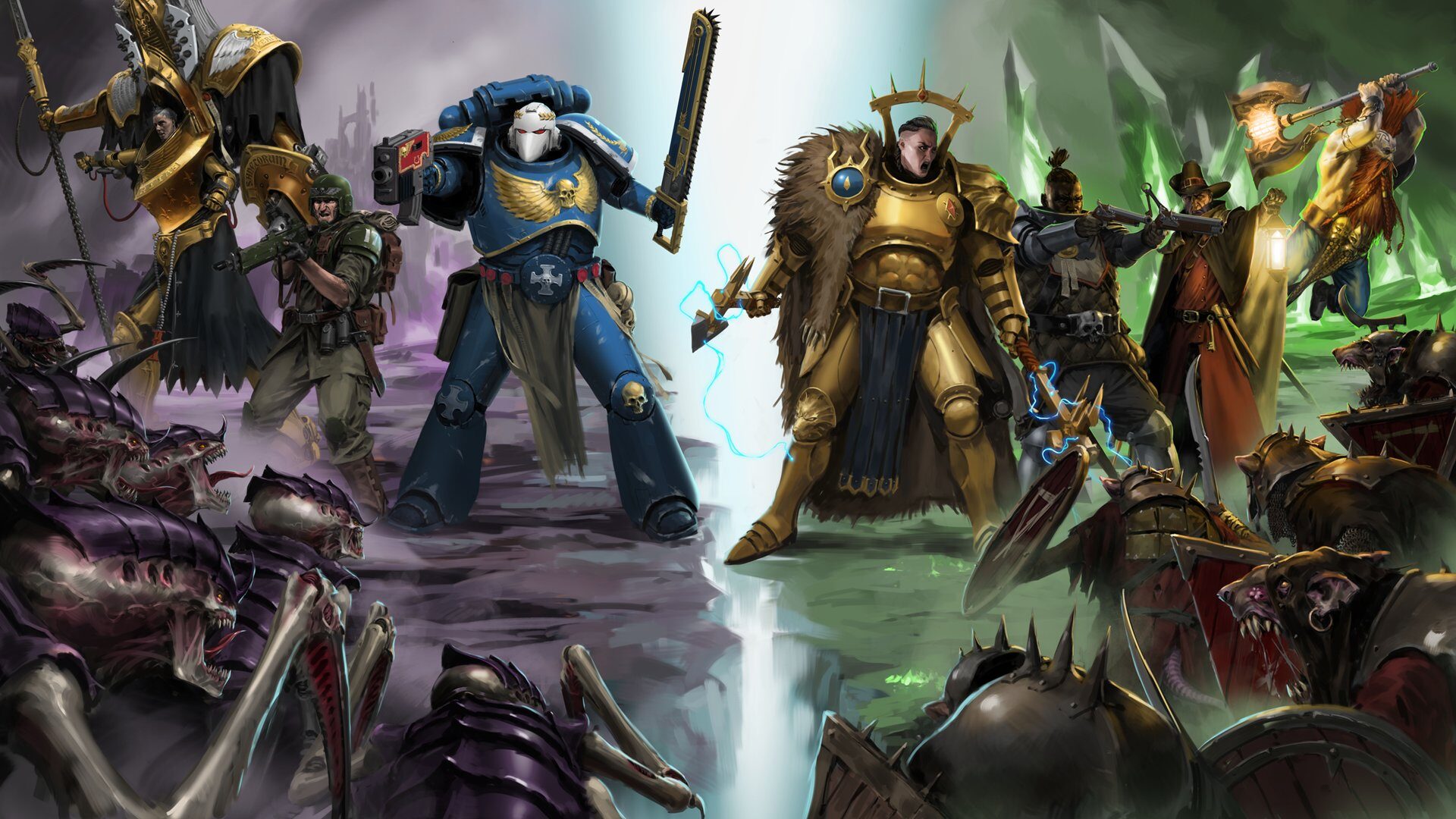
The eternal war of Warhammer rarely comes with such a simple brief. Survive for twenty-five minutes, upgrade the arsenal and leave enough bodies behind to forget how many attempts ended in defeat. With Warhammer Survivors, Auroch Digital takes on the Vampire Survivors formula in partnership with its creator, poncle. The studio already knows the 41st Millennium inside out thanks to Warhammer 40,000: Boltgun. This time, it brings in the Mortal Realms of Age of Sigmar, with heroes, weapons and enemies from both settings.
The pairing makes immediate sense. Whole armies to wipe out, fighters capable of surviving the impossible and a shared taste for excess made for fertile ground. The runs still needed more than a few familiar names and recognisable suits of armour. The game builds on squads, faction traits and a generous range of combinations. Are those ideas enough to make this licensed take on the formula a success in its own right?
Twenty-five minutes of war
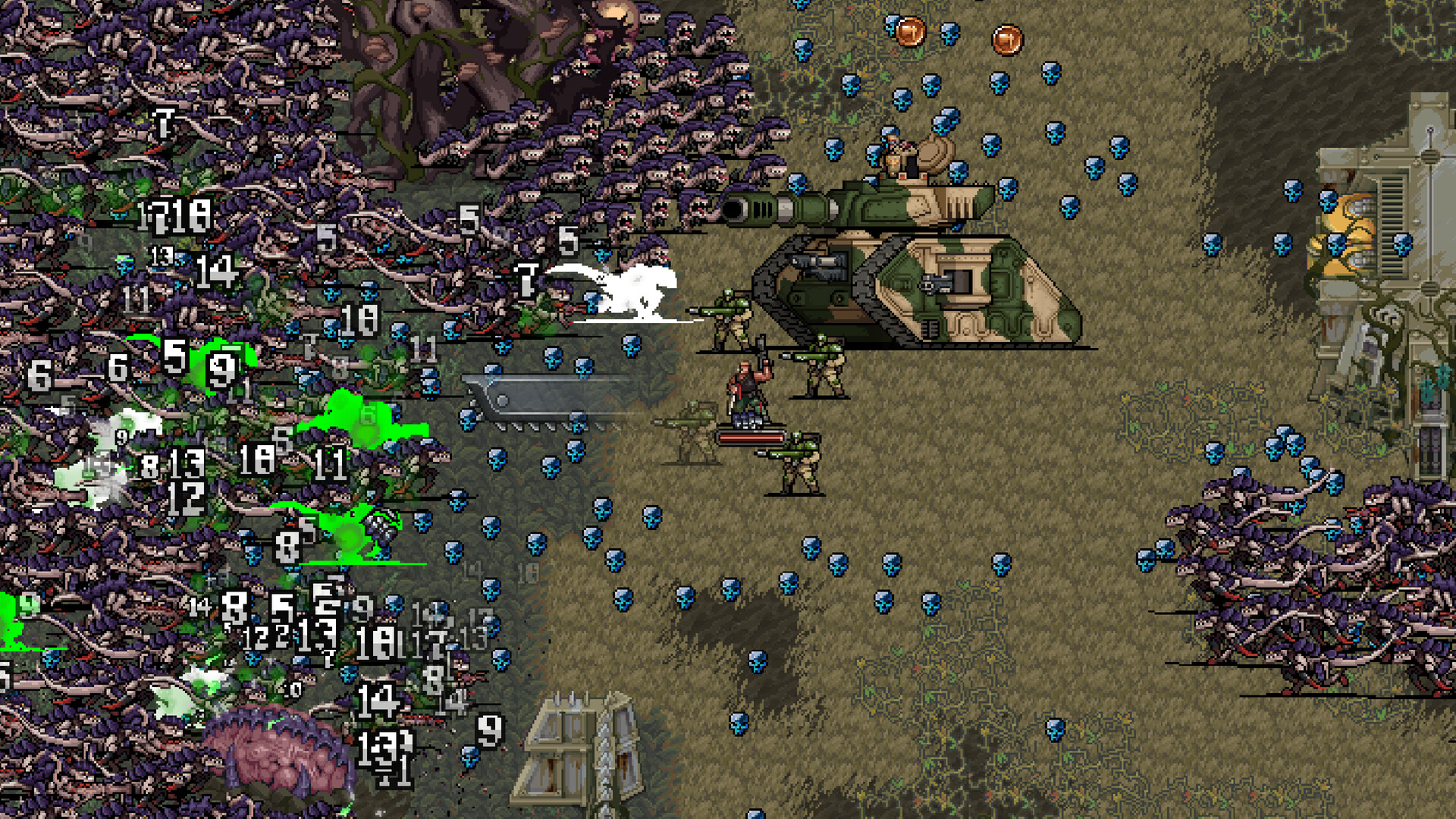
The rules are simple enough to hide what makes a run interesting. A fighter enters an arena with a starting weapon. Attacks trigger automatically, and the player controls movement. Fallen enemies can drop Skull Gems that grant experience. Collecting them unlocks levels and a choice of a new weapon, an upgrade or a passive item. The standard goal is to survive for twenty-five minutes before facing a boss.
It all comes down to movement and how the arsenal takes shape. Pulling away from the horde keeps the hero safe, but it also leaves the experience needed to grow stronger on the ground. Going back for it means making an opening, finding the right moment between attacks and keeping an escape route clear. A single stick moves the hero. That still leaves plenty to think about.
The game really takes off once the first few weapons start working together. One attack opens a gap, another keeps enemies at bay, and an area attack clears out anything that gets too close. The increase in power is immediately visible. The handful of enemies that took some effort to bring down at the start end up buried under projectiles, then a fresh wave forces a change of priorities. The game strikes a fine balance between how strong the hero has become and how much stronger the next wave demands.
The right gear in the wrong place
The arsenal runs to more than seventy-five weapons, and the differences between them matter more than the count. A chainsword, a boltgun and a tank cannon each cover the battlefield differently. Attacks that stay close to the hero, more direct shots and wide-ranging effects serve different purposes. Passive items change how effective they are, and evolutions turn certain pairings into far more devastating weapons.
Those transformations are where the fun lies. A tempting choice at the next level-up can also lay the groundwork for a combination that only comes into its own later. Upgrading a weapon that already works makes the run safer. Taking something new and still weak sets up a different build. That moment of hesitation gives upgrades real weight. The eventual power comes from a series of decisions, with enough options to make the next attempt play out differently.
Status effects add some clever wrinkles. Poison slows enemies down, while Burning speeds them up as it deals damage. Setting the horde alight also helps it close the distance. Nuln Oil applies the Oiled effect, which increases fire damage. The two are devastating together, provided the build can still deal with whatever survives. The combination has an immediate, visible effect on the fight. It makes for a far more interesting choice than a bonus buried in a stats screen.
That familiar pot of black wash is only the beginning. Six-sided dice bounce off enemies and explode, with the damage depending on the roll. Miniature-modelling accessories join the loadout. The game has fun with what Warhammer means outside its fiction, and gives those references a practical role. The joke gets a laugh, then earns a place in a serious build. It’s an excellent way to handle the licence.
Reinforcements included
The squad system is one of the best additions in Warhammer Survivors. Every fighter and weapon has keywords that determine who can wield what. Picking a weapon the hero cannot use brings in an ally who can. A Leman Russ cannon brings Pask and his tank along, saving a Space Marine from having to double as a walking turret.
That changes how the action fills the screen. The attack comes from the ally’s position, away from the hero. Companions expand the area covered and give the assembled loadout a visible shape. They are immune to damage and leave pickups to the hero, so only the main fighter’s survival needs managing. The run gains more options without adding a single control.
Some pairings take the idea further. The Black Templars Castellan grows stronger with every companion recruited. Kozlowski’s Lasgun brings in more Cadian Shock Troopers as it’s upgraded. The two mechanics reinforce each other. An already useful weapon also makes the Castellan’s ability more valuable. In the Mortal Realms, Lorai’s fog draws enemies into the areas struck by Bastian Carthalos’s hammer. Each ally has a distinct role, and combining them produces a result that’s easy to grasp.
The squad system gives the fighters an identity that goes beyond their looks. Choosing a weapon can also mean choosing a partner and discovering a new interaction. The resulting team can look absurd, but there’s a clear logic to how it works. It’s a fine idea for a setting where the makeup of a force matters as much as its weapons.
Two universes, two reasons to stay
The 41st Millennium and Age of Sigmar are kept distinct. The former pits Imperial forces against the likes of the Tyranids, the Orks and the Death Guard. The latter fields champions of the Mortal Realms against the Skaven, Khorne’s followers or the grots of the Gloomspite Gitz. Heroes stay in their own settings, with their own arenas, objectives and some equipment of their own. A few shared items connect the two without throwing everyone into the same arena.
Keeping the settings separate gives the game real breadth. The roughly forty fighters unlock gradually through challenges, exploration and specific conditions. Discovering a hero also adds a weapon and opens up ways to make it available to other fighters. Secrets and relics give each run something to look for beyond an immediate win.
Permanent progression uses currency collected during runs. It pays for upgrades between attempts, alongside the upgrades earned during a fight. Each universe has its own progression, with some higher ranks eventually granting bonuses in the other. There’s a reason to alternate between them and room to focus on a favourite first.
At a standard price of €7.49, that generosity is especially welcome. There are already enough objectives and combinations to justify coming back for plenty of runs. Even a death leaves something worth pursuing, whether it’s a new weapon to try, a challenge to finish or a different way into an arena. A reset always comes with a reason to return.
Every horde has its habits
The enemy factions are among the adaptation’s biggest successes. The Tyranids are organisms coordinated by a Hive Mind, and their Synapse creatures strengthen nearby units. Taking out those creatures briefly stuns the smaller organisms around them. Even with automatic attacks, moving into position brings fire to bear on a priority target and weakens the whole group.
The Orks work differently. Their Waaagh! ramps up the pressure as more enemies appear and the horde works itself into a frenzy. The Skaven add bursts of gunfire that cut off routes through the arena, along with poison globes. The Death Guard makes use of poison. These differences change which threats demand attention and how to keep space clear. The enemies finally have a good reason to belong to their factions.
The arenas add variety of their own. The open plains of Aqshy leave plenty of room to move, while a Space Hulk, a vast agglomeration of wrecked spacecraft, channels movement through its corridors. In tighter spaces, the reach and coverage of attacks become essential. A loadout that works out in the open can leave the hero more exposed among obstacles.
The Extremis Bosses put that preparation to the test. The Ork warlord Ghazghkull Thraka strikes with his Power Klaw, opens fire and calls in more troops. Even with an arsenal capable of clearing the preceding waves, the fight demands anticipating his attacks and keeping on the move. The payoff from building up all that power is immense, and reading the fight still matters. That gives the final encounter more to it than a damage tally.
A hobby table comes to life
The pixel art has obvious charm. Bulky armour, distinct enemy silhouettes and exaggerated proportions suit the style beautifully. A tank still looks massive, a Space Marine cuts a familiar figure, and enemy leaders take up the space they deserve. There’s enough detail to pick out the features that distinguish the miniatures, and each fighter stays easy to read.
The Hobby Table arena captures the tone perfectly. Battles break out among a cutting mat, paint pots and tools left on the workbench. Several factions can cross paths there. There’s a simple pleasure in seeing these little armies come out of storage to fight, and the joke fits the excess of the runs. The game takes its systems seriously and still has enough of a sense of humour to let a paint pot join the slaughter.
The soundtrack keeps pace with the action as it grows more intense. Most of the game’s identity, though, comes from the way weapons, reinforcements and creatures gradually fill the screen. It’s a lavish spectacle, sometimes downright excessive, and pitched at exactly the right scale to make the firepower feel as formidable as it looks.
How smoothly this version runs does a lot to preserve that fun. Even with hundreds of enemies on screen, the game stays remarkably smooth and the action remains easy to follow. Movement still matters in the thick of the biggest crowds. For a game that gets so much of its appeal from the sheer number of effects and enemies, that’s essential.
A less forgiving start
The opening is the part most in need of work. Some starting weapons lack punch before they’re upgraded, and enemies build up quickly. Skull Gem drops are far from guaranteed, which also slows progression in early attempts. It takes some patience before the range of possible combinations becomes clear.
Permanent upgrades ease the difficulty, but there’s still a noticeable gap between those first attempts and better-equipped runs. A weak starting loadout sometimes leaves too little room to turn things around. The game needs a more forgiving opening. Its best ideas sit behind the early unlocks for too long.
The other drawback is the absence of co-op at launch. Reinforcements convey a real sense of fighting as a team, with the game controlling every ally. There’s no way for a second player to join the battle. Solo play has enough depth to carry the game, but the appeal of sharing this chaos is so obvious that co-op feels conspicuously absent. Otherwise, the formula keeps experimentation fun and makes destroying everything deeply satisfying. It’s hard to ask for much more.
Verdict
Another battle for the Emperor
9.5/10
Warhammer Survivors is an absolute blast. Auroch Digital gets the power curve right and gives Warhammer a real role in how the game plays. Factions have their own traits, weapons bring along their own reinforcements, and nods to miniature modelling become tools in battle. The result is generous, funny and rich enough to keep the next combination interesting. The two settings offer far more than a change of scenery, with distinct progression paths that make another run in either one tempting.
The start takes some patience, and the absence of co-op is a shame. Those drawbacks carry little weight once the options open up and the fights get going. This version runs remarkably smoothly, even with hundreds of enemies on screen, which makes it all the harder to put down. An excellent Warhammer game and a terrific way to blow off steam. Simple as that.
Pros
- An immensely satisfying build-up of power and plenty of combinations to explore
- Weapon-specific reinforcements and meaningful interactions between fighters
- Two settings with separate progression paths that give the game real breadth
- Faction traits that genuinely change combat priorities
- Nods to miniatures and modelling built into the weapons and arenas
- Remarkably smooth performance, even with hundreds of enemies on screen
Cons
- Rougher early runs before permanent upgrades kick in
- No co-op at launch
More in Video games
Full library 8/10
TerraTech Legion
XBOX 8.5/10
Warhammer 40,000: Boltgun 2
PC 7/10
Castlebound
SWITCH 8.5/10
Village in the Shade
SWITCH 5.5/10
Warrior Cats: Clans of the Forest
SWITCH 6.5/10
Demons’ Night Fever
SWITCH 8/10
Culdcept Begins
SWITCH 5/10
The Witch’s Bakery
SWITCH 7/10
Joe & Mac Retro Collection
SWITCH 6/10