
Warhammer 40,000: Boltgun 2
By bolter and by fire
Score: 8.5/10
Images and videos


At a glance
We liked
- Weapons that really feel powerful
- Nyra changes the way fights are approached and navigated
- More varied worlds and a bigger enemy roster
- Alternate routes and secrets give a reason to replay
We liked less
- Enemies still get stuck or wind up unable to fire back too often
- Effects can make fights harder to read
- Objectives still get repetitive
- Some awkward navigation and platforming stretches
 By Farrel Grimwood · published · 8 min read
Contents
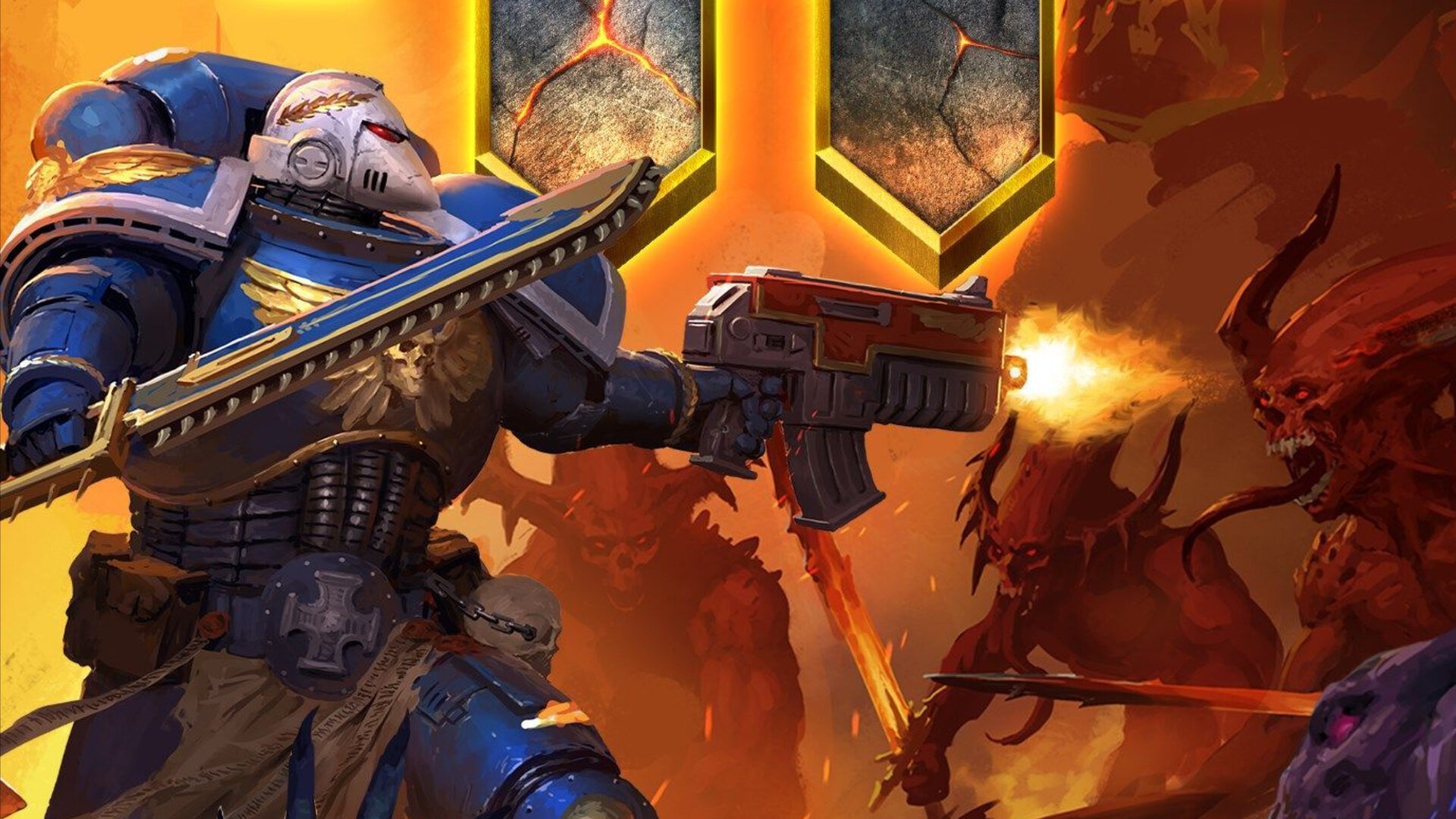
In Boltgun 2, there’s a dedicated button for shouting your devotion to the Emperor while carving up whichever daemons happen to be in the way. Here’s a game that has its priorities straight. The first one already knew exactly what Warhammer 40,000 could bring to a retro FPS: absurdly large guns, monstrous enemies and the fairly primal satisfaction of blowing up anything that sticks out.
Three years on, Auroch Digital sends Malum Caedo back into the fight alongside a Sister of Battle, Nyra Veyrath. The campaign visits more worlds and offers several routes instead of forcing one path. The studio hangs on to the speed and brutality that made Boltgun such a good time, while trying to make the trip a little less repetitive.
There’s more than enough here to keep fans of Imperial carnage busy. There are also a few enemies stuck in walls and stretches that knock the wind right out of the action. The additions make a return tempting, but are they enough to justify another campaign against Chaos?
Caedo or Nyra
Malum Caedo is the Space Marine from the first game, still as disinclined as ever to talk things over with the forces of Chaos. He can take a hit, charge to clear a path and latch onto targets with his chainsword. His bolter and shotgun suit this habit of charging straight into trouble. The shotgun can even knock an enemy off a ledge. When the scenery can finish the job, it might as well.
Nyra Veyrath has to move differently. The Sister of Battle can’t take as much punishment, but she can slide through smaller enemies with her power sword and come out the other side of the group. There’s every reason to use that mobility rather than stand in front of a target. Her flamer clears crowds without giving up her speed, while her melta bomb offers an altogether more violent answer when things get crowded.
The bomb takes a moment to ready before it can be thrown. It’s less spontaneous than one of Caedo’s grenades, but in the right spot it wreaks havoc. Differences like that make the choice interesting. The rooms and objectives are the same, but surviving them takes slightly different instincts. Nyra gives a good reason to start over without pretending she turns it into a different game.
The choice is made at the start of the campaign and sticks for the run. There’s no picking Caedo to muscle through a difficult stretch and bringing out Nyra in the next room. Each has to get by with their own weapons and abilities to the end, which gives them time to actually learn how to use them.
The joy of emptying a magazine
The best thing about Boltgun 2 is still how the weapons feel. The bolter hits hard, the shotgun knocks things back and the flamer turns a roomful of enemies into somewhere considerably less crowded. The sound does as much work as the spray of pixels. There’s enough noise, impact and visible reaction for the power to feel like more than a number in a menu.
During Purges, the exits shut and enemies come in waves. It’s a matter of circling the arena, dodging fire, grabbing supplies and quickly deciding what needs to die first. Melee fits into that movement too. It’s a way to close the distance and finish off a threat instead of spending the whole fight backing up with a finger on the trigger.
The secrets provide another good reason to leave the main path. The Omnissiah’s Blessing strengthens the weapon currently equipped for the rest of the level, so it’s best not to pick it up without checking what’s in hand. The bonus has an immediate effect on the run. There’s no skill tree to work through between missions, and there doesn’t need to be. The game works very well when it concentrates on the weapons at hand and what they can do right now.
Chaos supplies the workforce
All four Chaos gods are represented. There are creatures of Nurgle and Tzeentch, as well as the forces of Khorne and Slaanesh. Daemonettes leap, Noise Marines bring out their sonic weapons and Bloodcrushers charge with very little regard for what’s in front of them. The new faces do the roster good and give players something else to watch besides the big enemy in the middle of the room.
The best encounters mix those threats. Whatever comes charging in forces players to move while ranged enemies cover the other angles. Even a weapon that’s excellent for clearing a crowd won’t help if something gets around the side unnoticed. That’s when Boltgun 2 really gets fun: the enemies give a reason to use all that mobility instead of emptying the same magazine from the same spot.
Unfortunately, the AI undoes some of that work. An imposing enemy loses its menace fairly quickly when it gets caught on the scenery or fails to respond to a shot from a distance. Sometimes it’s possible to keep firing from an angle where a target simply can’t answer back. In a game that sells the violence of going toe to toe, it’s a shame to win because the monster no longer knows what to do with its legs.
The difficulty can get messy when the projectiles pile up. Health vanishes quickly, and the screen doesn’t always make it clear where the danger came from. The settings can dial down the challenge, all the way to invulnerability for a more leisurely massacre, but they don’t fix the inconsistency. Between the target that barely puts up a fight and the barrage that punishes without warning, the encounters still lack a little balance.
More worlds, still plenty of keys
This time, the campaign takes Caedo or Nyra across several worlds to hunt Vashtorr the Arkifane, a daemon tied to machines and their makers. It picks up after the first game without requiring everyone to remember the details. The servo-skull delivers the useful information, and the leads mostly comment on the slaughter. The plot is still an excuse, but it does its job: it sends the action somewhere new without a lecture on Chaos between doors.
And those new destinations make a real difference. Mangroves, frozen installations and industrial fortifications change more than the color of the scenery. Crossing between two moving trains or running from rising lava brings in pressures that break up the usual arenas. Escort missions and specific targets offer a little variety as well. Boltgun 2 is more enjoyable when its locations do more than provide rooms to fill with enemies.
It still falls back on keys, switches and locked doors fairly often. Varied scenery isn’t enough to disguise repeated objectives over a long session. Some platforming sections make it worse. Movement that works beautifully for crossing a battlefield isn’t nearly as comfortable when the landing calls for a precise stop on the edge of a drop. The character can feel like they’re sliding when all that’s needed is to stand still.
The map and optional navigation guide make it easier to get pointed in the right direction. Being able to ask for the way after a Purge means finding the exit doesn’t have to take as long as clearing the place. Some levels are still confusing, though, and the map takes some getting used to. Looking for a hidden bonus is one thing. Circling a cleared area three times because the right door is nowhere to be found is another. It’s an improvement, but not a complete fix.
The campaign branches, offering a choice of destinations. There are 33 maps in total, but no single run goes through them all. Taking one route means leaving certain missions behind. It’s a good reason to go back and see what was missed, without any pretence that every choice will upend the story. The routes change; the outcome doesn’t.
Going back with the other character is a natural way to see more of those levels. The catch is that some of the trip is shared. The two leads give players different combat habits, not entirely separate campaigns. If the urge to shoot things has worn off by the end of the first run, the other branches probably won’t bring it back.
The first run takes roughly six to ten hours, depending on the difficulty and the time spent looking for secrets. Alternative routes and level select give it more life afterward. At €24.99, that’s a fair amount of game. More importantly, the campaign knows when to stop, so there’s a chance of wanting another run rather than coming out exhausted.
One hell of a mess on screen
Boltgun 2 sticks to sprite characters in 3D environments. The miniature-like silhouettes, oversized weapons and outlandish architecture still give it plenty of character. It’s unmistakably Warhammer 40,000, from machine-packed fortresses to places eaten away by Chaos. The retro style leaves room for changes of atmosphere and details worth looking at between fights.
The trouble is that all those effects sometimes cover up what needs to be seen. The flames and explosions look great, but they can hide an enemy, a projectile or a hazard. The spectacle becomes a problem of its own. Getting hit after a bad dodge is fair enough. Getting hit because it’s hard to see anything through the effects is another matter.
The weapons sound excellent, and Matthew Walker’s heavy music backs up the action well. Mick Gordon also contributes a track for the final boss. The soundtrack drives the slaughter along, though not every theme sticks once the game is off. It’s mainly the gunfire and the characters’ taunts that give the fights their personality.
Rahul Kohli returns as Caedo, while Alanah Pearce plays Nyra. Their lines suit an Imperial faith that seems to involve shouting louder before opening fire. The text and subtitles are available in French, but the voices remain in English. The story is easy enough to follow in French; a dub would still have been welcome for anyone hoping to enjoy the taunts without reading them in the middle of the carnage.
Verdict
One hell of a way to blow off steam
8.5/10
Boltgun 2 gives plenty of good reasons to pick up a weapon again. Caedo is still excellent as the Imperium’s wrecking ball, Nyra’s mobility is a real pleasure, and the new worlds keep the game from revisiting the same places over and over. The guns do most of the work. They have the power and variety to make one fight lead naturally into the next. Auroch Digital still knows exactly why it’s so much fun to shoot things in Warhammer 40,000.
Clumsy AI breaks the rhythm in places, and some fights get too busy to read properly. Branching routes don’t do away with repetition either. But the pleasure of the carnage holds up well against those reservations. It’s a genuinely good sequel, richer and more varied, that deserved less inept enemies and a few better-tuned levels.
Pros
- Weapons that really feel powerful
- Nyra changes the way fights are approached and navigated
- More varied worlds and a bigger enemy roster
- Alternate routes and secrets give a reason to replay
- Art direction that does justice to Warhammer 40,000’s excess
Cons
- Enemies still get stuck or wind up unable to fire back too often
- Effects can make fights harder to read
- Objectives still get repetitive
- Some awkward navigation and platforming stretches
- Rough at launch, with lingering achievement issues
More in Video games
Full library 8.5/10
S.T.A.L.K.E.R. 2: Cost of Hope
XBOX 8/10
Halo: Campaign Evolved
XBOX 10/10
World of Warcraft: Forever
PC 9/10
Total War: Warhammer III – Lord of the End Times DLC
PC 7/10
Revisited | Warcraft III: Reforged
PC 7.5/10
Warcraft III Reforged: Forsaken Kingdom
PC 8.5/10
World of Warcraft: Midnight
PC 8.5/10
Village in the Shade
SWITCH 5.5/10
Warrior Cats: Clans of the Forest
SWITCH 6.5/10