
Warrior Cats: Clans of the Forest
A promising apprenticeship, too many patrols
Score: 5.5/10
Images and videos


At a glance
We liked
- Creating a cat makes the choice of clan appealing
- Terrain that changes how each territory is traversed
- Stances and stamina give the early fights substance
- Decisions that can leave a visible mark
We liked less
- Patrols become repetitive too quickly
- Relationships at camp have little consequence
- Stuttering is particularly troublesome when jumping
- Bartering for healing makes return trips more laborious
 By Farrel Grimwood · published · 4 min read
In Warriors, a cat’s place in the clan matters as much as the battles it fights. Erin Hunter’s novels give weight to a rivalry between apprentices, a leader’s trust, or the return of a patrol. Bamtang Games adapts that communal life in a natural way: create a young cat, choose a clan, and follow its training until it earns a warrior name.
Warrior Cats: Clans of the Forest offers four original campaigns, one for each clan living around the lake. Hunting, defending the borders, and building relationships in camp occupy much of the adventure. It’s an adaptation that makes room for everyday life. But how does it keep those days interesting when responsibilities change more slowly than the patrols pile up?
An apprentice of your own
The adventure begins at six moons, when training starts. Coat, physical features, and name are chosen before the young cat joins ThunderClan, RiverClan, ShadowClan, or WindClan. The ancestors in StarClan, who watch over the living, warn of a threat through a prophecy. This isn’t a retelling of Rusty’s journey in the first novels. Each apprentice has a place to earn within a group already dealing with tensions of its own.
Character creation makes it tempting to spend time on this future warrior. Clan, appearance, and name add up to more than an interchangeable hero, even if the names are chosen from a preset list. The campaigns also have distinct territories, from woods to marshes and moorland. The game has a good basis for making the choice of clan matter. The trouble is what membership changes after that point: the chores are much the same, and conflicts rarely amount to more than a border skirmish.
Conversations in camp build affinity with the other cats and sometimes earn an item. They sketch out ambitions, worries, or disagreements with the leader. But highlighted hints in the dialogue often make the right answer too obvious, and those relationships barely affect the campaign. Talking becomes a way to fill a meter rather than get to know the group. For a series in which internal rivalries account for much of the appeal, that weakness becomes apparent quickly.
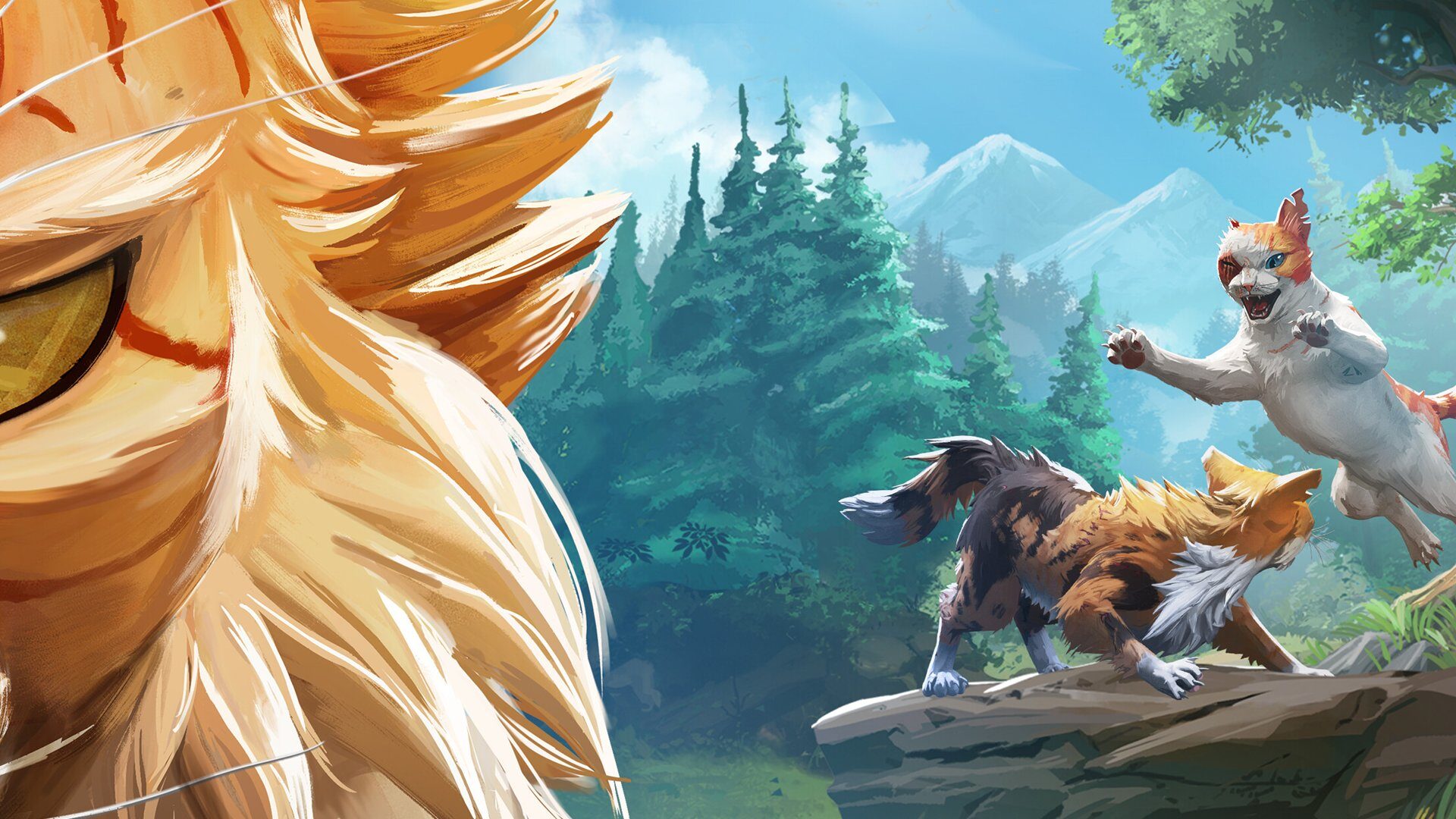
Some decisions have more tangible consequences. A fight can leave a scar or cost a piece of an ear. The visible mark makes the encounter matter because the same cat carries it into the rest of the journey. It’s a simple way to tell a personal story without another lengthy scene. These moments are too occasional, though, to compensate for plots whose major turns make little difference to life in camp.
Back to the same border
Hunting fills the fresh-kill pile, which gives the cat a stat bonus. The borders also have to be marked to keep the neighbors back. Both activities fit the novels and give everyday trips a purpose. The repetition is harder to justify. A promotion or major confrontation is often followed by another round of the same duties, without the new status changing much about how they’re done. Earning a warrior name deserves a little more than another watch.
The four stories struggle to justify four full campaigns on that basis. The regions and circumstances change, but the shape of a day is too familiar from clan to clan. Everyday life isn’t a bad subject. It becomes interesting when an encounter, a relationship, or a new responsibility changes the routine. Here the objectives change location more often than they change character. The campaigns mostly extend a formula that reaches its limits well before the last prophecy.
Exploration has some good ideas. Climbing a tree and moving from branch to branch gives the forest a different scale. A modest obstacle on the ground may call for a detour overhead. The territories become interesting for more than their dominant colors. The map helps locate a destination but is less useful for finding a workable route to it. Spotting the right footholds can take more attempts than the terrain warrants.
Stuttering makes that worse. Movement and jumps suffer from an uneven frame rate, especially when reaching a branch or correcting a trajectory. Turn-based combat can tolerate an involuntary pause much better than platforming can. A dense forest is the right choice for this setting, but the technical cost spoils the fun of crossing it. The most interesting trips are also the ones that make the lack of polish hardest to ignore.
Claws and stamina
Battles put up to three fighters on each side. Attacks adopt different stances, and their matchups make the enemy’s response worth watching. Stamina costs matter too: taking a turn to catch a breath can be more useful than getting another attack in. Only four techniques can be equipped at once. That makes preparation worthwhile at first, since a set of skills that are too similar leaves few answers against certain opponents.
Dialogue choices are more useful during these fights than back at camp. Encouraging an uncertain ally can grant a temporary advantage with an immediately visible effect. Making trust between cats matter to their effectiveness works well, and gives allies a purpose beyond their attacks. It’s a sound system even if ordinary fights end up drawing on a fairly small part of what it can do.
Focusing attacks on one target to limit retaliation soon becomes an effective answer. The least demanding encounters still take their time, and they can be followed by a trip back for healing. The most useful remedies depend on barter and require several specific materials. That adds gathering and travel to an adventure already weighed down by repetitive tasks. Survival mode makes better use of resource management by asking the group to last through several fights. In the campaign, these trips mostly extend days that are already short on variety.
Verdict
A warrior name isn't enough
5.5/10
Warrior Cats: Clans of the Forest makes it tempting to create an apprentice and find it a place by the lake. The territories have character, the early fights make useful distinctions between stances, and some decisions leave a visible mark on the future warrior. The adaptation has the right pieces to make clan life matter.
It doesn't do quite enough with those pieces. Relationships carry less weight than meters, promotions barely affect the daily routine, and the four campaigns lean on tasks that are too similar. Stuttering and the trips needed for healing make the repetition worse. A few moments justify a first campaign, but this is a limited RPG that takes a lot of patience to reach its best ideas.
Pros
- Creating a cat makes the choice of clan appealing
- Terrain that changes how each territory is traversed
- Stances and stamina give the early fights substance
- Decisions that can leave a visible mark
Cons
- Patrols become repetitive too quickly
- Relationships at camp have little consequence
- Stuttering is particularly troublesome when jumping
- Bartering for healing makes return trips more laborious