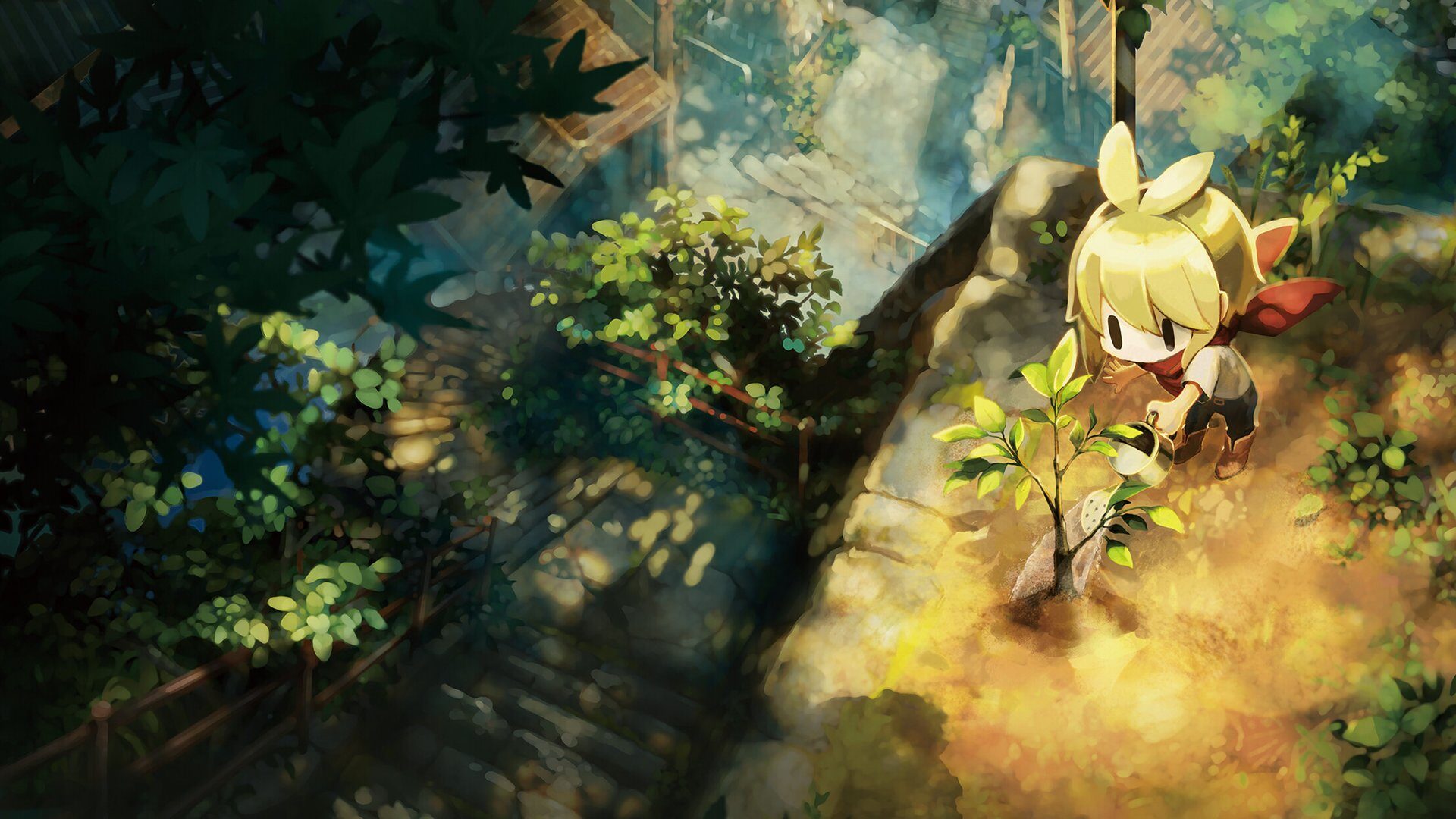

Village in the Shade
A farm to fix up and a curfew to break
Score: 8.5/10
Images and videos


At a glance
We liked
- Nighttime expeditions can benefit the farm or set it back
- Villagers whose trust has to be earned and whose reactions matter
- A farm with enough going on to fill the days
- Painted settings and sound that change how familiar streets feel
We liked less
- Mandatory tutorials stretch out the opening hours
- The story doesn't always allow work or investigation at an individual pace
- No manual save for stopping partway through a day
 By Farrel Grimwood · published · 5 min read
Nippon Ichi Software’s Yomawari could make a street unsettling the moment it had to be crossed by flashlight. In Village in the Shade, the studio starts by giving that street reasons to be liked. It’s the way to the seed shop; the neighbors’ roofs grow familiar; before long, the route home doesn’t need a map. It’s the same road that has to be taken once night falls and the village turns out its lights.
Released on October 27, 2026, the game settles its protagonist in Kagatsu, a mountain village where a farm can be restored as long as eight rules are obeyed. Some sound like sensible precautions. Others leave the question of what could possibly have happened to make someone write them down. That’s Nippon Ichi’s wager: once there’s a place worth keeping in Kagatsu, how much is it worth risking to understand how the village works?
A farm, a debt, and eight rules
At the start, a child chases a chicken and falls down a well. By the time he climbs out, ten years have passed and he hasn’t aged. His disappearance has become one of those stories Kagatsu has been telling for so long that nobody expects the person in it to come back. The villagers take him in. Rin, the village chief, gives him a dilapidated house and an overgrown plot, with a debt to repay and work for the foreseeable future. It’s hardly a warm welcome. At least it explains why the first harvest matters so much.
Kagatsu’s rules say not to talk to strangers, go out after 11 p.m., or answer voices from the mountain. The first rule is already enough to make the day difficult: the stranger, at first, is the protagonist. A neighbor may live next door and pass him on the way to the shop for some time before deigning to speak. That frostiness makes the first signs of trust count. A neighbor finally extending an invitation does more for the story than a friendship bar rising after a third gift.
The game is right to keep some of the villagers unpleasant even after they become familiar. They disagree about what they owe Kagatsu, and some are less accommodating when the conversation turns to subjects they’d rather avoid. There are no romances to unlock. Gifts and village festivals help build relationships, but it’s the villagers’ reactions to what’s uncovered that make them interesting. For once, helping a neighbor doesn’t mean trusting them on the way home.
Plenty of work to do
The farm starts simply. Clear the stones and weeds, till the soil, and put the crops in a crate to get paid the next day. Time and energy soon force a choice between finishing the vegetable patch, looking for ore, and going fishing. Quarry resources pay for improvements to tools and buildings. A better watering can earns nothing by itself, but watering faster leaves time to do something else before the shops close. That’s the kind of progress that matters most on a farm starting with almost nothing.
The activities also fit together in some clever ways. Rice needs a flooded plot, and ducks can eat the weeds in it. Milk can be turned into cheese, and crafting machines makes it worth keeping part of the produce rather than selling it all. Other pleasures are more immediate: there is a rhythm to follow once a fish is hooked, and the quarry encourages one more floor in pursuit of the ore that’s still missing. The farm has enough going on to make it worth tending even when the story stands still.
The game takes too long to trust the player, though. The first few hours continually interrupt the work to explain the next activity, and some options only turn up after routines are already established. Between tools, the map, and menus, there are quite a few controller inputs to remember. On-screen reminders help, but don’t excuse the moments when the game takes over after the task is perfectly clear. No manual save is a more practical problem in handheld play: quitting before the next autosave can mean having to repeat part of the day.
What’s still outside after 11
At night, the painted scenery loses the colors that made it inviting. The roofs and walls are in the same places, but the flashlight only reaches part of the street. Sound does the rest. A knock at the door can make even the house that’s being repaired seem suspicious. Once outside, there are yōkai, beings from Japanese folklore whose intentions aren’t immediately obvious. Some can be skirted; others require figuring out what makes them react. This is where Yomawari‘s craft comes through. The game is often more unnerving when the choice is whether to take another step than when it finally shows what is in the dark.
There are reasons to go back out. Items unseen by day turn up at night, and fishing can even turn up a cursed catch. Some discoveries pay for useful improvements the next morning. The question becomes whether a trip is worth returning weakened and starting the day at a disadvantage. That’s the game’s best idea: hours spent tending the farm give the nighttime expeditions something to put at risk, and what happens outside can change what’s available for the next day’s work.
The story is less convincing when it decides exactly when the rules can be broken. Sometimes a particular scene has to happen before an idea the rules have already suggested can be tried. And when the plot speeds up, it can take over just when there was work planned in the fields. The peaceful mode, selected at the start, allows farming and decorating the house without breaking the code. It makes sense for anyone mainly interested in growing rice and spending time with the villagers. To understand why Nippon Ichi put this farm in Kagatsu rather than anywhere else, though, it’s worth leaving the house after hours.
Verdict
Kagatsu is worth a night out
8.5/10
Village in the Shade makes it appealing to build up a farm and ask questions the neighbors would prefer to avoid. It's at its best when those desires get in each other's way. Caring about what was built during the day makes the night more unsettling. And the villagers have enough character to make the answers as intriguing as the creatures out after dark.
The opening spends too long explaining tasks that are already clear, the investigation sometimes sets its own schedule, and saving is inflexible. None of that takes much away from seeing the same village change once night falls. The farm is good enough to settle in for; wanting to know what Kagatsu is hiding is what makes it worth staying.
Pros
- Nighttime expeditions can benefit the farm or set it back
- Villagers whose trust has to be earned and whose reactions matter
- A farm with enough going on to fill the days
- Painted settings and sound that change how familiar streets feel
- A peaceful mode for focusing on village life
Cons
- Mandatory tutorials stretch out the opening hours
- The story doesn't always allow work or investigation at an individual pace
- No manual save for stopping partway through a day