
Total War: Warhammer III – Lord of the End Times DLC
Nagash finally seizes power
Score: 9/10
Images and videos
At a glance
We liked
- Nagash’s campaign and recruitment combining all three undead traditions
- Thanquol’s Grand Schemes genuinely integrate conspiracy into strategy
- Distinct armies and objectives for all four lords
- New units that enrich army composition
We liked less
- Boris’s less inventive campaign despite an identical individual price
- The Glottkin feel less novel to Warriors of Chaos veterans
- Power and depth that widen the gap with older lords
- Systems and an interface that remain intimidating for newcomers
 By Farrel Grimwood · published · 7 min read
Contents
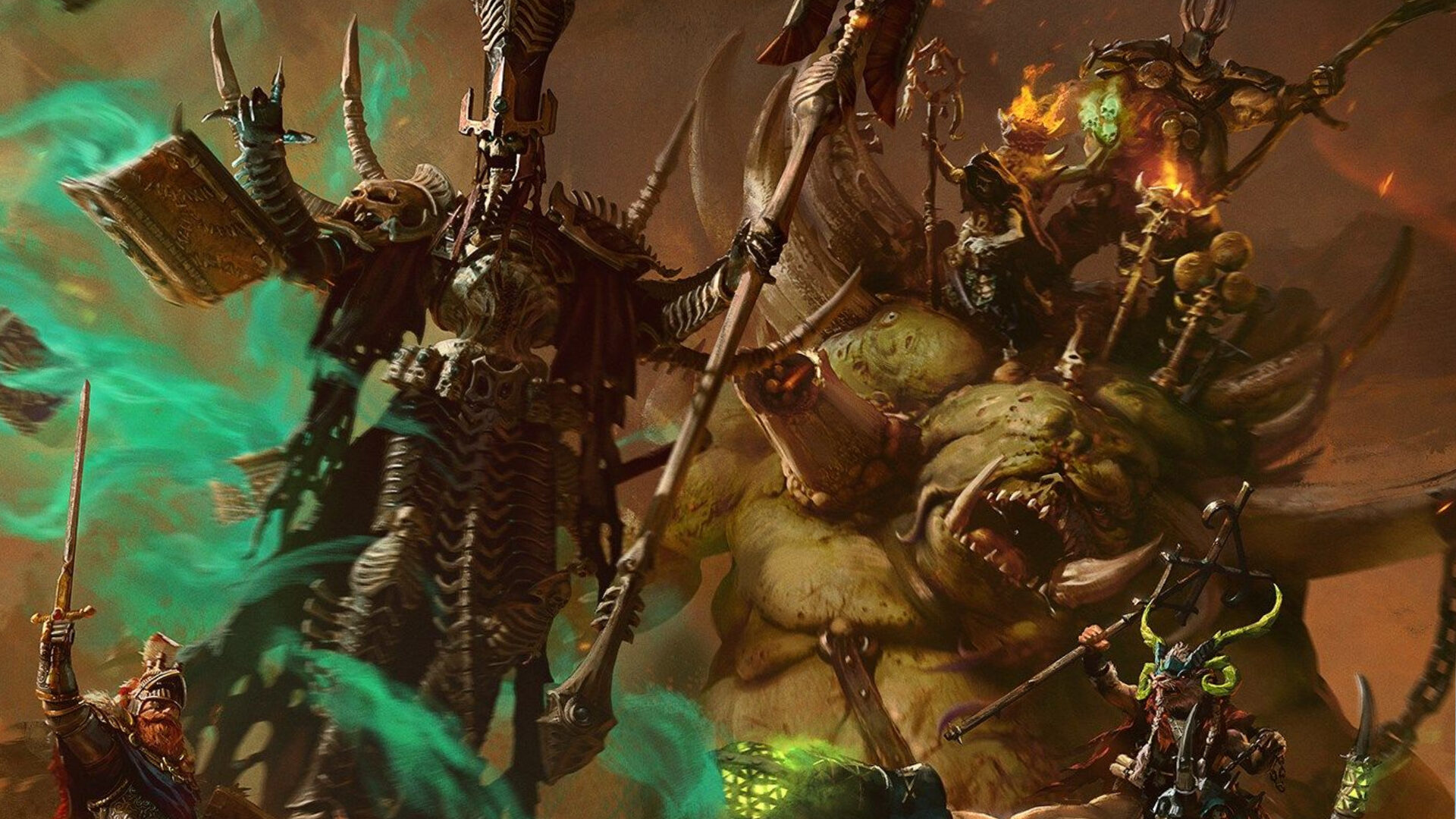
Bringing Nagash into Total War: WARHAMMER III required more than a new lord with a few bonuses. The Great Necromancer wants to subjugate all the dead, drain the world of life and become a god. That called for a campaign able to convey his ambition without immediately handing the player an invincible army. After ten years adapting Warhammer Fantasy, Creative Assembly finally tackles the character with Lords of the End Times, a DLC accompanied by a major overhaul of the late campaign.
Nagash shares the spotlight with Thanquol, the Skaven Grey Seer whose schemes rarely go to plan, the three Glottkin brothers serving Nurgle, and Boris Todbringer, tasked with defending the Empire. Three ways to contribute to the catastrophe and one to try to prevent it. The selection makes sense, but these four campaigns offer neither the same depth nor the same degree of renewal.
The title borrows its theme from the End Times, the great cataclysm of Warhammer Fantasy, without imposing its outcome. This remains Immortal Empires, with the freedom to conquer, negotiate and change the world’s fate.
Four campaigns on the same map
Lords of the End Times adds four Legendary Lords, eight Legendary Heroes, five other lords and heroes, twenty-three units and twelve Regiments of Renown, special troop variants with additional abilities. The pack’s appeal, however, mainly lies in each faction’s systems. Nagash builds a new undead empire, Thanquol prepares covert operations, the Glottkin develop their corruption and Boris strengthens the cult of Ulric. The differences therefore extend well beyond starting positions, even if Boris and the Glottkin remain closer to existing formulas.
Nagash alone makes the trip worthwhile
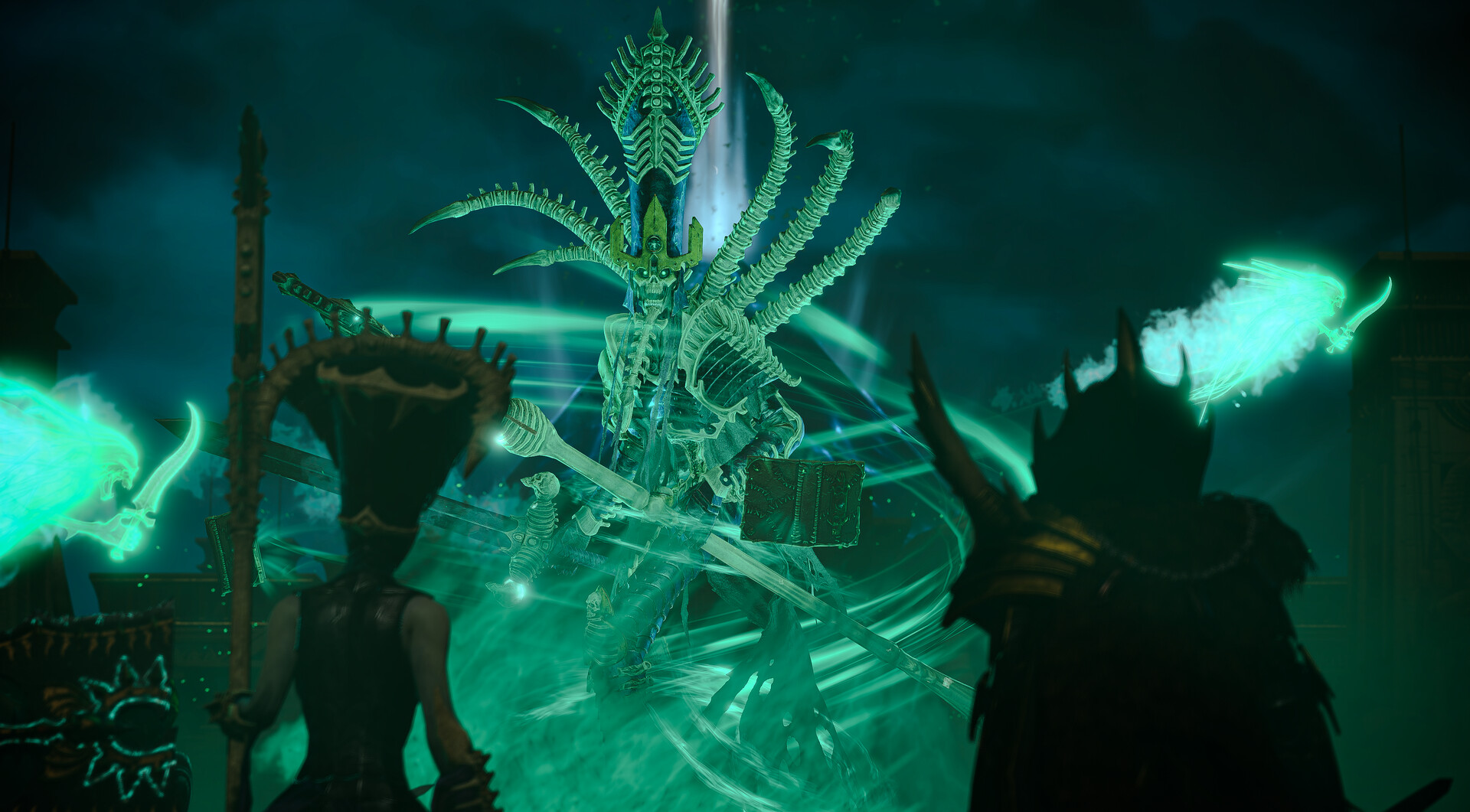
Nagash leads a new faction combining troops from the Vampire Counts, Tomb Kings and Vampire Coast. That combination genuinely changes army composition. Masses of infantry raised through necromancy can fight alongside Nehekharan constructs and undead pirates’ firearms. There is finally a force capable of mixing these traditions without having to choose just one of their armies.
The campaign organises that power around the Black Pyramid and necropolises. The latter drain energy from surrounding lands and fuel faction development. Recruitment depends on caps that must be increased: unlocking a creature does not immediately allow every army to be filled with it. The infrastructure to support it must be built. The Pyramid, meanwhile, contains an extensive upgrade tree requiring specific resources. Territorial development therefore directly strengthens Nagash and his legions.
The nine Books of Nagash and nine Mortarchs give that expansion purpose. The former notably enrich his magic. The latter are his lieutenants, characters to subjugate to gain forces and, in some cases, territories. This reunification makes conquests less interchangeable. A war can secure a particular lieutenant or open a new recruitment branch instead of merely adding another province to the total.
The growth in power is the campaign’s real pleasure. Nagash gradually becomes what he claims to be, and the new units give that transformation weight. Morghasts provide flying fighters capable of supporting different encounters, while the Khemrian Titan brings a far more massive presence. These additions complement army building rather than merely offering rewards to admire in the recruitment menu.
The opening, however, is harsh. The Black Pyramid lies in contested territory, and development demands limit available means. Several threats must be held off before the promised excess becomes available. That initial resistance is welcome, but the accumulation of energy, caps, upgrades and objectives also makes the early turns busy. Nagash is the DLC’s most ambitious component, not its simplest introduction.
Thanquol leaves almost nothing to chance
Thanquol offers another very convincing adaptation: making conspiracy an activity in its own right. This Grey Seer serves the Horned Rat, the Skaven deity, with immense ambition and rather excessive confidence in his talents. His Grand Schemes allow resources to be stolen, covert attacks to be prepared and magical operations to be launched. Subordinates handle them while ordinary armies continue the campaign.
Each operation develops over several turns. An attack can gather troops secretly before being launched against a city. A theft instead targets money, food or warpstone, the substance fuelling Skaven magic and inventions. Waiting improves potential gains but also increases the risk of complications. Intervention comes through adjusting the plan and buying additional means from other clans. The interesting decision is knowing when to stop preparing and finally act.
The system gives treachery a practical purpose. Preparing an operation behind an enemy can support a conventional offensive, while stealing food addresses a development need. Conspiracy becomes part of the campaign instead of remaining an amusing button pressed whenever available. Complications also introduce uncertainty fitting for the Skaven. Thanquol wants to control everything, but his ambitions readily exceed his organisation’s reliability.
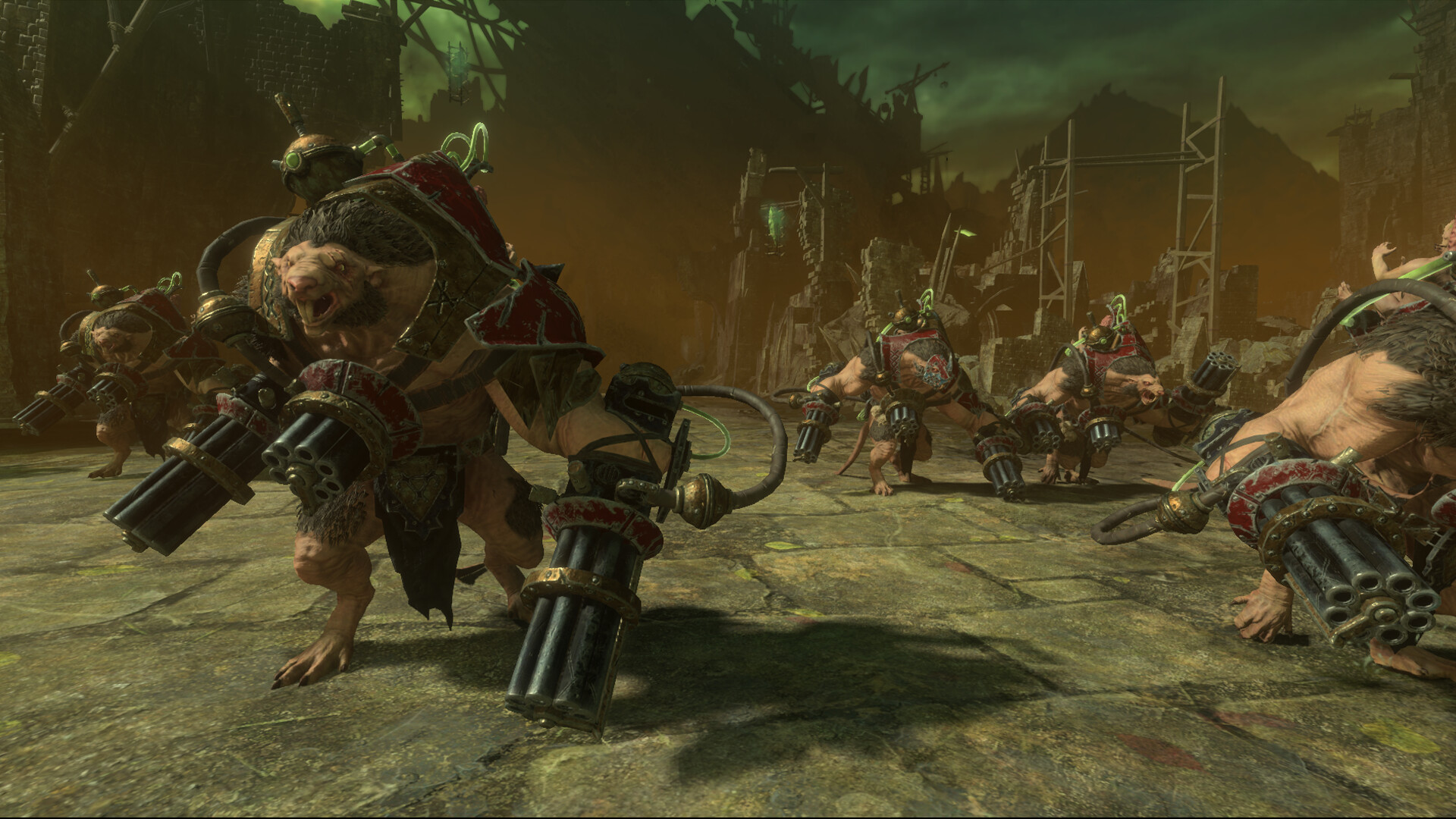
In battle, Stormfiends — heavily modified and armed Rat Ogres — come in six ranged or melee variants. Verminlords add daemonic commanders, while Thanquol can ride Boneripper and combine magic with a much less fragile striking force. The pack thus generously expands an already well-stocked Skaven army. That abundance and the management of schemes nevertheless add weight to a faction already requiring several resources to be tracked. The system is excellent for refreshing a campaign, less suitable for learning the basics at a gentle pace.
The Glottkin spread corruption
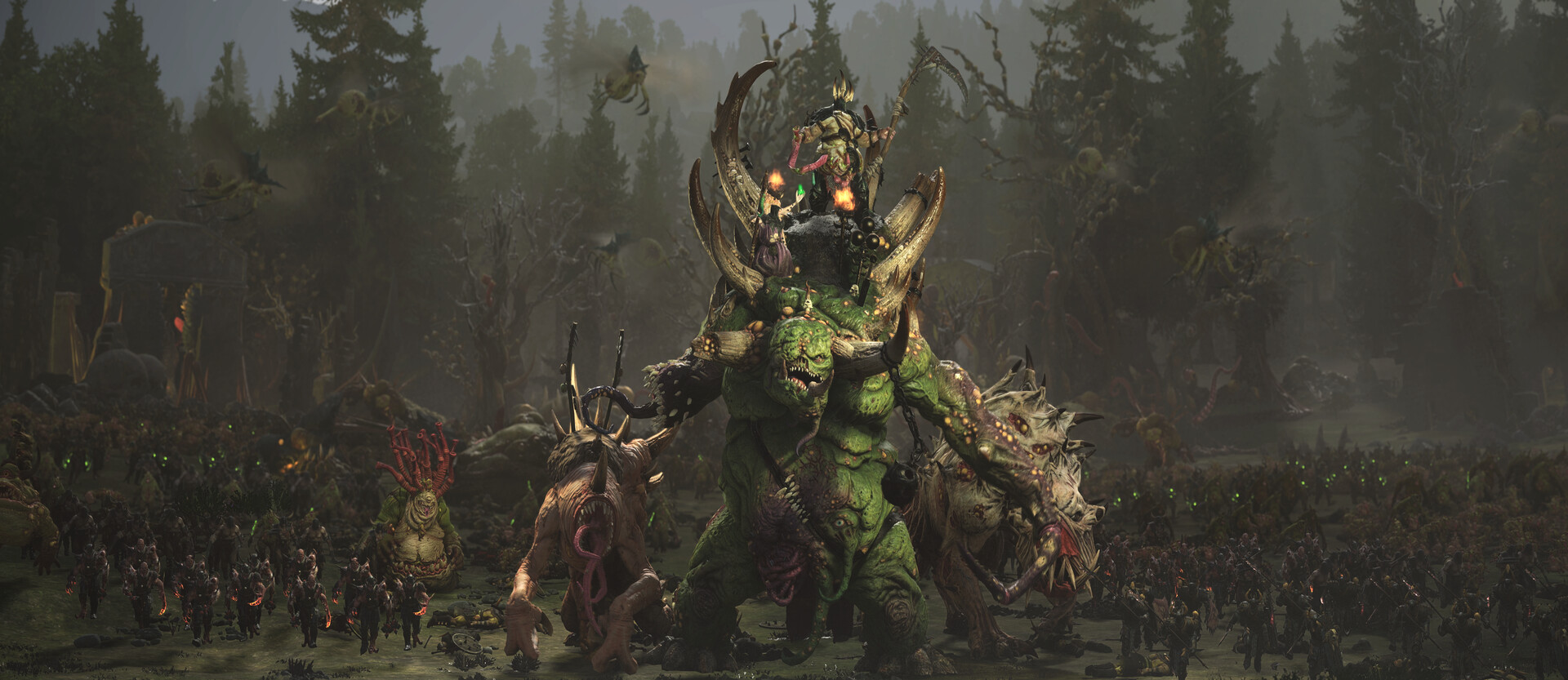
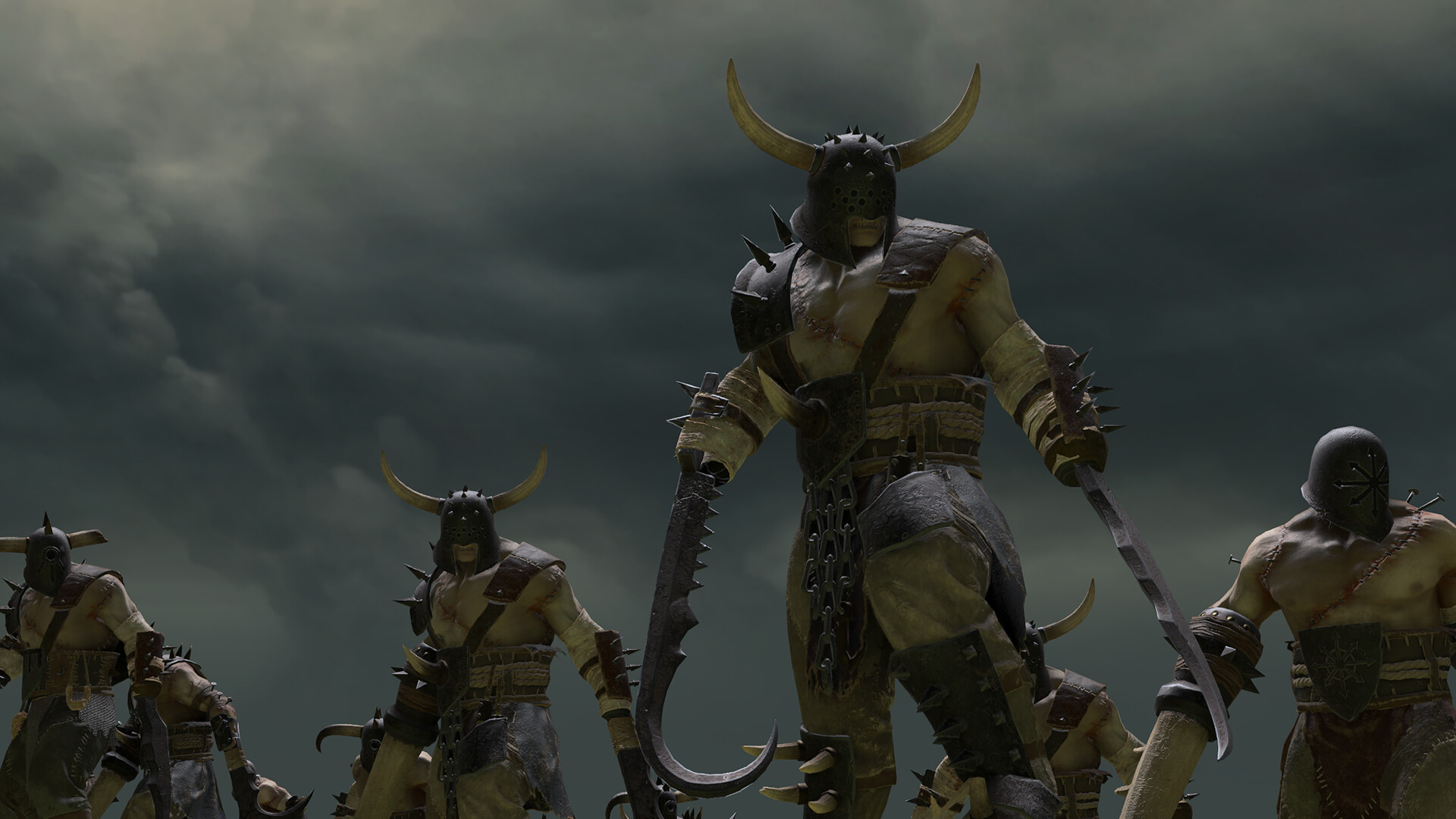
The Glottkin belong to the Warriors of Chaos and serve Nurgle. Their campaign retains the logic of warbands and Chaos fortresses rather than simply copying a Nurgle daemon faction. The three brothers fight together as a single unit. Otto wields his scythe and Ethrac casts spells from Ghurk’s shoulders, Ghurk having become a true monster. Their partnership immediately conveys the brutality and resilience expected of these plague champions.
Souls harvested in battle fund Nurgle’s gifts. They are spent on strengthening characters, triggering rituals or establishing Gardens of Corruption. These gardens turn conquered settlements into daemon recruitment sites, with cyclical operation inherited from Nurgle. Their limited number means placement deserves thought. The aim is to support advancing armies without scattering the installations far from useful fronts.
The mix of troops is the campaign’s main contribution. Mortal warriors can progress through the warband upgrade system, while gardens allow more daemons to be recruited. Putrid Blightkings strengthen resilient infantry, monsters broaden offensive options, and the Chaos Siege Giant specialises in destroying walls. There is enough to build varied armies without losing Nurgle’s identity: endure, weaken and eventually crush whatever resists.
The start in Norsca involves subjugating tribes and developing a force able to march south into the Empire. For those familiar with the Warriors of Chaos and Nurgle’s various incarnations, that progression remains familiar. The gardens enrich it and the brothers make an excellent centrepiece, but the change is less profound than with Nagash or Thanquol. A solid addition for returning to Chaos, rather than a complete transformation of its playstyle.
Boris remains more conventional
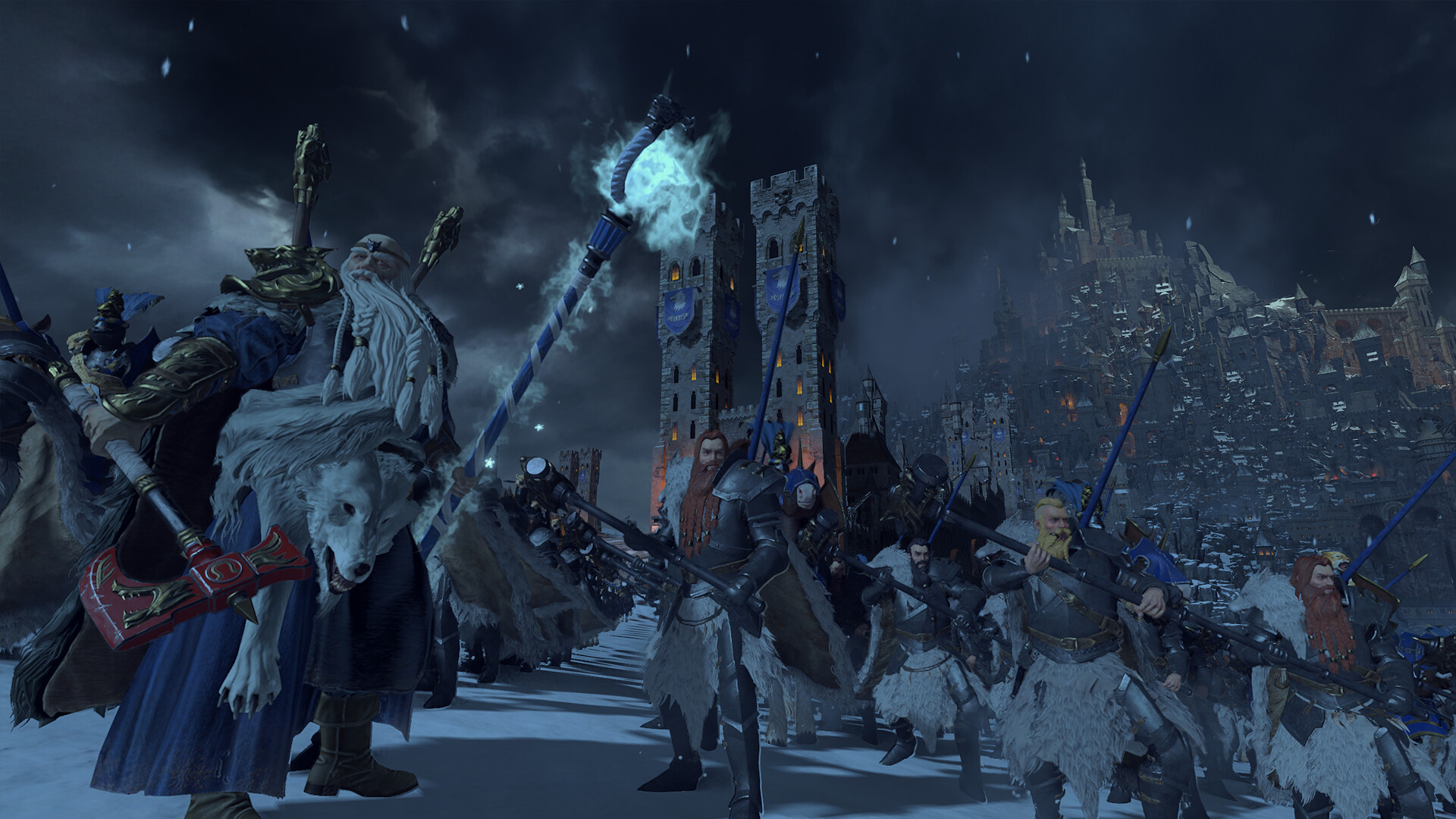
Boris Todbringer rules Middenland in the northern Empire and maintains an old rivalry with Khazrak, the Beastman leader threatening his lands. His campaign combines territorial defence with the development of the Great Temple of Ulric, god of wolves, winter and war. Victories generate fervour, spent on improving six shrines and obtaining military, economic or diplomatic benefits. Winter rites extend that religious identity.
The system is easy to understand and properly connects combat to faction development. Beastmen threats also give Boris a reason to watch his own lands rather than endlessly conquering elsewhere. The temple, however, remains mainly a progression of bonuses. It has neither Thanquol’s risky operations nor Nagash’s possibilities for recombining armies. The campaign is coherent, but less inventive than its companions in the pack.
Fortunately, new troops prevent it from feeling like merely another Imperial starting position. The Teutogen Guard provides heavy infantry able to hold and strike protected opponents. Knights of the White Wolf favour sustained combat, while priests of Ulric support soldiers in melee. Boris thus pushes the Empire towards a more aggressive close-combat army without removing its cavalry, artillery or magic.
The troops’ roles are easier to understand than Nagash’s layered systems. That is not enough, however, to conceal the difference in depth between four packs sold at the same price. Boris finally gives Middenland a real identity, but his content remains the least convincing for anyone primarily seeking a mechanically new campaign.
The real late-campaign overhaul is free
Update 9.0 adds three endgame scenarios: the Chaos invasion, the Skaven onslaught and Nagash’s ascension. They accompany the DLC’s release but are not part of its paid content. That matters because they address an old Immortal Empires problem: once the economy is established and the armies effective, conquest can continue for a long time without seriously putting victory in doubt.
These scenarios provide more structured objectives than the mass appearance of enemy armies. The Chaos invasion requires weakening Archaon’s forces and destroying his fortresses before facing him. The Skaven onslaught demands that attacks be contained and information gathered about enemy plans. Nagash gathers the dead and imposes a progression towards his Black Pyramid. Devastation also changes the invaded world. Damage thus affects the campaign rather than disappearing with the final army.
The appeal is real: accumulated power finally serves to answer an organised threat. A crisis does not, however, turn every movement or intermediate conquest into a fascinating decision. It revitalises the campaign without removing all its repetition. Fortunately, the ability to disable or customise these events preserves the freedom to fight a more conventional war.
The same update reworks victory conditions and the Vampire Counts while adding Neferata. She is a free lord whose availability depends on owned content; buying Nagash notably unlocks her. She therefore does not constitute a fifth pack sold within Lords of the End Times. For an already equipped player, these changes can justify returning without any purchase.
Verdict
Nagash finally lives up to his standing
9/10
Lords of the End Times earns a place among Total War: WARHAMMER III’s most interesting additions. Nagash offers an ambitious campaign connecting his rise in power to the development of an entire undead empire. Thanquol turns Skaven treachery into entertaining, useful decisions. The Glottkin round out the Warriors of Chaos well, and Boris gives Middenland an army and objectives of its own. The pack therefore offers much more than four characters placed in otherwise unchanged campaigns.
The package remains uneven, with a distinctly more conventional Boris and Glottkin who feel less novel to Chaos veterans. The new lords’ power also widens the gap with older ones, while remaining bugs and the weight of certain systems prevent an unreserved endorsement. The free update markedly improves the context, but should not inflate the DLC’s value. For the purchase itself, Nagash and Thanquol are the two priorities; the complete pack mainly makes sense for anyone genuinely planning to play all four campaigns.
Pros
- Nagash’s campaign and recruitment combining all three undead traditions
- Thanquol’s Grand Schemes genuinely integrate conspiracy into strategy
- Distinct armies and objectives for all four lords
- New units that enrich army composition
- Access to Immortal Empires with a single €8.99 pack
Cons
- Boris’s less inventive campaign despite an identical individual price
- The Glottkin feel less novel to Warriors of Chaos veterans
- Power and depth that widen the gap with older lords
- Systems and an interface that remain intimidating for newcomers
- Quest and Bone Giant access problems still identified in version 9.0.2
More in Video games
Full library 8/10
Culdcept Begins
SWITCH 7/10
Brigandine Abyss
XBOX 10/10
World of Warcraft: Forever
PC 8.5/10
Warhammer 40,000: Boltgun 2
PC 7/10
Revisited | Warcraft III: Reforged
PC 7.5/10
Warcraft III Reforged: Forsaken Kingdom
PC 8.5/10
World of Warcraft: Midnight
PC 8.5/10
Village in the Shade
SWITCH 5.5/10
Warrior Cats: Clans of the Forest
SWITCH 6.5/10