
Culdcept Begins
A toll, a monster, and forty cards to get out of trouble
Score: 8/10
Images and videos


At a glance
We liked
- Cards change the way the board is played
- Short duels that reward preparation
- Forty-card books that demand real choices
- A campaign that teaches the rules well
We liked less
- Luck can decide the outcome after an already lengthy match
- No French localization
- No same-device multiplayer
- The story doesn't live up to the game it introduces
 By Farrel Grimwood · published · 4 min read
Contents
Nearly thirty years ago, Omiya Soft found a way to make a toll interesting: put a monster on it and let whoever owes money try to kill it. That was the starting point for Culdcept. Neos returns to the series ten years after Revolt, with a new campaign and rules that make it possible to get started without having learned the ropes in the earlier games.
Culdcept Begins still has a board, dice, and properties worth investing in before anyone else does. But the best space on the board can become an opponent’s best investment if they have the cards to take it. That’s different enough from Monopoly for the comparison to last a turn or two. When dice and card draws get involved, though, what still separates a good plan from a lucky accident?
Business starts at the academy
Kamru is a young Cepter, one of the people able to use the cards left by a destroyed book of magic. He arrives at the academy with a name to live up to; his father left rather more of an impression than an ordinary student. While Kamru learns to match his classmates, a more serious threat is gathering around the school. Judging by the campaign, there’s hardly a dispute on the whole continent that can’t be settled with a few creatures and a die.
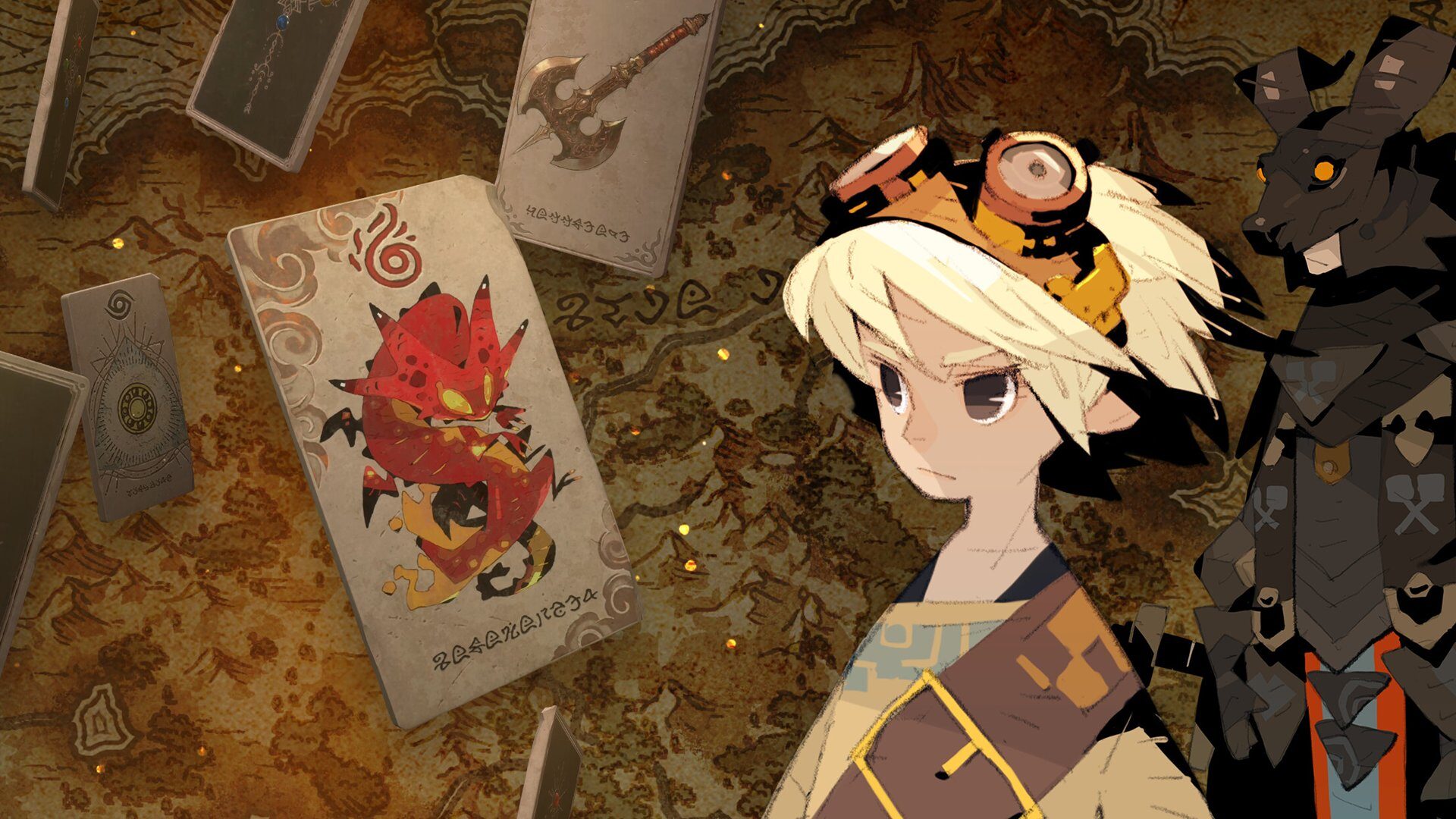
The academy is mainly useful for taking the time to explain what happens on the board. The early matches give the rules a purpose as they’re introduced. Between games, the story has a harder time justifying its conversations. Student rivalries give a good reason to play the next match. Once war gets involved, the dialogue and stiff poses do little to give it more weight. The card art has more character, with creatures that look as if they could be cut out and set on the board. There are more ideas in some of their silhouettes than in a whole exchange between rivals.
A toll is set up the turn before
A turn starts with drawing a card, then allows a spell before the die is rolled. An empty space can be claimed by placing a creature on it. On an opponent’s space, the choice is to pay or send in a creature. The attacker usually strikes first, but the defender benefits from matching the land’s element, and either side can play an item. Winning a standard match requires reaching a magic total that includes the value of the land and then returning to the castle. Owning half the board is no use if the properties bringing in money can’t be defended.
The duel itself is too short to rescue a poor decision. When a rival is holding a weapon, it’s not the time to sink all the savings into land they can capture. There may be a better investment elsewhere, or a reason to save enough magic to equip the defender. Conversely, Holy Word 3 fixes the die roll at three, making it worth counting the spaces before casting it. Deciding whether an opponent is worth inviting onto a property is more interesting than waiting for them to be unlucky enough to land there.
Luck is still frustrating when it settles a match that’s already gone on too long. A toll can be avoided at a fork, an attack planned, or enough kept in reserve to pay. None of that guarantees that the right card will turn up. When it all comes down to the last roll after turns spent estimating land values and the other player’s hand, the result can feel less clever than the match leading up to it. Four players can each take their time, and the evening can run long as well. At least other people’s duels give everyone something to watch.
Forty slots and not one more
A Book is the deck of forty cards prepared before a match. Neos provides two to start with, then lets players buy packs and individual cards using in-game currency. Putting every favorite creature in one book is a good way to learn there isn’t always enough magic to summon them. Too many items, and the hand is full of fine armor with nobody to wear it. The flashy card that never gets used soon gives way to the one that takes a space on the first turn.
The campaign offers enough time to try these changes, and challenges keep solo play going. Up to four can play online, but there’s no taking turns on a single device. For a game that gets so much of its appeal from reading the person on the other side, that’s a loss. The other hurdle for French-speaking players is that the game has no French localization. Missing part of a conversation doesn’t spoil much. Misreading a card effect can cost a property that took ten turns to build. A fair amount of reading, particularly at first, is the price of getting the most from what Neos has put back on this board.
Verdict
The board game strikes back
8/10
Culdcept Begins is an excellent introduction to a series that has never been short of ideas. The campaign teaches how to take a property. The game really gets good once it becomes clear which one to give up, which one to defend, and what to keep in hand to make an opponent think twice about taking it.
A die roll can still ruin a match that has gone on too long, the English text needs careful reading for a French-speaking audience, and the lack of same-device multiplayer is difficult to defend. But with spells that bend the rules of the board and forty cards to reconsider after a defeat, a better idea for the next match never takes long to come. That's the best reason to give it the time.
Pros
- Cards change the way the board is played
- Short duels that reward preparation
- Forty-card books that demand real choices
- A campaign that teaches the rules well
Cons
- Luck can decide the outcome after an already lengthy match
- No French localization
- No same-device multiplayer
- The story doesn't live up to the game it introduces
More in Video games
Full library 9/10
Total War: Warhammer III – Lord of the End Times DLC
PC 7/10
Brigandine Abyss
XBOX 8.5/10
Village in the Shade
SWITCH 5.5/10
Warrior Cats: Clans of the Forest
SWITCH 6.5/10
Demons’ Night Fever
SWITCH 5/10
The Witch’s Bakery
SWITCH 7/10
Joe & Mac Retro Collection
SWITCH 6/10
Qliphah in Providence’s Shadow
SWITCH 8/10
Woodo
SWITCH 6/10