

Woodo
A holiday in pieces
Score: 8/10
Images and videos


At a glance
We liked
- Wooden models that come to life during assembly
- Closets and interiors that add interest to the 3D view
- Precise sound effects and music that leaves room for them
- Hints and settings that prevent a tiny piece from bringing progress to a halt
We liked less
- The camera becomes cumbersome in large scenes
- The narration sometimes resumes in the middle of a search
- Some sequences of placing small pieces become repetitive
 By Farrel Grimwood · published · 4 min read
Contents
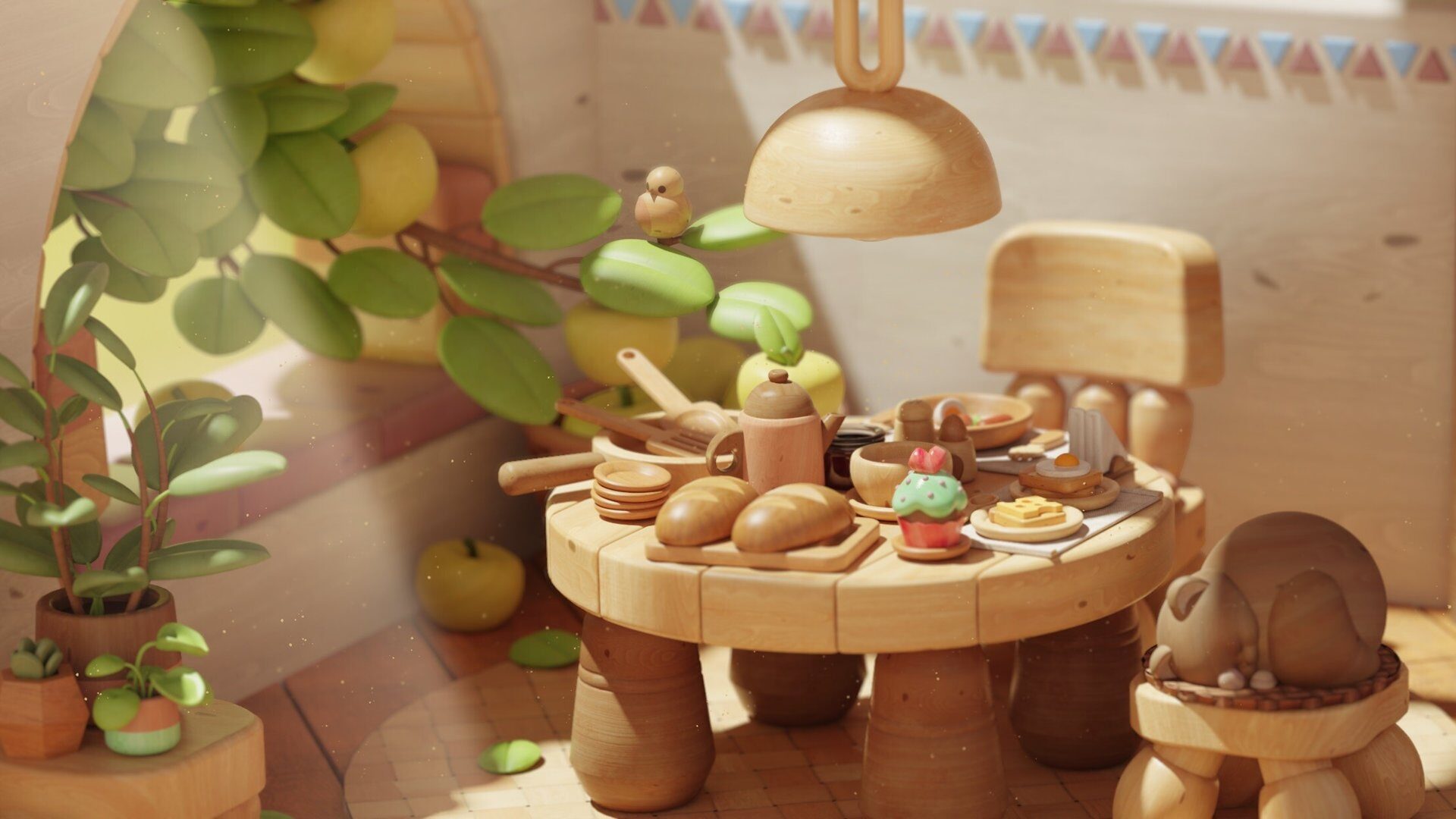
Tiny Monks Tales has chosen a curious way to tell the story of a child’s vacation. In Woodo, the child is not steered from one end of the village to the other. Instead, the places she visited are rebuilt, along with the little objects she left there. A chair, a cup, a drawer to open and, sometimes, a whole room that we hadn’t seen when turning the model. For its first game, the studio decided to incorporate a story into things that we usually don’t pay any attention to.
The game will be released this September 16, 2026 by Daedalic Entertainment. It follows Foxy, a city girl who comes to spend the summer in the countryside. She takes her tablet and pencils, meets Ben, a frog who knows the area, and ends up finding something to do without needing what she had planned. Nothing too earth-shattering, and that’s a bit of a risk. When an entire adventure hinges on the joy of piecing together these kinds of memories, how long do we want to look for where the next piece goes?
A holiday rebuilt by hand
Foxy doesn’t have a big mission to complete when she arrives at the village. She doesn’t really know what to do with her summer and Ben shows her what there is to see. It’s a friendship that is built over ordinary days, on a scale that is very suitable for models. An interior matters because we recognize the belongings of the people who live there. The goslings that we come across throughout the scenes end up being part of the scene in the good sense of the term: we notice what they are doing, even when we came looking for something else.
The narration follows the progression in each painting. It’s a good idea to not keep the story separate, but the two activities don’t always go together. The voice resumes while we are still looking for the corner where to place a small piece of wood. Unless you let go of the room and listen, you risk missing the thread of what Foxy is saying. The story is simple enough to pick up again along the way. It is also more touching when a scene has time to come to life before our eyes, without the voice having to tell us immediately what to remember about it.
Not everything is on the table
At first, the model is almost colorless and the available objects are stored to the side. We take one, go around the board and looking for the missing shape. The piece reorients itself when you move it above the scene. If it is in the right place, it snaps into place and regains its color with a little click. We understand what needs to be done before the game even really begins: the title itself is made up of letters that need to be put back in place. It’s more effective than a tutorial, and the sound of the wood already does a good part of the work.
You quickly see where to put a cup, less quickly where a piece of flooring goes. The best scenes play on what the model is capable of hiding. A cupboard can contain pieces and a key can give access to an entire section of the scene. The multi-story mill takes the idea quite far: the silhouette we see from the outside doesn’t say much about the rooms that still need assembling inside. This is where the game really deviates from the flat puzzle. There is a reason to look at the furniture and openings instead of scrolling through shapes until one matches.
The animations extend this idea without overcrowding the scene. After a placement, an object moves or a small scene resumes where it left off. You can see the grain of the wood and the rounded edges, even on elements that you barely notice in another game. The music knows when to leave the sounds of the objects in the foreground. And when the model is finished, the photo mode gives time to return to the details that we didn’t look at when looking for the solution.
The mill also has a reverse side
The camera becomes more cumbersome as the scenes grow. On a small board, the rotation is enough to rule out any doubt. On several floors, you sometimes have to turn, zoom in and shift the centre of the view just to examine the back of a room. Touch makes picking up an object more direct, but it doesn’t change this framing problem. Once the piece and its intended location have been identified, having to start again to aim for the right corner no longer has much to do with the pleasure of solving a puzzle.
Hints prevent getting stuck on the last detail and you can adjust the force with which the pieces are attracted to their location. These are good choices for a game that has nothing to gain from letting you struggle with a floorboard. They also highlight the difference between two forms of difficulty. Opening a piece of furniture after realising the scene is incomplete is worth spending time on. Placing a series of small, almost identical elements once the rule is clear is much less rewarding. Woodo is much better when it gives a new reason to look at the model than when it just enlarges it.
Verdict
A charming toy that delivers on its promise
8/10
Woodo understands what makes a model fun. We want to look through the openings, lift what is lying around and see what moves once the object is placed. The game does enough with a simple story because the locations already tell a lot of what Foxy discovers in the countryside.
Big scenes too often require fighting with the camera and the final small pieces can drag on. It doesn’t take away much from the best scenes. We come there for the pleasure of assembling, searching and hearing the wood click, and in this area Tiny Monks Tales has done better than a hidden object game.
Pros
- Wooden models that come to life during assembly
- Closets and interiors that add interest to the 3D view
- Precise sound effects and music that leaves room for them
- Hints and settings that prevent a tiny piece from bringing progress to a halt
Cons
- The camera becomes cumbersome in large scenes
- The narration sometimes resumes in the middle of a search
- Some sequences of placing small pieces become repetitive
More in Video games
Full library 8.5/10
Village in the Shade
SWITCH 5.5/10
Warrior Cats: Clans of the Forest
SWITCH 6.5/10
Demons’ Night Fever
SWITCH 8/10
Culdcept Begins
SWITCH 5/10
The Witch’s Bakery
SWITCH 7/10
Joe & Mac Retro Collection
SWITCH 6/10
Qliphah in Providence’s Shadow
SWITCH 6/10
Barbarian Saga: The Beastmaster
SWITCH 5/10
Disgaea Mayhem
SWITCH 5/10