
Qliphah in Providence’s Shadow
An original combat system that struggles to find its rhythm
Score: 6/10
Images and videos
At a glance
We liked
- Scheduled attacks and colour-coded counters give combat a distinctive identity.
- The coordination of Rena and Souma allows for interesting tactical sequences.
- The Aberrations and the police setting establish an effective horror atmosphere.
- French text
We liked less
- Too much waiting in certain duels, too much information to follow against several enemies.
- An investigation that relies more on reading than on deduction.
- Skill development discourages replacing familiar techniques.
- Reused environments, an uneven visual finish and too little variety of musical themes.
 By Farrel Grimwood · published · 7 min read
Contents
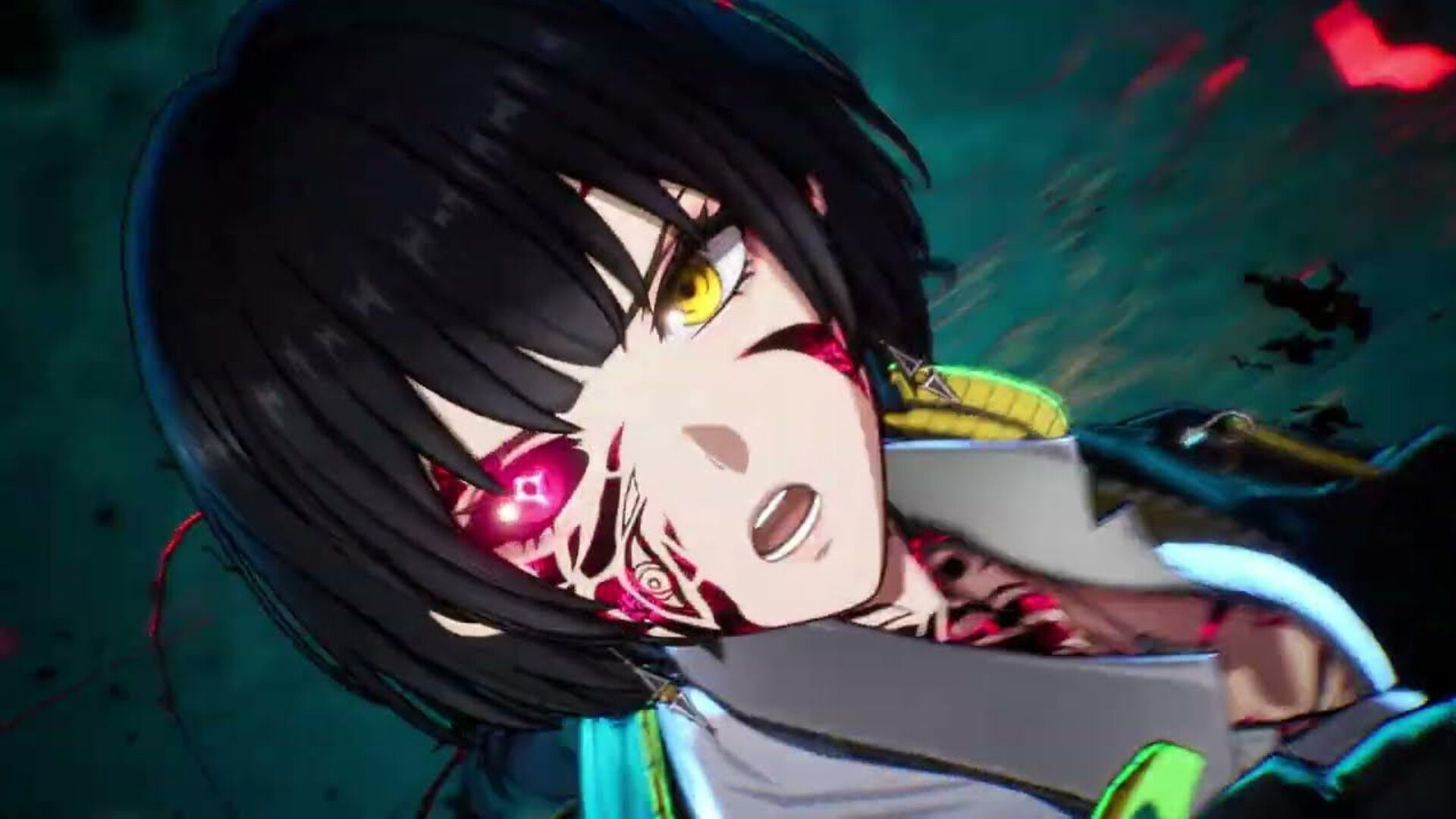
With its distinctly anime-style characters and spectacular attacks, Qliphah in Providence’s Shadow could easily pass for an action-RPG. However, it requires preparing attacks rather than rushing the opponent, since the attacks are programmed on a timeline which also indicates the enemy’s intentions.
Developed by UnitePlus and published by Arc System Works, the game offers an entirely single-player adventure in which you control two characters, Rena and Souma, responsible for investigating the phenomena ravaging Tokyo.
Between the clashes, this investigation takes the form of a visual novel, with a lot of dialogue and travel limited to a map. The contrast is quite marked between these long reading phases and the battles which multiply the commands, effects and information to monitor.
On paper, the combination can work, especially since the counter system has good ideas. But is it enough to make you want to continue an adventure whose pace remains so irregular?
A Tokyo coming apart
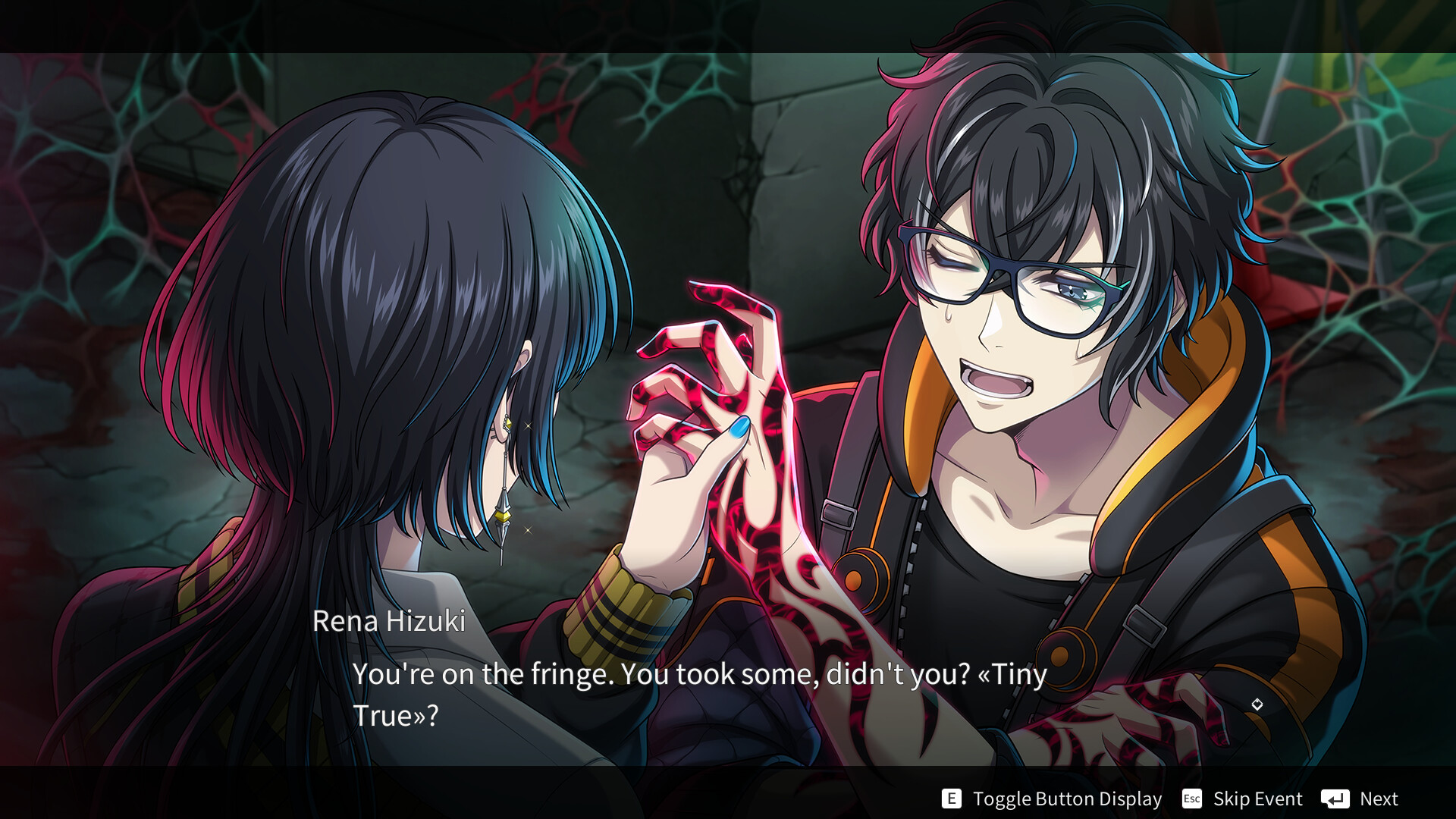
The story takes place after a catastrophe that has begun to destroy reality itself. Tokyo is invaded by Aberrations, monstrous creatures that Souma Hoshigami finds himself confronted with during his work as a deliveryman. He survives the attack, but his body begins to transform, bringing him into the care of Rena Hizuki, an investigator from a brigade specializing in these phenomena. He seeks to understand what has become of him, while she must trace the origins of the mutations.
The storyline connects their situation to a drug circulating in the city, to marks appearing on bodies and to the activities of a cult. We find several familiar elements of horror manga, in particular this proximity between the powers of the heroes and the transformations which destroy the others. The police setting gives a reason to be interested in the victims as much as the monsters, which makes the investigation more attractive than a simple succession of creatures to be killed.
Rena and Souma also offer a complementary point of view on this universe: she already knows the dangers of Tokyo, while he discovers the consequences of his new condition. However, their relationship deserved more space. The story spends a lot of time explaining supernatural phenomena, ongoing cases and the rules of this world, but dwells less on what brings its two characters together. We may want to understand the catastrophe without becoming as attached as we would like to those who face it.
A heavily guided investigation
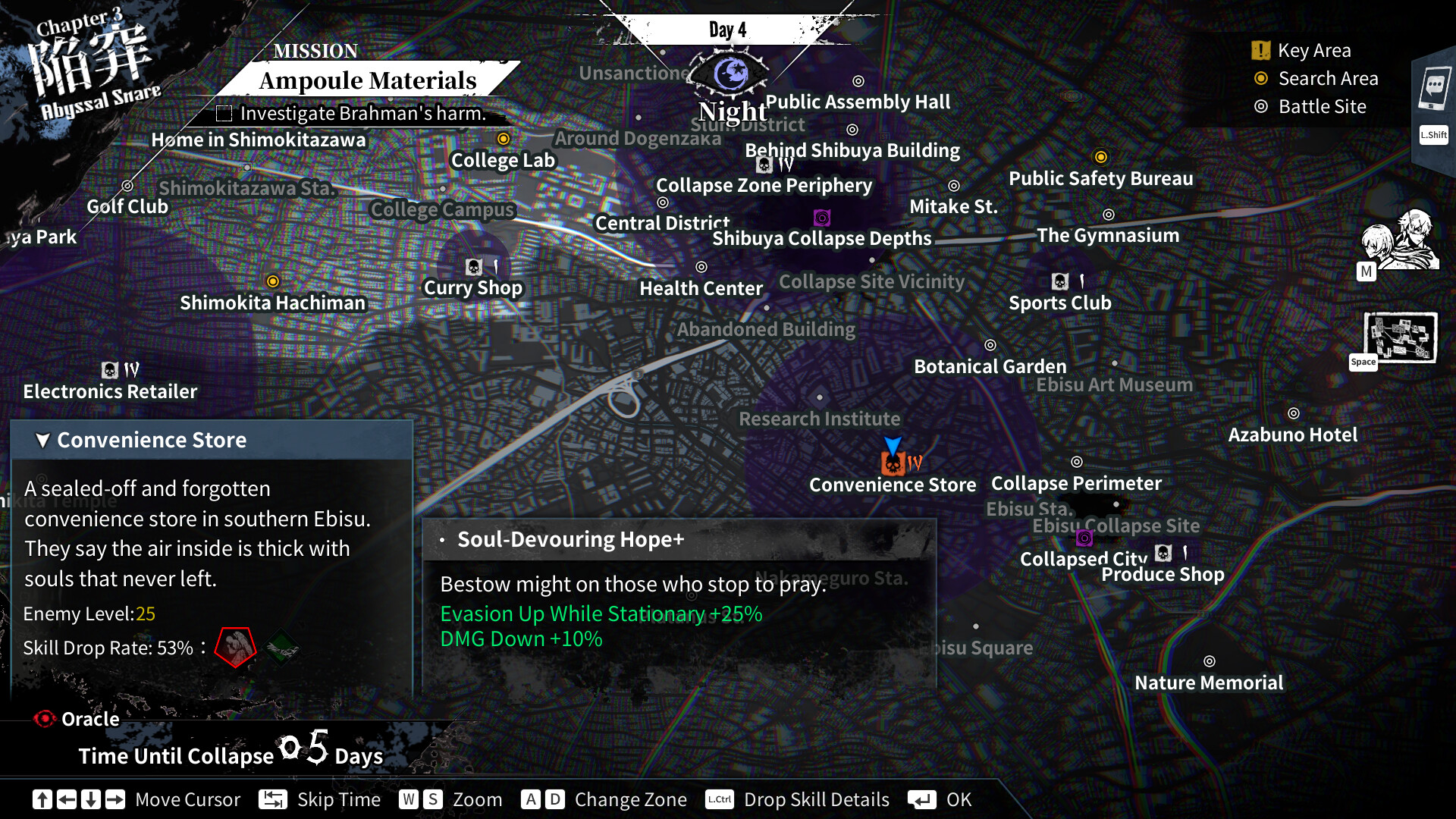
To move forward, we choose a location on the map of Tokyo, then we follow the events taking place there through illustrated dialogues. Investigations occupy daytime or nighttime slots, while case files keep the collected information available. You must therefore read and remain attentive to understand the links between the cases, but that does not make Qliphah a real investigation game.
The problem is that the narrative largely handles the deductions. We select our destinations and consult the documents, without having many opportunities to compare clues or defend a hypothesis. The revelations arrive throughout the scenes and fights, with this impression of following Rena’s work rather than doing it yourself. That approach suits a visual novel, but inevitably limits the appeal of its detective elements.
The presentation also ends up accentuating this passivity. The same backgrounds often recur and the conversations must almost alone convey almost every development. With tighter exchanges, the mystery could more easily sustain the desire to continue. As it stands, explanations regularly take precedence over events, while the game needs to move its story forward between encounters.
Counters that need preparation
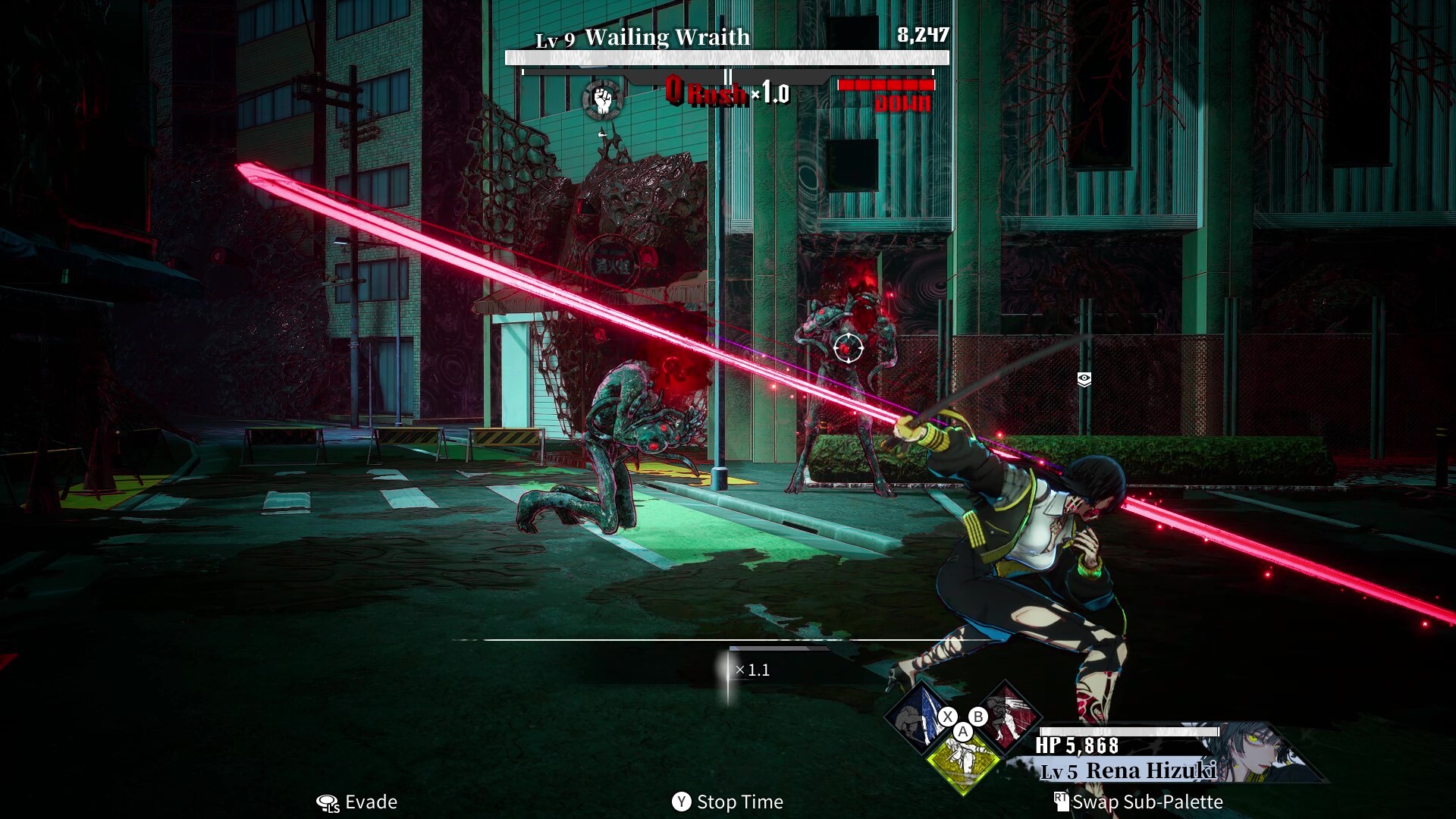
The battles are based on a timeline placed in the center of the screen, where the actions of the characters and those of the targeted enemy scroll. Each skill requires a set delay before execution, and it is the arrival of its bar in the center which triggers the blow. We must therefore choose our attacks according to what is going to happen, with the possibility of slowing down or suspending time to prepare our response.
Counters use three colors: red, blue and yellow. To interrupt a red attack, you must make a red skill coincide with it on the timeline; the other two colors follow the same rule. The timing thus depends on the delay of the chosen skill, not just on the moment when the button is pressed. This is what makes the system interesting: you prepare your counter in advance, then you try to place other attacks without compromising this response.
Each skill also has a cooldown. It is still possible to use it again before the end of this cooldown, but it then inflicts less damage and its counter window becomes narrower. We can therefore maintain the pressure instead of waiting for everything to be available, provided we accept more demanding execution. White attacks force you to use guard or dodge, since they cannot be countered with colored skills.
Once these rules are understood, Qliphah allows you to build truly satisfying sequences. We spot an upcoming attack, keep the skill needed to counter it, and use the remaining time to continue doing damage. This way of managing combat gives interest to very simple decisions, such as delaying a blow or preferring a faster attack. It takes time to get used to, but the system has enough depth to warrant paying attention.
Two characters to manage simultaneously
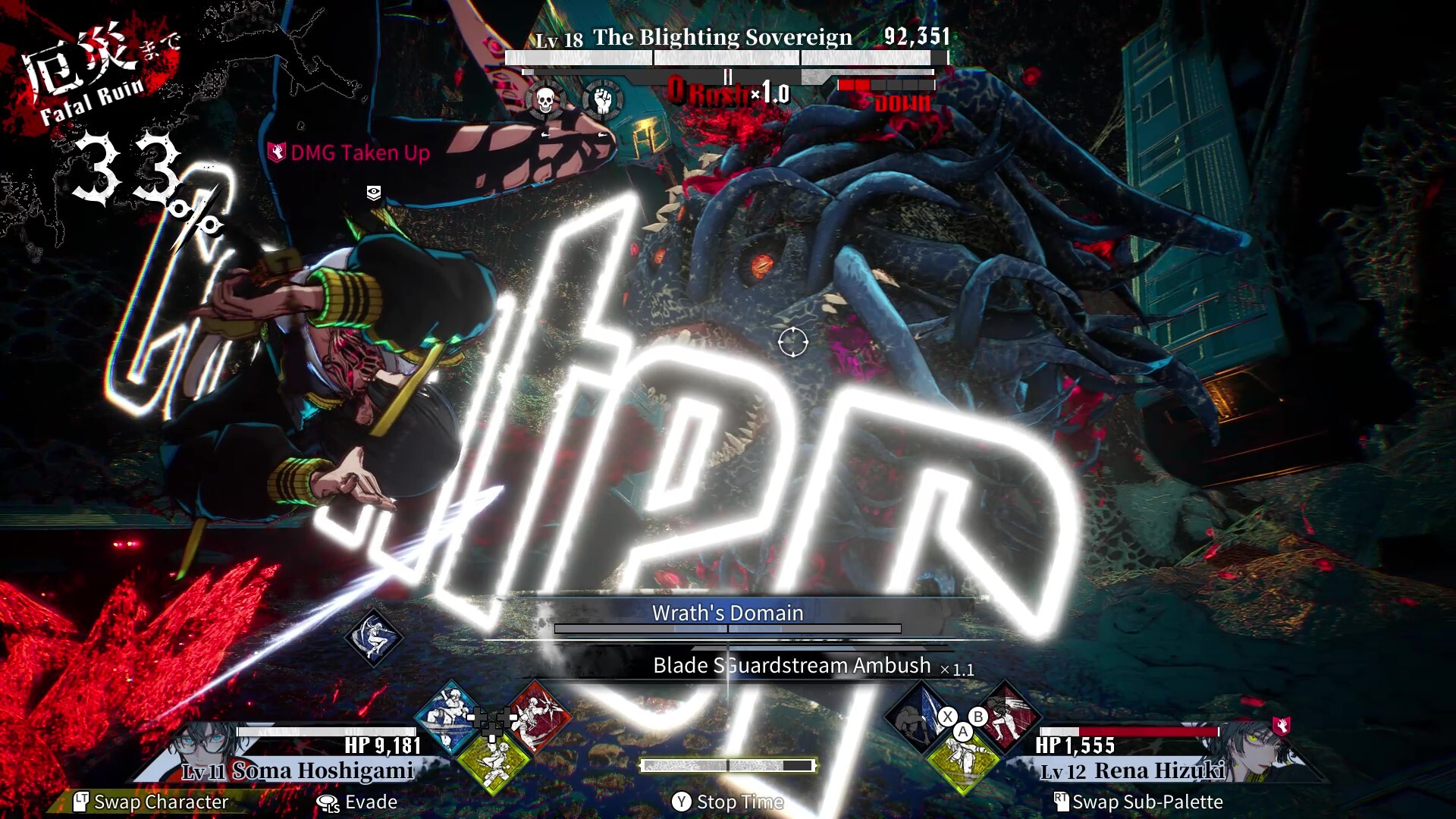
Rena and Souma each have their own skills, which the player must coordinate during combat. Some enemy attacks even require a simultaneous counter from both heroes, called Buddy Counter, which requires monitoring the possibilities of each. The presence of the duo therefore brings something other than a partner responsible for automatically striking: the best sequences require preparing the two characters and making their actions coincide.
Counters also allow you to launch certain enemies into the air to extend combos, or to deplete their stagger gauge when they have one. Once the opponent is vulnerable, critical hits become an opportunity to increase damage before finishing with a special attack. This is where the game becomes most convincing, because the success of a counter results in an offensive sequence that you have prepared yourself.
The difficulty is to maintain this control when several enemies attack. You have to change targets, identify the next color, check cooldowns and continue to manage the two characters, while the visual effects occupy a good part of the screen. The game’s explanations are not always enough to make all these elements obvious, and the first failures also serve to understand what the tutorials explain poorly. Slowing down fortunately helps analyze the situation, but the whole thing remains more confusing than it should be for a system based on anticipation.
Conversely, duels can become too slow. Since the counter is particularly effective, it is tempting to keep your skills available while waiting for the opponent’s attack, especially when you still have difficulty controlling the delays. Faced with a less aggressive enemy, this caution produces long moments of waiting. The combat nevertheless offers ways to maintain your combos, but its defensive operation easily encourages you to be patient rather than taking the risk of spoiling your next response.
Progression that reinforces habits
Investigations unlock skills, while investigation points are used to develop them. You can choose attacks, healing and buffs which notably improve speed or damage, then complete the set with passive effects. Character preparation therefore matters: a build capable of quickly exploiting an opening helps prevent already lengthy encounters from dragging on.
However, skill progression discourages experimentation. Active techniques gain levels as they are used, so that an attack kept from the beginning benefits from an investment that new techniques have not yet received. Replacing an effective skill then requires additional time and resources, without the result necessarily appearing more interesting. You easily end up keeping your familiar attacks and your speed or damage buffs, while the game offers more combinations.
The ratings obtained after the fights at least give a reason to work on your combos and seek better execution. This pleasure of optimization exists, but it comes up against the limited variety of encounters. The campaign lasts around twenty hours, with variations depending on the difficulty and additional activities, and certain situations recur too often to remain stimulating until the end. Reducing the difficulty shortens the fights and makes it easier to access the rest of the story, without correcting their lack of variety.
Strong monster designs, uneven presentation
The Aberrations are much more convincing than the settings in which we face them. Their distorted bodies and growths give the enemies a disturbing appearance that suits the storyline, while the heroes maintain a very anime aesthetic. This contrast works particularly well on bosses, whose silhouettes stand out more than the rather sparse environments that surround them.
The illustrations also suffer from inconsistent quality. Portraits used during dialogue, menu drawings and 3D models do not always appear to belong to the same set, weakening visual coherence. We can appreciate the drawing of a character and find the same character’s representation less convincing on the next screen. Special attacks provide spectacle, but their repetition also ends up reducing their effect as the fights progress.
The soundtrack accompanies the action well, with energetic combat themes that support combos well. The limited number of tracks is, however, noticeable over time, especially when the same music accompanies already repetitive confrontations. The Japanese voices give more presence to the dialogue scenes, and the Switch version benefits from French text, which counts in a game so talkative and so loaded with explanations.
Verdict
A good idea that is still poorly implemented
6/10
Qliphah in Providence's Shadow has a combat system worth discovering. The management of the timeline, the cooldowns and the coordination of Rena and Souma make it possible to prepare combos whose success really depends on what we have understood about the opponent. Its horror-manga atmosphere and strong monster designs give it enough appeal to sustain more than a few minutes of curiosity.
However, it struggles to maintain this interest throughout the adventure. The fights sometimes become too slow, sometimes too confusing, while the investigation leaves little room for deduction and drags on with too many explanations. It remains worth considering for those who enjoy understanding and optimising an unusual system. But its originality is not enough to make us forget the repetitions and the uneven execution: it is an interesting RPG to dissect, much less consistent in the enjoyment it provides.
Pros
- Scheduled attacks and colour-coded counters give combat a distinctive identity.
- The coordination of Rena and Souma allows for interesting tactical sequences.
- The Aberrations and the police setting establish an effective horror atmosphere.
- French text
Cons
- Too much waiting in certain duels, too much information to follow against several enemies.
- An investigation that relies more on reading than on deduction.
- Skill development discourages replacing familiar techniques.
- Reused environments, an uneven visual finish and too little variety of musical themes.
More in Video games
Full library 5.5/10
Warrior Cats: Clans of the Forest
SWITCH 6.5/10
Demons’ Night Fever
SWITCH 9/10
Dragon’s Dogma 2: Dark Arisen
XBOX 8/10
Verho – Curse of Faces
XBOX 8.5/10
Village in the Shade
SWITCH 8/10
Culdcept Begins
SWITCH 5/10
The Witch’s Bakery
SWITCH 7/10
Joe & Mac Retro Collection
SWITCH 8/10
Woodo
SWITCH 6/10