
TerraTech Legion
A few blocks, a lot of damage
Score: 8/10
Images and videos
At a glance
We liked
- Block-by-block construction really influences combat and driving
- Varied assembly possibilities, between firepower, speed and ramming
- Four pilots with distinct abilities and vehicles
- Planets and secondary objectives that encourage movement
We liked less
- A fairly unspectacular start to the attempt
- Workshop interruptions sometimes end up breaking the rhythm
- The machine becomes difficult to read under the densest crowds
- Permanent improvements require replaying familiar challenges
 By Farrel Grimwood · published · 5 min read
Contents
The Survivors-like formula, in which you control a character surrounded by an army is starting to have competition. To stand out from the crowd, a few additional weapons are no longer enough. Payload Studios has an idea well suited to the problem: take the vehicle construction from TerraTech and let the improvements physically modify the machine engaged in battle.
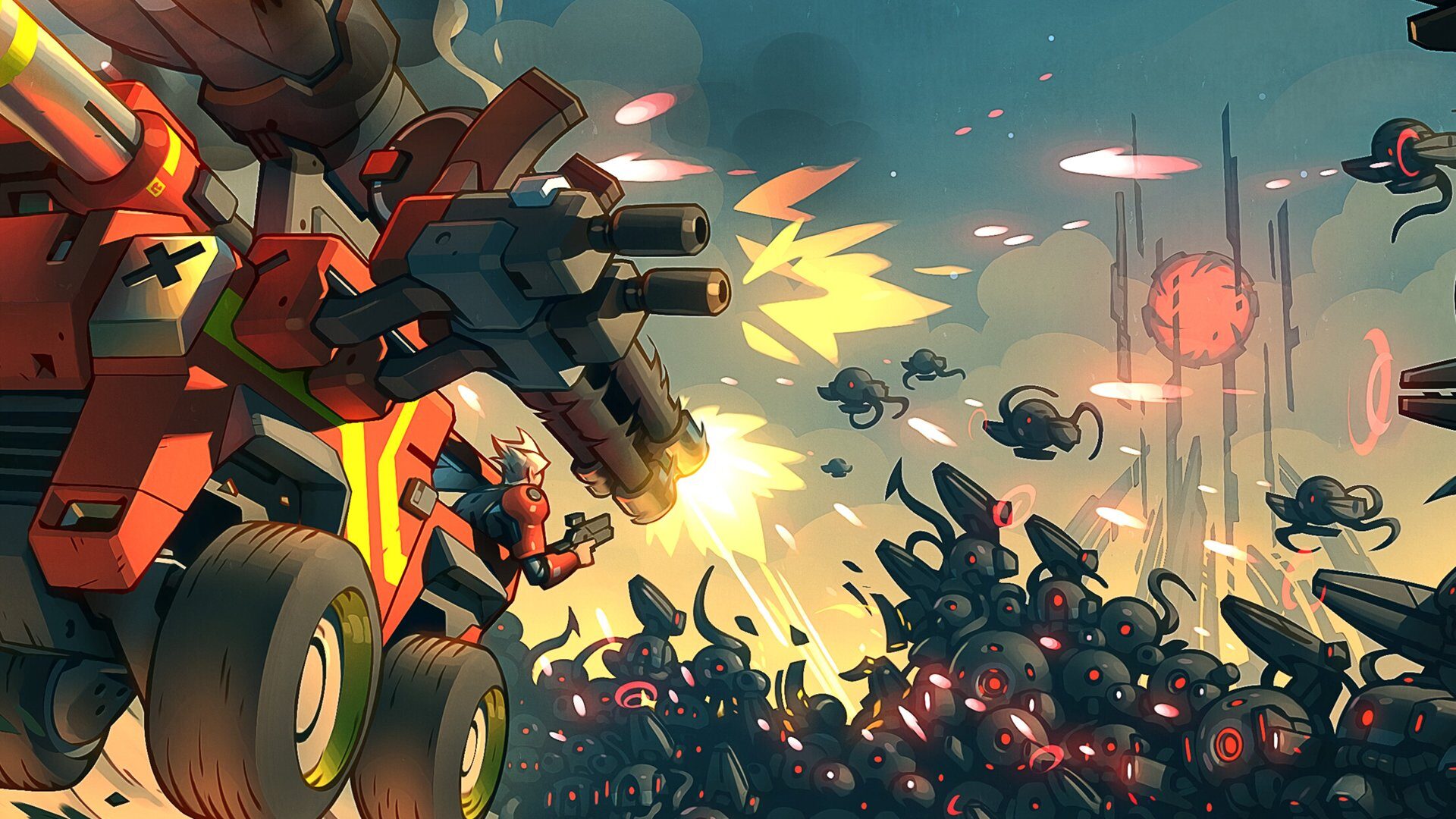
TerraTech Legion turns this idea into a roguelite survival game. A small machine arrives on a planet infested with robots, collects something to grow and ends up, with a little method, in a rolling assembly of cannons, wheels and defensive parts. Mechanical delirium seems attractive. But does the build bring any real depth to the robot slaughter?
The invasion serves as a pretext
The galaxy is undergoing the expansion of artificial intelligence which assimilates the resources and facilities encountered. The Legion advances from planet to planet, and a few rebel pilots take command of their Techs to resist it. The setting explains the presence of corporations and their technologies, without trying to develop a long plot between the missions.
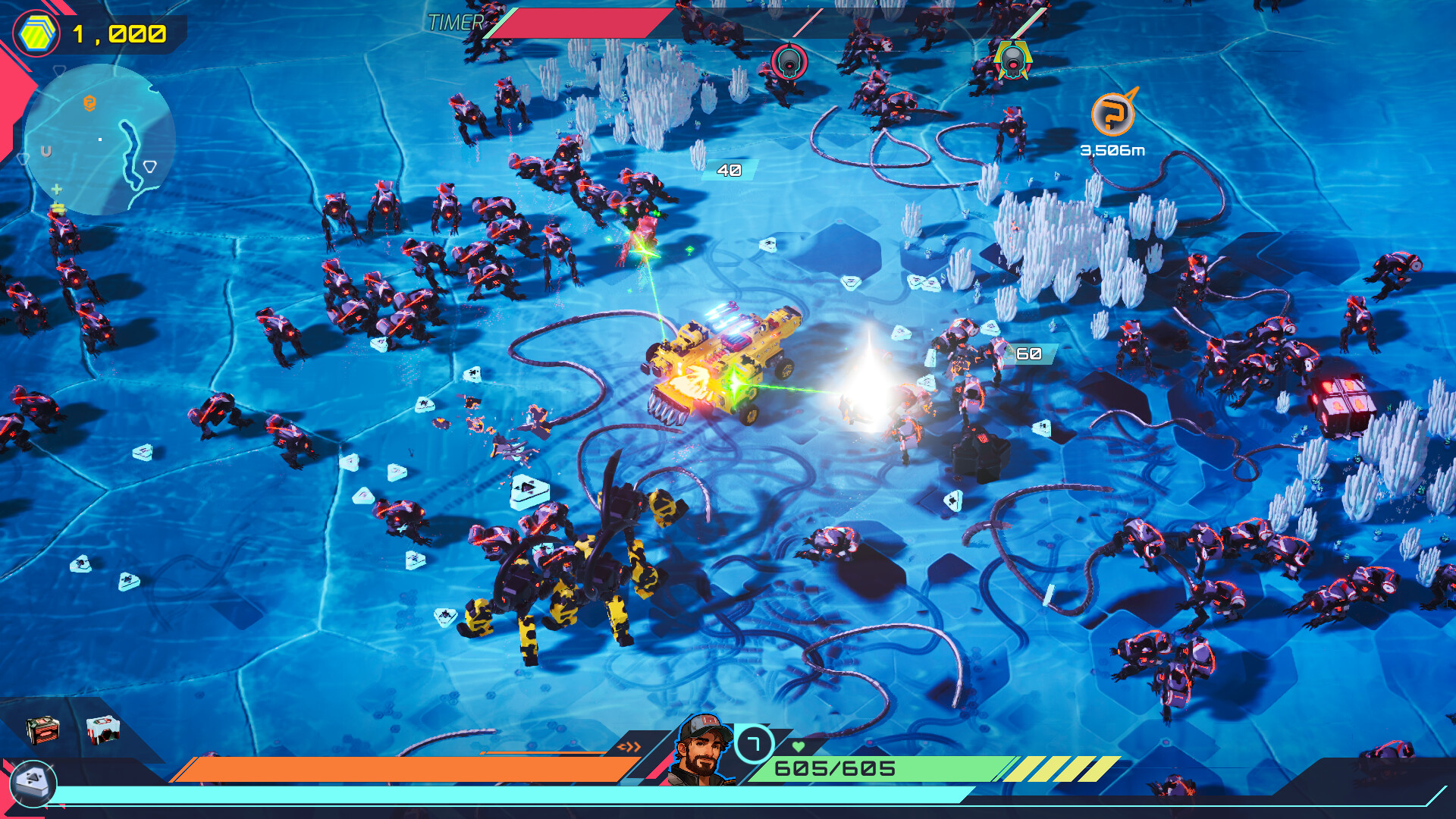
This choice suits the pace of the game. The objective is quickly understood: prepare a machine capable of surviving the waves, progress in the arena and face the boss of the planet. The attempts remain relatively short, around half an hour when they are completed. The interest comes from the transformation of the machine, with a modest start and a power that increases over the course of the fights.
The first moments require a little patience. The initial weapon lacks strength and the driving must compensate for this weakness. Pilot abilities help clear space while destruction provides the first resources. The contrast makes the build-up pleasant, but resuming this elementary phase with each attempt also ends up creating this little routine that is inherent to the genre.
An improvement, a place to find
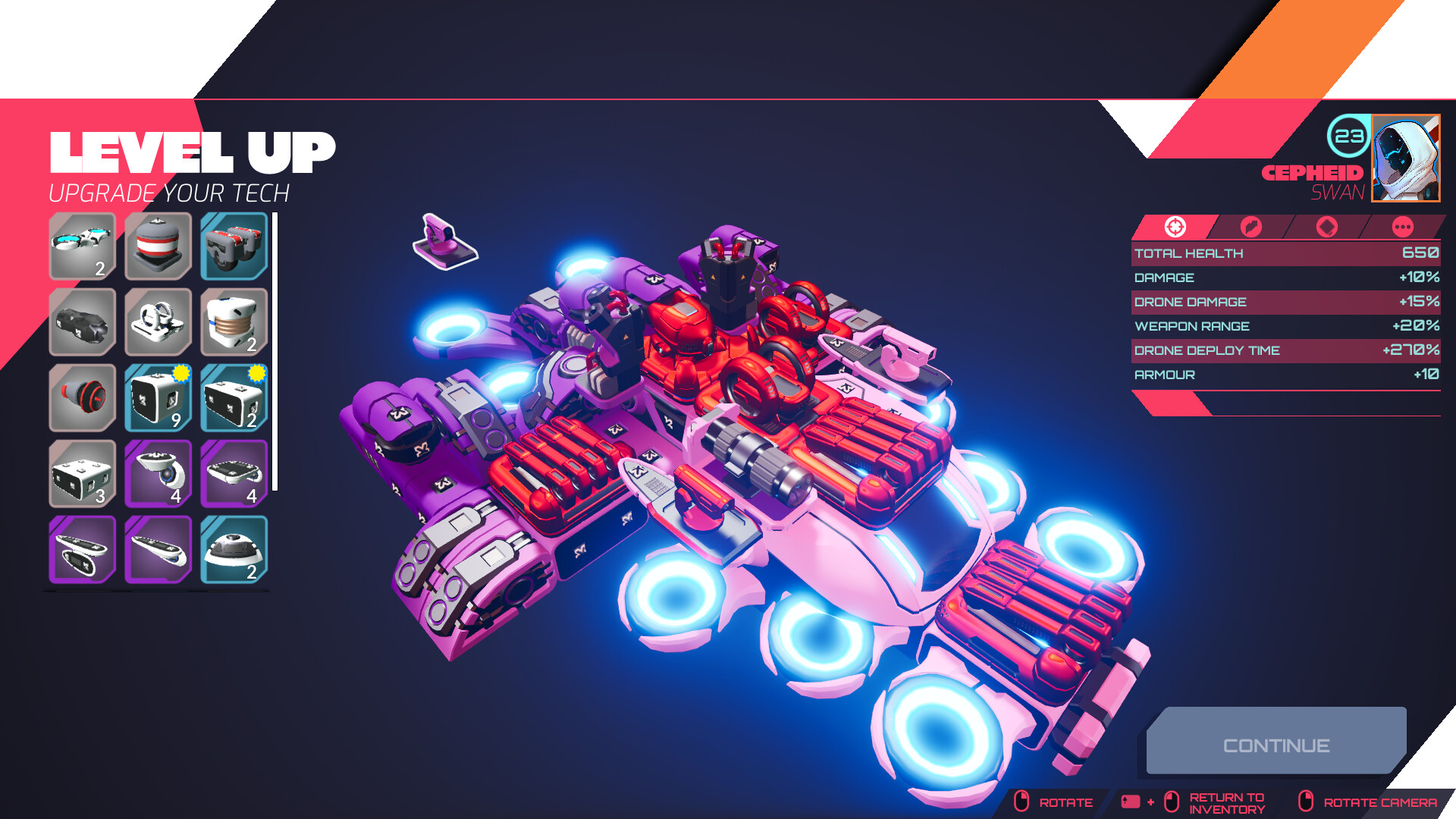
Destroyed enemies leave experience and resources to recover. At each level, a beacon allows you to reach a construction zone to modify the vehicle. The crates offer choices of blocks, then the workshop lets you place the available elements. The decision therefore does not stop at the bonus retained. It remains to find how to integrate it.
A forward-facing gun requires different handling than a turret capable of covering several directions. A weapon installed too low can lose part of its interest if the rest of the machine obstructs its field of action. Placement in height then frees up possibilities, but also adds volume. The thrusters and locomotion elements in turn modify the behavior of the whole.
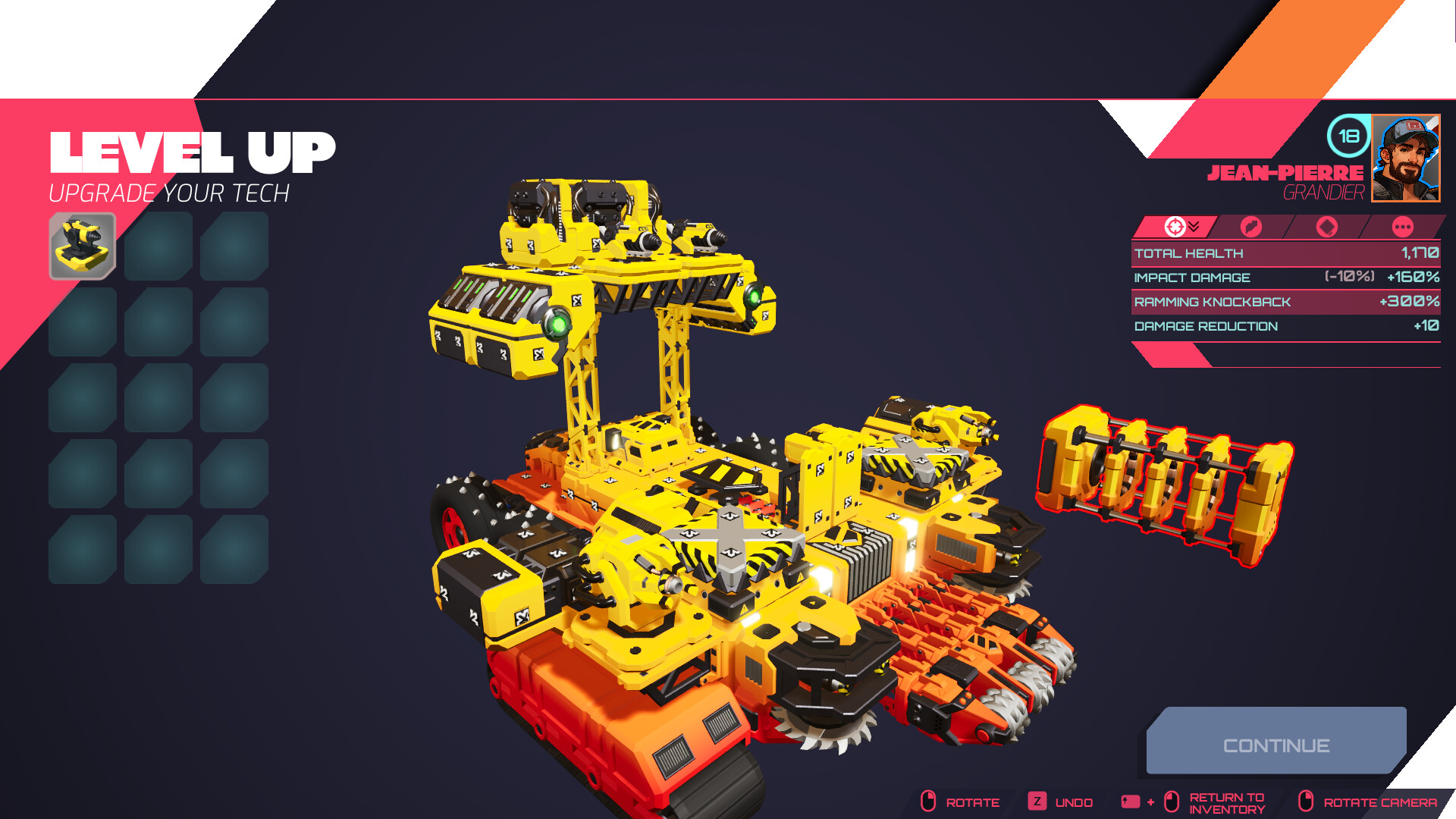
Weight and balance prevent each improvement from being turned into an automatic gain. Accumulating mass in one place changes stability and handling. A heavily armed machine must still be able to turn, avoid obstacles and escape from an encirclement. This constraint gives real coherence to the construction. The vehicle visible on the screen corresponds to the choices made in the workshop, with their advantages and consequences.
The game draws a lot from this connection between manufacturing and piloting. Strengthening the front for impact, increasing the number of shots around the chassis or favoring boosters produces machines that do not solve the same problems. The hundreds of blocks provide the material, but their interest comes mainly from the way they combine. A new part sometimes requires you to review an entire side of the machine. The improvement becomes a small design problem, immediately verifiable in the field.
Four pilots, four playstyles
The four pilots give sufficiently distinct directions to the attempts. Mikela stuns enemies and has luck-related tools. Jean-Pierre focuses more on durability and ramming. Sam combines phasing and critical hits, while Cepheid has a hovering machine associated with plasma. Starting vehicles and abilities therefore create different priorities even before the first blocks.
Jean-Pierre gives a particular meaning to reinforcements and contact weapons: the bodywork becomes part of the attack. A more mobile configuration must retain enough maneuverability to benefit from its accelerations. Interest doesn’t just come from different numbers. The relationship with the crowd and the space evolves according to the pilot, which makes the unlocking really useful.
The choices offered during an attempt also prevent an identical plan from being reproduced. The right part does not necessarily appear when expected. The assembly must evolve with the possibilities available, and a less familiar weapon can guide what happens next. This part of improvisation works well as long as the vehicle maintains logic. The pleasure lies as much in the power obtained as in the success of a somewhat dubious DIY project.
A planet cannot be cleaned in place
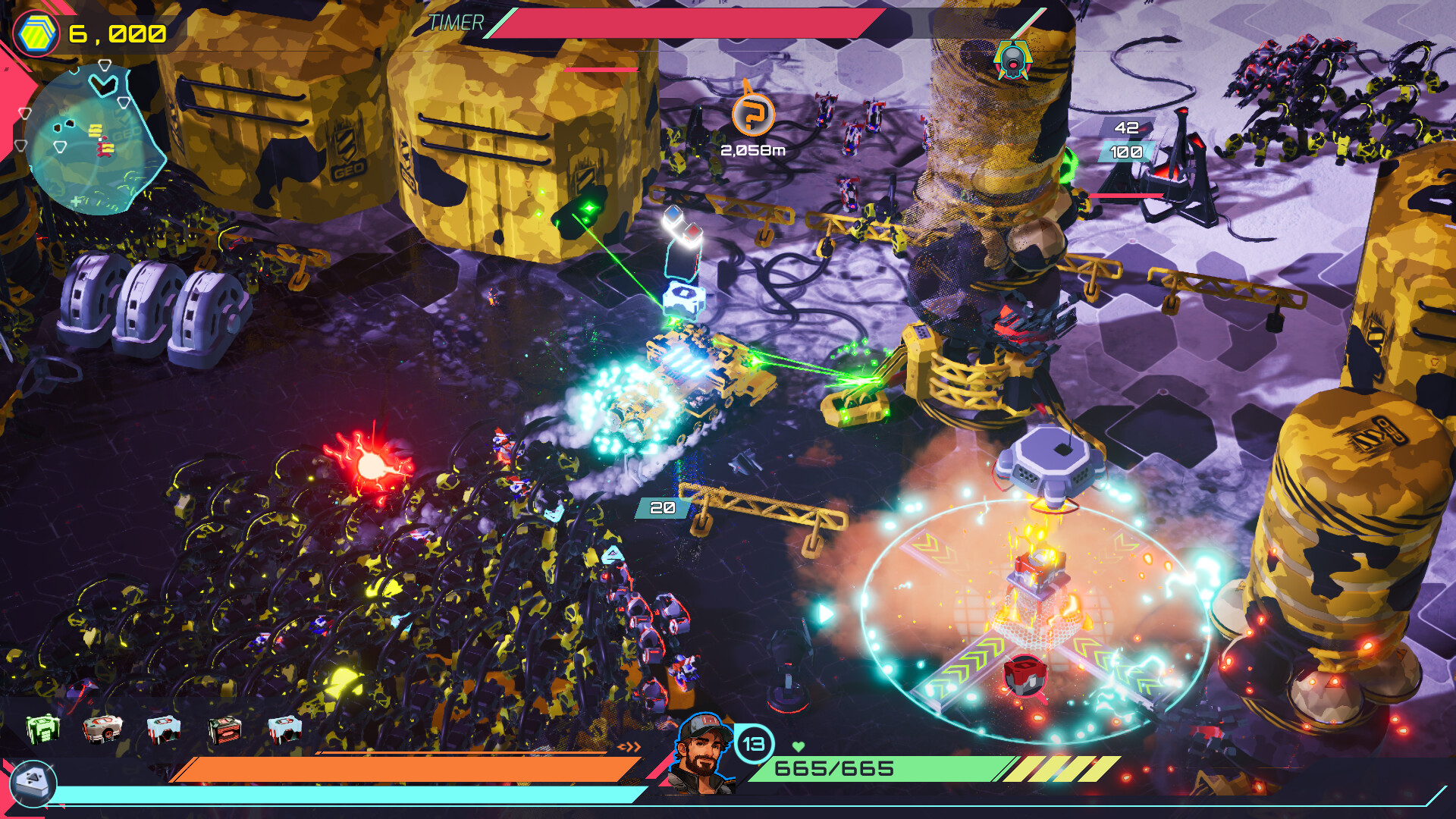
The four planets change the constraints of the terrain. Dust Bowl provides an initial desert environment, Rotwater Basin adds its corrosive liquids, and icy or volcanic areas introduce other dangers. Terrains, installations and obstacles give reasons to monitor the route instead of endlessly circling the same position.
Outposts and structures to attack reinforce this mobility. They offer challenges and rewards that make deviations interesting. A useful improvement sometimes merits leaving a comfortable path, but the detour can also put the machine in difficulty. The arena thus has several points of interest, with a boss to give a destination to the increase in power.
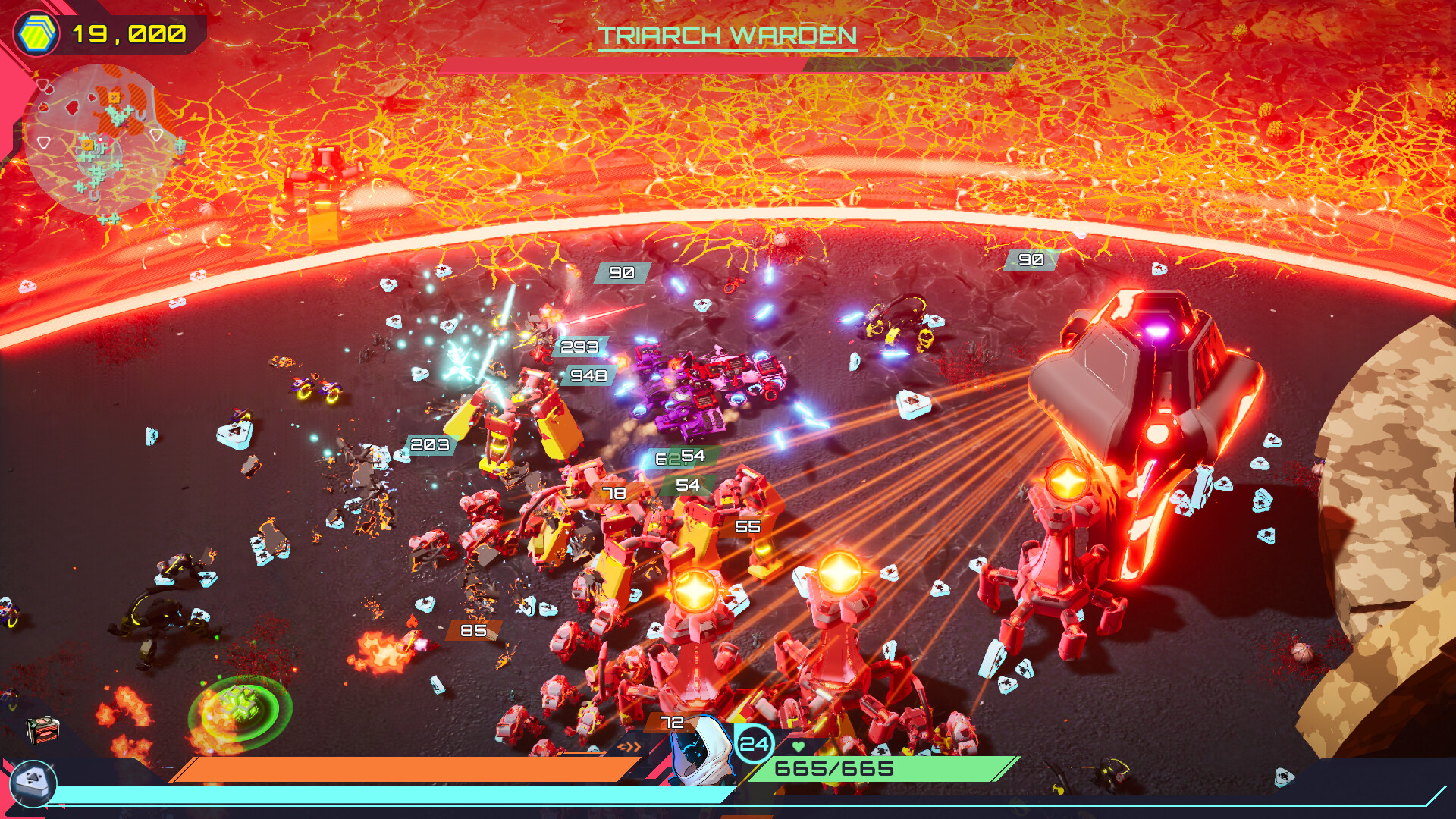
Enemies gradually occupy the space and force the construction to prove itself. A machine effective against the first waves does not necessarily maintain enough mobility or coverage in the face of a denser crowd. Large opponents also check the ability to concentrate damage. The game forces you to think of the weapons together and then drive taking into account their angles.
Readability suffers, however, when robots almost completely cover the Tech. Shots, effects and mechanical bodies overlap, making the exact position of the machine less obvious. The show correctly conveys escalation, but it also makes it difficult to spot nearby threats. A carefully designed machine deserves to remain identifiable when its survival depends on a few meters.
A few more pieces
Resources earned between missions fuel permanent pilot-specific upgrades. Abilities, starting vehicles, and several bonuses become more effective, giving utility to failed attempts. The contracts also open up new construction possibilities. Progression maintains the desire to start again, with more tools to solve the next problem.
This generosity is accompanied by a very real repetition. Developing several pilots requires returning to tests already understood. The variety of assemblies helps a lot, but it does not entirely renew the objectives. Survival mode then offers another destination for the most efficient builds, without the limit of a campaign to complete.
The other trade-off is workshop interruptions. Building takes time and attention; it does not always maintain the momentum of the last seconds of combat. The controller allows you to build without having to leave the sofa, with readable menus and French text. The succession of adjustments nevertheless remains more calm than the action surrounding them.
The colorful art direction gives the blocks easy-to-distinguish shapes, and the metallic noises correctly accompany shots and collisions. The game does not seek to tell the story of a particularly serious war. It prefers to make its machines fun to assemble, then satisfying to send into the middle of the carnage.
Verdict
A mechanism that runs well
8/10
TerraTech Legion finds an excellent way to renew survival in the face of hordes: each improvement takes up a space on the vehicle and changes its handling as much as its power. The weapons, thrusters and defensive elements make you want to try different assemblies, while the four pilots and the planets maintain the interest of the repeats. The construction directly serves the action, and this coherence makes the formula particularly gripping.
The first minutes lack power, the workshop frequently interrupts the rhythm and readability decreases when enemies cover the machine. Permanent improvements also require resuming battles that are already known. Nothing, however, ruins the pleasure of assembling an improbable machine, then checking its solidity among the robots. A very pleasant surprise, offered at a reasonable price.
Pros
- Block-by-block construction really influences combat and driving
- Varied assembly possibilities, between firepower, speed and ramming
- Four pilots with distinct abilities and vehicles
- Planets and secondary objectives that encourage movement
- Progression and a Survival mode that make you want to restart
- A modest launch price
Cons
- A fairly unspectacular start to the attempt
- Workshop interruptions sometimes end up breaking the rhythm
- The machine becomes difficult to read under the densest crowds
- Permanent improvements require replaying familiar challenges
More in Video games
Full library 9/10
Dragon’s Dogma 2: Dark Arisen
XBOX 7/10
Brigandine Abyss
XBOX 6/10
The Walking Dead: Streets of Survival
XBOX 8/10
Onimusha: Way of the Sword
XBOX 7/10
HOT WHEELS Infinite Rush
XBOX 8.5/10
S.T.A.L.K.E.R. 2: Cost of Hope
XBOX 7.5/10
The Lord of the Rings: War in the North – Legacy Edition
XBOX 8/10
Verho – Curse of Faces
XBOX 8/10
Halo: Campaign Evolved
XBOX 7/10