
HOT WHEELS Infinite Rush
Small cars think too big
Score: 7/10
Images and videos
At a glance
We liked
- Accessible arcade driving with boost and drifts that are fun to master.
- Over 150 cars to win, divided into four useful categories.
- Duels against the Daredevils which give a real reward to the race.
- Complete circuit editor with sharing of creations.
We liked less
- Four islands whose progression too often follows the same pattern.
- Repetitive secondary activities and overly restrained official tracks.
- Open world not very lively despite varied settings.
- Frequent loading between events and islands.
 By Farrel Grimwood · published · 6 min read
Contents
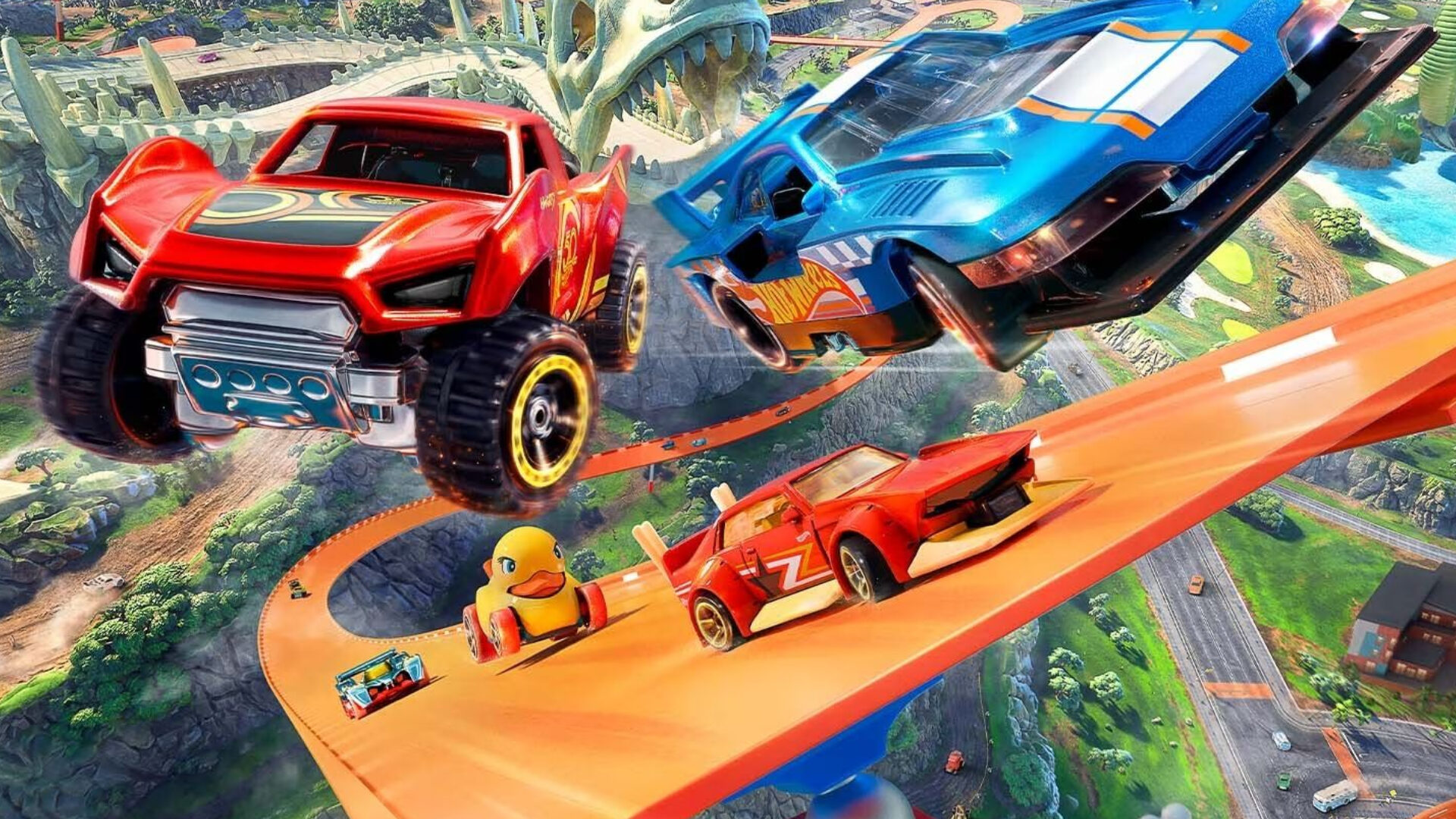
In the two Hot Wheels Unleashed, an orange track placed on a piece of furniture was enough to remind us of what we were driving: a toy. The cars sped between objects much too large for them, and this gap gave character to the races. Milestone changes scenery with Hot Wheels Infinite Rush. This time, the little cars can leave the track and travel through four open islands, filled with events and unlockable vehicles.
The Italian studio maintains its arcade style and its taste for circuits to build. It adds more than 150 cars, four driving categories and a career that leads to each island’s champion. The program seems generous, especially since the Xbox edition allows you to play alone, with four on the same screen or with twelve online. The move to the open world, however, changes the role of the race: you now have to cross entire areas between two starts, look for objects and repeat challenges to progress.
Do these islands really give Hot Wheels more freedom, or do they take the cars away from what made their tracks so fun?
Four islands and the same career
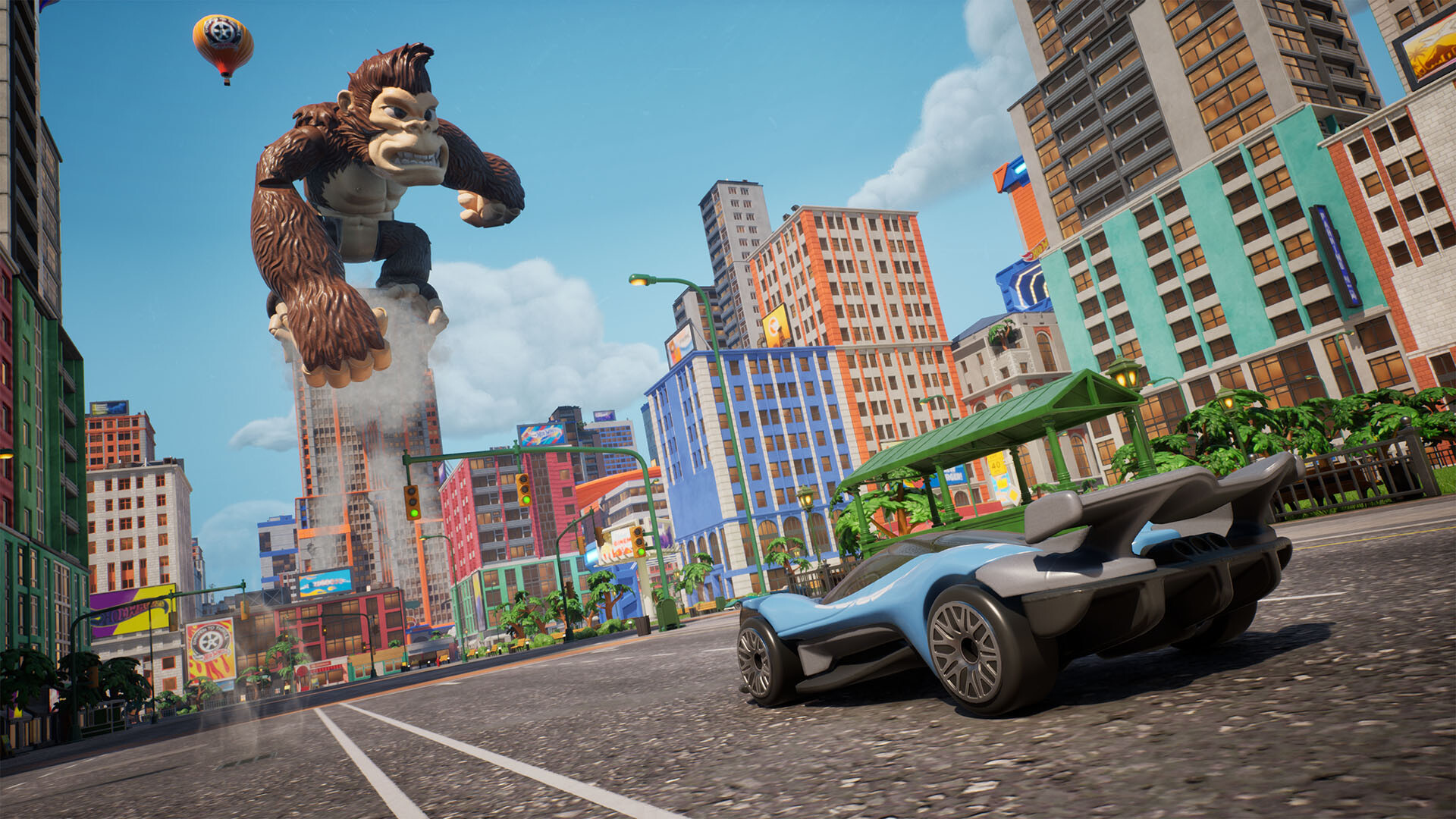
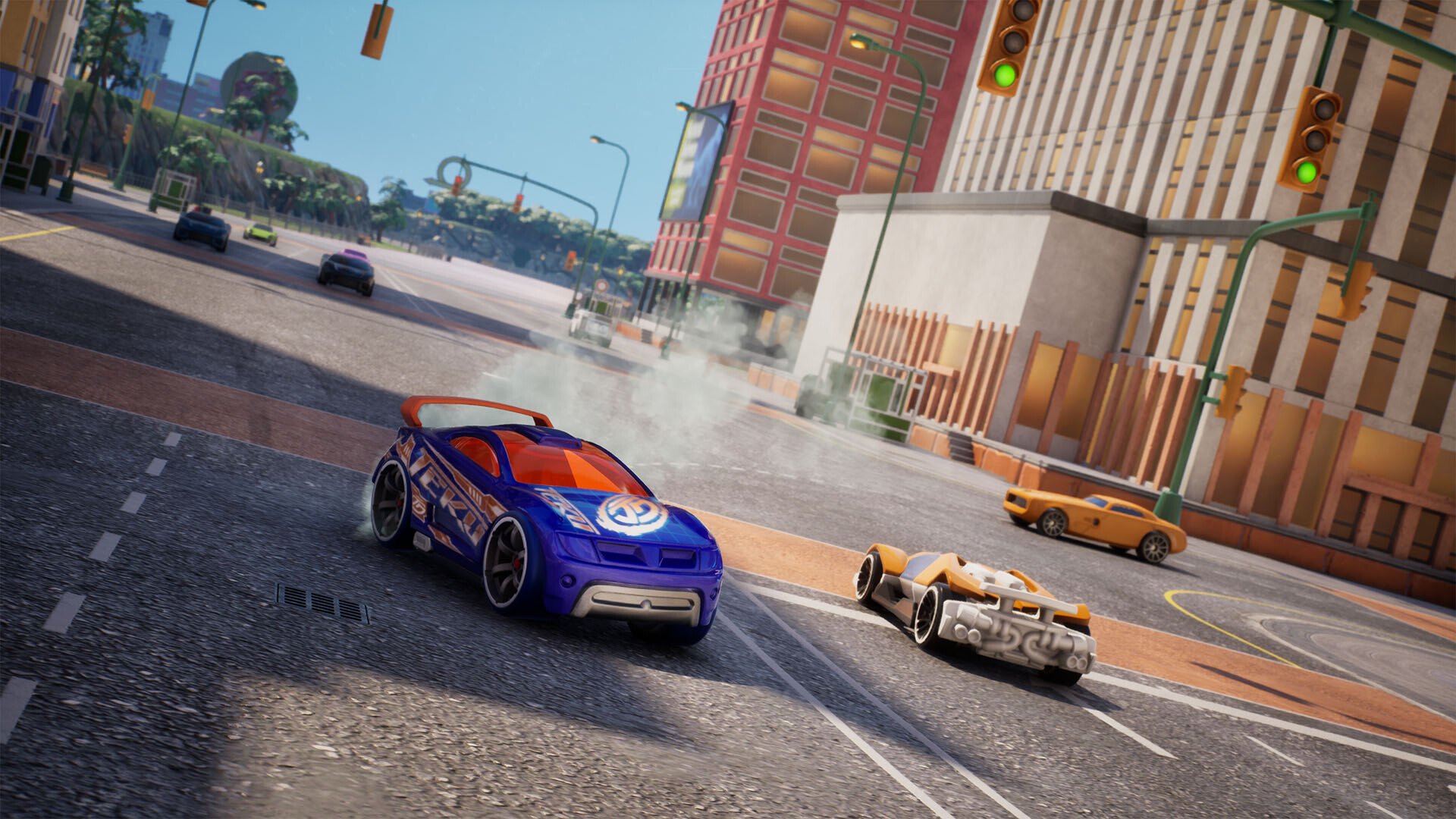
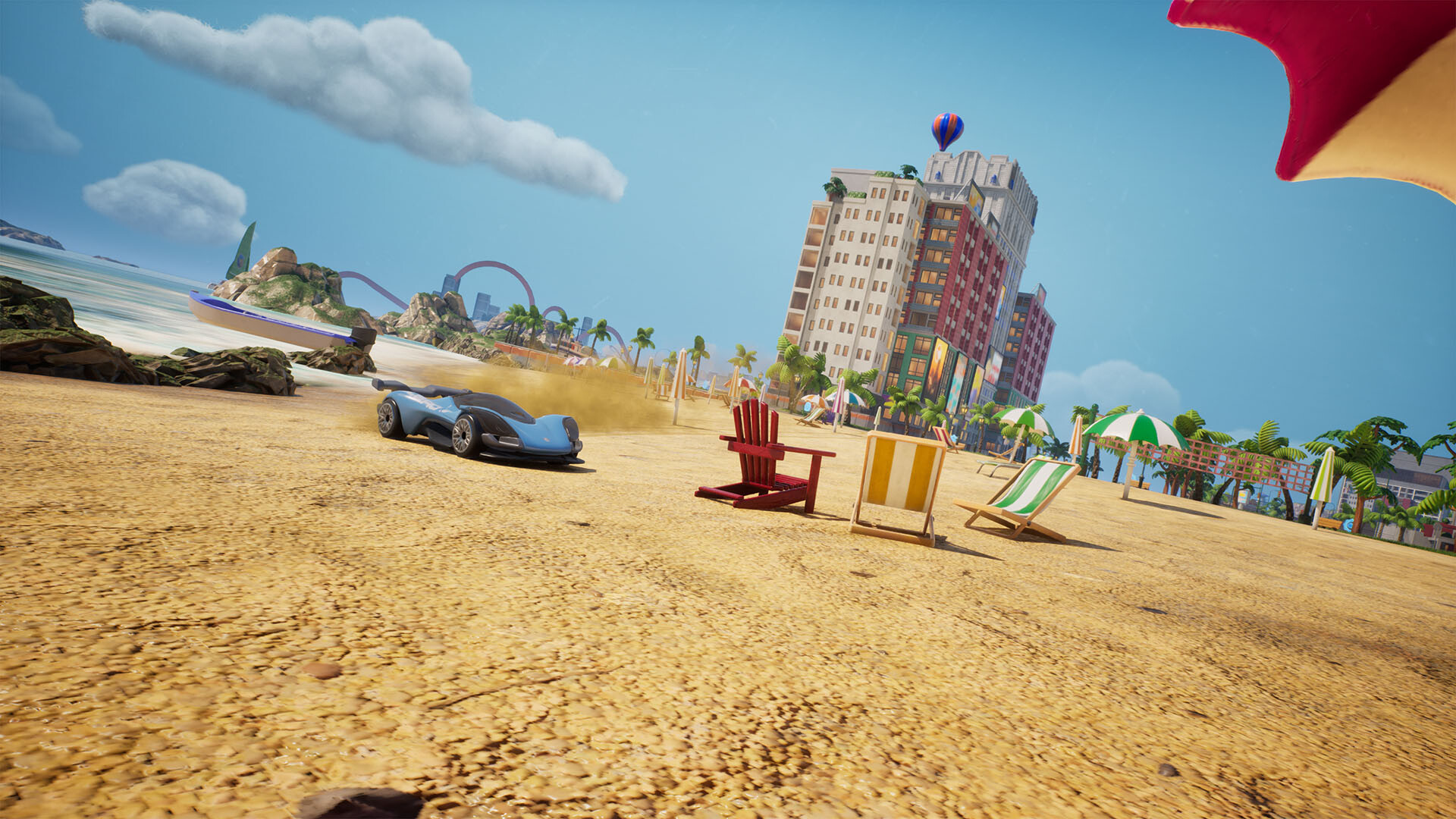
The adventure begins in Wheelswood, a city of skyscrapers crossed by orange roads and pieces of track. The other islands then open up as you progress: Tentacle Bay gives more space to nature, Gearville to industrial installations and Drifty Temples to tight turns in a setting inspired by Japan. The moods change enough that moving from one island to another doesn’t seem like a simple change of color.
However, the principle remains the same everywhere. You participate in the events, you complete the progression of the island, then you challenge its Rush Master to win their car and access the rest. This framework gives a clear objective without imposing a storyline that a Hot Wheels game doesn’t need. It also quickly reveals its repetition: the fourth island requires repeating a routine understood from the first.
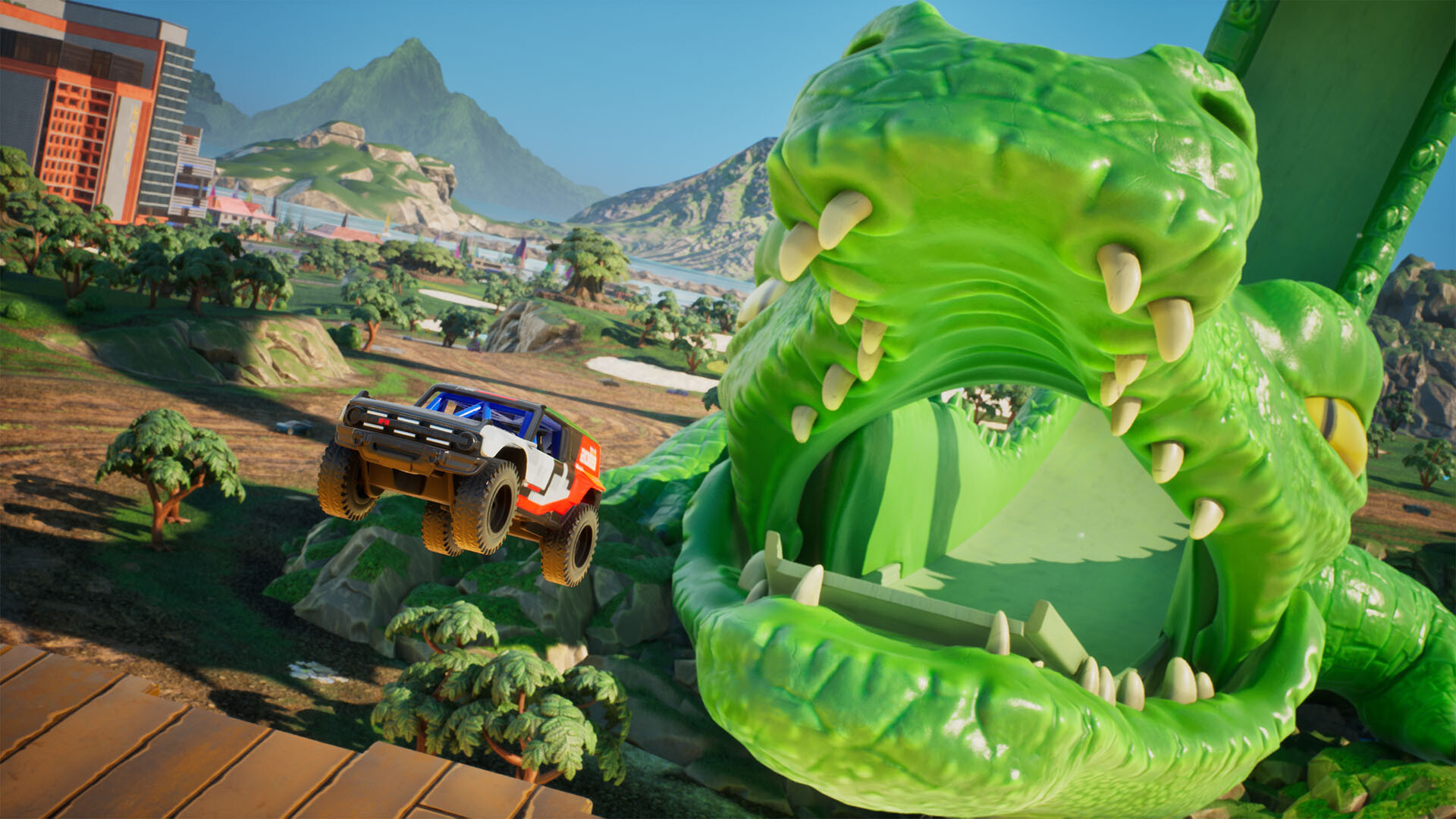
Between races, ramps and pick-up items provide reasons to leave the main road. A successful jump can lead to a new location to explore, and dueling against a freely moving car offers a more motivating reward than just a meter to fill. But this freedom loses its interest when the challenges return in the same forms. The traffic and the settings give little impression of a world that continues to live outside of the trials. Islands are mainly used to connect activities, not to create unexpected situations.
Responsive handling
Fortunately, getting behind the wheel remains simple. You accelerate, you prepare your skid before a turn and you spend your boost to exit faster or catch up with an opponent. A child can get started without having to understand the simulation settings. The controls maintain enough precision so that maintaining a clean trajectory and managing your boost reserve makes the difference in a time trial.
The four categories give utility to the garage. Universals remain balanced, Speeders favour speed, Drifters make drifting easier and the Titans absorb contact better. In exploration, we move from one category to another on the fly; the races impose a specific type. This choice forces you to try several cars instead of always improving the same one. However, you should not expect four distinct driving games: acceleration, drifting and boosting remain common to the entire catalog.
The difficulty also requires adjustment. At the intermediate level, many races make it too easy to take the lead and keep it. Going up a notch makes trajectories and mistakes more interesting, while driving aids make the game more welcoming for younger players. A few collisions or landings produce unpredictable reactions, but they are not enough to spoil a driving experience whose efficiency remains the main quality of the game.
A garage worth coming back for
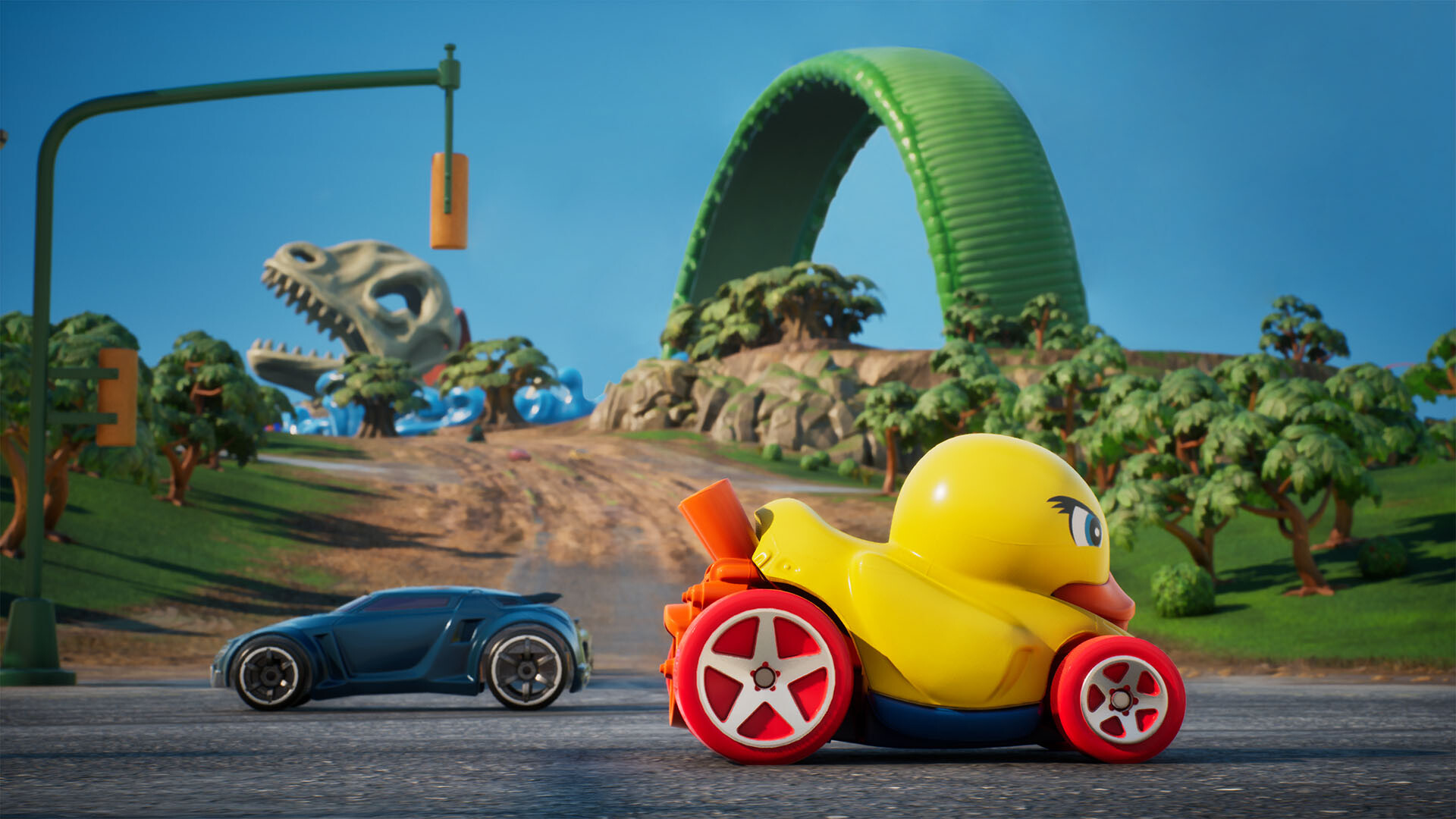
The catalog of more than 150 models gives a real reason to move forward. You expand your garage by progressing in the career, completing activities or winning certain duels. The Daredevils, these cars that you must first catch before facing them, are particularly well-founded: winning the race allows you to leave with the beaten vehicle. This reward has more flavor than a simple purchase at the dealership.
Each car has characteristics that upgrade parts can modify. Visual customization is even more pleasant: liveries, stickers, rims and effects allow you to give an identity to an already familiar model. The care given to the bodywork, reflections and plastic details reminds us that these are reproductions of toys. It’s often by looking at the cars up close that the game best finds its personality.
This collector’s pleasure nevertheless has a limit. Getting a new car is a desire, but its arrival does not necessarily change the way you play when several models in the same category are similar behind the wheel. Upgrades allow you to adjust speed or maneuverability; they do not prevent part of the garage from becoming a collection that we admire more than we drive.
Numerous but unsurprising challenges
Classic races, eliminations and time trials already provide several ways to measure yourself against others or the clock. On the islands, there are also viewpoints to photograph, objects to destroy, jumps and routes to complete under constraints. Moving between event types fills the first few hours. You can leave a race, see a challenge nearby and stop there before heading to the next objective.
The problem is that the number of challenges ends up masking their lack of ideas. Secondary objectives rarely change the way you drive: go fast, do a series of skids, or break what’s in an area. The official races themselves don’t exploit the trademark loops, jumps and suspended tracks as much as one would hope. The passages on the orange track remain the most memorable, while too many journeys are satisfied with ordinary roads.
The variety displayed on the map therefore does not always translate into a variety of sensations. The first few hours feel like there’s a lot to discover; searching for the last few items or filling yet another island gauge feels more like work. A racing game can do without story, but it must then renew its courses and its situations often enough for us to want to leave again. Infinite Rush doesn’t achieve this all the time.
Circuits to build yourself
The track editor allows you to lay sections of track across the four islands, snap them to terrain or buildings, and take a race high above the streets. It is also possible to place waypoints so AI opponents can follow the route, then share the creation. Building a track takes patience, especially if you want it to be enjoyable to run and not just impressive to look at.
This is where the game finds some of its fantasy. Player-designed courses can exploit the height of the scenery and extravagant pieces that official courses use too restrainedly. The editor extends the game after the career and rediscovers the action at the heart of Hot Wheels toys: assemble a route, test the car, correct a turn, then start again. It does not repair the four islands, but at least provides the means to make the islands more than an activity map.
Loading breaks the rhythm
On Xbox Series, the driving remains smooth and the cars are carefully rendered. The metallic paints, plastic surfaces and orange tracks stand out well; the islands are less rich in detail to look at between two races. Engines roar and shocks clatter, but the soundtrack does little to add extra life to free-wheeling.
Loading screens are the most annoying technical fault. Starting a race, returning to exploration, or changing islands regularly interrupts the game. Taken separately, these stops remain bearable. Repeated between often short events, they end up cutting off the momentum that the driving had just created. Some strange physical reactions are added to the picture, but the real problem of rhythm comes from these too many transitions.
Split screen brings together up to four players and online races up to twelve. Cross-play allows you to meet competitors on PlayStation and PC, but not on Switch 2. On Xbox, Play Anywhere also gives access to the PC version with the same digital purchase. On the other hand, you can neither roam the islands freely nor advance in the career together. Multiplayer is limited to racing, which deprives the new open world of precisely the function that could have made it more lively.
Verdict
Driving pleasure does not fill four islands
7/10
Hot Wheels Infinite Rush keeps the essentials of a good arcade racing game. The cars respond well, the four categories encourage variation in models and the garage gives real reasons to restart a game. The duels against the Daredevils and the circuit editor make better use of the franchise than most of the tasks scattered around the map. Both locally and online, the races also keep several players busy.
The move to open world was supposed to give more space to small cars; it too often dilutes what made their tracks special. The islands lack life, the career repeats the same pattern and loading screens constantly interrupt the sequence of events. It's a fun game to drive and generous in collectible cars, but not the big playground that its new formula announced. We come back there for the cars, less for the roads that await them.
Pros
- Accessible arcade driving with boost and drifts that are fun to master.
- Over 150 cars to win, divided into four useful categories.
- Duels against the Daredevils which give a real reward to the race.
- Complete circuit editor with sharing of creations.
- Split screen for up to four and online races for up to twelve players.
Cons
- Four islands whose progression too often follows the same pattern.
- Repetitive secondary activities and overly restrained official tracks.
- Open world not very lively despite varied settings.
- Frequent loading between events and islands.
- No exploration or career progression with others.
More in Video games
Full library 9/10
Dragon’s Dogma 2: Dark Arisen
XBOX 7/10
Brigandine Abyss
XBOX 6/10
The Walking Dead: Streets of Survival
XBOX 8/10
Onimusha: Way of the Sword
XBOX 8.5/10
S.T.A.L.K.E.R. 2: Cost of Hope
XBOX 7.5/10
The Lord of the Rings: War in the North – Legacy Edition
XBOX 8/10
Verho – Curse of Faces
XBOX 8/10
Halo: Campaign Evolved
XBOX 10/10
World of Warcraft: Forever
PC 8.5/10