
The Lord of the Rings: War in the North – Legacy Edition
The North takes up arms again... with its old wounds
Score: 7.5/10
Images and videos


At a glance
We liked
- Three truly complementary heroes, now interchangeable in solo.
- Up to three-person online co-op and ever-valuable split-screen on Xbox.
- Heroic mode, executions and ranged attacks maintain an immediate impact.
- Rarely visited places in the North and a careful adaptation to Tolkien's universe.
We liked less
- Clashes built on the same waves and enemies that are too resistant at the end of the campaign.
- A decent plot, but poorly developed heroes and dialogues without real effect.
- A camera that is still annoying as soon as space becomes tighter.
- Models, textures and animations that clearly show their Xbox 360 origin.
 By Farrel Grimwood · published · 9 min read
Contents
In November 2011, War in the North chose the worst possible window. Dark Souls, Batman: Arkham City, Battlefield 3, Uncharted 3 and Skyrim were already keeping players busy, while Snowblind Studios offered a cooperative action-RPG that was less ambitious, stiffer and covered in technical flaws. However, it never disappeared from the memory of those who had traveled through Fornost in threes. Its removal from digital stores ended up transforming an average but endearing game into an iconic and almost inaccessible title.
Aspyr is putting it back on sale fifteen years later for €19.99, with a launch promotion of €17.99. It is neither a remake nor a visual reconstruction comparable to current major productions. The campaign, levels, dialogues, skills, loot and animations still come from the Snowblind game. The Legacy Edition above all adds 4K and 60 frames per second, target selection, a revised interface, several save slots and the possibility of changing heroes during the game.
This upgrade addresses real flaws, particularly in solo play, and it restores cooperation that has become difficult to organize on old hardware. However, it does not change the repetition of the clashes, nor the rather flat writing of the trio, nor the very clear traces of the Xbox 360 generation. Does The Lord of the Rings: War in the North – Legacy Edition finally do justice to this forgotten chapter, or is it above all selling an old affection at a reasonable price?
Another Fellowship during the War of the Ring
The adventure begins in Bree, shortly before Frodo leaves. Aragorn learns that Agandaûr, a Black Númenórean in Sauron’s service, is gathering Orcs in the ruins of Fornost. The future king cannot leave the Hobbits. So he entrusts the threat to Eradan, a Dúnedain ranger, Andriel, a mistress of elven lore from Rivendell, and Farin, a dwarf champion from Erebor. This new Fellowship heads north while the known events take place further south.
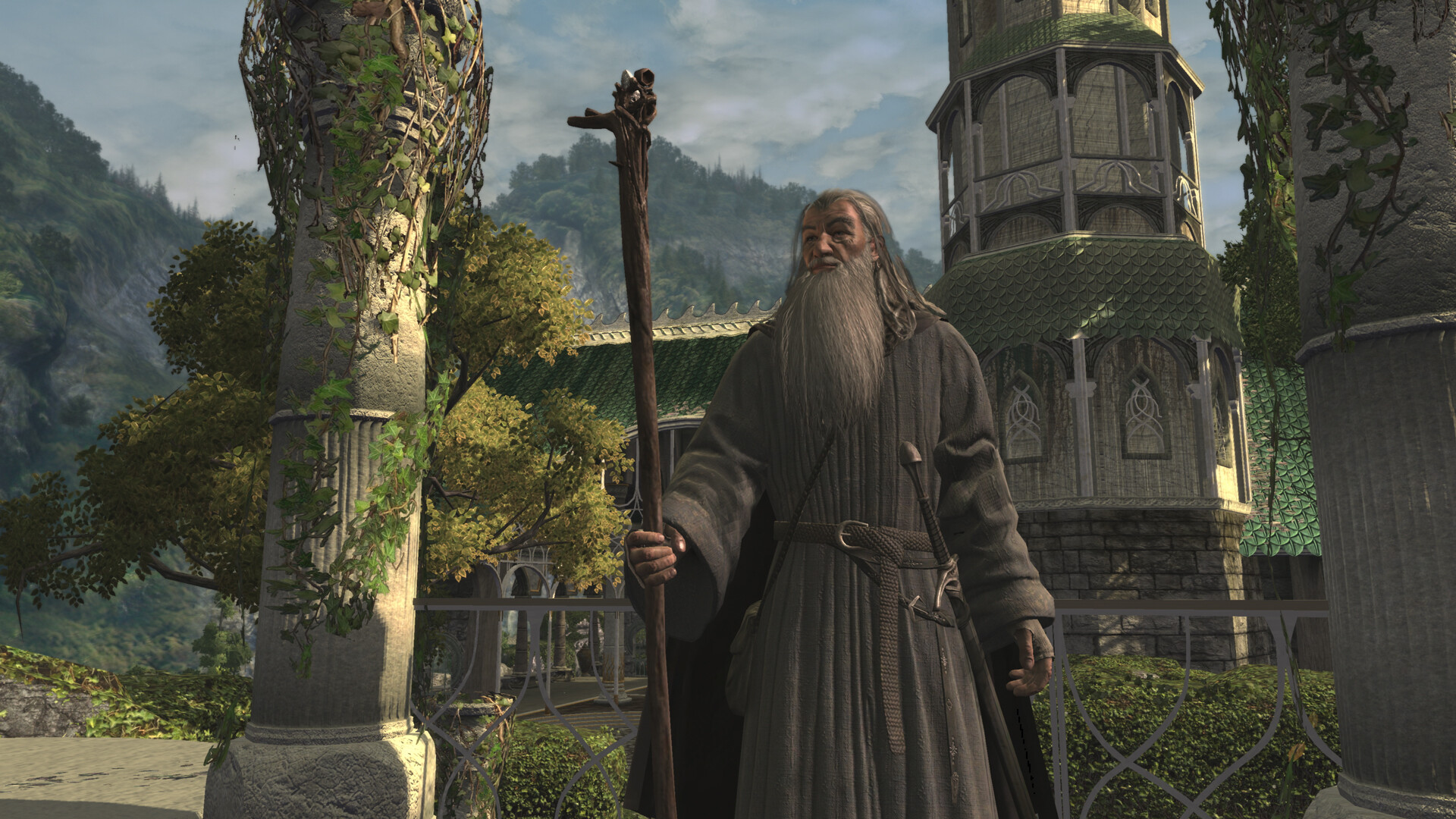
The choice allows you to visit places rarely opened by games based on The Lord of the Rings. the Barrow-downs, Misty Mountains, Mirkwood, Nordinbad and Mount Gundabad offer something other than another crossing of Moria or Helm’s Deep. Bree, Rivendell and the meeting with Gandalf, Elrond, Bilbo or Aragorn maintain the link with the trilogy, without diverting the entire plot towards already famous heroes. Beleram, the large eagle that accompanies the group, has even more presence than several main figures.
This place on the margins of the cinematic story is also its main weakness. Agandaûr represents a clear, but not very complex, threat. The three heroes accept their mission, move forward and comment on the next danger without experiencing an evolution comparable to that of the Fellowship of the Ring. The dialogue wheel allows you to ask for details about people, places and ancient wars. It gives material to Tolkien fans, but almost no choice modifies the quest. The exchanges serve more as an oral encyclopedia than as a real role-playing game.
War in the North remains respectful of its setting. It borrows the visual identity of Peter Jackson’s films while searching for names and facts in the appendices. The result is not canonical and sometimes emphasizes its importance by explaining that this victory of the North indirectly protects Frodo. However, it avoids simple copying of the films and maintains a consistent warlike tone. The story is enough to give direction to the fights, rarely to make them moving.
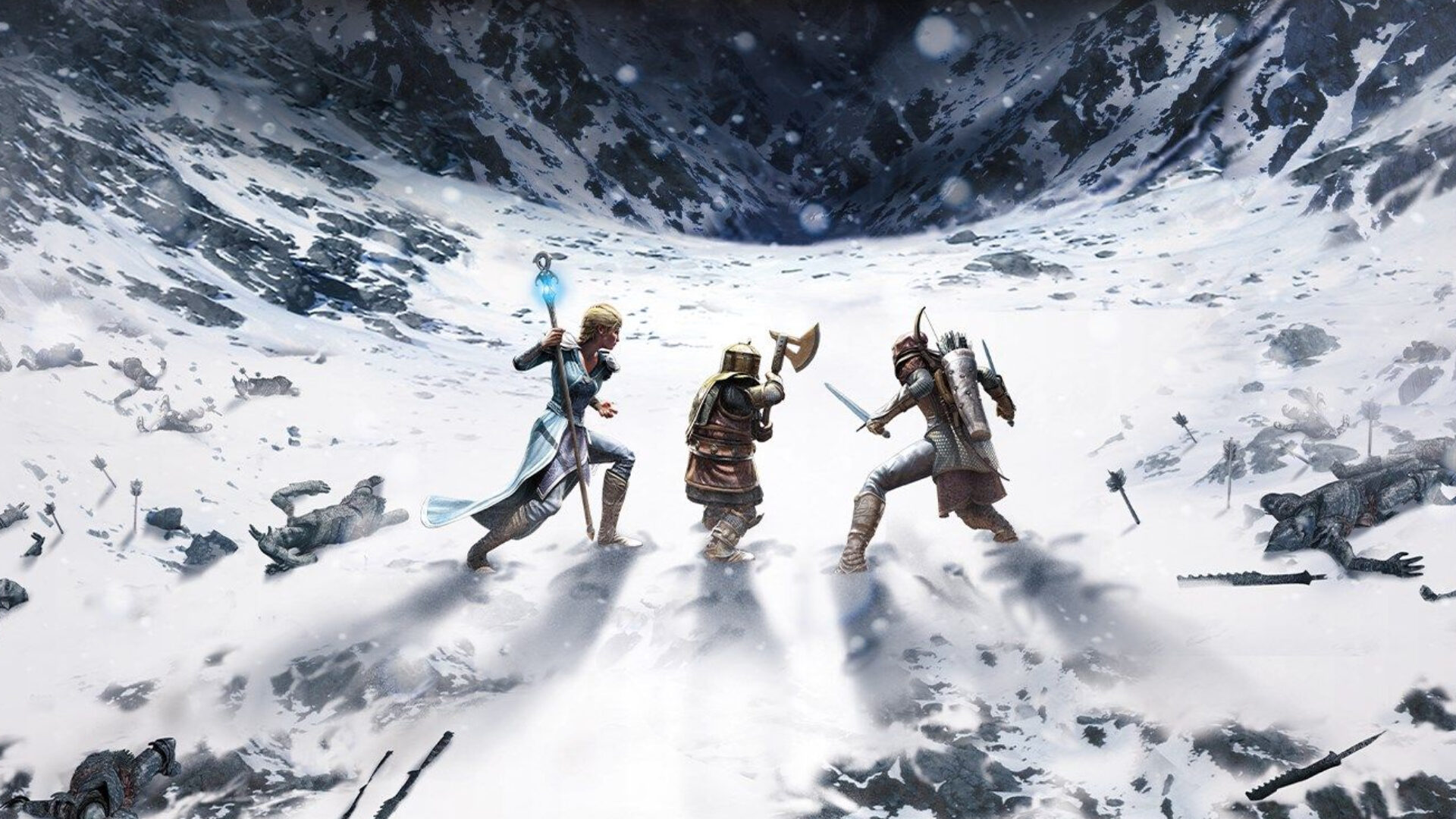
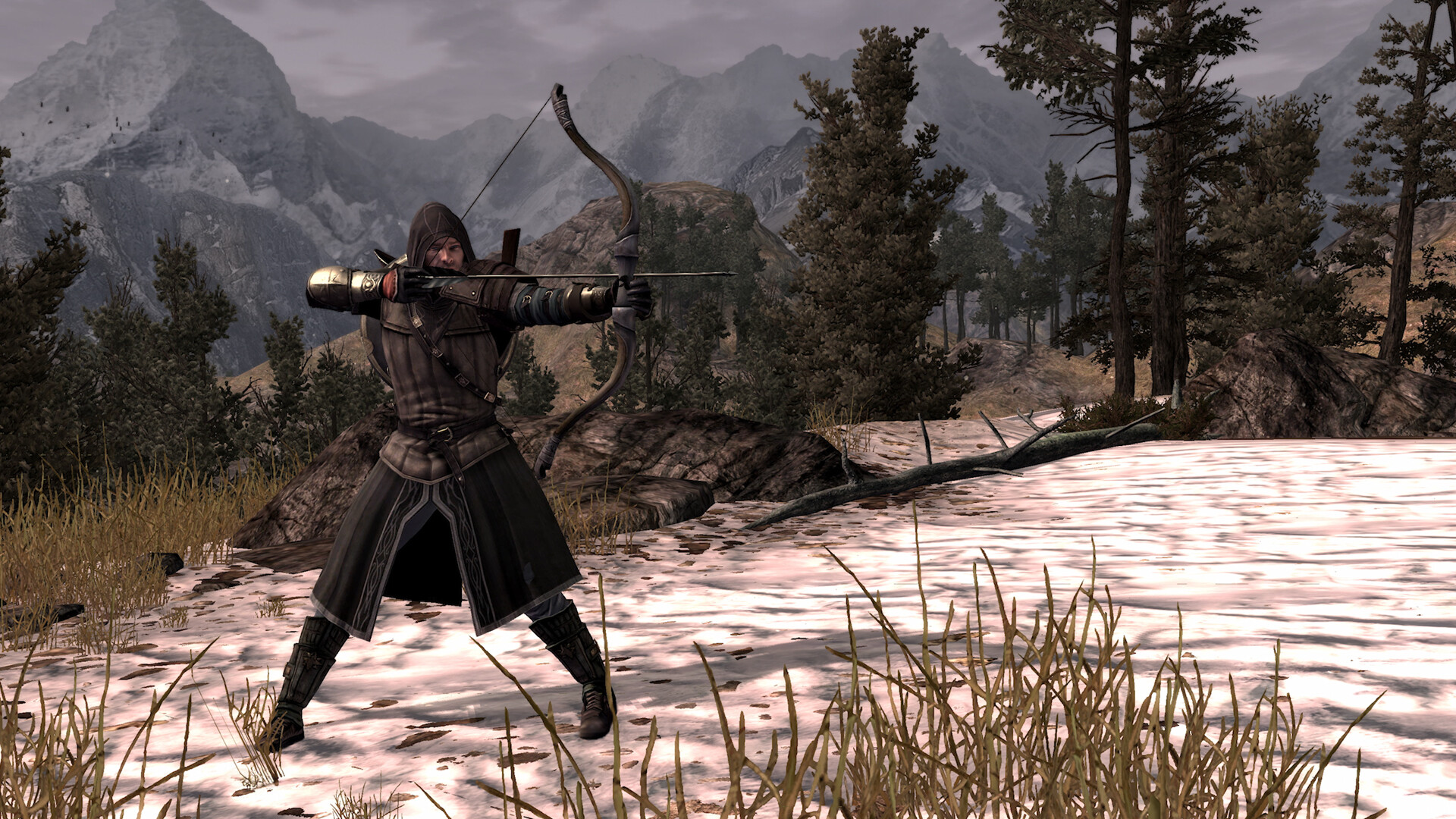
Eradan occupies the center. He can slash with one or two blades, fire a bow, disappear briefly, and boost his ranged damage. Andriel projects magical attacks with her staff, deploys area spells, and creates a protective bubble that helps the party regain their strength. Farin takes more, breaks the guards with his heavy weapons and uses a crossbow. The three know how to defend themselves in close combat and at a distance, but their abilities give a clear function to each.
Each level up grants attribute and skill points. Strength, dexterity, endurance and willpower improve damage, health or power reserve, while three trees per hero guide their specialty. Eradan can become a formidable archer or rely on stealth. Andriel can strengthen her support role or her magical attacks. Farin can become a wall, a two-handed fighter, or a crossbow threat. The system remains readable, without combinations fine enough to compete with a large RPG.
The major improvement in this edition is the immediate change of solo heroes. In 2011, the choice remained locked for an entire section and the two machine-managed allies decided on their own equipment. Switching from Eradan to Andriel to deploy protection, then to Farin to hold back a Troll, finally gives the player responsibility for the entire team. This freedom does not transform combat into a tactical game, because the action continues and direct orders remain limited. However, it reduces a central frustration of the original version.
Aspyr also fixes class-specific caches. A crack spotted by Farin, a mark understood by Andriel or a reserve discovered by Eradan can now be activated regardless of the hero controlled. The idea seems minimal, but it avoids changing characters just to open a chest seen in the setting. This type of retouching shows a good understanding of old defects, even if the basic structure remains intact.
A heavy, bloody and quickly repetitive combat
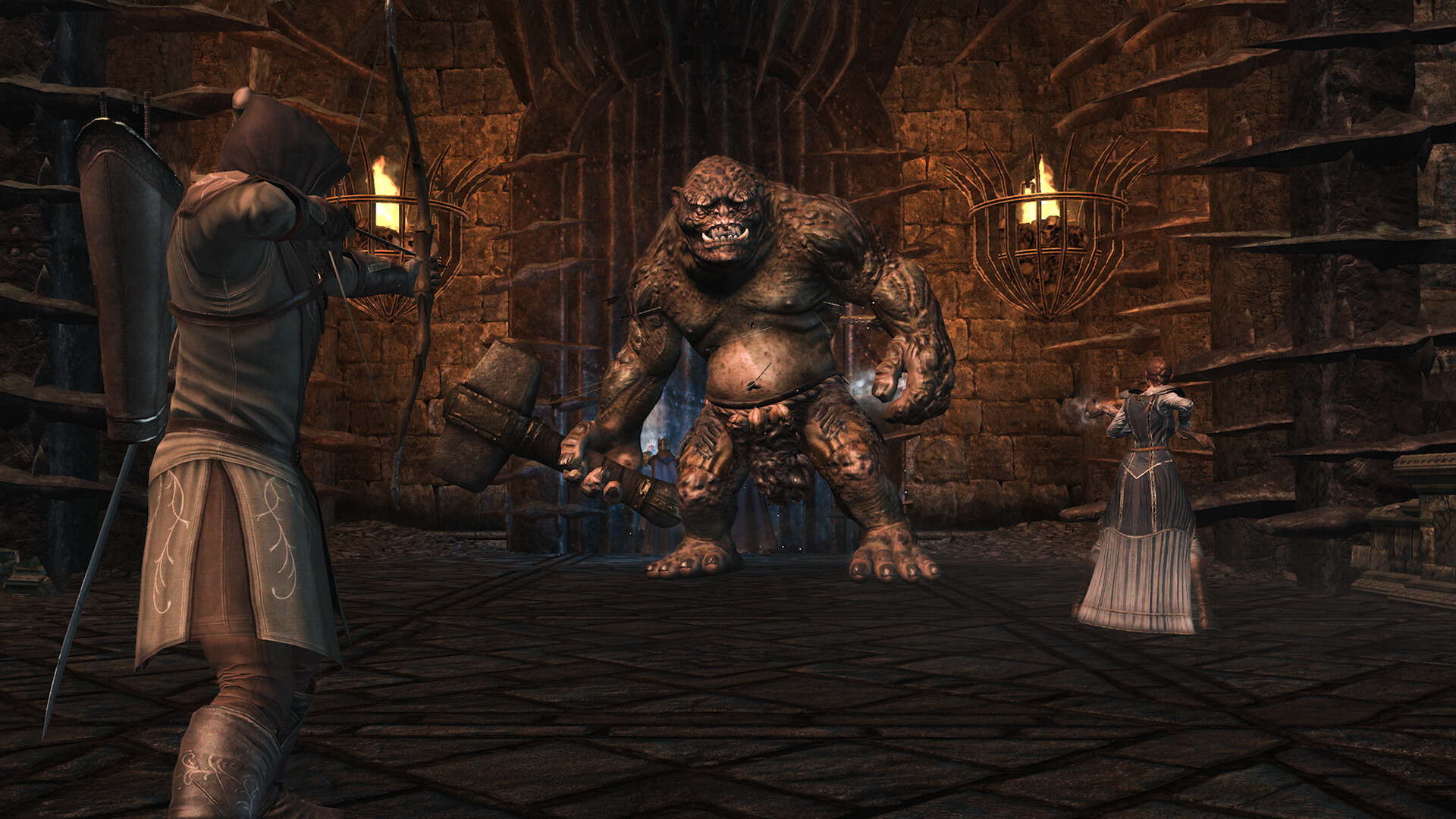
Melee is based on quick attacks, powerful blows capable of breaking a guard, dodging, blocking and several abilities limited by a power gauge. At a distance, the camera moves closer to the shoulder to aim for a head, interrupt an archer or attack a Troll before contact. After several successful hits, a symbol prompts you to trigger a critical strike. The execution can sever a limb, activate Heroic mode and increase damage and experience as long as the hero is not hit.
This mechanic gives a very direct rhythm. You must isolate a target, provoke the opening, launch the execution, then take advantage of the bonus to continue before a projectile cuts the series. The weapons have enough weight, the sound of the impacts supports the heavy blows well and the violence has rarely been so visible in a Tolkien adaptation.
Beleram adds a contextual attack. When a target is in the open and the eagle is available, it swoops down on it or bombards a position. The action provides little choice, especially when facing an isolated archer or a massive creature. Turrets, ballistas, defense fights and a few leaders also interrupt the routine. None of this is enough to renew it over twelve hours.
Most arenas close a gate, send in infantry, place archers at the back, then add a mage or heavier opponent. The first hours are pleasant because the Orcs react well to blows and fall quickly. Later, some enemies absorb a lot of damage, resist interruptions and repeat the same attacks. The difficulty then increases by the opponent’s endurance more than by new tactics. With three people, coordination and complementary skills mask this defect. Alone, it becomes impossible to ignore.
The target selection added by Aspyr helps in tight spaces. It prevents a heavy hit from going towards the wrong Orc and makes area spells easier to prepare. It does not fully fix the camera, still too close when a Troll, a wall and two allies occupy the same corner. The 60fps frame rate improves controller response, but the 2011 roots remain visible in collisions and some stiff transitions.
Every chest and enemy group fuels progression with swords, axes, bows, crossbows, staves, armor, rings and potions. Stats often go up, some pieces form sets, and sockets receive Elf-stones to add resistance or a bonus. The bag fills up quickly and encourages you to regularly compare two close numbers. This flow supports a first game well, especially when a rare weapon immediately changes damage or speed.
However, the system lacks effects capable of changing the way you play. A better ax hits harder, a new bow sometimes adds an element, armor resists better, but the game offers few objects that disrupt an ability. Skill trees make more of a difference than gear. By opening chests to sell half of their contents to the next merchant, loot becomes a routine parallel to the waves of Orcs.
Two challenge maps, Osgiliath and Lórien, unlock after the first chapter. They pile up increasingly dangerous groups, distribute experience and loot, then send back to town when the team decides to call it quits. These arenas are used to test a build or to gain a few levels between two missions. They correctly extend a cooperative game, but precisely repeat the formula which is already tiring in the campaign.
The main campaign takes around twelve hours, with more spent searching the branches and completing the side quests. Two higher levels are then unlocked. New Game Plus maintains gear, money, attributes, and abilities, while enemies and rewards level up in turn. This recovery gives real interest to advanced builds, but it requires redoing the same areas and the same dialogues. The total duration therefore depends a lot on the attractiveness of loot and cooperation.
Cooperation remains the right way to go North
The group is designed around three overlapping functions. Farin attracts attention, Andriel protects or heals, Eradan removes distant threats. A downed ally can be revived if another keeps the enemies at bay. Coordinated strikes give bonuses and several confrontations become much more readable when everyone retains responsibility. Repetition doesn’t disappear, but a mistake, a resurrection snatched at the last moment or a sharing of spoils creates stories that the script does not provide.
The Legacy Edition restores online play for up to three and retains split-screen. The game does not require any additional content and the price remains the same for the entire quest. The Game Pass subscription required for online co-op is the only console-specific external expense.
Soloing has gained in comfort thanks to the change of heroes and less cumbersome ally behavior in the first hours. Partners support the player effectively and trigger their abilities without requiring a series of orders. They don’t replace two humans. They sometimes choose a secondary target, stay in front of a shot or delay reaching a defensive zone. War in the North is now more pleasant alone, but its logic remains that of a cooperative game in which the free places are occupied by the machine.
Legacy improves comfort, not game age
Aspyr chose the flaws that were easiest to fix without rebuilding the adventure. The health, power and experience bars are clearer. Autosaves are better distributed and multiple save slots reduce the risk of losing an entire game after an incident. Locking on enemies makes melee less floaty. Changing heroes and shared access to caches directly improves single-player.
The term remaster must nevertheless remain measured. Models, textures, lighting, cutscenes and animations keep their original construction. Rivendell retains beautiful architecture, Gundabad still imposes its walls and the snow accompanies the climb well. As soon as a secondary character speaks in close-up or an armor passes through a cape, the year 2011 takes over. 4K even makes some old textures easier to see.
The artistic direction holds up better than the technique. The ruins of Fornost, the mist-shrouded tombs, the corridors of the Mirkwood, and the dwarf fortifications have a clear identity. Inon Zur’s music correctly accompanies the gravity of the locations and takes the expected orchestral tone without copying each theme from the films. The melee sound effects are good. The whole thing remains credible, rarely impressive on a current console.
Verdict
A good return, not a new epic
7.5/10
War in the North maintains a simple quality: bring together three complementary fighters and send them to a lesser-known Middle-earth. Eradan, Andriel and Farin offer clear roles, Heroic mode gives rhythm to executions, loot maintains progression and cooperation transforms a repetitive campaign into a warm adventure. The change of heroes, target lock, revised interface, save slots, 4K and 60 frames per second make this edition clearly superior to that of 2011.
The storyline remains secondary, the three heroes evolve little, the enemies too often gain endurance instead of learning new tactics and the same arenas return until the last chapter. The visual overhaul is limited and there is still a lack of hindsight to certify the disappearance of all the old blockages. At 19.99 euros, the compromise is honest: a dated cooperative action-RPG, generous in its framework and finally easy to buy.
Pros
- Three truly complementary heroes, now interchangeable in solo.
- Up to three-person online co-op and ever-valuable split-screen on Xbox.
- Heroic mode, executions and ranged attacks maintain an immediate impact.
- Rarely visited places in the North and a careful adaptation to Tolkien's universe.
- 4K, 60 frames per second, locking and the interface significantly improve comfort.
- Multiple save slots reduce the risk of old crashes.
- A price of 19.99 euros consistent with the content and scale of the upgrade.
Cons
- Clashes built on the same waves and enemies that are too resistant at the end of the campaign.
- A decent plot, but poorly developed heroes and dialogues without real effect.
- A camera that is still annoying as soon as space becomes tighter.
- Models, textures and animations that clearly show their Xbox 360 origin.
More in Video games
Full library 8/10
Onimusha: Way of the Sword
XBOX 5/10
Disgaea Mayhem
SWITCH 9/10
Dragon’s Dogma 2: Dark Arisen
XBOX 7/10
Brigandine Abyss
XBOX 6/10
The Walking Dead: Streets of Survival
XBOX 7/10
HOT WHEELS Infinite Rush
XBOX 8.5/10
S.T.A.L.K.E.R. 2: Cost of Hope
XBOX 8/10
Verho – Curse of Faces
XBOX 8/10
Halo: Campaign Evolved
XBOX 10/10