
The Walking Dead: Streets of Survival
The dead advance, the beat’em up stalls
Score: 6/10
Images and videos



At a glance
We liked
- Weapons and skills specific to Rick, Daryl and Michonne
- An artistic direction in pixel art that makes the places recognizable
- Managing ammunition and healing items gives combat a little depth
- Negan to unlock after the campaign
We liked less
- Hit detection and aiming that lack precision
- A limited range of moves and repetitive situations
- A staging without any real dramatic force
- No co-op, even locally
 By Farrel Grimwood · published · 5 min read
Contents
Adapting The Walking Dead into a beat’em up has a certain logic. The clashes against the walkers, the instantly recognizable weapons and the war against the Saviors provide enough to fill a few streets with the dead to be slaughtered. Odaclick Game Studio chooses this path with The Walking Dead : Streets of Survival, a side-scrolling adventure that mixes fighting, searching and improving abilities.
The game resumes the conflict against Negan, but abandons the long exchanges in favor of a more direct campaign. Rick, Daryl and Michonne must move forward, gather supplies to keep going and eliminate the threats that stand in their way. A simple proposition, the success of which depends above all on the rhythm and quality of the fights. But does this new excursion into the apocalypse have enough bite to keep you entertained over time?
The war in a few lines
The starting point is based on the All Out War arc of the television series. The communities face the Saviors and their leader Negan, whose authority is based on violence and intimidation. Alexandria, Hilltop and the Sanctuary give the conflict identifiable locations. The dead obviously continue to occupy the field, complicating a war that the living are already enough to make deadly.
The story reorganises this material to adapt it to action missions. The textual exchanges set the next objective, the encounters bring back known figures and the levels lead to new confrontations. Knowledge of the series helps to recognize the references, without constituting an obligation to understand the immediate goal. The situation remains clear: cross a dangerous zone, face the Saviors and continue the fight against Negan.
This clarity, however, comes at a price. The dialogues find neither the tension of the balance of power nor the depth of the relationships which usually give their weight to this universe. The staging remains sketchy, and the absence of voiced dialogue deprives the confrontations of some of their presence. The heroes remain recognizable thanks to their silhouettes and their weapons. Attachment relies heavily on what already exists outside of the game.
Three weapons, some differences
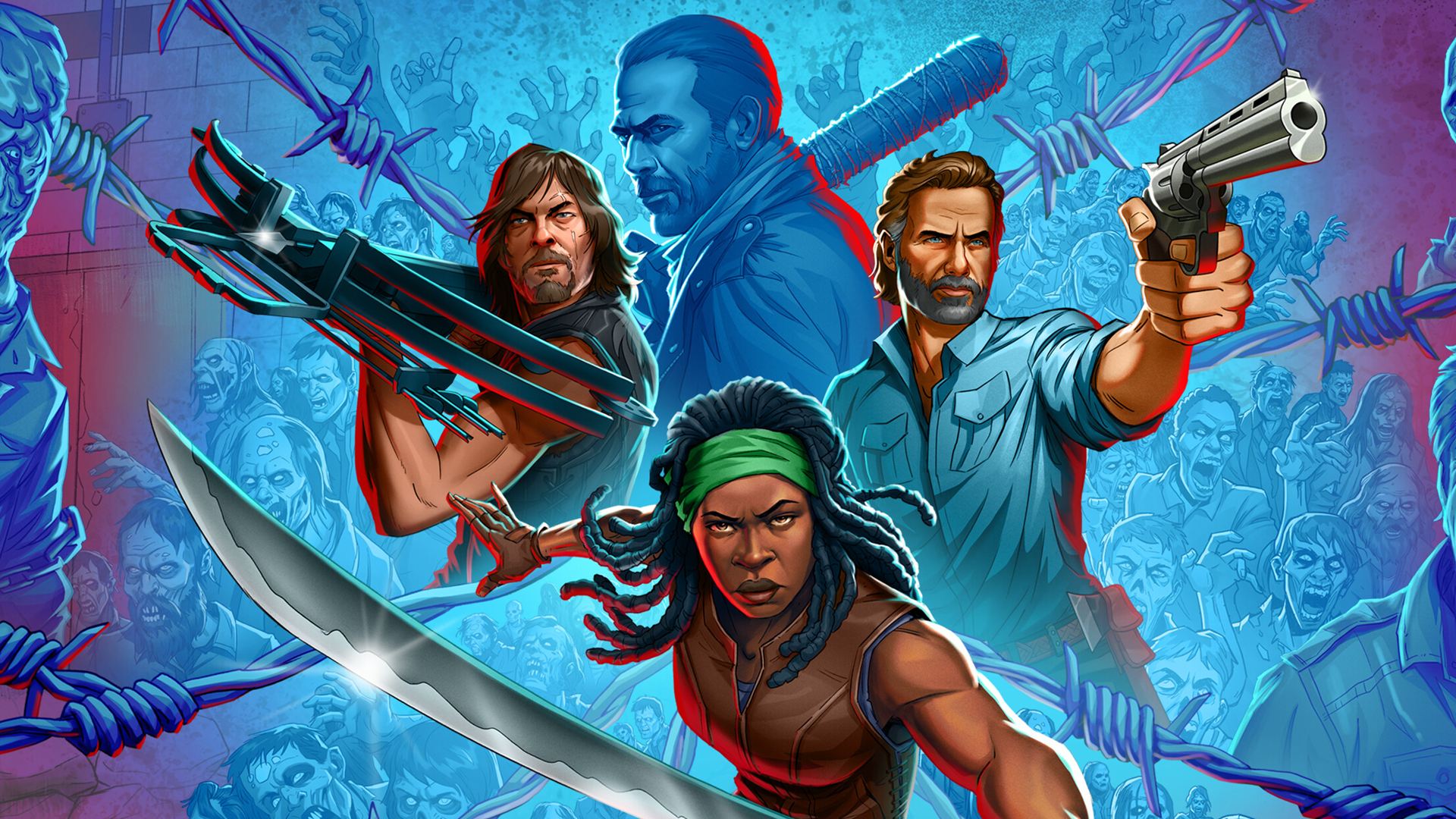
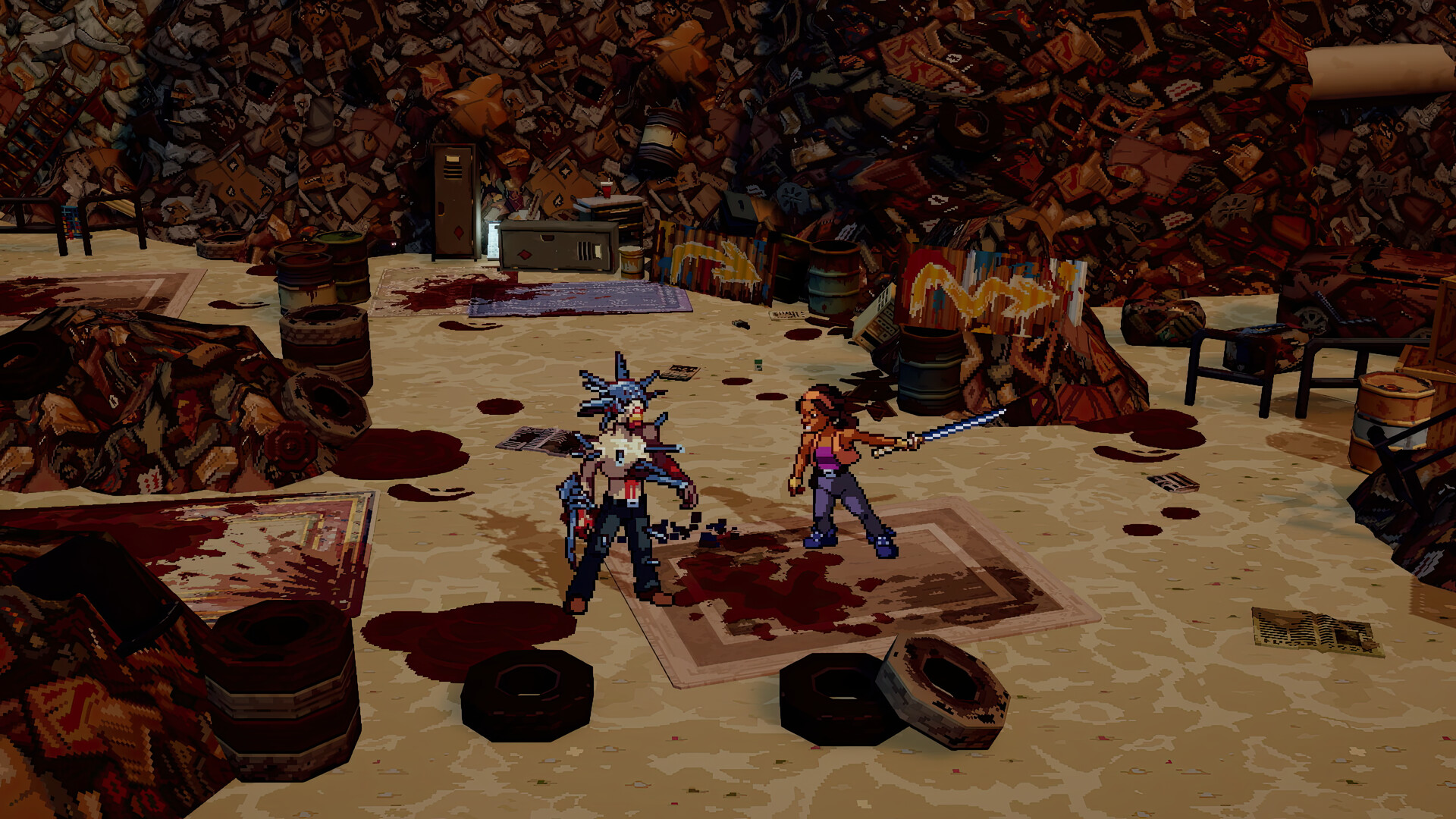
Rick has his magnum, Daryl his crossbow and Michonne her katana. These weapons cause real differences. Rick’s firepower requires monitoring ammunition, Daryl favors working from a distance and Michonne requires getting closer. Animations and skill trees extend this distinction. The hero’s choice is therefore not limited to a new outfit.
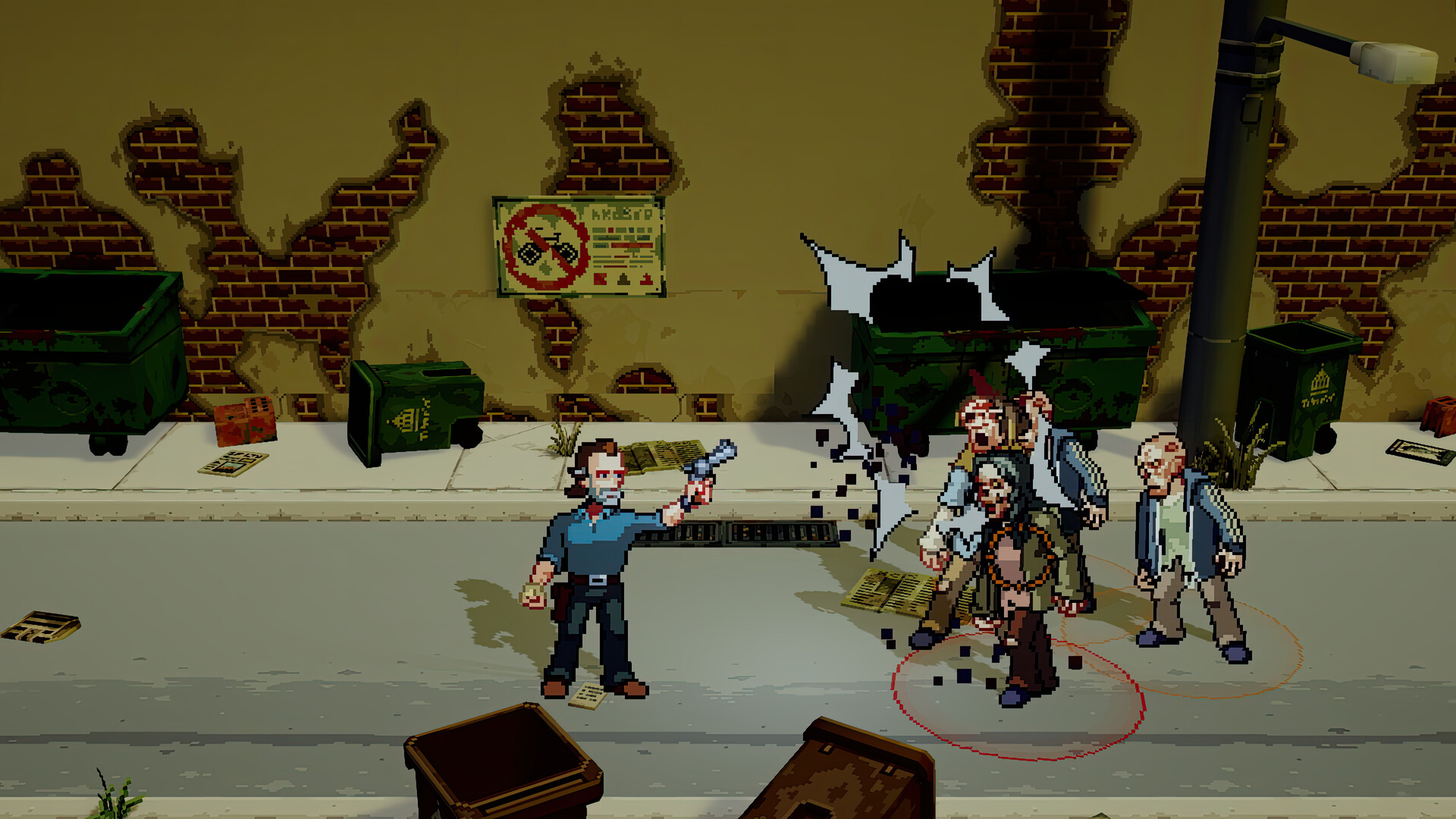
The simultaneous presence of walkers and human fighters gives the clashes their best idea. The former crowd the battlefield and threaten with numbers. Saviors add ranged attacks and defenses that require more attention. A firearm thus retains a purpose against a priority threat, instead of being used only to clear the screen. The expense of ammunition takes on a little weight when a group still has to be fought through.
Healing items, weapons and upgrade points found in levels also encourage scavenging. Exploring the surroundings of the main path prepares for what follows and allows you to strengthen your abilities. The progression gives a concrete reason for the detours, with a few objects linked to the universe to complete the collection. The balance between exploration and combat therefore has a coherent basis.
The system nevertheless remains quite light. The moves available lack variety and the clashes end up repeating the same exchanges. The absence of certain classic possibilities of the genre, notably jump attacks, further reduces the responses available when the crowd tightens. Skills improve the effectiveness of heroes, but they do not transform the rhythm enough to renew an entire campaign.
Precision is lacking
The main problem appears upon contact with enemies. Hit detection lacks clarity and aiming does not give the expected result. A shot that appears correctly placed does not necessarily produce a clear enough response. Faced with an isolated opponent, the discomfort remains bearable. In a melee, the uncertainty becomes much less pleasant: the difficulty then depends as much on reading the impacts as on the choice of attack.
The game’s feedback does too little to compensate for that imprecision. The sound effects and reactions to blows lack the strength to give each exchange the expected brutality. The katana, magnum and crossbow have a very strong visual identity; their effectiveness requires an equally clear translation on screen. This discrepancy weakens the immediate pleasure, which is nevertheless essential in a formula so geared towards combat.
The bosses try to vary the situations. Winslow, Simon and Negan constitute identifiable stages, with multi-phase clashes for the main human figures. Checkpoints limit losses after a failure and avoid systematically restarting a long section. Easy mode also helps reduce resistance. These choices make the campaign accessible, but adjustable difficulty is no substitute for consistent control precision.
Survive, but alone
The campaign remains exclusively single player. No local or online cooperation can bring survivors together in the same game. This choice does not prevent us from building a valid adventure, but it removes an obvious reason to replay. Returning to levels is based on skills to complete, difficulties to increase and Negan to unlock once the campaign is completed.
Lucille brings a new way of approaching clashes, and the possibility of replaying with other heroes gives a little latitude. However, the structure and situations remain familiar. The differences in skills extend the game without erasing the limits of its range of moves. Redoing the missions to complete the improvements quickly becomes more mechanical than the first discovery.
Additional content makes this limitation more annoying. The endless Walker Pit survival mode and checkpoint-removing difficulty belong to the Arcade Apocalypse Pack. This supplement also adds skins and the digital soundtrack. Cosmetic elements do not pose any particular problem. Reserving two game variations for the paid pack, when the standard edition already lacks options to last, is a significantly less convincing choice.
Beautiful ruins, little tension
The pixel art gives the game a nice identity. The environments layer car wrecks, degraded buildings and industrial zones, while the heroes retain their distinctive features. Tunnels, streets and bastions avoid complete uniformity. Violence also finds its place in this representation, without requiring a realistic reconstruction of the series.
The soundscape and narration, however, do not support this visual success. The places are dangerous, but the feeling of threat lacks continuity between the fights. The silence of the exchanges and the weak impact feedback leave certain sequences duller than their context. The references are present; the tension which must animate them remains intermittent. The French text make the campaign easy to follow.
Verdict
An adaptation that lacks bite
6/10
The Walking Dead: Streets of Survival has a sound premise in the combination of Rick, Daryl and Michonne’s weapons, resources to conserve and hordes to contain. The familiar locations, bosses, and unlockable Negan provide some good reasons to complete the campaign. Pixel art also has enough character to avoid feeling like an anonymous adaptation.
The fights, however, lack precision and variety, while the narration struggles to give weight to the conflict. Lack of cooperation further reduces replay possibilities, and placing survival mode and additional difficulty in a paid pack weakens the core content. An occasionally decent action game, but too limited to take full advantage of its source material.
Pros
- Weapons and skills specific to Rick, Daryl and Michonne
- An artistic direction in pixel art that makes the places recognizable
- Managing ammunition and healing items gives combat a little depth
- Negan to unlock after the campaign
Cons
- Hit detection and aiming that lack precision
- A limited range of moves and repetitive situations
- A staging without any real dramatic force
- No co-op, even locally
- Survival mode and difficulty without checkpoints reserved for the paid pack
More in Video games
Full library 7/10
MARVEL Cosmic Invasion – Cyclops and the Thing
XBOX 6/10
Underling Uprising
SWITCH 8/10
MARVEL Cosmic Invasion
XBOX 5.5/10
Heroes of Mount Dragon
XBOX 9/10
Dragon’s Dogma 2: Dark Arisen
XBOX 7/10
Brigandine Abyss
XBOX 8/10
Onimusha: Way of the Sword
XBOX 7/10
HOT WHEELS Infinite Rush
XBOX 8.5/10
S.T.A.L.K.E.R. 2: Cost of Hope
XBOX 7.5/10