
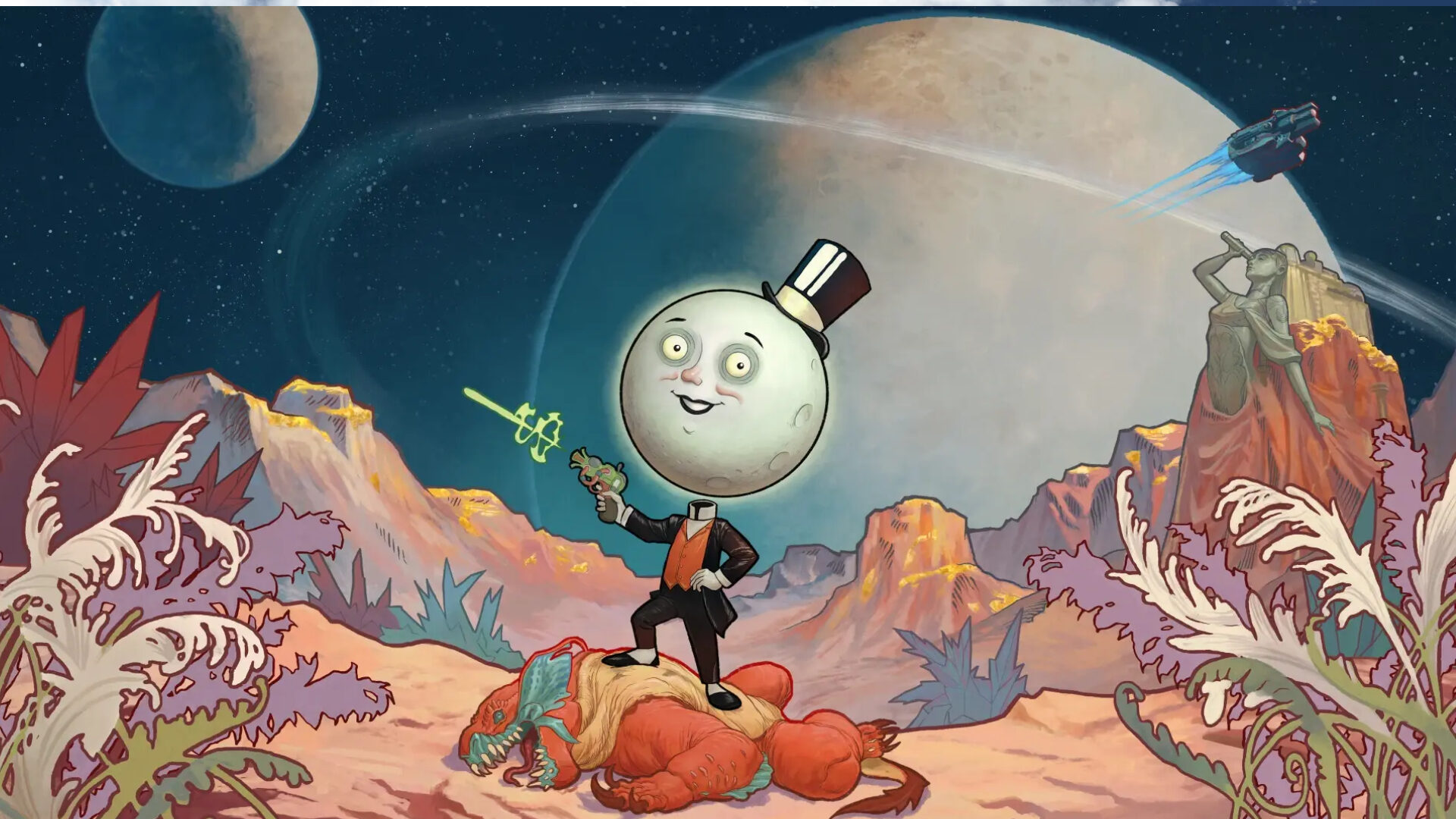
The Outer Worlds 2
The dizziness of stellar promises
Score: 8/10
Images and videos
At a glance
We liked
- Writing that is ever more sharp, ironic and disillusioned
- Memorable characters, embodied by dubbing of rare precision
- Better paced, faster-paced and smoother gameplay
- A splendid artistic direction, of absolute coherence
We liked less
- Sumptuous environments but without real soul
- A structure still too compartmentalized despite the promise of openness
- A satire so mastered that it becomes distant
- A feeling of frozen perfection that restrains emotion
 By Farrel Grimwood · published · 6 min read
Obsidian Entertainment returns with The Outer Worlds 2, exclusive to Xbox Series, and signs a sequel that plays the card of total shift. A new system, a new hero, an ever more acidic satire of space capitalism: everything seems familiar, but nothing really is. The studio does not seek to revolutionize its formula, it redeploys it, larger, more cynical, more gleaming.
Behind its caustic humor and its planets saturated with neon, The Outer Worlds 2 hides a darker ambition: that of transforming farce into reflection, and science fiction comedy into a grotesque mirror of our societies. The journey promises to be ironic, disillusioned, almost philosophical beneath its absurd space opera exterior. But does Obsidian still manage to make people laugh at chaos without becoming complicit in it?
The puppets of progress
The Outer Worlds 2 takes the dark comedy of the first episode, but stretches it to the scale of an entire system. Arcadia is no longer a simple setting: it is a showcase of absolute cynicism, an archipelago of planets governed by brands, slogans and empty promises. Obsidian pushes its concept to the absurd, transforming each colony into a caricature of our modernity. Stifling bureaucracies, standardized ideals, contracted morality… it’s a world saturated with advertising, false hopes and dialogues programmed to please.
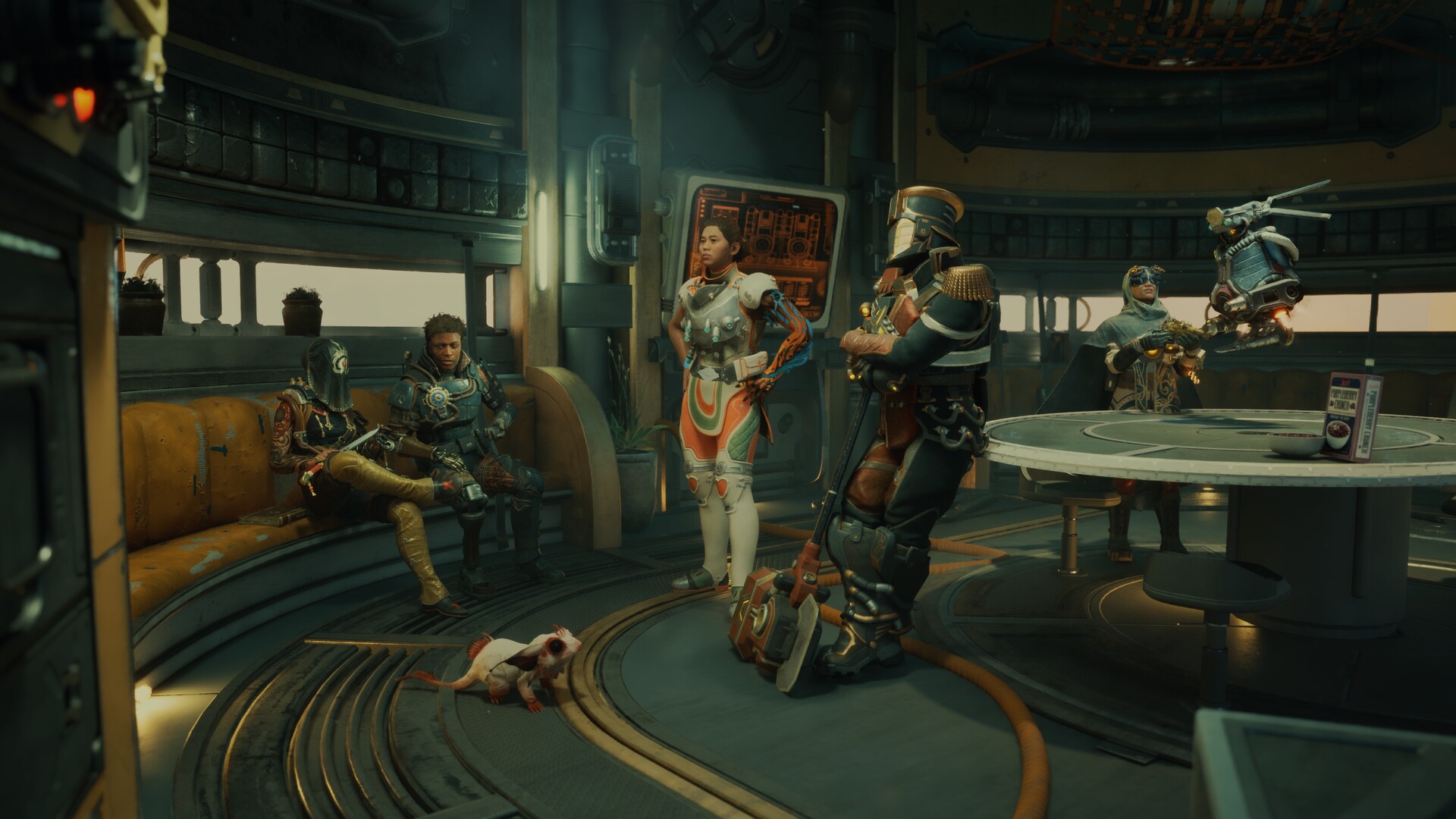
Writing remains the studio’s main weapon. The dialogues, chiselled and with biting irony, follow one another with absurd tirades and disillusioned monologues. The companions, more numerous and better characterized than in the first game, each embody a fragment of this moral disorder: the idealistic engineer ready to make a pact with the worst to save the best, the smuggler who theorizes corruption as the engine of progress, or the artificial intelligence convinced of being the moral conscience of the group. None are there to please; everyone is there to disturb.
Obsidian retains its sense of rhythm: the dialogues follow one another like duels of wits, the secondary quests are intertwined in a weave of irony and tragedy. We move from a satire of the colonial utopia to a reflection on manipulation without the tone ever wavering. The studio plays with the boundaries of parody, and therein lies its strength… and its limit. Because by dint of commenting on the world, The Outer Worlds 2 forgets to bring it to life. The situations shine through their writing, but lack emotional impact; we admire more than we feel.
The protagonist remains a ghost. His relative silence and voluntary neutrality serve the purpose, but also create a distance. You are the cynical witness to a theater on fire, never really an actor, rarely guilty. This posture ends up being irremediable: we go through the dialogues like a lucid spectator of a world too talkative to be sincere.
This is the ambiguity of the game: a fascinating universe, written with rare intelligence, but which ends up biting its tongue. The Outer Worlds 2 speaks better than it lives; and that is perhaps what makes it so contemporary as well as disappointing.
The wheels of conquest
The Outer Worlds 2 retains this hybrid structure between narrative RPG and first-person shooter, but deploys it on a much larger scale. The planets of Arcadia function as semi-open biomes, connected by transit zones and orbital stations where plots unfold. Each world has its own economic logic, its moral climate, its factions, and above all its contradictions. There we find the signature of the studio: spaces designed less for exploration than for dilemma.
The heart of the game beats in freedom of approach. Each mission can be resolved through diplomacy, infiltration or direct confrontation, and the game rewards persuasion as much as violence. Obsidian has perfected its branching dialogue system: the choices not only color the narrative, they modify the very structure of the quests. Some arcs close suddenly, others branch off according to unpredictable, sometimes cruel logic. It’s a writing that embraces moral chaos and makes you pay for your certainties.
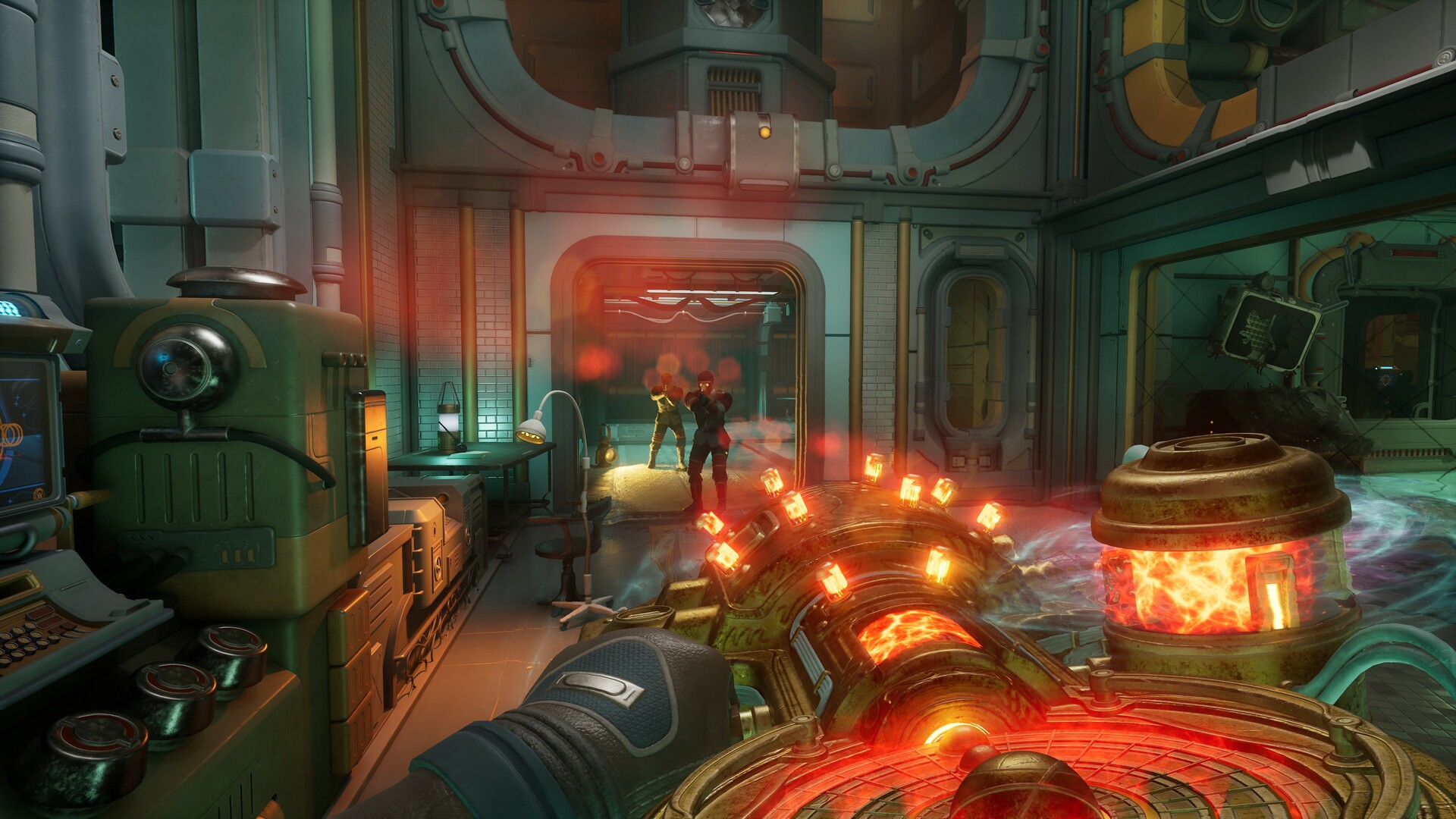
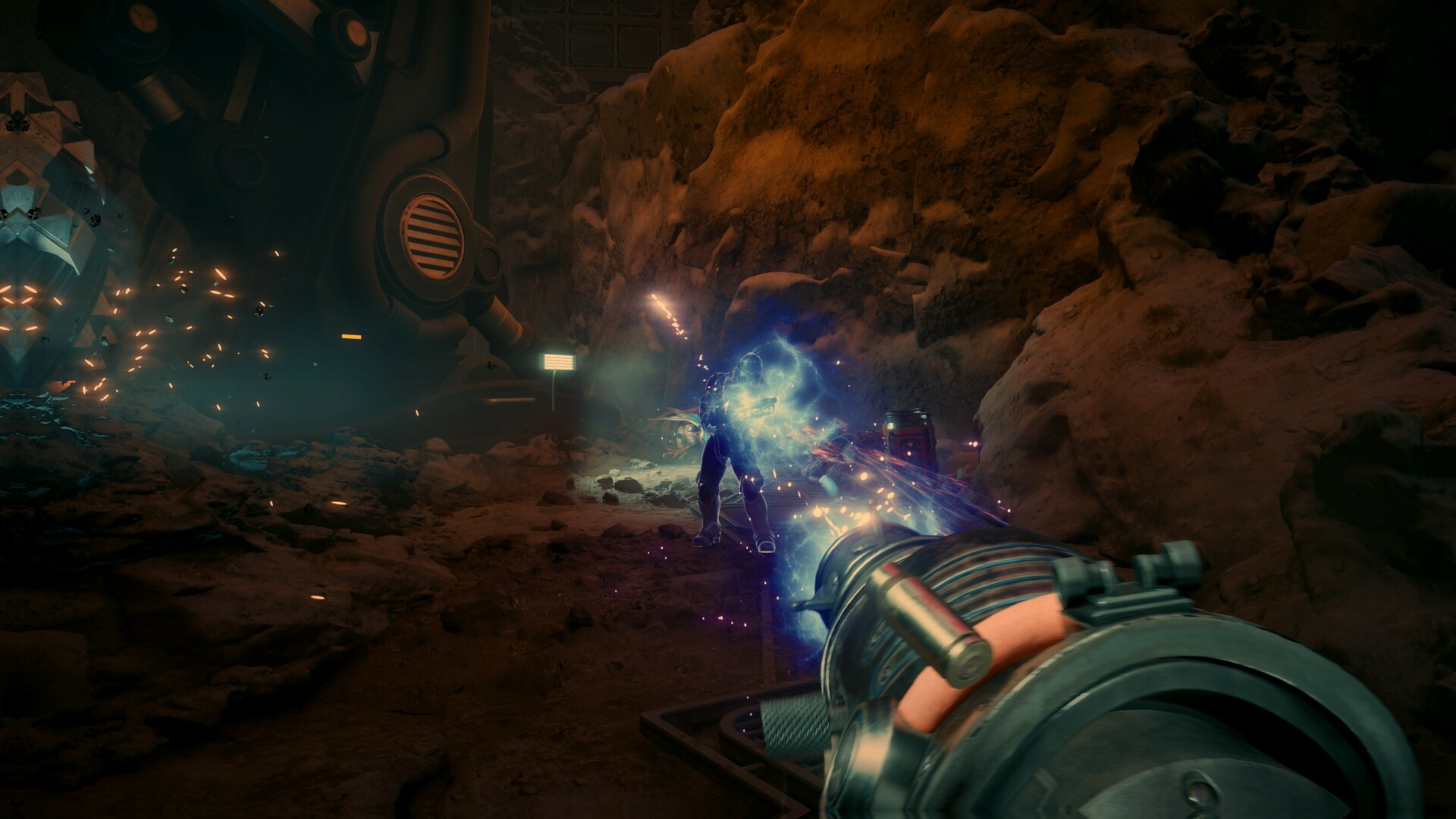
On a mechanical level, the combat becomes faster-paced. Weapons have weight, impacts shake, special skills trigger with a real sense of rhythm. The temporal slowdown, inherited from the first opus, returns in a reworked form: less spectacular, more strategic. We no longer shoot to aim, but to calculate. Yet, despite these adjustments, the persistent heaviness of certain weapons and uneven AI remind us that ambition sometimes exceeds mastery.
The level design adopts a more vertical approach, but remains trapped in its logic of partitioned areas. Each environment passes through like a theater set: sumptuous, coherent, but artificial. We feel Obsidian’s hand in the precision of the placement of points of interest, but also its limits in the repetition of certain patterns: entrance, corridor, decision room, inverted morality. The studio masters its language, at the risk of overusing it.
The game economy aims to be more dynamic. Resources, contracts, relations between factions form a dense but tedious system. The player spends a considerable amount of time comparing, managing, bargaining in a satire of capitalism which ends up reproducing its heaviness. This paradox runs through the entire game: the more Obsidian denounces the mechanics of control, the more it becomes their finest craftsman.
The Outer Worlds 2 remains fascinating in its coherence: everything is thought out, calculated, calibrated. But it is a world that breathes under glass, where freedom always seems a little staged. We play it like we would read a manifesto on the cynicism of power: brilliant, acidic, but strangely static.
The theater of illusions
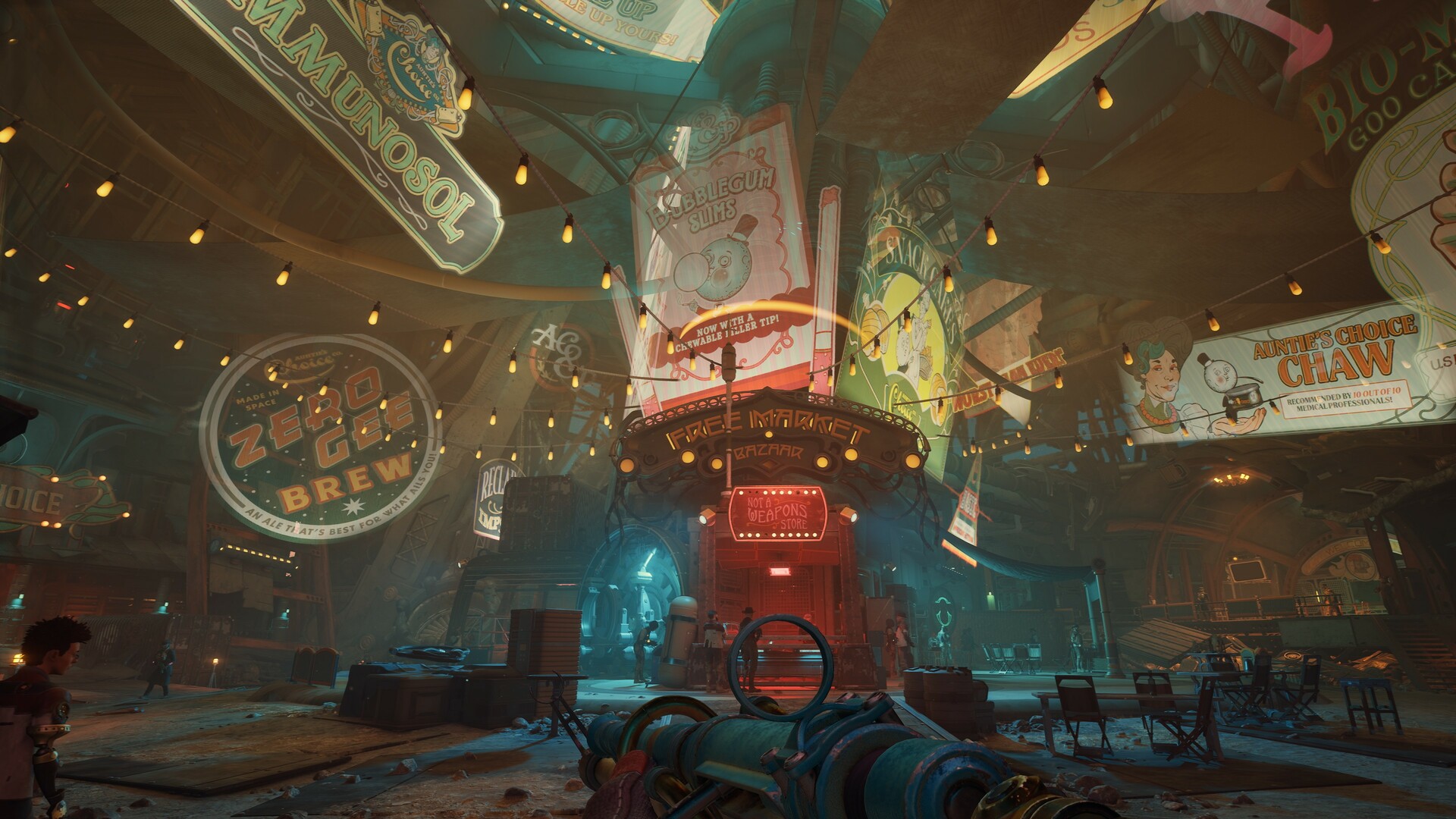
The Outer Worlds 2 imposes a falsely flashy splendor. The colors explode, the planets shine like shop windows, and each city seems to exist only to be observed but never inhabited. Obsidian strengthens its visual identity by pushing the logic of simulacrum further: artificial landscapes, absurd neon lights, costumes too clean to be credible. The whole world seems to be staged by an invisible hand, and that is precisely what makes it fascinating.
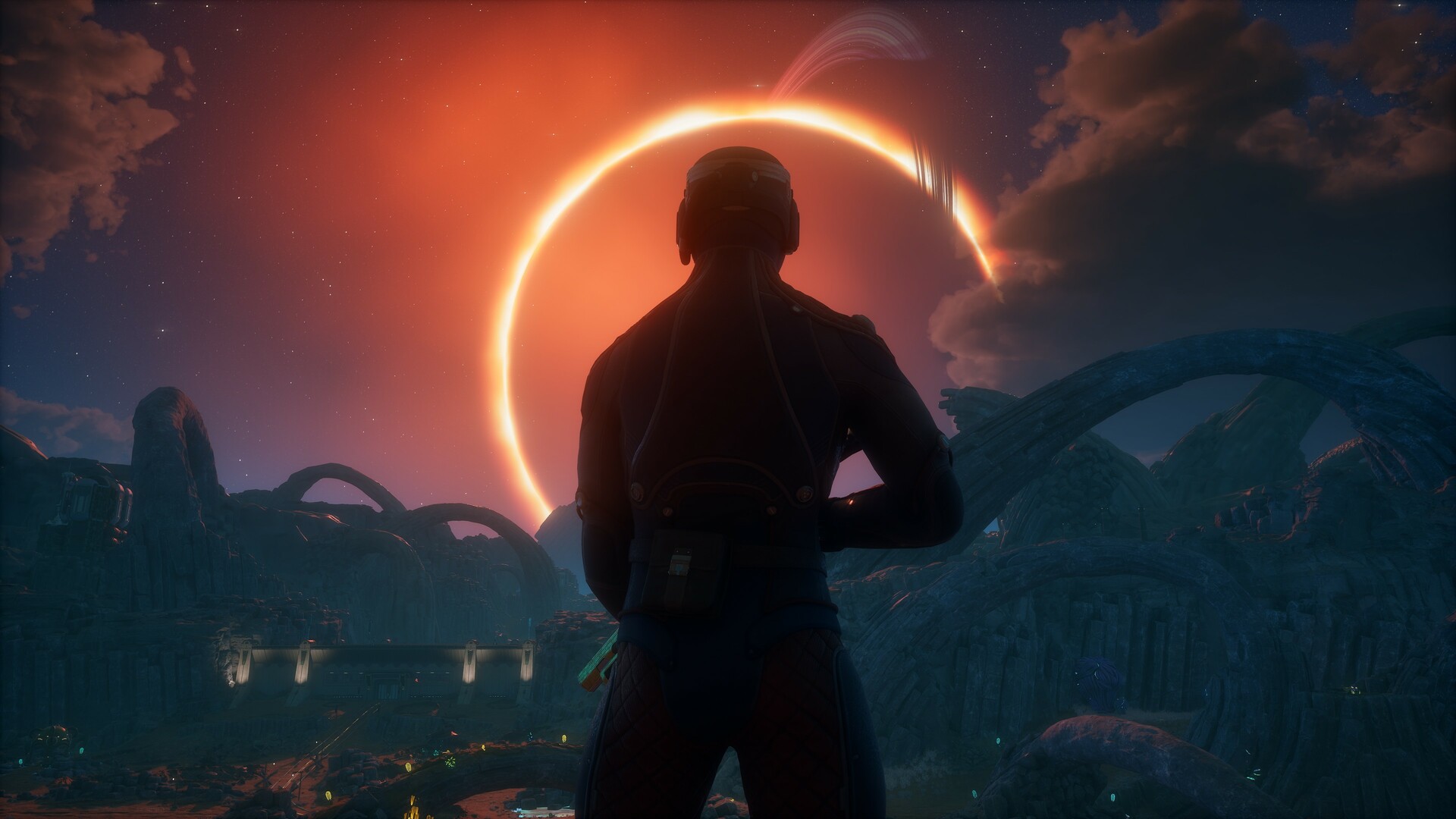
The artistic direction emerges as a paradox: more beautiful, clearer… more hollow. The textures are full of details, the lighting effects unfold with new accuracy, but something was lost along the way: this organic imperfection of the first game, this roughness which gave the setting its melancholy. Here, everything sparkles. The planets breathe advertising perfection: each sunset seems calibrated, each reflection seems to want to sell a product. It’s splendid, yes, but coldly splendid.
Facial animations, on the other hand, become more natural. The faces, once frozen in an ironic grimace, soften; the game dares to be nuanced. The companions express, hesitate, doubt: this visual subtlety reinforces the disillusioned tone of the writing. The environments benefit from a more ambitious staging, multiplying the panoramas, the saturated skies, the oppressive interiors. We feel a real increase in technical power, served by an engine that is finally fluid, stable and constant.
On the sound side, Obsidian regains its verve. The soundtrack, orchestral but restless, alternates between heroic flights and heavy silences, as if to remind us that heroism is no longer anything but a commercial memory. Mechanical sound effects, station whistles, radio interference create a world saturated with echoes. Each weapon clicks with dry realism, each shot reflects the violence of a sanitized universe. The dubbing, although only English, remains exemplary: the actors deliver performances of perfectly balanced irony, between sarcasm and disenchantment.
The Outer Worlds 2 thus stands out as an aesthetically accomplished work, but morally exhausted. Its beauty is no consolation for its lucidity: everything is splendid, but nothing is pure. We contemplate a magnificent world that no longer believes in itself.
Verdict
The perfect lie
8/10
The Outer Worlds 2 does not seek to please, but to persist. Obsidian offers a game that is broader, more acidic, more merciless than its predecessor. Everything is bigger there, but also more disillusioned. Behind the veneer of a ceremonial space opera, the studio continues its methodical dissection of power, hypocrisy and progress. The player laughs, but this laughter quickly freezes.
It’s not a flamboyant sequel, it’s a lucid, logical, relentless sequel. A two-way mirror where we contemplate our own cynicism, polished by hours of play and bursts of bitter laughter. Obsidian does not evolve its formula, it radicalizes it; and delivers, under the guise of satire, one of the most coldly lucid RPGs of its generation.
Pros
- Writing that is ever more sharp, ironic and disillusioned
- Memorable characters, embodied by dubbing of rare precision
- Better paced, faster-paced and smoother gameplay
- A splendid artistic direction, of absolute coherence
Cons
- Sumptuous environments but without real soul
- A structure still too compartmentalized despite the promise of openness
- A satire so mastered that it becomes distant
- A feeling of frozen perfection that restrains emotion
- The absence of French dubbing
More in Video games
Full library 8.5/10
Warhammer 40,000: Boltgun 2
PC 8.5/10
S.T.A.L.K.E.R. 2: Cost of Hope
XBOX 8/10
Halo: Campaign Evolved
XBOX 7/10
Cthulhu: The Cosmic Abyss
XBOX 9.5/10
Marathon
SERIES 8.5/10
Battlefield 6
SERIES 9/10
Bravely Default : Flying Fairy HD Remaster
SERIES 9/10
PRAGMATA
SERIES 8.5/10
FATAL FRAME II: Crimson Butterfly REMAKE
SERIES 7/10