
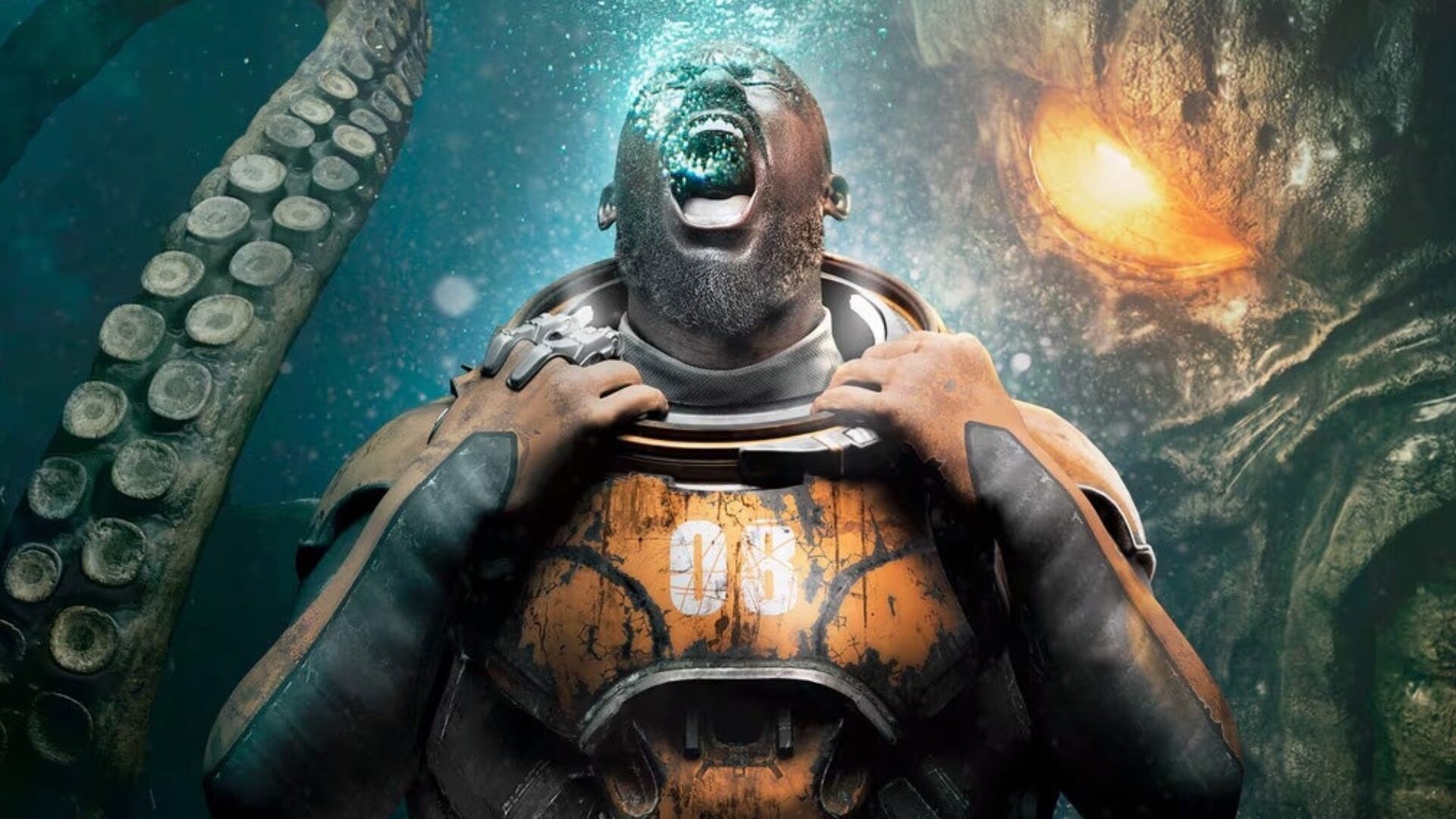
Cthulhu: The Cosmic Abyss
Reason at the bottom of the abyss
Score: 7/10
Images and videos
At a glance
We liked
- A well-established Lovecraftian atmosphere
- The Vault gives weight to the deduction
- Sonar functions as a real investigation mechanism
- R'lyeh has a real visual presence
We liked less
- Handling objects is painful
- The energy system does not serve the experience
- Controls lack precision
- Goals get confusing at times
 By Farrel Grimwood · published · 7 min read
Contents
Cthulhu: The Cosmic Abyss makes a good decision from the start in not turning Lovecraft’s universe into an action game. Big Bad Wolf leaves the weapons aside and builds a first-person investigation, with evidence to read, objects to examine, hypotheses to connect and an underwater station that gradually slides towards something much less rational.
Noah, an agent of Ancile, descends in 2053 into a mining installation cut off from the world. Humanity still exploits what it can, large private structures dig ever lower, and the investigation quickly leads to R’lyeh, a sunken prison devoid of meaning and reason. The idea is not new in the Cthulhu universe, but it works because the game takes it seriously. It talks about exploitation, technology, the belief in control, and then shows what happens when all of that is no longer enough.
The game succeeds especially when it remains observational. We move forward, we dig, we understand a scene in small pieces. A note, a corpse, a trace, a sound anomaly. Nothing spectacular, but real consistency. Cthulhu: The Cosmic Abyss isn’t trying to scare every five minutes. It prefers to let the discomfort build.
The problem is that a detective game has to be precise. There are too many things hanging here. Manipulating objects is painful, some objectives are poorly indicated, the rhythm is broken in useless back and forth. The background is good. Execution does not always follow.
An investigation that holds its idea
The best choice of the game remains its lack of combat. Noah doesn’t win because he aims better. He moves forward because he observes more closely. This immediately changes the relationship to horror. The threat is not an adversary to manage, but a truth to approach. This is exactly what was needed for this franchise.
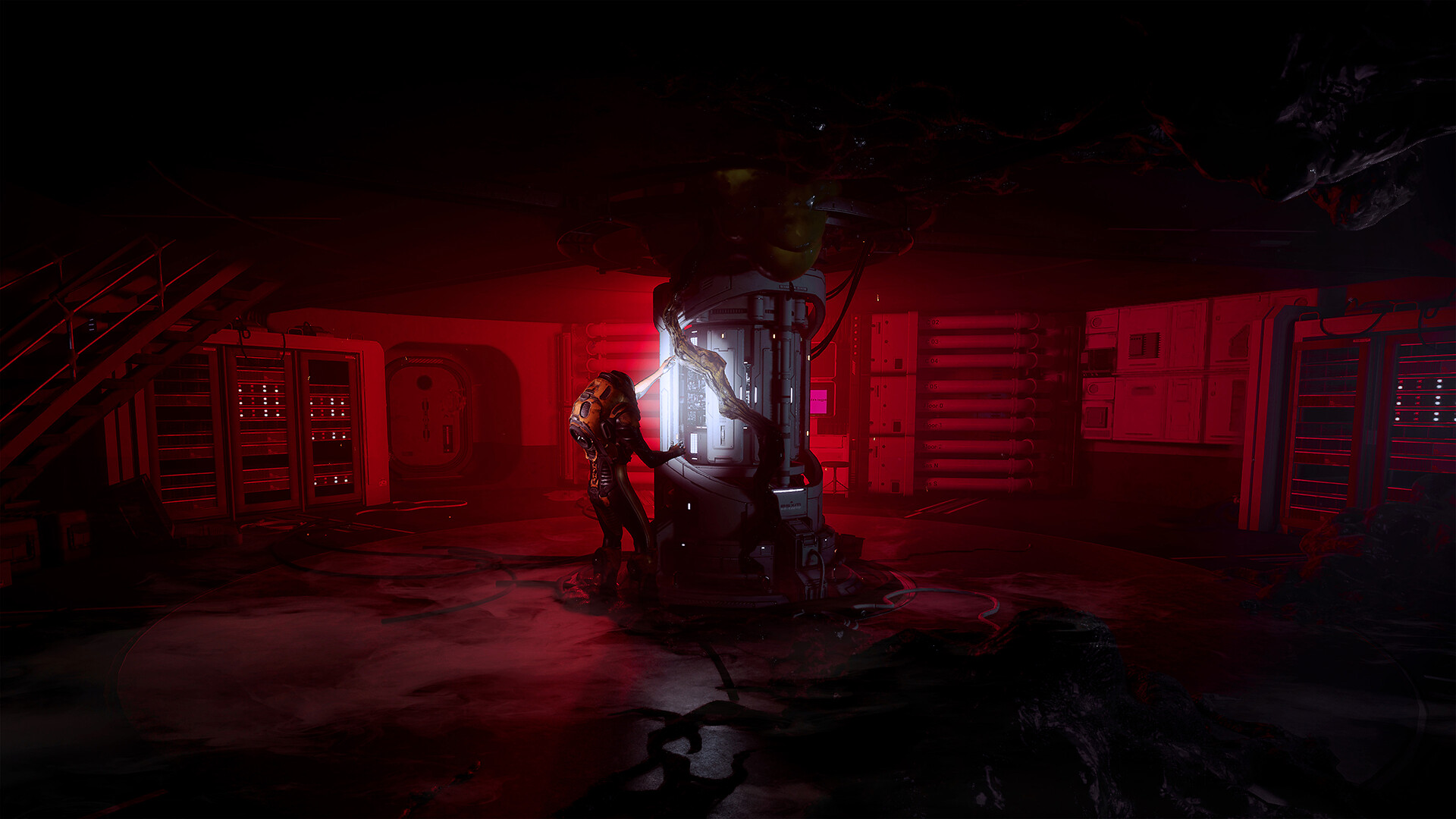
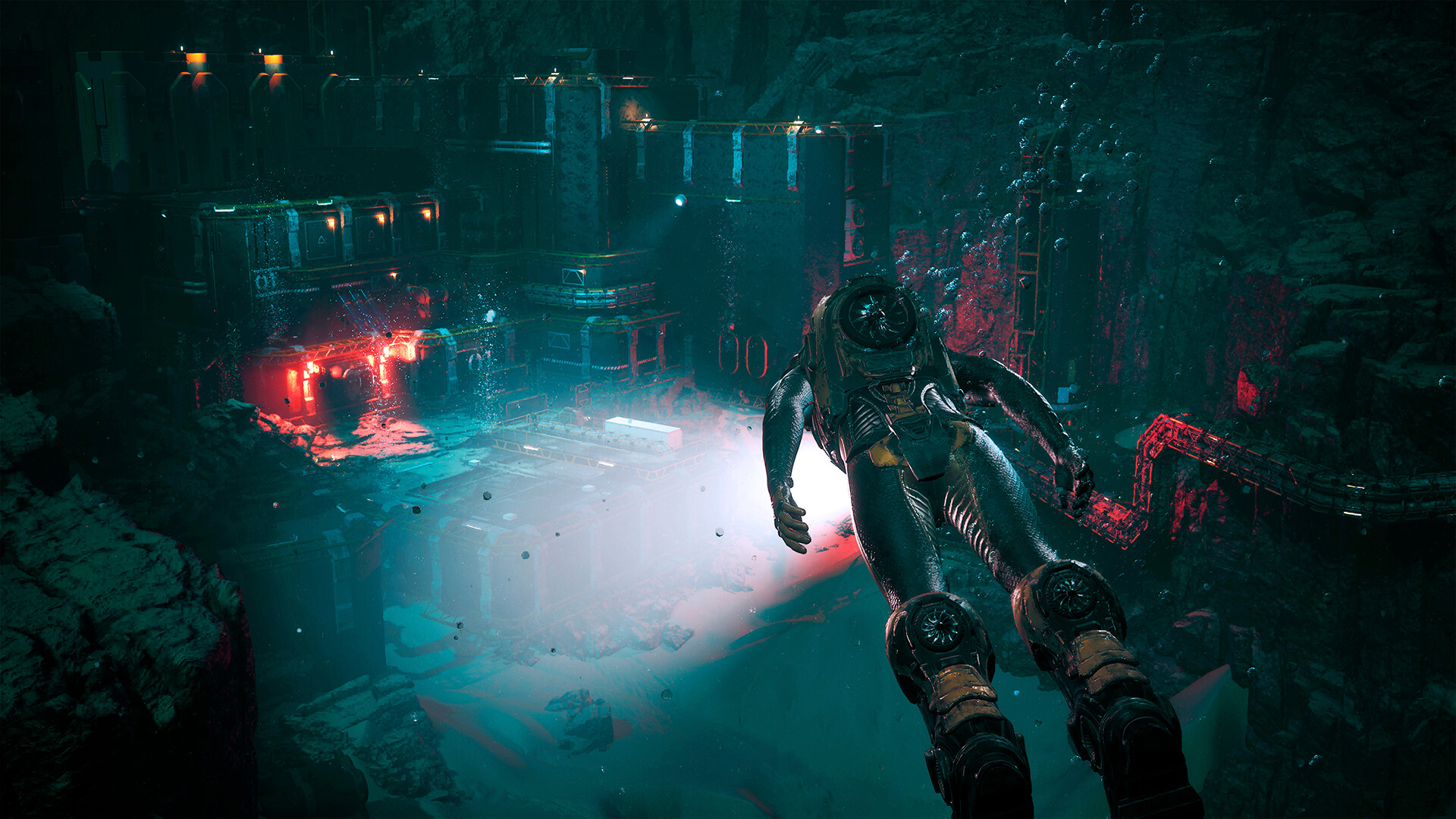
The first hours establish this logic well. The station gives a cold, industrial, almost administrative setting. There we find procedures, screens, files, abandoned work areas. Then reality becomes distorted. Human places find themselves contaminated by something else. R’lyeh does not arrive as a simple spectacular decoration, but as a presence which makes everything else ridiculous.
Noah remains a conventional, functional protagonist. It’s used to investigate, not to steal the scene. Key, the artificial intelligence that accompanies him, is of more interest. It helps to classify the clues, structures the reasoning, gives a technical reading to phenomena which precisely refuse to be reduced to data. This opposition works well.
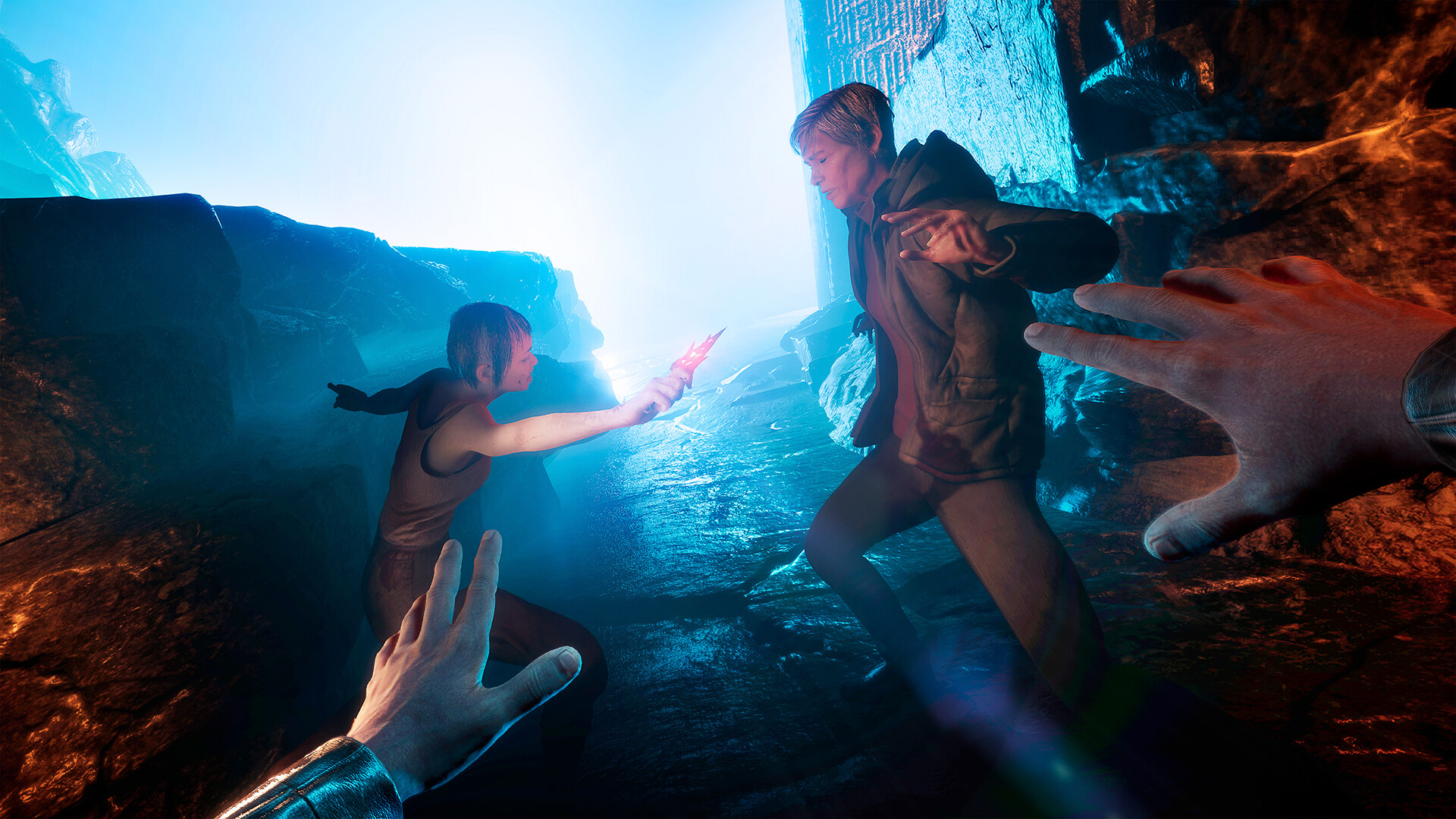
The game also finds a good place for mental corruption. It is not limited to a gauge of madness placed in a corner. It influences certain conclusions, modifies the way of reading the facts, and gives weight to choices. Cthulhu: The Cosmic Abyss understands that Lovecraftian fear comes not only from what we see, but from what we agree to believe.
The story remains more classic than its device. Blind corporation, cult, forbidden knowledge, overconfident humanity: we know this trajectory. The game doesn’t surprise much. But it holds its line well enough to keep the investigation interesting.
The Vault does the job
The Vault is the really good gameplay idea. This is the place where the evidence meets each other. We classify the elements, we connect facts, we test an interpretation. When the system works, it provides simple and effective satisfaction: a scene that seemed confusing finally becomes readable.
Key’s sonar brings another good layer. It is used to locate traces, to probe an environment, to reveal what Noah does not see directly. The game could have fallen into easy highlighting. It often avoids this trap. Sonar gives a method, not just an arrow.
The puzzles follow this logic. Above all, they require you to look carefully and understand the link between the clues. They are not very complicated puzzles, but they fit well into the rhythm of the investigation. Cthulhu: The Cosmic Abyss is more interesting when it asks you to think about what happened than when it tries to block the player in front of a mechanism.
This part works. It gives the game a real identity. Big Bad Wolf knows how to make documents, choices and frozen scenes talk. We sense the studio’s experience in this way of letting a moral or logical decision weigh on what happens next.
But the system lacks clarity in several important moments. Sometimes you have to find the exact right point on an object, revisit a room because a detail has not been validated, return to a menu without immediately understanding what the game expects. The investigation becomes heavier, not more interesting.
Heaviness breaks the mystery
The game’s biggest flaw is very concrete: manipulating objects is not pleasant. For a title that constantly requires you to inspect, rotate, analyze and validate elements, this is a real problem. The gesture lacks precision. The right angle is hard to find. The expected interaction does not always occur clearly. We then leave the investigation to fight with the interface, we leave the anxiety to return to our position as a player fighting against wobbly handling.
The rhythm also suffers from this heaviness. Cthulhu: The Cosmic Abyss has the right to be slow. Its slowness often even serves its atmosphere. But it adds too much back and forth, too many moments where you’re simply looking for what hasn’t been checked off by the game.
The energy system is also not working as it should. It limits certain tools, but does not create real tension. Rather, it slows down an adventure that did not need this additional constraint. The game is already quite heavy in its atmosphere, its locations and its choices. This management layer doesn’t add much, other than the frustration of having to wait before performing an action.
The controls also lack precision. Movement remains fine, but examining objects and navigating evidence feels less natural than it should be. Be careful, the game remains perfectly playable. It only gives the impression of having been designed for finer manipulation, using a mouse, than what the pad actually allows.
Technical problems add their own stumbling blocks. Bugs, poorly placed save points, slowdowns, small visual inconsistencies: nothing makes the adventure unplayable, but everything regularly comes back to scratch the immersion. In a game built on atmosphere, these flaws are costly.
A solid atmosphere, not always well maintained
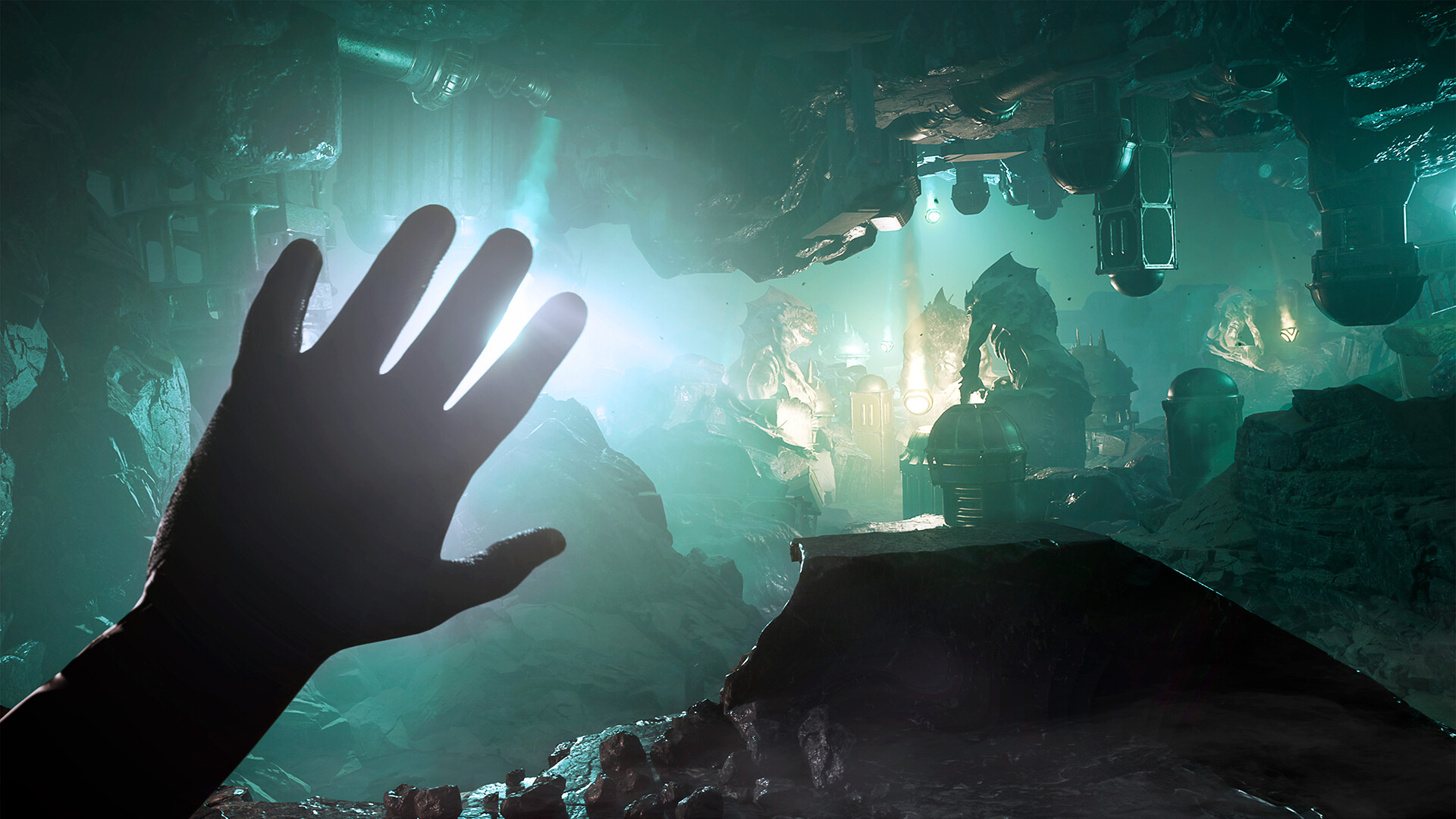
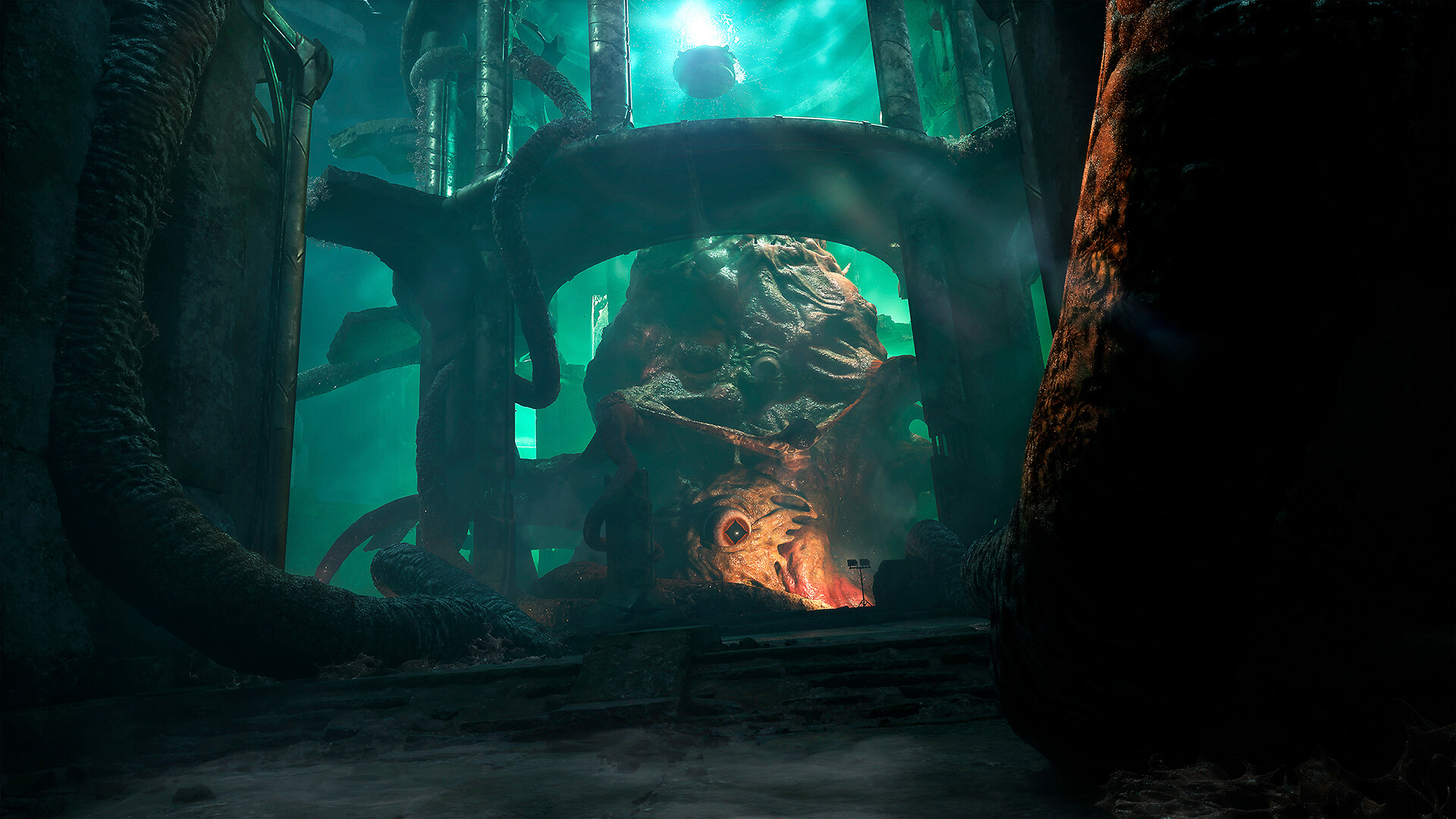
Visually, Cthulhu: The Cosmic Abyss has some very good passages. The underwater station sets up a credible and cold setting. R’lyeh contrasts with this logic and gives the game its strongest images. The volumes, shapes, verticality and scale often give the impression of being in a place that has nothing to do with humans.
The game also avoids showing Cthulhu too much. It’s important. Many adaptations lose the strength of the myth by transforming the unspeakable into a big boss at the end of the level. Here, the threat weighs more through the places, the traces, the effects on the characters. The result is fairer.
The sound plays a large part in this success. Muffled noises, machines, signals, silences and distant voices create an effective atmosphere. The game doesn’t need to overuse jump scares. It knows that waiting does a lot of the work.
The English voices do the job correctly, without always giving the scenes the expected strength and without providing the comfort of a complete localization. French in texts is essential to follow clues and deductions. Localization fulfills its role, even if it does not solve the clarity problems of the system.
The whole therefore remains solid in terms of atmosphere. Cthulhu: The Cosmic Abyss knows where it wants to take the player. It only lacks cleanliness to keep this tension without interruption. As soon as the interface or technical problems intrude, the horror recedes and the game becomes software again.
A good base, too many snags
Cthulhu: The Cosmic Abyss is an interesting game because it understands its subject. It doesn’t try to imitate survival horror, it doesn’t transform its investigator into an armed hero, it doesn’t drown the player in monsters. It takes the side of investigation, deduction, observation. That’s the right angle.
But this angle is not enough to hide the flaws. The systems lack comfort. The manipulations break the rhythm. Some goals become more confusing than intelligent. Saves and bugs mess up several passages. These are central issues, not mere details.
The game remains recommendable for those who like slow investigations and well-established Lovecraftian atmospheres. It offers real moments of unease, good ideas for deduction and an artistic direction capable of making R’lyeh exist other than as a dark postcard setting.
You shouldn’t expect the precision of a great investigation game from it. This is where it fails most clearly. It knows how to pose a mystery. It is less able to make the path that resolves it pleasant.
Verdict
A strong, but poorly polished investigation
7/10
Cthulhu: The Cosmic Abyss is held together by its atmosphere, its refusal of easy action and its good ideas for investigation. The Vault, sonar, corruption and artistic direction give the game a real identity. Big Bad Wolf understands the myth and finds an interesting way to modernize it.
But the game loses too many points on execution. Manipulating objects is painful, the energy does not serve the experience, the controller lacks precision, the saves are annoying and the technical performance lacks stability. A good investigation, yes, but a good investigation that requires putting up with too many hiccups.
Pros
- A well-established Lovecraftian atmosphere
- The Vault gives weight to the deduction
- Sonar functions as a real investigation mechanism
- R'lyeh has a real visual presence
- The game avoids easy action and stays true to its subject
Cons
- Handling objects is painful
- The energy system does not serve the experience
- Controls lack precision
- Goals get confusing at times
- Technical performance and saves lack polish
More in Video games
Full library 8.5/10
Warhammer 40,000: Boltgun 2
PC 8.5/10
S.T.A.L.K.E.R. 2: Cost of Hope
XBOX 8/10
Halo: Campaign Evolved
XBOX 9.5/10
Marathon
SERIES 8/10
The Outer Worlds 2
SERIES 8.5/10
Battlefield 6
SERIES 9/10
Dragon’s Dogma 2: Dark Arisen
XBOX 7/10
Brigandine Abyss
XBOX 6/10
The Walking Dead: Streets of Survival
XBOX 8/10