
Battlefield 6
The rebirth of a total battlefield
Score: 8.5/10
Images and videos
At a glance
We liked
- Fluidity and stability on Xbox Series
- The return of traditional classes and team play
- The breadth of multiplayer and the richness of the maps
- The visual and sound density of the Frostbite engine
We liked less
- Some scripts still too rigid in the single player campaign
- The AI sometimes hesitant during large-scale missions
- A progression system that is still slow in the first levels
- The absence of real new features in certain classic modes
 By Farrel Grimwood · published · 9 min read
Contents
Battlefield 6 stands out as Battlefield Studios’ most ambitious attempt since the controversial 2042 overhaul. Built as a methodical reconstruction of a fractured myth, it returns the series to the terrain of modern warfare, the one where it all began, the one where every meter gained counts as much as the staging. The game unfolds on Xbox Series like a mechanical fresco of glass, dust and fire, where each explosion becomes language again, each map a moving story.
Beneath its military blockbuster surface, Battlefield 6 aims to be heir to a lineage marked by the obsession with spectacle and the search for organic tension. The Battlefield Studios teams celebrate dynamic destruction, squad coordination and the return to a human scale, after the excesses of disconnected futurism. Everything breathes the desire to restore meaning to digital war: that of controlled chaos, collective rhythm, balance between technique and feeling.
But does Battlefield 6 embody the reconciliation of a series with itself, or only the illusion of a return to glory?
The ghosts of modern conflict
Battlefield 6 immerses you in a fragmented world where historical powers have ceased to exist as nations. Alliances have dissolved, replaced by coalitions of interests and private armies competing for remaining territories. At the center of this chaos stands the Pax Armata, a military organization emerging from the ruins of NATO. It acts as an autonomous entity, selling war as a service and peace as a product. You are operating in an unstable equilibrium where technology, information flows and total surveillance have replaced diplomacy.
The single-player campaign sees you join Dagger Unit 1-3, a small group of elite operators sent to different fronts of a changing global conflict. You follow Haz Carter, field commander and last vestige of a decaying military ideal. Dylan Murphy, engineer and drone specialist, manipulates the machines with cool efficiency. Simone Espina, a sniper with a fragmented past, experiences war as a discipline. Cliff Lopez, logistical support, is the faithful shadow of a group that is falling apart. Finally, Lucas Hemlock, a CIA agent with a troubled identity, embodies the gray zone into which everything falls. Everyone bears the mark of a world that no longer belongs to anyone.
You traverse the planet through a series of operations designed as interconnected boards. The snows of the Caucasus, the underground corridors of Gibraltar, the mined ports of the Mediterranean, the ruins of New York and the industrial zones of Europe become the theaters of the same collapse. Each mission forces you to rethink how you approach the battlefield, adapt to changing environments, and survive misinformation and manipulation. The Gibraltar episode perfectly sums up this approach. You are tasked with retaking the Rock Fortress, neutralizing the automatic defenses there, liberating the strategic tunnels and restoring communication lost for weeks. What you discover is not a victory, but another illusion of control.
The narrative unfolds without a triumphant hero. You participate in a series of uncertain moral decisions, temporary alliances and inevitable sacrifices. The war no longer has a face, only operators lost in a fog of data. Each verbal exchange, each silence between two orders reflects the weariness of men and women aware of being the instruments of a system that renews itself faster than they breathe. Fatigue and resignation replace bravery, and the story draws unusual power from it.
The scriptwriting approach of Battlefield 6 is distinguished by this tension between the spectacular and the disenchantment. You are in the middle of total conflict, but nothing seems glorious. The cutscenes, sober and meticulously framed, focus on the faces, on the gestures, on the hesitations before the strike. Emotion is born from the contrast between the disproportionate scale of events and the fragility of the beings who experience them. Everything is crumbling, slowly, methodically, as if the war itself was becoming meaningless. You no longer fight for a cause, but to not disappear before the end of the cycle.
The architecture of the battlefield
Battlefield 6 takes you back to the heart of what has always defined the series: scale, destruction and collective tension. Each map becomes a living organism, an ecosystem where strategy, mobility and coordination take precedence over simple shooting precision. You are not playing an isolated soldier, you are participating in a spiral of dizzying magnitude where each action, each retreat, each error can redraw the front line.
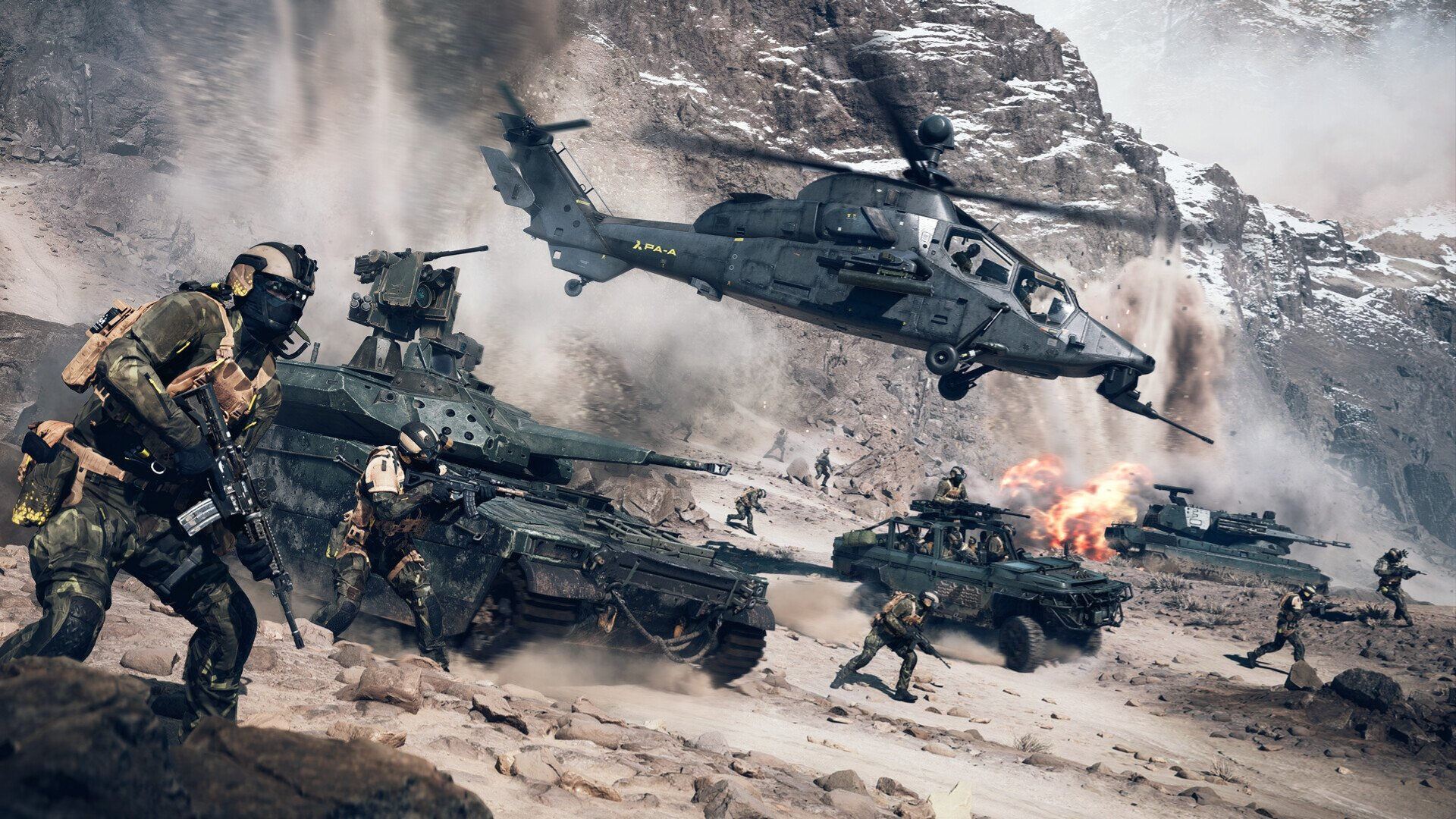
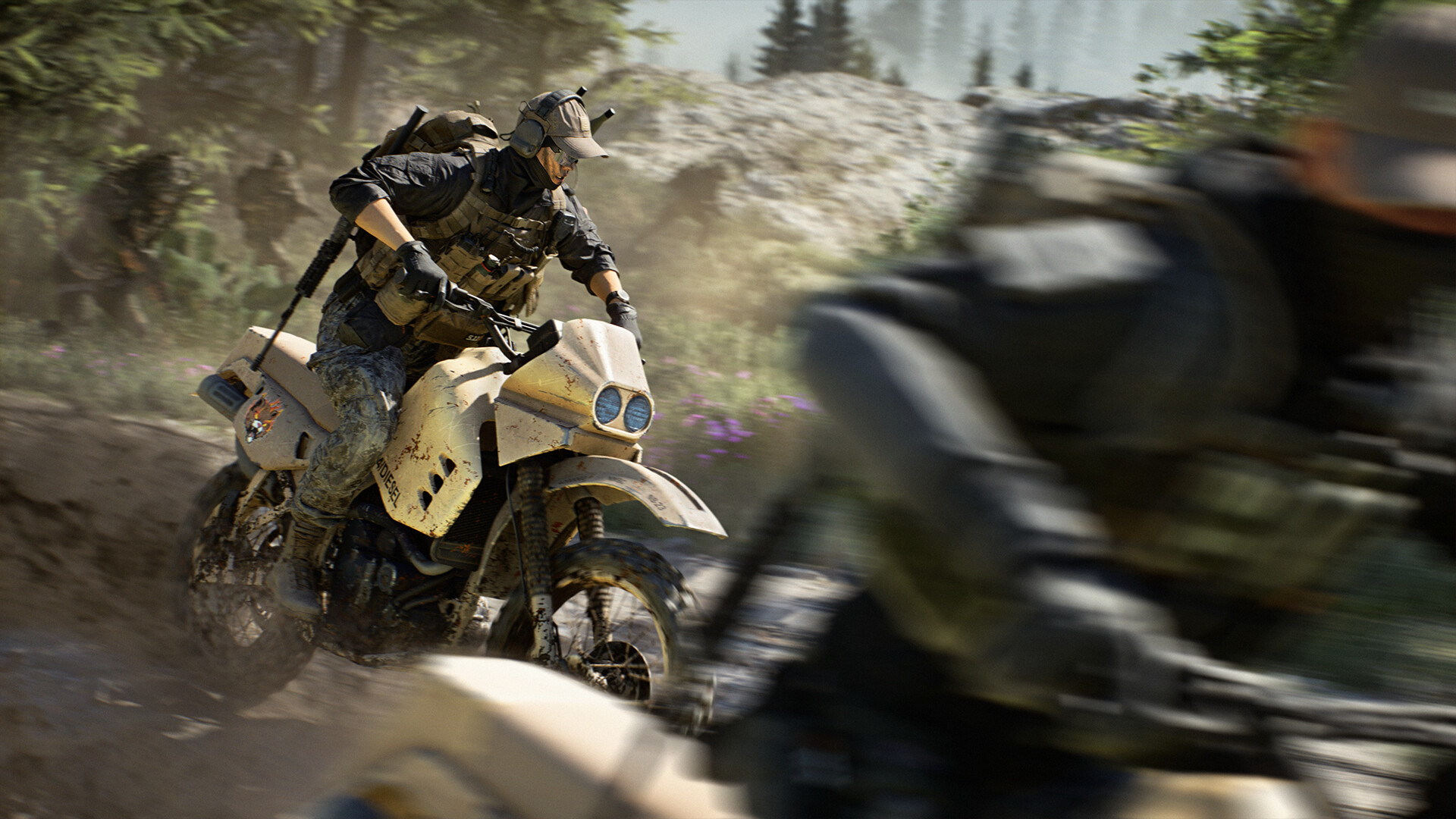
The game is based on a structure of successive layers. On the surface, a smooth, visceral and fast-paced combat system. In depth, a redesigned conquest mechanic to encourage constant adaptation. You alternate between infantry, land vehicles, air support and mechanized operations, in environments that transform throughout the clashes. The maps evolve in real time: buildings collapsing, roads falling apart, storms erasing visual landmarks. You learn to read space as a living, changing, unpredictable matter.
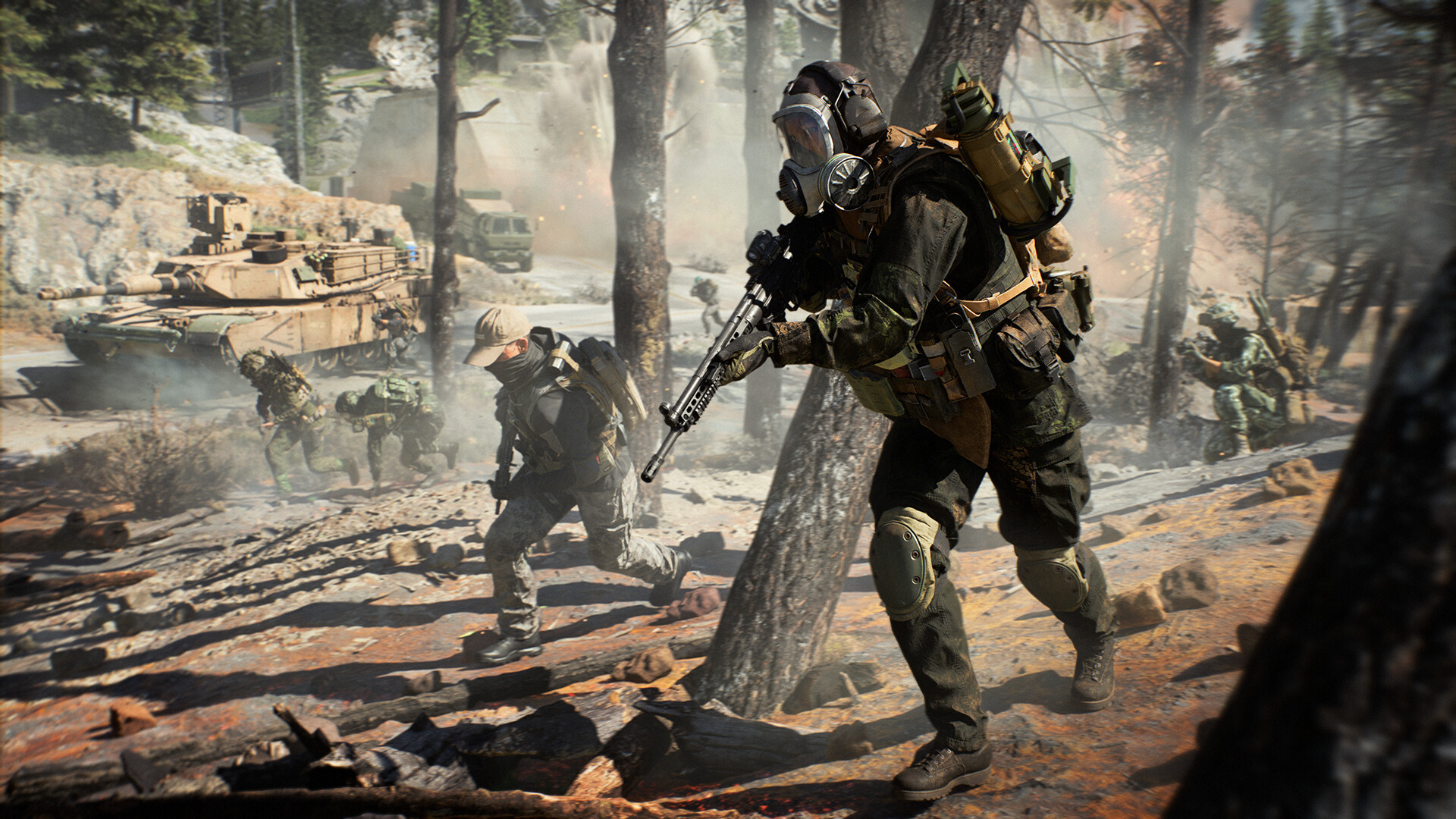
On Xbox Series, the fluidity of movements and the density of the battlefield are impressive. Transitions between areas are seamless, particle effects and debris saturate the screen without compromising readability. You feel the breath of the Frostbite engine in its most controlled form: each explosion generates calculated chaos, each impact seems to feed the logic of the game. Destruction once again becomes a language, a tactical tool rather than a simple setting.
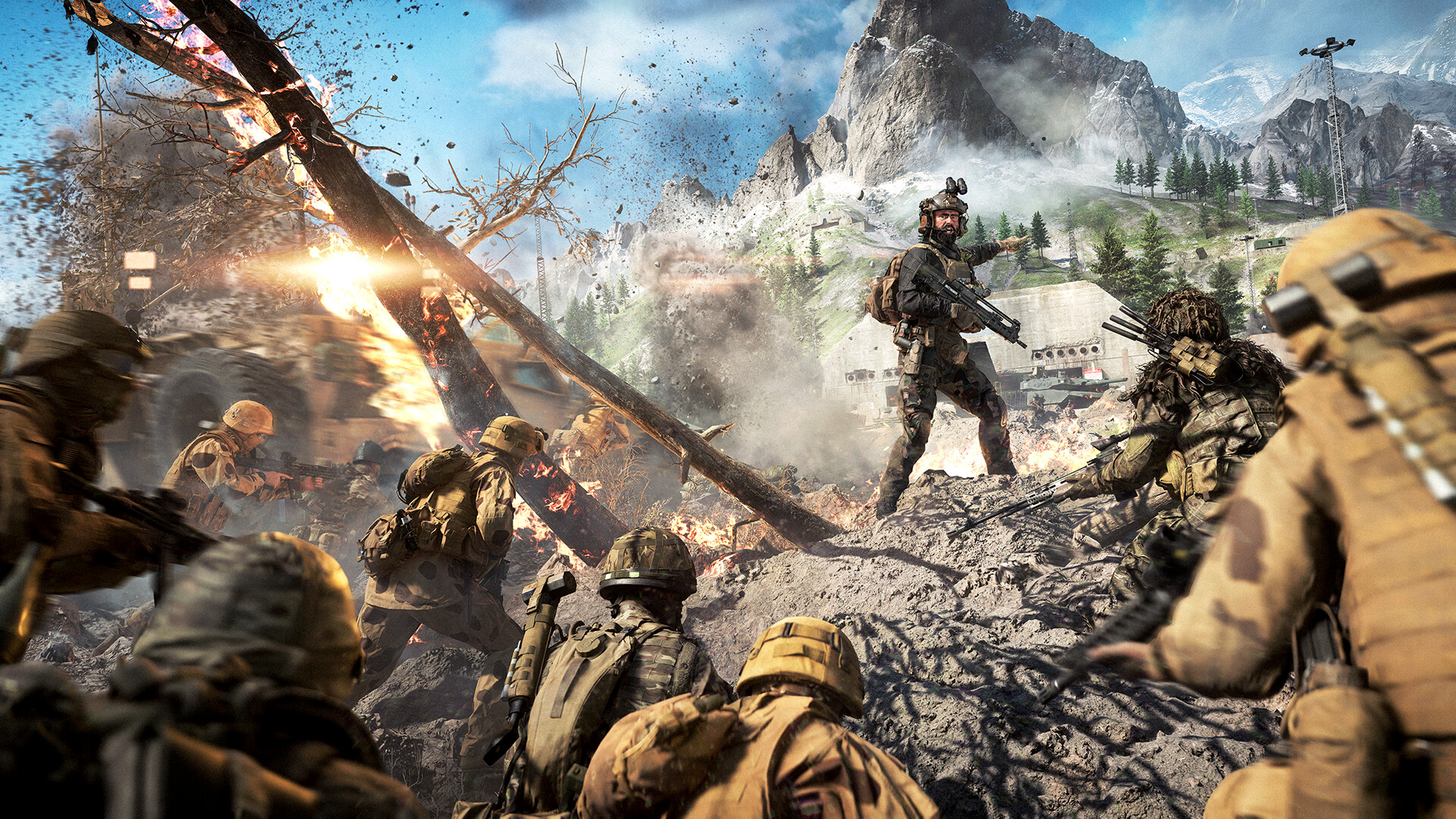
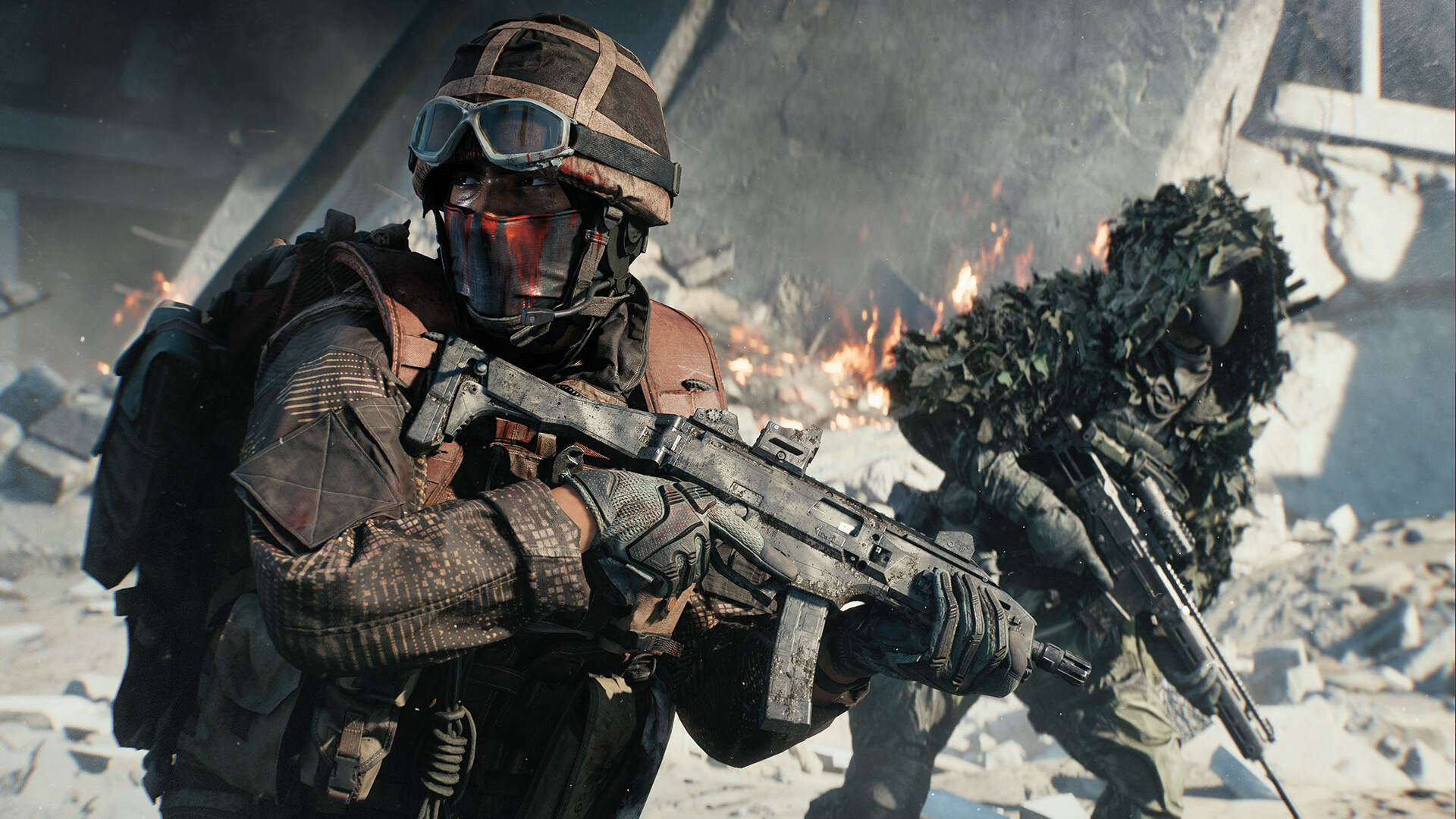
The gameplay encourages the complementarity of roles. You rediscover the class system, more rigid than before but better balanced. Assault resumes its frontline role, Engineer dominates mechanised warfare, Support keeps the squad alive, and Recon rediscovers the finesse of spotting. This return to a more readable structure makes skirmishes more strategic. You once again feel the weight of collective decisions, the need to understand your place within the whole.
The level design embraces this philosophy. The environments are no longer simple areas of confrontation: they tell the story, in their own way, of ruin and reconstruction. You fight in cracked urban areas, on industrial islands shrouded in mist, on top of fragile skyscrapers or in valleys ravaged by drones. Each map is designed to create constant circulation, to break routines, to force cooperation. Verticality, already present in Battlefield 4, achieves new precision here: functional elevators, accessible roofs, deployable roads, modular structures. You deal with the terrain, not against it.
Multiplayer, the beating heart of the game, brings together up to one hundred and twenty-eight participants on new generation consoles. You feel the same intensity as before, but with enhanced readability. Conquest and Breakthrough modes maintain their dramatic power, while dynamic new scenarios introduce moving objectives, forcing each squad to improvise. You play as much with the map as with your allies, in a loop where victory is never achieved, where the slightest collective error can reverse the fate of a battle.
This precision, this density and this coherence give back to Battlefield what it had lost: the sensation of being at the center of controlled chaos, of a war where beauty and brutality merge. You are not a hero, you are a piece of machinery, and it is this modesty that restores all its grandeur to the battlefield.
The visual and sound material of war
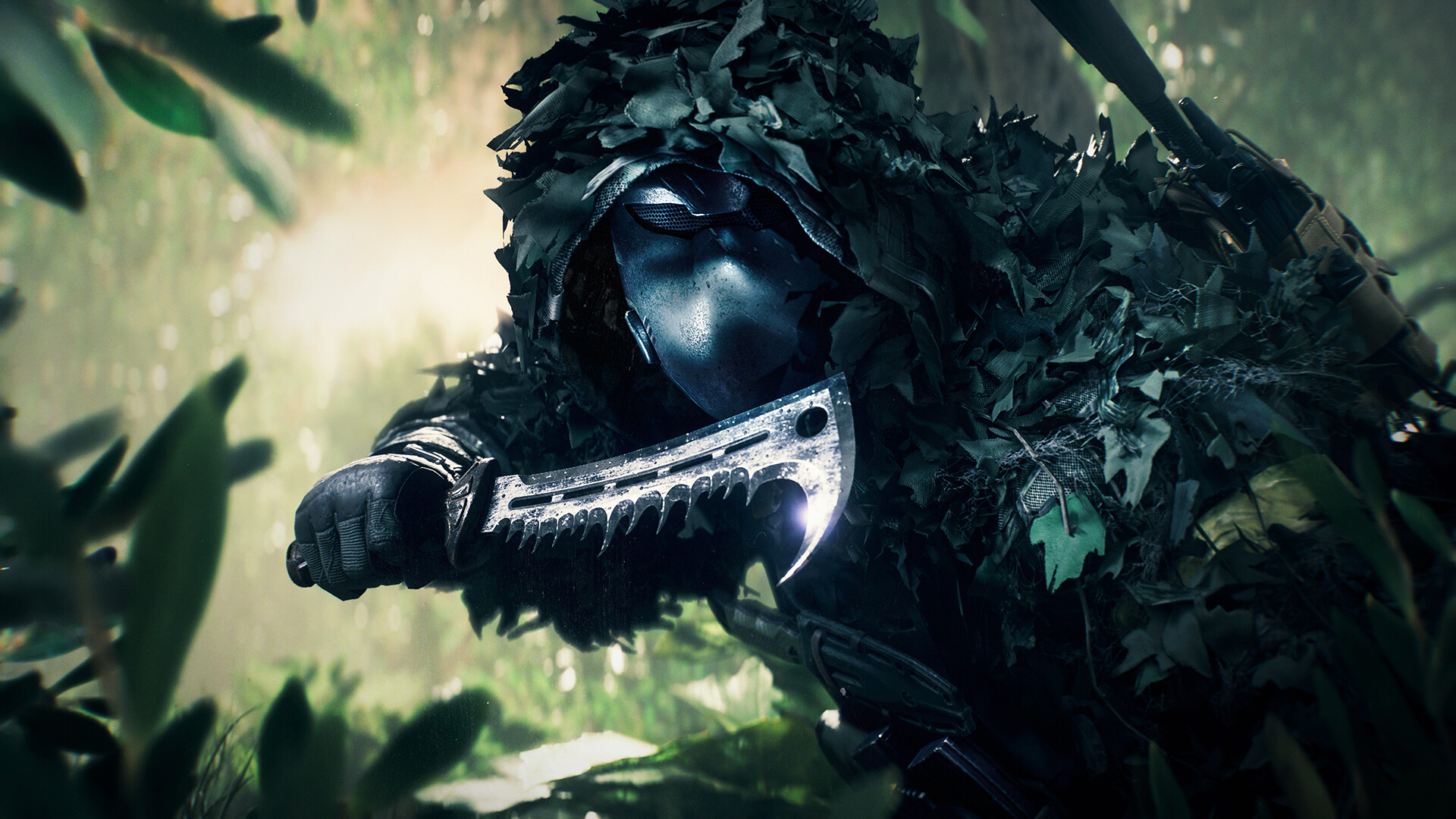
Battlefield 6 surrounds you with immediate, almost hypnotic visual power. The series has never hidden its taste for graphic excess, but here the technical prowess blends into a staging of rare coherence. On Xbox Series, light sculpts every surface with clinical precision. The Frostbite engine, in its most advanced version, restores environments where dust, steam and rain become elements of language. You advance in a world where every detail breathes, where the reflections on the helmets, the particles suspended in the air, the footprints in the mud alone tell the story of the fatigue of the terrain.
The artistic direction seeks less to impress than to translate the tension of reality. The settings are not idealized, they are worn, damaged, marked by the repetition of battles. The ruins of New York stretch under a copper sky, European industrial complexes are covered in soot, the frozen areas of the Caucasus glow with an almost sterile white light. You feel the texture of the world as unstable, moving matter, capable of collapsing at any moment. This approach gives war a sensory density that goes beyond simple technical virtuosity.
The destruction effects contribute to this overall impression. Buildings fragment, walls disintegrate, vehicles deform with disturbing verisimilitude. Nothing seems set in stone. The game does not seek to exaggerate the chaos, it stages it methodically, almost elegantly. You witness an orchestration of ruin where each explosion becomes a rhythm, each collapse a visual musical note.
On the sonic side, the work accomplished borders on devotion. The weapons find a raw, metallic grain, which makes the controller vibrate. The bursts resonate differently depending on the space, the echoes propagate on the facades, the silences take up as much space as the shots. The composers abandon the emphatic military themes for a more minimalist score, made up of electronic layers and muffled percussion. The music does not underline the action, it envelops it, like a constant breath between two attacks.
The dubbing is distinguished by its sobriety. The voices never try to overplay the tension. You hear the fatigue, the doubt, the held anger. Each actor contributes to anchoring the story in a human, almost intimate register, despite the scale of the show. The sound design remains exemplary. You hear the crunch of tracks on metal, the buzz of drones, the crunch of glass under your boots. Everything breathes the war experienced, the war felt, the one that does not take a break.
This fusion between image and sound gives Battlefield 6 a total sensory identity. You don’t look at a battlefield, you are absorbed in it. Each mission becomes a coherent sound and visual space, a moving picture where beauty and fear merge. In this area, Battlefield Studios rediscovers its absolute know-how: making destruction an aesthetic language and noise a form of silence.
The mysteries of the engine and the network
Battlefield 6 first impresses with its stability. Where the previous parts had sometimes collapsed under their own ambition, this one maintains a rare coherence. The Frostbite engine reaches a form of maturity here. The textures retain their relief even in the most saturated sequences, the light filters without artifice, the destruction retains a logic. Nothing seems gratuitous, everything obeys a mechanism designed so that fluidity and spectacle coexist. On Xbox Series, the game shows exemplary consistency. You cross the maps without interruption, without noticeable slowdown, with a density of details which maintains the tension at every moment.
The game modes extend this impression of total control. You find the foundations of the series with Conquest and Breakthrough, pillars of multiplayer, reinvented to accommodate up to one hundred and twenty-eight participants. Each battle becomes an autonomous organism where squad coordination takes on its full meaning. You move forward, backward, redeploy your resources in a loop of rhythm and counter-rhythm that leaves no respite. The revisited Hazard Zone mode offers a more tactical experience, focused on the recovery of sensitive data and collective survival. You feel the tension of calculated risk, the fear of losing everything on a too hasty decision.
The game also introduces dynamic operations, missions that transform depending on the performance of your team. A destroyed bridge modifies a route, a collapsed building redraws the line of fire, a storm erases visual markers. You learn to think in motion, to improvise rather than plan. This constant unpredictability gives Battlefield its flavor of shared experience, this feeling of belonging to something bigger than yourself.
Progression is based on a unified system, combining aesthetic customization and equipment development. You unlock your weapons, gadgets, and specializations through use rather than chance. Nothing is imposed, everything is earned. You feel the logic of the battlefield reflected in your own evolution. Every success is measured less by victory than by mastery of the role you play.
The stability of the network appears solid, even in the tumult. The servers absorb the density of combat without the flow breaking. You sometimes feel the inertia of discreet latency, but it never alters the group dynamic. Multiplayer regains its dimension of a living, moving experience, where each match tells a different story.
Battlefield 6 thus manages to combine technical rigor with the frenzy of the show. You feel at every moment the weight of the engine, the solidity of the code, the breathing of the network. Nothing seems fixed, everything breathes, everything responds. It is this invisible continuity, this silent coherence, which transforms chaos into harmony.
Verdict
The reconstruction of the myth
8.5/10
Battlefield 6 is not a simple continuation, it is a reaffirmation. Battlefield Studios redefines what it means to belong to a living, moving, unpredictable battlefield. You feel in each mission, in each moment of tension, the desire to rediscover what the series had lost: the symbiosis between chaos and control, between beauty and fear. The game restores weight to the collective, meaning to destruction, clarity to confusion.
On Xbox Series, this rebirth is expressed with raw strength and measured elegance. The engine breathes, the battles hold, the rhythm imposes itself without artifice. You play an episode that looks as much towards its past as towards its future, aware of its errors, proud of its reconstructions. War becomes a ritual, a mechanical dance where technical precision and raw emotion merge.
Battlefield 6 isn't trying to be bigger than war, it is simply trying to understand it again. And in this attempt, it hits the mark.
Pros
- Fluidity and stability on Xbox Series
- The return of traditional classes and team play
- The breadth of multiplayer and the richness of the maps
- The visual and sound density of the Frostbite engine
- The balance between spectacle and readability
Cons
- Some scripts still too rigid in the single player campaign
- The AI sometimes hesitant during large-scale missions
- A progression system that is still slow in the first levels
- The absence of real new features in certain classic modes
More in Video games
Full library 8.5/10
Warhammer 40,000: Boltgun 2
PC 8.5/10
S.T.A.L.K.E.R. 2: Cost of Hope
XBOX 8/10
Halo: Campaign Evolved
XBOX 7/10
Cthulhu: The Cosmic Abyss
XBOX 9.5/10
Marathon
SERIES 8/10
The Outer Worlds 2
SERIES 9/10
Bravely Default : Flying Fairy HD Remaster
SERIES 9/10
PRAGMATA
SERIES 8.5/10
FATAL FRAME II: Crimson Butterfly REMAKE
SERIES 7/10