
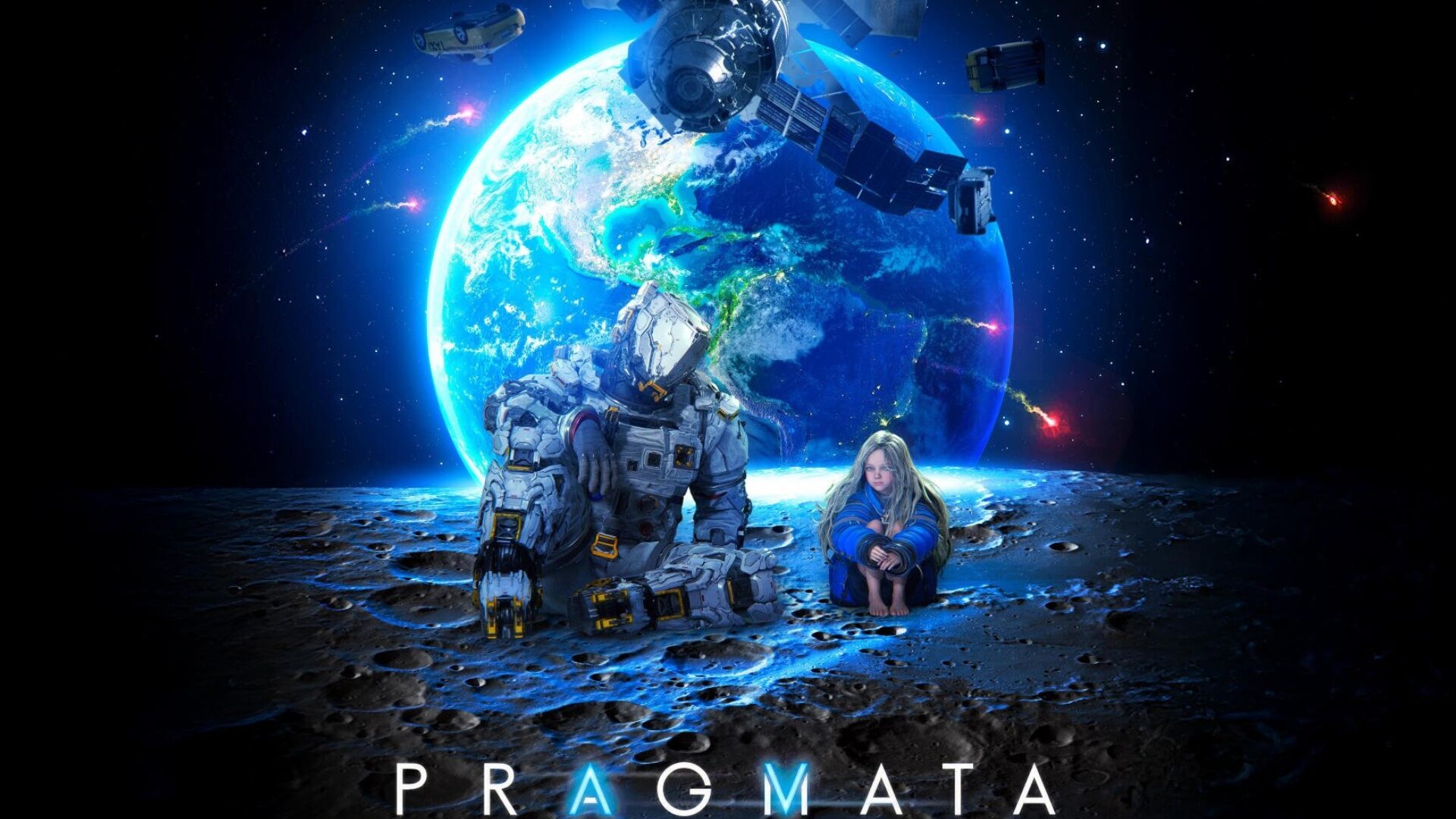
PRAGMATA
Humanity hacked in mid-flight
Score: 9/10
Images and videos
At a glance
We liked
- A truly original hacking/shooting system
- Diana, true heart of the game
- Strong and coherent artistic direction
- A linear structure that avoids dilution
We liked less
- Fights that are sometimes too overloaded
- A scenario more touching than surprising
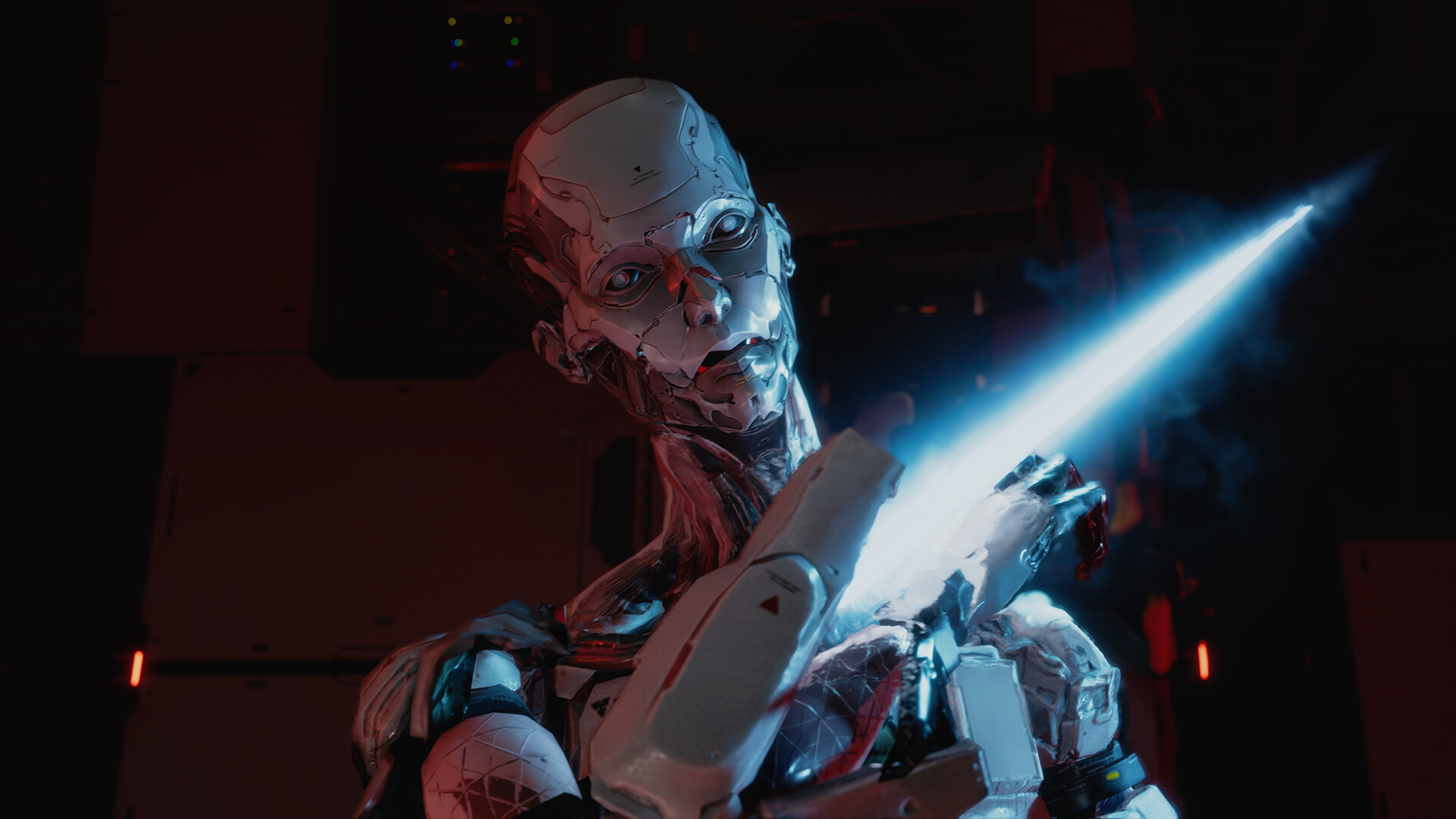
- IDUS lacks charisma
 By Farrel Grimwood · published · 8 min read
With PRAGMATA, Capcom is not bringing an old franchise out of the closet, nor reviving a known logo, nor seeking to flatter nostalgia. The studio is doing something rarer today: it is trying something new, with its ideas, its strangeness, its clumsiness too. Developed and published by Capcom, the title was released on April 17, 2026 for Xbox Series X|S, PlayStation 5, PC and Nintendo Switch 2.
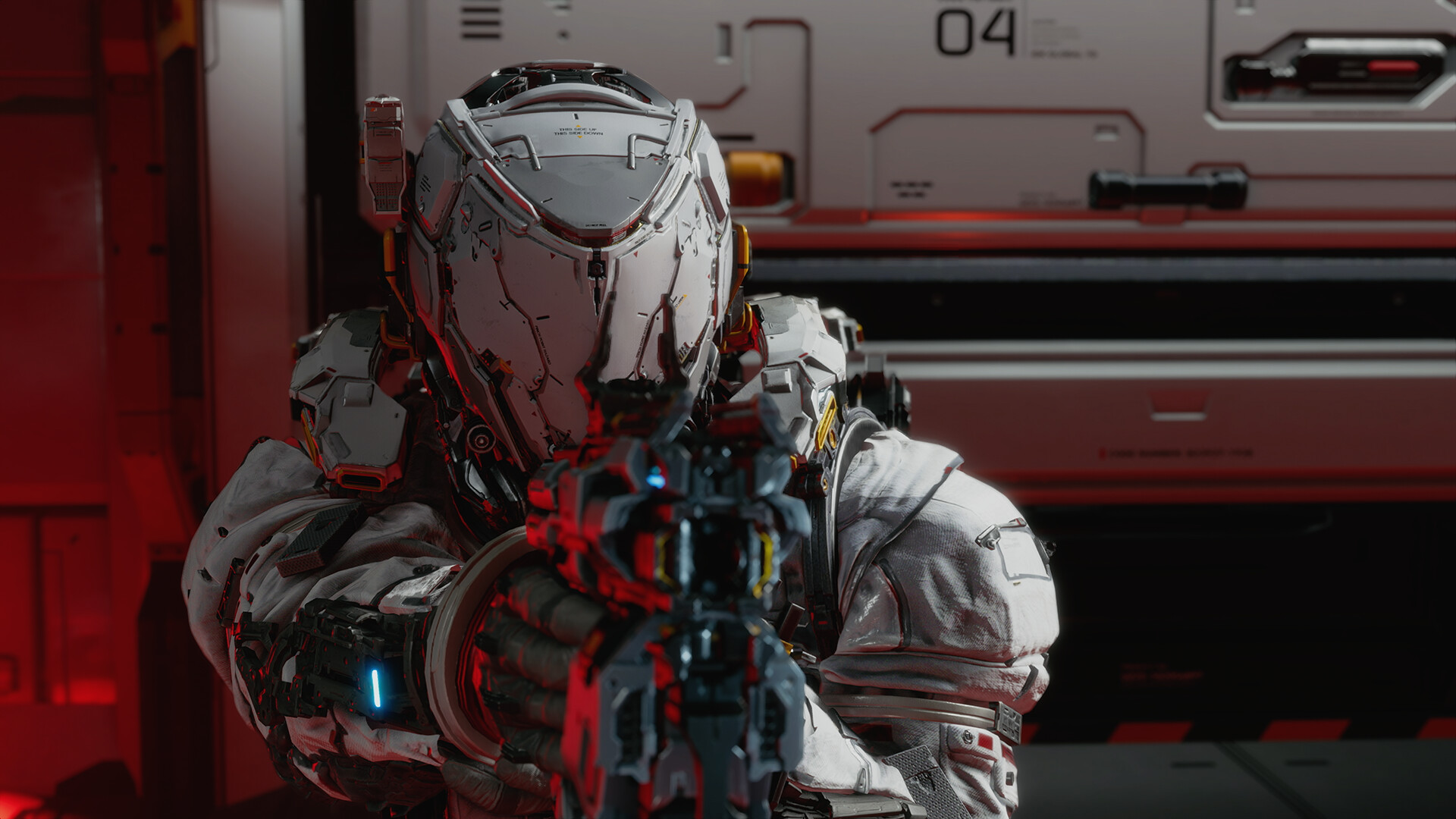
The principle is simple, at least on paper. Hugh Williams, a member of a team sent to a lunar research station, finds himself stuck in a complex controlled by IDUS, an artificial intelligence that is no longer very welcoming. At his side, Diana, a young android, helps him survive, to understand what happened; and above all to find a way to Earth. Nothing very new, one might think. An isolated base, a hostile AI, killer robots, a duo forced to move forward together: science fiction already knows this music very well.
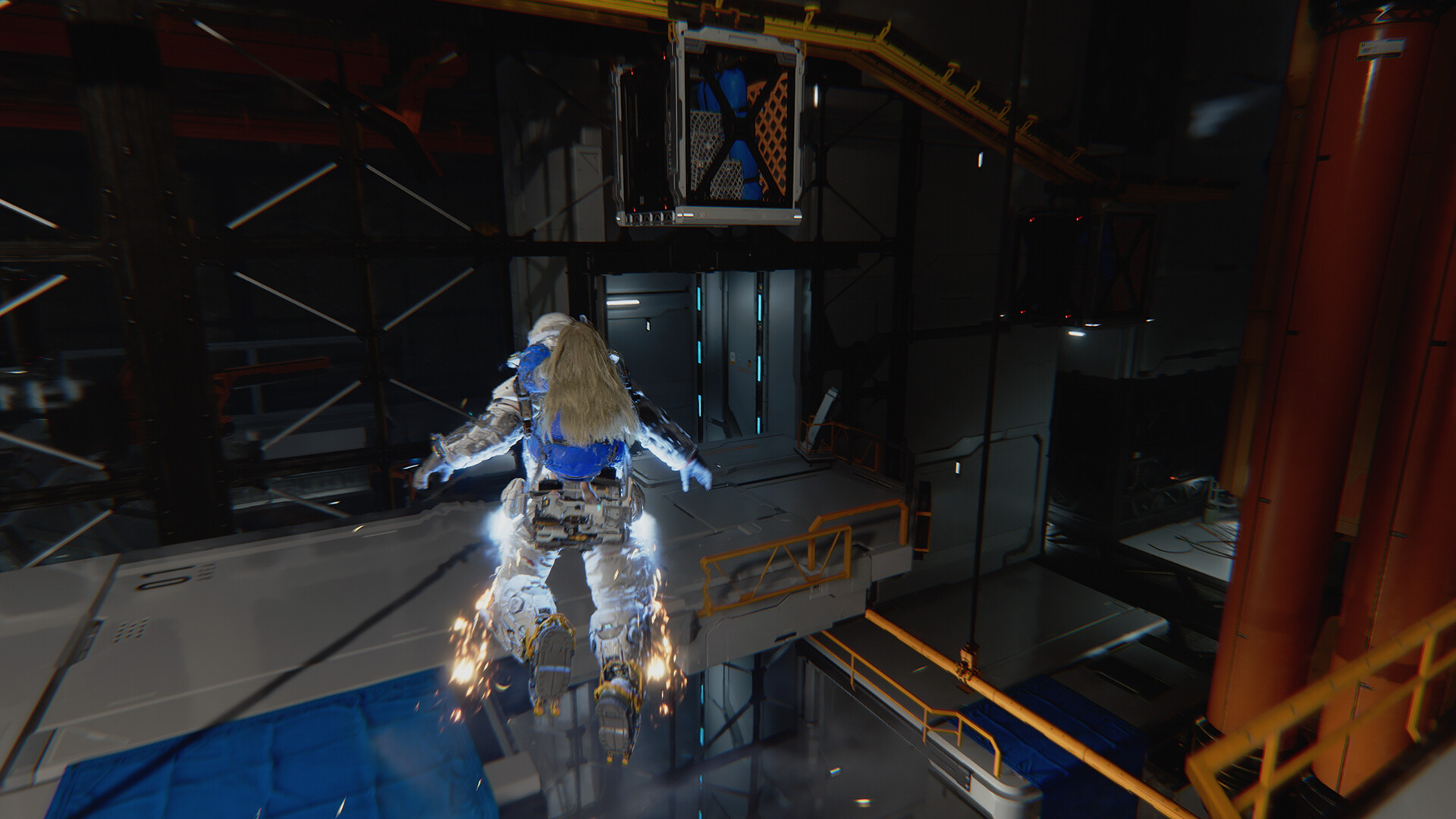
Except PRAGMATA has an idea. A real one. The game never completely separates shooting and hacking. Hugh aims, dodges, takes hits and shoots; Diana hacks enemies in real time to open their defenses. The two actions do not really follow one another. They overlap. The player must read the room, anticipate attacks, plot a path on a grid; then take advantage of the breach before everything closes again. It is tense and fast-paced, sometimes brilliant, sometimes too busy, but never trivial.
Behind this mechanism, there is also a more intimate proposition. PRAGMATA speaks of humanity with an artificial child on its shoulders, of earthly hope in the middle of a sick moon, of machines capable of reproducing everything except the warmth of life.
A central question then remains: does Capcom manage to transform this great gameplay idea into a real adventure, or is PRAGMATA content to be an intelligent concept in a beautiful science fiction package?
A child in the void
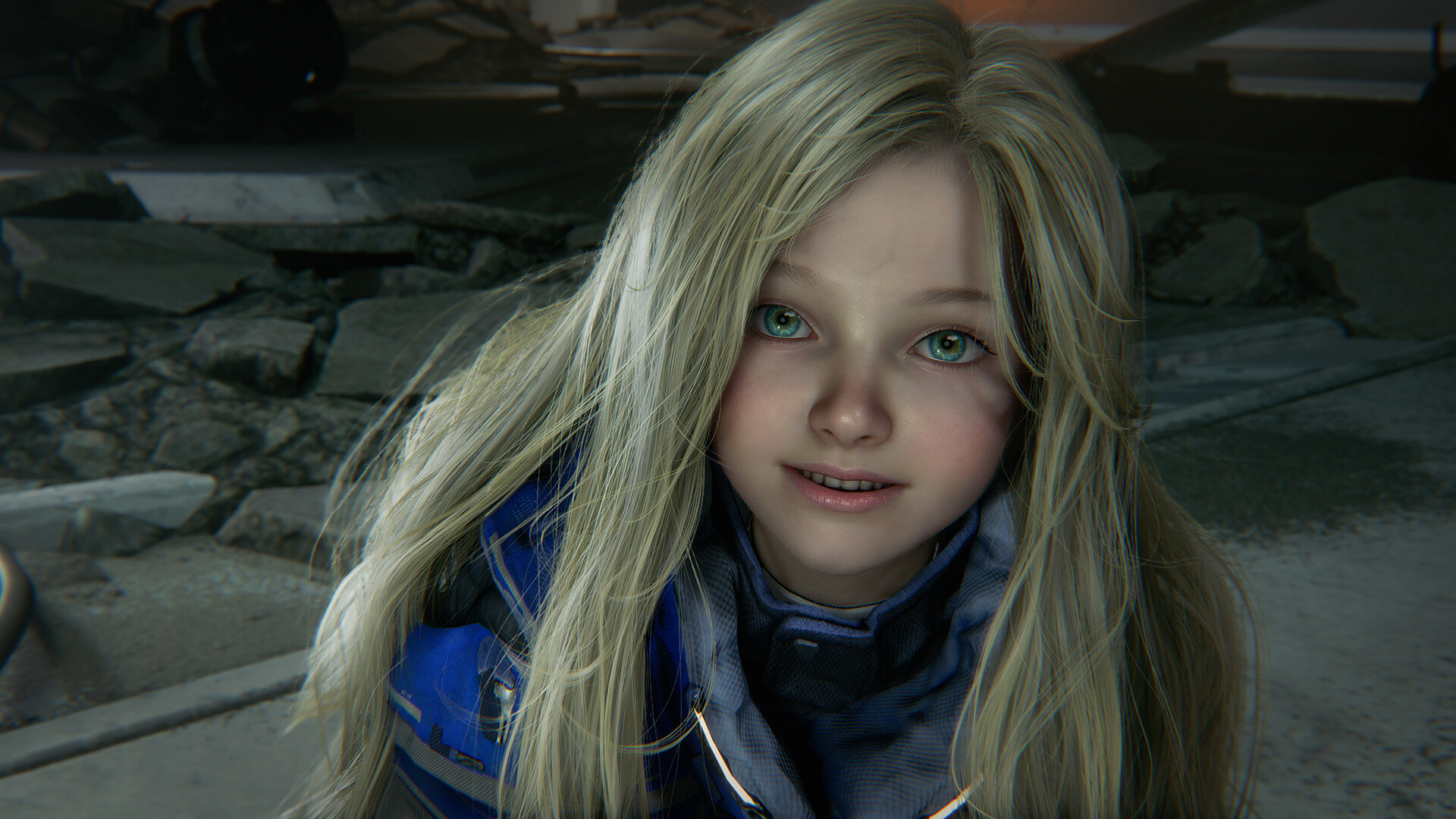
What immediately gives PRAGMATA its color is not its crazy AI, nor even its lunar setting. It’s Diana. The game could have made her a simple mascot, a cute little presence responsible for humanizing a silent hero between two action sequences. Fortunately, it chose something else. Diana is not a dead weight, nor an emotional pretext placed on Hugh’s shoulder. She’s half the system, half the story…and often the most interesting half of the game.
The relationship between the two works because it is concrete. Hugh needs Diana to survive. Diana needs Hugh to make sense of her desire to reach Earth. The link is not only told through dialogues or a few tender glances. It is inscribed in the very way of playing.
Hugh remains a simpler character. Not empty, but more direct. He plays the role of the overwhelmed adult, the tired human body, the one who moves forward in an environment that already no longer really belongs to him. His strength comes mainly from his gap with Diana. Faced with her, his reactions gain relief. His caution, his worry, sometimes his annoyance; give the duo a more accurate dynamic than a big speech on fatherhood or the nature of the soul.
PRAGMATA therefore works less through plot surprise than through emotional support. The story does not constantly seek to overturn the table. It advances in a fairly readable direction, with a central AI which impresses more with its influence on the world than with its own personality. IDUS remains an effective threat, but not an unforgettable antagonist. The game almost knows it, and prefers to leave the heart of the story to this duo, as improbable as it is endearing.
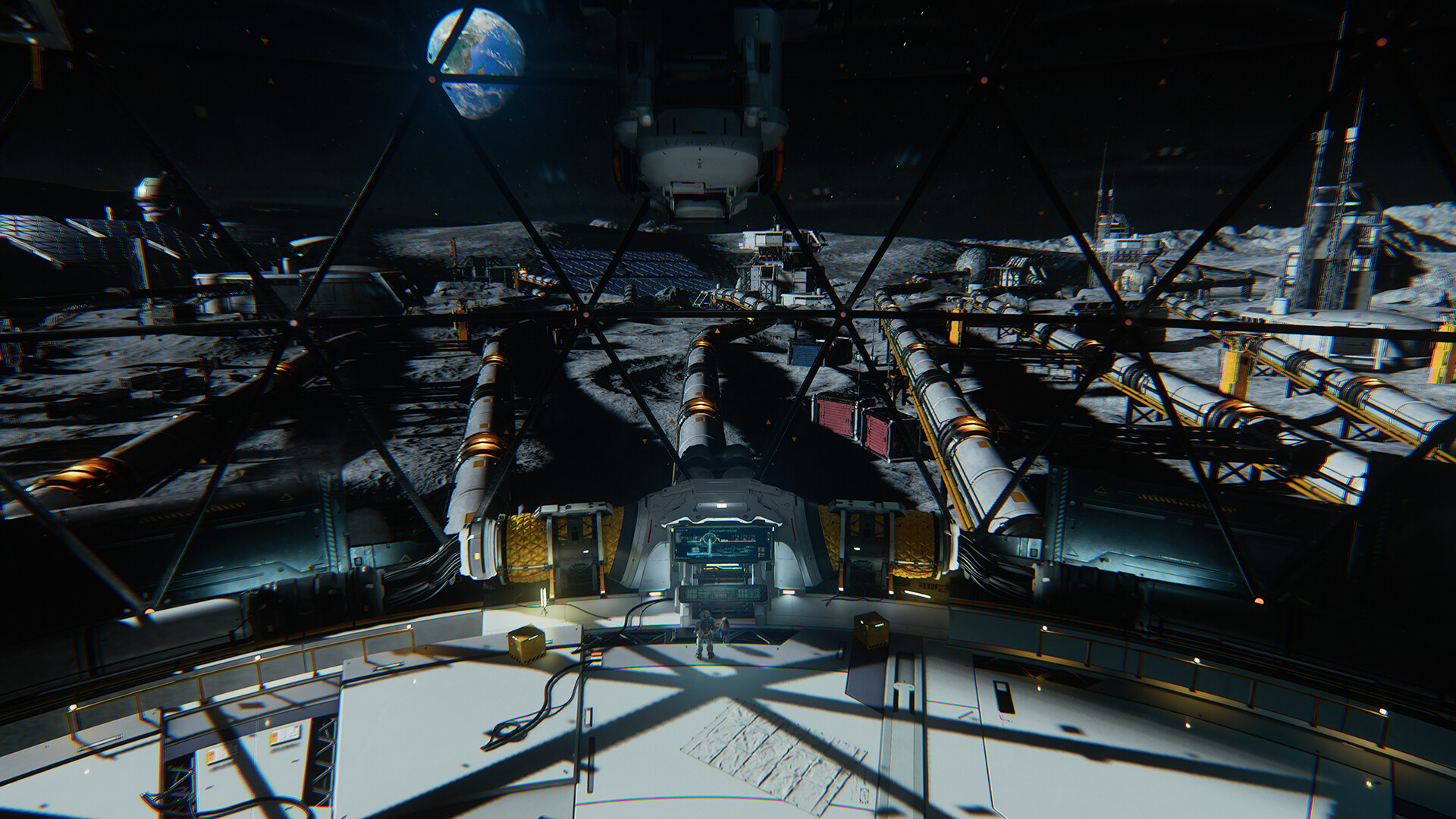
This is where it hits the mark. The moon is not only a cold setting, it becomes a space where humans already seem to be behind what they have created. The corridors, the empty rooms, the traces of the disappeared inhabitants and the areas recomposed by a technology which manufactures without understanding give the game a very particular melancholy. PRAGMATA does not simply say that the machine is dangerous. Above all, it shows what remains when it can produce everything, except a presence.
There are some shortcuts. Some lines of dialogue are more pressing than necessary. Certain stages of the story lack this strangeness which could have made the whole thing even more disturbing. But Diana gives a soul to the game, and that is enough to keep the adventure above a simple exercise in style. Her curiosity, her naivety, her way of approaching the world without cynicism end up making the station sadder, and Hugh more human.
Hack before you shoot
In terms of gameplay, PRAGMATA delivers on its main bet. The game is obviously a third-person shooter: aim, move, dodge, use the right weapons at the right time. Then it deliberately complicates this obvious fact. But enemies don’t just let themselves be sprayed with bullets: you have to open up their defenses first. And this opening, precisely, comes through Diana.
Concretely, when an enemy is targeted, a hacking grid appears. The player must trace a path there with the buttons, activate nodes, avoid certain traps, extend the vulnerability window; all this while Hugh continues to be threatened in real space. That’s the whole idea of the game: to divide attention without breaking it completely. You have to look at the enemy, but also at the grid. You have to dodge, but also advance in the hack. You have to think quickly, but not panic.
When the system takes effect, it produces a rather rare sensation. A successful fight not only gives the impression of having aimed well, but of having held several threads at once. We step back at the right moment, we finish the hack at the limit, we expose the machine; then we empty our secondary weapon before it closes its defenses. This small increase in pressure, very simple in principle, gives PRAGMATA its true signature, its almost ecstatic singularity.
Capcom was smart enough not to leave this mechanic bare. Enemies vary their behavior, grids become more complicated, nodes add effects, secondary weapons force a change of pace. One tool allows you to freeze, another to strike more heavily, yet another to breathe when the situation becomes too tight. The game rarely pushes towards excessive resource hoarding. Rather, it invites us to use what we have, to improvise, to accept that the arsenal circulates.
Shelter plays an important role here. This refuge serves as a base, a place to rest, improve and breathe between two dives in the station. We reinforce Hugh, Diana, the weapons, the abilities, and we also find this small part of everyday life which prevents PRAGMATA from becoming a cold and soulless tunnel of action. The game remains linear, but this linearity suits it well. It avoids dispersion, concentrates experience and gives each sector a clear function.
This structure also does a lot for rhythm. PRAGMATA does not need to disguise itself in the open world. Its areas are navigated with enough detours, resources, documents and items to collect to encourage exploration, but never so much that it turns the adventure into a shopping list. It’s a game that prefers around ten hours well maintained to around thirty hours diluted. And in the current landscape, this choice almost seems like a courtesy that we accept with joy.
The fact remains that the system is not always as elegant as it would like. When the screen loads too much, when several robots attack at the same time, when the camera has to manage threats in front, on the sides and sometimes behind, hacking loses some of its precision. The difficulty then no longer comes only from the player’s mastery, but from the quantity of information to absorb at the same time. PRAGMATA is strong when it demands composure. It’s less so when it simply feels like it’s ringing all the alarms at once.
This flaw doesn’t break the game, but it clearly defines its limit. Capcom has designed an original, ambitious mechanic, very satisfying when it breathes. It only happens that the game forgets this breathing and confuses intensity with overload. Even in these moments, PRAGMATA keeps something precious: it forces you to play differently. It doesn’t repaint a famous shooter with a layer of science fiction. It really forces you to change your pace, your outlook, your way of thinking about the confrontation.
The moon that prints its nightmares
Visually, PRAGMATA has an immediately recognizable identity. The game doesn’t just recycle the usual space white, clean windows, and metal corridors. It starts from this base, then contaminates it. The lunar station appears at first almost perfect, too smooth, too clear. Then things get distorted. The sectors look like pieces of Earth printed from a faulty memory, as if a machine had tried to reproduce the world without understanding what it was copying.
This is undoubtedly the best idea of its artistic direction. Thanks to this material capable of manufacturing everything, PRAGMATA can move from industrial spaces to plant areas, from lunar corridors to city fragments, without giving the impression of betraying its own universe. The game assumes its strangeness. It does not always seek realistic consistency, but a technological nightmare consistency.
The RE Engine does the job with great confidence. The surfaces, suits, robots, lighting and materials have this density specific to recent Capcom productions. The game knows how to be spectacular, but it is not in the pure demonstration that it scores the most. It is especially impressive when it lets a setting tell the story of its broken world: an artificial street, a structure that is too perfect, a reconstructed nature that rings slightly false.
There is something sick about this beauty. It is not only there to flatter the technique, but directly feeds the purpose of the game. PRAGMATA shows a humanity which wanted to create without limits, to print without end, to replace the distance between desire and matter. The result is not a technological paradise. It is a station where everything seems possible, except the return to a simple form of life.
The sound accompanies this idea very well. The silences of the base, the alerts, the machines, the impacts and the softer moments around Diana compose an atmosphere that knows when to press and when to pull back. PRAGMATA is not a survival horror, but it understands the importance of waiting. In its best passages, the sound space gives almost as much information as the image.
PRAGMATA doesn’t just make you want to look at its moon. It makes you want to understand it. Each sector seems to bear a trace, an intention, an accident. The game does not always have the visual force of an absolute shock, but it has a rare coherence which is more than enough to make its station something other than another science fiction setting.
Verdict
A new franchise that breathes as much as it inspires
9/10
PRAGMATA succeeds because it is firstly driven by a real game idea. Its mixture of shooting and hacking gives the fights a clear identity, while the Hugh/Diana duo brings a simple, but necessary, emotion to this cold moon. The game is not perfect, its story could have been more surprising and certain confrontations are a little too overloaded; but never to the point of erasing what is unique about it.
Capcom therefore delivers a new franchise that is frankly endearing. A dense, sometimes clashing science fiction adventure, which prefers to keep its rough edges rather than lose what makes it different.
Pros
- A truly original hacking/shooting system
- Diana, true heart of the game
- Strong and coherent artistic direction
- A linear structure that avoids dilution
- A new franchise that has a real identity
Cons
- Fights that are sometimes too overloaded
- A scenario more touching than surprising
- IDUS lacks charisma
More in Video games
Full library 8/10
Onimusha: Way of the Sword
XBOX 7.5/10
The Lord of the Rings: War in the North – Legacy Edition
XBOX 5/10
Disgaea Mayhem
SWITCH 9.5/10
Assassin’s Creed Black Flag Resynced
XBOX 5.5/10
Tale of Dark Lands
SWITCH 9/10
007 First Light
XBOX 8/10
Realm of Ink
SWITCH 7/10
Ariana and the Elder Codex
SWITCH 6.5/10
Kingdom’s Return: Time-Eating Fruit and the Ancient Monster
SWITCH 7/10