
Assassin’s Creed Black Flag Resynced
He returns with his hold full of loot
Score: 9.5/10
Images and videos

At a glance
We liked
- The Jackdaw remains one of the best gameplay hubs Ubisoft has built.
- Sailing, boarding, and ship upgrades remain immediate fun.
- Combat, stealth and shadowing become more comfortable without breaking the identity of Black Flag.
- The Caribbean benefits from a real visual leap, with dynamic weather, ray tracing and a more continuous world.
We liked less
- The absence of Freedom Cry takes away a significant portion of the historical significance.
- No multiplayer, although the 2013 game still had it as a real bonus.
- The disappearance of Abstergo makes everything more fluid, but may disappoint some.
- Some side activities keep a very familiar open world fatigue.
 By Farrel Grimwood · published · 5 min read
Contents
Thirteen years after giving the series its best flavor of rum, damp rope and cannons, Assassin’s Creed Black Flag Resynced puts Edward Kenway back on deck. Ubisoft Singapore not only takes the old Black Flag to make it cleaner, the studio rebuilds the adventure with the current Anvil engine, adds scripted content and cuts some of the heaviness that ended up sticking to the name Assassin’s Creed.
This return comes at a special time for Ubisoft. After more RPG-focused entries, then the tighter focus of Mirage and the scale of Shadows, Assassin’s Creed Black Flag Resynced wants to remind you that an Assassin’s Creed can remain a focused, single-player action adventure, centered on a hero, a map and a very clear game loop: navigate, pillage, infiltrate, flee, start again.
The real question is therefore not whether Edward deserves another voyage. It is simpler and harder: does this remake really improve the already iconic Black Flag, or does it just make its deck shine?
Edward, pirate before assassin
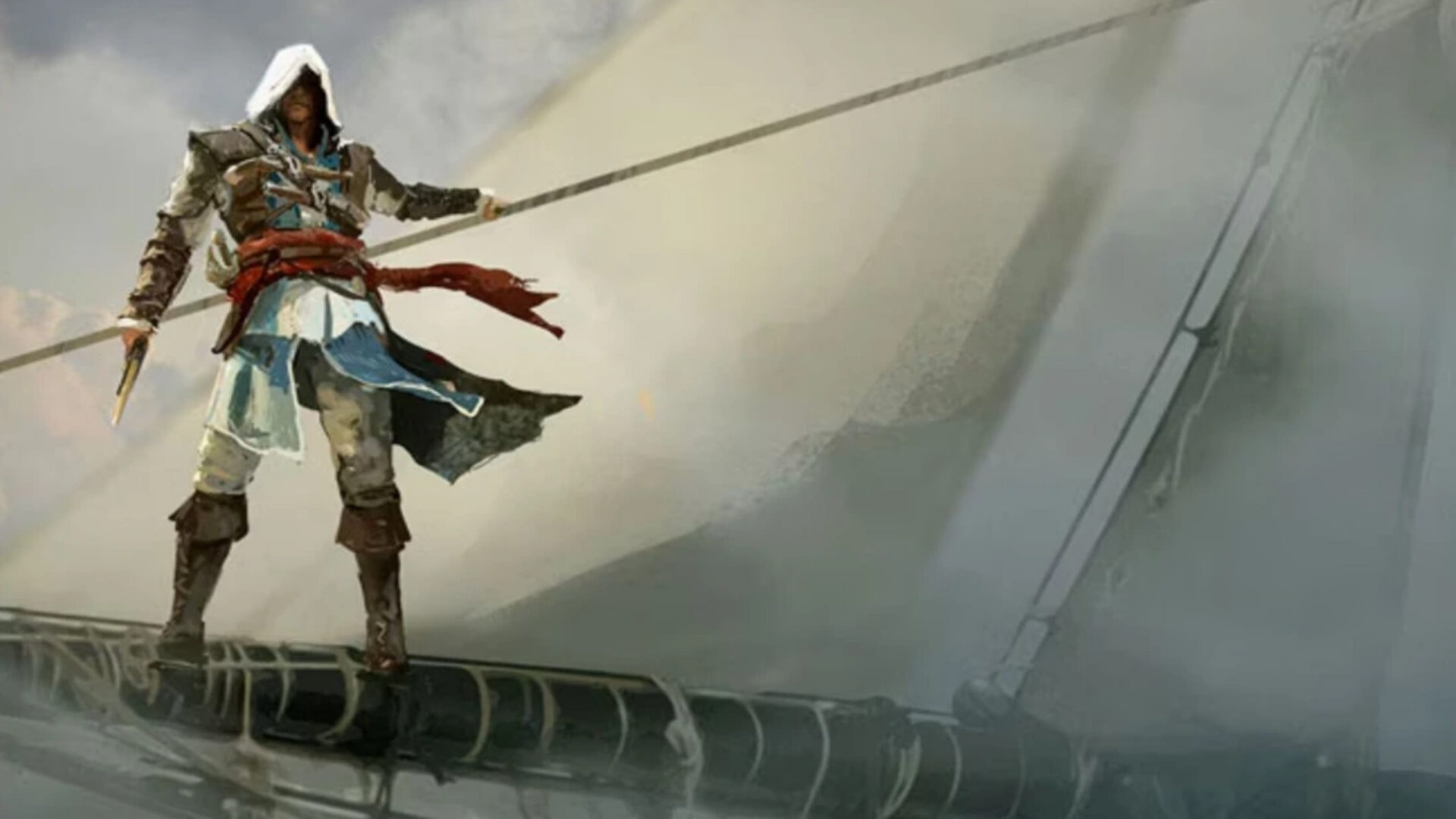
Edward Kenway remains a great way into the series because he doesn’t start out as a believer. He has not sworn loyalty to the Creed, he does not yet speak of freedom with capital letters and he does not seek to save the world. He wants gold, a reputation, a ship that commands respect and a life big enough to no longer have to obey.
The game begins with a castaway who steals the identity of a Templar and finds himself involved in a war that he does not yet understand. This very simple motivation gives the rest of the story depth. Edward is selfish, brutal, funny sometimes, often annoying, but he sticks to this idea of the Caribbean where everyone is selling something: a route, an alliance, a secret, a betrayal.
Assassin’s Creed Black Flag Resynced strengthens this center. The modern-day Abstergo sequences no longer structure the adventure and leave room for more discreet elements around Edward’s memory. The gain is obvious: we leave the Caribbean less often, we have less of this feeling of "break" in the storytelling, nor this frustration of being torn away from a story that keeps you in suspense.
The Jackdaw still carries the game
If there’s one thing this remake had no right to miss, it’s Jackdaw. The ship is not a simple vehicle between two objectives. It is Edward’s house, his work tool, his main weapon and the real backbone of the adventure.
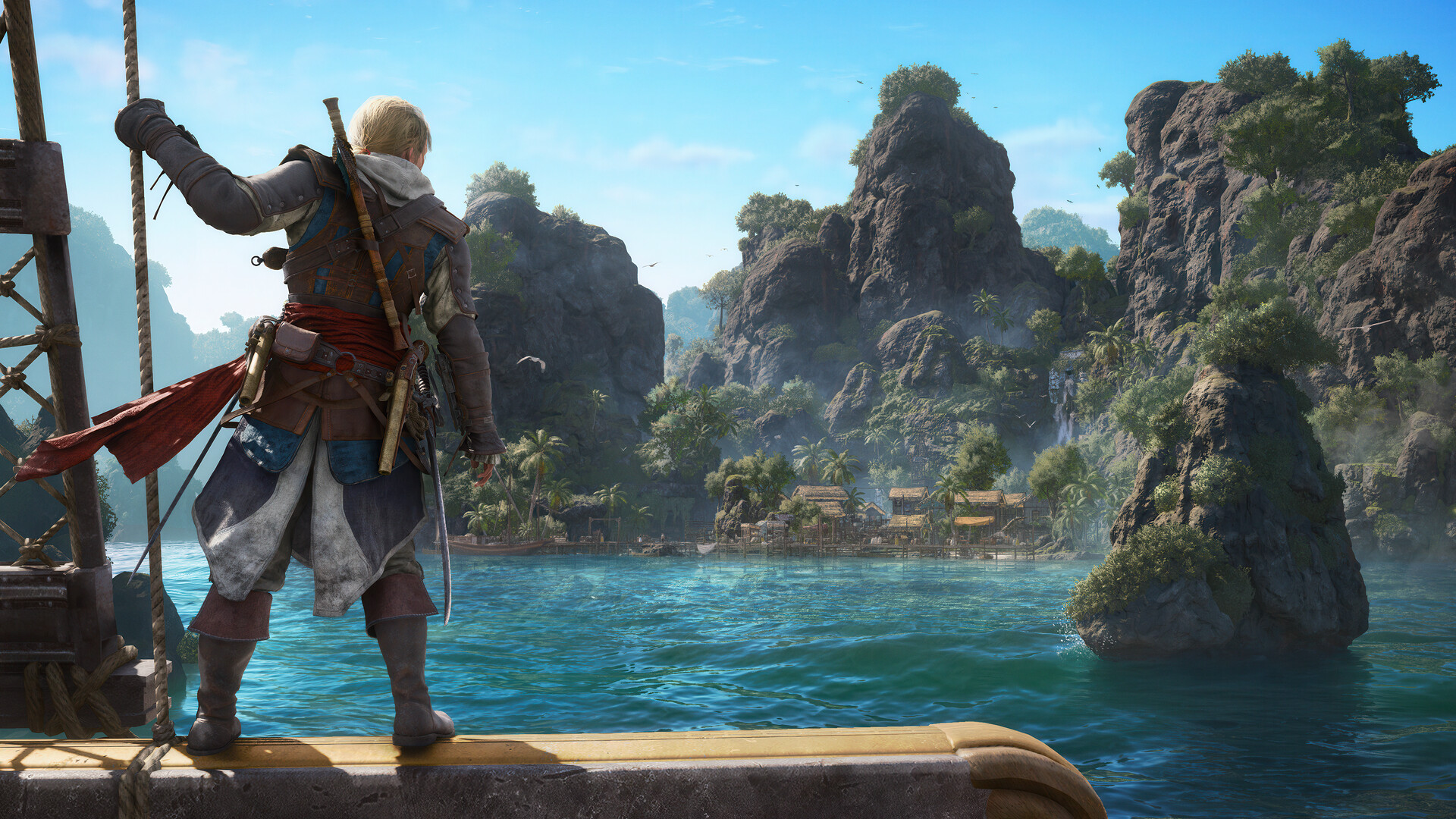
Fortunately, the maritime loop still works as well. We spot a ship, we judge its power, we open fire, we avoid the response, we hook the enemy hull, then the boarding transforms naval combat into a brutal melee to seize enough resources to upgrade the Jackdaw. Each improvement is felt, because it allows greater risk-taking during the next outing.
The strongest part remains the natural drift of the game. We set off on a mission, we come across an interesting brig, the weather turns bad, a hunter appears, the sea shanties rise, and thirty minutes disappear without having reached the planned objective. This is where Black Flag maintains its lead: it knows how to make people forget the map with the simple pleasure of racing along the water.
A remake that cuts as much as it polishes
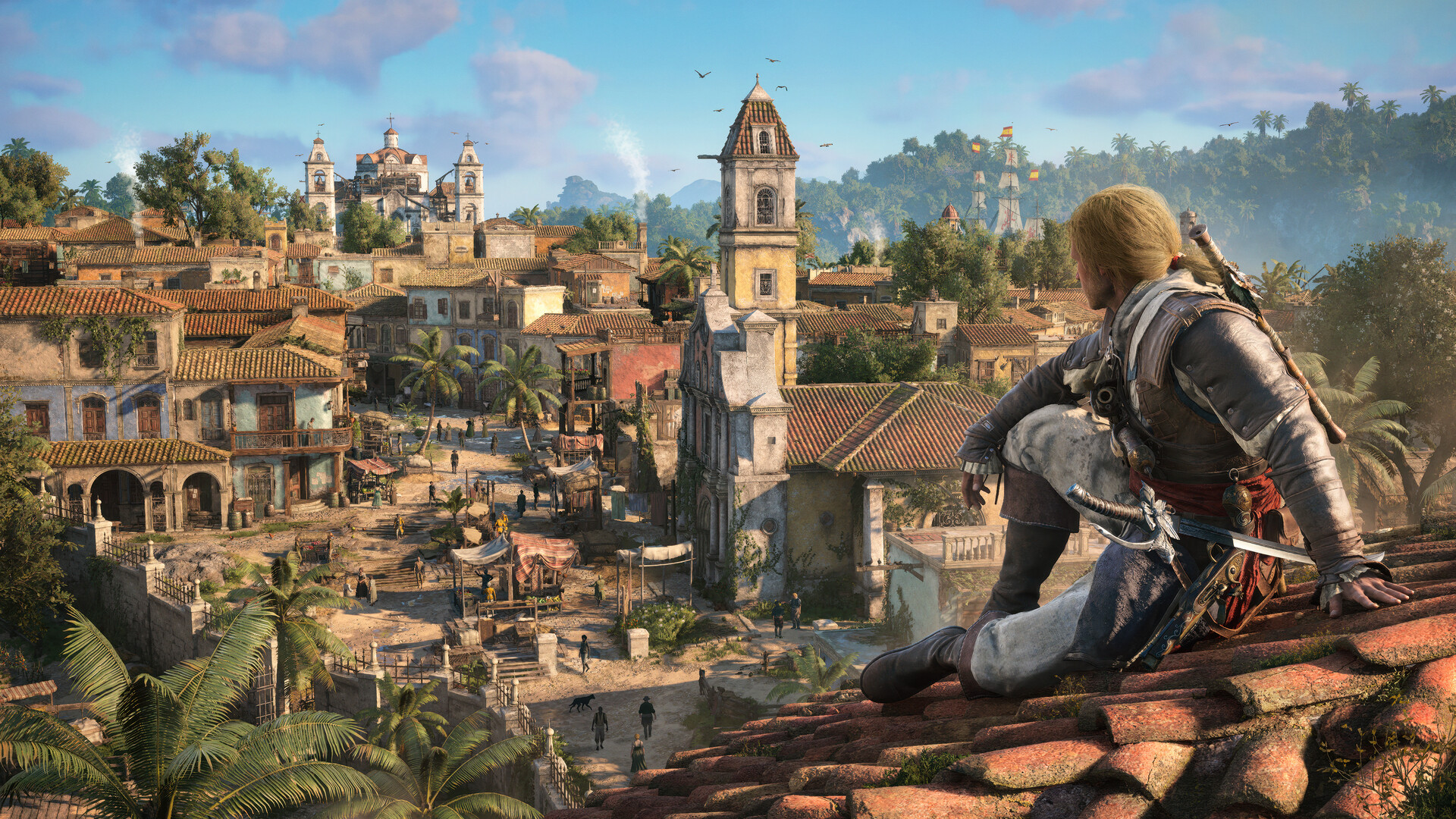
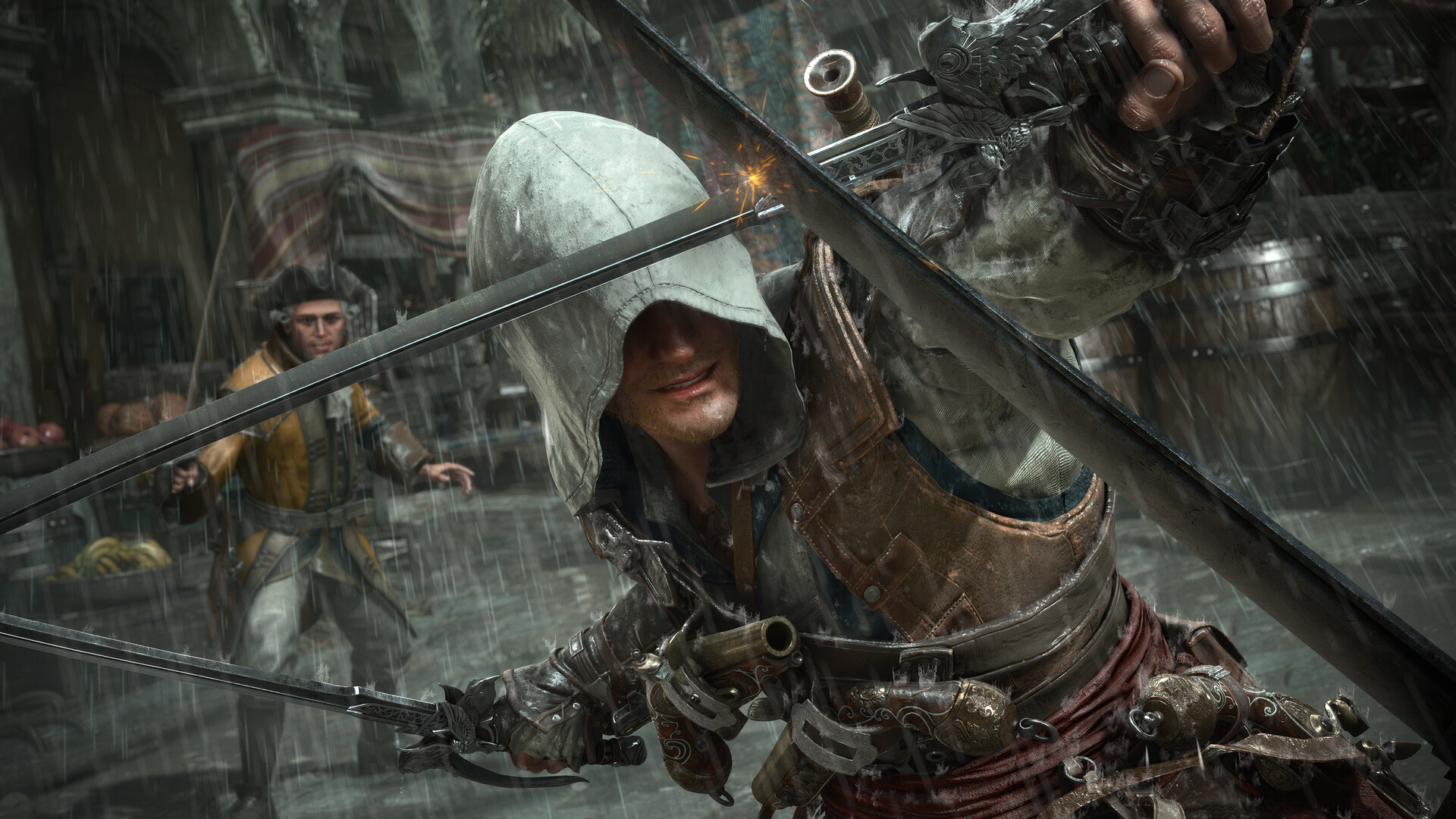
The most obvious work has gone into making the game smoother to play. The cities can be crossed without heavy loading, the light is magnificent, the dynamic weather, the denser vegetation and the reflections on the water give the Caribbean a more modern, tangible presence. It’s not just sharper. It’s more continuous, more readable, more pleasant to explore; with this paradoxically strange feeling that nothing has changed, as if we were finding an old comrade left aside for too long.
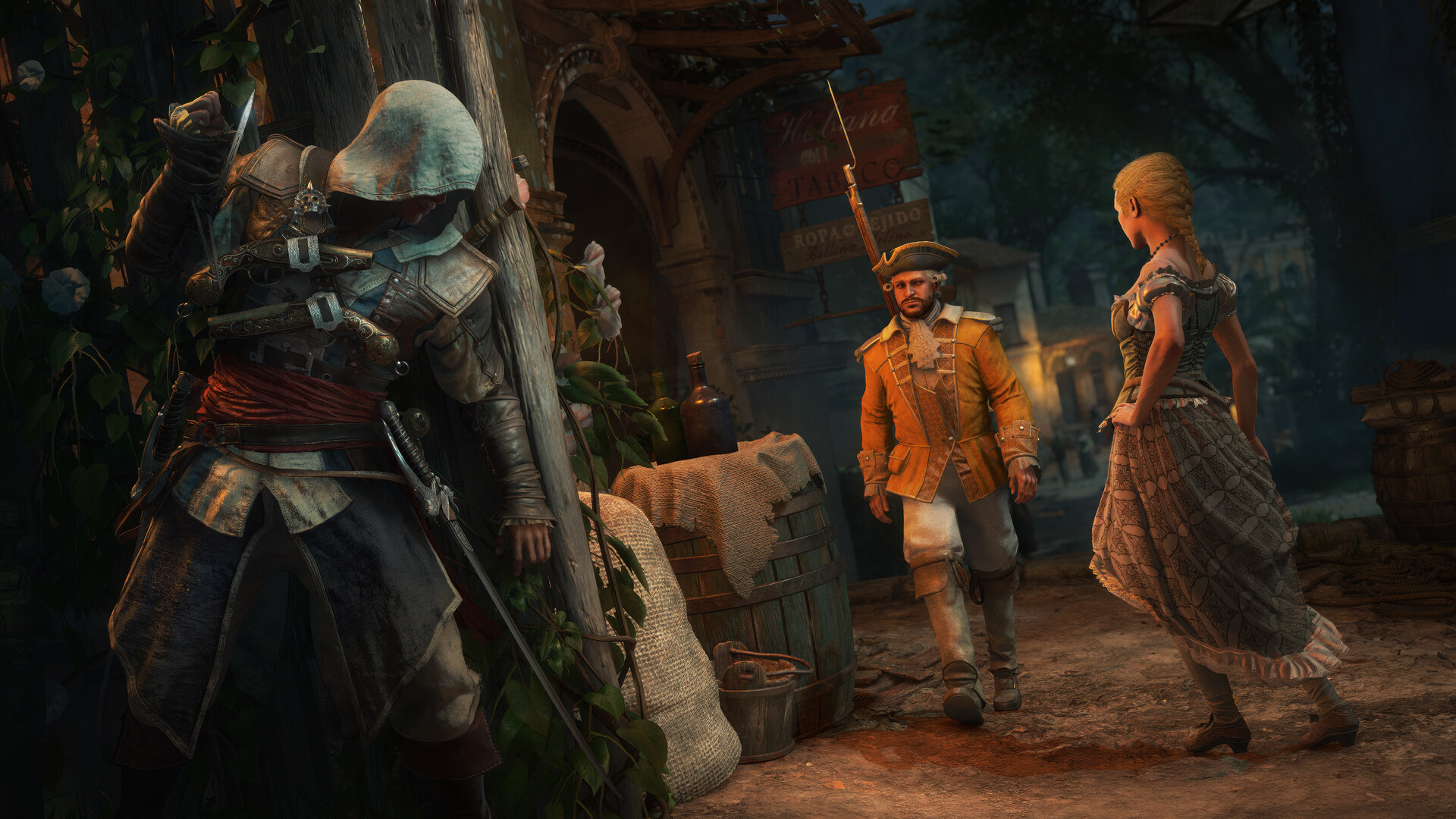
With a controller in hand, the biggest improvement is how Edward handles. The ability to crouch freely makes stealth less stiff. Shadowing and eavesdropping no longer punish the slightest error with an immediate failure screen. Parkour gains in flexibility, even if it sometimes retains this old Assassin’s Creed habit of confusing the player’s intention and the available edge.
Combat also aims for clearer action. Parries, blocks, executions and combos give the clashes a more modern, more cinematic rhythm, less dependent on the old automatic counterattack. The problem is that the remake sometimes cleans up instead of rethinking. Removing or relaxing constraints helps the pace, but it doesn’t transform old missions into new ideas.
The side activities also retain some of their age. Chests, contracts, dives, capture of forts, materials to accumulate: the whole thing remains pleasant because sailing ties everything together, but we still find this fatigue which consists of multiplying small objectives until filling the horizon. And at the same time, if the studio had removed or smoothed out these parts it would have been criticized for this lack of fidelity.
A solid, but not uniform, Xbox version
On Xbox Series, the technical arguments are clear: 4K Ultra HD, HDR10, ray tracing, spatial sound, Dolby Atmos, DTS:X and Series X|S optimization. On Series X, the 60 fps mode brings genuinely valuable fluidity to sailing, parkour and combat, especially in a game that constantly switches between running, climbing, melee and cannon fire.
On Series S, the balance is less flattering. The game remains designed for the machine, but the console makes do with a 30 fps mode. It’s not unplayable, far from it, but for a remake sold as a modern return, the gap will inevitably be felt in the naval chases and busy fights. It remains an impressive work that never stutters despite the limitations of the machine.
Full French support, in both audio and text, also counts enormously. After Oblivion which skipped French audio, the fear was legitimate. Fortunately, Ubisoft continues to understand that Black Flag relies on dialogue, songs, orders shouted on the open sea, ship menus and sometimes numerous objectives. Not having to read the experience half in English makes this Xbox version significantly more comfortable for the French-speaking public, especially since the work of the voice actors of the time has not aged a bit and remains as pleasant and immersive as ever.
Some treasures are missing from the chest
What rankles has less to do with the quality of the remake than with what it chooses to leave out. If the absence of multiplayer or the Abstergo offices is understandable, it is much more difficult to justify the absence of Freedom Cry.
This expansion, undoubtedly one of the best in the entire series, featured Adéwalé, spoke of slavery, shifted the perspective and gave Black Flag a gravity that the main adventure sometimes avoided. Removing it keeps the story more direct, but it also weakens the historical significance of a game that adores uncompromising piracy. The best we can hope for is that the studio offers it as stand-alone content in the coming months.
Verdict
A great comeback that chooses its course
9.5/10
Assassin’s Creed Black Flag Resynced succeeds in what is essential: reinvigorating one of the best episodes of the series without breaking what was its strength. Edward still works, the Jackdaw remains a story machine, the fights have more weight, the stealth breathes better and the Caribbean finally benefits from technology capable of realising what we already imagined in 2013.
But this is not the complete version. The absence of Freedom Cry is felt, certain activities retain their old open world fatigue, and the very structure of the title shows its age. The result remains excellent, but not untouchable: a remake rich in spectacle, cautious in its vision, sometimes too happy to know that Black Flag was already a treasure. However, it remains a clearly essential title for fans of the era as much as for those who did not know it.
Pros
- The Jackdaw remains one of the best gameplay hubs Ubisoft has built.
- Sailing, boarding, and ship upgrades remain immediate fun.
- Combat, stealth and shadowing become more comfortable without breaking the identity of Black Flag.
- The Caribbean benefits from a real visual leap, with dynamic weather, ray tracing and a more continuous world.
- The full French localization makes the adventure more welcoming on Xbox Series.
Cons
- The absence of Freedom Cry takes away a significant portion of the historical significance.
- No multiplayer, although the 2013 game still had it as a real bonus.
- The disappearance of Abstergo makes everything more fluid, but may disappoint some.
- Some side activities keep a very familiar open world fatigue.
More in Video games
Full library 8/10
Onimusha: Way of the Sword
XBOX 7.5/10
The Lord of the Rings: War in the North – Legacy Edition
XBOX 5/10
Disgaea Mayhem
SWITCH 9/10
Dragon’s Dogma 2: Dark Arisen
XBOX 7/10
Brigandine Abyss
XBOX 6/10
The Walking Dead: Streets of Survival
XBOX 7/10
HOT WHEELS Infinite Rush
XBOX 8.5/10
S.T.A.L.K.E.R. 2: Cost of Hope
XBOX 8/10
Verho – Curse of Faces
XBOX 8/10