
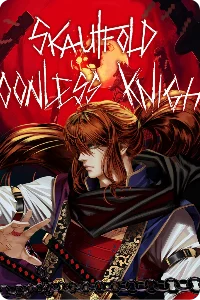
Skautfold : Moonless Knight
The palace that awaits you around the corner
Score: 7/10
Images and videos


At a glance
We liked
- A Japanese imperial palace transformed into a dense and coherent semi-open metroidvania.
- A central guard system that makes timing and patience the real resource of the game.
- A controlled Lovecraftian atmosphere, between a disembowelled moon, fanatical cult and decaying empire.
- A clean, fluid Xbox Series port sold at a reasonable price.
We liked less
- A slow pace at the start, which risks discouraging more than one person.
- A hero who is too self-effacing and limited character development.
- Interface and control layout choices that betray a somewhat rigid heritage.
- An unfair difficulty if you do not fully adhere to the guard system.
 By Farrel Grimwood · published · 7 min read
Contents
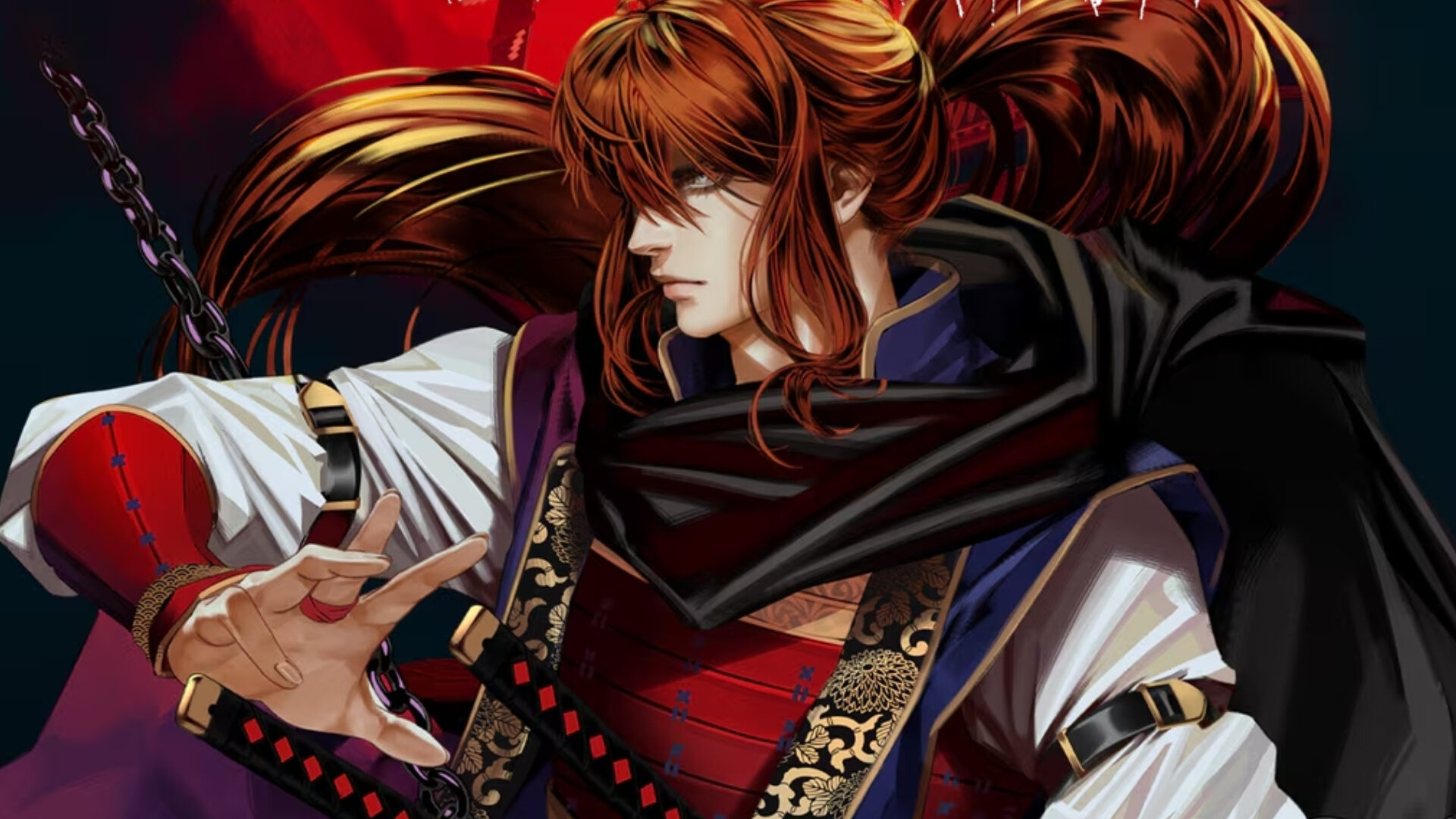
Skautfold: Moonless Knight arrives on Xbox Series as a late and demanding chapter, concluding a series already known for its taste for unease and bitter combat. The game abandons the more closed arenas of previous installments to embrace a top-down metroidvania formula, set in a Japanese imperial palace transformed into a trap beneath a shattered sky and corridor of Lovecraftian horrors. There we find Gray, second knight of the Angelic Empire of Britannia, sent on a diplomatic mission which immediately turns into a mystical bloodbath.
On paper, Moonless Knight promises a fairly rare mix: a semi-open progression which allows you to choose your routes, a guard system which relies on timing more than on frenzy and a universe which treats its own lore like a debt to be paid, rather than a setting to absently leaf through. In practice, the game keeps this promise as much as it brutalizes it. It offers a dense adventure, sometimes brilliant in its way of linking exploration and combat, but also willingly unrewarding, slow to let itself be tamed and perfectly capable of rejecting those who are not ready to give it the time it demands.
A diplomatic mission under a split full moon
Moonless Knight is set in 1900, in an alternate history where the angelic Empire of Britannia and the Rising Empire of Japan coexist under a literally shattered moon, which leaves traces of cosmic horrors trailing across the sky. Gray, the second knight in Britannia’s service, arrives at the Oda Imperial Palace on a negotiating mission that does not cross the threshold of the court. A lunatic cult triggers a coup, the Imperial Guard falters, and the entire building becomes a civil war zone saturated with rituals and impossible creatures.
The palace, from there, becomes the real protagonist. Skautfold encloses almost its entire adventure in this labyrinthine fortress, where each wing corresponds to a fragment of power, a faction, a lineage or an occultist obsession. The dialogues, notes and optional encounters trace the remains of a long story, already begun in Shrouded in Sanity, Usurper and Into the Fray, and which here finds a form of convergence rather than a simple continuation. The writing remains cold, deliberately distant, but it nourishes a coherence which gives weight to the progression, especially for those who already know the universe.
Gray, for his part, remains a vector more than a character who seeks to seduce. His role is to hold on, to fulfill the function of a foreign knight in a court on the verge of collapse and to carry the story as much as the player on his shoulders. Moonless Knight is not interested in his psychology like that of a classic hero, it makes him a means of navigating in a world which is overflowing with secondary characters, tragic figures and sacrificial silhouettes. This reserve can frustrate, but it fits with the tone: Skautfold prefers to tell the story of an empire that is crumbling than an individual who confesses.
A metroidvania in cross section
The Oda Imperial Palace is not a simple succession of rooms connected by colorful doors. Moonless Knight adopts a semi-open structure, with several objectives that can be chained together in a partially free order, shortcuts to unlock, loops that lead back to the same areas and a real game of back and forth between the wings of the palace. There we find shelters which serve as breathing points, relics which open new accesses, pets and bonuses which encourage returning to areas already crossed.
The exploration remains generally readable. The map draws identifiable blocks, the interconnections end up producing this satisfaction specific to metroidvania, that of a space which is no longer content with being large, but which becomes familiar. Skautfold does not seek to compete with the large labyrinths of the genre, but it manages to create an impression of a constructed place, with internal logics and spatial hierarchies that make sense. We don’t just cross a corridor to reach the next boss, we plunge into structures that had a function before being invaded by horror.
The freedom of progression is not total, but it is enough to break linearity. You can choose in which order to face certain bosses, leave a wing aside to return later with better relics, or insist on an area earlier than expected at the cost of a more difficult fight. This room for maneuver gives the palace a welcome texture: the missed corners are not failures, but promises of return.
Parrying as a religion of combat
The heart of Moonless Knight lies neither in the size of the map nor in the number of side quests, but in its combat system. Skautfold inherited the Guard System introduced in Usurper and pushes it to its breaking point here. Each confrontation is based on precise guarding, parrying and dodging mechanics, where the slightest timing error is immediately paid for, and where patience is worth as much as a longer life bar.
Concretely, Gray has a guard gauge which is consumed with each blocked blow and breaks if the defense is abused, but the same logic applies to most enemies. The more we punish at the right time, the more we undermine their ability to withstand, until we open a window where the damage explodes and where an opponent who seemed untouchable finally finds himself vulnerable. The game thus imposes a discipline: observe, understand, agree to stay at a distance, then strike precisely rather than hammering the attack button.
This approach immediately highlights the difference between caution and haste. Ordinary enemies can already surprise you with the extent of their punishments, the elites transform each error into a brutal return to the loading screen, and the bosses take on the appearance of a final exam of everything we have learned. Progression is not just about accumulating numbers on a character sheet, but about honing a move. Moonless Knight is very clear on this point: it does not seek to be fair to everyone, it seeks to be consistent for those who accept its rules.
This requirement can obviously backfire. The game doesn’t make much effort to smooth out its corners, but it never betrays the initial contract. Moonless Knight does not want to flatter the player, it wants to check how far the player is willing to go to tame a guard system that refuses approximations.
An austere, but lived-in exterior
Visually, Skautfold: Moonless Knight assumes a very marked 2D top view. The sprites are small, the animations remain measured, the effects never invade the screen, and the whole prefers readability and tonal coherence to demonstrations of technical power. The Empire of Dawn is not a festival of colors, but a succession of cold rooms, ceremonial corridors, gardens strangled by the shadow of the moon and ritual rooms where the decor absorbs the light.
The soundscape follows the same logic. The music maintains the tension without seeking the immediately memorable theme, the sound effects anchor the impacts of the Guard System in a somewhat heavy material, and the rare moments of calm take on weight because they pause a background sound which never quite leaves the nervousness. The game does not seek to seduce with the spectacular, it builds an atmosphere of constant pressure which serves its difficulty as much as its universe.
On Xbox Series, the picture remains stable. Moonless Knight does not strain the machine, but it takes advantage of it to keep a clean image, without marked drops or visible concessions in resolution compared to the original version. The game remains fluid, loading times are contained, and the controller adapts well to the control scheme, provided you accept a layout that does not seek to imitate the most modern metroidvania standards.
A game that chooses its audience
Moonless Knight doesn’t take everyone by the hand. The pace at the beginning is slow, reading the map requires time to adapt, the difficulty curve rises quickly and certain sections of lore remain deliberately opaque if you have not followed the series. It’s a game that expects its audience to make the effort to enter into a language already underway, whether in the universe, in the structure, or in the guard system.
This choice makes it a deeply niche title, but also surprisingly satisfying when you accept this contract. The imperial palace of Oda gradually becomes a place that we read, that we understand, that we pass through with knowledge of the facts. Battles cease to be isolated obstacles to become a series of tests that truly validate what we have learned. And the narrative thread, even drowned in voluntary austerity, leaves the sensation of a story which concludes with a real intention of form.
Verdict
A satisfying ending without being memorable
7/10
Skautfold: Moonless Knight is a game that is aimed directly at those who expect neither complacency nor superficial modernity. It offers a palace to be patiently explored, a combat system which makes guarding a religious reflex, a universe which mixes diplomacy, lunar worship and the end of the world in a fantasized Japan of the early 20th century, and it stubbornly refuses to adapt its rhythm to those who would like to dispatch it.
We can criticize it for its initial slowness, its hero who is sometimes too self-effacing, its dated interface choices and its almost dogmatic desire to punish the slightest error. We can also recognize that, as long as we agree to give it the necessary space, Moonless Knight manages to keep the promise that the Skautfold series has been carrying around for years: to offer a piece of Lovecraftian nightmare that is playable, dense, sometimes frustrating, but always consistent with the rules it sets.
Pros
- A Japanese imperial palace transformed into a dense and coherent semi-open metroidvania.
- A central guard system that makes timing and patience the real resource of the game.
- A controlled Lovecraftian atmosphere, between a disembowelled moon, fanatical cult and decaying empire.
- A clean, fluid Xbox Series port sold at a reasonable price.
Cons
- A slow pace at the start, which risks discouraging more than one person.
- A hero who is too self-effacing and limited character development.
- Interface and control layout choices that betray a somewhat rigid heritage.
- An unfair difficulty if you do not fully adhere to the guard system.
- An interface and texts only in English, without French localization.
More in Video games
Full library 8/10
Onimusha: Way of the Sword
XBOX 7.5/10
The Lord of the Rings: War in the North – Legacy Edition
XBOX 5/10
Disgaea Mayhem
SWITCH 9.5/10
Assassin’s Creed Black Flag Resynced
XBOX 5.5/10
Tale of Dark Lands
SWITCH 9/10
007 First Light
XBOX 8/10
Realm of Ink
SWITCH 7/10
Ariana and the Elder Codex
SWITCH 6.5/10
Kingdom’s Return: Time-Eating Fruit and the Ancient Monster
SWITCH 9/10