
Dragonkin: The Banished
Blood of Dragons and the Promise of Iron
Score: 7/10
Images and videos

At a glance
We liked
- An Ancestral Grid truly designed as a build engine
- Four classes that give genuinely different ways to play
- Progression that becomes very gripping when everything fits together
- Environments often very visually successful
We liked less
- Writing too simplistic to make a lasting impression
- A vast but poorly rewarded exploration
- Loot too abundant to remain exciting for long
- A soundtrack that lacks depth
Contents
Developed by Eko Software and published by Nacon, Dragonkin: The Banished arrived in version 1.0 on March 19, 2026 on PlayStation 5, Xbox Series X|S and PC, after a year of early access on Steam. Tested here on Xbox Series, the game takes us into a world ravaged by the blood of dragons, where humanity still clings to Montescail, the last bastion in the face of a corruption that brings forth creatures from the depths.
The title displays a fairly clear ambition. Eko Software does not seek to replay the score of hack’n’slash with abundant loot, but to add its own markers, with four heroes with distinct approaches, a dragonet who accompanies the progression, an Ancestral Grid designed as a customisation engine; and a city that evolves with the hunt. This base immediately gives the game a more structured identity than it seems, as if it wanted to combine the brutality of the genre and a more methodical form of construction in the same movement.
An essential question then remains: in a landscape where the masters of hack’n’slash already occupy the field, does Dragonkin: The Banished really have the fangs to impose its own path, or only the good ideas of an outsider still learning to bite?
Heroes more useful than striking
The universe of Dragonkin: The Banished rests on a very clear basis. The world has been ravaged by dragons, corruption has spread with their blood, and humanity still stands around Montescail, the last bastion from which the hunt begins. It’s a fairly classic dark fantasy setting, but it works because it immediately gives the game a direction. We know what we’re looking for, we know what threatens this world, and the adventure doesn’t waste time blurring its own promise.
The story doesn’t really seek finesse. It advances with a simple, almost frontal logic, relying on a mythology of blood, corruption and stalking. This is not a game that impresses with the subtlety of its writing or the complexity of its issues. On the other hand, it knows how to set a scene, pose a threat and give the player the impression of taking part in an ancient war already well underway. This raw efficiency is often enough to keep it going, even when it remains very well defined.
The playable characters perfectly reflect this approach. The Barbarian, the Oracle, the Knight and the Tracker are not written as great dramatic figures, but as immediately readable combat profiles, each associated with a way of inhabiting this world and confronting its creatures. Their presence firstly serves the rhythm, the readability and the identity of the styles of play. On this point, Dragonkin makes a simple choice: the heroes exist above all because of what they allow to play.
This is also where the game shows its limits. Behind their silhouettes and their specializations, these figures leave an impression that is more functional than truly memorable. We quickly understand their role, their place, their energy, but more difficult what could make them exist beyond their archetype. The world has more presence than those who pass through it. The monsters, the corruption, the city, the promise of the hunt, all of this impresses more than the faces supposed to carry this adventure.
Basically, Dragonkin: The Banished tells its world better than its characters. This is not necessarily a fatal flaw for a game of this nature, especially when progression, loot and combat must remain at the center. But this immediately sets its priorities. Here, the writing supports the action more than it transcends it. And for the moment, this is enough to keep the journey going, without yet giving it a real dramatic signature.
A terrain that does not always reward
Dragonkin: The Banished initially gives the impression of a fairly classic hack’n’slash in its approach. The first hours remain deliberately readable, with simple basic skills and immediate, almost raw sensations. But this simplicity is only a facade. Very quickly, the game begins to reveal what it really has in store, and that’s where it becomes more interesting. Its four heroes do not just dress up known archetypes: they impose real differences in rhythm, scope and reading of the combat, to the point of making the chosen class a question of feeling as much as of effectiveness.
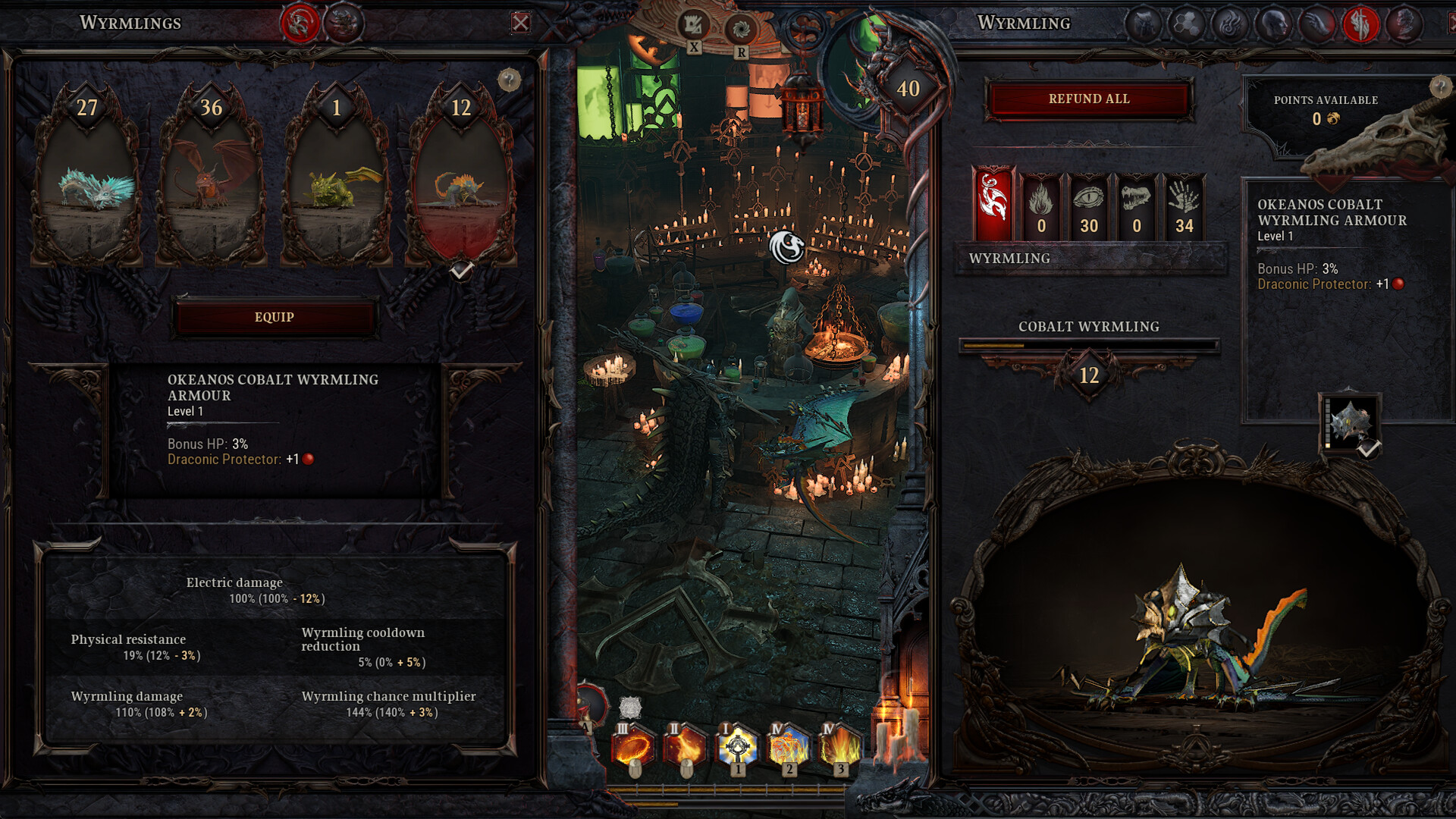
The heart of the system is obviously the Ancestral Grid. It’s what gives the game its personality, much more than its loot or its raw leveling. You place your skills, their modifiers, their variants, their combinations, with a logic of shapes, orientation and nesting which requires you to think about the very structure of your build. The game therefore encourages you to manipulate your powers like pieces to be arranged, and not like a simple list of talents to unlock. Added to this is the dragonet, which is a true extension of the character, with its own effects, its own elemental affinities and its own place in the construction of the whole. It is this articulation between the hero, the grid and the companion that gives Dragonkin its best game design idea.
This richness is all the more appreciable as it does not remain isolated in a corner of the menu. The game tries to connect it to its global loop, notably through Montescail, the bastion city, which also evolves as you progress. In theory as in practice, this city brings a welcome structure to the adventure: new artisans, passive bonuses, improvement of systems, rapid teleportation to different points of interest. This gives the game a more methodical foundation than many competitors in the genre, with this simple but effective idea that progression is not limited to the character, but also affects the location from which the entire hunt is organized.
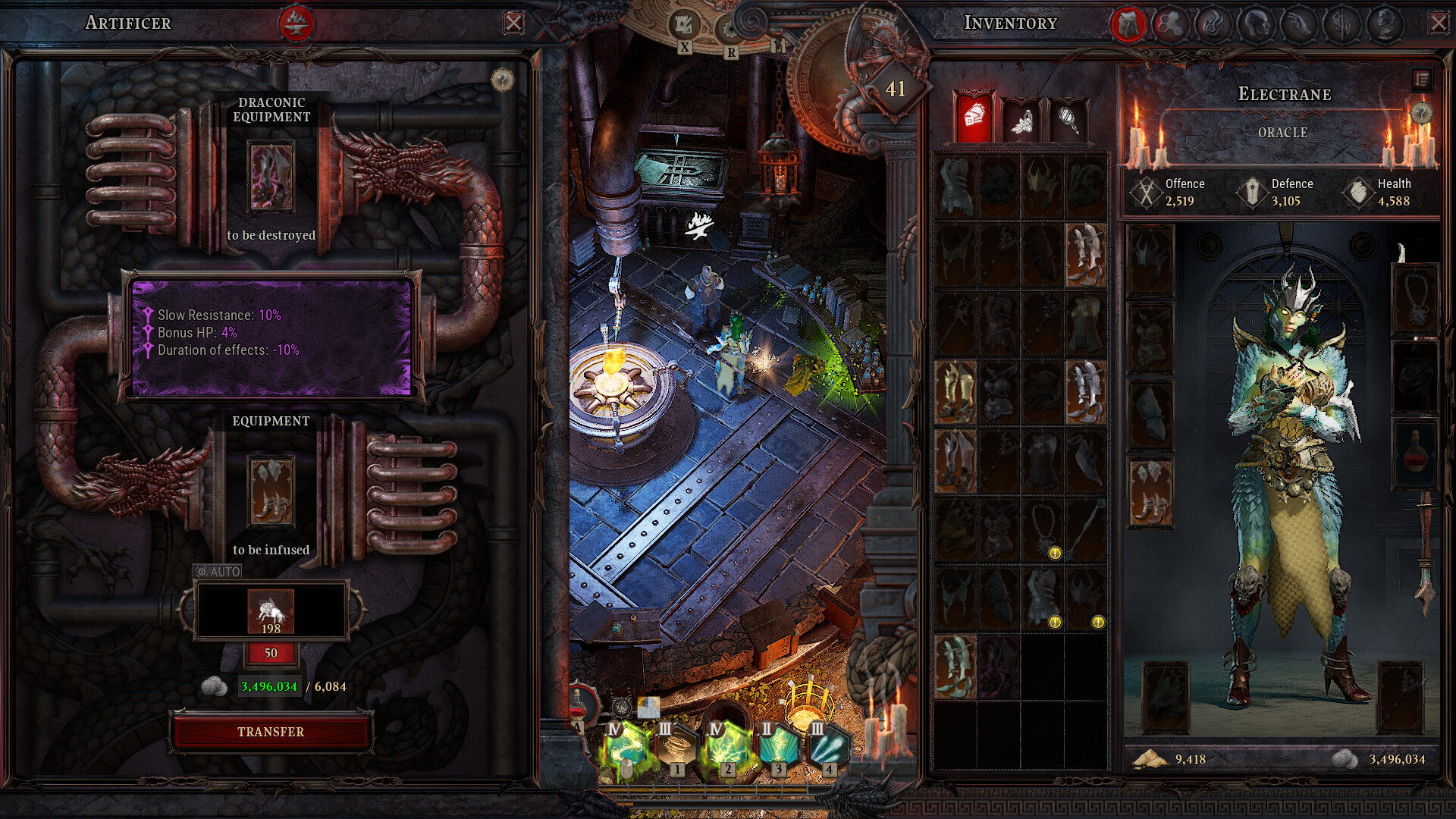
Where Dragonkin weakens, however, is in its balancing and in maintaining its loop over time. The system is rich, but it takes a little time to fully deploy. Certain skills quickly take over the rest, the level scaling sometimes tends to smooth out the feeling of increasing power, and the loot, although omnipresent, fails to remain exciting. We collect a lot, we sort a lot, we compare a lot; but not everything has the same value… and the feeling of cleaning out your inventory sometimes takes precedence over the pleasure of discovering a real find. The game is good when it pushes you to experiment. It is much less so when it simply makes you recycle interchangeable equipment.
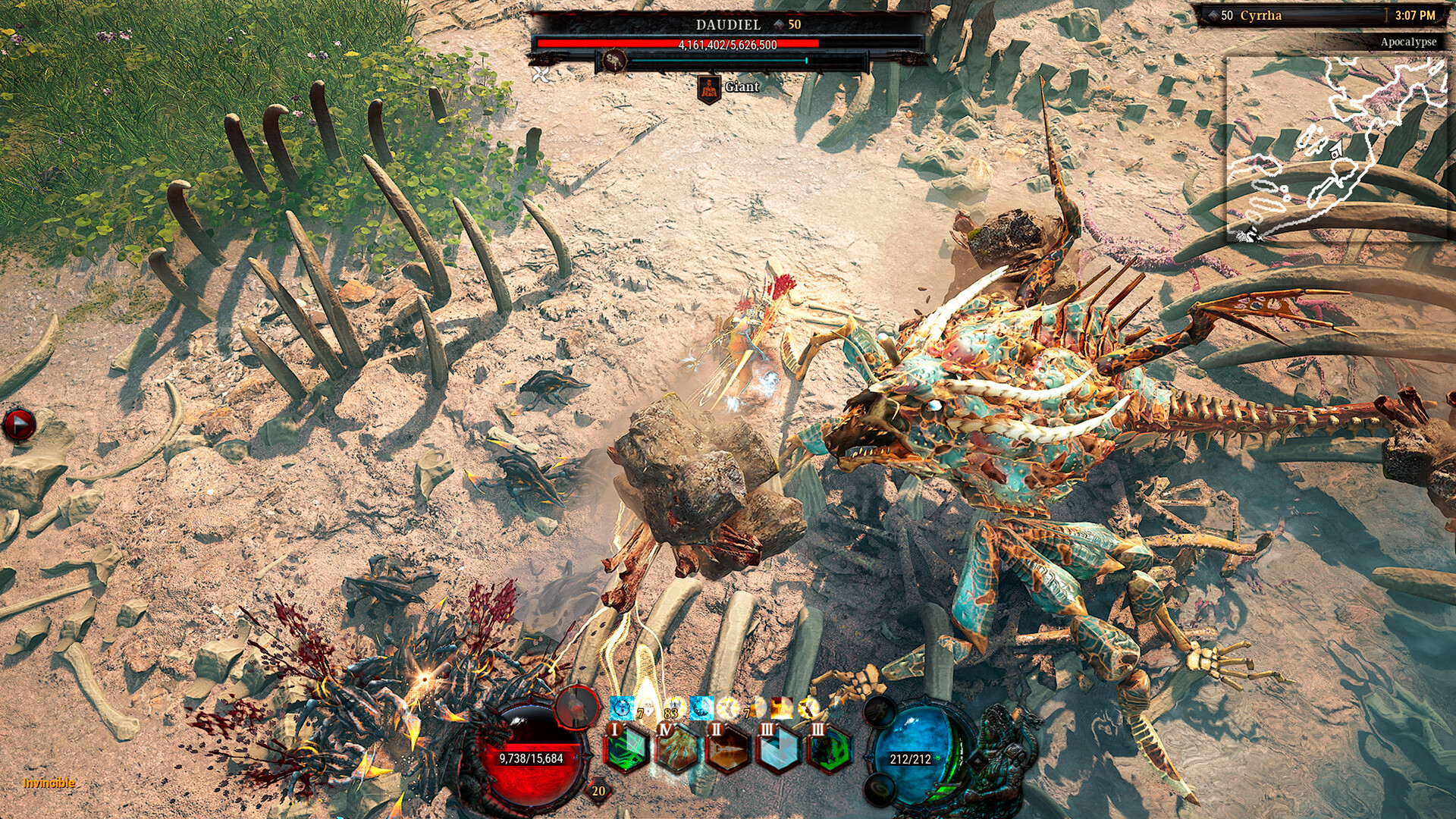
The level design leaves a more contrasting impression. The areas are vast, sometimes very beautiful, sometimes even frankly evocative; and getting around remains easy thanks to a well-thought-out teleportation system. However, this scale is clearly not exploited as it should be. Exploration regularly gives the feeling of promising more than it really offers, with poorly rewarded junctions, numerous dead ends and spaces that seem larger than truly dense. This does not break the adventure, but weakens part of its breath. By dint of exploring extensive maps which do not always capture the player’s curiosity, Dragonkin ends up reminding us that the size of a world is never enough to give it depth.
Dragonkin: The Banished stands out above all for the quality of its internal architecture. Its customization system is solid, stimulating, sometimes even exhilarating when all its pieces finally start to dialogue with each other. On the other hand, its rhythm, its balancing and the reward given to exploration do not always follow this same requirement. The result is a hack’n’slash that’s smarter than it looks, but still a little uneven in the way it brings all its good ideas to fruition.
Lands that catch the eye, but a soundtrack that fades too quickly
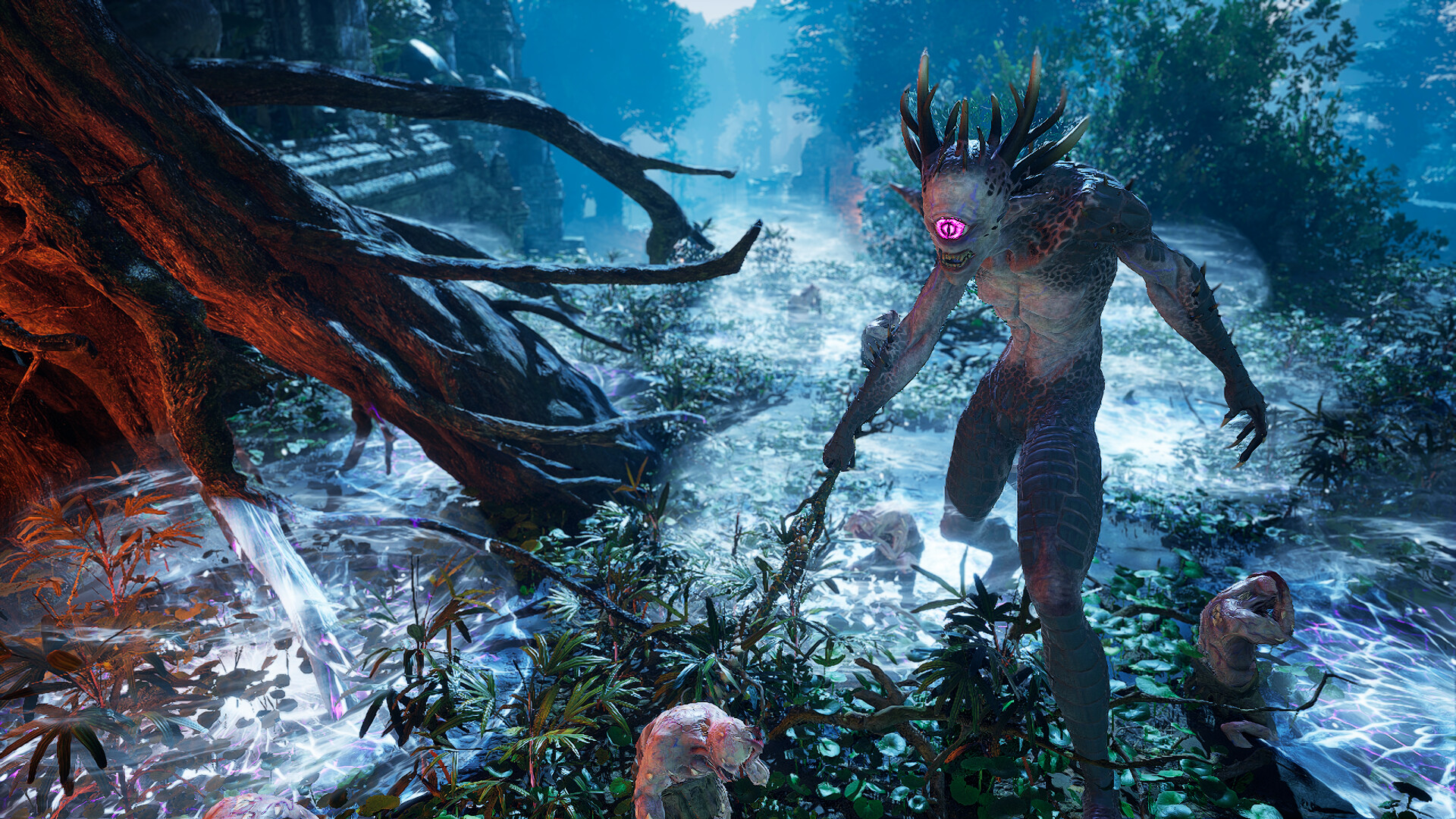
Visually, Dragonkin: The Banished often makes a better impression than its status as a hack’n’slash outsider might lead one to fear. Its artistic direction remains classic in its foundations, with this dark fantasy of ashes, ruins and corruption that we know well, but it nevertheless finds real points of interest in its environments. This is even where the game is most convincing: the areas have scale, certain panoramas are frankly successful, and a few more marked places, notably the more dreamlike spaces or the more atypical biomes, break the monotony of the whole.
It is this contrast that sums up its visual identity quite well. Dragonkin does not really invent a new imagination, but it sometimes knows very well how to highlight the one it borrows. When the camera takes the time to open up the space, to highlight an architecture, a relief or a breakthrough towards the horizon, the game exudes a real presence. In those moments, there is something. A feeling of travel, of a ravaged territory, of a wide world that makes you want to see further. The problem is that this beautiful decor is not always relayed with the same force by the rest.
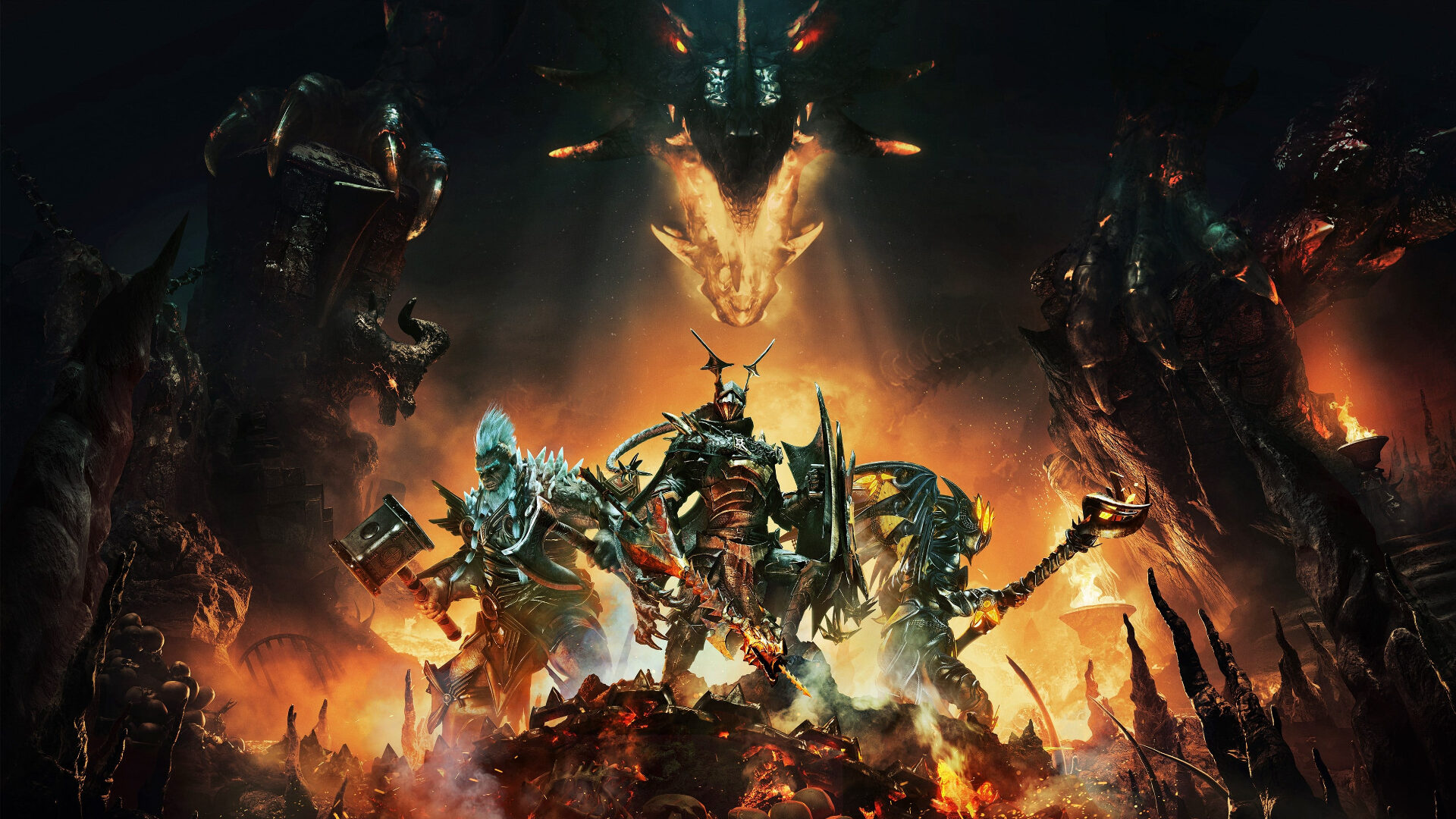
The characters leave a more uneven impression. The general rendering lacks a little personality, as if the game put more care into its lands than into its faces. This does not directly harm the action, but limits its impact a little as soon as it seeks to give more weight to its scenes or its figures. Conversely, bosses and especially dragons fare much better. Their visual presence has more authority, their silhouette prints more quickly, and the game immediately finds new life when it highlights these large creatures rather than its simple lines of dialogue.
The soundtrack, on the other hand, struggles more to leave a lasting mark. It correctly accompanies the action, supports the atmosphere, fulfills its function, but without ever really imposing a strong color. Very quickly, it even gives the feeling of going a bit in a loop, to the point of ending up being more noticed by its repetition than by its own qualities. It’s not a disaster, simply a sound design that lacks depth where the game would have needed some extra soul to support its dark fantasy.
The dubbing leaves a comparable impression. There is will, there is sometimes strength in the moments when the dragons speak or when the game seeks to give more gravity to its confrontations, but everything is not at the same level, far from it. Some voices lack naturalness, and the absence of French dubbing, the irony for a French game, does not really help to compensate for this feeling of distance for the French-speaking public. Basically, Dragonkin: The Banished seduces more with its landscapes and its ability to bring its monsters into existence than with its sound staging. It’s already something, but not yet enough to give the whole thing a real sensory signature.
Verdict
A good bite, not yet a big fang
7/10
Dragonkin: The Banished leaves the impression of a solid hack'n'slash, sometimes even frankly stimulating, but still incapable of transforming all its good ideas into clear strengths. Its customization system largely holds up, its Ancestral Grid gives it a clear identity, and the whole regularly manages to rediscover this very simple pleasure of the build which becomes clearer, the combat which heats up and the progression which finally begins to pay off.
But aside from that, the writing remains uneven, the exploration rewards too little, the loot ends up losing its luster and the sound design struggles to give the whole thing a real signature. Dragonkin is therefore not a clumsy suitor. It’s already a game that has teeth. It simply still lacks enough consistency to leave a lasting scar, especially in such a competitive market.
Pros
- An Ancestral Grid truly designed as a build engine
- Four classes that give genuinely different ways to play
- Progression that becomes very gripping when everything fits together
- Environments often very visually successful
Cons
- Writing too simplistic to make a lasting impression
- A vast but poorly rewarded exploration
- Loot too abundant to remain exciting for long
- A soundtrack that lacks depth
More in Video games
Full library 5.5/10
Warrior Cats: Clans of the Forest
SWITCH 6.5/10
Demons’ Night Fever
SWITCH 9/10
Dragon’s Dogma 2: Dark Arisen
XBOX 6/10
Qliphah in Providence’s Shadow
SWITCH 8/10
Verho – Curse of Faces
XBOX 7.5/10
Terrinoth: Heroes of Descent
XBOX 7/10
LumenTale: Memories of Trey
SWITCH 6/10
STARBITES
SWITCH 8/10
Monster Crown: Sin Eater
XBOX 9.5/10