
Borderlands 4
The chaos found in the infinity of stars
Score: 9.5/10
Images and videos


At a glance
We liked
- The scale and coherence of Kairos as a continuous planet
- The new Vault Hunters, varied and charismatic
- Richer and more narrative loot, linked to factions and zones
- Technical fluidity and staging of fights
We liked less
- Certain visual excesses which confuse readability
- Humor that is sometimes too talkative and breaks the tension
- Loot balancing that can still be improved
 By Farrel Grimwood · published · 9 min read
Contents
The madness never left Borderlands. Since the first step taken on Pandora, the saga has made plunder and excess its trademark, oscillating between unbridled anarchy and scathing satire. After a third episode criticized for its verbiage and its imbalances, Gearbox returns with Borderlands 4, launched on September 12, 2025 on Xbox Series, and promises a new start. Here, the planet Kairos becomes the heart of a fractured universe, where the boundaries of loot fade to give way to an open world, without ruptures, where each horizon conceals a promise of violence and loot.
This fourth chapter is not just a sequel. It aims to be a reinvention, a bet on the future: to rediscover the ferocity of the origins, while daring to break the shackles that confined the franchise. But behind this ambition, a nagging question persists: can chaos still surprise, or is it nothing more than the repetition of an exhausted myth?
The insurgents of a chained world
Kairos is not a planet like any other. It is an open scar, born from the Cataclysm which tore Elpis from the sky and left the world panting, offered to the ambitions of a single man: the Timekeeper. With his Order, he imposed an icy screed, dividing the territory into provinces each subject to a Commander, true guardians of undivided power. Where Pandora embodied anarchy, Kairos embodies control, and it is in this locked universe that the story of Borderlands 4 unfolds.
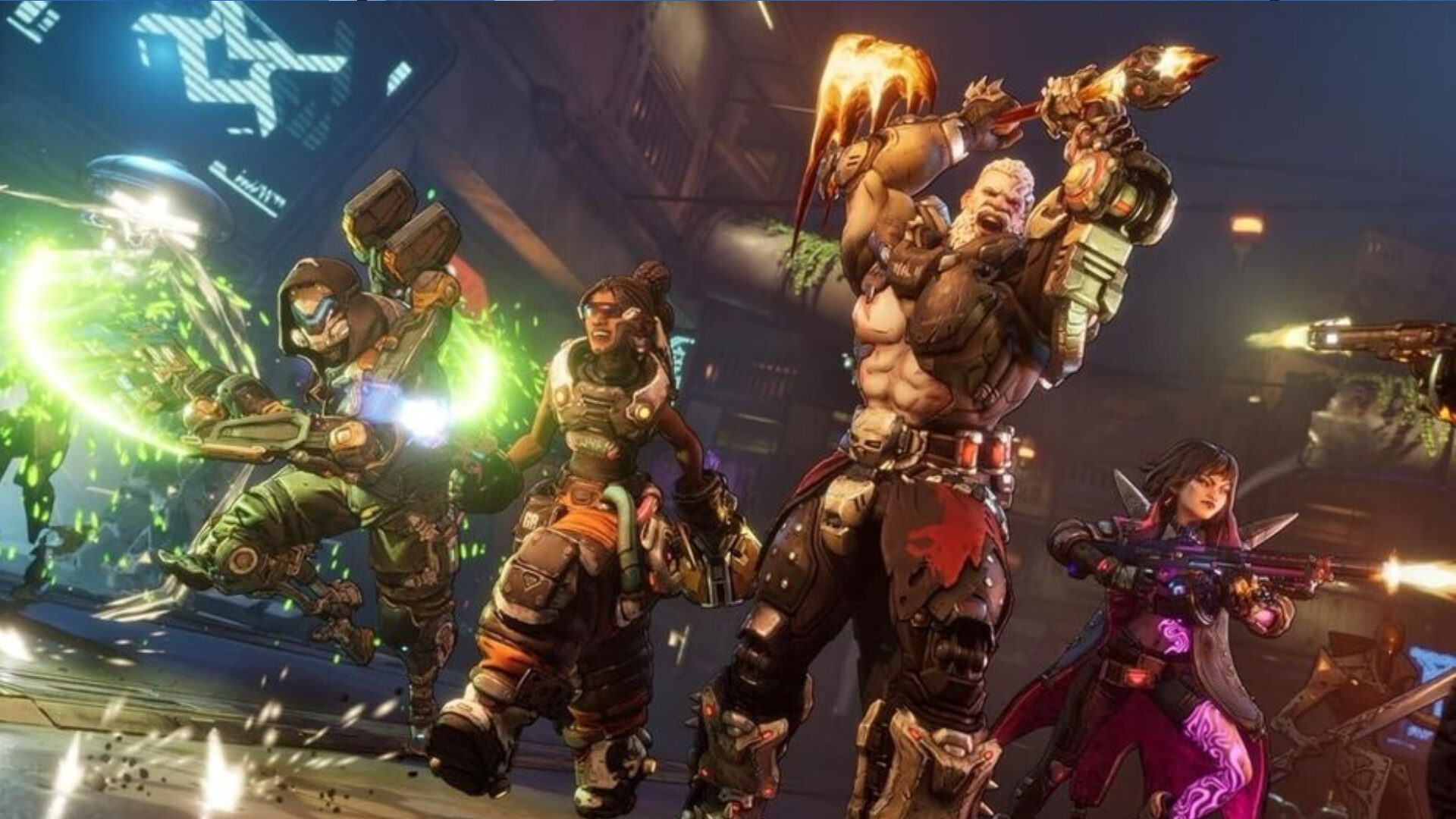
In the center, four new Vault Hunters. Vex, Rafa, Amon and Harlowe are not simple mercenaries, but the leaders of an uprising. Each person embodies an approach to combat and an intimate wound. Vex, elusive Siren, uses speed and shadow to overthrow hierarchies. Rafa, an improved soldier on the run, plays as much on his humor as on his abilities. Amon, a mystical barbarian on the run, wields artifacts with disturbing resonances. Harlowe, finally, embodies glacial precision, scientific before being warlike, observing each weakness as an opening. Their trajectories intersect, collide and complement each other, drawing a mosaic of motivations where union is never acquired, but always necessary.
Around them gravitate the fragments of a scattered resistance. The Outbounders, freedom-loving survivors, the Augers, who seek to preserve technological relics, and the Electi, convinced of embodying a higher order, gradually join the uprising. Their trust is earned through victories, their loyalty is paid for through sacrifices. Even more unexpected, Claptrap, faithful to his absurdity, finds himself propelled into the unwilling founder of the new Crimson Resistance after a resounding crash. Behind his boasting, he becomes the derisory and touching symbol of a people who seek to laugh in the heart of disaster.
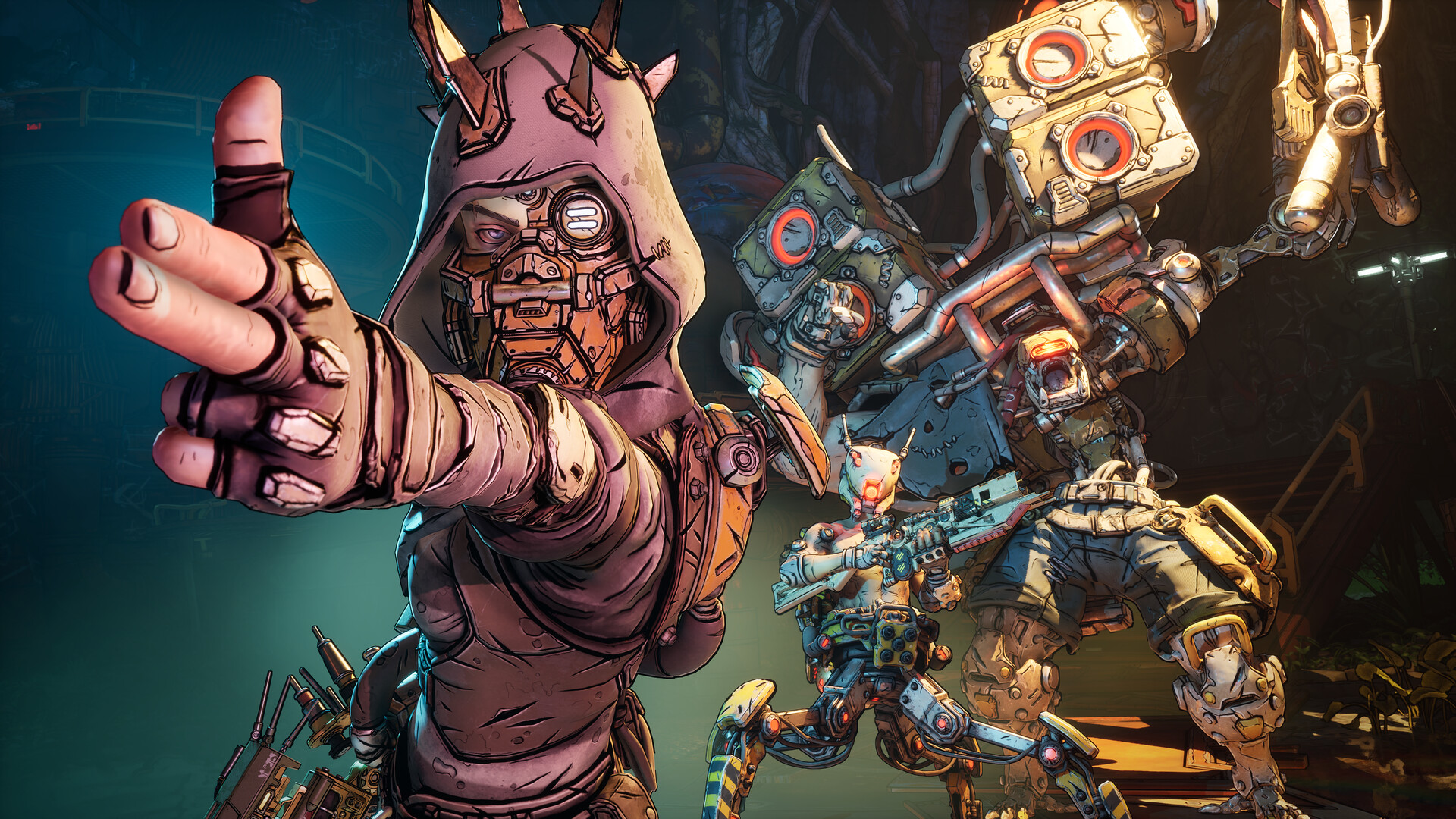
But the rebellion is not alone. In the shadows rises Queen Callis and her Rippers, soldiers mutilated by the removal of their Bolt implant, gone mad with pain and vengeance. Where heroes seek to unite, they only dream of conquering, transforming each battlefield into an altar to their hatred. This opposition gives the story its harshest tension: the player faces not only the Order, but also a monstrous deviation from freedom.
Writing chooses to explode. Narrative fragments accumulate: journals left on the burned ground, secrets extracted from residents, fanatical sermons shouted in the busy streets. The story is built like a puzzle, each victory adding a piece, each defeat removing one. The great fresco is slowly taking shape: that of a planet which refuses to bend, but which can only survive by breaking its own chains.
The side quests are not left out. These improvise as threads, leading the player from one region to another, surprising with the ineffable quality of polished and precise writing. Often the game makes you laugh by obscuring the low-brow humor that was the spice of the third opus. At times it moves, touches and elevates even its smallest side quests. There a bomb that dreams of exploding, here a scientist pretending to have found a solution to the madness of the Rippers. Borderlands 4 manages to tell the story of life with a strangely accurate mastery: sometimes cruel, sometimes funny, often on the border between the two.
The open arena of renewed chaos
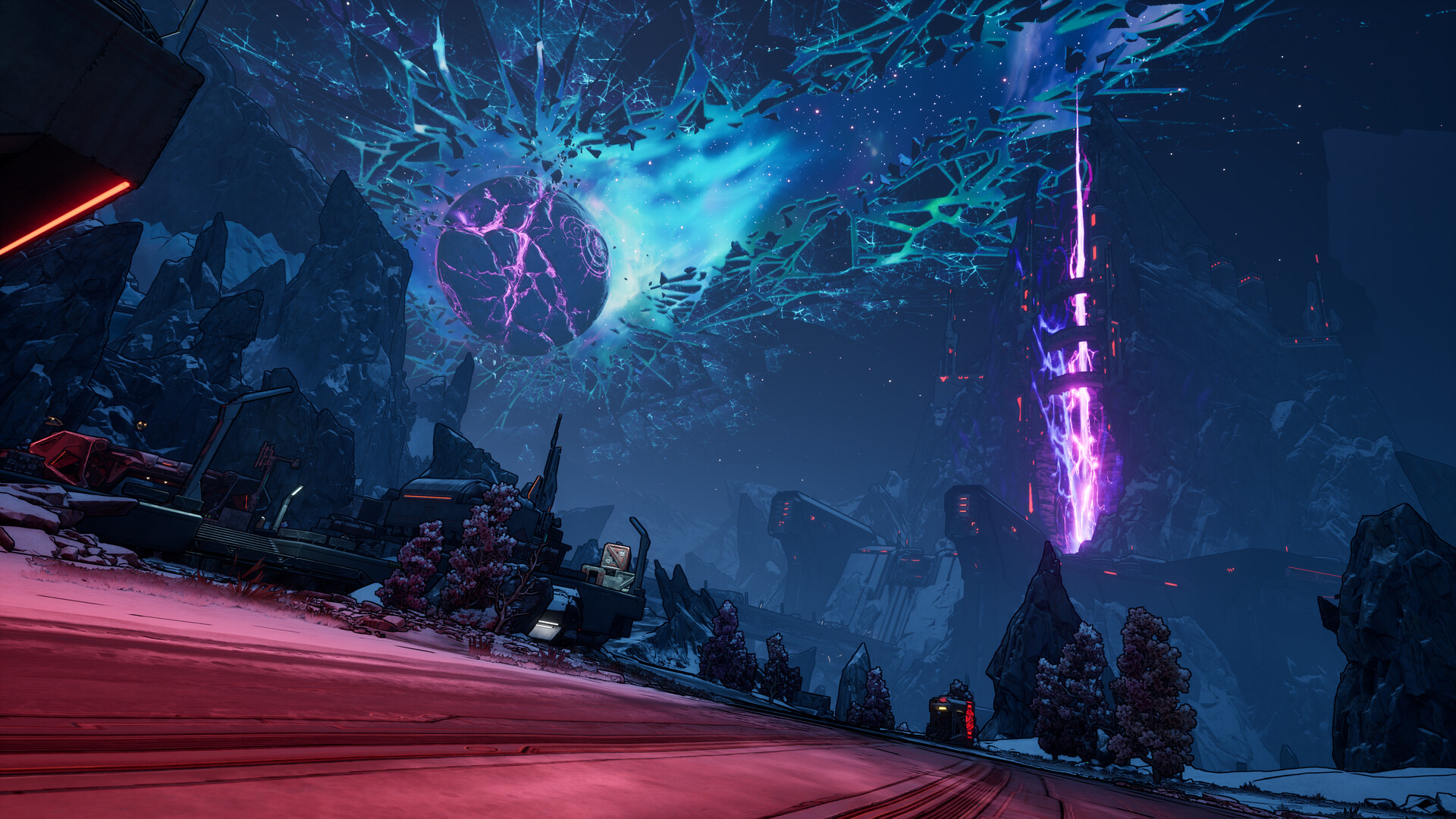
Borderlands 4 frees itself from corridors and compartmentalized areas to offer an open planet, without loading times, where each horizon becomes a promise of loot and carnage. Kairos extends like a fractured world, a mosaic of shifting biomes, each governed by a Commander of the Order. Burst deserts, industrial ruins, hanging cities and corrupted forests make up all natural arenas where the player writes his own legend.
Progression is based on a mechanics of liberation: each region is a fortress to be broken, each victory a crack in the Timekeeper building. This structure gives the player an impression of progressive conquest, of methodical shaking of a locked world. Far from being simple hunting grounds for loot, these zones are organized like narrative bastions, where the architecture itself embodies the domination to be overthrown.
The new Vault Hunters are distinguished by new abilities that shape the rhythm of the clashes. Vex excels in mobility and lightning attacks, Rafa turns melee into a devastating storm, Amon manipulates artifacts that alter the environment and inflict unpredictable effects, while Harlowe masters tactical drones capable of controlling space. Each brings its own identity, but the richness of the game is born from their synergies: skills can intersect, amplify, contradict each other, creating a strategic depth that goes beyond previous iterations.
Loot, the backbone of the franchise, takes on a new dimension here. Weapons are no longer limited to random statistics: they now carry narrative modifiers, linked to factions and zones. A rifle from the Augers not only offers a technical bonus, it tells a fragment of their obsession with ancient technology. This customization gives the loot an unprecedented weight, transforming each weapon into a tangible trace of the universe.
The level design is also enriched with dynamic challenges. Order patrols crisscross Kairos, assaults break out without warning, rival factions arise to claim their share of the battlefield. The player is never a spectator of a fixed world: he is caught in a spiral of events where the unexpected constantly fuels chaos.
The bosses, central figures of the saga, find an operatic dimension. Each Commander stands as the guardian of his province, with a visual identity, his own mechanics and a setting that reflects his philosophy. The confrontation goes beyond the simple DPS test to become a duel of symbols: fanatical faith, limitless greed, military discipline, raw savagery.
If this ambition gives Borderlands 4 an unprecedented scale, it is also accompanied by risks. The density of events can confuse the rhythm, certain clashes seem calibrated to artificially prolong progression, and the profusion of loot can still generate an impression of saturation. But as a whole, the game dares to make the gameplay a metaphor for the chaos it tells: an overabundance of weapons, enemies, situations, where we go from frustration to euphoria in an instant.
A carnival of color and fury
Since its beginnings, Borderlands has forged its visual identity through cel-shading, this thick line that transforms each setting into an explosive comic strip. Borderlands 4 takes this aesthetic further. Kairos deploys a more contrasting palette than ever: the burnt tones of the deserts clash with the acid neon lights of industrial cities, the forests saturated with spores glow with toxic greens, and the ruins sparkle with forgotten technological shards. Each region imposes its own atmosphere, reflecting both the domination of the local Commander and the violence of the conflicts that cross it.
The characters benefit from special care. The raw charisma of Vex, the imposing presence of Rafa, the disturbing serenity of Amon and the icy calculation of Harlowe are accentuated by an artistic direction which sculpts each silhouette like an icon. The secondary figures, whether faction leaders or inhabitants encountered throughout the adventure, are not content to be caricatures: their marked faces, their theatrical postures translate so many fragments of history engraved in the flesh.
The visual effects accentuate the frenzy. Projectiles fill the screen with streaks of light, Hunter powers trigger waves of particles that distort space, and explosions tinge the fights with saturated flamboyance. Sometimes this profusion borders on overload, confusing readability, but it is in keeping with the philosophy of the series: making chaos a visual celebration where confusion becomes spectacle.
In terms of sound, Borderlands 4 hits hard. The soundtrack alternates between abrasive electronic rhythms, overdriven guitars and darker orchestrations, each adapted to the areas explored. The oppressed villages resonate with muffled melodies, the military bases rumble with martial percussion, and the clashes against the Commanders are accompanied by crescendos that transform the duel into an opera of violence.
Dubbing retains a central place. The French and English voices offer a careful interpretation, between acid humor and dramatic intensity. Claptrap’s delirious monologues, the Order’s chilling sermons, Rafa’s outbursts of rage or Amon’s calm confidences give the story an emotional density that goes beyond simple pastiche.
Finally, the sound effects reinforce the body of the gameplay. Each weapon clicks with its own identity, each reload resonates like a ritual, each cry of a defeated enemy participates in the cacophony of an endless battle. The sonic chaos is total, but controlled, and transforms the arena into a score of violence where the player becomes conductor.
The gears of infinite chaos
On a technical level, Borderlands 4 takes advantage of the capabilities of the Xbox Series to provide a smoother and broader experience than ever before. The exploration of Kairos takes place without any apparent loading time, reinforcing the illusion of a continuous world where each step leads to a new confrontation. The framerate remains at sixty frames per second, even in sequences saturated with explosions and enemies, while the 4K resolution highlights the sharp features of the cel-shading. Some minor slowdowns remain during large dynamic events, but they do not dent the overall momentum.
The content, faithful to the generosity of the franchise, is deployed in multiple layers. The main campaign is organized around the liberation of the provinces of Kairos, each marked by its Commander and its own themes. Added to this are the side missions, always just as crazy, where absurd humor rubs shoulders with darker breaths. Random events, meanwhile, transform the planet into a living theater: Order ambushes, clashes between rival factions, loot opportunities appearing unexpectedly.
Replayability is amplified by a redesigned progression system. Each Vault Hunter has evolving skills that combine with modifiers linked to factions and loot collected. Builds are no longer limited to linear specializations: they adapt to loot, recruited allies and choices made. Optimization enthusiasts will find there a strategic wealth that encourages experimentation.
Multiplayer, a historic pillar of the saga, remains at the center of the experience. Four-player cooperative sessions are enriched with new synergies between Hunter skills, and the difficulty adjusts according to the group. Competitive modes complete the offering, transforming cooperative chaos into frenetic clashes where every gunshot becomes a gamble.
GearBox has also integrated accessibility and modern comfort options: customization of subtitles, difficulty adjustments, visual filters, audio settings. These details reflect a desire to open the experience to as many people as possible, without betraying the frenzy of the game.
Finally, the general stability demonstrates real care. Few major bugs, a clearer interface and redesigned ergonomics for the controller reinforce the impression of a polished game, which, without reaching the technical perfection of the biggest blockbusters, manages to transform its intrinsic chaos into constant pleasure.
Verdict
Chaos reinvented without denial
9.5/10
Borderlands 4 succeeds where many still doubted. By opening its universe with Kairos, Gearbox has transformed the hunt for loot into a global epic, combining visual exuberance, mechanical richness and a broader narrative than ever. The game does not deny its roots: absurd humor, outrageous dialogue, escalation of improbable weapons, it's all there. But this time, the anarchy is coupled with a more solid structure, a narrative breath which goes beyond simple parody to give the saga a second impetus.
Not everything is perfect. Some imbalances persist in the abundance of loot, certain dialogues still stray into caricature, and the overabundance of visual effects can confuse the action. But these flaws do not weigh heavily in the face of the raw energy of the whole, the technical fluidity, the generosity of the content and the exhilaration of chaos. Borderlands 4 is not a simple sequel: it is a rebirth.
Pros
- The scale and coherence of Kairos as a continuous planet
- The new Vault Hunters, varied and charismatic
- Richer and more narrative loot, linked to factions and zones
- Technical fluidity and staging of fights
- The generosity of cooperative and competitive content
Cons
- Certain visual excesses which confuse readability
- Humor that is sometimes too talkative and breaks the tension
- Loot balancing that can still be improved
More in Video games
Full library 8.5/10
Train Sim World 6
PS5 8.5/10
Agatha Christie – Death on the Nile
PS5 6.5/10
Brews & Bastards
PS5 9/10
Frostpunk 2 Console Edition
PS5 7/10
Folly Of The Wizards
PS5 8.5/10
Towa and the Guardians of the Sacred Tree
PS5 8.5/10
Dying Light: The Beast
PS5 8/10
Triangle Strategy
PS5 7/10
Perennial Order
PS5 6/10