Brews & Bastards
A hellish round
Score: 6.5/10
Images and videos


At a glance
We liked
- The immediate energy and pace of the gameplay
- The visual identity, deliberately grotesque and assumed
- Exemplary fluidity on Xbox Series
- Cooperative pleasure, simple and contagious
We liked less
- Repetitiveness after a few hours
- Lack of variety in rewards and enemies
- Visual chaos in multiplayer
- The absence of real progress over time
 By Farrel Grimwood · published · 6 min read
Developed and published by Mune Studio and released on September 22, 2025, Brews & Bastards unleashes its chaos: a tavern in ruins, a stolen magic stone, hordes of drunken enemies and a brain-rattling crowd demanding beer.
On Xbox Series, a Play Anywhere optimized game, the promise is simple: go down, drink, destroy. But behind this clear formula, does this mixture of juvenile humour, twin-stick and randomly generated dungeon manage to become a real fun feast or does it crash under its own barrel?
The Chaos Brewers
In Brews & Bastards, the story is told in one clear line: the “Brew Stone”, the sacred stone at the origin of all the kingdom’s beer, has been stolen. Without it, the legendary tavern of Mune Shine falls into despair and the customers desert the place. The player takes on the role of an adventurer tasked with descending beneath the tavern to retrieve the artifact and restore the lost glory of brewing.
The tone of the game is deliberately absurd, inspired by humorous fantasy universes and old school dungeon-crawlers. No complex narration or cutscenes: the scenario acts as a pretext for the action, but its lightness contributes to the identity of the title. Brews & Bastards is a tavern fable, a tale of thirst and chaos where each descent into the depths becomes a warlike drinking bout.
The player evolves in a randomly generated universe, punctuated by grotesque creatures and demons linked to magic beer. The studio chose minimal writing, reduced to short texts and situational humor; the dialogues do not seek to build characters, but to reinforce the juvenile atmosphere. The figures we encounter are only archetypes intended to serve the rhythm.
It’s a world where everything is just an excuse to go down one more level. The narration has no other ambition than to maintain the spirit of celebration and derision. And it is precisely in this simplicity that Brews & Bastards finds its tone: that of an adventure that laughs at everything, including itself.
Hand-brewed chaos
Beneath its juvenile exterior, Brews & Bastards hides a surprisingly mastered structure. It’s a twin-stick dungeon crawler, heir to the arcade classics of the 2000s, but brought up to date with the pace and readability of modern independent productions. The player plays an adventurer tasked with recovering the Brew Stone, through a series of randomly generated dungeons where each room becomes a test of reflex and survival.
The principle is clear: we enter, we clean, we drink. Each dungeon floor is full of enemies, collectibles, traps, and temporary rewards. The heart of the gameplay is based on a magic drink mechanic, the “brews”, which grant various effects: speed boost, area explosion, temporary shield or elemental attack. These consumables structure the tempo of the game. The player juggles between risk management and the pleasure of outbidding. To drink is to strengthen yourself; but also precipitate chaos.
The balance between precision and improvisation defines the entire dynamic of the title. Aiming with the right stick allows immediate reading of the space, while the arenas, tighter than in a classic roguelite, encourage constant movement. Each confrontation becomes a dance of projectiles, a ballet of foam and fire where the slightest misstep is costly. The game does not seek strategy, it seeks trance: this feeling of being carried away by the flow without ever completely losing control.
Local multiplayer for up to four participants turns this experience into a carnival of the unexpected. The screen fills with spells, debris, explosions and visual effects that are almost unreadable. Chaos becomes a collective language: we laugh, we shout, we get lost, we start again. In solo, the experience is more readable but also more demanding. Progression is based on short, fast runs, where death is only a necessary step towards a new cycle.
The level design, procedural but coherent, multiplies the variations without ever breaking the visual unity. Each room is based on simple geometry: circular areas, ambush corridors, closed rooms where enemies flock in waves. This minimalism works because the game makes no secret of it: it prefers rhythm to complexity. Where other roguelikes flaunt their depth, Brews & Bastards boasts its immediacy.
The progression remains deliberately light. No stats to optimize or builds to refine: everything goes through equipment and discovery. The arsenal consists of classic weapons such as hammers, axes, and other wands, to which are added special powers linked to potions. Pleasure comes from repetition and mastery: learning to read chaos, to guess the next slip-up, to laugh at your own fall.
On Xbox Series, the handling is exemplary. The controls respond like clockwork, the fluidity never weakens, and the vibration of the controller perfectly accompanies the impact of combat. The cooperative mechanics are perfectly stable: no drop in framerate, even in the busiest scenes.
But this frenzy comes at a price. By focusing on rhythm, the game neglects depth. The reward system lacks variety, replayability relies more on atmosphere than on a real progression curve, and the visual chaos tires over time. Brews & Bastards is not intended to last dozens of hours: it is consumed like a good craft beer: strong, brief, exhilarating.
Visual intoxication and tavern din
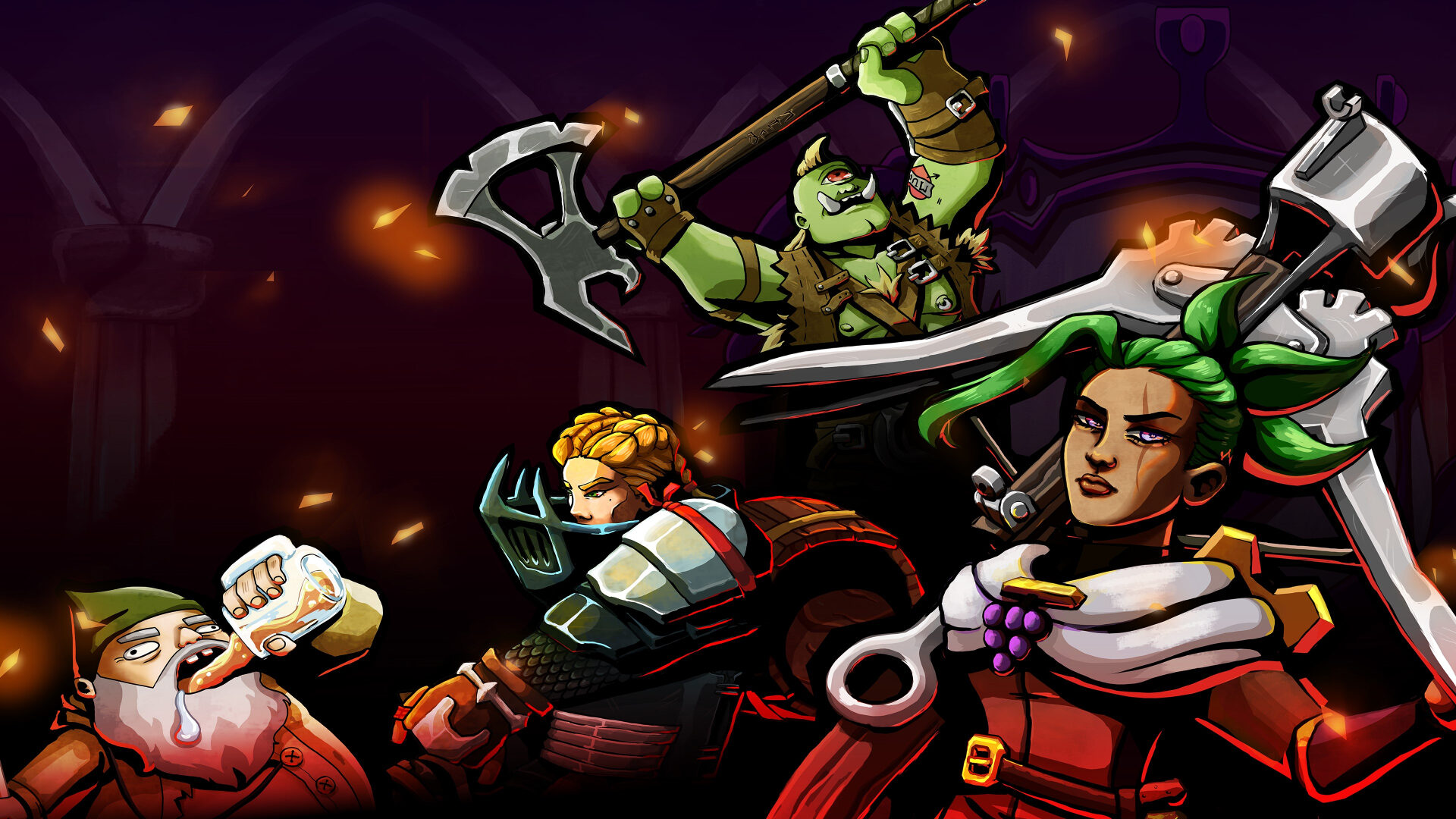
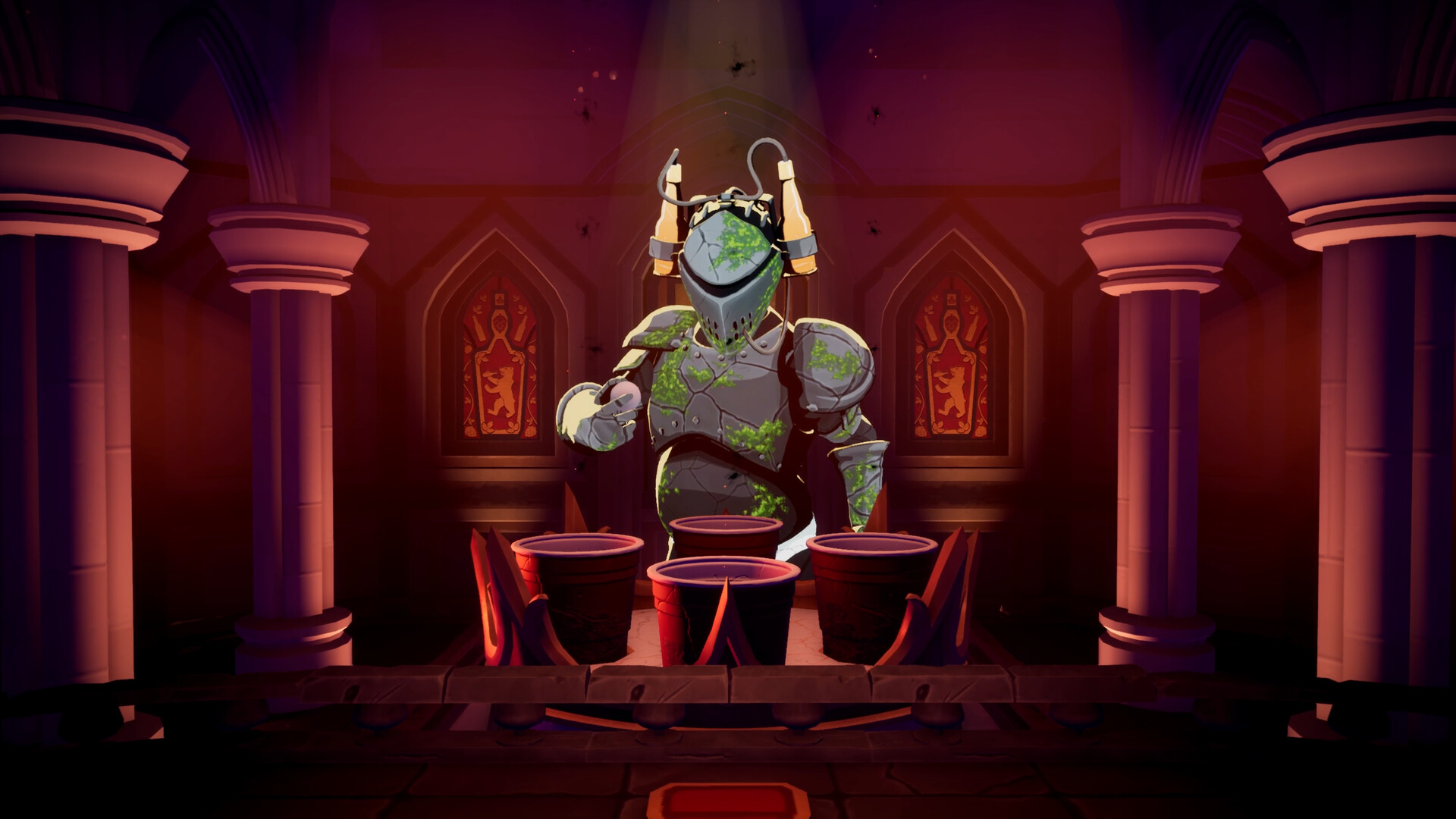
Brews & Bastards appears with the relaxation of a game that knows exactly what it is: deliberately outrageous visual chaos. Mune Studio focuses on a macabre cartoon artistic direction, an improbable blend of medieval fantasy and tavern punk aesthetics. The settings, made of damp cellars and collapsed breweries, are reminiscent of the dungeons of old roguelikes, but with a saturated palette and animations full of irony. Nothing is realistic, everything is expressive.
The characters and enemies have a caricature style: round silhouettes, garish colors, bulging eyes. We feel in each design the desire to break with the grayness of the genre. Explosions of foam, liquid lighting effects, spills of beer or alcohol fire transform each confrontation into a fresco of disorder. The whole thing evokes a cross between the grotesquery of Castle Crashers and the burlesque of modern independent games.
Readability, on the other hand, is not always there. During multi-player clashes, the visual effects invade the screen to the point of sometimes masking the action. This overflow of information ends up tiring the eye, even if we guess that it is an assumed choice: here, pleasure is born from chaos, not from clarity.
On Xbox Series, the game runs with exemplary stability. The textures are sharp, the colorful rendering retains its liveliness even in 4K, and the engine supports the most frenetic scenes without flinching. The work on lights, notably liquid reflections and magical halos, brings an unexpected visual warmth to a universe that is nevertheless absurd.
On the sound side, Mune Studio is having fun. The soundtrack oscillates between medieval rock and festive metal, with guitar riffs and percussion that accompany each surge of monsters. The soundscape exudes a degenerate party: screams, clinking of glasses, bursts of laughter and demonic roars intermingle to bring the tavern to life. Each room resonates like an endless drinking session, where the sword blows have the rhythm of a drinking song.
Sound design is more than an accompaniment: it becomes an integral part of the gameplay. The rumble of a barrel, the hiss of a potion, the din of a monster exploding under alcoholic pressure punctuate the fights like an improvised score. It’s loud, excessive, often grotesque… and strangely coherent.
Verdict
The art of controlled chaos
6.5/10
Brews & Bastards is a game that embraces everything: its absurd humor, its mechanical simplicity, its taste for disorder. Mune Studio has created an unpretentious but fiercely coherent work, a dungeon crawler that is both brutal and festive, where each run becomes an orchestrated tavern brawl. Nothing is subtle: neither the writing, nor the gameplay, nor the staging... and that is precisely what makes it strong.
On Xbox Series, the game runs like clockwork and perfectly exploits the cooperative format to offer sessions that are both frenetic and hilarious. Its weaknesses are clear: a repetitiveness that sets in quickly, a lack of variety in the rewards, a visual chaos that tires. But behind this noise hides a real sincerity, that of a studio which prefers generosity to calculation, frankness to perfectionism.
Pros
- The immediate energy and pace of the gameplay
- The visual identity, deliberately grotesque and assumed
- Exemplary fluidity on Xbox Series
- Cooperative pleasure, simple and contagious
Cons
- Repetitiveness after a few hours
- Lack of variety in rewards and enemies
- Visual chaos in multiplayer
- The absence of real progress over time