Frostpunk 2 Console Edition
The cold sets in on console
Score: 9/10
Images and videos


At a glance
We liked
- The faithful and demanding transposition of the PC experience
- The clear and efficient console interface, perfectly adapted to the controller
- The political and moral density of choices still intact
- A coherent and oppressive visual and audio atmosphere
We liked less
- Few new features compared to the PC version
- An austere artistic direction that can be boring
- Some narrative arcs too linear
 By Farrel Grimwood · published · 5 min read
Contents
A year after its launch on PC, Frostpunk 2 comes to Xbox Series and transposes to console the icy rigor of an experience already praised in our columns. More than a simple port, it is a life-size test: can social and political survival, demanding and dense, find its place in the hands of console players? In a genre traditionally designed for the keyboard and mouse, 11 bit studios dares to reinvent the ergonomics, redesign the interfaces and adapt the navigation so that the dramatic tension loses none of its intensity. The arrival on Xbox is therefore much more than a new release: it is the promise of a new lease of life for a work which, since its beginnings, has never ceased to question what it means to survive on the verge of collapse.
The heirs of frost, the heralds of balance
Thirty years after the events that crushed the frozen world of the first part, New London is reborn in a breath of steam, tensions and contrary promises. Regret lingers: the frost does not forgive. As a Steward, you inherit a weighty legacy. The ruins of the past weigh down. The city, once reduced to a simple nucleus of survival, now extends into districts, venturing towards the frozen lands.
This expansion is not only territorial: it is moral, ideological. Oil, a fatal resource that has become the basis of renewal, imposes its dilemmas. It promises light, warmth, progress. But it fuels rivalries, social fractures and calls for rupture. The factions, once latent, are expressed in the Council. Each carries a vision: some advocate industrial development at all costs, others advocate sobriety tempered by ethics. The conflict is no longer only between man and nature: it is also between man and man.
The Council, a place of negotiations and forced compromises, becomes the central theater of the intrigue. The Steward must not only deal with the climate emergency, but also with political expectations, broken promises, radical vociferations. We don’t lead a city, we lead minds, sometimes lost, often wounded.
The secondary characters, far from being extras, embody these tensions. The technocratic leader, obsessed with reasoned efficiency, the antithesis of the utopian who sees social balance as the only possible light. The faction of workers, the voices of the people who demand justice when we talk about sacrifice. The moderates, who try to weave a path between iron and compassion. Each speech, each complaint, each demand draws a mental map of New London, where power is never neutral.
The narration does not pretend to be epic: it prefers gravity, the weight of decisions. Behind every vote, every decree, every blow to the balance, there are faces, sometimes tired, sometimes bitten by hope. The narrative does not widen its arcs; it concentrates. It’s a political chamber drama in a frozen world. The cold becomes a silent judge. And the biggest frost, sometimes, is in the hearts of the inhabitants as much as in the landscape.
The mechanics of cold, the politics of fire
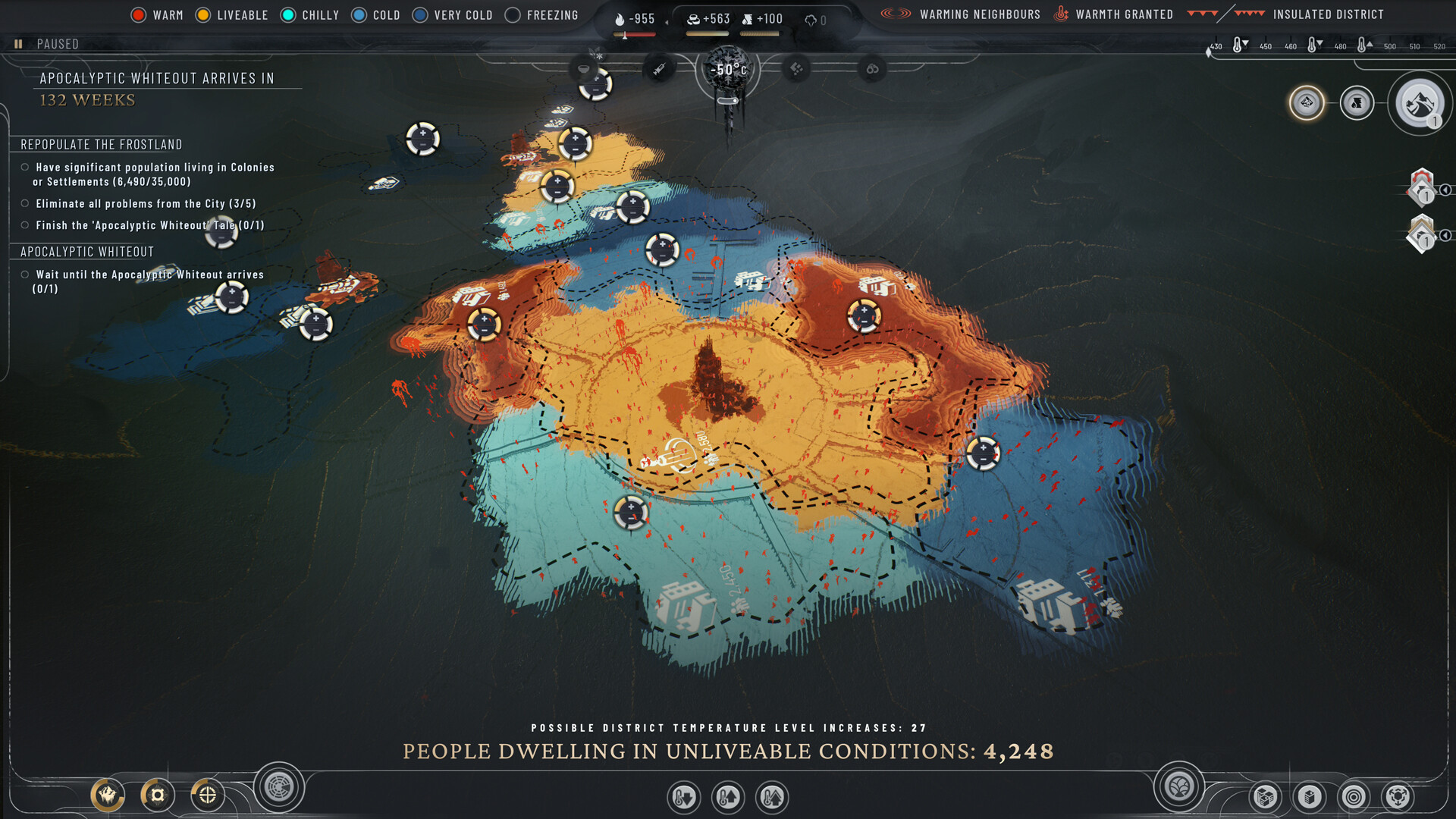
Switching to Xbox does not change the essence of the gameplay but frames it differently. The basics remain those that forged Frostpunk’s reputation: relentless resource management, heartbreaking political choices, a constant tension between immediate survival and hypothetical future. However, the console version succeeds in redeploying this complexity in ergonomics designed for the controller. Radial menus replace cluttered interfaces, districts are explored using fluid shortcuts, and navigation finds a clarity that is surprising in a genre known for being austere.
Survival always depends on the balance between warmth, food and morale. But here, oil becomes the central axis around which everything revolves. Intensive exploitation promises power and expansion, but every pump raised against the blizzard also reinforces the division within the Council. The industrialist demands to speed up, the environmentalist demands to slow down, and the player, in the middle, feels that each decision tips the city towards a different precipice. This dialectic, already present on PC, takes on particular strength on console: the simplicity of control accentuates the brutality of the choices, we are no longer in micro-management, but in naked decision-making.
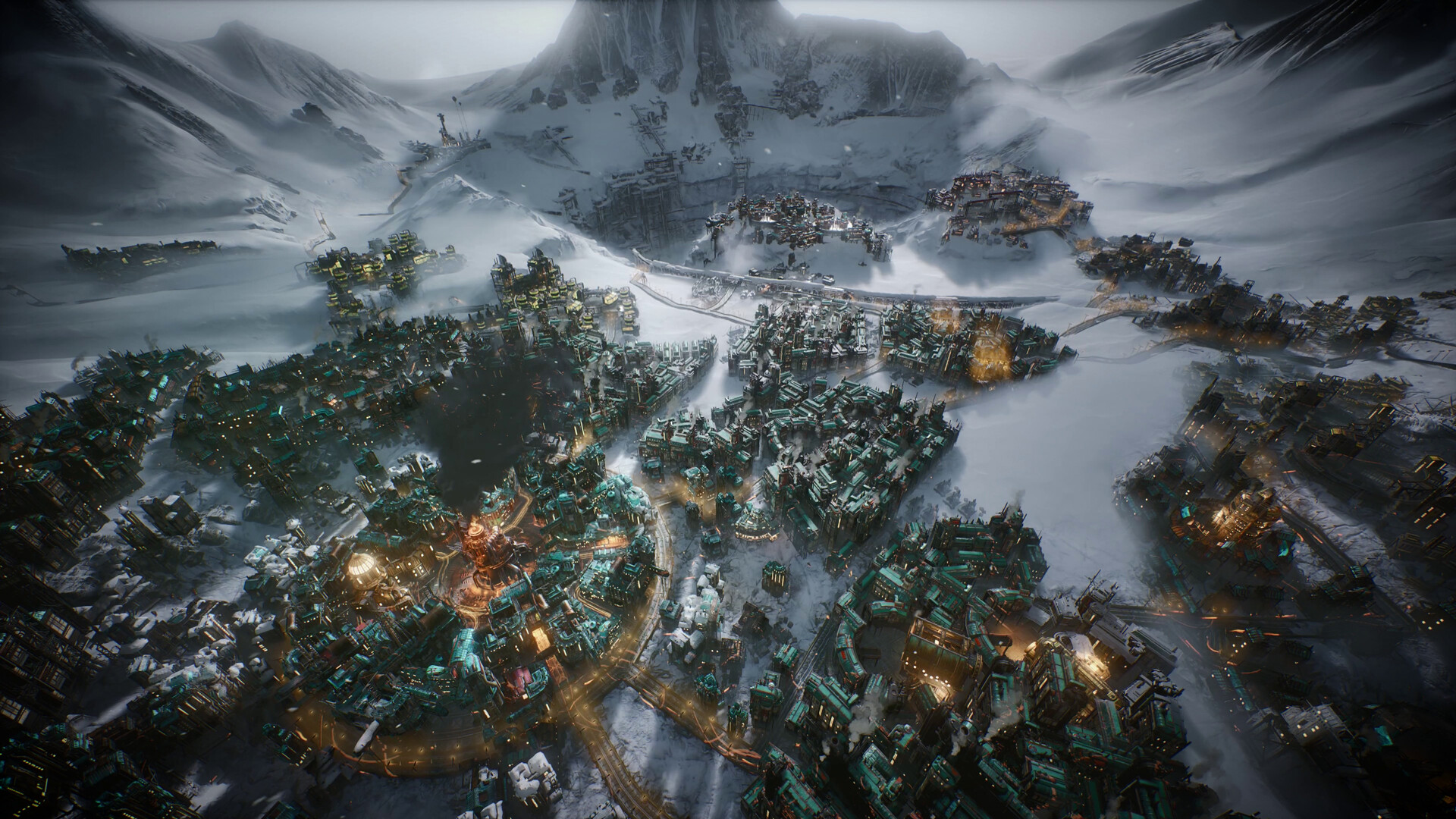
The level design accompanies this change. New London is no longer a town surrounded by ice, but a sprawling organization made up of specialized districts. Working-class neighborhoods, industrial zones, scientific centers: each becomes a pawn that the player organizes, develops, sometimes sacrifices. The readability of this structure on a large screen, controlled from an analog stick, highlights the macro dimension of management. We don’t draw streets, we draw balances.
The scripted progression is nourished by dynamic crises: revolts, collapses, accidents, strikes, enemy raids. They appear without warning, shake up routine and remind us that in Frostpunk 2, comfort does not exist. Even on console, the intensity of the system holds up. We adjust, we repair, we decree, and the question always remains: how far can we force a population to hold on when the cold and hunger eat away at its certainties?
A mirror of ice, a symphony of steel
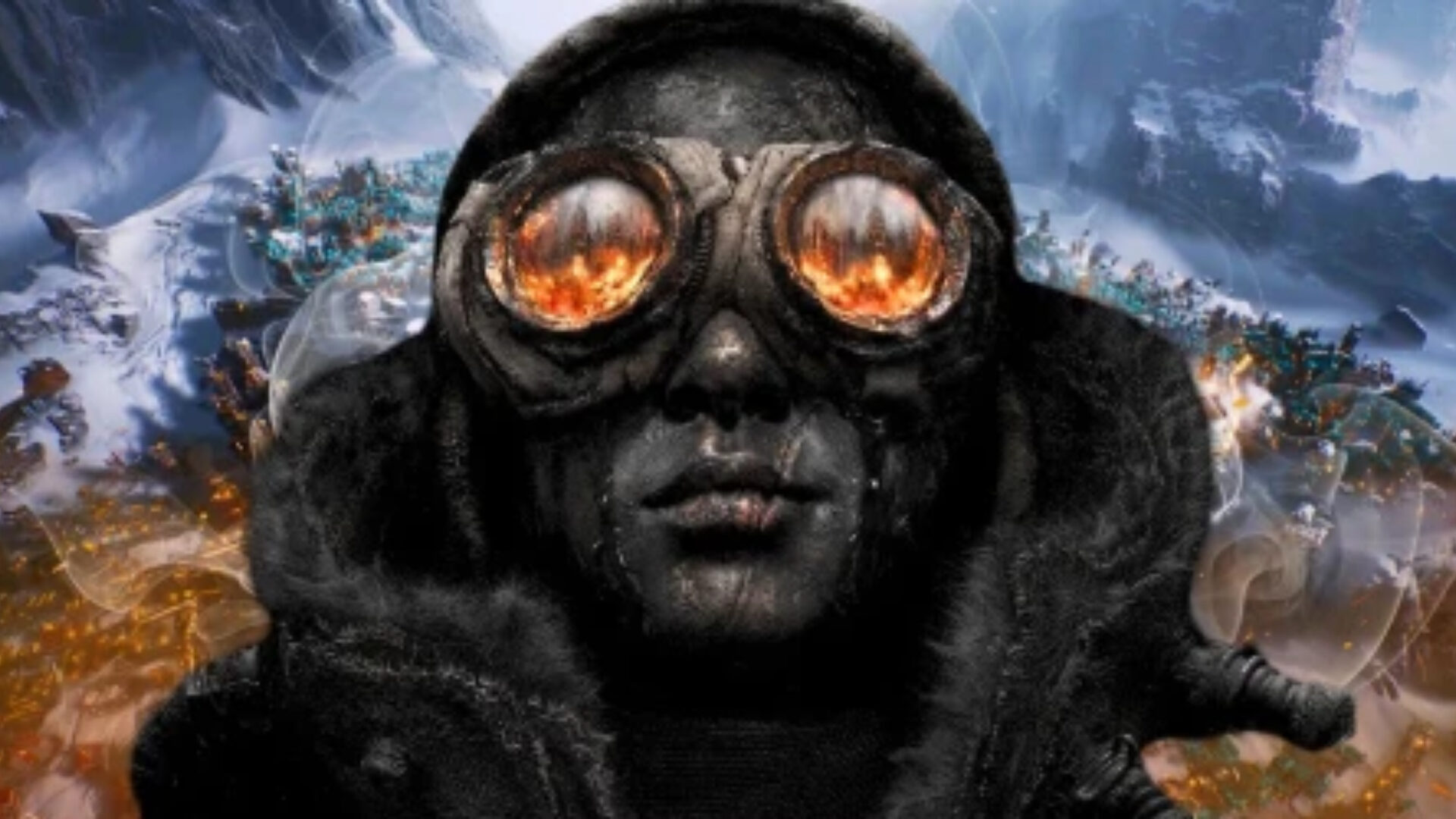
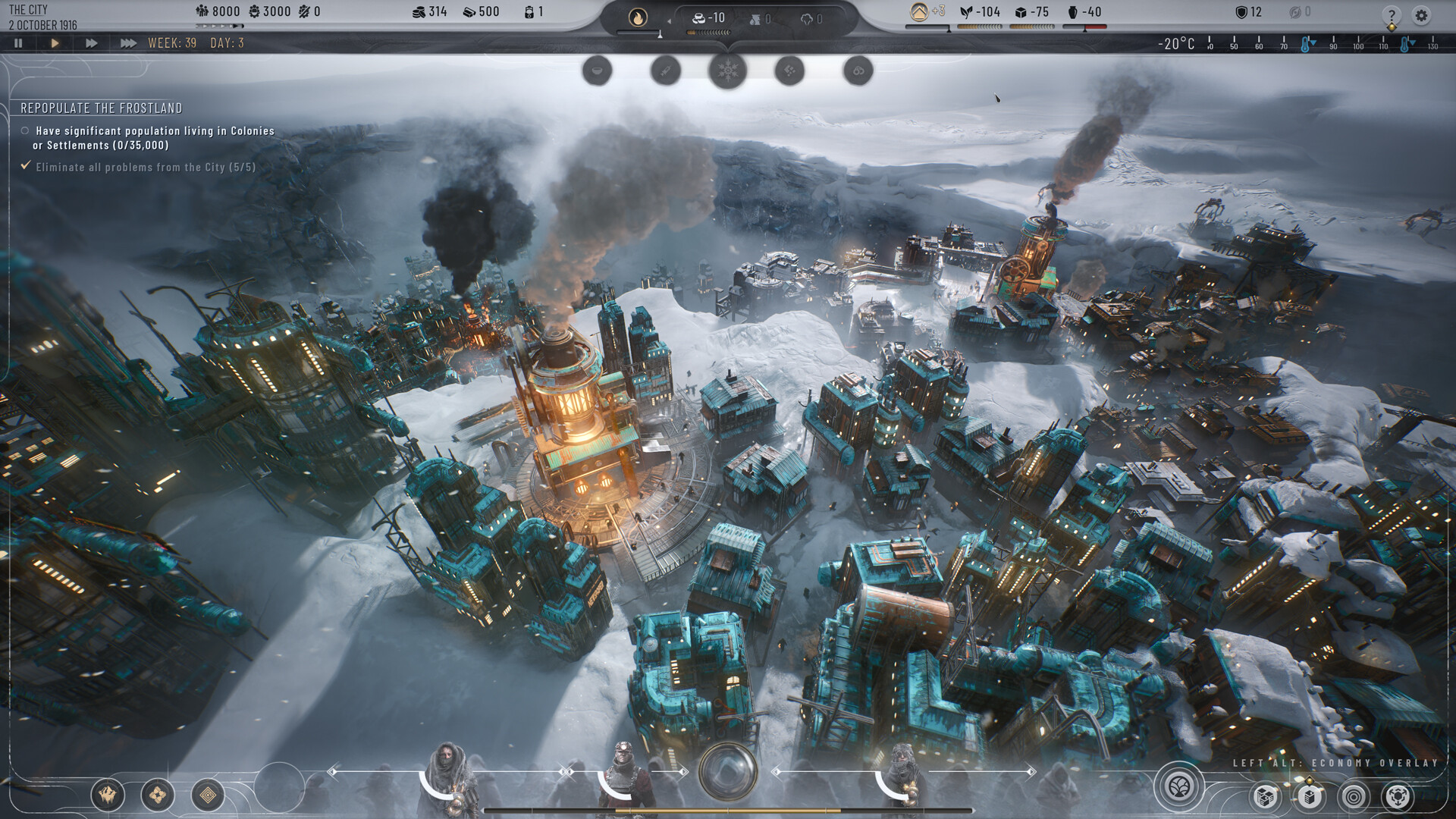
On Xbox Series, Frostpunk 2 retains all the visual power that it had already imposed on PC. The transition to the controller does not detract from the obvious: New London rises like a living city, eaten away by the cold, bristling with industrial districts and homes choked with steam. Unreal Engine 5 technology deploys its strengths in the details: the curls of smoke rising from chimneys, the snow sticking to buildings, the silhouettes of the crowds thronging the streets. As the city grows, the screen takes on a continuous, almost organic movement, and the player contemplates on his television a city that breathes as much as it suffers.
The artistic direction retains the austerity that marked the first game. Few colors, few flashes, but a deliberately reduced palette where the white of the frost, the gray of the factories and the orange of the flames dominate. This restraint creates an atmosphere of oppression where each variation of light – the glow of a campfire, the twilight crashing on the ice – takes on dramatic importance. Sometimes uniformity gets boring, but it contributes to this feeling of being locked in a cage of snow from which you cannot escape.
The soundtrack, composed by Piotr Musiał, supports this gravity. The low strings, the muffled brass and the heavy percussions punctuate the progress, falling silent in moments of doubt, resuming when the city wavers. The discreet, almost religious songs that arise during the most critical phases remind us that each decision is a collective burden. The sound effects amplify this immersion: the blowing of the wind, the creaking machines, the cries of the crowd demanding or rising up. In a living room, headphones or soundbar, the experience is striking in its sensory density.
This Xbox version does not bring any spectacular addition compared to the PC, but it preserves the essential: a sound and visual universe designed to oppress, constrain, make you feel the weight of each choice. The studio proves here that the frost has lost none of its bite by leaving the keyboard for the controller.
Verdict
The frost does not spare the controller
9/10
Frostpunk 2 on Xbox Series does not just reproduce the PC version, it transposes its harshness with a rigor that commands respect. The management of New London, tense between oil, factions and collective survival, retains all its intensity. The redesigned ergonomics for the controller make possible what seemed unimaginable: living an experience of social and political management, dense and complex, from a sofa, without losing the precision of the choices.
The game does not erase its limits. The visual heaviness can be tiring, the absence of significant new features compared to the PC is felt, and the linearity of certain narrative arcs sometimes hampers momentum. But these flaws do not affect the overall impression: that of a unique title, of a work which makes no compromise on its moral demands, and which proves that the frost, on console, bites with the same force as elsewhere.
Pros
- The faithful and demanding transposition of the PC experience
- The clear and efficient console interface, perfectly adapted to the controller
- The political and moral density of choices still intact
- A coherent and oppressive visual and audio atmosphere
- Technical stability on Xbox Series X and S
Cons
- Few new features compared to the PC version
- An austere artistic direction that can be boring
- Some narrative arcs too linear