

Courtisans
Every choice counts
Score: 9/10
Images and videos
At a glance
We liked
- Constraining the three zones produces strong decisions with a tiny rule.
- The varying status of families constantly links the court and the domains.
- A direct interaction where every gift can become a trap.
- Four perfectly integrated roles, readable and quick to resolve.
We liked less
- Secret missions are not equally dependent on drawing specific roles.
- At five, the state of the court changes a lot between two turns.
- The fabric mat requires a lot of handling to check the condition of the families.
 By Farrel Grimwood · published · 7 min read
Contents
Three cards in hand. One must go to the player’s own domain, the second that of a rival and the last the queen’s table. Courtisans installs its entire rule in this imposed distribution. There are no resources to accumulate, no secondary action to trigger, no hand to save for later. The round is short, but each card changes at least two calculations: the value of its owner and the reputation of his family.
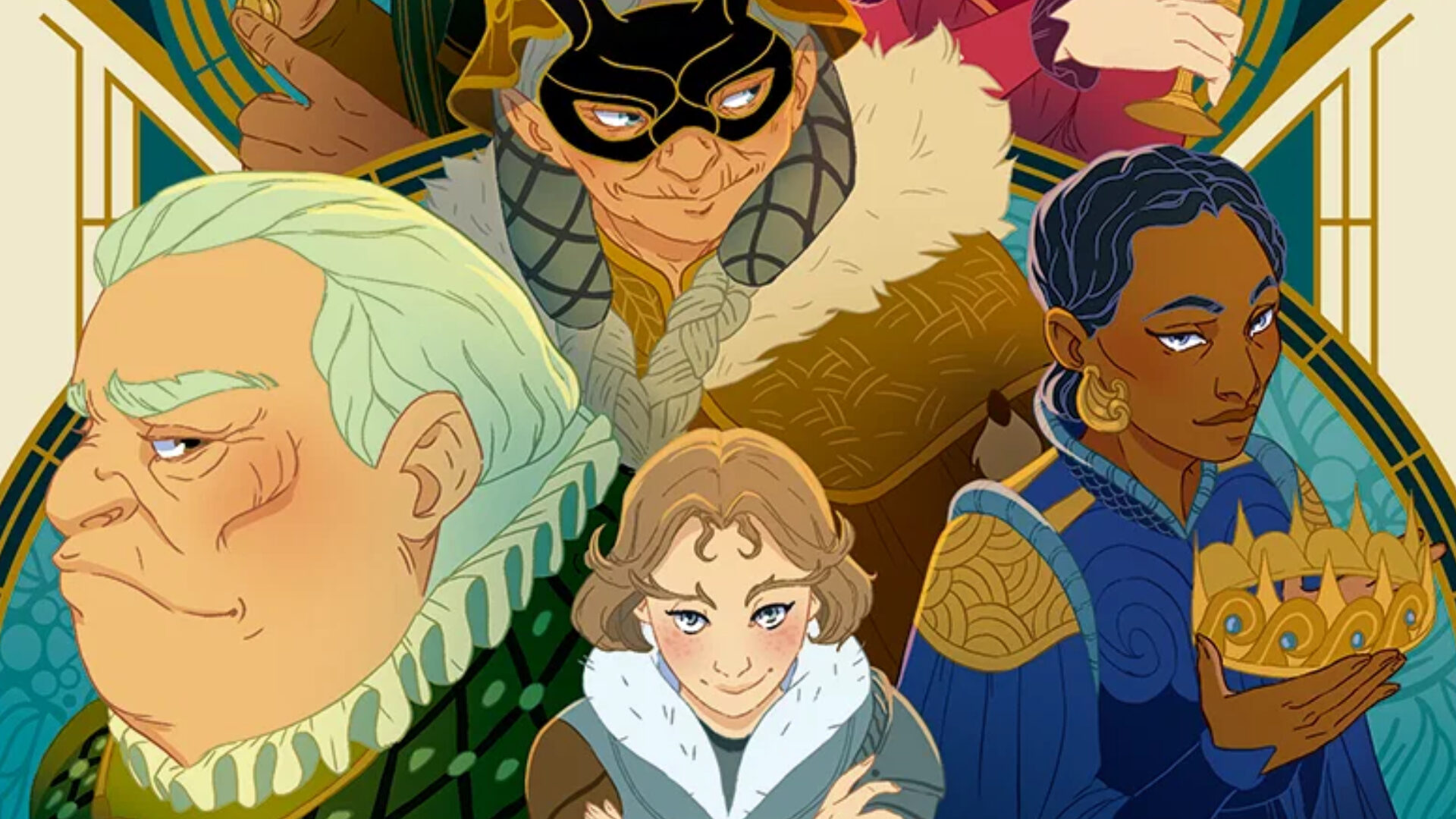
Romaric Galonnier and Anthony Perone started from a very concrete observation: many games separate a personal space, that of others and a common area, but rarely exploit all three with the same intensity. Their answer lies in these cards that are distributed everywhere each turn. Noëmie Chevalier then transforms the six families into a sumptuous animal court, clear enough that the color, the coat of arms and the role of a courtier can be read at a glance.
Such a short rule can produce a great game or a well-dressed lottery. Here, the draw pile decides the three available cards and the table can topple a family just before the final count. So the whole question is there: does Courtisans leave enough control for decisions to really count, or does its crown rest mainly on its illustrations?
A rule understood in one round
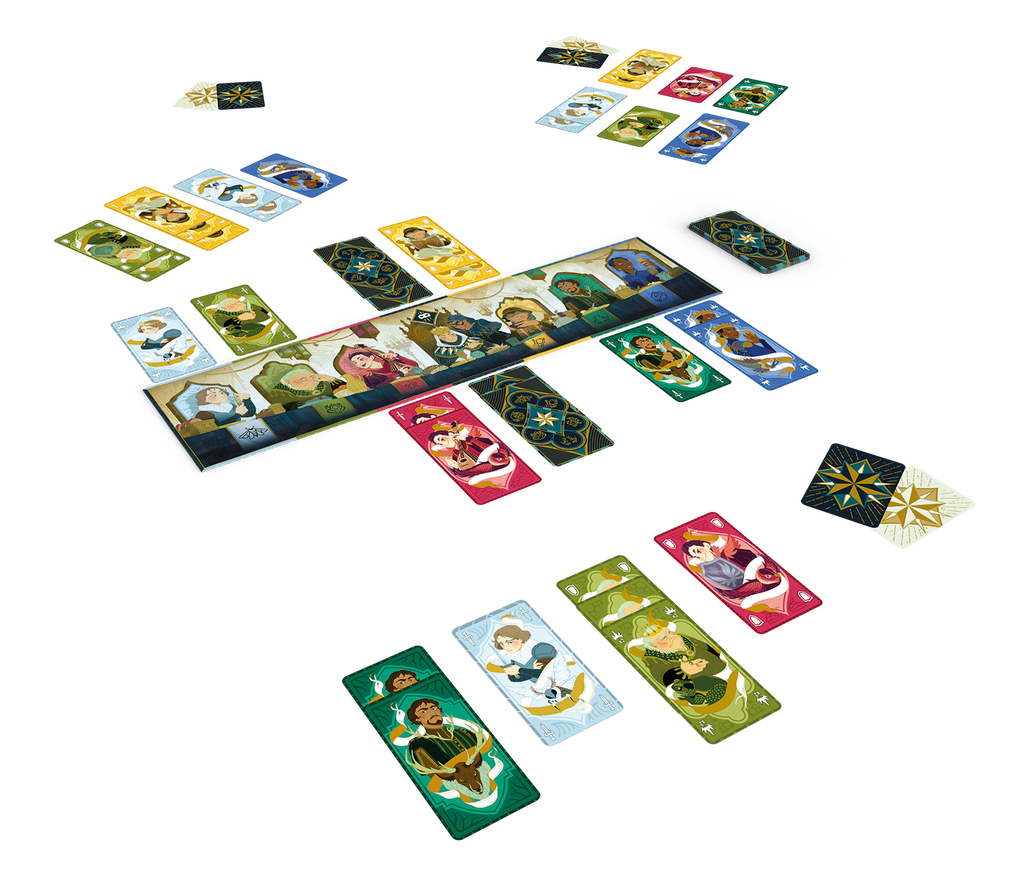
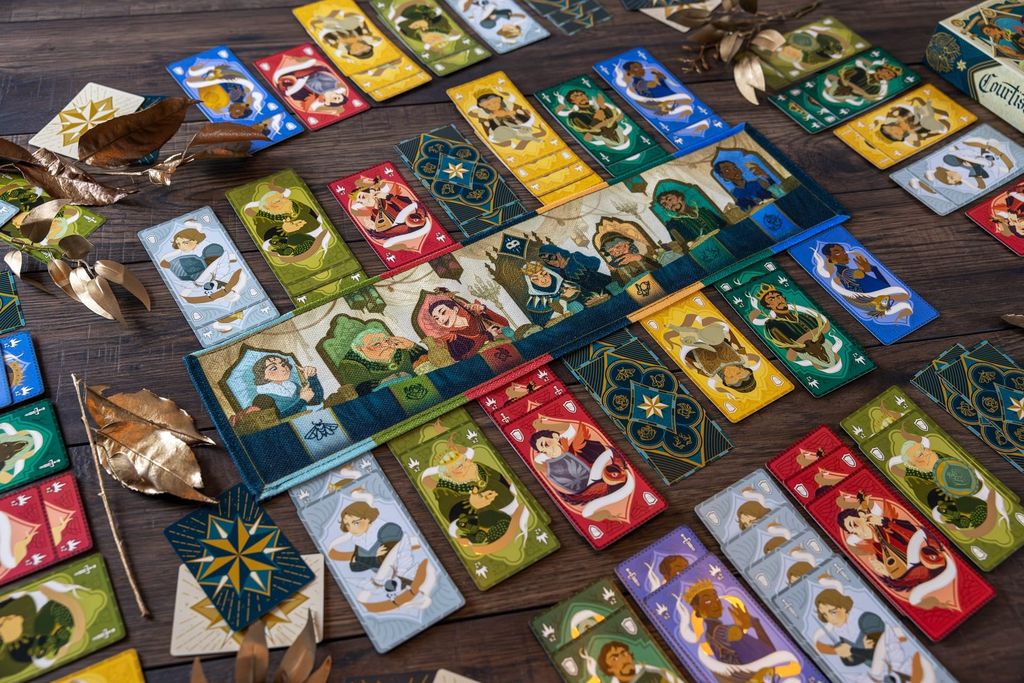
The game begins with two secret missions per player, one linked to their domain and another to the queen’s table. Everyone then receives three Courtier cards. During the round, we play the three in the order of our choice, with a strict obligation: one card in front of us, one in front of our opponent and one at the central banquet. The latter joins its family’s column, above the mat to put it in favour, or below to push it into disgrace. Three new cards immediately replace those that have just been placed.
When the draw pile and the hands are empty, we compare the cards placed above and below for each of the six families. A high majority puts the family in the light. A low majority condemns it to disgrace. A tie makes it neutral. In each player’s domain, each member of a well-regarded family earns one point; each member of a fallen family removes one. Neutral cards are worthless. Completed missions add three points each.
The explanation takes a few minutes, but the first count remains essential. Until players see a positive collection become negative, they can treat the center table and domains as two separate games. However, they form a single calculation. It is this dependence which gives all its interest to an action as simple as laying down a card.
A value that can change until the last round
No family has a fixed value. A carp placed in front of you can bring you a point for most of the game, then cost you one if two blue cards join the disgrace at the end. The gap reaches two points per card between the two states. With four members of the same family in a domain, the switch therefore moves the total by eight points. In such a short game, that’s huge.
The queen’s table then becomes much more than a majority track: it sets the price of all the collections at the same time. Supporting a family helps its own domain, but can also enrich an opponent who has more. Dropping it penalizes others, at the risk of destroying your own collection. The right choice rarely depends on just one area. We must read the cards already laid out, estimate what the missions may ask for and accept that an investment that is too visible attracts an immediate response.
Neutral families add a third outcome that is often underestimated. Bringing back a tied majority can reverse a loss without offering points to a rival. This result is sometimes better than a too costly struggle to put the family back in the light. Courtisans thus rewards small deviations and precise corrections, not just the big reversals announced to the whole table.
Four roles, no unnecessary effects
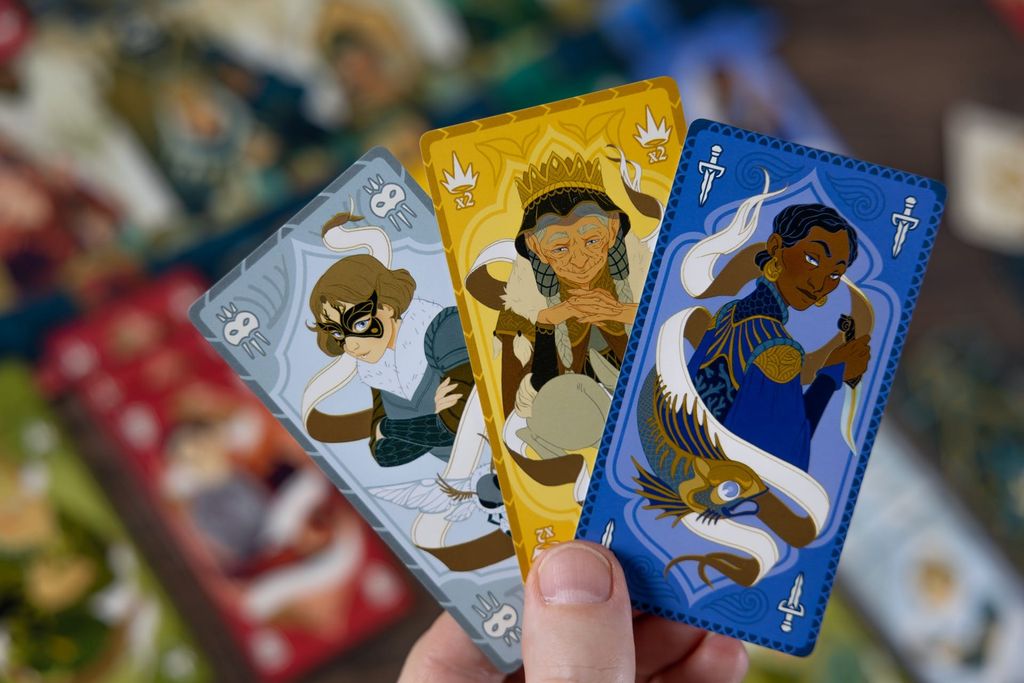
Each family contains fifteen cards: four nobles, two spies, two assassins, three guards and four courtiers without roles. This distribution avoids two excesses: the powers come back often enough to structure decisions, but ordinary cards allow the game to breathe. There is no text to reread or chain of effects to resolve, which makes the game particularly dynamic and intuitive.
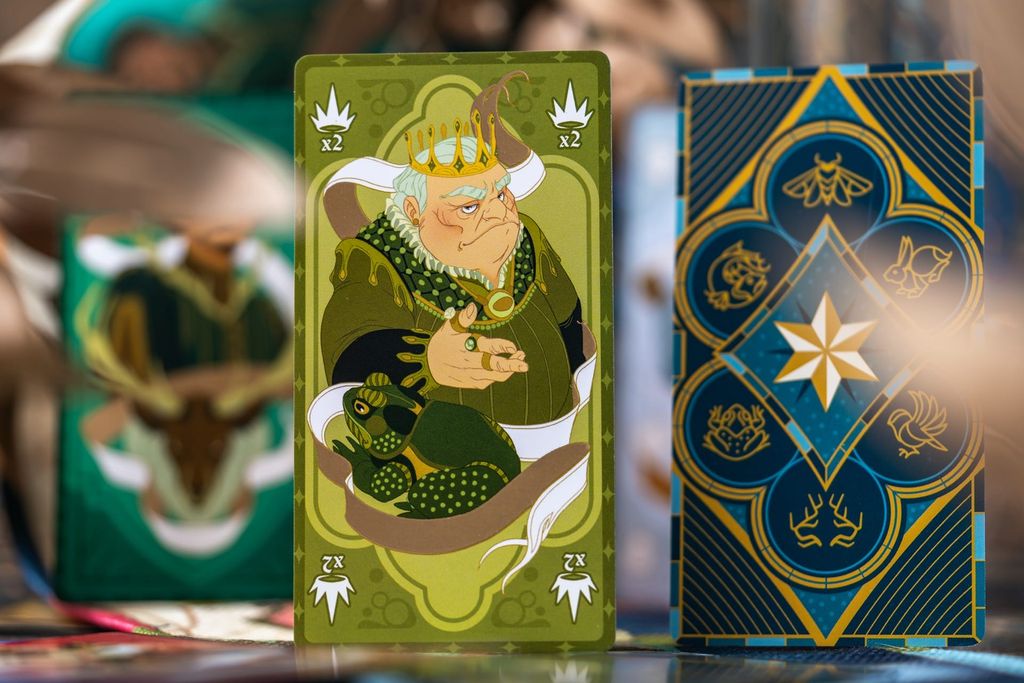
The noble counts double, both in a domain and during the majority around the queen. It therefore represents a double reward and a double danger. A noble in a fallen family takes away two points, and he offers two if he is in the light. The spy is placed face down. At the central table, he joins the queen’s column, above or below, without revealing his family. All spies are turned over at the end and placed back in the correct column, which can decide several majorities at the same time and turn over a game at the very last moment.
The assassin can remove another card from the area he arrives at. In a domain, it corrects a collection or destroys an opposing protection. At the queen’s table, he can target any family. The guard resists the assassin and anchors a stable position. The free order of the three placements finally allows you to clean an area before placing your card there, or to modify the central majority before deciding what to give.
These roles do not seek to create spectacular combinations. They reinforce the rules already present. The noble amplifies the calculation, the spy hides a piece of data, the assassin removes a piece and the guard protects a position. This discipline keeps the game fluid while giving a real identity to cards that go beyond simple color.
Missions guide without confining
The twenty missions are separated into two packs of ten. Each player receives a mission related to their domain and another related to the court. Some require gathering a type of role, having fewer cards of a family than a neighbor or having a family end up in a specific state. Each is worth three points, enough to guide multiple choices without replacing the main score.
The principle gives direction from the first hand and prevents solving each turn with public state alone. A strange card from a rival can serve a mission rather than announce an attack. Strong support for a family can be an illusion. Even when the objective becomes unattainable, opponents do not know that it has been abandoned.
However, not all missions require the same effort. Bringing together several spies or guards depends heavily on the cards drawn and those that others agree to give. Acting on a family at the banquet generally remains more accessible. This gap can give one player three points for a natural condition while another has to distort their entire game. The limit remains contained: six points maximum, no penalty in the event of failure and a game fast enough to redistribute the objectives immediately.
Eight years… after a first count
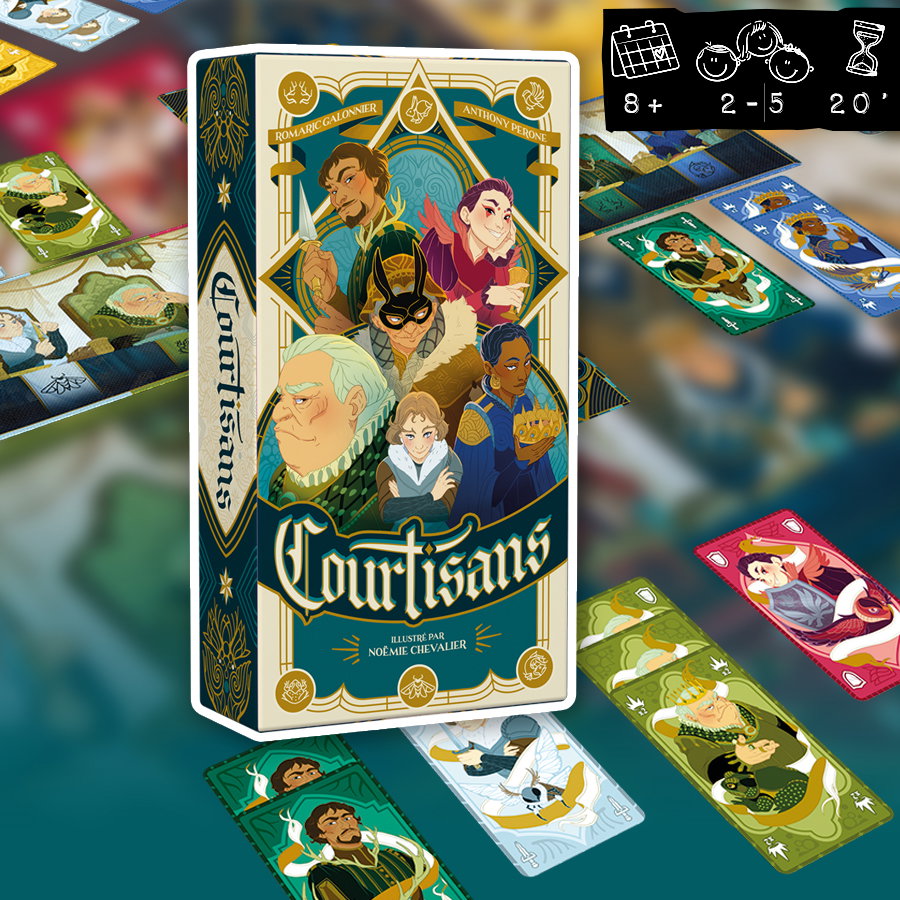
The age indicated by Catch Up Games is consistent. Placing three cards in three areas poses no particular problem, the roles are based on four icons and no text slows down the round. A child accustomed to small card games can participate with exactly the same rules as adults.
The difficulty comes in the score. A card can go from +1 to -1, a noble doubles this result and a central majority must be verified before counting domains. An adult will often need to accompany the first totals, especially with several neutral families and spies to move into position. Once this calculation is seen in full, the logic becomes clear. The 8+ correctly describes the understanding of the actions; full autonomy may require more than one game.
The interaction also deserves to be clearly announced. Dealing a bad card, eliminating a noble, or targeting the same player is part of the game. Courtisans remains light and non-elimination, but it is not cooperative or caring. Around a family table, pleasure depends more on the acceptance of direct blows than on the difficulty of the rules.
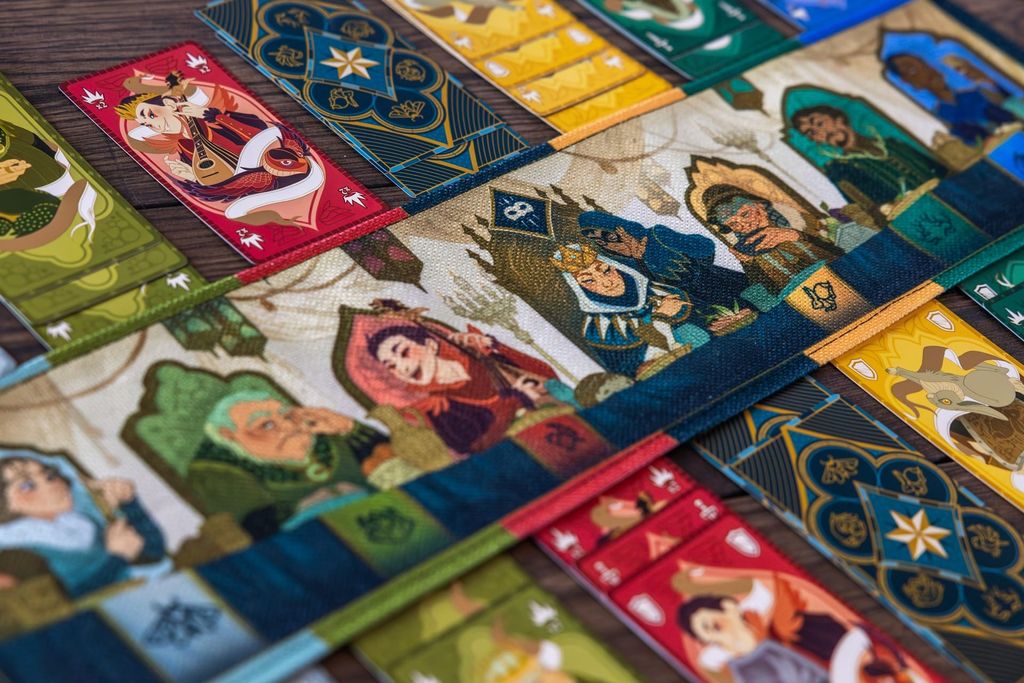
The box contains ninety large Courtier cards in tarot-like format, twenty smaller Mission cards, a cloth mat and the booklet. The six families combine a color, a coat of arms and an animal: butterflies, toads, nightingales, hares, deer and carp. Noëmie Chevalier does not repeat the same portrait fifteen times. The clothing, silhouettes and animal details give a distinct presence to each member of the court.
The soft finish and gold accents highlight the illustrations without blurring the icons. The families remain identifiable other than by their color, an important point when several dozen cards surround the mat. The roles stand out immediately and the face down cards maintain the same elegance as the rest. For a current price of around twenty euros, the whole thing rarely gives the impression of having been compressed to fit within its price.
The central mat perfectly organizes the six columns and catches the eye upon opening. Its rolled storage can leave the ends rising, a defect reported on several prints and visible especially on a small table. The box measures approximately 19.7 x 10.5 x 4.5 cm, but the game requires more space than it suggests. You must provide the cards above and below the mat, then an area in front of each participant. The format travels well; the game needs a proper table.
Verdict
Almost flawless on its own scale
9/10
Courtisans accomplishes something rare: explaining its entirety in a few minutes without exhausting what it offers after a game. The obligation to play at home, at a rival's and at the queen's table transforms each draw into a tactical problem. The varying status of families connects all areas, while the four roles add exactly the information, protection and twist needed. Nothing slows down the turn and almost nothing seems superfluous.
The missions are not perfectly equivalent and the mat must often be manipulated to check the cards in play. The rest achieves a remarkable level of production quality and mechanical precision for twenty euros and twenty minutes. Courtisans is beautiful, immediately understandable, nasty without becoming painful and different enough depending on the number of players so as not to be reduced to a single configuration. A game that you take out quickly, that you set up quickly but that you have trouble putting away.
Pros
- Constraining the three zones produces strong decisions with a tiny rule.
- The varying status of families constantly links the court and the domains.
- A direct interaction where every gift can become a trap.
- Four perfectly integrated roles, readable and quick to resolve.
- Really different sensations from two to five players.
- Noëmie Chevalier's work gives a specific identity to the six families.
- Generous and very neat material for around twenty euros.
- Short games that immediately make you want to start one more.
Cons
- Secret missions are not equally dependent on drawing specific roles.
- At five, the state of the court changes a lot between two turns.
- The fabric mat requires a lot of handling to check the condition of the families.
More in Tabletop
Full library 7.5/10
Vroom
Big Moustache Games 8/10
Wapigo
Totem 8.5/10
Cartaventura: Haiku
BLAM! 7.5/10
Jungle Twist
Kiwizou 8/10
Aurealis
La Boîte de Jeu 7.5/10
To me ! …or not to me ?
Bankiiiz Éditions 6.5/10
Trait Cool
 8.5/10
Maladum : Dungeons of Enveron
Battle Systems 8/10
Dungeons & Dragons – Forgotten Realms: Adventures in Faerûn
Wizards of the Coast 9/10