
Cartaventura: Haiku
A few cards, three lines, and a good reason to take the road
Score: 8.5/10
Images and videos


At a glance
We liked
- A clear starting point and encounters that give choices real weight
- The poetry notebook fits Ren's journey beautifully
- Superb watercolors and an easy-to-read map
- Five endings to discover by making different decisions
We liked less
- Familiar scenes must be reread to explore other paths
- At six players, there's one hero and little room for individual actions
 By Farrel Grimwood · published · 6 min read
Contents
Cartaventura is built around fitting an adventure into a small box of cards. Published by BLAM!, the series sets its stories in a particular era and draws on historical figures, with decisions that change the route and the ending. For Cartaventura: Haiku, Thomas Dupont and Matthieu Conzales pick late seventeenth-century Japan and the poetry of Matsuo Bashō. It’s an unusual subject for a tabletop game, and a good deal more interesting than another excuse to draw swords.
It all fits into 70 cards and a historical booklet. There is a road to follow, people to meet, five possible endings, and, most importantly, haiku to compose along the way. The box suggests an hour of play for ages ten and up, alone or with up to six players. The challenge is giving poetry a real place in a branching story. Does Ren’s journey live up to the idea?
The poet has already left
It begins in the spring of 1689, in the domain of Ogaki. Ren comes from a noble family, and his father has already decided his future. Ren dreams of becoming a poet. Rather than settle into the life laid out for him, he slips away with a clear goal: find Bashō and become his pupil. The problem is that the master travels a great deal. Ren leaves his home province without knowing where to look for the very man he is leaving to find.
It’s an effective opening. Ren’s desire is easy to understand, and Bashō’s absence gives him a reason to travel, ask questions, and stop along the way. The story has a direction but gives its encounters room to breathe. Looking for a poet, of all people, makes a good case for pausing to look around rather than rushing ahead. A journey hurried along to its destination loses some of its appeal.
The choices put that idea to work. Talking to a traveler or approaching a musician isn’t a matter of reading both descriptions and carrying on as before. The card chosen can tell the group to discard the other. One opportunity closes while a new scene opens. That simple action gives an ordinary decision some weight without introducing extra rules. It makes the road interesting without making every encounter more complicated.
Cards and choices
The game follows the logic of a choose-your-own-adventure book with one tangible difference: the cards build the route on the table. Some form a piece of the map; others are encounters, events, or objects to keep. Numbers indicate which cards to draw, the text describes the available actions, and the instructions change what is in play. The adventure takes shape as the route does.
Getting started is particularly well handled. Instructions are on the cards, so there is no rulebook to study before leaving. The difference between an item to keep and an event to resolve is explained as it becomes relevant. The same goes for the two sides: a number in a colored circle marks the front, while a black square marks the back. It’s a useful distinction. It prevents a card being turned too early and revealing text from further along the story.
That simplicity leaves room to pay attention to the narrative, but following the directions still matters. Discarding, replacing, and turning over a card are three different actions. An item found earlier can open an option later. Previous decisions remain present in a tangible form without a stat sheet or lengthy calculations. The game relies on careful reading and memory. For this sort of adventure, that is plenty.
Three lines, not an essay
The poetry notebook is this installment’s best idea. Some cards have a line of verse printed along the edge. When the story calls for Ren to compose a haiku, two cards from the discard pile slide beneath the notebook card. Their fragments complete the line already there to form a three-line poem. It’s simple, immediately clear, and makes use of material that has already had a part in the game.
What makes it work is its connection to the route taken. The discarded cards hold places, items, and encounters from the adventure; their words return in Ren’s poetry. That gives the theme a concrete place in the game. Play stops for a moment to put images and lines together, rather than opening another branch of the story. It makes sense for a young man who set off to become a poet to take that pause.
The exercise is guided. The fragments are supplied and the poem comes from putting them together, without a blank page to fill. That keeps the game accessible and prevents a lack of inspiration from stopping the adventure. There’s a limit to the freedom of composition, but the constraint gives the poetry a form that’s easy to work with. It’s a distinctive, delicate idea that changes the act of reading without weighing the game down.
Five endings, several departures
The first ending leaves other routes to explore. Cartaventura: Haiku offers five endings, reached by starting again and making different decisions. The advertised hour is for one playthrough, not the whole box. The draw lies in the paths left behind and their unknown consequences: what changes after that encounter? Is there another use for that item? Where does the other road lead?
Starting again changes how decisions are made. The first time, a choice comes down to the available text and which lead appeals. The next time, the memory of those events comes into play. An option already explored becomes a reference point, and another attempt can link things that previously seemed separate. Finding a different ending becomes a small narrative puzzle without stripping the story of its interest.
Five endings still don’t make five entirely different adventures. The opening steps and some scenes repeat. Once their contents are familiar, rereading them loses some appeal, especially when the object is to get back to a junction quickly. The pleasure of replaying therefore depends on curiosity about the remaining branches. There are good reasons to return to the box, but there is a finite amount inside. That’s the most noticeable limitation of the format.
Only one Ren at the table
Solo play suits the approach particularly well. The same person follows the story, chooses the actions, and remembers the decisions. Reading keeps its rhythm, and the poetry notebook fits naturally into a personal adventure. There is no stand-in player or additional management to get in the way. The game already has everything it needs to work alone.
With several players, cooperation means talking things through. The group decides Ren’s fate rather than dividing up independent roles. There’s a clear appeal at two or in a small group: one situation can prompt different responses and spark a proper discussion. The upper limit of six players seems generous, though. More participants don’t mean more decisions, and nobody has a set of individual actions. Six people can take a seat, but that doesn’t guarantee six equal contributions.
The suggested age of ten and up makes sense given how simple the cards are to handle. What matters more is an interest in reading and discussing a story, and enough attention to follow the instructions. The format calls for time spent with the text and a willingness to go at its pace. That appetite for reading matters more than a grasp of complex rules.
A pleasure to look at
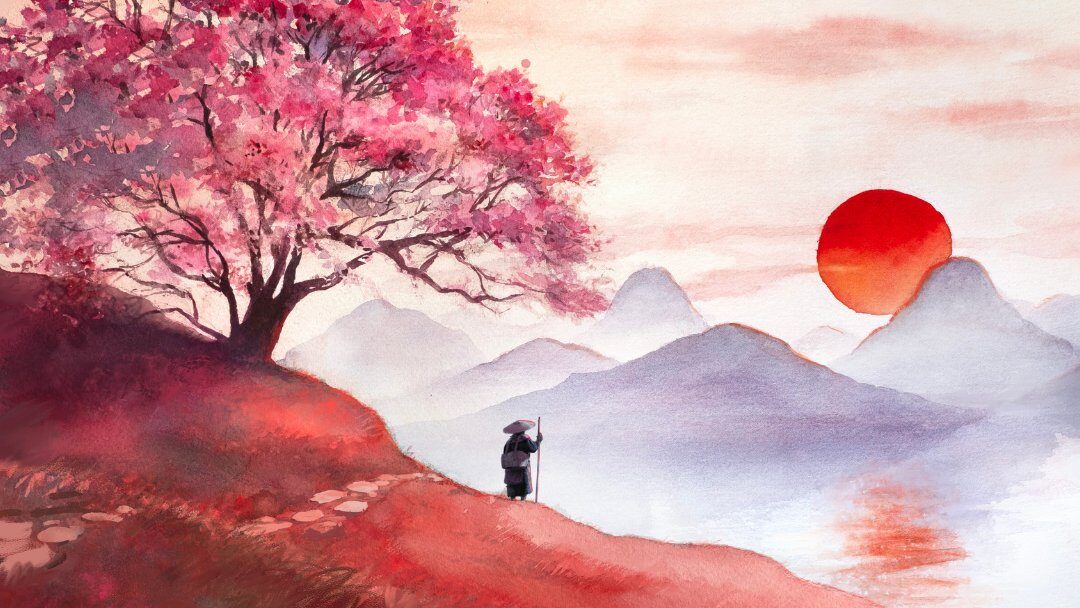
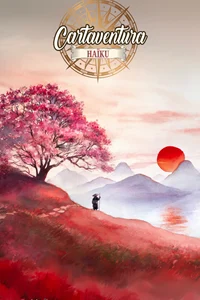
Guillaume Bernon and Jeanne Landart’s watercolors give the game much of its charm. The map cards combine mountains, illustrated towns, and a clearly marked road. The encounters get more detailed scenes, such as the musician sitting outside a house lit by lanterns. Light and color bring variety to the illustrations. The cards belong together without becoming interchangeable.
The presentation stays practical, too. The numbers stand out, actions are grouped in panels, and the poetry fragments are easy to distinguish from the main text. Some cards carry a fair amount of writing, but the illustrations and instructions still have their own recognizable spaces. That care matters when the same components have to tell the story, give directions, and explain the rules.
The historical booklet complements the fiction with material about Bashō and his era. Its introduction suggests leaving it until after the first playthrough. That’s a good order: let the adventure spark curiosity first. The historical material then has something to do beyond fulfilling the cultural promise printed on the box. It extends an encounter the game has already made interesting.
Verdict
Poetry makes good traveling company
8.5/10
Cartaventura: Haiku is a lovely success. Ren's departure gives the story a clear direction, its encounters demand choices, and the poetry notebook adds an idea as simple as it is apt: put together a few lines from cards already set aside. Bashō's Japan has a place in the writing, the watercolors, and the decisions, and all three have been handled with care.
The five endings make another trip tempting, even if returning to familiar scenes eventually slows down the discoveries. The format works better alone or with a small group than with six people sharing a single adventure. Those limits don't take away from what's good here. This small box does a great deal with very little, and its theme has a genuine place at the table.
Pros
- A clear starting point and encounters that give choices real weight
- The poetry notebook fits Ren's journey beautifully
- Superb watercolors and an easy-to-read map
- Five endings to discover by making different decisions
- A self-contained adventure well suited to solo play
Cons
- Familiar scenes must be reread to explore other paths
- At six players, there's one hero and little room for individual actions