
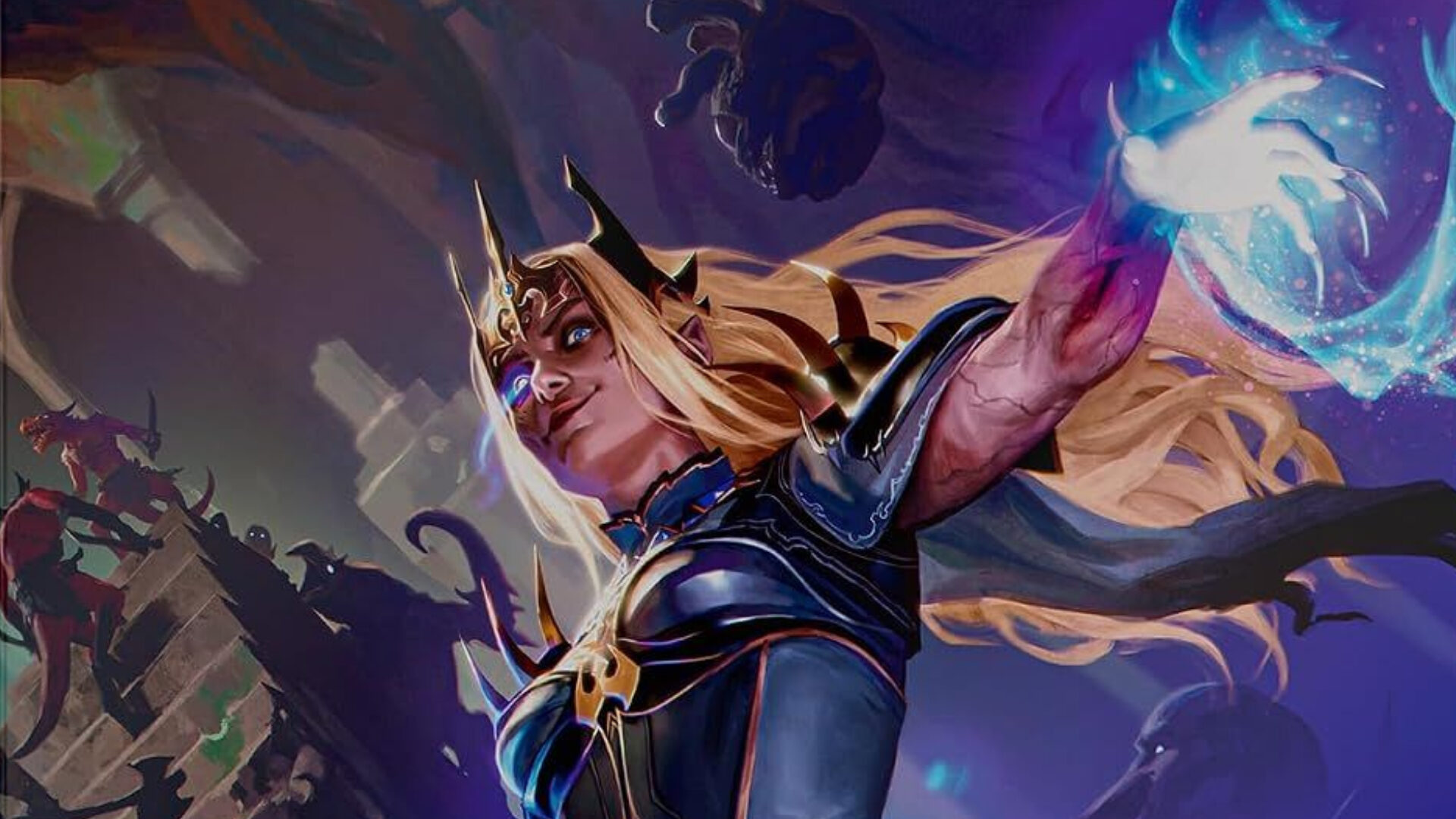
Dungeons & Dragons – Forgotten Realms: Adventures in Faerûn
A generous campaign setting, scenarios too short
Score: 8/10
At a glance
We liked
- Five regions with distinctly distinct atmospheres and conflicts.
- An updated timeline in 1501 DR that changes the world.
- Icewind Dale, Calimshan and the Moonshae Islands provide many campaign ideas.
- The Lost Library offers a truly adaptable introductory adventure.
We liked less
- One-page adventures often too thin to play without preparation.
- No complete campaign naturally linking the 51 proposals.
- Regional toolkits limited to encounters, renown and Bastions.
- A bestiary focused more on major adversaries than on local fauna.
More on Les Royaumes Oubliés
 By Farrel Grimwood · published · 16 min read
Contents
Faerûn had never really left the fifth edition of Dungeons & Dragons. Most of the major campaigns took place there, the Sword Coast served as the default setting and Baldur’s Gate 3 had put several of its figures back at the center of the news. However, there was a lack of a real campaign book capable of showing how to run adventures in this world other than by piecing together the information scattered between ten scenarios.
Wizards of the Coast responds with Dungeons & Dragons – Forgotten Realms: Adventures in Faerûn, a 288-page volume intended for the DM and published in French on August 4, 2026. The book details five regions, brings together 51 short adventures, adds an introductory adventure, nearly forty opponent profiles, several magic items, rules for epic destinies and more than fifty maps. It accompanies Heroes of Faerûn, which focuses on character options, deities and factions.
The quantity impresses, but the word adventure creates a very specific expectation. A DM who pays €59.99 can hope to open the book, quickly prepare a session and find enough material to run a campaign. Does the content really live up to this promise, or does it mainly provide good ideas that you still have to transform yourself?
Faerûn finally returns in a real supplement
The lack had become difficult to justify. Since 2014, Forgotten Realms has served as a setting for numerous campaigns without having a general guide comparable to those of the old editions. The Adventurers’ Guide to the Sword Coast remained short, focused on a portion of the continent and largely focused on character options. To understand a region, you often had to look into the scenario that used it.
This new volume puts the chronology back in motion until 1501 DR, i.e. the year 1501 of Dalereckoning. Previous campaign events are not deleted. Icewind Dale still bears traces of Auril’s anger, Myth Drannor evolves in Elminster’s absence, and Baldur’s Gate retains visible links to recent events. The world seems active again instead of remaining frozen in an encyclopedic presentation.
This continuity remains flexible enough not to impose a single ending on the earlier campaigns. The book describes a current situation, identifies tensions and places new opponents, then lets the DM decide what really happened at his table. The approach works well to restart an interrupted campaign or install a group who knows the locations through video games without transforming the latter into obligatory canon.
The term general guide must, however, be used with caution. A final atlas places the territories, but in-depth development is limited to five zones. Waterdeep, Cormyr, Thay, Anauroch or Rashemen exist mainly through references and a few adventures. The book makes five parts of Faerûn playable; it does not describe the entire continent with the same precision.
Each regional chapter follows a regular structure. A few pages set the tone of a campaign, then come the inhabitants, local powers, magical phenomena, a directory of places, active conflicts and a small toolbox. Short scenarios then close the chapter. This repetition helps you find information without rereading the entire volume.
The Dalelands represent classic heroic fantasy, with rural communities, trade routes, ancient forests, and the elven ruins of Myth Drannor. Icewind Dale turns to survival and horror in a cold capable of killing before the monster. Calimshan focuses on high magic, genie courts, trading cities and the desert. The Moonshae Islands combine navigation, magic and threatened nature. Baldur’s Gate closes the whole with its social struggles, its cults and its urban intrigues.
This division by genre immediately gives direction to the DM. The same group does not prepare an expedition in the blizzard like a negotiation with a djinn or an investigation in the Lower City. Advice, encounters and dangers change with the territory. Faerûn thus ceases to resemble a single expanse of medieval fantasy where the names of cities are interchangeable.
The downside comes from the available space. Thirty to forty-six pages per region are enough to launch a campaign, but not to exhaust territories loaded with several decades of stories. Each chapter selects a few threats, places and figures. This conciseness helps you play quickly, while leaving out a lot of history, daily life and local politics that older supplements developed at greater length.
Eclectic regions
The Dalelands is the easiest entrance to understand. Small, independent communities live near Cormanthor Forest, guarding their borders and resisting outside ambitions. A threatened farm, an attacked road, or a discovered ruin is enough to start a low-level party. The chapter clearly explains why these ordinary lands produce so many adventurers.
Myth Drannor brings the depth that this simplicity sometimes lacks. The destroyed elven city becomes an immense land of exploration, filled with sectors, ancient magic and powers seeking to recover its secrets. The DM can start with a local problem and then gradually increase the scale to ruins, the Zhentarim or conflicts between the Dalelands.
The content remains very familiar. Villages, goblins, dangerous forests and elven heritage make up an effective setting, but less surprising than other regions. This chapter is perfect for a first campaign or to find a traditional tone. It will be less convincing to a group looking for a rarely shown side of Forgotten Realms.
Icewind Dale has a central constraint that each scene can exploit: the cold. The Ten-Cities offer fragile shelter, while the tundra, frozen lakes, the Reghed Glacier and the Sea of Floating Ice make any journey a decision. The rules of arctic survival modify routes, reserves, rest and the price of failure.
The chapter repeats the known locations without simply repeating Rime of the Frostmaiden. It explores what the region becomes after the crisis, the wounds left in communities and new threats. This continuity gives a reason to return to Ten-Cities, even for a group that has already played the 2020 campaign.
Cities each have an identity and external dangers form a constant pressure. A political intrigue in Bryn Shander, a curse in Dougan’s Hole and an expedition under the ice do not produce the same session. The DM obtains enough marks to allow the region to breathe between two fights.
Icewind Dale, however, benefits from an obvious advantage: Wizards had already devoted an entire book to the territory. The foundations were numerous and readers of Rime of the Frostmaiden will recognize many elements. The chapter updates and reorganizes the setting very well, but it doesn’t always offer the sensation of discovery promised by a new guide to Faerûn.
Calimshan provides the clearest break. Rivalries between djinns, efreets, marids and daos mingle with trade, oases, flying fortresses and mechanical marvels from Lantan. Magic is visible in the streets and intervenes in the economy. The DM can build an intrigue around a contract, a resource, a water right or a debt without immediately falling into a monster attack.
The desert receives rules of survival and several distinct zones, while Calimport offers a much larger urban setting than just the image of the eastern palace. The genie factions provide interlocutors with conflicting objectives. This density creates useful choices: allying with a court can solve one problem and open up two others.
The Moonshae Islands play with the sea, the rites, the island peoples and the doors to the Feywild. Druids protect mounds and groves, Norse raiders roam the coasts, and fey courts influence the land. The journey between islands becomes part of the narrative, not just a fade between two dungeons.
These two chapters make you want to leave the Sword Coast, which constitutes one of the great successes of the book. However, they remain lighter than Icewind Dale or The Dalelands on certain local details. The DM is given direction, maps, and several conflicts, but must still invent many of the daily relationships, customs, and supporting figures necessary for a long campaign.
Baldur’s Gate benefits from a very readable geography. The Upper City concentrates rich families and power, the Lower City hosts the port and merchant activities, while the Outer City crowds in those who are not allowed to enter. This social separation naturally produces corruption, smuggling, investigation and class conflict.
The Flaming Fist, the Guild and the cults of the Dead Three provide forces that are easy to showcase. A character can work for one, undergo the second and discover the third in the same evening. Gates, sewers, docks and neighborhoods have enough detail to build a chase or clandestine operation without drawing the entire city yourself.
The connections to Baldur’s Gate 3 make the chapter welcoming to recent audiences. They offer familiar points of reference, but the book does not become a guide to the video game. The city continues to exist after its heroes and retains its own tensions. This balance prevents the characters at the table from becoming simple extras among celebrities.
Despite everything, the territory remains already well documented in the fifth edition. Descent into Avernus devoted its first part to the city and several products used it. Reserving an additional thirty-six pages for Baldur’s Gate makes commercial sense, but this choice takes up space that a much less covered region like Cormyr or Thay might have received.
The 51 adventures are mainly frameworks
The book does not contain 51 complete scenarios comparable to an adventure sold separately. Most fit on one page and follow a compact format: a situation, a hook, a few encounters, a map and an outcome. Around thirty appear in the first chapter, then each region adds its own proposals.
This format comes in very handy when a campaign needs a detour. The DM can choose a deity, a faction, a territory or a phenomenon of high magic, then insert the idea between two arcs. Levels vary enough to follow a group for a long time. A ready-to-use map also avoids having to build each battlefield from scratch.
The motivations of the secondary figures are sometimes contained in an adjective, the transitions remain implicit and the conclusion assumes that the group follows the intended direction. What is often missing are reactions to failure, specific non-violent solutions and a dramatic connection between encounters. The session only holds up after real preparation work.
Tears Fall illustrates this problem well. At level 5, the party sets out to collect fragments that have fallen from the Tears of Selûne for a reward of 500 gold per fragment. The research advances through a series of Perception tests and random encounters until the requested total is reached. The mechanics work, but the urgency, the rivals and the final conflict remain too underdeveloped to carry a memorable adventure on their own.
Other proposals have a much stronger idea, especially when they exploit a location or threat specific to the region. Their brevity then makes adaptation easier. The quality remains irregular and the quantity does not correct this problem. Ten more developed scenarios would perhaps have served a beginner DM better than fifty-one summaries whose articulations must be written.
The Lost Library shows what is missing elsewhere
The Lost Library of Lethchauntos occupies sixteen pages and is aimed at characters of level 1 to 3. It can be placed in each of the five regions thanks to variations in context, route and atmosphere. This flexibility makes it a real gateway to the book: the group discovers a territory, explores the site then can move on to the tensions described in the corresponding chapter.
The structure takes the time to present the context, the departure, the journey, the particularities of the library, the creature called Nathlum and several endings. The DM better understands the connections between scenes and knows what needs to change when moving the storyline. Preparation doesn’t go away, but it’s about choosing and adapting rather than filling holes.
Above all, these sixteen pages show how much an idea benefits from being given a little space. The issues are identifiable, the exploration has a progression and the personalization responds to a real method. The adventure remains short and does not alone launch a campaign covering twenty levels, but it keeps the promise of directly exploitable content much better.
The contrast with one-page canvases necessarily becomes severe. As soon as Wizards develops a proposal, the result gains pace and clarity. The book would have benefited from two or three adventures of this size, even if it meant reducing the total highlighted on the cover.
Epic destinies can fit too tightly
Epic destinies offer the DM and the player the opportunity to prepare together the personal evolution of a hero. They define several milestones, rewards and a long-term outcome. A relationship with a deity, the inheritance of a powerful mage or the recovery of an artifact can thus return regularly instead of disappearing behind the main plot.
The idea addresses a real problem in Dungeons & Dragons. In a long campaign, some heroes naturally receive more attention because their story fits into the storyline. Destiny gives everyone a visible trajectory and allows the DM to distribute the strong moments. It also provides a narrative reason for an additional gift, a major item or an exceptional installation in a Bastion.
The rule remains very free and requires serious discussion. Rewards can increase group power faster than expected, which the book recognizes. All heroes must receive comparable benefits at the same time, otherwise the device creates exactly the imbalance it wanted to avoid.
The narrative risk is more troublesome. Planning the stages of a destiny too early can force the campaign to protect a decided direction before the character has truly evolved. A useful prophecy at the first level can become cumbersome six months later. The system works when it remains revisable and shared; it becomes rigid when the DM transforms each step into an obligatory meeting.
A lighter toolbox than advertised
Each chapter promises a toolbox specific to its region. There are mainly random encounters, renown effects and elements linked to Bastions. Renown measures the party’s relationship with a faction, while a Bastion represents the base that heroes develop between their adventures. These systems come from the Dungeon Master’s Guide 2024 and are given local color here.
Integration is useful. A fortress in the Dalelands, an isolated base in Icewind Dale or a mobile refuge in the Moonshae Isles creates different incidents. The group can see its alliances produce concrete benefits instead of keeping a faction name on its sheet with no effect at the table.
The mechanical content, however, remains thin. Stronghold encounters take up more space than new facilities, and Renown tables don’t always explain how to build an organization, evolve its resources, or provoke internal conflict. The DM gets events to draw from, fewer methods to craft a suitable situation himself.
This weakness is surprising in a volume intended precisely for the DM. Generators of districts, ruins, genie courts, ships, storms or plots would have given each territory a real engine. The book knows how to describe what exists, but it helps less to quickly produce new coherent places and actors.
The final forty pages bring together nearly forty profiles classified by region. Several families return with different ages or functions, such as the spirit dragons, the deep dragons, the drow of Lolth or the zhentilar soldiers. The ranking immediately indicates where to place a creature and avoids going through the entire chapter before a session.
The choice often favors major adversaries. Manshoon, Sammaster, and several regional leaders can carry an entire arc, while the cultists of the Dead Three reinforce Baldur’s Gate. These profiles give high-level objectives and respond well to epic destinies.
This orientation leaves less room for local fauna. Calimshan would have benefited from more elementals and the Moonshae Isles from varied fey creatures. A campaign encounters guards, travelers, beasts, and threats in between much more often than an ancient archmage. The bestiary provides summits, but little material to fill the climb.
The Monster Manual therefore remains essential. The adventures refer to many basic profiles which are not reproduced here. This operation is normal for a supplement, but it further nuances the ready-to-play formula. The €59.99 book cannot be used alone, even for its shortest scenarios.
The chapter on magic items only covers six pages. Seven main entries bring together several versions, which allows the publisher to announce twelve references. Their low number is compensated by a real narrative presence. It is not a question of adding one more +1 sword, but of giving an objective capable of occupying several levels.
The Crystal of Calimemnon encloses a multitude of genies, the Crown of Horns carries the baleful magic of Myrkul and the Orb of Damara can lead its holder towards a draconic transformation. Every object creates temptation, danger and consequences. They are perfect as the final rewards of an epic destiny.
The selection still lacks intermediate objects specific to the five regions. A DM will find few local rewards to distribute at the third or sixth level. The chapter aims for the spectacular and forgets the everyday needs of a campaign. It enriches the great arcs, but never replaces the tables of the Dungeon Master’s Guide.
Maps save real time
The 51 maps constitute the most immediately useful aid. Many short scenarios have their own terrain, with a scale and elements clear enough to prepare for an encounter. Regional directories add city and territory maps that help locate travel and show players where the issues are.
Quality varies. Some maps build a confrontation with access points, obstacles and several heights, while others mainly illustrate a fairly empty area. They remain more useful than a paragraph asking the DM to completely invent the location. For an online game, the digital version integrated with the official tools further reduces preparation, but this advantage does not automatically accompany the physical book.
The general model facilitates consultation. The chapters reproduce the same order, the boxes separate the rules and the index correctly refers to important names. The illustrations establish the five atmospheres without transforming each page into a showcase. Their style sometimes lacks unity, especially when a region suddenly changes its graphic treatment.
The historical parts are less well organized. The same case can be divided into several long paragraphs and the book provides few timelines or diagrams to follow the alliances. Maps clarify geography, not chronology. A DM who wants to understand an ancient conflict must still annotate its pages or construct his own summary. The second book becomes almost essential
Heroes of Faerûn is not a simple catalog reserved for players. It contains the general guide to the major regions, the 42 deities, eight factions, the renown rules associated with them, circle magic, histories and local equipment. Part of this information is of direct interest to the DM who prepares organizations, temples and adversaries.
Adventures in Faerûn delves into five territories, but regularly assumes that the general culture of Faerûn lies elsewhere. The two volumes complement each other very well: one anchors the heroes in the world, the other provides the locations and the conflicts. The separation remains artificial when a faction or magic rule useful to the DM is found in the book sold as a players’ guide.
The math becomes hard to ignore. The DM’s volume costs €59.99 and its companion €49.99, or €109.98 to obtain the complete framework, even before the three basic books. The price can be defended by the 480 cumulative pages, the color and the quantity of options. It still weakens the promise of a work bringing together the necessary tools in one place.
A DM who must choose can start with this volume if he already knows which region to use and has the basic rules. For general discovery of Forgotten Realms or to create heroes with strong ties to gods and factions, the companion provides a broader foundation. This paradox shows that editorial sharing serves the range better than the table.
Who is this manual really for?
An experienced DM, comfortable with improvisation, can get a lot out of this book. He spots a tension, chooses a map, adds two secondary figures and connects everything to his campaign. The short outlines then become a stock of sessions, while the regional chapters ensure consistency of tone and locations.
A beginner risks reading the ready-to-play formula differently. A page seems reassuring, but it does not always teach him how to manage failure, relaunch an investigation, balance a meeting or give credible motivation to a rival. The Lost Library correctly accompanies its first steps; the majority of other proposals already require him to know how to write what is missing.
The book is also not a complete campaign. No thread naturally connects the 51 adventures and the levels do not build a common progression. It is possible to select several scenarios in a region and invent a recurring opponent, but the transitions, consequences and ending remain the responsibility of the DM.
Its true function then becomes clear: to provide a modern framework and a reserve of ideas for five zones of Faerûn. In this role, it is generous, readable and often stimulating. As soon as it is asked to replace the preparation or to offer a large campaign already written, its limits become much more visible.
Verdict
A big reservoir, not a ready campaign
8/10
Dungeons & Dragons – Forgotten Realms: Adventures in Faerûn finally puts the Forgotten Realms at the center of a real campaign book for the fifth revised edition. The five regions have a clear identity, Icewind Dale and Calimshan offer excellent bases, the maps save time and the timeline advances without erasing earlier campaigns. The Lost Library, Epic Destinies, and several great adversaries can sustain a campaign for a long time.
The content remains solid for a DM who likes to build from a base. It becomes less compelling for someone looking for a full campaign or minimal preparation. Adventures in Faerûn makes you want to lead in five territories and provides something to start immediately, but it still leaves the DM with the most difficult job: connecting its good ideas and giving them real tension.
Pros
- Five regions with distinctly distinct atmospheres and conflicts.
- An updated timeline in 1501 DR that changes the world.
- Icewind Dale, Calimshan and the Moonshae Islands provide many campaign ideas.
- The Lost Library offers a truly adaptable introductory adventure.
- Epic destinies structure major personal arcs.
- More than fifty maps that reduce part of the preparation.
- Major adversaries and magic items capable of carrying an entire arc.
- A regular organization that facilitates research at the table.
Cons
- One-page adventures often too thin to play without preparation.
- No complete campaign naturally linking the 51 proposals.
- Regional toolkits limited to encounters, renown and Bastions.
- A bestiary focused more on major adversaries than on local fauna.
- Dense historical parts and with few supporting timelines.
- A guide limited to five regions despite its continental ambition.
More in Tabletop
Full library 9/10
Dungeons & Dragons – Forgotten Realms: Heroes of Faerûn
Wizards of the Coast 8.5/10
Cartaventura: Haiku
BLAM! 7.5/10
Jungle Twist
Kiwizou 7.5/10
Vroom
Big Moustache Games 8/10
Aurealis
La Boîte de Jeu 7.5/10
To me ! …or not to me ?
Bankiiiz Éditions 6.5/10
Trait Cool
 8/10
Wapigo
Totem 9/10
Courtisans
Catch Up Games 8.5/10