
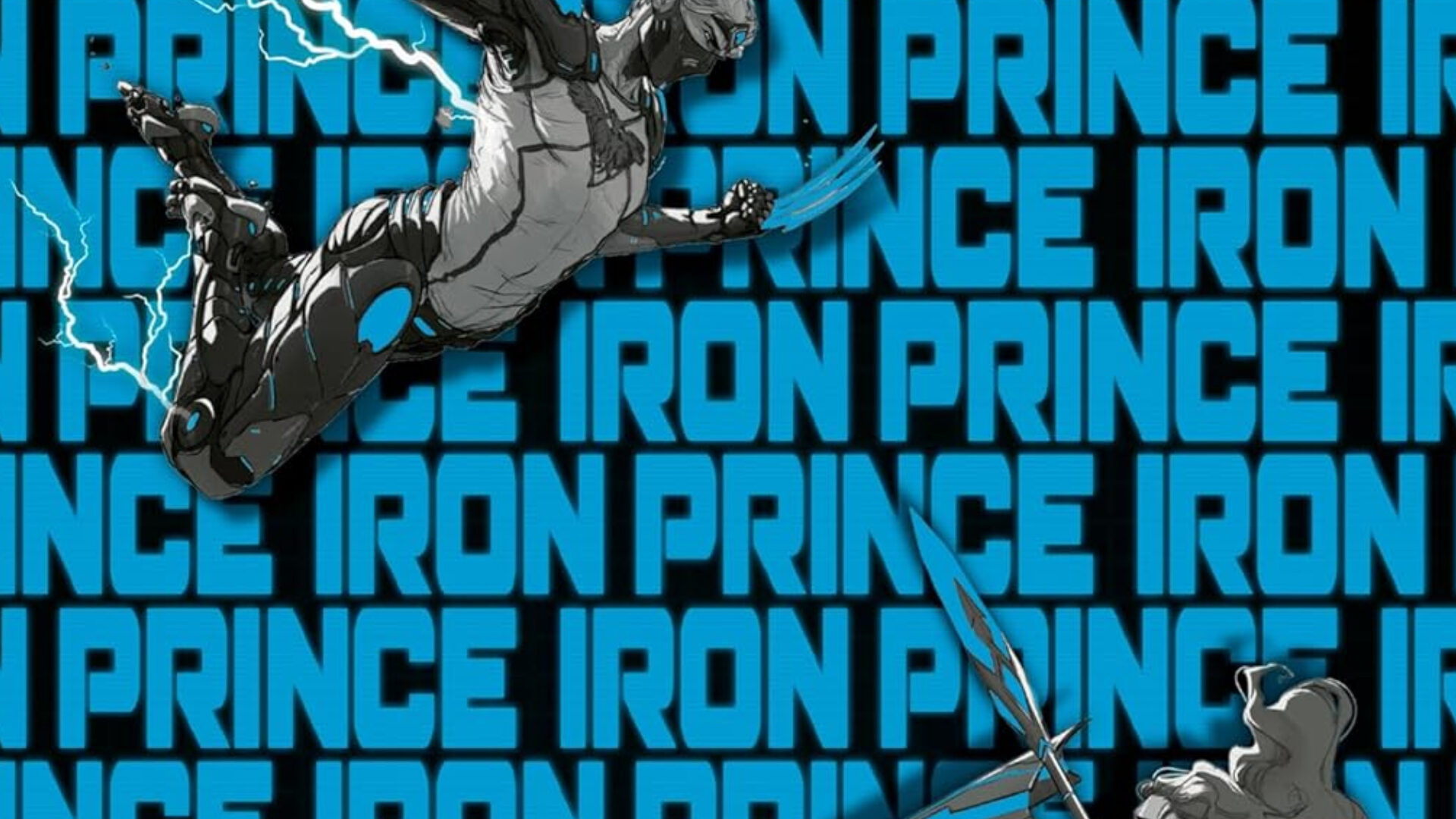
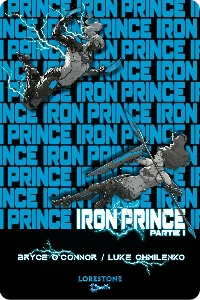
Iron Prince – Part 1
The shōnen of numbers that teaches you to breathe
Score: 8/10
Images and videos
At a glance
We liked
- A rich and coherent military science fiction universe, driven by the opposition against the Archons and the central role of the CAD.
- A disabled and stubborn protagonist, who progresses by effort and not by miracle.
- A detailed, readable and satisfying progression system, which fully embraces its LitRPG and video game heritage.
- Tactical and dynamic combat, always serving the evolution of the hero and the world.
We liked less
- A very introductory volume, focused on the Galens Academy to the detriment of the war.
- A French division into “Part 1” which gives the impression of an interruption rather than an open ending.
- Heavy emphasis on numerical mechanics, which can put off readers who are not very sensitive to game systems.
More on Iron Prince
 By Farrel Grimwood · published · 6 min read
Contents
Iron Prince – Part 1 has all the makings of a reader-player’s fantasy. A galaxy at war, an elite military academy, an entirely number-driven progression system, and a broken hero who refuses to stay in his place. It is a novel which immediately announces its program of pure progression, nourished by MMOs, shōnen and LitRPG, and which never seeks to apologize for it. The question is simple: does this first part stand up as a complete novel, or does it mainly resemble a long prologue of 450 pages while waiting for the sequel?
The answer is less caricatured than expected. Iron Prince – Part 1 offers a more elaborate military science fiction framework than the average for the genre, a surprisingly endearing protagonist, readable combat and progression which very quickly finds an addictive rhythm. On the other hand, it suffers from its status as the first part, with a very academic construction around the academy and a division that leaves a real impression of interruption rather than of an open ending.
A distant war, a very close school
There is nothing minimalist about the Iron Prince universe. Humanity has colonized the galaxy, is waging a two-century war against artificial entities, the Archons, and is determined not to completely lose control thanks to a mixture of genetics, advanced weaponry and personal devices, the CADs, which serve as the backbone of the entire military effort. These CADs are weapons, armor, training interfaces and physical augmentation systems, but above all tools for numerical progression: everything is measured, everything is won, everything is compared.
Despite this massive context, most of this first part takes place far from the front. The novel remains almost exclusively centered on the Galens Institute, an elite academy built to train CAD users by transforming their simulated combat into a global spectacle. Simulated Combat Tournaments serve as training, a ranking system, an industrial recruitment tool and mass entertainment, with logic very close to competitive circuits and online game ladders.
This choice is assumed. The first volume clearly favors the school story, with its cohorts, its common rooms, its rivalries, its clans and its more or less benevolent teachers, rather than the great war against the Archons. The front remains in the background, present in the briefings, the issues and the pressure that weighs on the students, but the novel prefers to tell what it means to live in a society where we grow up watching combat circuits the way others would watch e-sports championships.
Reidon Ward, disabled, stubborn and credible
The real challenge of the book lies in its protagonist. Reidon Ward does not enter Galens as a prodigy or an obvious choice, but as a kid shattered by a rare genetic disease, fibrodysplasia ossificans progressiva, which gradually transforms his muscles and tendons into bones. He is small, damaged, covered in scars, abandoned by his parents, and survives only thanks to a public health system that prevents him from dying too soon.
Obtaining his CAD does not miraculously change this state of affairs. The device corrects his body, removes pain and disability, but gives him catastrophic statistics in all areas except one: growth potential, pushed to the maximum. Reidon therefore starts at the bottom of the rankings, in an academy where everyone thinks in ranks, in averages, in efficiency and in compatibility with archetypal combat models.
This is where the novel finds its best idea. Reidon never progresses by accident. He trains, gets injured, steps back, observes, starts again, and the text really takes the time to accompany him in this logic of progression that is never gratuitous. His determination does not transform him into the cliché of an invincible hero, it rather places him in the category of protagonists who command respect because they never have an easy solution, neither on a physical level, nor on a social level.
Around him, the novel is not content to distribute generic silhouettes. Lifelong best friend Viviana Arada serves as an emotional counterpoint, an anchor, and a constant reminder that progress doesn’t happen alone. Aria Laurent, an appealing rival, embodies established genius; she tests Reidon’s limits and reveals what the system really expects from the best. Catcher and the rest of the gang complete the picture by bringing a dose of sincere camaraderie, sometimes naive, but which gives the novel a human warmth that many equivalents lack.
A LitRPG that embraces its numbers
Iron Prince openly claims to be a novel inspired by LitRPG and MMOs, even if the authors avoid the gimmick of the omnipresent “interface menu”. Fights, training and exams are translated into numerical values, statistics of strength, speed, resistance, ranks and improvement thresholds. The CAD functions as a playable character with its own trees, limits and synergies, and the novel details these rules with more than commendable seriousness.
This obsession with the system does not remain theoretical. Each step forward, each rise in rank, each new skill is linked to a concrete effort, to a specific fight, to a decision by Reidon which has a cost, whether physical, mental or social. The novel does not hesitate to slow down to explain how a CAD improvement works, why a particular choice of build makes sense at that moment, or how a strategy seen as “optimal” can collapse in the face of an opponent who goes outside of the planned patterns.
For a reader who is closed to game mechanics, this aspect can represent a real obstacle. Iron Prince – Part 1 pulls no punches with its jargon, its acronyms, its implicit tables of fighter classes and its constant references to rising in rank. On the other hand, for those who like to see a system turned in all directions, check that it holds and feel the “grain” in each confrontation, it is a real feast. The fights are not mere entertainment, they constantly serve to test, illustrate or extend the established rules.
Rhythm, division and limits
The structure of this Part 1 works in stages. Entrance exam, first humiliating defeats, installation in Galens, first Tournaments, gradual rise in the rankings, increasingly tough confrontations, and finally shift towards a status which begins to justify the nickname “Iron Prince”. Each segment follows the same logic: Reidon hits a wall, gets crushed, understands, prepares, comes back stronger.
This assumed choice gives a very readable rhythm. The novel advances with matches, training sessions and numerical assessments, which allows a constant tension to be maintained, even when the story remains locked in the microcosm of the school. On the other hand, the great war, the Archons and the galactic context remain largely on the margins of this first volume. There is a sense of promise of a larger conflict, but the bulk of this volume focuses on the training and circuits internal to Galens.
The “Part 1” division further accentuates this impression. The original English version reached more than a thousand pages. Lorestone has split this block into two volumes, and it shows. This first volume ends on an important level of progression for Reidon, but does not offer a real thematic or narrative resolution. The novel feels more like a long build-up than a full arc, which can leave you with legitimate frustration once you turn the last page.
A translation that gets the job done
Lorestone Editions entrusted the translation to Hermine Hémon and Erwan Devos, and this is a point that must be emphasized. The French text manages to make technical jargon, military terms, interface descriptions and dialogues readable without ever falling into illegible gibberish or overplay. The acronyms, ability names and ranks maintain internal consistency, and you don’t have the impression of reading a poorly localized game manual.
The whole thing maintains a relatively neutral tone, which lets the action scenes and the relationships between characters take their course, rather than trying to comment on everything. In a novel which relies as much on the clarity of the combat and the precision of the progression mechanisms, this restraint is a real asset.
Verdict
A solid first step, but clearly introductory
8/10
Iron Prince – Part 1 is aimed at a very specific audience. It is a novel that embraces its numbers, its ranks and its fascination with training, fighting and growing in power. This science fiction takes the time to establish a credible framework for its war against the Archons, even if this first volume remains almost entirely focused on the Galens Academy and its simulated Tournaments.
Reidon Ward carries an intense weight on his shoulders, via his journey as a disabled, abandoned and literally rebuilt hero, who refuses to be defined by his starting statistics. The progression is readable, the fights are constructed, the friendships give an unexpected warmth to a novel which could have remained coldly mechanical.
Pros
- A rich and coherent military science fiction universe, driven by the opposition against the Archons and the central role of the CAD.
- A disabled and stubborn protagonist, who progresses by effort and not by miracle.
- A detailed, readable and satisfying progression system, which fully embraces its LitRPG and video game heritage.
- Tactical and dynamic combat, always serving the evolution of the hero and the world.
- A solid French translation, which conveys the jargon and the issues without excessive heaviness.
Cons
- A very introductory volume, focused on the Galens Academy to the detriment of the war.
- A French division into “Part 1” which gives the impression of an interruption rather than an open ending.
- Heavy emphasis on numerical mechanics, which can put off readers who are not very sensitive to game systems.
More in Books
Full library 8/10
Iron Prince – Part 2
Lorestone 10/10
Sépia, tome 2 : Le complot de Flobourg
Pocket Jeunesse 8/10
100 Films d’animation japonais
Yniss 8/10
The Witcher: A Little Sacrifice
Bragelonne 7/10
One of Us Is Next
PKJ 9/10
The Star That Fell from the Sky
 8/10
Mégères et vamps face caméra
L’Harmattan 8/10
Strange Maps
Seuil 7.5/10
Quelque part dans la région du Kinki
Seuil 7.5/10