
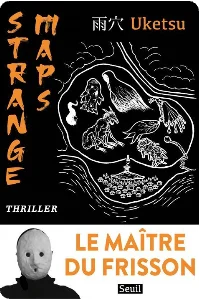
Strange Maps
Kurihara confronts his family’s secrets
Score: 8/10
Images and videos
At a glance
We liked
- A family investigation that gives Kurihara a personal reason to keep searching.
- Maps and diagrams that help explain the locations and the reasoning.
- A story that is easy to follow despite its different periods and cases.
- The young Kurihara becomes more interesting beyond his detective role.
We liked less
- Clues are often explained before the reader can really work through them.
- The old map is less consistently central to the story than the title suggests.
- Unease fades in favour of a more conventional investigation.
 By Farrel Grimwood · published · 6 min read
Contents
A woman admits to killing several people in her youth, while a railway company executive wakes up on the tracks inside a tunnel with no idea how he got there. Elsewhere, a student discovers an old map connected to his grandmother’s death. Strange Maps begins by piling up questions before bringing these stories together, with one important difference from Uketsu’s earlier novels: this time, the detective is personally involved in what he is investigating.
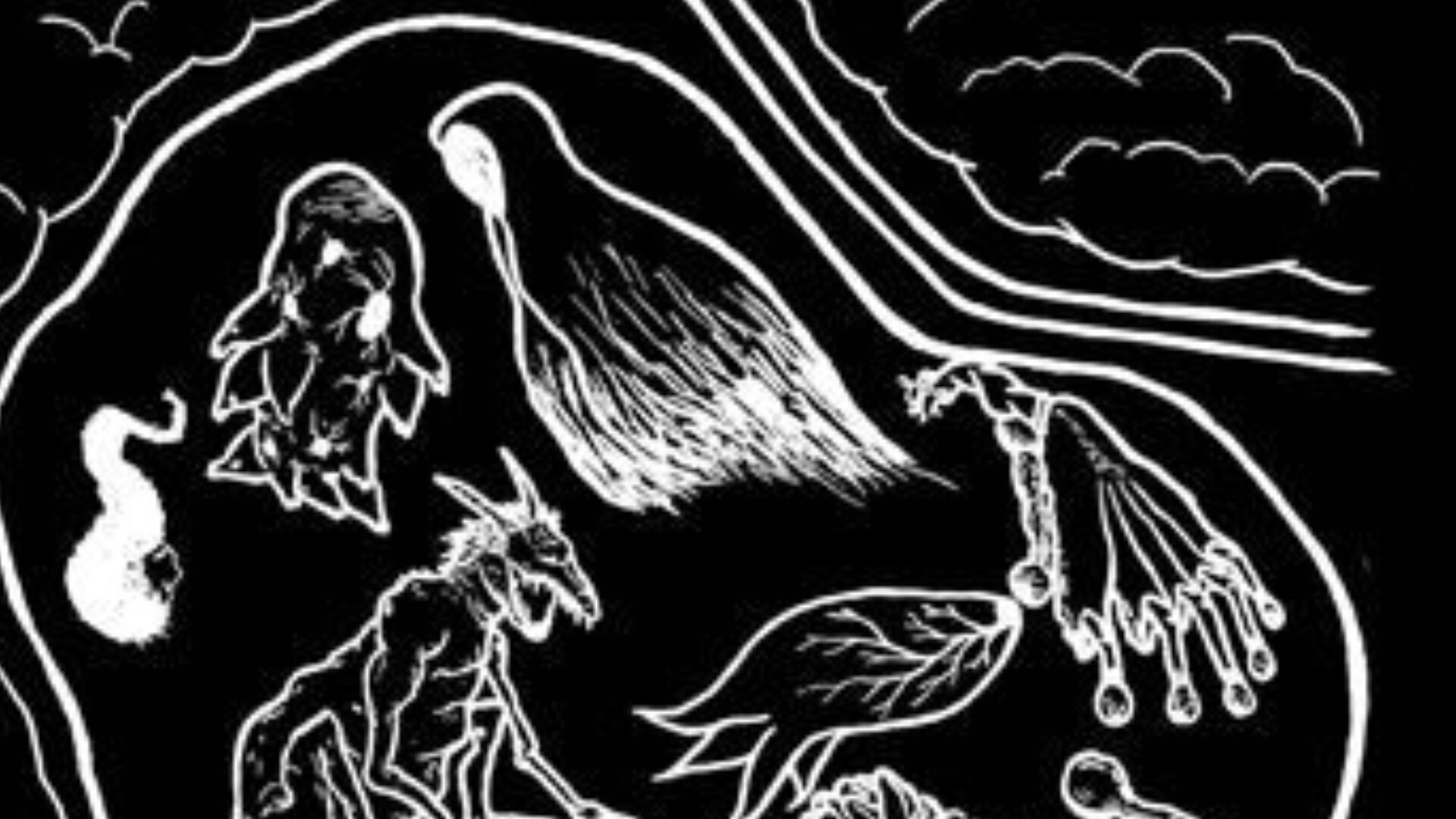
That student is Kurihara, the architect who helped make sense of the disturbing floor plans in Strange Houses. Here, he has yet to begin his professional life and is still trying to come to terms with his mother’s death. The map depicts seven creatures and lies at the heart of the research she left unfinished. The novel retains the images and family secrets, but gives its protagonist more room. Does that breathe new life into the formula, or is the investigation too heavily guided to preserve all its mystery?
Kurihara’s past becomes an investigation
Kurihara is studying architecture and looking for a job. When a firm asks why he chose that path, the answer should be simple: his mother passed that interest on to him. But talking about her triggers attacks that leave him unable to breathe. The problem is serious enough to jeopardise an interview, and too deeply rooted to solve simply by preparing his application more carefully. Even before setting out, the young man has a reason to revisit his family history.
He then learns that his maternal grandmother died in suspicious circumstances, holding an old map. His mother had investigated the case and left her research unfinished. Kurihara’s journey leads him to an abandoned coastal village, incidents connected to the railway, and memories that documents alone cannot always explain.
This starting point gives the hero a personal reason to carry on. Understanding the map might also help him understand his mother and his own reaction whenever he mentions her. The discoveries therefore affect the person interpreting them. Kurihara can be discovered here without having read Strange Houses: his studies, his difficulties and his mother’s interrupted research are enough to explain what drives him to leave.
Drawings that genuinely help follow the story
The maps and diagrams serve a very practical purpose. They show locations, movements and the layout of the tunnel, saving the reader from having to mentally reconstruct every explanation. An arrangement that would take a long paragraph to describe becomes immediately clear in a drawing. Uketsu can thus introduce plenty of information without making the investigation’s geography a chore to follow.
The device remains particularly enjoyable as the hypotheses become clearer. The drawings accompany shifts in the reasoning and show what was wrong with the first interpretation. Text and image work well enough together to keep the locations in mind, even when the narrative returns to older events. The book demands attention, but rarely a struggle with the way its information is presented.
Uketsu knows how to revive a question before the previous one is completely forgotten. Explanations stay simple, and illustrations regularly break up the blocks of text. The result is a quick read, driven more by the desire to know what happens next than by a taste for description. The downside is that the novel also holds the reader’s hand very often.
The detective sometimes gets there too quickly
Kurihara spots the useful details and quickly moves from observation to deduction. That keeps the pace up, but leaves less time to work things out. The novel presents a clue and the hero is already beginning to explain it before there has really been a chance to pause over it. His progress is clear, but there are fewer opportunities to reach the answer before he does. The maps are there to examine, yet the book rarely leaves the reader alone with them for long.
The reminders have the same strength and weakness. Revisiting an earlier detail just as it becomes important saves the trouble of leafing back through the book to find the relevant passage. But by spelling out the connections so often, Uketsu reduces the satisfaction of making them independently. The story is very welcoming to people who rarely read crime fiction; it is sometimes too considerate of those who like to keep a theory alive for a few pages before it is confirmed or dismantled.
Following the detective himself reinforces that impression. Kurihara moves faster than the reader, who mainly discovers his conclusions, with fewer opportunities to share his uncertainty. His deductions are easy to follow, but sometimes it would be nice to investigate alongside him instead of watching him find the answers. Strange Maps remains gripping as a detective adventure; it is less generous when it comes to the pleasure of solving a puzzle independently.
The old map is not the whole story
The title and the seven creatures invite a close examination of the document until its oddities make sense. Yet the investigation soon moves beyond that initial promise. The circumstances of the deaths, people’s movements and the history of the village all occupy considerable space. The maps do as much to make these events understandable as they do to offer visual puzzles. The old map retains its place in the whole, but it does not constantly dictate the reading experience.
That is both a welcome expansion and a slight disappointment. The novel avoids repeating the same exercise for hundreds of pages, but its most intriguing document sometimes takes a back seat to more familiar detective questions. It is better to want to follow Kurihara’s journey than to expect a succession of drawn monsters, each concealing a puzzle of its own. The book offers an ongoing illustrated investigation, with its detours and encounters, rather than a catalogue of maps to decipher.
The drawn creatures, the old deaths and the tunnel establish an immediate sense of unease. The village also brings its customs, its power relationships and the things its residents wanted to keep quiet. But interest gradually shifts towards human actions and their consequences. The question becomes less about an incomprehensible threat and more about people caught up in a story whose rules they do not fully control.
That change gives the family’s past greater weight. Kurihara’s mother’s research is more than a convenient file left in the right place: it shows that she too lived with these questions without managing to resolve them all. Taking up her work forces her son to see her as more than the source of the mental block that prevents him from speaking about her. The novel gains a great deal when it connects a discovery to what the hero thought he knew about someone close to him.
Fear, however, fades as the underlying mechanisms are explained. The strangeness of the images promises something more disturbing than the story sustains over time. The events remain serious, and the village’s history is far from cheerful, but there is more breathing room here than in Uketsu’s most unsettling investigations. Strange Maps should not be expected to maintain the same sense of threat right to the end.
Kurihara also has to find his place
The young Kurihara already has a taste for logic, but does not yet know how to apply it to his own life. His earnestness helps him make progress in the investigation without doing much to help him find his place among other people. That difference makes him more engaging than a specialist called in solely to provide the right explanation. His awkwardness and anxiety about the future give the journey stakes that remain even after some of the puzzles are solved.
The resolution connects the different events and returns to what Kurihara will do with what he has learned. The investigation thus reaches an ending that matters to him too. Understanding the facts allows him to see his family and his own difficulties differently. The novel retains its sadness, but leaves him a way forward. It is a less crushing ending than the opening might suggest, without that change spoiling the journey.
Verdict
Kurihara benefits from leading his own investigation
8/10
Strange Maps finds its appeal in a young detective who has to understand his family before he can work out how to move forward. The maps and diagrams make the locations easy to follow, while the cases converge in a plot that encourages further reading. The journey does something for the character instead of merely lining up his deductions. Uketsu thus refreshes his formula without abandoning the pleasure of examining an image to understand what happened.
He sometimes explains things too quickly and leaves less room for both fear and the search for answers. The old map also occupies a less central role than the title suggests. But the novel holds together as an illustrated investigation and an exploration of Kurihara’s past. Provided the expectation is not simply another graphic nightmare, it is an engrossing read that is right to take more interest in the person solving the puzzles.
Pros
- A family investigation that gives Kurihara a personal reason to keep searching.
- Maps and diagrams that help explain the locations and the reasoning.
- A story that is easy to follow despite its different periods and cases.
- The young Kurihara becomes more interesting beyond his detective role.
- A more personal conclusion that leaves room for hope.
Cons
- Clues are often explained before the reader can really work through them.
- The old map is less consistently central to the story than the title suggests.
- Unease fades in favour of a more conventional investigation.
More in Books
Full library 7.5/10
Quelque part dans la région du Kinki
Seuil 8/10
100 Films d’animation japonais
Yniss 8/10
The Witcher: A Little Sacrifice
Bragelonne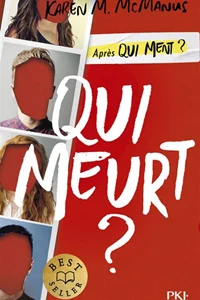 7/10
One of Us Is Next
PKJ 9/10
The Star That Fell from the Sky
 8/10
Mégères et vamps face caméra
L’Harmattan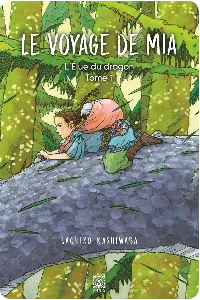 7.5/10
L’Élue du Dragon Volume 1: Le Voyage de Mia
Ynnis Éditions 8/10
Comme dans une romance de Noël… ou pas !
Hauteville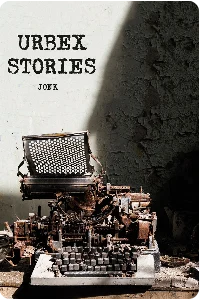 9/10
Urbex Stories
Tempus Fugit 7/10