
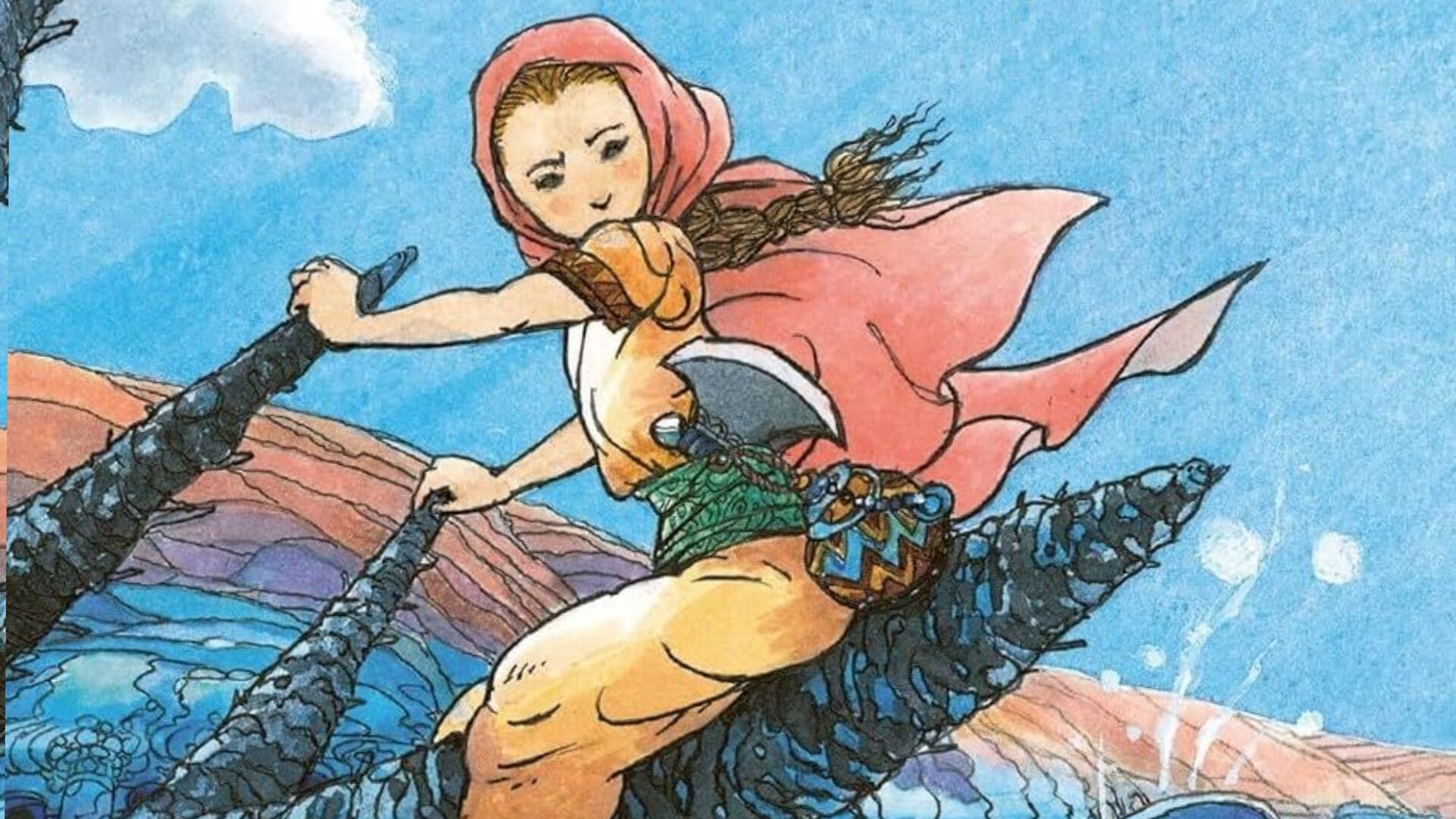
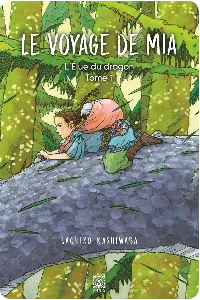
L’Élue du Dragon Volume 1: Le Voyage de Mia
Mia has to find her place
Score: 7.5/10
Images and videos
At a glance
We liked
- Mia remains a hesitant child whose courage develops through her decisions.
- The heroine’s origins give practical meaning to her discovery of the kingdom.
- The cursed knight and unknown creature sustain curiosity.
- Protecting others becomes a real stake in the adventure.
We liked less
- Some resolutions move too quickly from difficulty to solution.
- The creature’s nature and some possibilities of magic remain vague.
- The injustice inflicted on the valley’s inhabitants deserved more attention.
 By Farrel Grimwood · published · 6 min read
Contents
Leaving a prison village on a dragon’s back sounds like a dream, but Mia mainly fears leaving her aunt and everything she knows. At ten, she cannot understand why the creature chose her. She is small, clumsy and struggles to speak up. Nobody expected this departure, least of all her. L’Élue du Dragon thus begins with a child who would much rather not have become the centre of attention.
Sachiko Kashiwaba, author of Le Fantôme derrière le temple and La Maison des égarées, sends her to discover a kingdom of dragons, witches and knights. Ynnis brings the first two Japanese volumes together here in a 496-page novel, translated into French by Nina Le Flohic and illustrated by Miho Satake.
The setting promises a grand adventure, but the book retains a more intimate concern: understanding how Mia can make her own decisions in a world where adults have already decided her role.
The village bears the sins of the past
Mia lives at the bottom of a valley surrounded by cliffs, in a village whose inhabitants still carry the weight of an old defeat. Their ancestors lost a struggle for power, and their descendants remain confined to a place designated the village of criminals. Mia has done nothing to deserve that label, but must live with it. The novel thus establishes an easily understood injustice before developing the kingdom’s conflicts.
Dragons are the only connection to the outside. When they call a child, that child can leave the valley without knowing exactly what awaits. The departure is an honour for the village, but Mia mainly fears leaving her aunt. The adventure therefore begins with a promise of freedom and the feeling of losing the only person around whom she feels safe. The novel takes that anxiety seriously instead of assuming a dragon’s call is enough to make her want to leave.
The idea gives substance to the discovery of the kingdom. Mia already belongs to this magical world; she does not arrive from the present day through a secret door. Yet she knows almost as little about it as the reader because she grew up apart. Kashiwaba can therefore explain palace customs through her difficulties without turning her into a mere pretext for presenting the setting. Her ignorance has a reason, and her origins will affect the welcome she receives.
Mia moves forward with her doubts
The aunt who raised her plays an important part in this departure. Her mother left when she was very young, and Mia learned how to live beside this woman. Her aunt knows the outside world herself. What she has taught the child therefore gains another meaning when it is time to leave: she has also prepared her to manage far from the valley. Their bond gives the journey an anchor that the palace’s wonders cannot immediately replace.
Mia retains her doubts afterwards. Being chosen does not give her the confidence to answer adults or understand their intentions. She has to learn by observing, making mistakes and accepting help. Her difficulties do not disappear the moment they threaten to slow the adventure. The demands of each decision are clear, even when no spectacular threat is involved yet.
Her courage comes above all from her concern for others. Mia can be afraid and still act if she believes someone needs her. That distinction avoids confusing heroism with ease. She is engaging because she tries not to abandon those she can help, not because she already has every right answer. The novel thus keeps a recognisable child among far more powerful characters.
The palace does not erase prejudice
Arriving at the royal palace does not settle the question of her place. She is still treated as a child from the valley, with the distrust those origins bring. Mia is assigned to serve a legendary knight struck by a curse. His body is invisible, but his presence makes itself known, notably through the moans she hears at night. The contrast works: the kingdom offers a marvellous setting and leaves her caring for a man others prefer to avoid.
That situation establishes a mystery far more interesting than a tour of the palace. It means understanding what happened to the knight, what remains of him and how his fate connects with old conflicts. Witches and dragons participate in the kingdom’s life, with roles and relationships extending beyond their powers. Fantasy belongs to the organisation of this world as much as to the extraordinary events shaking it.
The adventure nevertheless retains a certain harshness. Adults can use children, judge them by their origins or impose a task whose consequences they cannot yet grasp. A few lighter moments keep the narrative from becoming oppressive, but do not make the palace harmless. Above all, Mia has to learn to recognise whom she can trust. That uncertainty gives encounters more interest than the presence of magic alone.
Deep in the royal treasury, Mia encounters a small life form whose nature nobody truly understands. It resembles a mass of darkness and may be dangerous. Mia nevertheless refuses to let it die. The person in charge grants her ten days to discover what it is, with a weighty condition: if the creature proves dangerous, she will have to dispose of it herself.
The choice gives the child a specific responsibility. A kind heart and a demand to be left alone by adults are not enough. She must find answers to defend the life she chose to protect. The investigation takes her beyond the palace’s familiar setting and forces encounters with people whose intentions are not immediately clear. The unknown thus drives the journey instead of being a creature simply added to accompany the heroine.
It also offers a good way to continue her development. Mia was first sent somewhere because others needed her; this time, she commits herself for a reason she has chosen. Compassion does not excuse her from considering the risks, but gives her a motive to face them. The narrative finds stakes stronger than another proof of her importance. What she decides to do matters more than having been called by a dragon.
Magic sometimes settles things too quickly
The little creature sustains the mystery, but its nature remains rather vague. Mia’s desire to protect it is perfectly understandable; what explains its particular traits is less clear. Explanations of magic sometimes present the same problem: a revelation supplies the solution before the reader has really understood what makes it possible. Emotion drives the story forward, but the answers occasionally lack precision.
Mia obviously cannot control everything, and giving her every victory would be a shame. Some problems nevertheless resolve rather quickly after occupying an important place. In the cursed knight’s storyline, the witches’ intervention weighs more heavily on the resolution than the child’s actions. That help is consistent with her means, but also leaves a slight sense of something missing after following her efforts to understand for so long. Her involvement sustains the emotion; the ending could have given her a greater role.
The village of criminals also leaves a reservation. Making descendants suffer the consequences of an old power struggle is a strong idea. The novel focuses more on Mia’s journey than on challenging that order, understandably in an adventure centred on a child. Even so, the injustice of the situation could have carried more weight against the palace’s prestige. Leaving the valley is not enough to make the system keeping everyone else there acceptable.
Combining the first two Japanese novels allows Mia to be followed beyond her arrival at the palace and the first curse. The volume therefore offers more than a lengthy setup interrupted just as its heroine begins to act. The two adventures have their own questions while continuing the same learning process.
The 496 pages nevertheless make this a read for a child already accustomed to long novels. Mia’s age alone says nothing about the reading confidence needed to follow her journey and the kingdom’s secrets.
Verdict
Mia makes the next adventure appealing
7.5/10
L’Élue du Dragon – Le Voyage de Mia finds its appeal in the way its heroine navigates a world that does not readily make room for her. The valley, cursed knight and creature to protect give her journey different stakes. Above all, Sachiko Kashiwaba preserves Mia’s fears and doubts without undermining her initiative. Her concern for others gives the adventure meaning and a reason to care about her.
Some resolutions move too quickly, and the rules of magic sometimes remain vague. The village’s fate also deserved greater weight in the discovery of the kingdom. These limits do not erase the charm of a generous first volume that develops its character instead of merely announcing what she will achieve later. Good children’s fantasy for a reader already comfortable with long adventures, and a heroine worth meeting again.
Pros
- Mia remains a hesitant child whose courage develops through her decisions.
- The heroine’s origins give practical meaning to her discovery of the kingdom.
- The cursed knight and unknown creature sustain curiosity.
- Protecting others becomes a real stake in the adventure.
- Combining the first two Japanese volumes provides an already substantial journey.
Cons
- Some resolutions move too quickly from difficulty to solution.
- The creature’s nature and some possibilities of magic remain vague.
- The injustice inflicted on the valley’s inhabitants deserved more attention.
More in Books
Full library 8/10
100 Films d’animation japonais
Yniss 8/10
The Witcher: A Little Sacrifice
Bragelonne 7/10
One of Us Is Next
PKJ 9/10
The Star That Fell from the Sky
 8/10
Mégères et vamps face caméra
L’Harmattan 8/10
Strange Maps
Seuil 7.5/10
Quelque part dans la région du Kinki
Seuil 8/10
Comme dans une romance de Noël… ou pas !
Hauteville 9/10
Urbex Stories
Tempus Fugit 7/10