
Smash It Wild
The ball has more ideas than stamina
Score: 6.5/10
Images and videos
At a glance
We liked
- A truly original volleyball/dodgeball/tactics mix
- Real positioning choices and synergies
- Animal teams with distinct styles
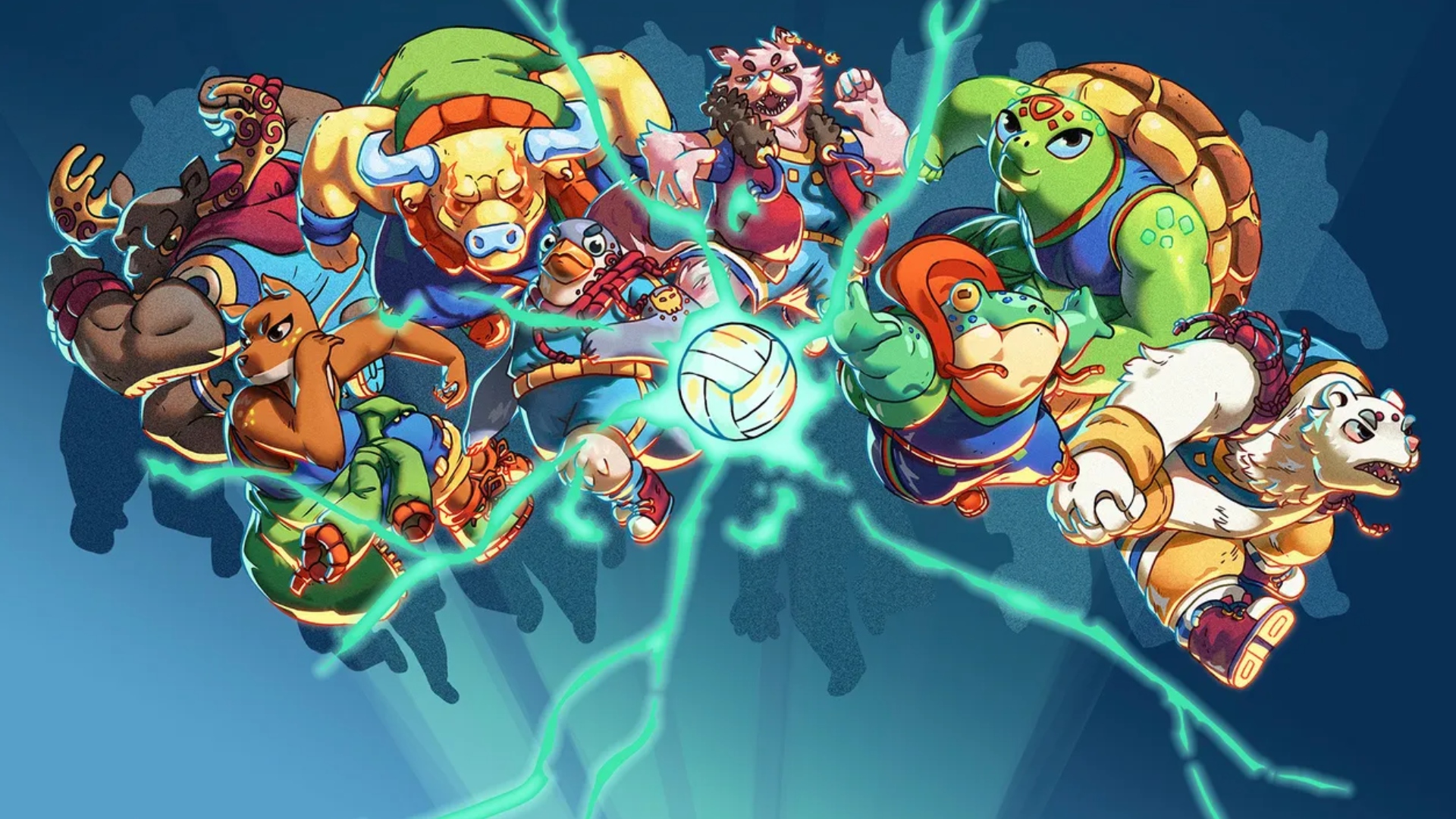
- Very nice hand-drawn artistic direction
We liked less
- Too light a tutorial
- A difficult to read interface
- No multiplayer
- Content that quickly shows its limits
 By Farrel Grimwood · published · 6 min read
Contents
You should not come looking for volleyball in Smash it Wild. Not really. The net is there, the ball too, the exchanges pretend to respect a sporting logic, but the game looks elsewhere. What interests it is not the beauty of a reception or the speed of a smash. It’s space. The free square. The poorly placed player. Stamina that drops low enough to let the next point pass.
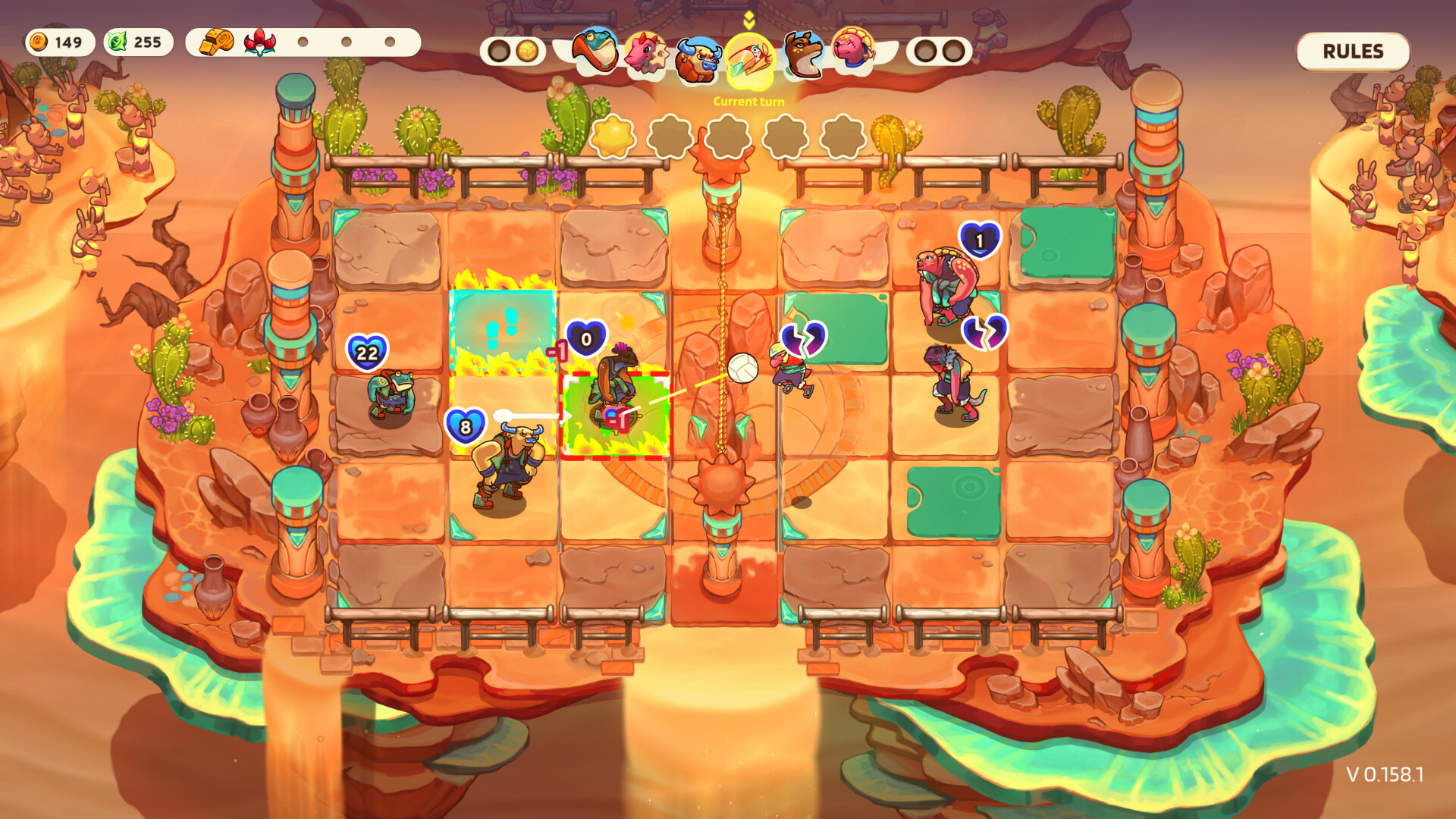
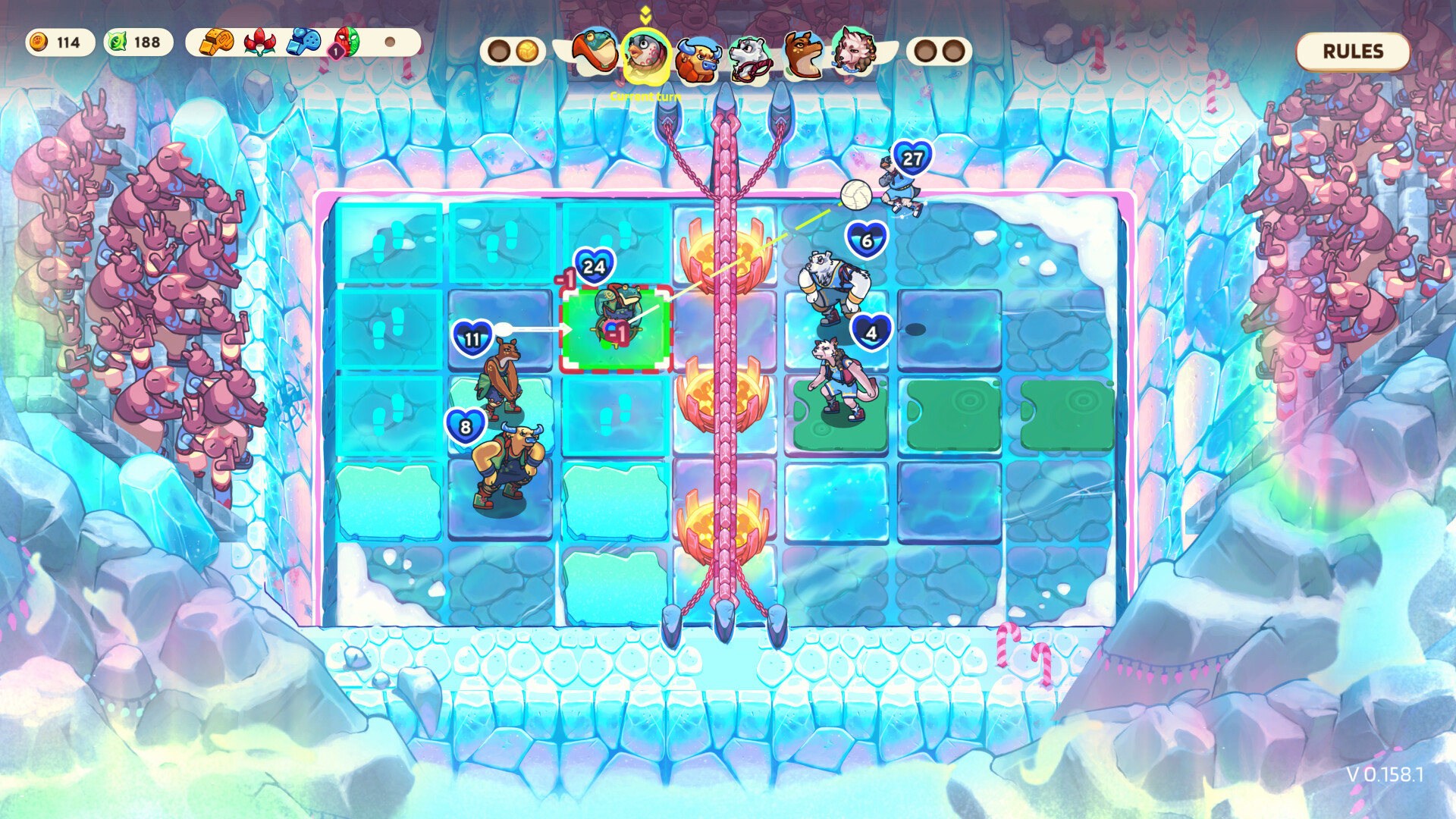
The field therefore looks less like a gymnasium and more like a small chessboard. Three champions on one side, three opposite, abilities specific to each team, field effects, attacks that repel, slow down, poison or prepare an opening. The ball circulates, but it is mainly used to make bodies move, to break down a defense, to create that second of imbalance where the opponent no longer has enough resources to respond.
Smash it Wild has a rare idea in its favour: transforming a skill sport into a turn-based tactics game. It’s strange enough to catch the eye, readable enough to not remain a simple curiosity, and clever enough to make you want to understand what each team can really do. The problem is that the idea takes time to deliver.
The game doesn’t come across very smoothly. It explains little, quickly, and poorly. The first games resemble more of a messy making contact than a comfortable discovery. We click, we place, we send the ball, we watch the effects stack up, and we understand only afterwards why a point changed. This is not prohibitive. It’s just a shame, because the heart of the game deserves better than this somewhat stiff entry.
Sport as an excuse
Once the logic is understood, Smash it Wild becomes more interesting. Each player has endurance which wears out over the course of receptions and attacks suffered. The goal is therefore not only to aim for a hole in the defense, but to prepare for this hole. We force an opponent to receive, we push him back, we tire him, we take him out of his position, then we take advantage of the opening.
This approach gives the exchanges a real tactical flavor. A point won doesn’t just taste like a successful shot. It often comes from a small chain of decisions: moving the right player, choosing the right attack, aiming for the right target, sometimes agreeing not to score right away to weaken a line. The game works when it feels like it’s building to a point rather than just hitting it.
The animal teams bring a little variety to this base. Some play with terrain, others with alterations, still others with more direct forms of pressure. We quickly find the very simple pleasure of tactical games: understanding what your group can do, spotting what the opposing team wants to set up, then looking for the small angle that will bring everything down.
Smash it Wild is not very elegant in its guidance, but it has the merit of not being hollow. Behind its colorful exterior, there are real questions of placement, timing and synergies. Tactics enthusiasts will find more material than its light sports game appearance would suggest.
The rhythm, on the other hand, can be surprising. Turn-based gives weight to decisions, but it also takes away some of the immediate energy that we naturally associate with this type of sport. We must accept that chaos is mental more than physical. The game is not jumpy in the arcade sense. It is tense because a bad square, a bad target, or a bad expenditure of stamina can derail the exchange.
The tournament always starts again
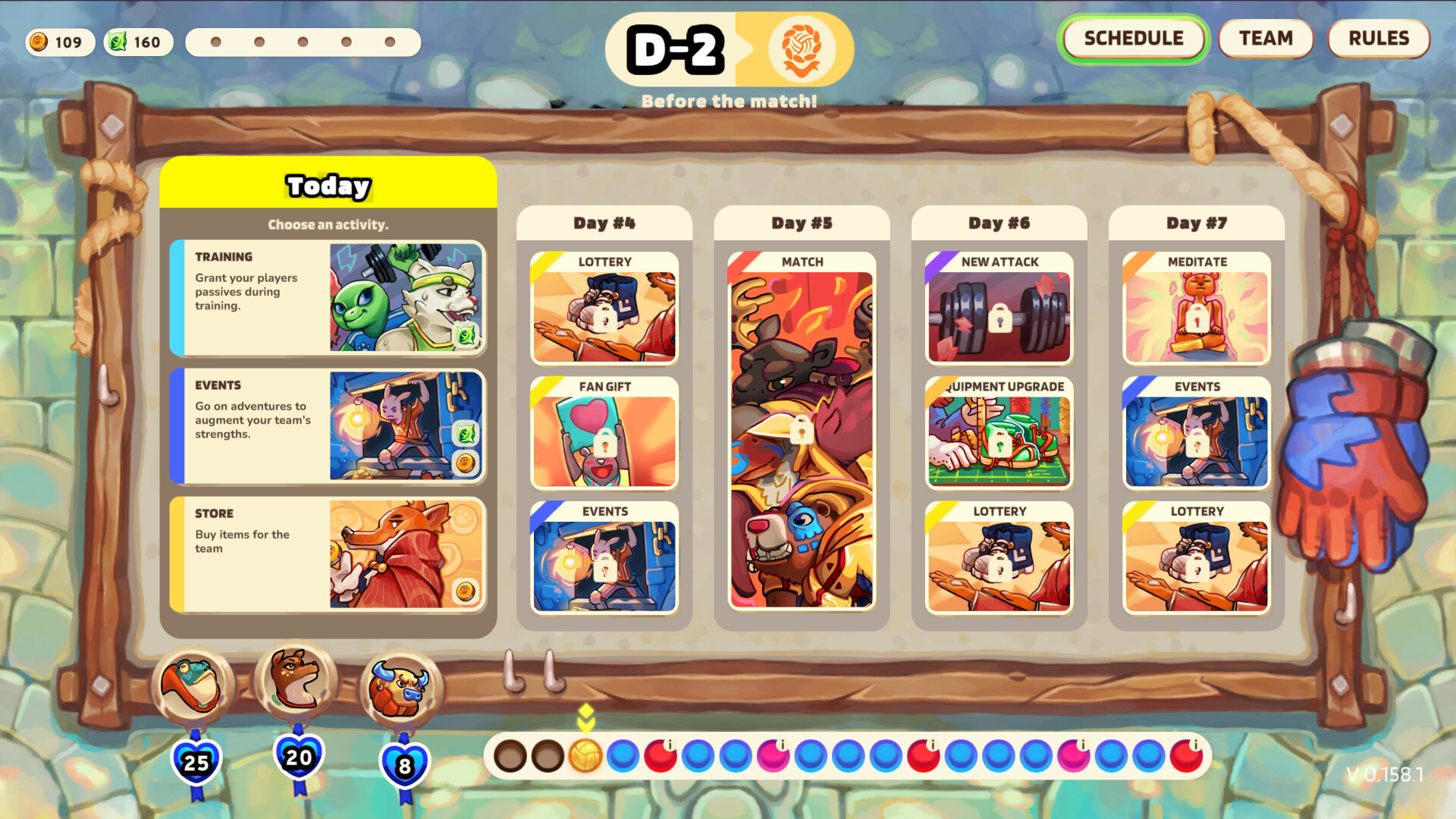
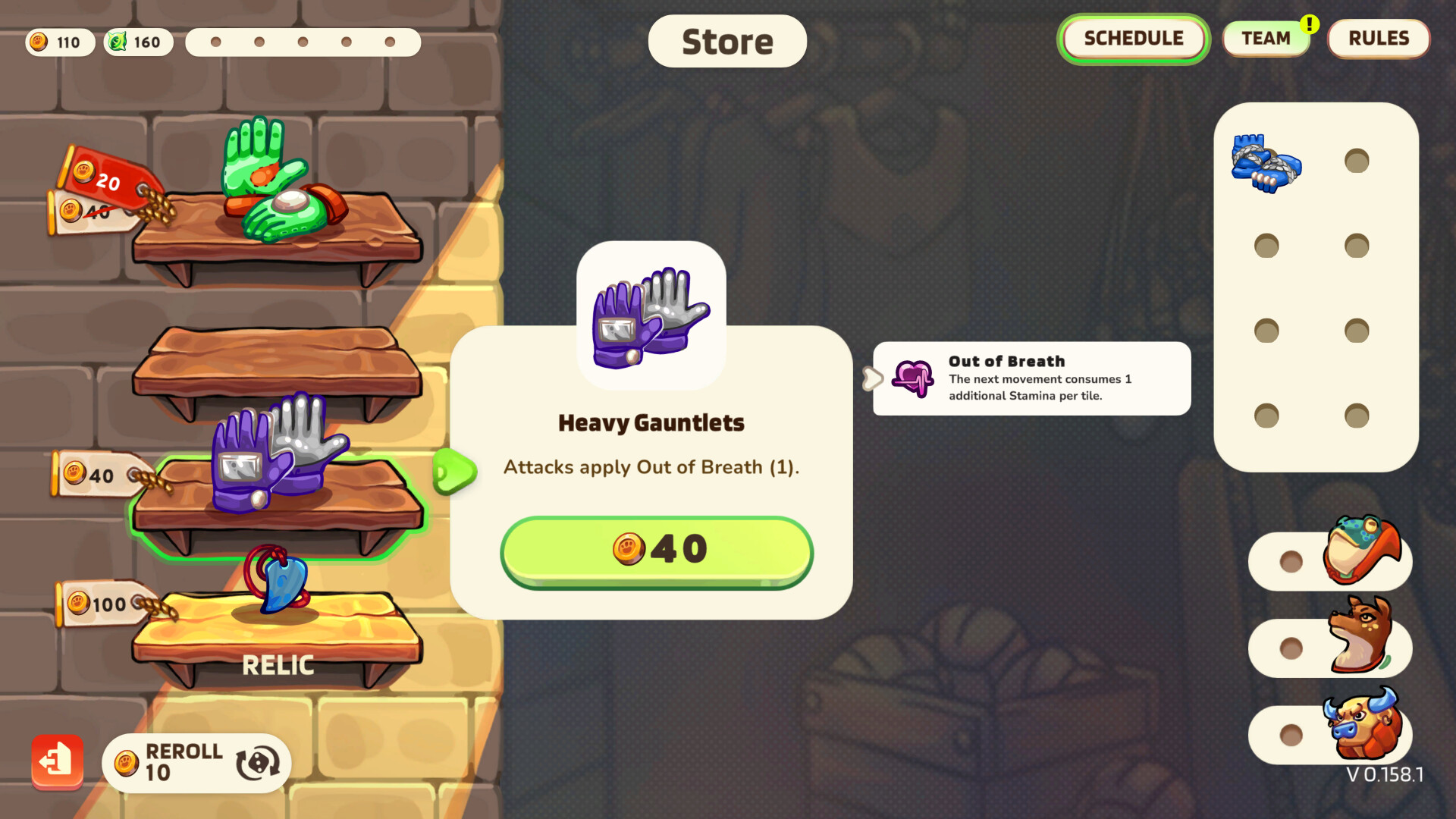
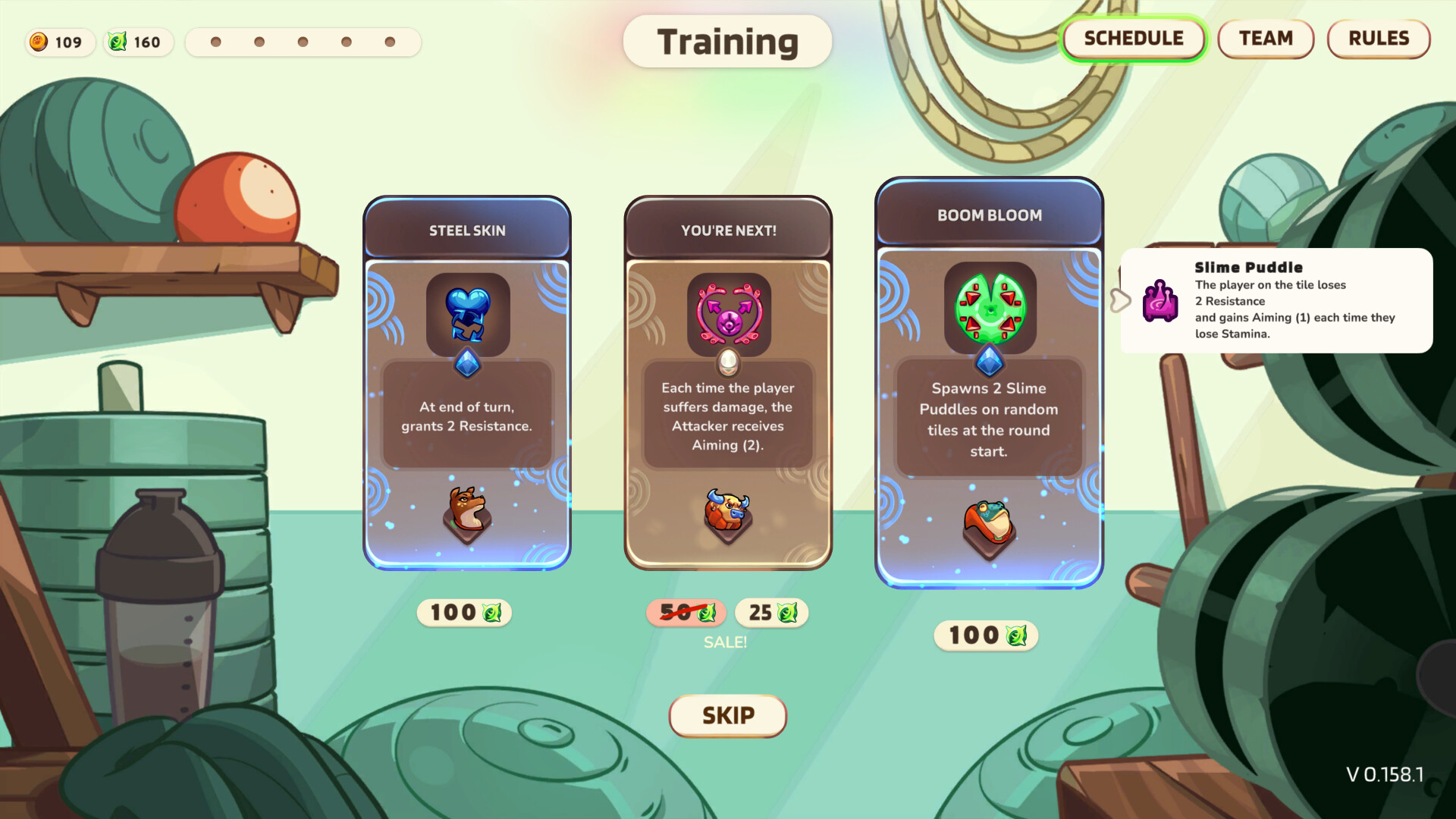
The roguelike structure gives the game its main loop. A run takes the form of a tournament, with days of preparation between matches. You train your champions, collect equipment, choose upgrades, accept events, then return to the field. Victory requires a series of won matches. The defeat puts the cup back away.
It’s a good way to add depth to a game that could have simply been a series of encounters. Choices between matches matter. A passive bonus can change an approach, a new attack can give a clearer role to a champion, an item can transform a decent team into a combo machine. The best of Smash it Wild is often there: in that moment when three or four decisions end up adding up and suddenly give a very clear identity to the run.
The element of randomness obviously plays its role. Sometimes the proposals fit together with almost indecent generosity. Sometimes the construction progresses less well, and we find ourselves tinkering with tools that don’t really work together. It’s the law of the genre. It works here, because the matches are readable enough for us to understand what we are trying to achieve.
There are also secondary objectives, rewards to be obtained, risks to be accepted. The game tries to push the player to not just win, but to win better. This adds a nice little tension, especially when you hesitate between securing the match or aiming for a reward capable of changing the rest of the tournament.
This structure, however, has a clear limit: it makes you want more. More teams, more variations, more reasons to come back after understanding the four main styles available and going through the difficulty levels. Smash it Wild is not empty, but it quickly reveals the outlines of its content. For a sports roguelike, this is a concern.
Good shots, some blind spots
The presentation does a lot for the game. The hand-drawn sprites give a real personality to the champions, the animations accompany important strikes well, and the whole thing has a warm color which prevents the field from becoming a simple tactical grid. Smash it Wild has charm, and that charm matters.
However, the world remains more beautiful than exploited. The animals, teams, effects and settings give an immediate visual identity, but the game does not transform this universe into an engine. We mainly remember the characters and abilities, less the setting itself. This isn’t a big deal for such a mechanical game, but the design had more to do with it.
The interface is more problematic. Some elements lack readability, the move icons are clearly too small, and the descriptions sometimes take up too much space in relation to the terrain. In a game that relies so much on understanding effects, this kind of friction is quickly felt. We eventually get used to it, but the game would have benefited from making its information cleaner, more immediate.
Guidance follows the same path. Smash it Wild is not an impossible game to understand, far from it, but it could much better accompany its first hours. Its tutorial leaves too much to the player, as if the obviousness of its rules was enough. However, the interest of the game does not come from the basic rule but from the details: endurance, placement, effects, synergies, order of actions. This is precisely what should have been portrayed better.
The game remains limited to solo, which weighs more than one might believe. Such an idea naturally calls for a human duel. Not necessarily a great competitive mode, but at least local, a way to bring this tactical volleyball to life other than against the AI. Its absence leaves a real gap.
A good match too short
Smash it Wild finds itself in a bit of a strange position. Its opening minutes can lose the player, but its system eventually hooks you. The matches become more readable, the synergies more pleasant, the errors easier to understand. The game has this very frank pleasure of ideas which finally come into place after having resisted.
But once this step is over, another limit appears: there are not enough strong reasons to stay. Teams change approaches, difficulties add challenge, runs allow other constructions to be tested. This is enough for a good time, especially at a low price. This is not necessarily enough to create a real obsession.
We quickly understand why the game can find its audience. It is original, accessible once launched, visually pleasant, and its mixture of genres has something very endearing. But its lack of multiplayer, its interface hiccups and its relatively tight content prevent it from transforming this pleasant surprise into lasting evidence.
It remains a game that is easy to love, but difficult to defend wholeheartedly. A proposal lively in its idea, less generous in its duration. A title that makes you want to say yes, then immediately ask: and now what do you add?
Verdict
A well placed ball
6.5/10
Smash it Wild stands out above all for its concept. Mixing volleyball, dodgeball, turn-based tactics and roguelike could have resulted in a shaky object. The result holds up better than expected, with real placement choices, distinct teams, fun synergies and obvious visual charm.
However, it lacks the means to take things a step further. The tutorial doesn't support enough, the interface lacks clarity, the solo limits an idea that called for a duel, and the content lets you guess its edges a little quickly. A good little tactical game, therefore, original and pleasant, but which would have needed a longer serve to win the match without discussion.
Pros
- A truly original volleyball/dodgeball/tactics mix
- Real positioning choices and synergies
- Animal teams with distinct styles
- Very nice hand-drawn artistic direction
- A roguelike loop that works well
Cons
- Too light a tutorial
- A difficult to read interface
- No multiplayer
- Content that quickly shows its limits
- Some friction that slows down the first hours
More in Video games
Full library 6.5/10
Atomic Owl
XBOX 9/10
Dragon’s Dogma 2: Dark Arisen
XBOX 7/10
Brigandine Abyss
XBOX 6/10
The Walking Dead: Streets of Survival
XBOX 8/10
Onimusha: Way of the Sword
XBOX 7/10
HOT WHEELS Infinite Rush
XBOX 8.5/10
S.T.A.L.K.E.R. 2: Cost of Hope
XBOX 7.5/10
The Lord of the Rings: War in the North – Legacy Edition
XBOX 8/10
Verho – Curse of Faces
XBOX 8/10