

Atomic Owl
The owl that damages its wings
Score: 6.5/10
Images and videos
At a glance
We liked
- A universe of samurai birds carried by dense and immediately recognizable pixel art.
- A lively platforming/combat mix, with transformable weapons and wing powers to collect.
- A synthwave soundtrack that supports the rhythm and atmosphere very well.
- A complete Xbox version: 4K, 60 fps+, Series X|S optimization, Smart Delivery, Play Anywhere and NO ROGUELITE mode.
We liked less
- Eight fixed zones from one run to the next: repetition comes quickly.
- Camera too far away which hinders readability in the busiest passages.
- Demanding platforming, spaced checkpoints, fatigue more than tension over time.
 By Farrel Grimwood · published · 5 min read
Contents
Atomic Owl has everything to grab your attention at first glance: a cute shinobi, a sword that talks too much, a raven sorcerer settling old scores and a neon city populated by angry birds. It’s sold like a 2D roguelite: eight zones, runs, a hub, a return to the starting point each time you fall and the hope of coming out a little stronger.
On Xbox Series, the game arrives in a so-called definitive version, with NO ROGUELITE mode, rebalancing, 4K, 60 frames per second, Smart Delivery and Play Anywhere.
On paper, the owl is equipped to fly for a long time. In practice, it mostly ends up wearing out its own playing field.
An owl, a saber, an old crow
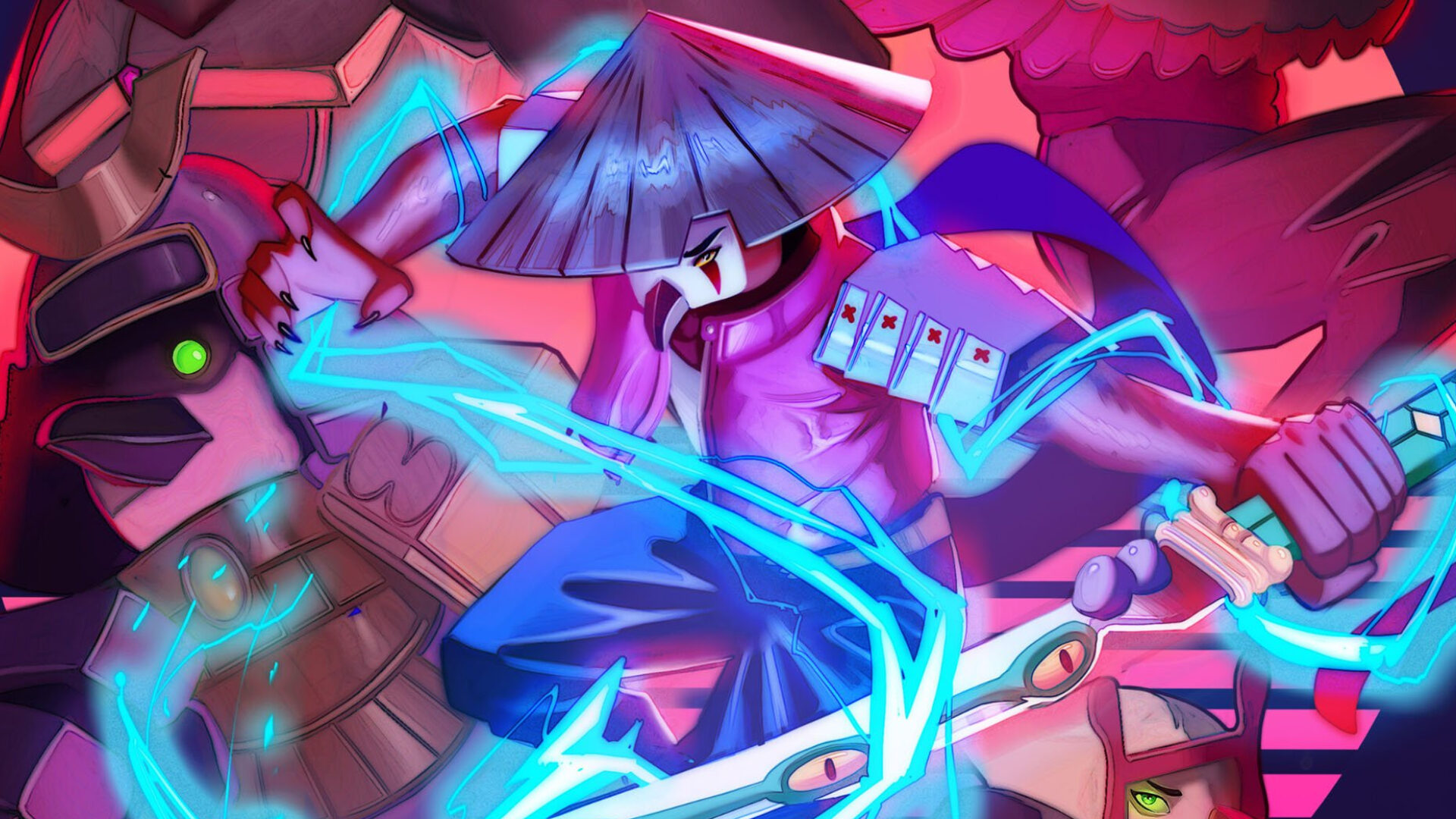
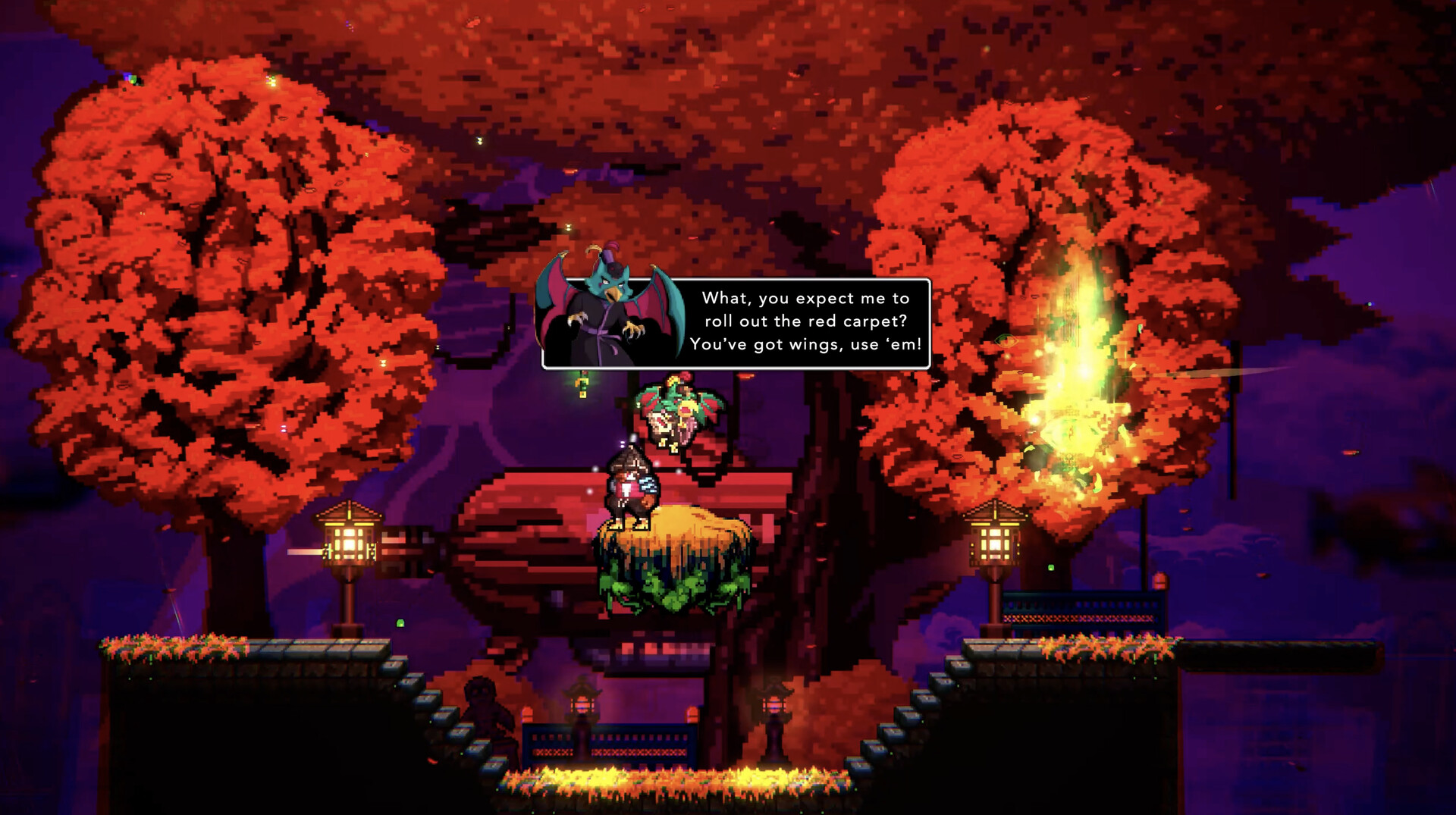
It all starts in a ramen bar. Hidalgo Bladewing, an owl samurai, returns from a mission with his companions when Omega Wing, a spiteful void raven, decides that the evening has lasted long enough. The sorcerer corrupts the troop, chains Hidalgo to a cursed tree and leaves Judanest to sink into a war of feathers and darkness. Two years later, Mezameta (a demonic sword as talkative as it is vindictive) wakes the hero to organize the counterattack.
The mission is simple: cross eight areas of Judanest, save each companion who has fallen under the influence of Omega Wing, and finally pay him back for everything he has done. The universe has a few lines, but it has a real face: warrior owls (the Bladewings), Tengu who serve as cannon fodder, crows with tar feathers and temples suspended above a neon light that never goes out. Atomic Owl is not looking for a great fable, it is looking for a setting that justifies anger and combos. And from that side, it’s quite successful. For the rest…
A roguelite copying the lesson without understanding it
Atomic Owl presents itself as a roguelite: you attempt a run, you die, you return to camp, you spend what you have collected and you go back to the same boss, hoping to last a little longer. The loop is there: we collect power-ups and wing fragments which increase health, damage and mobility options, and we end up feeling the difference between a beginner Hidalgo and a veteran who has already spent a few nights being fleeced.
The problem is that the roguelike component never moves. The eight zones keep the same structure from one attempt to another, without procedural generation or recomposition of rooms. The enemies return to the same places, the traps too, the stairs too. Eventually, each run looks less like a new attempt than a careful repetition of the same route, with simply better numbers in the pockets. The initial promise quickly turns into “do the same route again until the life bar is long enough to take the bad hit”; which is far from being the motto of the genre.
The NO ROGUELITE mode, added on consoles, cuts at least this repetition: we play Atomic Owl like a linear platform game, without systematic return to camp. It’s a useful fallback for those who just want to cross Judanest once, but it’s mostly an admission of failure.
Tight platforming, transformable weapons
Atomic Owl is, above all, tight platforming and an arsenal that adapts to the needs of the moment. The Mezameta Blade can take the form of a sword, whip, hammer, or large blade, each with its own range, speed, and way of dealing with mayhem on screen. You choose your combination at the start, then you adjust during the run with bonuses and transformations.
The zones combine platforms, fights and flight sequences where Hidalgo finally spreads his wings to hover above Judanest. The idea is attractive: alternating corridors under pressure and breathing in weightlessness. When everything aligns, the game finds what it was looking for from the start: a demanding retro flow, halfway between an edgy Castlevania and a 16-bit era platformer boosted with synthwave, all in a particularly exhilarating flow.
But Atomic Owl doesn’t do any favors. Jump windows are often narrow, dashes require knowing the distances by heart, and the lack of variation in layouts means that mistakes are paid for by the same backtracks over and over again. The precision requested is not a defect in itself; the impression of replaying the same punishment over and over again, yes.
Judanest, beautiful neon cage
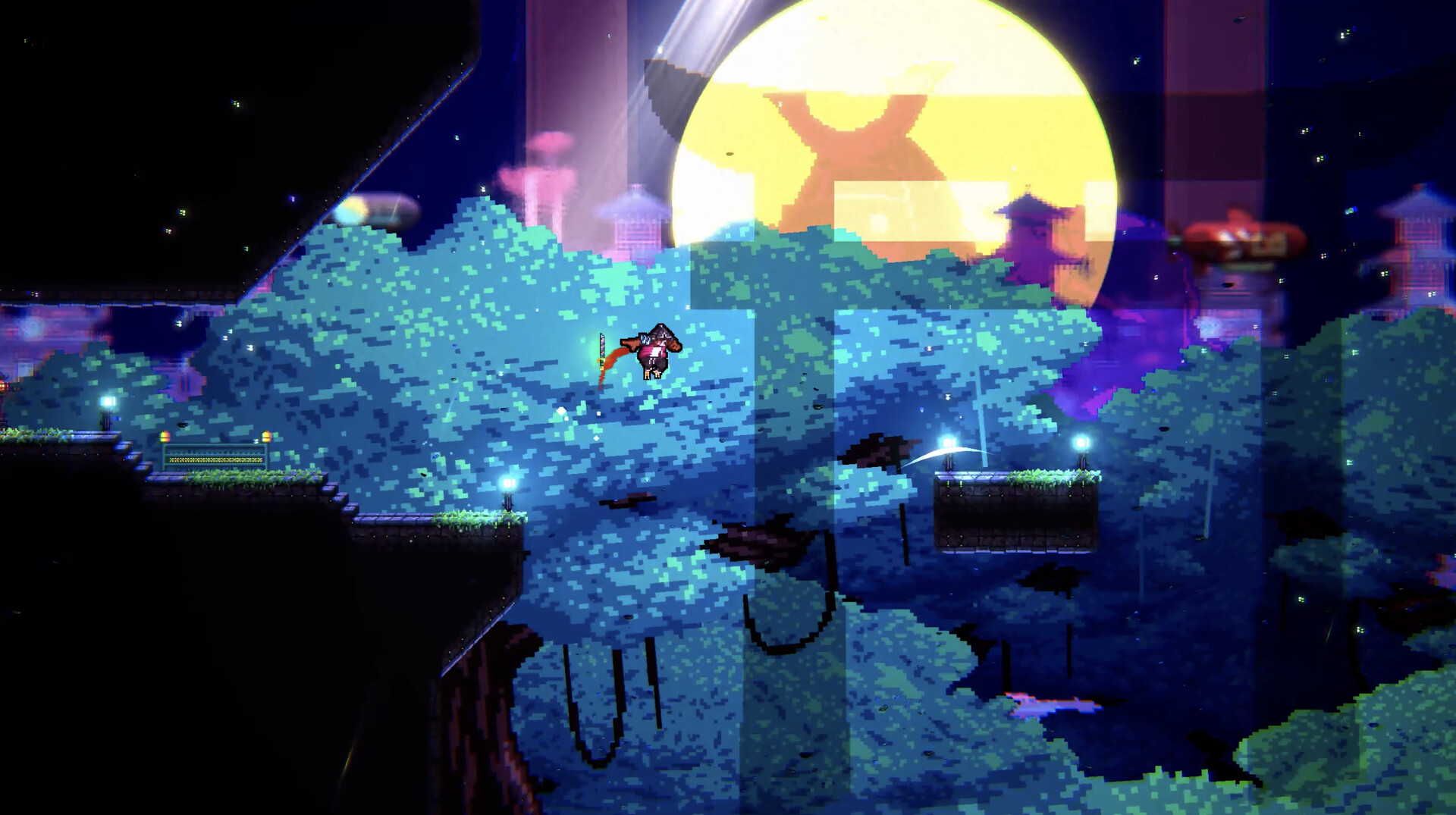
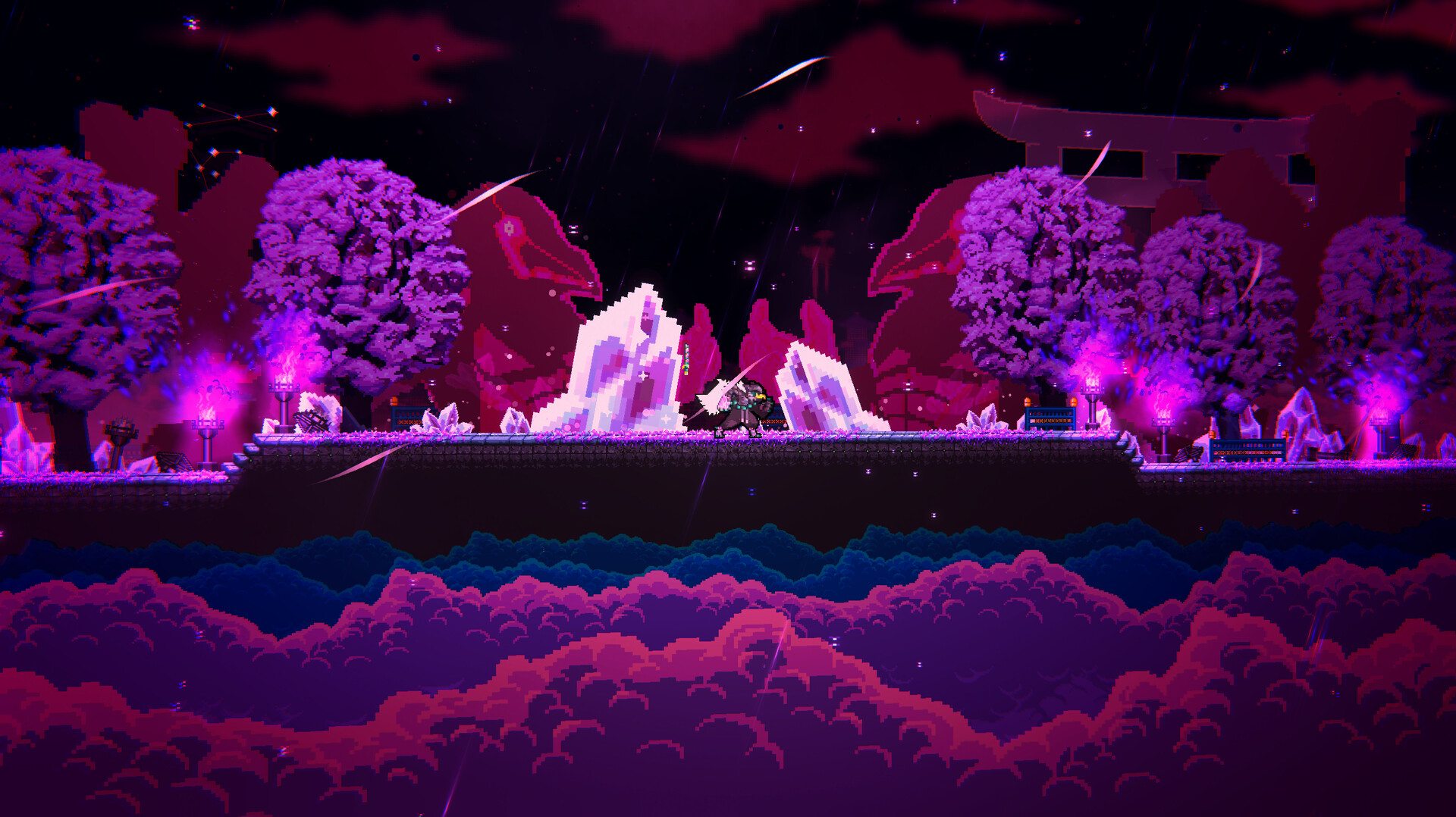
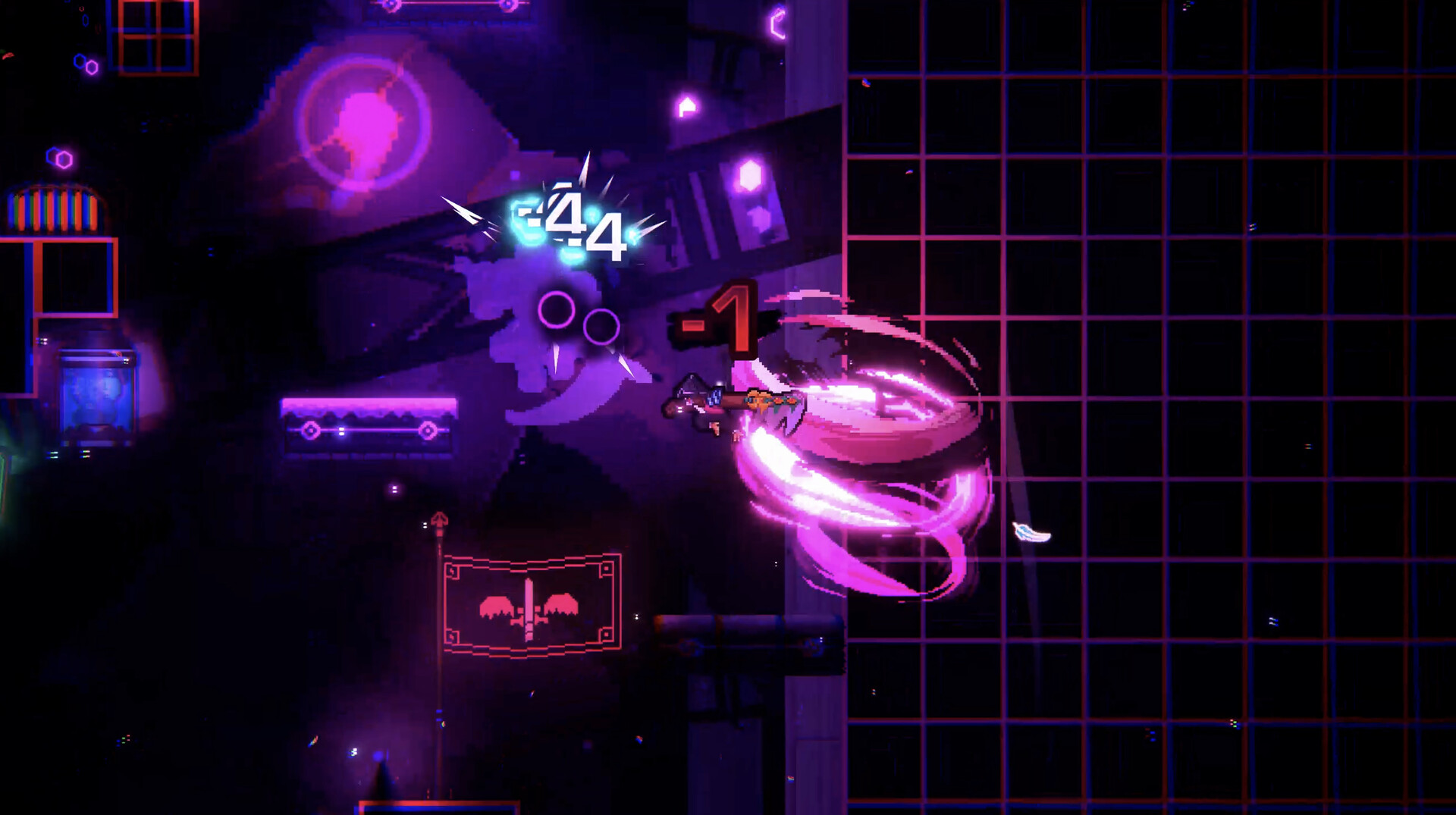
Visually, Atomic Owl is one of those games that seduces you even before you move the stick. The pixel art is dense, saturated with colors, with neo-Japanese environments that mix temples, alleys, signs and surreal landscapes. The Tengu and other enemies have legible silhouettes, the animations give weight to the blows, and some scenes would make excellent wallpapers.
The synthwave soundtrack does the rest: pads, bass, 90s rhythms that fit well with this sugary neon Shinobi atmosphere. When you cross an area by chaining platforms, attacks and weapon transformations on a well-laid track, Atomic Owl looks exactly like the game it claims to be: a small, aggressive and stylish retro action game.
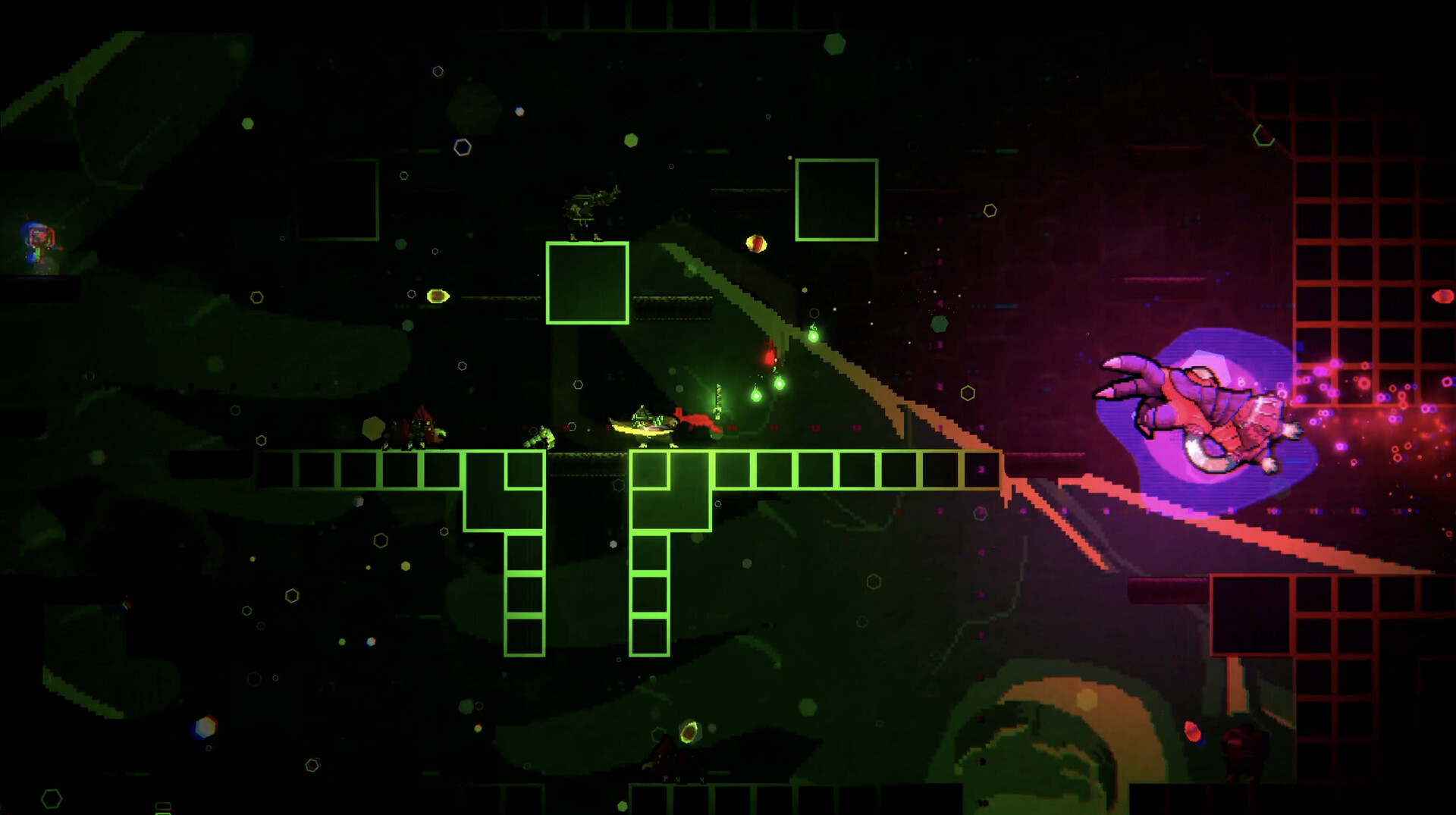
This is also what makes its flaws more visible. The camera remains pulled back, the characters quickly become tiny in the middle of the composition, and as soon as the graphic effects multiply, readability takes a hit. The game knows how to be beautiful; it sometimes forgets to be clear.
A more polished Xbox version, not reinvented
On Xbox Series X|S, Atomic Owl arrives in 4K Ultra HD, targets 60 fps and benefits from the entire in-house package: Series optimization, Smart Delivery, cloud saves, Xbox Play Anywhere with the Microsoft Store. It’s fluid, correctly integrated into the system and ready to run both on a Series X connected to a big TV and on a PC connected to the same account.
This console release also includes adjustments: rebalanced weapons, reworked sound, improved UX, and this famous NO ROGUELITE mode which allows you to cross the eight zones like a simple action-platformer. This is the version we needed, especially after a PC version which caused some serious problems.
The fact remains that all these adjustments do not change the nature of the game, nor its main faults. Atomic Owl remains what it is: a compact, demanding, often spectacular action-platformer, but built on fixed levels which age faster than their aesthetic.
Verdict
An endearing owl in a cage that is too narrow
6.5/10
Atomic Owl has something to fall in love with at first sight: a universe of warrior birds, rich pixel art, music that fits the mood perfectly and a platform/action mix which, at times, creates a series of good sensations. But behind this beautiful showcase, the game struggles to renew its playing field and persists in making the owl go through the same corridors until exhaustion.
For a few evenings, with the desire to tame its tight jumps, enjoy its visuals and discover its NO ROGUELITE mode, Atomic Owl may be worth the detour. For those looking for a truly surprising, generous and impeccably readable roguelite, it will above all remain a great idea that is a little too cramped in its own plumage.
Pros
- A universe of samurai birds carried by dense and immediately recognizable pixel art.
- A lively platforming/combat mix, with transformable weapons and wing powers to collect.
- A synthwave soundtrack that supports the rhythm and atmosphere very well.
- A complete Xbox version: 4K, 60 fps+, Series X|S optimization, Smart Delivery, Play Anywhere and NO ROGUELITE mode.
Cons
- Eight fixed zones from one run to the next: repetition comes quickly.
- Camera too far away which hinders readability in the busiest passages.
- Demanding platforming, spaced checkpoints, fatigue more than tension over time.
More in Video games
Full library 6.5/10
Smash It Wild
XBOX 9/10
Dragon’s Dogma 2: Dark Arisen
XBOX 7/10
Brigandine Abyss
XBOX 6/10
The Walking Dead: Streets of Survival
XBOX 8/10
Onimusha: Way of the Sword
XBOX 7/10
HOT WHEELS Infinite Rush
XBOX 8.5/10
S.T.A.L.K.E.R. 2: Cost of Hope
XBOX 7.5/10
The Lord of the Rings: War in the North – Legacy Edition
XBOX 8/10
Verho – Curse of Faces
XBOX 8/10