
Reus 2
The giants of creation
Score: 7/10
Images and videos

At a glance
We liked
- The organic richness of the gameplay and its interactions
- The captivating soundtrack, of absolute coherence
- General fluidity on Switch
- The unique feeling of witnessing a breathing world
We liked less
- Sometimes dissuasive complexity
- A smoother, less striking artistic direction
- Slightly stiff controls in handheld mode
- A rhythm that sometimes borders on contemplative exhaustion
 By Farrel Grimwood · published · 5 min read
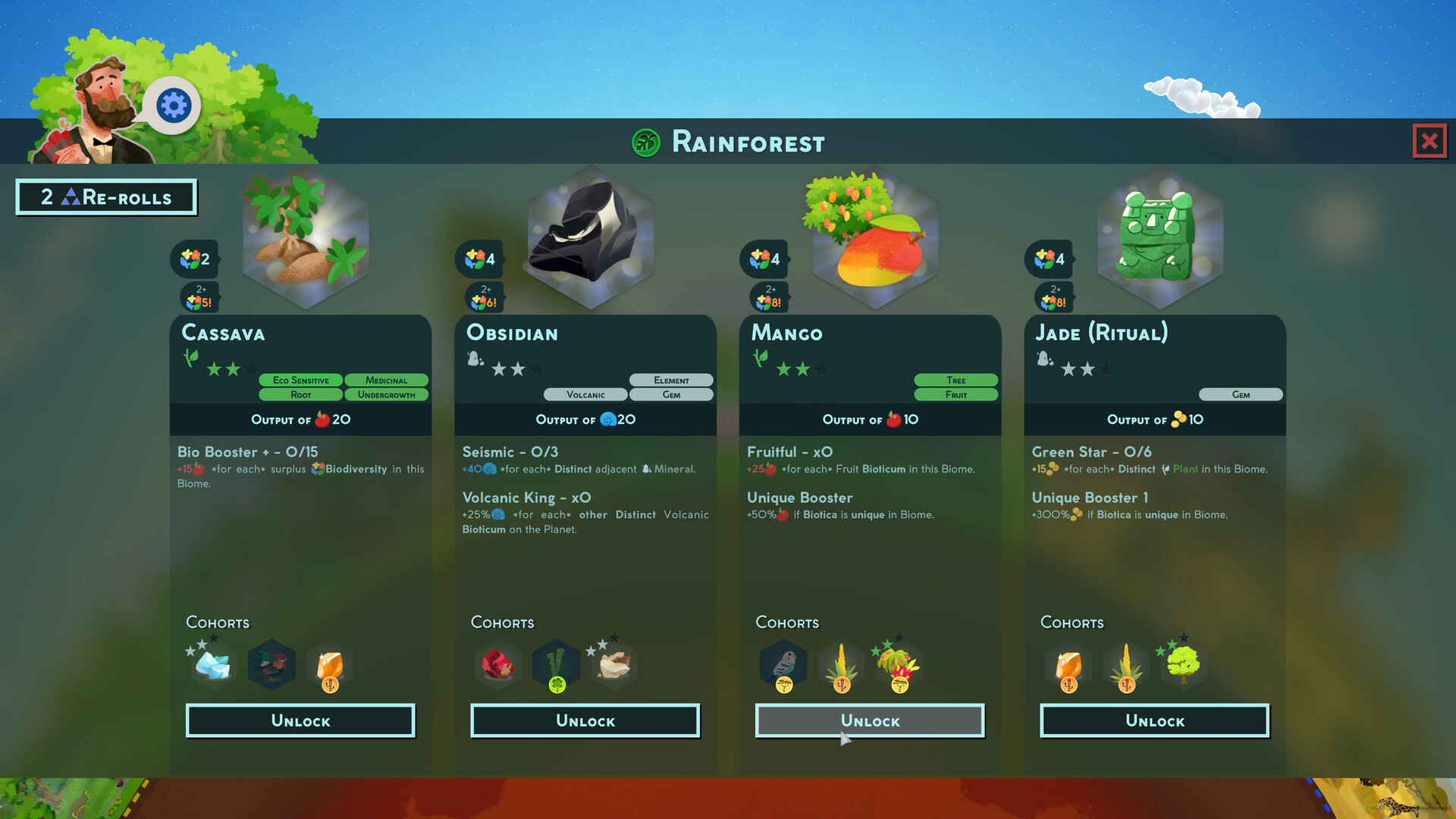
Developed by Abbey Games and published by Firesquid, Reus 2 arrives on Nintendo Switch with the same titanic ambition as its predecessor: putting you in the shoes of cosmic beings capable of shaping life, the earth and civilizations in their image. Direct heir to the first Reus, this second chapter transforms the planet into a field of divine experimentation, where each decision, each breath, each creative impulse shapes a fragile balance between nature and humanity.
In this new iteration, the meditative slowness of the first episode gives way to a more fluid dynamic, where strategic thinking now embraces a sense of rhythm and organic beauty rarely seen in the genre.
But beyond the visual fascination and the promise of a living world, does Reus 2 really succeed in giving meaning to omnipotence? Or is it just a dream of God lost in his own creation?
The memory of the worlds
Reus 2 does not tell a story in the classic sense of the term. Here, no heroes, no quests or dialogues: only the whisper of time and the trace of your choices engraved in the earth. Each run becomes a miniature timeline, a succession of eras where civilizations rise, prosper, decline and disappear before your divine gaze. What the game calls “scenario” is in reality only a pretext for the contemplation of life, an invitation to observe the fragility of the worlds that we claim to control.
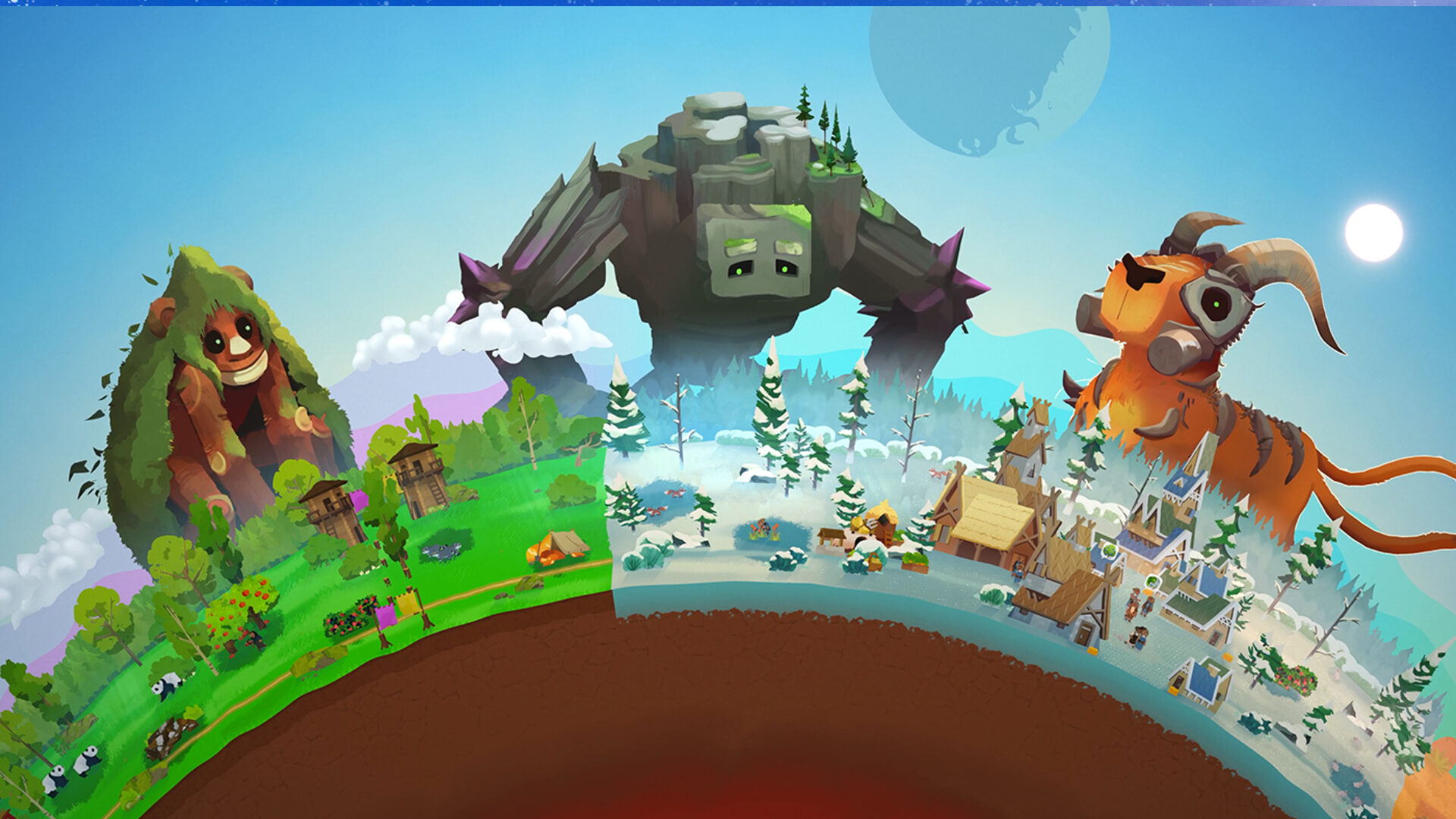
The narrative heart rests on the giants, these elemental colossi who shape the planet according to their nature: the Ocean, the Forest, the Mountain, the Swamp. Each of them embodies a form of primitive will, a creative breath which expresses both the power of life and its limit. Together, they weave a story without words, made of rhythms, cycles and contrasts. Abbey Games thus transforms the myth of creation into a silent ballet where each divine gesture is an act of narration.
Where the first Reus evoked discovery, Reus 2 adds memory. The game keeps track of your previous worlds, their successes and their failures, and gradually builds a personal mythology. Your ancient civilizations become legends, fragments of a cosmic narrative that only you can connect. This approach gives the game a rare depth: you no longer just play to create, but to understand what creation tells you about yourself.
And behind this apparent serenity, a tension remains. Each world reminds you that all divine power carries within it an element of imperfection: to give life is also to condemn one to loss. In Reus 2, the drama is not told; it can be discerned in the silence between two planetary beats.
The ecosystem weaver
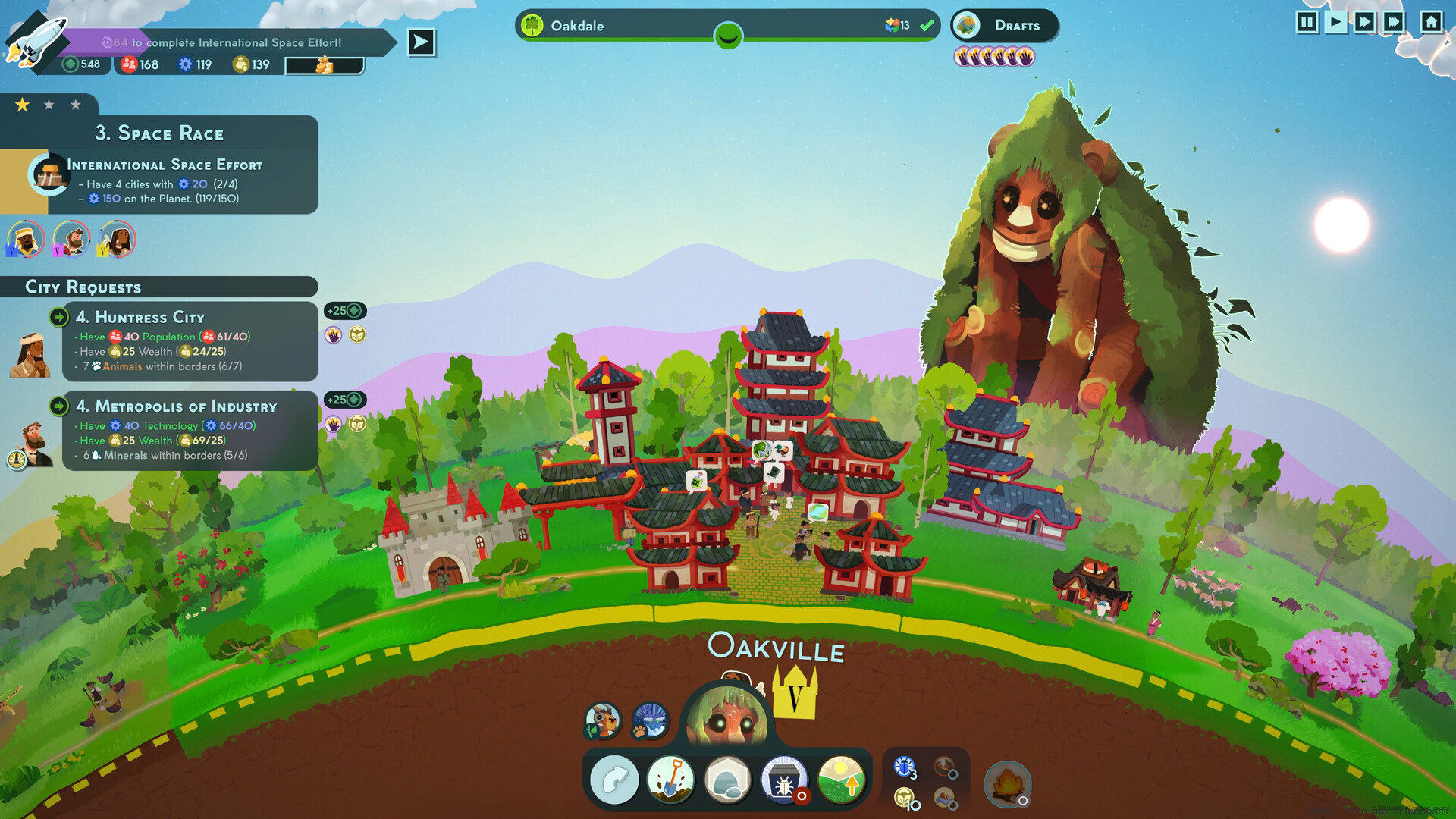
Reus 2 transforms the creation of the world into a ritual as majestic as it is confusing. The principle seems simple: shape a planet, summon giants, and guide life into balance. In practice, every gesture counts, every mistake has a cost. Abbey Games has swapped the dry rigor of the first opus for a more fluid, almost contemplative structure; but this relaxation is accompanied by a complexity that borders on opacity. Where we expected an evolution of the concept, we discover a labyrinth of mechanics which fascinates as much as it exhausts.
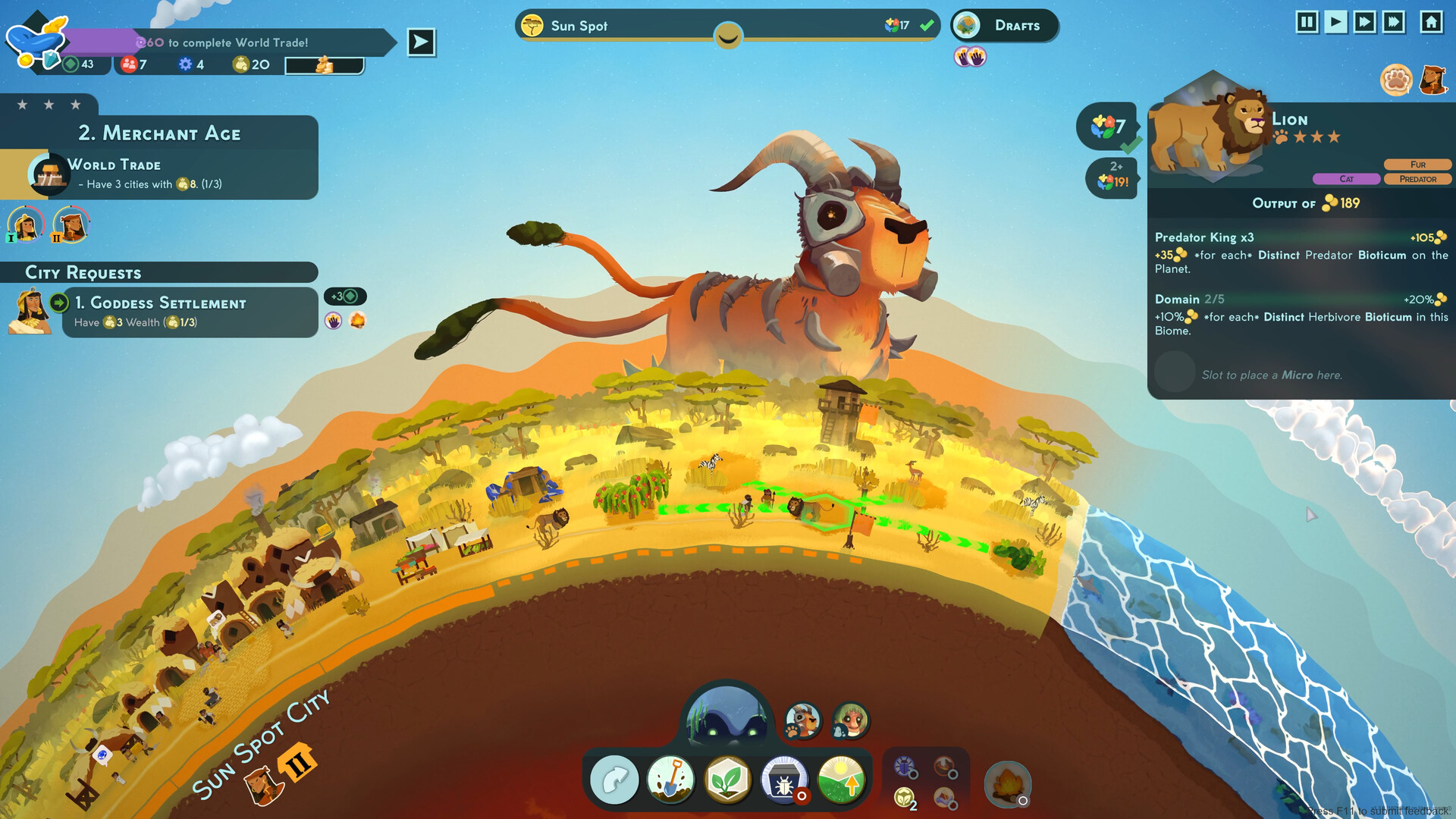
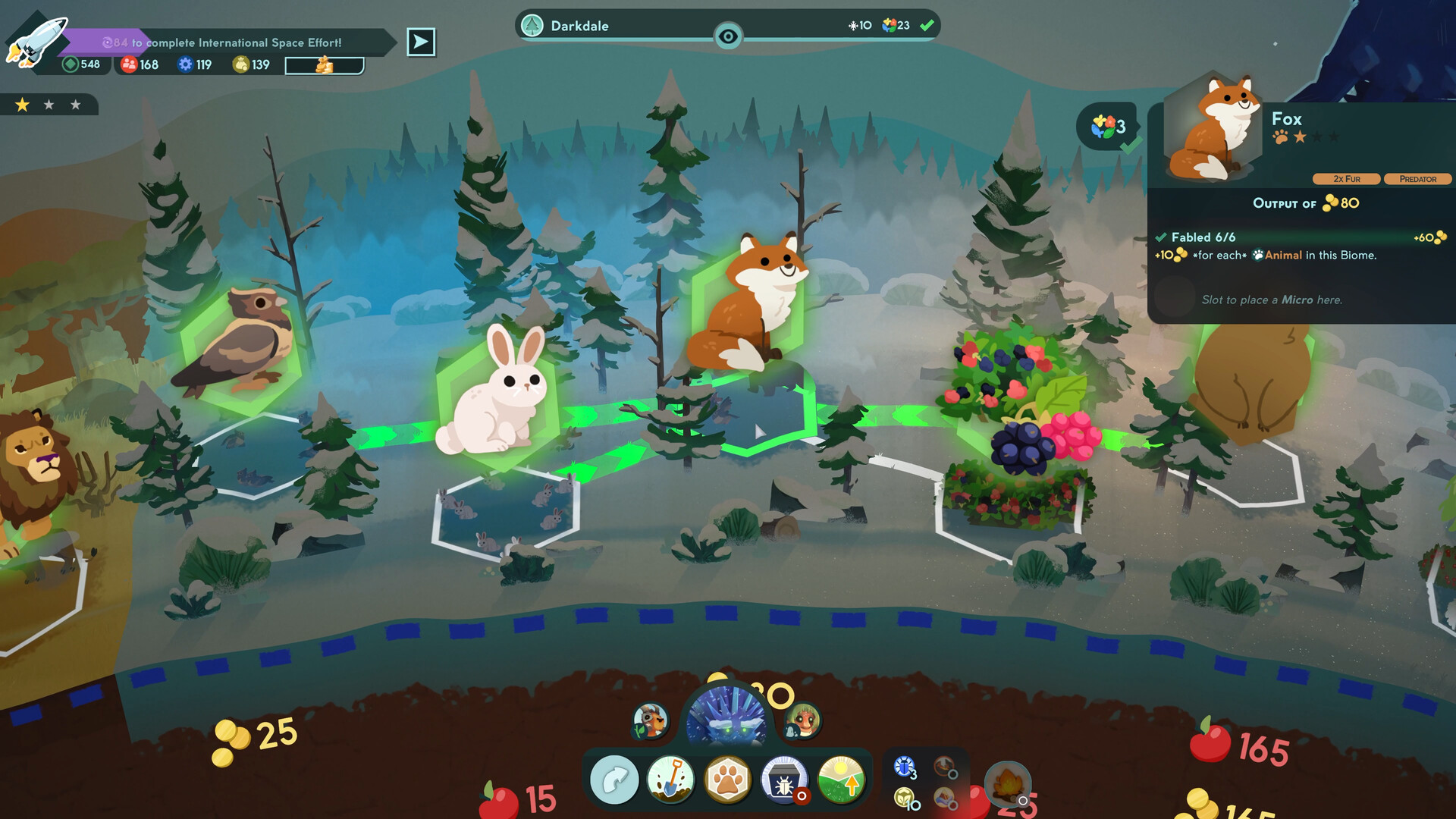
The game loop nevertheless retains a rare beauty. The creation-reaction-consequence sequence maintains this musicality specific to the series: we plant, we observe, we rectify, until we find the ideal breathing of our world. The pleasure comes from this fragile alchemy, from these micro-balances that we wrest from chaos, from these civilizations that we see rise before collapsing through excess greed. But this organic perfection is earned. The menus remain dense, the interactions multiple, and the slightest missed synergy can reduce hours of effort to nothing.
On Switch, the transposition impresses as much as it annoys. The studio has managed to preserve the general readability and fluidity of the planetary cycle, but certain manipulations lose precision: selecting, moving or modulating a biome sometimes requires more attention than is necessary. The analog controls struggle to restore the strategic finesse that the mouse made instinctive. This defect does not break the experience, but it makes it less meditative, more mechanical, especially over long sessions.
Despite this, Reus 2 retains an undeniable force of attraction. It’s a game that teaches you to fail with grace, to start again without bitterness, to see in each collapse a new chance for harmony. But behind this philosophy of starting over, we also sense a certain fatigue: that of a system so rich that it ends up closing in on itself. The genius of Abbey Games is to have been able to build a coherent ecosystem; its weakness is to lose yourself in it to the point of exhaustion.
The beauty of cycles
Visually, Reus 2 surprises with its sobriety. Abbey Games abandons the coarse textures of the first opus for a finer, almost painterly artistic direction. Each biome breathes, each transformation of the ground seems hand-painted, and the light acts as a storytelling instrument. The whole evokes a lively, calm and harmonious cosmic tale. But behind this elegance lies a restraint that divides: readability gains, personality loses.
The smoother, more restrained visual style erases some of the rough charm of the original game. The world sometimes seems too perfect, too controlled, as if beauty had taken precedence over vitality. We admire the colors, we appreciate the clarity, but we no longer feel quite the same impression of telluric force. This is the duality of Reus 2: a sublime game to contemplate, but which struggles to impose a visual identity as striking as before.
The soundtrack, on the other hand, transcends the experience. The orchestral compositions accompany each phase of creation with hypnotic sweetness. Ambient layers mingle with discreet percussion, giving the world a constant breath. We find this gradual rise typical of Abbey Games: a theme that flourishes as life expands, then slowly fades away when everything collapses. It is music that breathes with your planet, which embraces its pulsations and melancholy.
The sound design, more subtle than it seems, anchors each action in the material: a quivering of water, a cracking of rock, a distant chorus of vanished souls. Nothing is left to chance, and it is often through sound that we understand what escapes the eye. The only downside: the mixing, sometimes uneven on Switch, causes certain nuances to lose intensity, especially in handheld mode. It’s not prohibitive, but the experience is slightly dulled.
Reus 2 thus succeeds where many fail: making contemplation an emotion. But this beauty, too controlled, ends up establishing a distance. We admire more than we feel.
Verdict
Creation and its limits
7/10
Reus 2 is a rare work: a game which does not seek to dominate the player, but to educate them in nuance. Abbey Games refines everything that made the first episode unique, at the cost of sometimes compromised accessibility. Behind the assumed slowness and the dizzyingly dense systems, we find an experience of total coherence, almost meditative. However, this rigor sometimes turns into austerity: the pleasure of creating is transformed into scrupulous management, and fascination into distance.
On Nintendo Switch, the title retains its evocative power despite some ergonomic inaccuracies. It’s a demanding, slow, obsessive game; a call for patience in a time of constant flux. Reus 2 doesn't flatter, it demands. And that is precisely what makes it valuable: a lesson in the balance between creation and destruction, beauty and weariness, control and abandonment.
Pros
- The organic richness of the gameplay and its interactions
- The captivating soundtrack, of absolute coherence
- General fluidity on Switch
- The unique feeling of witnessing a breathing world
Cons
- Sometimes dissuasive complexity
- A smoother, less striking artistic direction
- Slightly stiff controls in handheld mode
- A rhythm that sometimes borders on contemplative exhaustion
More in Video games
Full library 8.5/10
Village in the Shade
SWITCH 8.5/10
Demeo x Dungeons & Dragons: Battlemarked
QUEST 3.5/10
Ultra Bonk Survivors
SWITCH 6.5/10
Buildest
SERIES 7/10
Ariana and the Elder Codex
SWITCH 6.5/10
Kingdom’s Return: Time-Eating Fruit and the Ancient Monster
SWITCH 9/10
Inazuma Eleven: Victory Road
SWITCH 8/10
Romancing SaGa -Minstrel Song- Remastered International
SWITCH 6.5/10
Winter Burrow
SWITCH 6/10