

Buildest
Architectures in movement
Score: 6.5/10
Images and videos


At a glance
We liked
- The serenity of the gameplay and its meditative rhythm
- The soft and refined artistic direction
- The consistent and satisfying physics engine
- Smooth and stable Xbox Series port
We liked less
- Some inaccuracies in physics
- A certain repetitiveness over time
- The absence of online multiplayer
- No French translation
 By Farrel Grimwood · published · 5 min read
Contents
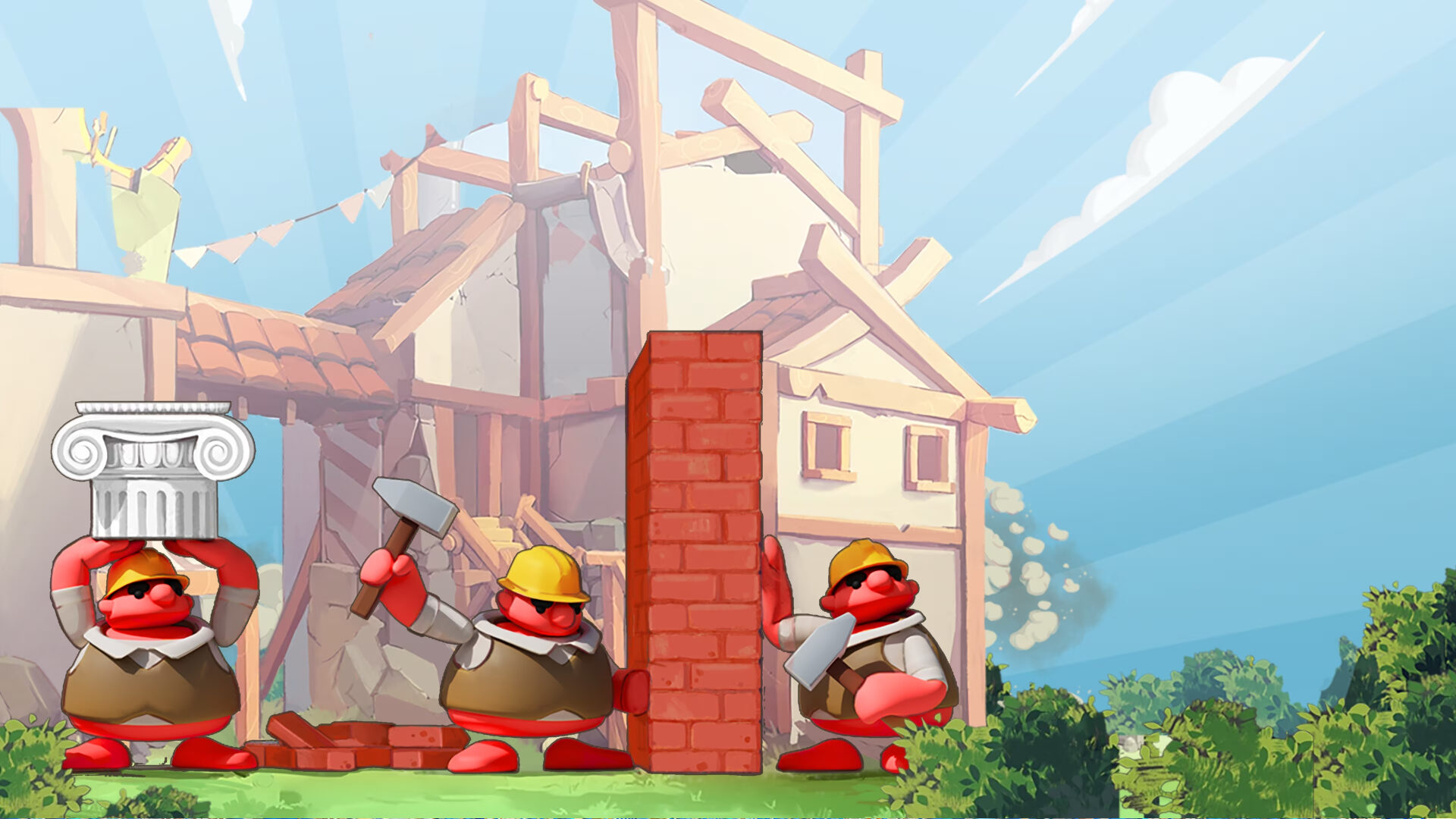
In Buildest, you become an architect of History: your mission is to shape buildings over the centuries, respecting shapes, techniques and eras. The game offers a cooperative experience where you direct workers, collect materials and follow plans. A blend of organization, rhythm and strategy in a stylized visual framework.
On Xbox Series, Buildest aims to offer this journey through time in a fluid console version, with the comfort of the pad and a suitable interface. The console edition is added to the PC versions, aiming for maximum accessibility for living room gamers. But the challenge is significant: succeed in making gameplay focused on order and organization captivating, without falling into the strict monotony of following a plan.
The builders and their constraints
Buildest doesn’t tell you a story, it makes you build one. You play as an invisible master builder, responsible for leading a small team of workers through different eras. Each site represents a fragment of history to be rebuilt, from ancient ruins to modern structures. Far from chatty scenarios or lengthy quests, the game prefers to let stone and wood speak. It is the materials, the tools and the pace of work that become the real narrators.
The characters you direct do not speak, but their gestures, their attitudes, their awkwardness are enough to create a form of attachment. You watch them run, carry, erect, and sometimes fail, in a mechanism that combines observation and planning. The general tone remains light, almost contemplative: Buildest does not impose drama or competition, it invites you to be patient and precise.
Each era has its own visual identity, its sound ambiance and its construction constraints. Medieval architecture requires attention to detail, Renaissance construction sites introduce more fragile materials, while modern structures test your reflexes and your sense of rhythm. This historical division creates a form of silent narration, a journey through time which is expressed through matter rather than words.
Implicitly, the game outlines a simple message: to build is to understand. You don’t follow a linear story, you assemble the pieces, stone by stone, like an archaeologist from the future.
The art of building without speaking
The heart of Buildest is based on a deceptively simple idea. You observe, you assemble, you learn. Each level places you face to face with an unfinished structure that you must rebuild stone by stone, respecting the plans and the allotted time. The gesture takes precedence over speed, the method over haste. Each block, each beam, each element placed influences the stability of the whole. Nothing is left to chance, and each placement error becomes a silent lesson.
On Xbox Series, the experience stands out with its precision and fluidity. The controls respond naturally, physics restores the weight and resistance of materials, and the controller transforms into a craftsman’s tool. The slightest collapse takes on the appearance of a miniature spectacle, the pieces of wood collide in a construction site noise, and you immediately resume your work with the patience of a builder.
Pleasure arises from this subtle loop between observation and mastery. You experiment, you adjust, you start again. There’s no rush. The game never imposes immediate success, it invites you to understand before acting. This almost meditative approach gives Buildest a unique personality, halfway between a physical puzzle and an interactive model.
The level structure progresses coherently. The first projects introduce the basics of handling, while the following ones make the shapes more complex, multiply the constraints and require an overall look. Each architecture tells its era, each plan imposes its rhythm. You learn to read stone like an ancient text, to anticipate faults before they form.
As a duo, the experience becomes even more lively. The coordination between two builders transforms each construction into a silent dialogue. One carries, the other adjusts, and sometimes everything collapses in a burst of laughter. Buildest finds its true human dimension there, that of a game of calm and sincere cooperation, where the pleasure comes from the gesture as much as the result.
The beauty of silence
Buildest imposes a unique atmosphere. The minimalist decors, pastel shades and refined textures reflect a clear desire: to focus your gaze on the essentials. The world is not here to shine but to breathe. The buildings rise in the middle of silent plains, diffused skies and suspended lights, as if each construction site was floating outside of time. The absence of visual flourishes reinforces the serenity of the game and underlines the beauty of the gesture, that of an architecture which is born from simplicity.
The materials retain a tangible presence. The blocks fit together precisely, the shadows slide slowly across the surfaces, and each completed building exudes a form of almost physical satisfaction. The graphics engine, without ever seeking demonstration, favors readability and coherence. Lighting variations accompany the progression, from daybreak to nightfall, giving each construction a different tone.
The soundtrack is part of this same philosophy. A few piano layers, electronic breathing, sounds of tools and wind are enough to create a contemplative climate. Nothing distracts, everything soothes. Each hammer blow, each stone slide finds its place in a discreet but measured score. You move to the rhythm of this inner music, as if the game is whispering to you to take your time.
The absence of dialogues further reinforces this immersion. You hear no voices or stories, only the sound of work and nature. This worked silence becomes a language in its own right, a space of concentration where we forget the passing of time. Buildest thus transforms the act of building into a sensory experience, on the border of meditation and creation.
The invisible foundations of the port
On Xbox Series, Buildest retains all the finesse and stability of its PC edition. The port is based on careful technical optimization which guarantees constant fluidity, even when the projects become more complex and dozens of elements are superimposed on the screen. The interface has been redesigned for the controller with rare elegance: simplified menus, clear contextual commands, intuitive navigation. Nothing disrupts the movement, everything seems designed to let you build without interruption.
The physics engine remains the heart of the game. Each object has its own inertia, each collapse obeys a credible logic. This realism, associated with the lightness of the graphic style, creates an astonishing harmony between precision and poetry. No slowdown disturbs the pace, even during the most spectacular collapses. The game runs smoothly, proof of discreet but solid technical work.
Loading times are almost non-existent, allowing you to move through levels fluidly. The autosave system, also well calibrated, avoids any frustration in the event of an error or interruption. The studio also took care to maintain optimal visual comfort: HDR, sober but effective, accentuates the softness of the colors and the depth of the materials without ever forcing the eye.
The local cooperative mode benefits from exemplary stability. No latency, no desynchronization breaks the group dynamic. Playing as a pair becomes a natural experience, where technique disappears behind the sensation of the shared gesture. We feel that Buildest has been designed to last, ready to adapt without compromise to its platform.
Verdict
The architecture of serenity
6.5/10
Buildest stands out as a rare, calm and mastered work. Behind its apparent simplicity lies a deep reflection on the gesture of building, on patience, on the balance between control and chance. The MAYO Games title proves that it is possible to move without words, to captivate without artifice, simply by leaving the player with the pleasure of a job well done.
On Xbox Series, this philosophy comes into its own. The fluidity, clarity and precision of the porting reinforce the feeling of harmony that emanates from each session. You don't play to win, but to understand. You build, you fail, you start again, until you reach that moment where everything fits together perfectly, where the structure becomes stable and beautiful at the same time.
Everything is not perfect: certain physics remain unpredictable, repetition can set in over long sessions and the absence of an online mode limits long-term prospects. But these slight imperfections never alter the beauty of the result. Buildest exudes the sincerity and elegance of a game that does not seek to shine, but to last.
Pros
- The serenity of the gameplay and its meditative rhythm
- The soft and refined artistic direction
- The consistent and satisfying physics engine
- Smooth and stable Xbox Series port
- Perfectly integrated local cooperative mode
Cons
- Some inaccuracies in physics
- A certain repetitiveness over time
- The absence of online multiplayer
- No French translation
More in Video games
Full library 8.5/10
Village in the Shade
SWITCH 8.5/10
Demeo x Dungeons & Dragons: Battlemarked
QUEST 3.5/10
Ultra Bonk Survivors
SWITCH 7/10
Reus 2
SWITCH 9/10
Bravely Default : Flying Fairy HD Remaster
SERIES 9/10
PRAGMATA
SERIES 8.5/10
FATAL FRAME II: Crimson Butterfly REMAKE
SERIES 7/10
Dragonkin: The Banished
SERIES 9.5/10
Monster Hunter Stories 3: Twisted Reflection
SERIES 9.5/10