
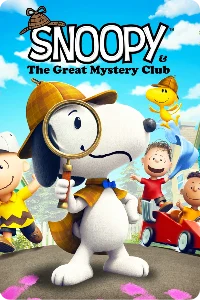
Snoopy & The Great Mystery Club
Snoopy conducts an investigation in slippers
Score: 6/10
Images and videos


At a glance
We liked
- A gentle and perfectly accessible adventure
- Snoopy costumes, good idea for progression
- The well-respected Peanuts universe
- A calm and family atmosphere
We liked less
- Overly guided investigations
- Sometimes heavy back and forth
- A city that lacks surprises
- Little real deduction
 By Farrel Grimwood · published · 9 min read
Snoopy & The Great Mystery Club takes the characters of the comic strip and installs them in a small quiet town, then entrusts them with a few mysteries to solve without ever really leaving the gentleness of the universe of Charles M. Schulz.
The game is not aimed at complex investigation, nor brain-twisting deduction. It prefers a very accessible adventure, designed for children, families, and those who want to find Snoopy in a peaceful setting rather than in a real puzzle.
This is both what gives it its charm and its limit. Snoopy & The Great Mystery Club has real tenderness. It understands quite well that the Peanuts do not work by permanent agitation, but by small situations, by light melancholy, by discreet humor and by this strange feeling that the great dramas of childhood sometimes hold in a stray ball, a blanket, a piano or a question asked too seriously. When the game takes the time to let that atmosphere exist, it hits something right.
But it also remains very cautious. The investigations often resemble a series of simple objectives, the back and forth increases the duration more than they really feed the mystery, and the mini games provide variety without giving much depth. Snoopy changes costume, the gang lends a hand, the city retains its charm, but the adventure seems afraid of asking too much of the player. It is consistent with its audience, less with its price and its promise of investigation…
A child-friendly investigation
Snoopy & The Great Mystery Club tells a very simple story, almost deliberately tiny. Snoopy starts a detective club, the neighborhood children need help, and each mystery becomes an opportunity to travel the city, talk to the Peanuts and restore some order to everyday life. The game never looks for the big case, the impossible culprit, or the spectacular reveal. It remains in the logic of a gentle investigation, where the important thing is not so much to surprise as to move the characters forward in a familiar setting.
This choice fits the universe quite well. The Peanuts never needed a huge story to exist. A baseball field, a cabin, a piano, a blanket, an argument or a bad day are often enough to say it all. The game keeps this scale. The problems remain small, the issues are clear, the dialogues do not seek to imitate a thriller. We are in a children’s adventure, with what that implies of naivety, disproportionate seriousness and small obsessions.
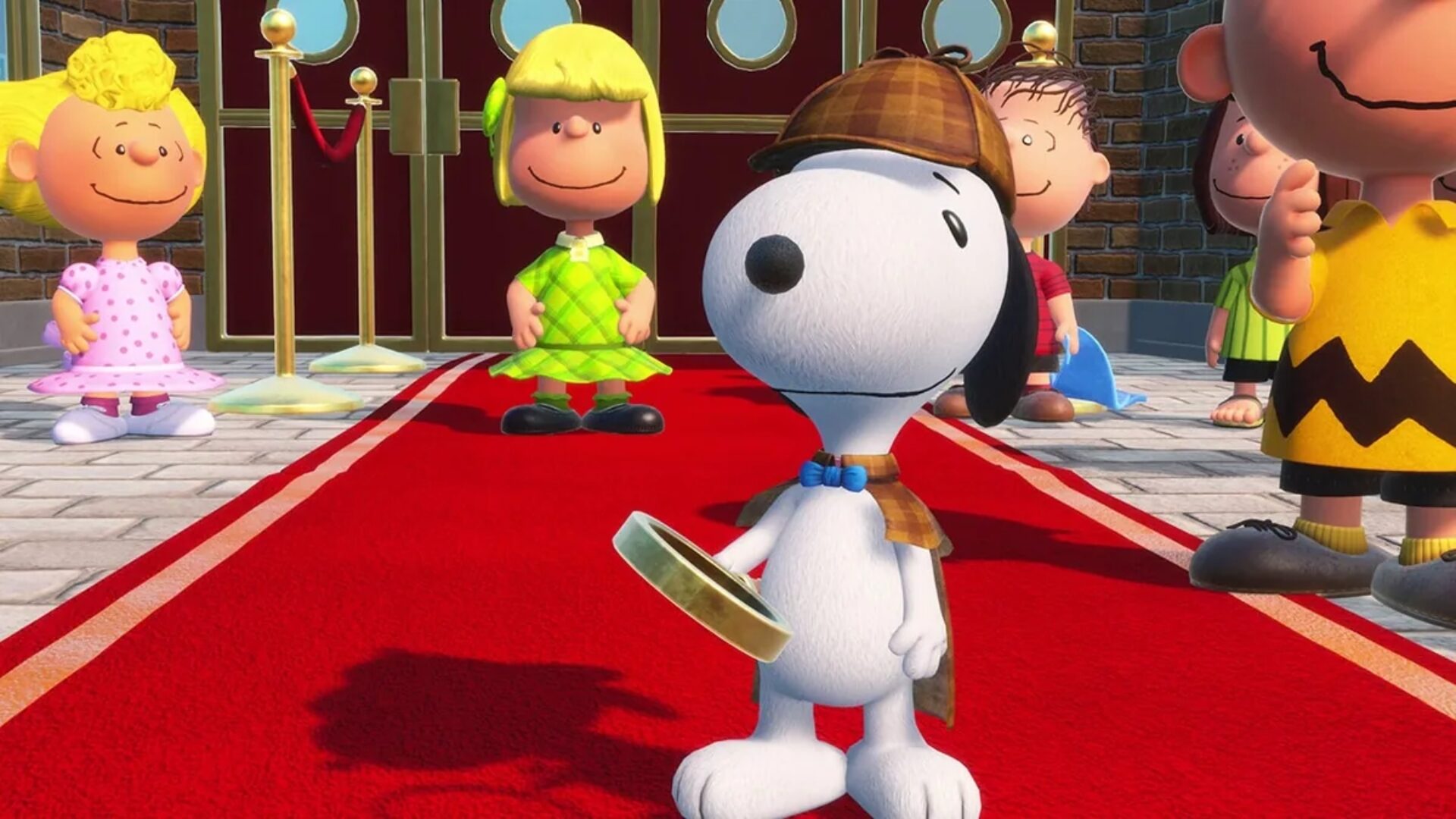
Snoopy naturally functions as an anchor. He doesn’t speak, but he acts, observes, searches, disguises himself and connects all these little people. The game uses his costumes as an extension of his personality: Snoopy is never just a dog, he is always a bit of a pilot, detective, adventurer, dreamer or improvised hero. This idea is not new for the character, but it works well in an adventure made up of mini investigations and small roles to take on.
The gang around him gives the game its main charm. Charlie Brown, Lucy, Sally, Marcie, Peppermint Patty, Schroeder and the others appear as reference points more than as real developed characters. Everyone keeps their mood, their tone, their little place in the neighborhood. The game doesn’t really go into depth about them, but it uses them with enough simplicity to create the impression of finding a familiar band. For a young audience, it’s enough. For a reader attached to Peanuts, it’s pleasant, even if it remains very safe.
French helps a lot with this part. The texts are simple, clear, accessible, and allow children to follow the objectives without depending on an adult for each dialogue. For a game built on exploration, clues, and discussion, this is essential. Snoopy & The Great Mystery Club does not require complex reading, but still requires understanding what the characters expect.
The limit comes from the lack of narrative relief. The mysteries follow one another without any real rise, the characters remain in their functions, and the game does not find the melancholic finesse of Schulz. There is sweetness, yes, but not that little hint that makes Peanuts so special. The game takes up the setting, the faces, the childhood situations, but it often remains more comfortable than really touching.
That doesn’t make it unpleasant. Snoopy & The Great Mystery Club has a pretty clear honesty to it. It wants to tell small investigations for children in a reassuring universe, with Snoopy at the center and the gang in support. It does so cleanly, without cynicism, without unnecessary noise. But it sometimes lacks finer writing, a funnier punchline, a light sadness, something that would take the adventure from a simple family product to a real little Peanuts story.
The game succeeds in its setting more than it succeeds in its mysteries. We like finding Snoopy, meeting Charlie Brown, talking to Lucy or seeing Schroeder behind his piano. We follow the investigations because they give a reason to cross this neighborhood but not really for their suspense. Snoopy & The Great Mystery Club tells little, gently, correctly. It stays at a child’s level, sometimes with charm, sometimes with a little too much caution.
Tidy clues
Snoopy & The Great Mystery Club plays like a little exploration adventure. We control Snoopy, we travel around the city, we talk to the characters, we look for clues, we complete simple objectives, then we return to the club to advance the investigation. The game does not seek to lose the player, nor to push him into a real logic of deduction. It prefers a very clear, almost guided progression, where each mystery is solved above all by going to the right place with the right tool.
This simplicity suits the target audience. Children can quickly understand what to do, where to go, who to question and what costume to use. The objectives are readable, movement remains easy, and the game avoids excessively severe blockages. We are not in an adventure where we spend twenty minutes understanding a riddle. We are in a series of small tasks which give the impression of carrying out the investigation without ever making the experience intimidating.
Snoopy’s costumes are the best idea of the game. They allow you to vary the actions a little, to access certain passages, to resolve specific situations and to recall all the fantasy of the character. Snoopy is never more fun than when he changes roles. Here, this idea becomes a simple, but effective mechanic. We are not talking about a very deep system, but it gives a little rhythm to the exploration.
Mini games fulfill the same role. They break things up, add a little one-off action, give the player something other than talking and picking up. Some are more fun than others, but they are all designed to be understood quickly. The game does not seek difficulty, only variety. It’s coherent, even if it sometimes gives the impression of a little too careful overall.
The problem mainly comes from the back and forth. Snoopy & The Great Mystery Club often requires you to move from one character to another, to return to find information, to return to validate a step, then to start again elsewhere. In a denser or more surprising city, this structure could have fueled the investigation. Here, it mainly serves to artificially lengthen the journey. We move forward, but not always with the impression of discovering something.
The level design remains very gentle, almost too much so. The areas are readable, pleasant to explore, but they lack secrets, really clever little detours, surprises capable of rewarding curiosity. The game gives a neighborhood to explore, but it keeps it in a very restrained setting. We understand why: the youngest must not get lost. But this caution also reduces the pleasure of exploration.
The investigation remains closer to a hunt for objects than to a real mechanism of reflection. We find a clue, we report it, we trigger the next step. The player does not often have to piece together the information or draw a conclusion. The detective club exists in the story, but the game doesn’t always give the feeling of exercising your brain.
That doesn’t make the experience bad. On the contrary, there is something comfortable about Snoopy & The Great Mystery Club. It can be played without stress, without violence, without particular frustration. For a child, this is a real quality. For an adult, or even for a player somewhat accustomed to adventure games, it is much more limited. The game quickly becomes too easy, too linear, too structured.
Snoopy & The Great Mystery Club therefore succeeds in its accessibility, but not in its adventure. The costumes work, the mini games bring a little fresh air, and the rhythm remains pleasant in small sessions. But the investigations lack real deduction, the back and forth is heavy, and the city doesn’t make you want to search for its own sake. The game is held together by its softness and by Snoopy. Less by the force of its mysteries.
A playground that is too clean
Visually, Snoopy & The Great Mystery Club knows very well what it has to do. It does not seek to transform the Peanuts into a modern cartoon that is too bright, nor to push the universe towards too busy 3D. The game keeps simple shapes, soft colors, immediately recognizable characters and this feeling of a quiet little playground where each element must remain readable for a young player.
Snoopy works particularly well on screen. His costumes give a little variety, his animations remain clear, and the game understands that the character doesn’t need to do much to exist. A posture, a gait, a look, a small transformation are enough to remind us of what he is: a dog who can become a detective, a pilot or an adventurer without ever really ceasing to be Snoopy.
The other Peanuts also keep their identities. Charlie Brown still has this slightly awkward sweetness, Lucy this drier presence, Schroeder his piano, Sally her energy, Marcie and Peppermint Patty their usual dynamic. The game doesn’t make them incredibly expressive, but it renders them with enough fidelity that we have the impression of finding the gang rather than simple models posed in a setting.
The city is pleasant without being very striking. The places are clean, easy to navigate, colorful enough to make children want to move forward, but rarely surprising. We clearly find this atmosphere of a peaceful neighborhood, with its houses, its open spaces, its little landmarks, but the whole remains very calm. The game provides a comfortable setting, not a land of exploration that one would want to explore for its beauty alone.
This restraint fits the tone, but it also limits the visual impact. Snoopy & The Great Mystery Club does not lack charm, rather it lacks small, stronger ideas. Funnier animation, a more lively setting, a more marked reaction, something which would have allowed the image to recapture more of the spirit of the strips. The game is faithful, clean, smooth. It’s also sometimes a little too smooth.
The technique remains correct on Switch. The game doesn’t need much power to run, and its simple style avoids major readability issues. The movements remain clear, the characters are easy to find, the interactions stand out sufficiently. It’s not a production that impresses, but it doesn’t feel like it’s fighting against the console either.
The sound part follows the same path. The music gently accompanies the exploration, without trying to take up too much space. They create a calm, almost cozy atmosphere, which suits the universe well. We are not faced with a memorable soundtrack, but it correctly supports this little children’s investigation, without ever breaking its peaceful rhythm.
The sound effects do the job with the same discretion. The interactions, mini games, movements and actions linked to the costumes are readable, but rarely striking. The game does not seek great comic sound effect. It prefers a soft, coherent, easy-to-follow atmosphere. Here again, it is adapted to the target audience, but a little too careful to leave a real mark.
Snoopy & The Great Mystery Club has an honest, tender design, respectful of its world. It looks like it should, plays without confusion and retains enough charm to accompany the adventure. But it lacks this little visual melancholy, this economy of line, this graphic mischief which really makes the strength of the Peanuts. The game is pretty, yes, but above all it is too safe.
Verdict
A very gentle investigation
6/10
Snoopy & The Great Mystery Club succeeds above all with its softness. The game understands its audience quite well: children, families, players who want to find Snoopy and the Peanuts in a simple, readable and non-aggressive adventure. Snoopy's costumes bring a good idea, the mini games break the rhythm a little and the universe maintains this quiet charm which makes you want to stay a few hours in the neighborhood.
But the investigation lacks teeth. The mysteries are very guided, the back and forth ends up weighing down, the city remains too safe and the writing rarely finds the finesse of the Peanuts. The game is clean, faithful, pleasant, but it always moves forward in slippers. Cradle Games offers an honest family adventure, perfect for the youngest, much more limited for those looking for a real investigation game. A good moment with Snoopy, but not a great mystery.
Pros
- A gentle and perfectly accessible adventure
- Snoopy costumes, good idea for progression
- The well-respected Peanuts universe
- A calm and family atmosphere
Cons
- Overly guided investigations
- Sometimes heavy back and forth
- A city that lacks surprises
- Little real deduction
- Writing too safe to rediscover all the finesse of Peanuts
More in Video games
Full library 6.5/10
Bluey’s Quest for the Gold Pen
SWITCH 6.5/10
Adorable Adventures
XBOX 5/10
Magin: The Rat Project Stories
SWITCH 9/10
Hello Kitty Island Adventure
SWITCH 6.5/10
Winter Burrow
SWITCH 7.5/10
Simon the Sorcerer Origins
SERIES 4/10
Fast & Furious: Arcade Edition
SERIES 7/10
Ariana and the Elder Codex
SWITCH 6.5/10
Kingdom’s Return: Time-Eating Fruit and the Ancient Monster
SWITCH 3.5/10