
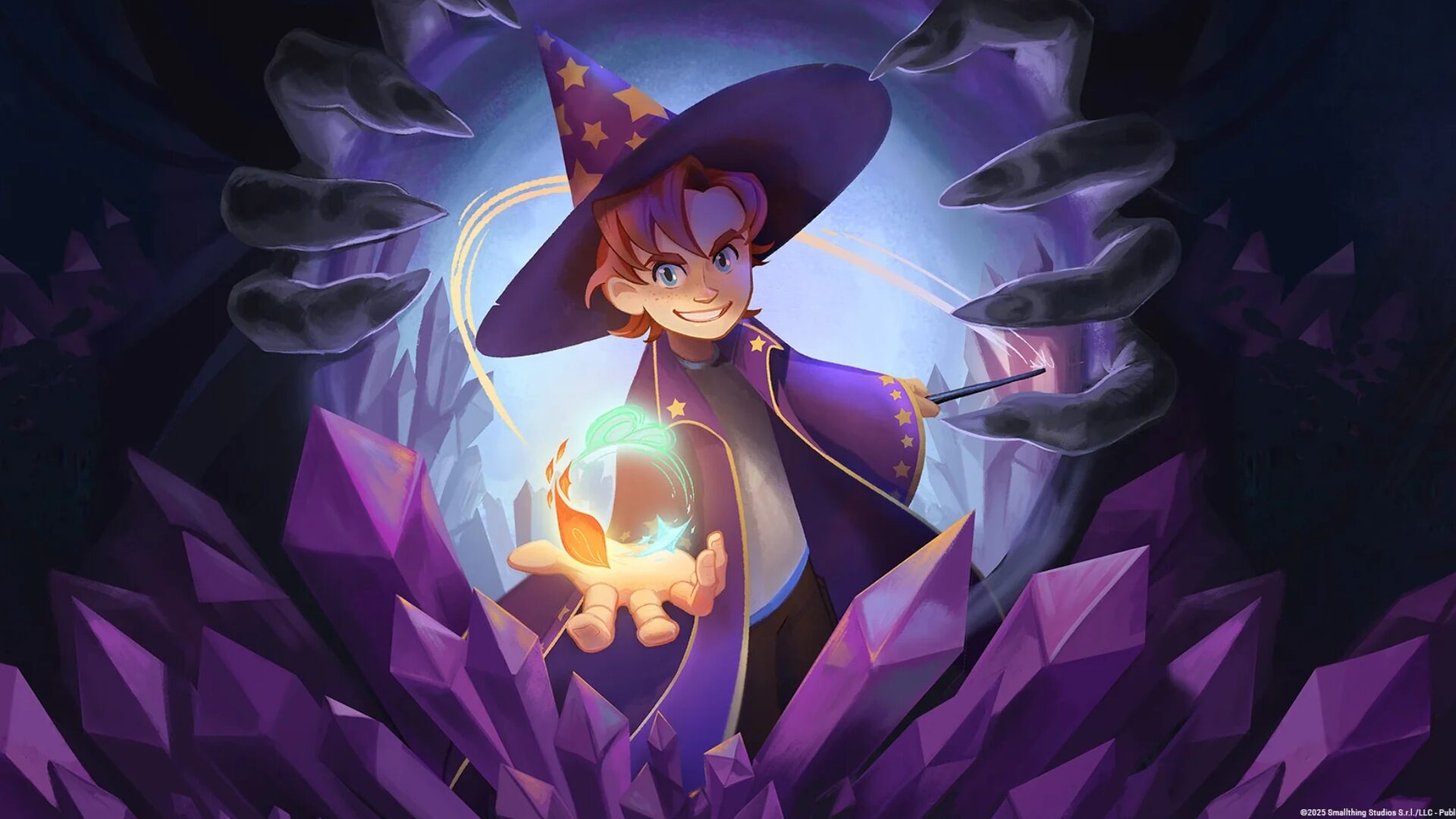
Simon the Sorcerer Origins
Simon returns through the front door
Score: 7.5/10
Images and videos
At a glance
We liked
- Simon regains his sarcasm
- A charming cartoon artistic direction
- Chris Barrie convincing in English
- Very appreciable French text
We liked less
- Riddles that are sometimes too opaque
- A rhythm that can freeze
- A fairly simple plot
- Sometimes stiff animations
 By Farrel Grimwood · published · 10 min read
With Simon the Sorcerer Origins, Smallthing Studios is not trying to restore an old glory by removing all its rough edges. The game goes back to the origins, before the first Simon the Sorcerer, with a sarcastic teenager, a prophecy that comes at the wrong time, a magical world full of bizarre characters and that old point and click mechanic where you talk, pick up, combine, observe, then sometimes end up trying anything because the solution refuses to come. Like in the old days.
Simon moves with his family, quickly finds himself drawn into a magical adventure, and discovers that his bad temper will not be enough to get him out of there. We therefore find a fairly pure graphic adventure, with dialogues, objects, puzzles, a few spells and a lot of teenage contrariness. The game doesn’t seek to become a fully polished modern point and click. It keeps this old way of asking the player to search each screen, read each line and endure being blocked.
This is where Simon the Sorcerer Origins finds its charm. It understands that a return of Simon cannot only be based on a franchise which, in any case, no longer speaks to many people. It takes sarcasm, absurd situations, a fantasy world that takes itself seriously enough for Simon to stomp on, and puzzles that make the player feel like they’ve won something when they finally give way.
But the game also drags old furniture with it. Some puzzles are downright twisted, sometimes less because they are brilliant than because they require you to think like the developers and not with logic. The pace can get stuck for a long time, the plot doesn’t always keep enough strength between two logical walls, and the world sometimes seems smaller than its opening suggests. Simon the Sorcerer Origins wants to rediscover the 90s, but it also rediscovers what was less glorious about those years.
You’re a brat, Simon
Simon the Sorcerer Origins returns before the legend, which is undoubtedly the best idea in the game. Simon is not yet quite the unwilling wizard that old players know. He is first a teenager torn from his daily life, trapped in a move that he undergoes, then thrown into a magical world where no one seems to have planned to make things simple for him. The prequel works because it doesn’t try to rewrite the entire mythology. It takes Simon at the moment when everything can still begin.
The character obviously remains the center of the game. Simon talks too much, responds badly, makes fun of almost everything and goes through the adventure with this insolence which was already part of his identity. The risk, with such a sarcastic hero, is to quickly become tiring. Origins does quite well when it lets this contrariness collide with an absurd fantasy world. Simon is not funny because he throws jokes at random but when he refuses to enter into the seriousness of a universe that would like to take him into a great destiny.
The scenario remains more classic. A prophecy, a magical world, a threat, bizarre encounters, impossible objects and that long road to the first Simon the Sorcerer. The game doesn’t really surprise you with its structure. It progresses like a fairly traditional graphic adventure, with locations to unlock, characters to question, situations which exist mainly to fuel the puzzles. It’s not bad, but it’s not where the game impresses the most.
What works best is the tone. Simon the Sorcerer Origins finds a form of fairly dry British humor, sometimes idiotic, sometimes more biting, which gives the story a real color. The game may be chatty, but it’s not empty. The dialogues often serve to establish a relationship between Simon and the world around him, a sort of permanent friction between the kid and magic.
The secondary characters participate in this dynamic, with a deliberately strange gallery, not always very deep, but often useful to maintain the comic rhythm. We feel that many exist first of all to carry a situation, an enigma or a response. That is part of the genre. In a point and click, the crossed figures are often obstacles as much as characters. Origins assumes this logic, even if some would have benefited from existing a little longer before becoming a function in the setting again.
The link with the old episodes remains quite well balanced. The game speaks to nostalgic people, but it doesn’t just wink at them. It tries to give Simon a credible start, to explain his relationship to the magical world and to prepare for what he will become. This prequel position is always tricky, because it can easily reduce the adventure to a series of set-ups. Origins partly avoids this trap thanks to its tone. Even when we know where the character must go, it is still pleasant to see him moan on the way.
The French version helps a lot. In a game so dependent on dialogue, descriptions and innuendo, having the texts in French really changes the experience. Humor is not just based on situations. It also comes from formulations, reactions, small shifts in exchanges. The English dubbing obviously retains particular weight with the return of Chris Barrie, but the French text at least allow you to follow without losing half of the intentions.
The fact remains that writing does not always have the same energy. Some passages go a little in circles, some discussions drag on more than necessary; and the main plot does not always have enough strength to make us forget the point and click mechanics behind it. Simon can carry a lot of things, but not everything. When the enigma is stuck or the place lacks life, the dialogues alone are not enough to maintain the magic.
Simon the Sorcerer Origins therefore succeeds above all through its protagonist and tone. It tells a decent, funny, endearing origin story, though not always as lively as its hero. The game understood that Simon had to remain a brat before becoming an icon. It only lacks, at times, a world capable of responding with the same insolence.
Click to the right nonsense
Simon the Sorcerer Origins remains a very classic point and click in its construction. We observe, we talk, we pick up objects, we combine them, we return to see a character, we try one idea, then another, until the logic of the game finally gives way. The title does not seek to transform the formula into a modern, heavily assisted adventure. It keeps this old way of pushing the player forward through curiosity, through deduction, sometimes through persistence.
When it works, the pleasure is real. The screens are full of details to examine, the dialogues often give a clue behind a joke, and the objects maintain this strangeness specific to the genre. We don’t always know right away what they will be used for, but we keep them, we transport them, we look at them differently after a new encounter. Simon the Sorcerer Origins finds this little satisfaction of point and click: finally understanding that two absurd elements can form an almost logical solution.
The game is also helped by its interface. The interactions remain legible, the inventory does not become unnecessarily painful, and we quickly understand what can be examined, taken or used. On console, this kind of adventure can quickly become cumbersome if the cursor, selection or menus do not follow. Here, everything remains clean enough for us to concentrate mainly on the puzzles. It’s a discreet but important quality.
Spells add a little interesting layer. Simon doesn’t just lug around strange objects. He also learns to use magic, which allows the game to vary its situations a little. We remain in pure point and click, not in a complex system of powers, but this idea gives a little more color to the puzzles. Above all, it reminds us that Simon is not just a grumpy tourist in a magical world. He also begins to understand the rules.
The limit, obviously, comes from these rules themselves. Some puzzles have this deliciously twisted flavor that fans of the genre come looking for. Others veer into something more frustrating. It happens that the solution seems less clever than arbitrary, or that the player understands what to do only after having tried it without real conviction. It’s the old point and click trap: when the absurd is well dosed, it’s amusing. When it is too opaque, it blocks.
The rhythm necessarily suffers. Simon the Sorcerer Origins progresses well as long as the solutions are linked, the dialogues fuel the progression and the locations are unlocked regularly. As soon as a puzzle persists too long for the wrong reasons, the adventure freezes. We return to the same screens, we listen to lines again, we test random objects, and the charm begins to wear off. The game assumes this old school side, but it does not always master it enough to avoid fatigue.
The progression also remains quite linear. You can explore several areas, chat with different characters and go back, but the adventure maintains a tightly controlled structure. This is not a fault in itself. A good point and click doesn’t need a huge world to be enjoyable. But here, certain passages give the impression of a smaller space than the universe promises. We would have liked the magical world to breathe more, to offer more detours, more surprises, more situations capable of conveying humor other than through dialogue.
The level design functions above all as a sequence of scenes to be resolved. Each location has its role, its characters, its objects, its little problem to unlock. It’s effective, but quite frontal. The game doesn’t always give the impression of a world in which you get lost. It is more like a well-organized graphic adventure setting, where each element fulfills its function. This fits the genre, but it also limits the wonder.
Simon the Sorcerer Origins therefore remains enjoyable when it trusts its formula: lively dialogues, absurd objects, enigmas that require a side step, a hero who comments on everything in contrariness. But it also rediscovers the faults of this formula, especially when it confuses difficulty and opacity. The game does not lack charm, but elegance in the way of guiding without holding your hand. Simon complains a lot, and sometimes the player has good reasons to do the same.
A cartoon that keeps its seams
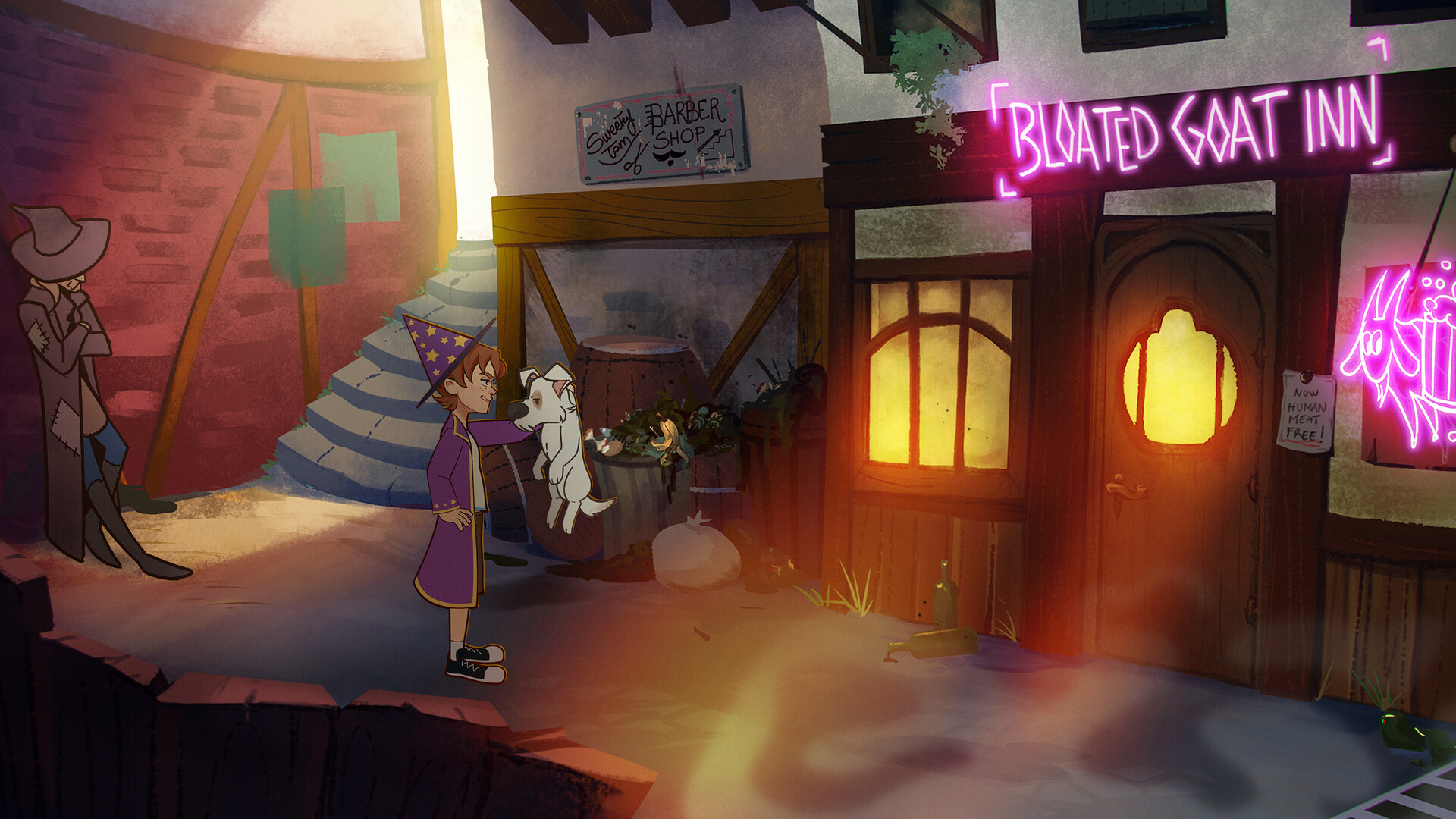
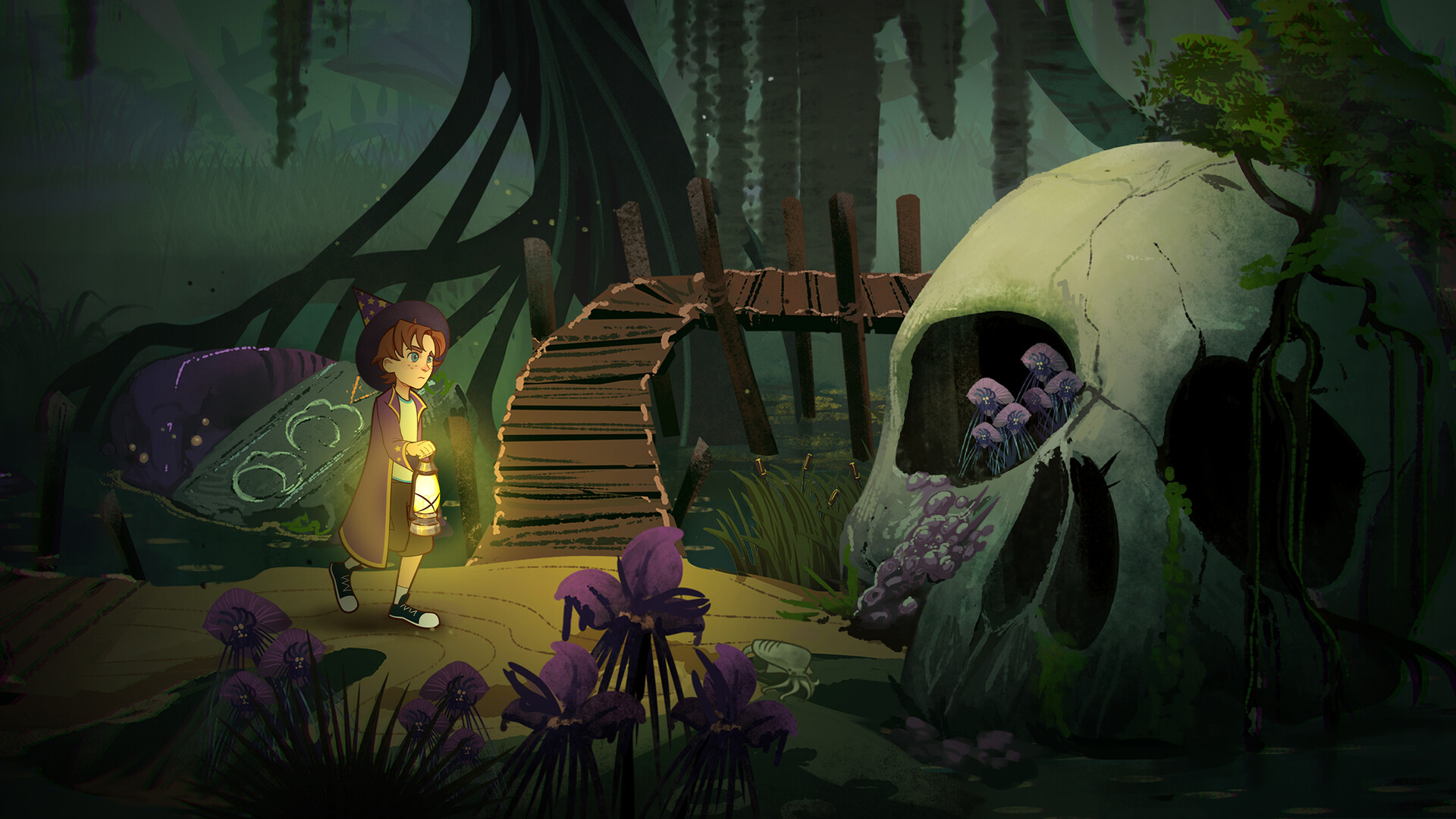
Visually, Simon the Sorcerer Origins chose the right direction. The game does not try to disguise its return behind anonymous 3D or too cold modernization. It assumes a cartoon aesthetic, with painted settings, expressive characters and a color bright enough to remind us that Simon first and foremost belongs to a comic fantasy world. This is probably what quickly gives it its identity.
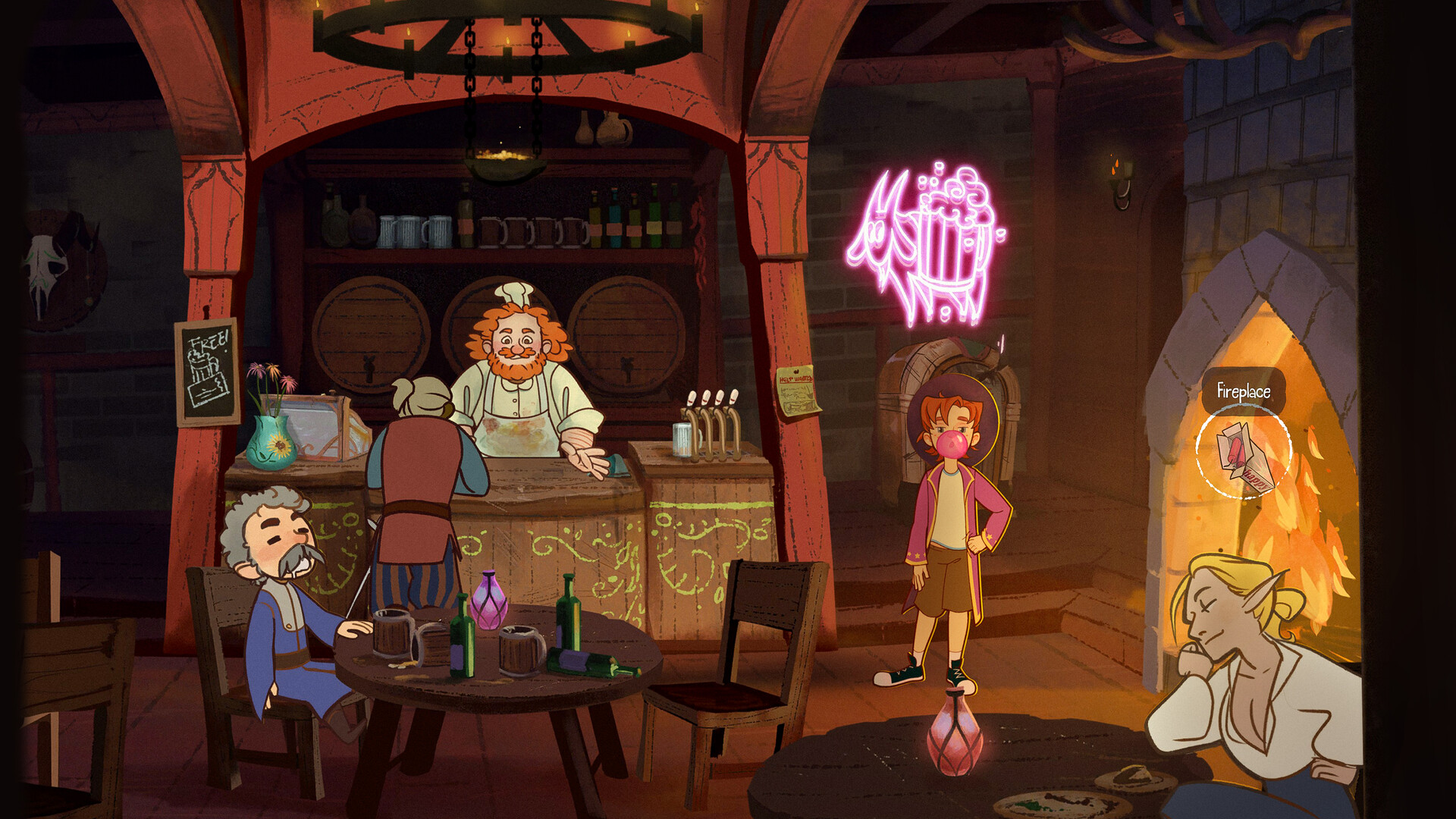
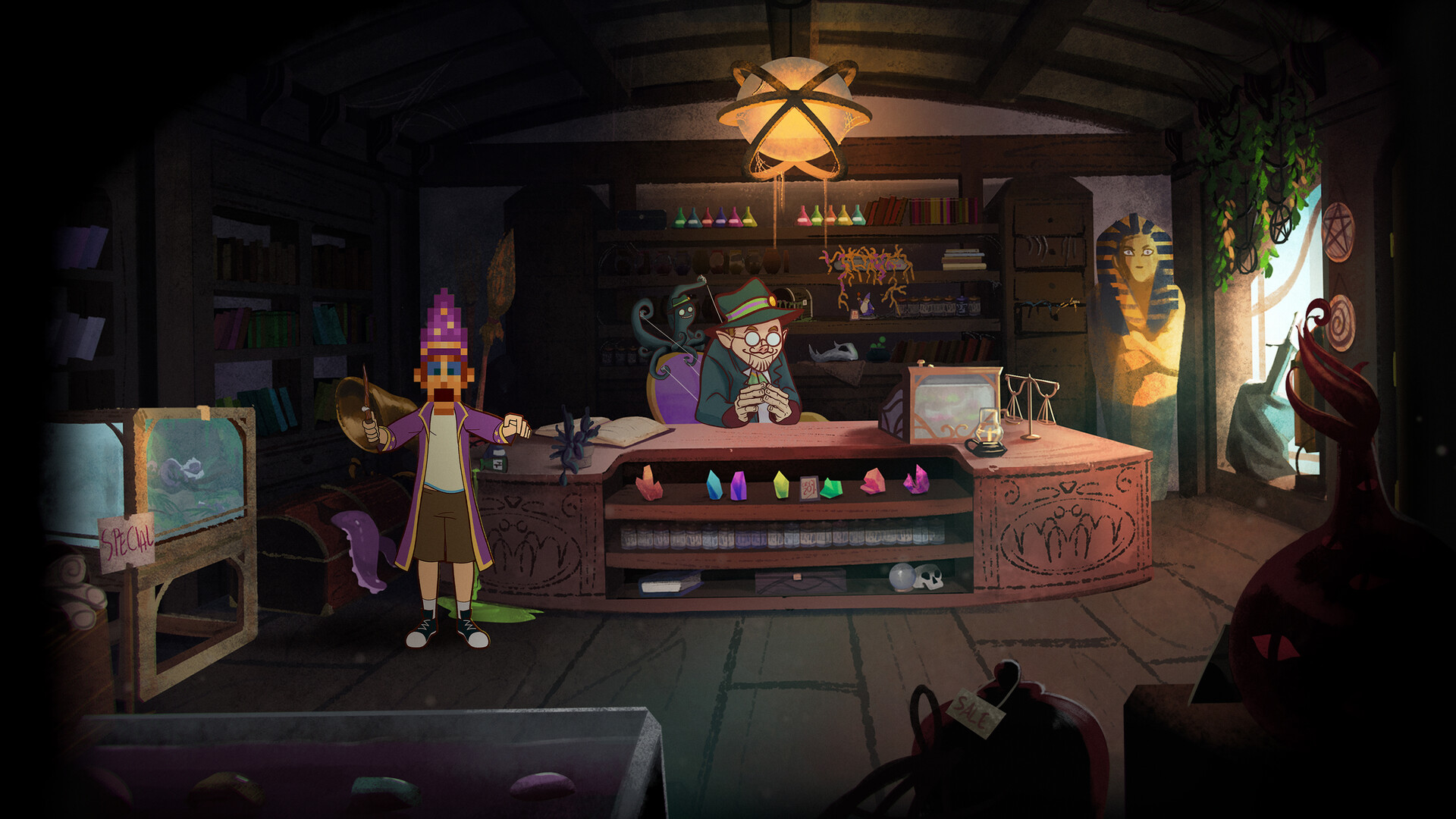
The environments are charming. The house, the magical places, the more absurd spaces that we cross throughout the adventure maintain this logic of interactive illustration where each element can be a setting, a joke or a clue. The game knows that point and click lives a lot in its background. You have to want to look, click, search, read a useless description just to hear Simon moan. On this point, Origins finds something very right.
The artistic direction works especially when it lets humor enter the image. An object placed too strangely, a creature a little ridiculous, a place that seems to take its own absurdity very seriously: this is where the game breathes best. We feel the desire to find a graphic adventure where the setting serves not only as a background, but as a comic partner. Not everything is memorable, but the whole thing maintains a real coherence.
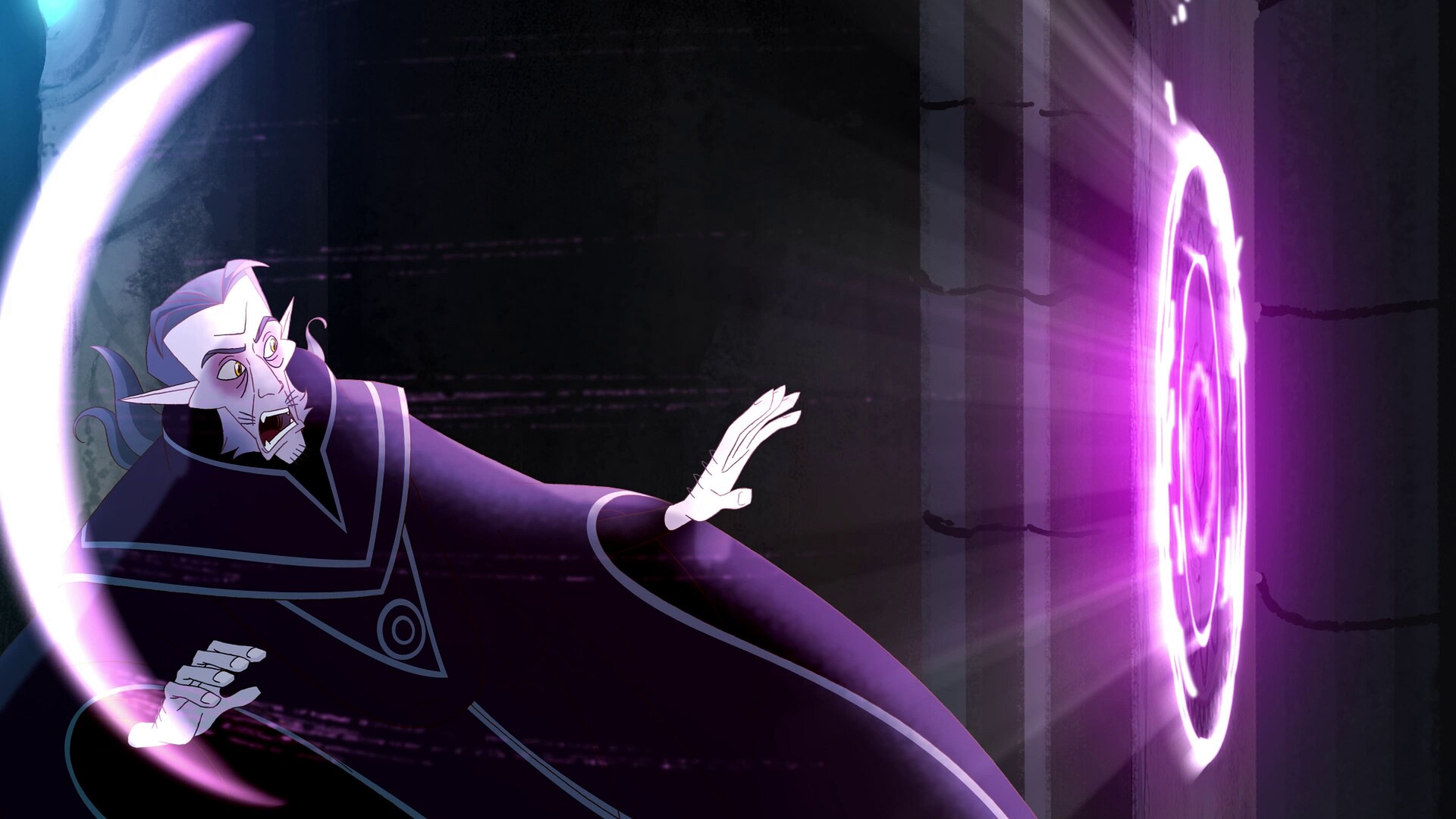
The animations are more uneven. Some movements lack flexibility, some transitions seem a little stiff, and we sometimes feel that the cartoon dreamed up by the game had to deal with more modest means. This doesn’t break the adventure, because the genre tolerates a certain rigidity quite well. But in scenes where the game really wants to bring its world to life, these limits are more visible.
The characters come out better thanks to their expressiveness. Simon keeps this face of an insolent kid who judges the whole world, and many of the supporting roles have enough visual presence to hold a few exchanges. The style can seem very smooth at times, but it remains readable and warm. Origins at least understood that a return of Simon had to have a real face, not just a correct interface.
The music accompanies this light fantasy well. It sets the tone for the adventure, supports the locations, gives a little excitement to the trips and knows how to remain discreet enough not to overwhelm the dialogues. We are not faced with a soundtrack that overwhelms everything, but it does the job with consistent good humor. The game needed themes capable of recalling the golden age of point and click without falling into simple imitation. It succeeds at times.
The English dubbing remains one of the most important points. Chris Barrie reunites with Simon, and it immediately gives weight to the character for former players. His voice carries a lot of the hero’s sarcasm, annoyance and contrariness. In such a talkative adventure, this is essential. A poorly played Simon would have damaged everything else. Here, the character at least retains this vocal presence which helps carry the slower stretches.
Verdict
The successful return of the little wizard
7.5/10
Simon the Sorcerer Origins succeeds in the essential: bringing Simon back without draining him of his sarcasm. The cartoon has charm, the dialogues maintain this very British contrariness, Chris Barrie gives a real presence to the hero in English, and the French text make the adventure much more accessible. Smallthing Studios has created a sincere prequel, respectful of the series, capable of rediscovering the spirit of classic point and click without transforming it into an overly smooth object.
But this return also inherits the flaws of the genre. Some puzzles are more twisted than clever, the rhythm sometimes stalls for too long, the plot remains quite simple and the magical world deserved to breathe more. Simon the Sorcerer Origins will therefore especially appeal to nostalgic people and fans of old-fashioned graphic adventures.
Pros
- Simon regains his sarcasm
- A charming cartoon artistic direction
- Chris Barrie convincing in English
- Very appreciable French text
- A true respect for classic point and click
Cons
- Riddles that are sometimes too opaque
- A rhythm that can freeze
- A fairly simple plot
- Sometimes stiff animations
- A magical world that could have been more alive
More in Video games
Full library 6.5/10
Bluey’s Quest for the Gold Pen
SWITCH 6.5/10
Adorable Adventures
XBOX 5/10
Magin: The Rat Project Stories
SWITCH 9/10
Hello Kitty Island Adventure
SWITCH 6.5/10
Winter Burrow
SWITCH 6/10
Snoopy & The Great Mystery Club
SWITCH 9/10
Bravely Default : Flying Fairy HD Remaster
SERIES 9/10
PRAGMATA
SERIES 8.5/10
FATAL FRAME II: Crimson Butterfly REMAKE
SERIES 7/10