
Magin: The Rat Project Stories
Magic that turns against its own game
Score: 5/10
Images and videos
At a glance
We liked
- A dark fantasy universe with a real identity
- A successful comic book style artistic direction
- The essence system, simple but interesting
- A structure that lends itself well to handheld format
We liked less
- Combats that are too rigid and punitive
- A progression that limits experimentation
- A story that takes time to grip
- Narrative choices less profound than expected
 By Farrel Grimwood · published · 6 min read
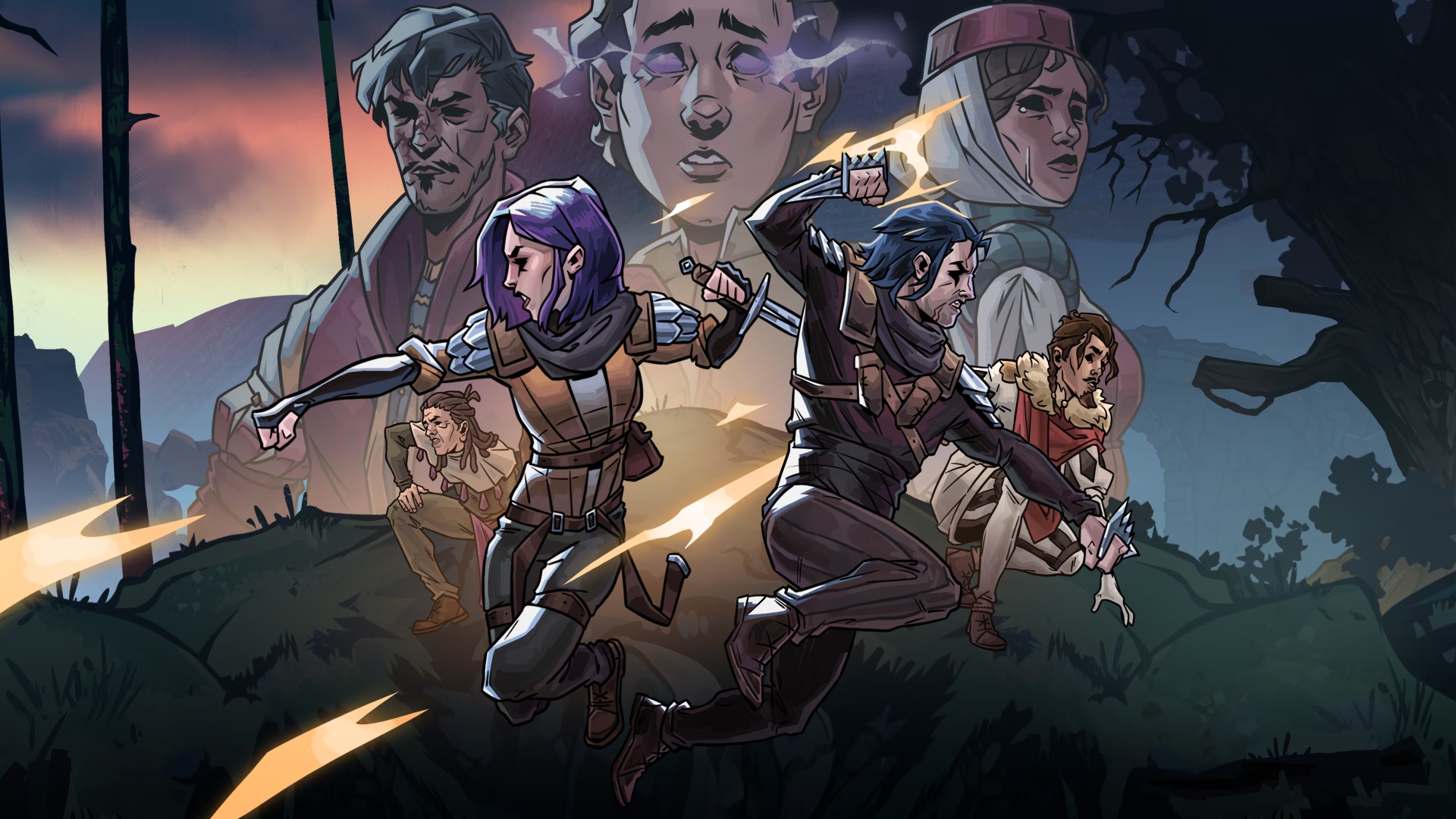
Magin: The Rat Project Stories starts from a frankly attractive idea: mixing narrative adventure, deckbuilding and dark fantasy where magic is born from desires and fears. On paper, the game has this little hook that makes you want to believe in it: a grimy world, cards, choices, emotions which are not only used to decorate the dialogues.
We follow Elester, a Magin and veteran killer linked to a criminal syndicate, then Tolen, a young boy who in turn discovers his relationship with essence. Around them, the world seems to be moving towards an industrial revolution fueled by magic, with all that implies of violence, domination and chaos. In this base alone, there was enough to build a dense, strange, almost sticky adventure.
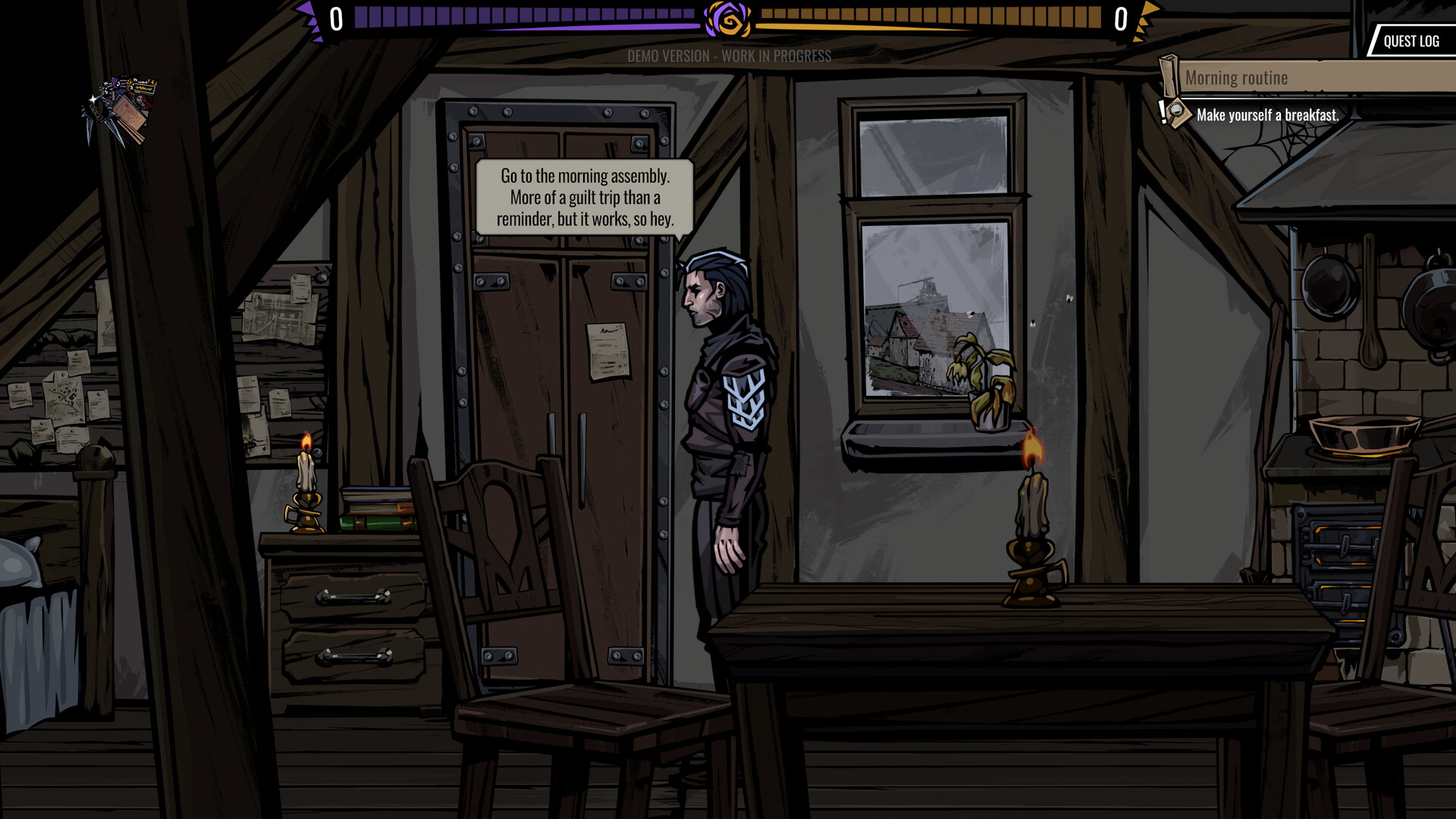
Magin therefore wants to hold two things together. On the one hand, exploration, choices, encounters, dialogues and this comic-book style presentation. On the other, clashes based on cards, essence, improvements and small tactical decisions. The ambition is there, visible, sometimes even endearing. But ambition is not always enough to make a good game.
It remains to be seen whether Magin really succeeds in turning its emotion system into a gameplay engine, or whether this beautiful idea ends up closing in on itself.
A world with taste
Magin works above all through its universe. The game does not seek to install a clean, bright, comfortable fantasy. It prefers a rougher world, where magic is not just a marvelous tool. The essence is linked to what the characters carry within them, to their desires, to their fears, to their contradictions. This is a good idea, because it immediately gives the story a more interior color.
Elester and Tolen also allow us to look at this world from two different places. The first arrives with his past, his job, his fatigue and the harshness of characters who have already seen too much. The second provides a more vulnerable, direct way in, almost more classic too. The contrast works, even if the game does not always give its characters the depth that its universe demands.
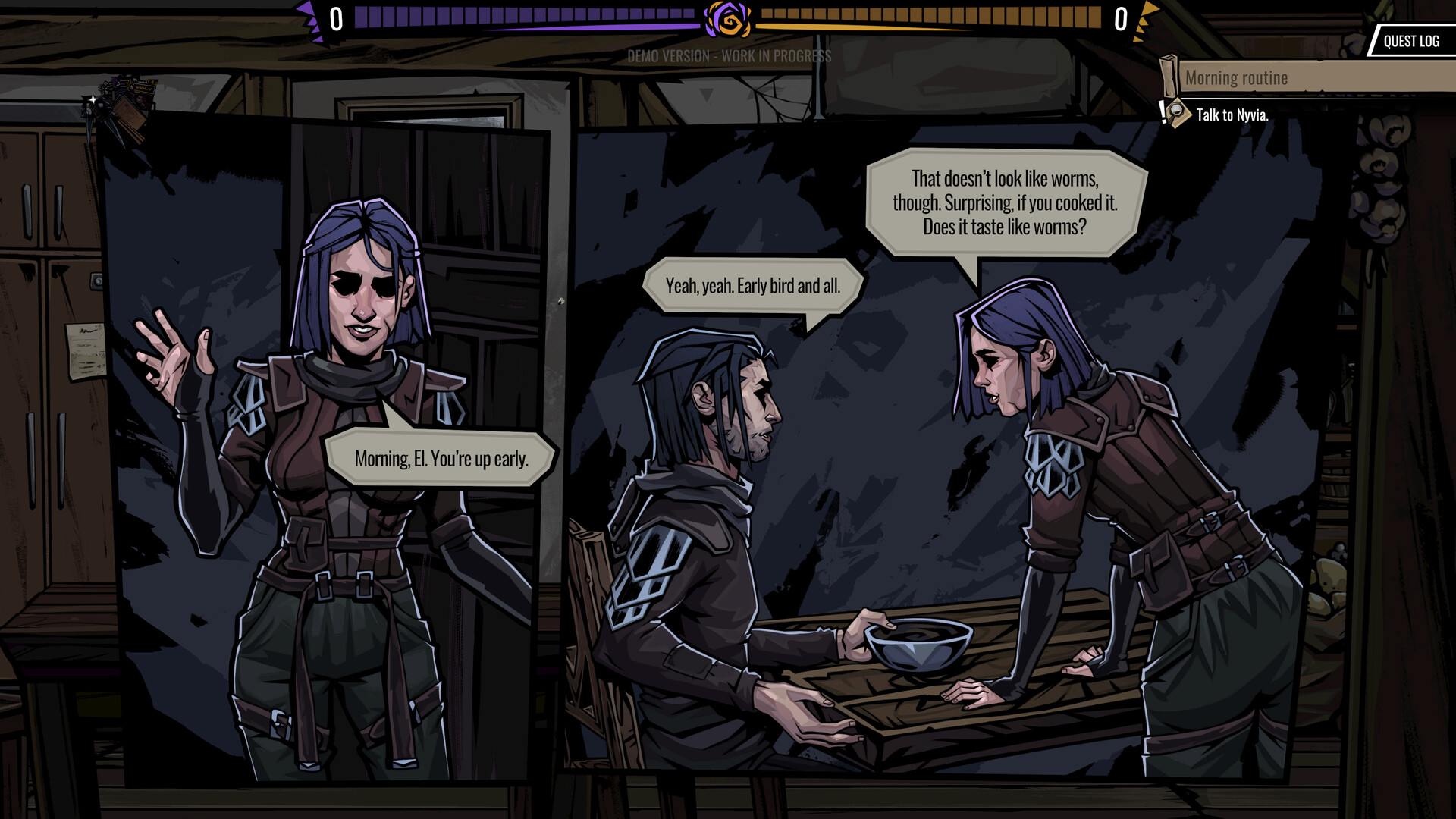
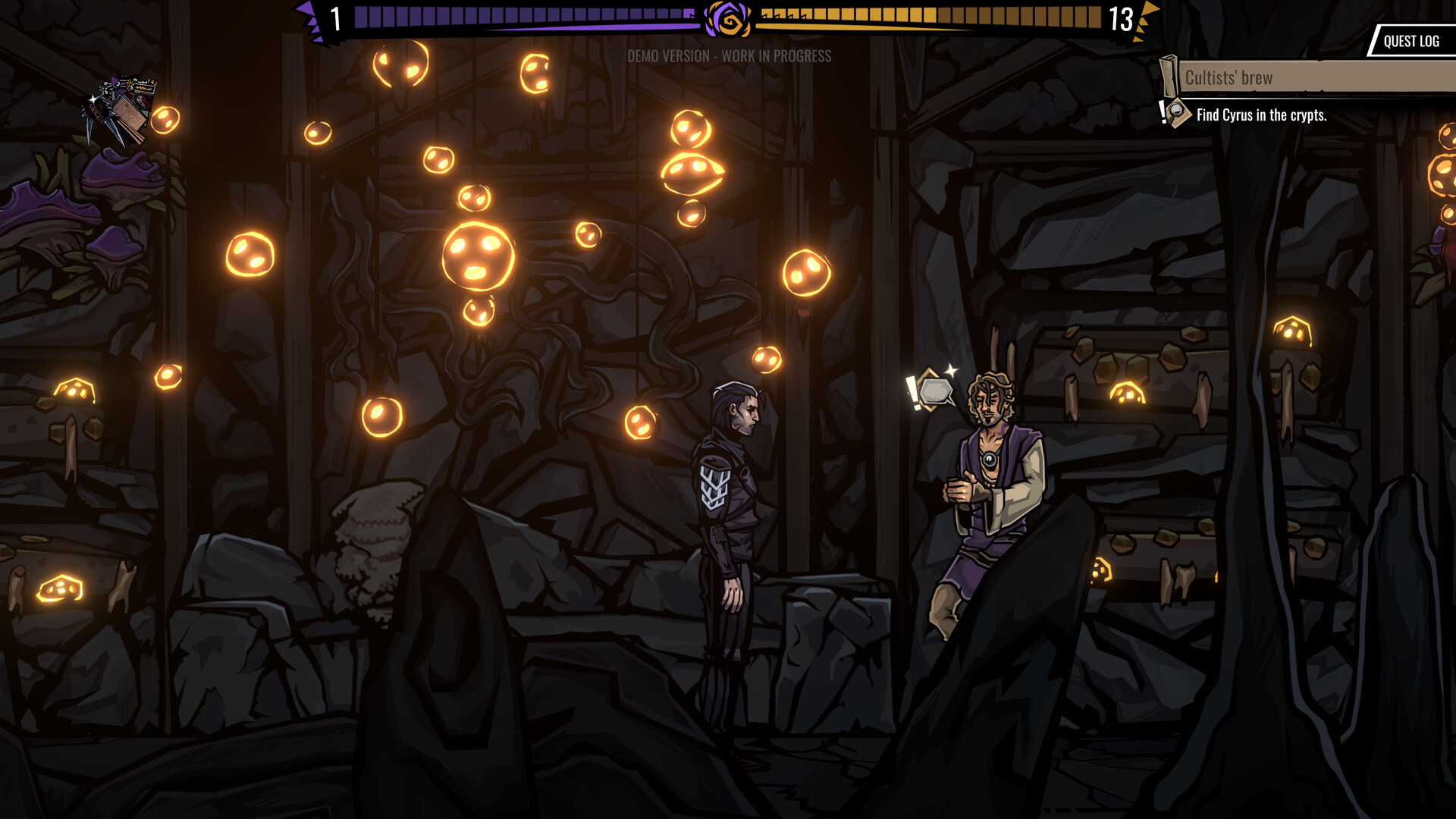
Where Magin convinces the most is in its presentation. Its comic book aesthetic gives depth to its scenes, its creatures, its two-dimensional settings. The environments have a real identity, the silhouettes stand out well, and the whole thing has that slightly rough charm of independent games that know exactly what image they want to leave.
The problem is that the writing doesn’t deliver on the same promise. The story follows, but it takes a while to take hold. Some dialogues too often seek witticism, as if the game was afraid to let its world breathe without adding a line. It works sometimes. It’s also tiring. Magin has some good background ideas, but it does not let them reach deeply enough into its characters.
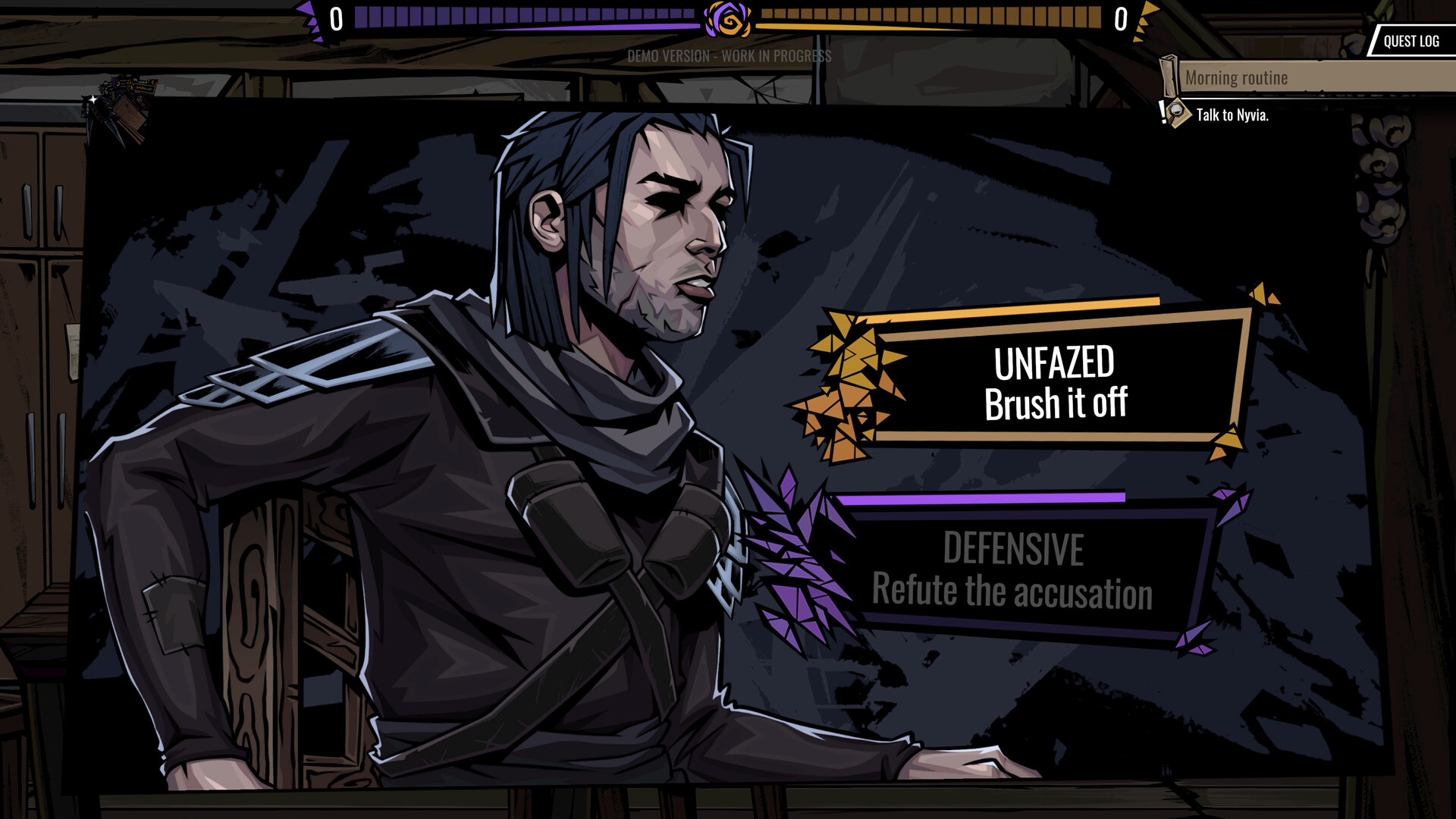
The choices contribute more to the logic of the game than to a great feeling of narrative freedom. They direct the influence of the character, shift certain nuances, nourish the relationship with the essence; but we shouldn’t expect every decision to actually move the narrative. The game talks about choices, it integrates them, but it remains more directed than its vocabulary might lead you to believe.
Cards against yourself
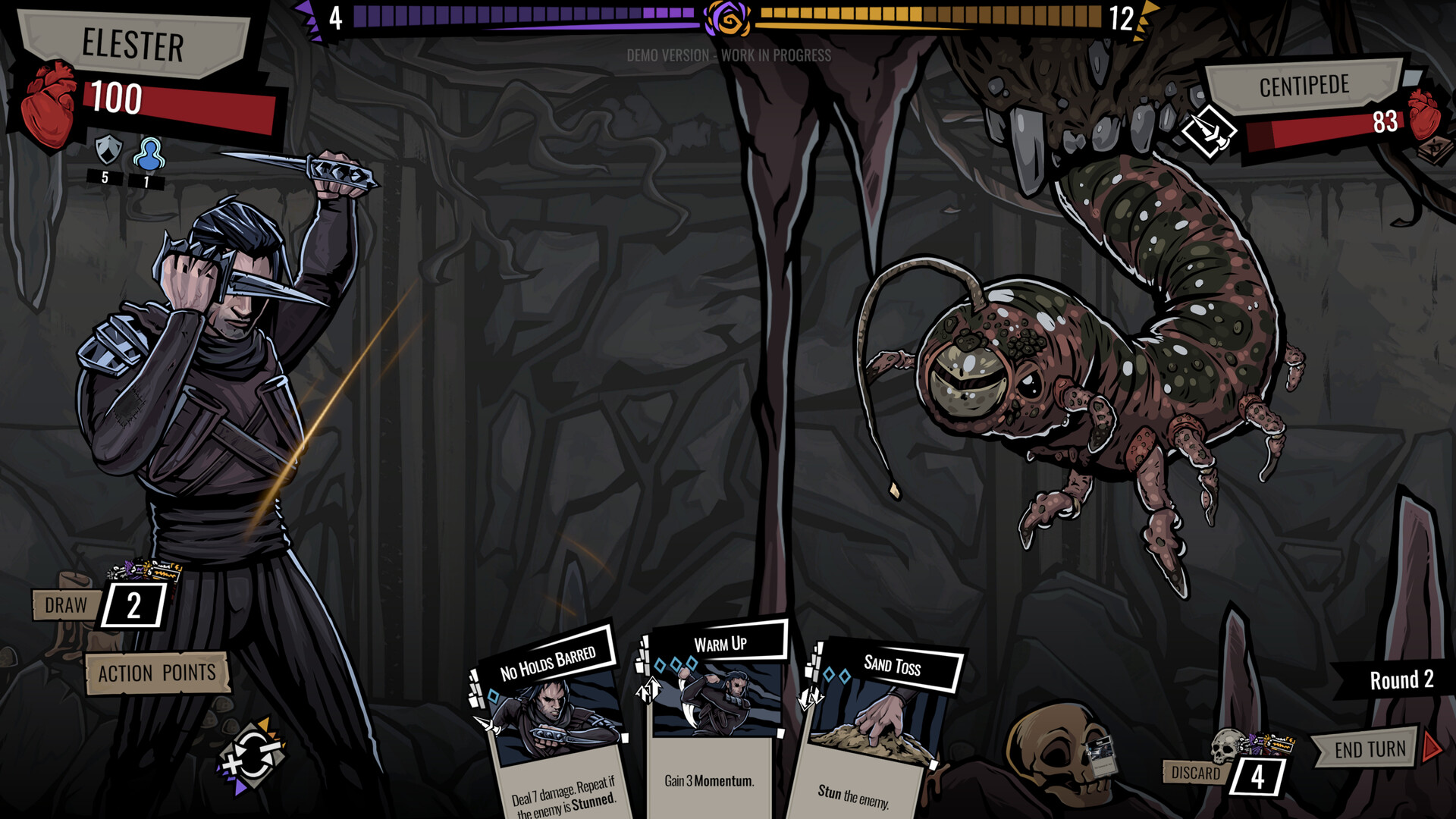
It is on the combat side that Magin most clearly shows its limitations. The idea, however, stands up. The clashes are based on a limited deck, which is gradually improved. The cards are linked to the essence, the orientations of the character, the rewards obtained, and some have two sides which allow their use to be adjusted. We quickly understand what the game wants to become: a narrative deckbuilder where each card tells a little about the way in which the character is built.
But a deckbuilder needs space. It must let the player experiment, fail, understand, start again differently. Magin gives the opposite feeling. Progression distributes few cards, customization arrives slowly, and the fights quickly impose a dry difficulty. Instead of opening up possibilities, the game feels like it’s narrowing the field.
The clashes then resemble less tactical duels than very strict puzzles. It is not a question of finding a good strategy, but often the only viable one. The one the game expects, which avoids being punished too quickly. This approach can work in a game built around precise learning, but here it comes into friction with the promise of freedom carried by the cards.
The most frustrating part comes from this feeling of permanent weakness. Enemies often seem to do a lot with a little, while the player must struggle to get a decent block, an acceptable amount of damage, a turn that doesn’t immediately backfire. A bad draw weighs heavily, a bad construction decision makes you want to go back much further than expected. The difficulty then no longer has the taste of a challenge, it resembles a poorly measured constraint.
It’s not that Magin lacks ideas. It’s almost the opposite. It has them, but locks them into a system that is too rigid. The essence, the double-sided cards, the rewards, the choices, all this should nourish real variety. However, the game often pushes towards repetition, towards the same reflexes, towards the search for a minimum of security before being able to really play.
It’s a shame, because the moments when the system opens up suggest a better game. We feel what Magin could have been with more breathing room, more rewards, a more readable difficulty curve and less stingy progression. An adventure where the cards would have accompanied the story instead of regularly putting a weight on its ankles.
A nice shape, little breath
On Nintendo Switch, Magin at least has a format going for it that feels natural. Its division into scenes, its two-dimensional exploration, its dialogues and its turn-based combat lend themselves well to handheld play. It’s not a title that needs to fill the screen to exist. Rather, it needs its atmosphere, its images and its choices to maintain their presence over time.
Artistically, it is clearly its best weapon. The game has a real visual personality. Its comic book direction prevents it from looking like just another deckbuilder, and its settings make you want to understand the rules of this world. In Magin there is a material, a color, a desire to tell stories through images which often saves the experience from simple mechanical dryness.
The full English dubbing supports this desire to give substance to the adventure, while the interface and French subtitles make the game accessible without too much detour. This is important for such a talky title, where the mechanics like the dialogues require you to correctly read what is happening. The presentation is therefore solid. The limit does not come from there.
It comes more from the rhythm. Magin alternates between narrative sequences that would like to take their time and fights that break this momentum with their harshness. The result is a slightly bumpy adventure, never completely unsuccessful, never completely smooth. We move forward because the universe intrigues. We drop out because the system places too much emphasis on what it does that is less pleasant.
There is something frustrating about this discrepancy. Magin is not a cynical game, nor a soulless project. We feel a real will behind it, a thought-out world, a worked form, mechanics which seek to bring emotion and strategy into dialogue. But this desire comes up against an execution that lacks flexibility. And in a card game, inflexibility quickly comes at a cost.
Verdict
A good idea held too tightly
5/10
Magin: The Rat Project Stories is a frustrating game, because its best ideas are also the ones it ruins the most. Its dark fantasy universe, its essence system and its comic-book style presentation make you want to believe in it, but the combat that is too rigid and too punitive ends up weighing on everything else.
It remains a sincere curiosity, visually marked, sometimes interesting in its way of linking emotion, choices and cards. But on Nintendo Switch, as elsewhere, Magin seems above all like a poorly kept promise: a game with character, yes, but not enough air to let its ideas breathe.
Pros
- A dark fantasy universe with a real identity
- A successful comic book style artistic direction
- The essence system, simple but interesting
- A structure that lends itself well to handheld format
- A more unique proposition than the average
Cons
- Combats that are too rigid and punitive
- A progression that limits experimentation
- A story that takes time to grip
- Narrative choices less profound than expected
- A rhythm often broken by difficulty
More in Video games
Full library 6.5/10
Bluey’s Quest for the Gold Pen
SWITCH 6.5/10
Adorable Adventures
XBOX 9/10
Hello Kitty Island Adventure
SWITCH 6.5/10
Winter Burrow
SWITCH 7.5/10
Simon the Sorcerer Origins
SERIES 6/10
Snoopy & The Great Mystery Club
SWITCH 7/10
Castlebound
SWITCH 8.5/10
Village in the Shade
SWITCH 5.5/10
Warrior Cats: Clans of the Forest
SWITCH 6.5/10