


Inazuma Eleven: Victory Road
The return of a legend that was never just a football game
Score: 9/10
Images and videos
At a glance
We liked
- A narrative progression that takes the time to build your team
- Hybrid football/RPG gameplay as unique as ever
- A wealth of characters and team possibilities
- Spectacular anime artistic direction
We liked less
- Uneven AI in certain encounters
- A dense interface at first glance
 By Farrel Grimwood · published · 5 min read
Contents
Long announced, often postponed, Inazuma Eleven: Victory Road finally joined the Nintendo Switch game library, relaunching a series that occupies a unique place in the history of Japanese RPGs. Since its beginnings, the franchise developed by Level-5 has cultivated a hybrid identity: under the appearance of a spectacular football game, it in reality deploys a role-playing structure where narrative progression, the formation of a team and the rise in power of the characters take precedence over simple sporting competition.
With Victory Road, this founding principle resurfaces in a context very different from that of the Nintendo DS episodes which built the reputation of the series. The video game landscape has changed, as have public expectations. The return of Inazuma Eleven is therefore not trivial. Does this new episode manage to transform the legacy of the series into a proposal capable of convincing beyond the nostalgia that surrounds it? This is what you will discover immediately.
A reconstruction around a missing football
The story mode of Victory Road takes place twenty-five years after the events of the first Inazuma Eleven and introduces a new generation of characters. At the center of the story is Destin Billows, a teenager whose relationship with football is deeply ambivalent. His physical condition prevents him from playing normally, which transforms his connection with sport into permanent frustration rather than an obvious vocation.
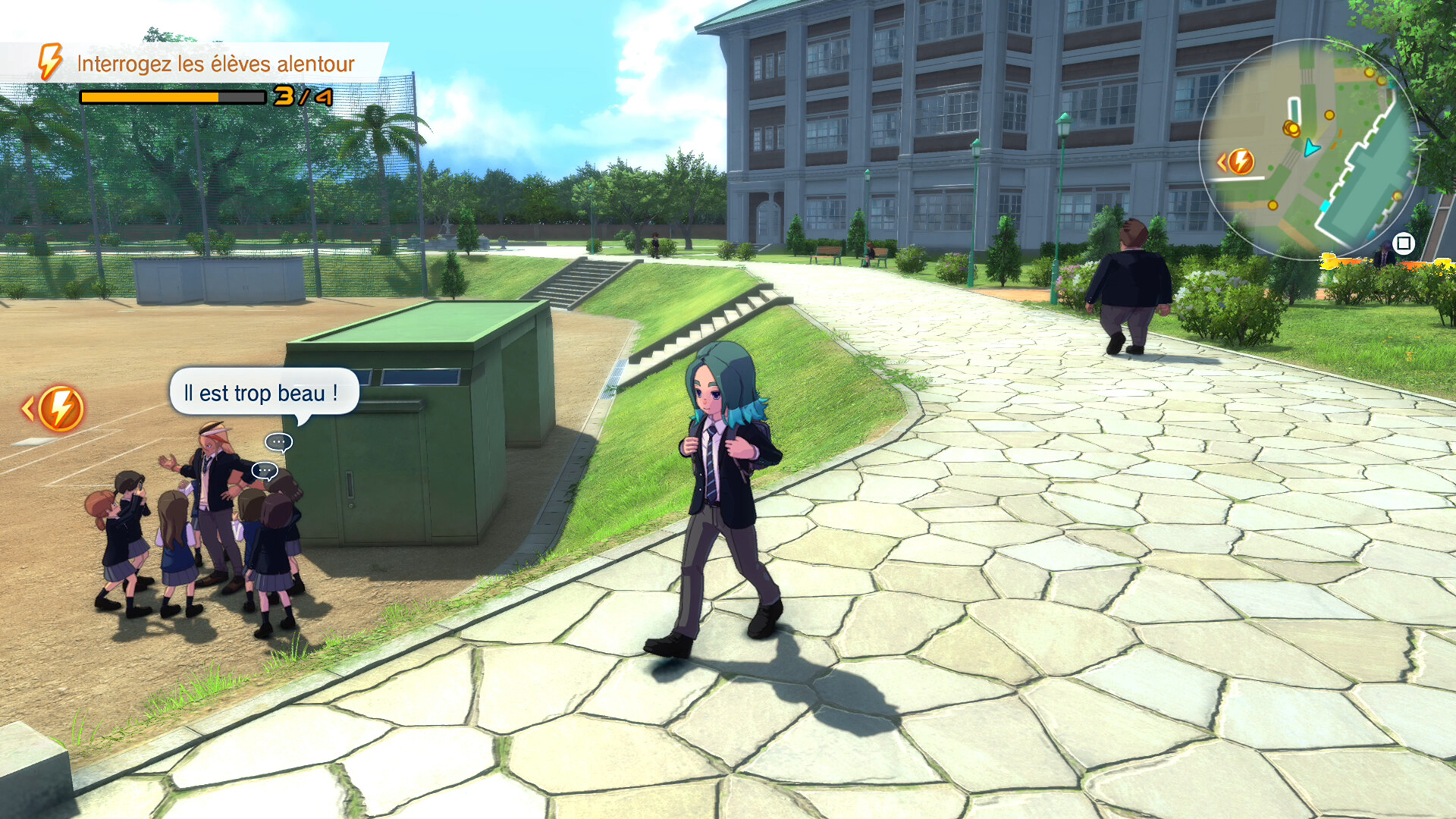
This personal tension becomes the starting point of the story. Upon arriving at his new school, Destin finds himself in an environment where football has almost disappeared from school life. Far from the legendary schools which dominated national competitions, the team must literally be rebuilt. The player then witnesses the gradual formation of a new club, made up of students from activities sometimes very far removed from football.
This approach gives the scenario a foundational dimension. The first hours do not revolve around spectacular tournaments, but around recruitment and the formation of a group. Each new member brings their own personality, style of play and motivation. This collective dynamic becomes the true backbone of the story.
At the same time, the game sets up a narrative counterpoint through the figure of Harper Evans, heir to a prestigious lineage and emblematic player of the Raimon school, one of the dominant institutions of school football. Their opposition functions less like a classic confrontation than like a parallel trajectory: two visions of football destined to intersect.
The scenario thus adopts a structure close to a season of sports anime. The chapters alternate exploration, character interactions, training and key matches, each one strengthening the team and deepening the relationships between its members. This construction transforms the adventure into collective progression rather than a simple succession of sporting encounters.
A tactical RPG disguised as a football game
Under its guise as a sports simulation, Inazuma Eleven: Victory Road continues a well-established tradition in the series: football functions as a role-playing game mechanic. The pitch becomes a tactical grid, the players a team to develop, and each match a confrontation where skill management is as important as collective strategy.
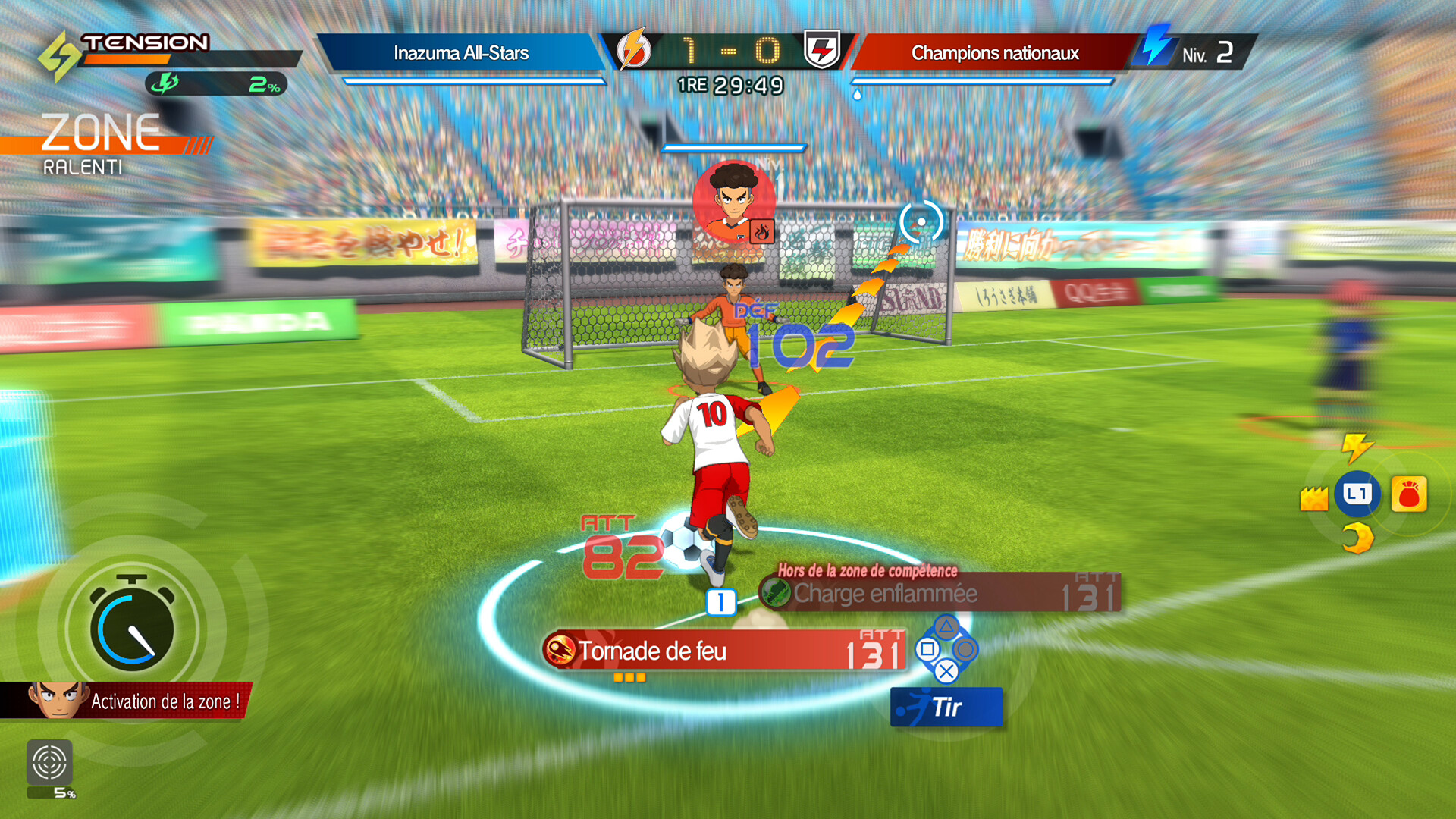
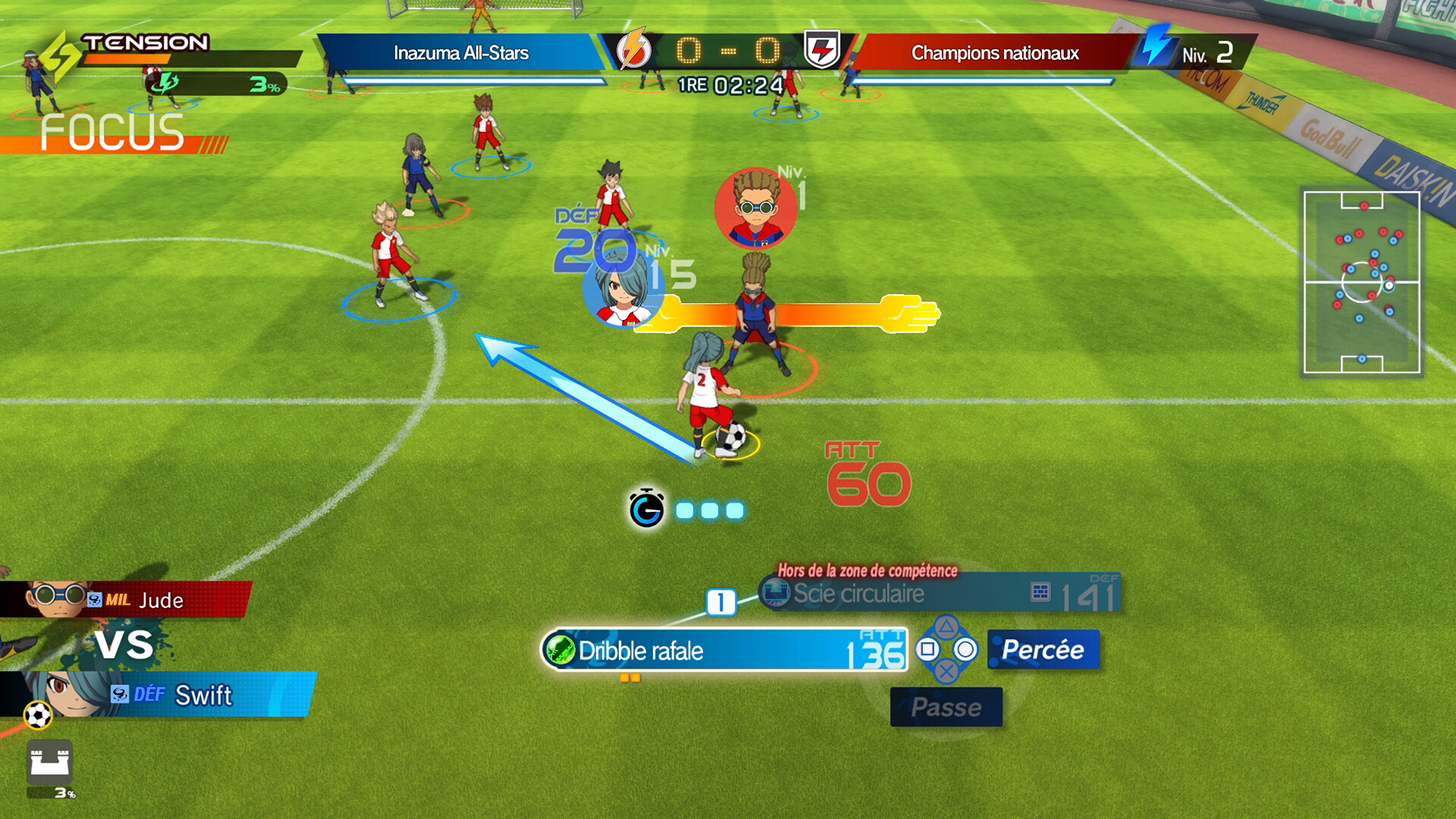
Encounters are based on a system that combines tactical movements, individual duels and the use of special techniques. Each character has their own abilities: spectacular shots, impossible dribbles or extraordinary defensive interventions; which consume resources and must be triggered at the appropriate time. This dimension transforms matches into rhythmic clashes where anticipation and team composition play a central role.
The progression of the game reinforces this RPG logic. Recruited players gain experience, unlock new techniques and can be integrated into different formations depending on the needs of the match. The title also offers a particularly large number of recruitable characters, allowing you to form very varied teams. This profusion becomes one of the great drivers of the experience: testing combinations, adjusting roles, refining strategies.
These mechanics are learned gradually. Rather than rushing the player towards the most difficult confrontations, the game multiplies the side matches and intermediate challenges. These encounters serve as a training ground as much as a narrative progression. The system thus encourages a patient approach: Victory Road rewards the time invested, experimentation and gradual evolution of the team.
This choice of design fits with the general identity of the game. The objective is not to rush through the adventure, but to build a team over time, to master the mechanics and to see the strategies transform over the course of the matches. In this context, football acts as a playful language serving a particularly generous tactical RPG.
A staging faithful to the anime heritage of the series
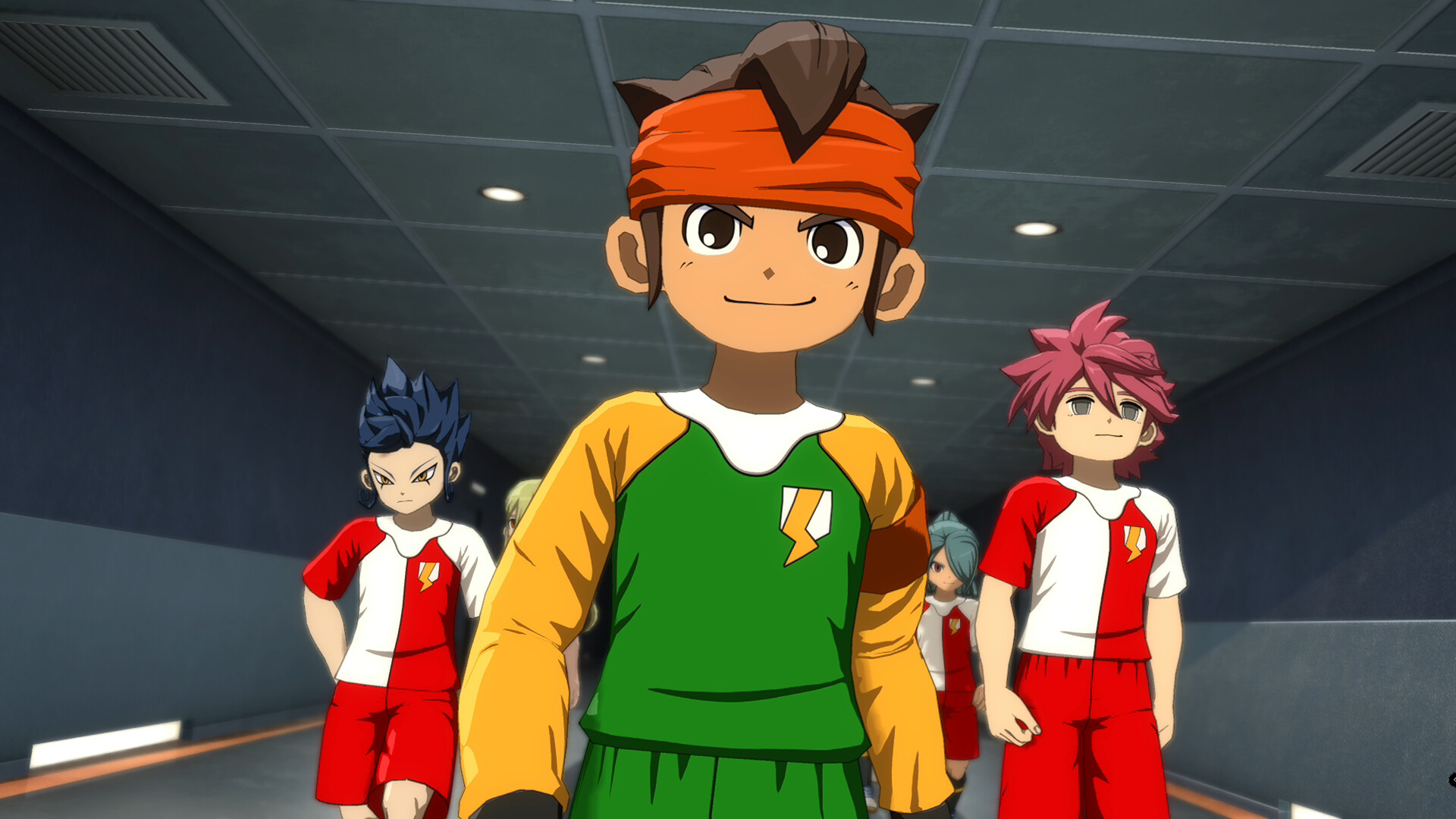
Visually, Inazuma Eleven: Victory Road remains faithful to the graphic identity that has shaped the reputation of the franchise. The anime aesthetic, a trademark of Level-5 productions, structures the entire game. The characters adopt expressive silhouettes, extravagant hairstyles and theatrical attitudes which immediately recall the codes of sports shōnen.
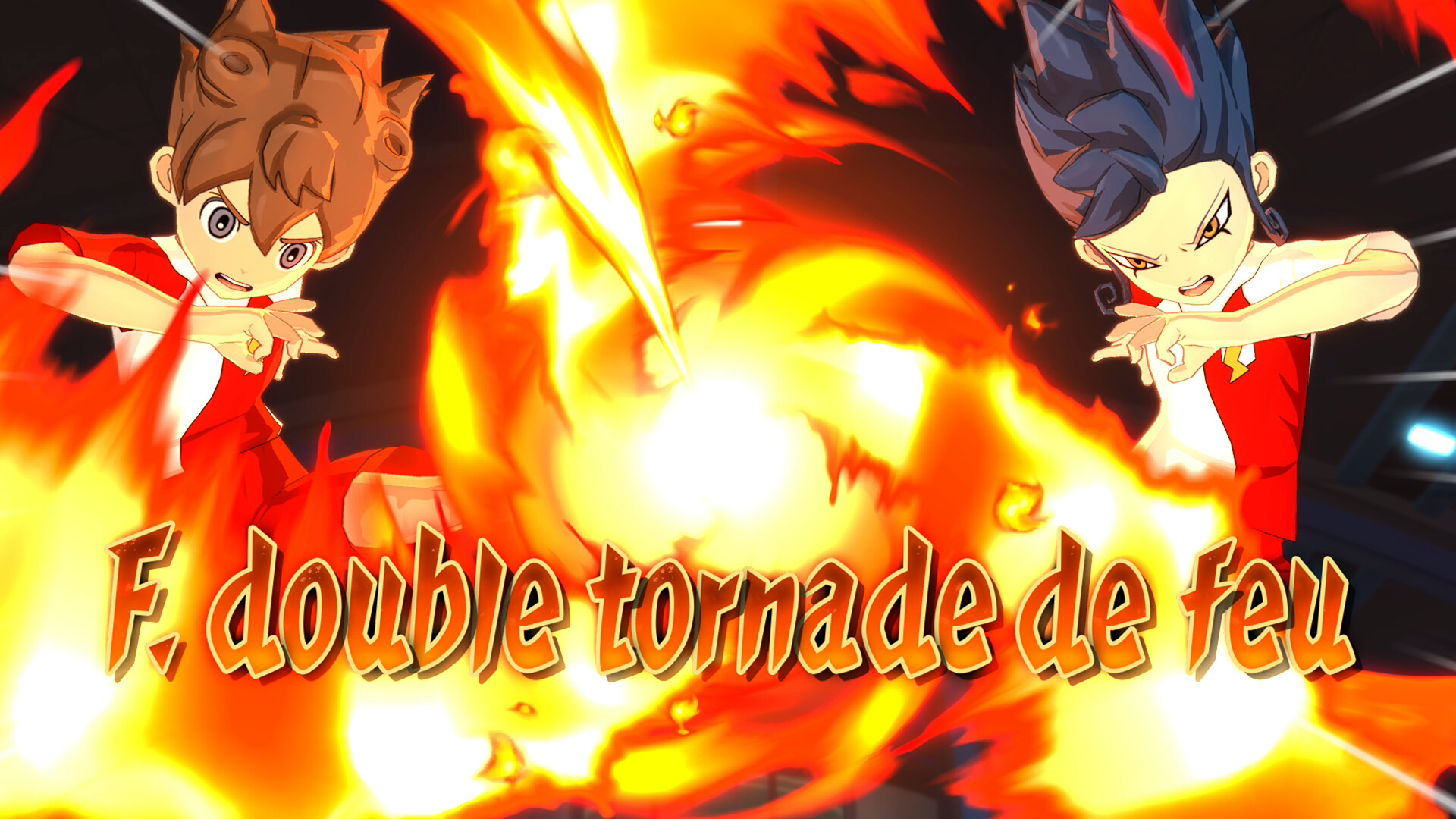
This artistic direction participates directly in the staging of the matches. The special techniques, historical signatures of the series, benefit from particularly spectacular animations. The shots transform the field into a real action scene, where explosions of energy, lighting effects and camera movements amplify each duel.
The whole thing creates a natural continuity with the universe of the anime Inazuma Eleven. The encounters take on the appearance of condensed episodes: rising tension, twists and turns and visual climax during the decisive techniques. This theatricalization of football remains one of the great singularities of the series, and Victory Road fully asserts it.
The soundtrack effectively accompanies this dynamic. The compositions alternate between energetic pieces during the matches and more calm themes during the narrative sequences. This alternation reinforces the impression of following an adventure structured like an animated series, where each sporting confrontation becomes the culmination of a dramatic progression.
This artistic coherence strongly contributes to immersion. It reminds us that the identity of Inazuma Eleven is not based solely on its game mechanics, but on an immediately recognizable visual and sound imagination, capable of transforming a simple football match into a heroic spectacle.
Verdict
The return of a still unique formula
9/10
With Inazuma Eleven: Victory Road, the series makes an expected return which confirms what has always made it unique. Behind its appearance as a football game hides an RPG built around collective progression, the formation of a team and a story that takes time to settle. The choice of a developed narrative start gives depth to the adventure and transforms each match into an outcome rather than a simple repeated mechanic.
Supported by an artistic direction faithful to the anime aesthetic of the franchise and by a narrative structure close to a season of a sports series, Victory Road succeeds in evolving the formula without distorting it. A generous, unique proposition that is still identifiable in the video game landscape.
Pros
- A narrative progression that takes the time to build your team
- Hybrid football/RPG gameplay as unique as ever
- A wealth of characters and team possibilities
- Spectacular anime artistic direction
Cons
- Uneven AI in certain encounters
- A dense interface at first glance
More in Video games
Full library 5.5/10
Warrior Cats: Clans of the Forest
SWITCH 6.5/10
Demons’ Night Fever
SWITCH 9/10
Dragon’s Dogma 2: Dark Arisen
XBOX 6/10
Qliphah in Providence’s Shadow
SWITCH 8/10
Verho – Curse of Faces
XBOX 7.5/10
Terrinoth: Heroes of Descent
XBOX 7/10
LumenTale: Memories of Trey
SWITCH 6/10
STARBITES
SWITCH 8/10
Monster Crown: Sin Eater
XBOX 7/10