
Recycling Center Simulator
Transforming scrap into an industrial empire
Score: 6.5/10
Images and videos


At a glance
We liked
- The concrete progression: from manual collection to industrial automation.
- The balance between accessibility and strategic management.
- Technical stability on Xbox Series.
We liked less
- The repetition of cycles and tasks.
- The raw, functional but uninspired aesthetic.
- Lack of variety.
 By Farrel Grimwood · published · 4 min read
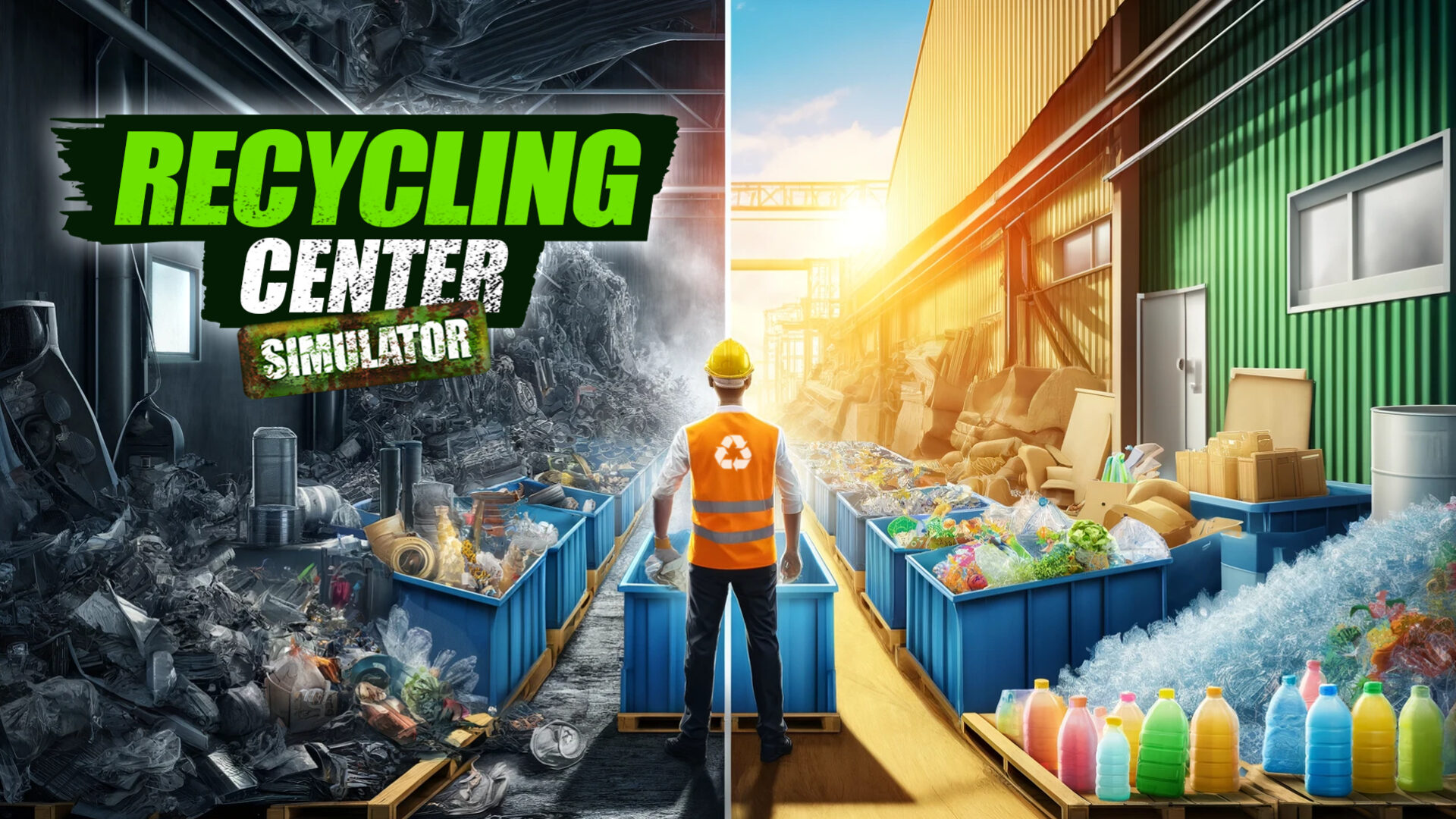
Released on October 2, 2024 and developed by Balas Games under the aegis of publisher PlayWay S.A., Recycling Center Simulator arrives on Xbox Series in August 2025 with a clear promise: to make waste a raw material, and the most banal gesture of sorting waste the heart of a progression mechanic. Far from heroic universes and spectacular scenarios, the game sets its intrigue in the dust of the hangars and the din of the machines, where each cardboard box, each piece of metal, each bit of accumulated plastic becomes a resource to be transformed. You are the architect of an empire that does not speak its name: starting from a dilapidated center, almost abandoned, to turn it into a complex capable of processing, recycling and reselling efficiently.
Behind this apparent banality, a tension arises: how to manage the growth of a place where everything relies on logistics, sorting and maintenance? Recycling Center Simulator places the player at the crossroads of two dynamics, one down to earth: collect, clean, separate, resell, the other more strategic: invest, automate, recruit, expand. And it is in this constant swing between manual effort and industrial vision that the identity of the game is found.
From manual gesture to industrial vision
The heart of Recycling Center Simulator is based on a seemingly simple loop but which gains in density over time: collect, sort, transform, resell. We start small, in the middle of a dilapidated hangar, with raw waste that must be processed by hand. Each box moved, each bag opened, each piece of sorted metal embodies this initial, deliberately laborious phase, which allows the player to feel the arduousness of the work before switching to industrial logic.
Progression is built around the acquisition and optimization of machines. Hydraulic press, crusher, conveyors, specialized grinders: each purchase changes the rhythm of the production chain. Where the first few hours require constant physical involvement, the introduction of automation transforms the experience into a game of flow and anticipation. The pleasure then comes from seeing the factory metamorphose, moving from a shambles to an organization where each position has its role, each machine its output.
The level design plays on the constraints of space. Sorting, storage and processing areas must be carefully thought out: poorly organizing your hangar means wasting time and therefore money. As the center expands, the topography changes, and the player discovers the art of optimizing every square meter. This management of space gives an almost puzzle dimension to the game, where the slightest poorly chosen location can slow down the fluidity of the whole.
But Recycling Center Simulator is not content with static management: it imposes dynamic logistics logic. The waste is not always there: it must be collected, deliveries sometimes have to be negotiated, and transport costs must be managed. Resale prices are changing, forcing you to adapt your priorities. Recycling plastic does not have the same yield as metal, and certain investments only become profitable if demand is well anticipated. This system, far from being so complex as to discourage, maintains a light but constant tension.
The game design succeeds in finding a balance between accessibility and challenge. The first phase, deliberately slow and repetitive, sets the framework and the weight of manual work. The later stages, marked by the introduction of machines and employees, gives real gratification: each investment is seen, each progress is felt. Certainly, the experience does not avoid the pitfalls of the genre – a certain redundancy, a lack of variety in the missions, some mechanics which would have deserved more depth -, but in its domain, the game keeps its promise: transforming an a priori thankless subject into an addictive loop, where efficiency becomes the engine of pleasure.
The raw aesthetic of an industrial hangar
Visually, Recycling Center Simulator is not looking for showoff: its ambition lies elsewhere. The graphics are decent, without being spectacular, but they effectively convey the industrial atmosphere that the subject requires. The hangars are displayed with their share of crumpled metal sheets, dull walls, accumulated dust, and the waste itself – cardboard, plastics, metals, used household appliances – is modeled with enough care to be identifiable at first glance. The player does not linger to admire landscapes: everything is designed for readability and functionality, like in a real sorting center.
The artistic direction therefore favors clarity over beauty. The machines, massive and mechanical, impose their presence through simple but robust shapes. Each new piece of equipment added to the production line is immediately distinguishable, allowing its role to be visually understood. The evolution of the center can be seen as much by the density of its machines as by the bulk of the waste which accumulates while awaiting treatment.
On the sound side, the game is just as pragmatic. Industrial noises dominate: the rumble of grinders, the sharp click of a press, the rolling of conveyors. This sound design anchors the player in the materiality of the place, at the risk of being repetitive. The discreet music simply accompanies without trying to impose a strong identity: it establishes a regular working atmosphere, but lets the mechanical effects occupy the first place.
On Xbox Series, technical stability is solid. Critics note a smooth display, good readability of spaces, and reduced loading time compared to the initial PC version. No graphic revolution therefore, but a clean execution which highlights what is most important about the game: the clarity and regularity of an environment designed to be manipulated rather than admired.
In short, the aesthetics of Recycling Center Simulator perfectly match its purpose. No frills, no bucolic landscapes: just the raw realism of a hangar where every sound and every texture reminds us that recycling is a matter of machines, noise and dust.
Verdict
Efficiency above all
6.5/10
Recycling Center Simulator does not claim to reinvent the simulation genre, but it succeeds in its challenge: transforming a thankless subject into a surprisingly captivating experience. The pleasure comes less from the spectacle than from the progression: starting in a dusty hangar, sorting by hand, then gradually seeing the factory equipped, automated and running at full speed provides tangible satisfaction. The title finds a rare balance between accessibility and light depth, enough to hook without suffocating.
Its limitations are clear: highly repetitive tasks, an uninspired artistic direction, and a lack of variety in the scenarios which prevents repeating the experience over time. But these weaknesses do not erase its effectiveness: Recycling Center Simulator delivers exactly what it promises, an industrial simulator where each installed machine and each piece of processed waste participates in an addictive loop.
On Xbox Series, the technical stability and fluidity make the experience pleasant, without it taking on a new dimension. It is not a title that stands out for its visual originality, but for the consistency of its mechanics. For those who like to see a structure grow, optimize its flows and give meaning to repetitive gestures, the game fulfills its contract.
Pros
- The concrete progression: from manual collection to industrial automation.
- The balance between accessibility and strategic management.
- Technical stability on Xbox Series.
Cons
- The repetition of cycles and tasks.
- The raw, functional but uninspired aesthetic.
- Lack of variety.
More in Video games
Full library 8.5/10
Train Sim World 6
PS5 8.5/10
Agatha Christie – Death on the Nile
PS5 6.5/10
Brews & Bastards
PS5 9/10
Frostpunk 2 Console Edition
PS5 7/10
Folly Of The Wizards
PS5 8.5/10
Towa and the Guardians of the Sacred Tree
PS5 8.5/10
Dying Light: The Beast
PS5 9.5/10
Borderlands 4
PS5 8/10
Triangle Strategy
PS5 7/10