
King of Meat
The meaty excess of organized chaos
Score: 8/10
Images and videos

At a glance
We liked
- The raw energy of cooperative gameplay
- Dark humour and satire of entertainment
- The community creation system, as funny as it is cruel
- The artistic direction between punk and industrial cartoon
We liked less
- The absence of French dubbing
- Legibility sometimes confused in clashes
- Some recurring animation bugs
- The slightly repetitive progression system over time
 By Farrel Grimwood · published · 7 min read
King of Meat stands out as an anomaly as grotesque as it is fascinating in the current video game landscape. Developed by Glowmade and published by Amazon Games, the title immerses you in the delirious arena of a world where flesh, scrap metal and glory intertwine in carefully orchestrated chaos. In this bloody reality TV universe, each participant fights to become the undisputed sovereign of a show where survival is the only prize and excess is the rule.
Beneath its air of absurd farce, King of Meat hides a true declaration of love for action gaming and cooperative multiplayer. The tone is deliberately outrageous, the dark humor is omnipresent, and each game becomes a mixture of improvised strategy and exhilarating carnage. Between frenetic confrontations, trap construction and management of improbable resources, the game elevates the grotesque into art and pushes the player to embrace the madness of their own system.
But behind the visual and sonic provocation, a question arises: does King of Meat manage to transform its chaos into coherence, or is it just a cry of meat in the void?
The gladiators of excess
In King of Meat, you enter an intergalactic television show where creatures from the four corners of the cosmos compete in huge arenas under the hilarious gaze of a show-hungry audience. Here, glory is measured not in victory but in the amount of flesh, metal and chaos you leave behind. Each episode of the show is presented as a show in its own right with its theme, guests and challenges, transforming your progress into a succession of ever more insane performances.
The game does not follow a classic narrative. Instead, it offers you a set of absurd fragments, sketches and dialogues that weave a coherent universe in its unreason. The presenter, a grotesque figure with hysterical verve, serves as a common thread between the missions. His thunderous voice, mixed with that of a cynical narrator, punctuates each confrontation and gives the game a theatrical dimension close to media satire. Everything is just an exaggeration: the fictitious sponsors, the false advertisements, the interludes worthy of the worst late-night shows and this way of elevating butchery to the rank of national entertainment.
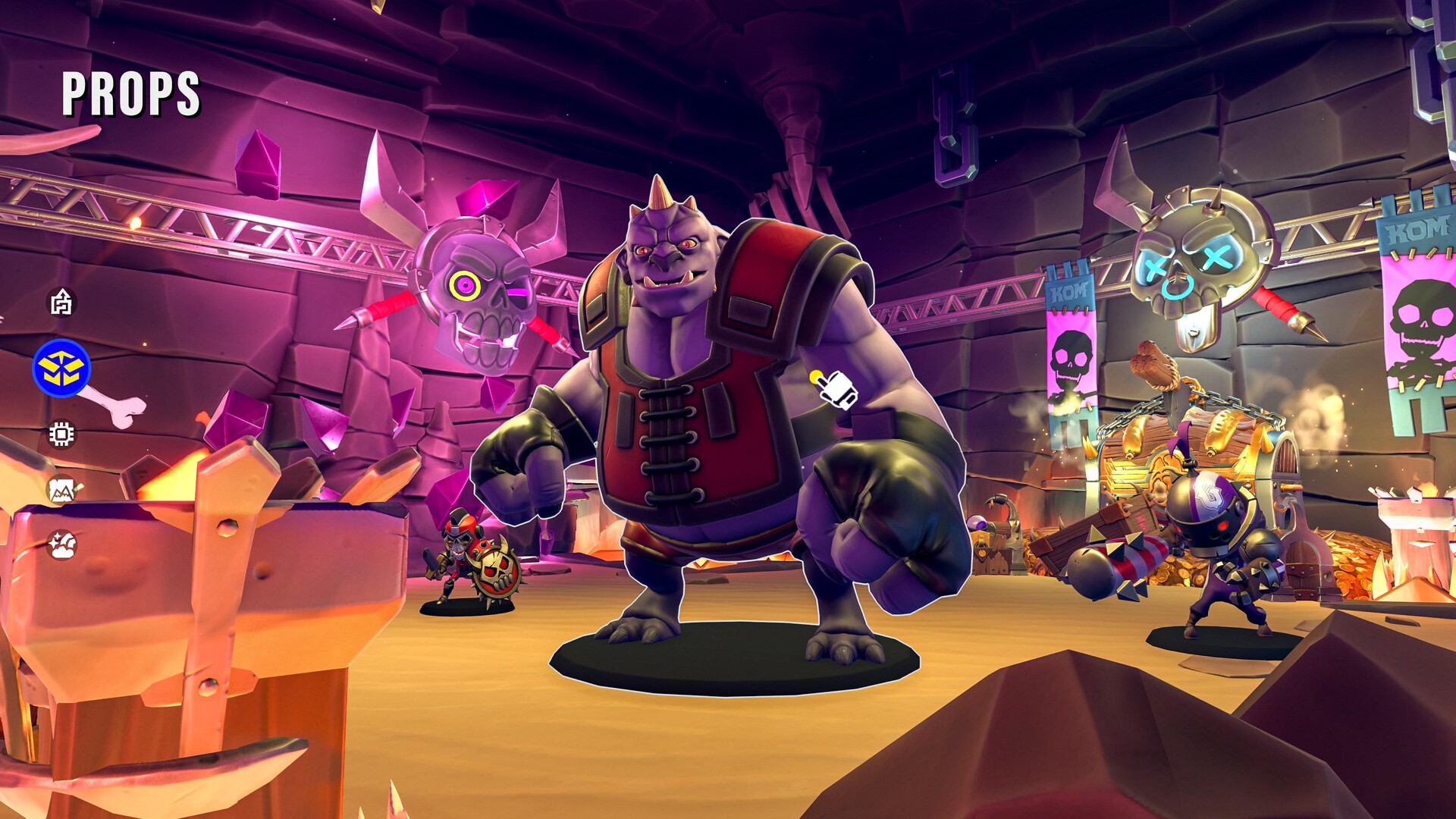
The playable characters perfectly embody this caricature logic. Each “meat fighter” is a walking parody: a robot butcher with a mechanical jaw, a gladiator in a chef’s outfit, an obese alien covered in surgical prostheses or even a failed clone of an interstellar athlete. Their lines, their animations and even their weapons tell a story of decline and derision. Here, you don’t play heroes but puppets in search of attention, survivors of the buzz in a world where notoriety is worth more than life.
But behind this grotesque farce lies a more bitter subtext. King of Meat mocks the contemporary obsession with spectacle, staged violence and the endless competition that transforms everything into a commodity. Certain dialogues, deliberately cynical, break the fourth wall: they remind you that you too participate in this charade, that you applaud the excess while making yourself complicit in it. This double talk, funny and disturbing at the same time, gives an unexpected density to what could have been just a simple release.
Where Glowmade surprises is in the way it connects this satire to a real universe. Hidden archives, coded messages and behind-the-scenes snippets reveal a larger, almost tragic world, where the "King" may not be an individual but an entity manipulating participants to fuel an eternal cycle of destruction. Behind the laughter, an uneasiness sets in: what if the farce was only a mask?
The mechanics of carnage
King of Meat is all about the chaotic symphony of combat, a precarious balance between strategy, speed and improvisation. You don’t just face your opponents: you build your own arena, you trap it, you twist it until you make it unrecognizable. Each session becomes a laboratory of creative cruelty where your design choices directly influence how the coming massacre will unfold. The essence of the gameplay lies in this cleverly constructed loop: create, fight, destroy, start again.
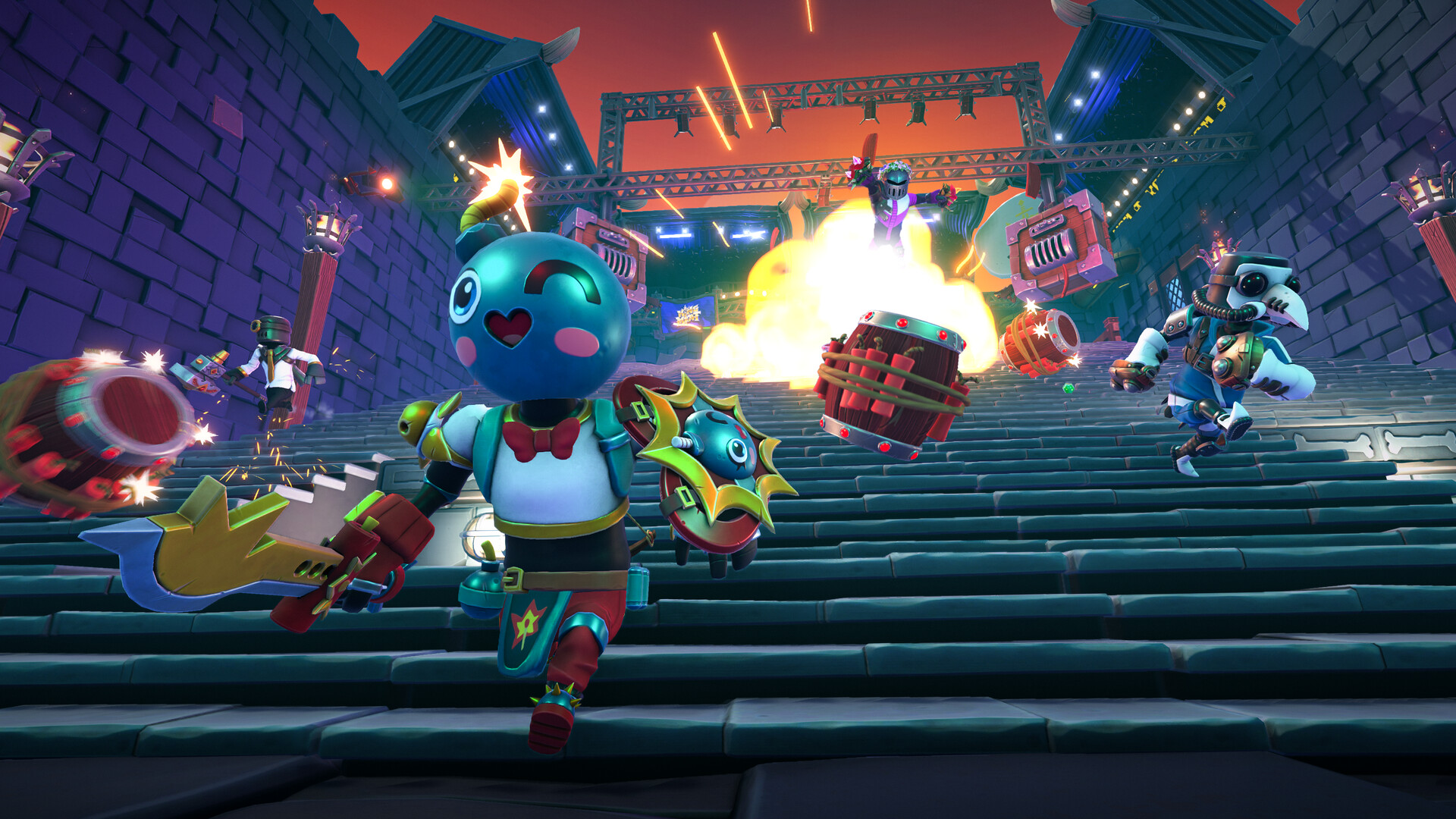
The first minutes reveal a game of raw energy. You jump, dodge, hack your way through enemies, propel your enemies into trapdoors lined with circular saws, trigger chains of traps and harvest the fragments of flesh which serve to strengthen your arsenal. The combat system, simple in its controls, gains depth as you experiment: each weapon has its own signature, each gadget subtly modifies the way in which you control space. You learn to anticipate, to set traps, to transform every corner into a deadly opportunity.
The heart of the game lies in its cooperative dimension. Together, King of Meat becomes a carnival of ingenuity and betrayal. You can work together to build metal fortresses or sabotage your allies’ creations in a burst of sadistic laughter. The balance between cooperation and competition gives rise to unpredictable, often absurd, but always exhilarating situations. The mechanics encourage collective creativity, this way of making madness a game engine.
The level design embraces this philosophy. Arenas are never simple settings: they live, breathe, deform according to the actions. Some close in on you, others explode in the middle of combat, still others transform gravity or erase visual cues, to the point of causing hypnotic dizziness. Reading space becomes a constant challenge: you have to adapt, improvise, accept dying to understand. Learning happens through failure, but each defeat nourishes the experience and refines your reflexes.
Glowmade dares to take a hybrid approach, halfway between a brawler and a sandbox. Creation tools, inspired by modular design, allow you to build your own levels and share them online. The community thus becomes a natural extension of the game: an incessant flow of insane arenas, absurd experiments and ever more sadistic traps. At its best, King of Meat pushes you to become a designer as much as a fighter.
Despite this inventiveness, everything is not perfect. Some interactions lack precision, physics sometimes gets carried away, and visual chaos can saturate the screen during multi-player confrontations. The progression system, based on random rewards, encourages the repetition of certain missions and creates slight frustration over time. However, these imbalances paradoxically contribute to the charm of the game: the sensation of an unstable but living system, unpredictable and always on the verge of exploding.
King of Meat succeeds in transforming butchery into dance and strategy into spectacle. Each fight is a gamble, each victory a brilliance, each defeat a story to tell. You play not just to win, but to see how crazy you can get before everything falls apart.
A visual and sound circus
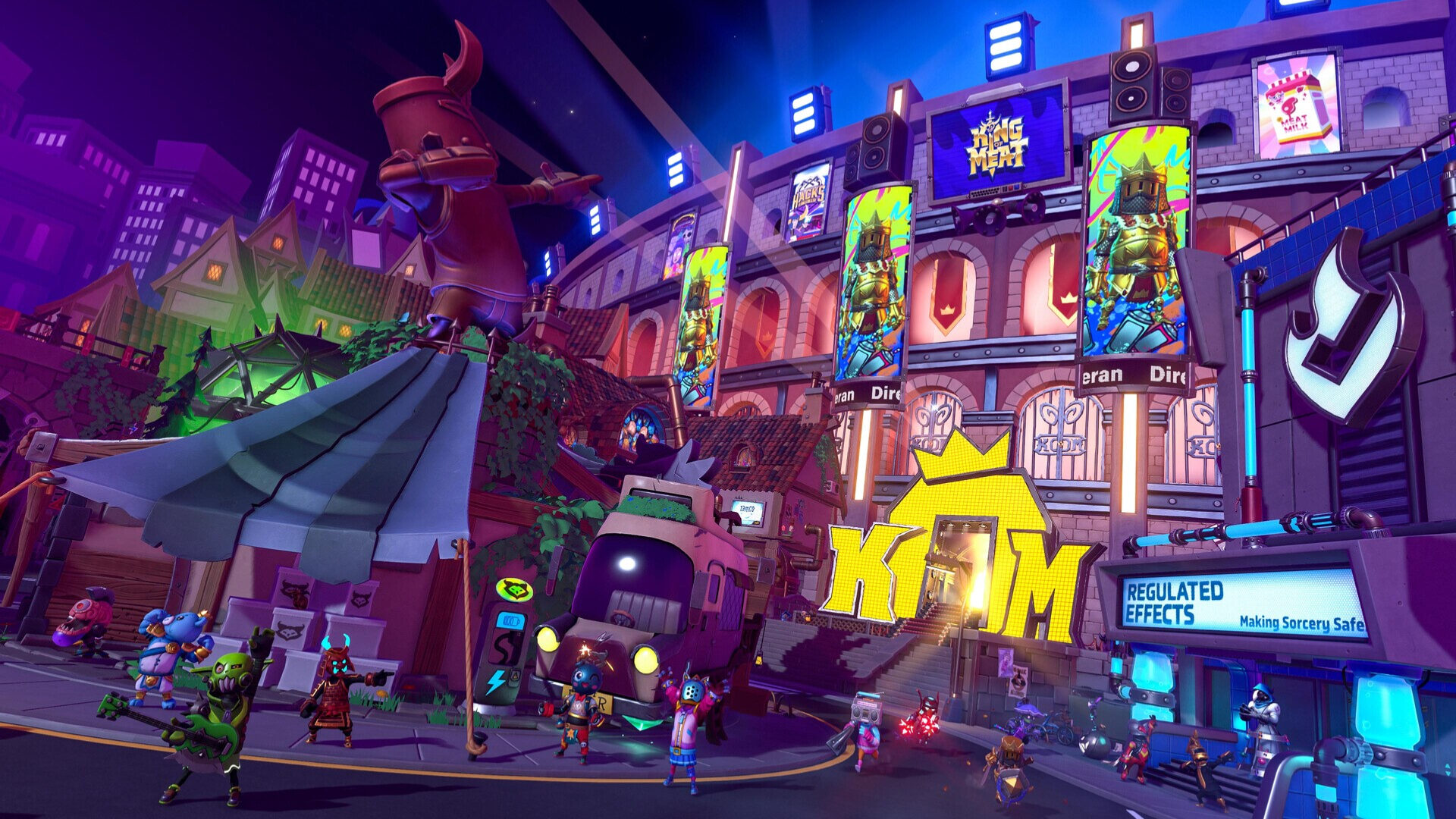
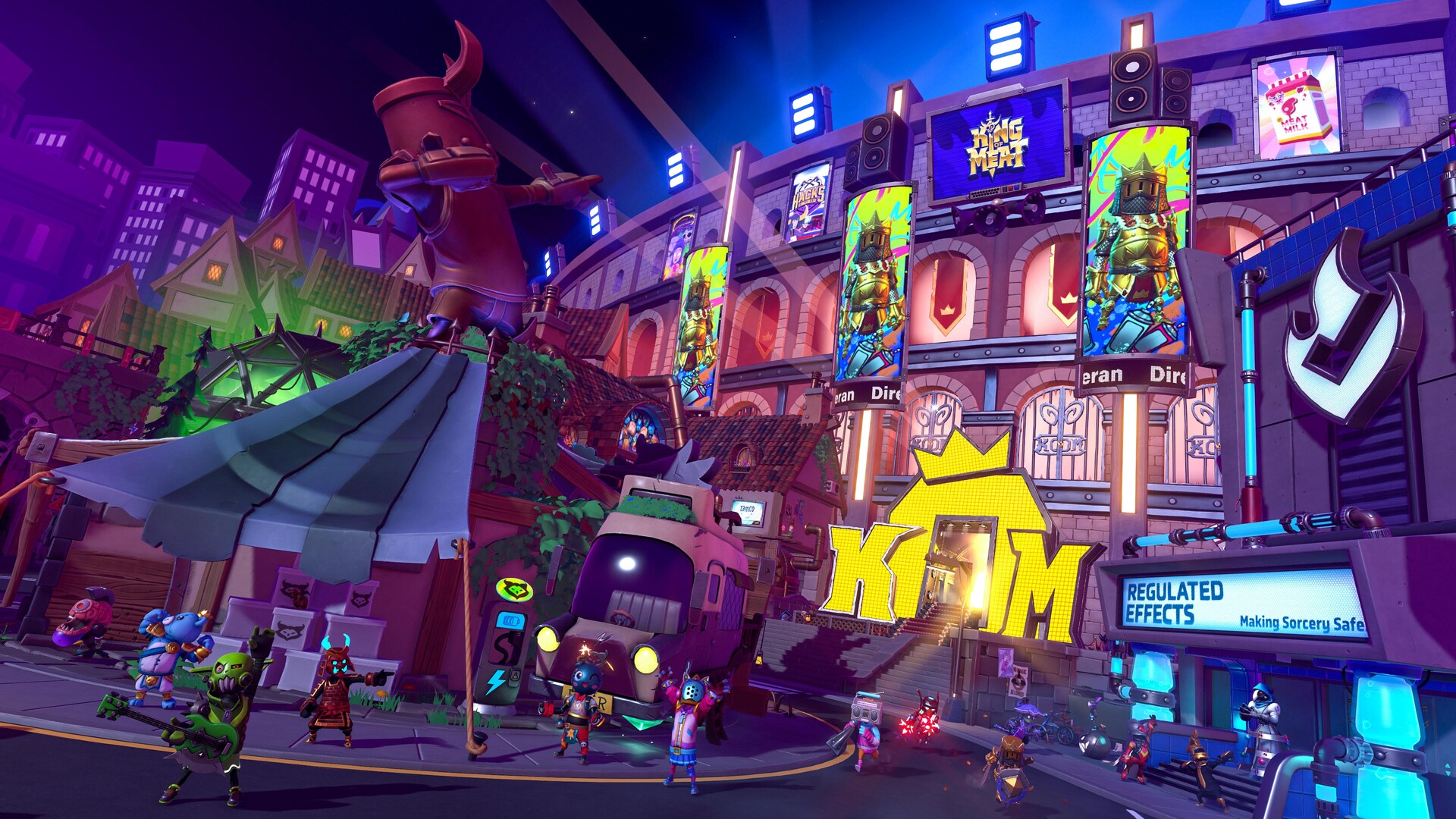
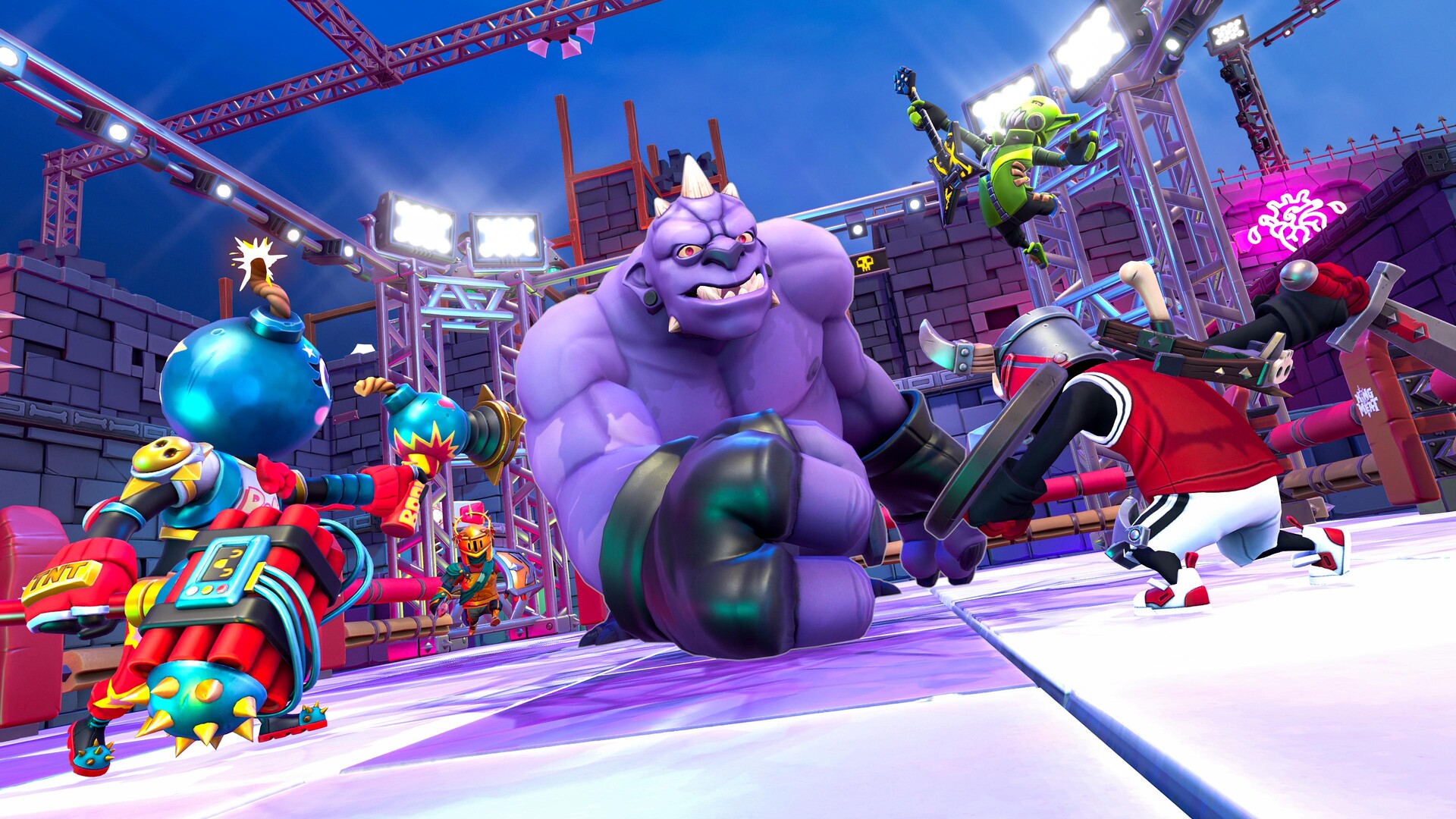
King of Meat deploys a visual universe of rare chromatic violence. Colors scream, textures pop, every corner of the screen overflows with grotesque animations and absurd details. You are immersed in a visual debauchery that oscillates between morbid cartoon and industrial science fiction, a world saturated with neon lights, metallic flesh and improbable fluids. The artistic direction never seeks subtlety: it claims ugliness as a language, excess as an aesthetic. Everything is outrageous, vulgar, excessive – and that is precisely what makes the whole thing fascinating.
Glowmade here assumes a visual identity close to digital punk. The arenas are designed like ruined show sets, saturated with spotlights, garish posters, degenerate advertising slogans. Each environment seems designed to assault your senses: giant screens broadcasting interstellar charcuterie ads, fans dripping with synthetic blood, metal cages suspended above an infinite void. The universe of King of Meat wants to be unstable, moving, always on the verge of collapsing under the weight of its own ridiculousness.
Lighting effects play a central role. Explosions, energy trails, reflections on organic surfaces transform each confrontation into a pyrotechnic spectacle. Sometimes, this escalation makes readability confusing, especially during multi-player fights where particles invade the screen. However, a strange beauty emerges from this chaos: a ballet of sparks and burst flesh that turns each victory into a grotesque opera scene.
On the sound side, the success is total. The original compositions, a mixture of aggressive electro and synthetic metal, carry the rhythm with constant power. The bass makes the controller shake, the screams of the audience mix with the hysterical laughter of the commentators, creating a controlled cacophony that amplifies the tension. The sound design pushes the grotesque to the point of caricature: amplified sounds of viscera, mechanical applause, deliberately ridiculous advertising jingles. Each sound contributes to the satire of a world where everything is a spectacle, including death.
The dubbing deserves a special mention. The actors deliver performances of rare intensity: forced laughter, theatrical screams, delirious monologues. The presenter, played with almost demented enthusiasm, becomes the emblematic voice of the game. In its entirety, King of Meat is experienced as a visual and sound concert where each note is a blow, each image a slap. You are not witnessing a simple spectacle: you are its beating heart, the extra element in a machine that crushes reason.
Verdict
The party of conscious carnage
8/10
King of Meat is not a simple arena game, it is a statement of intent. Glowmade transforms violence into ritual, the grotesque into aesthetics, and the absurd into an engine of pleasure. Each confrontation, each explosion of flesh or steel becomes a fragment of a spectacle larger than you, a staging where collective madness replaces the logic of combat. Chaos is not a mistake, it is the language of the game.
Beneath its layers of metal, sweat and derision, King of Meat hides a biting satire of modern entertainment. Everything is calculated to push you to laugh, to scream, to build then to destroy in a permanent cycle of creation and forgetting. You play as much as people watch you play, and that is its success: making you a voluntary actor in a universe that devours you while applauding you.
Pros
- The raw energy of cooperative gameplay
- Dark humour and satire of entertainment
- The community creation system, as funny as it is cruel
- The artistic direction between punk and industrial cartoon
- Fluidity and stability in multiplayer
Cons
- The absence of French dubbing
- Legibility sometimes confused in clashes
- Some recurring animation bugs
- The slightly repetitive progression system over time
More in Video games
Full library 7/10
Castlebound
SWITCH 7/10
Joe & Mac Retro Collection
SWITCH 8.5/10
The Disney Afternoon Collection
SWITCH 9/10
Bravely Default : Flying Fairy HD Remaster
SERIES 9/10
PRAGMATA
SERIES 8.5/10
FATAL FRAME II: Crimson Butterfly REMAKE
SERIES 7/10
Dragonkin: The Banished
SERIES 9.5/10
Monster Hunter Stories 3: Twisted Reflection
SERIES 9.5/10
Marathon
SERIES 8.5/10