
GreedFall II : The Dying World
The Empire seen from those it crushes
Score: 8.5/10
Images and videos
At a glance
We liked
- A dense and coherent political universe
- Writing that truly explores the tensions of the world
- A superb and immediately identifiable baroque artistic direction
We liked less
- Still uneven technical performance
- Controls that take time to learn
- A heavy combat system in the first hours
 By Farrel Grimwood · published · 6 min read
Contents
With GreedFall II: The Dying World, the Spiders studio chooses a rare gesture in the Western RPG landscape: going back to better shift the gaze. This prequel does not seek to directly extend the story of the first GreedFall, but questions its foundations. Three years before De Sardet’s arrival on the island of Teer Fradee, the world surrounding the Gacane Empire already reveals its fractures, its colonial ambitions and its contradictions.
This time the player plays a native of Teer Fradee torn from his land and transported by force to the continent. The reversal is immediate. Where the first game placed the player in an ambiguous diplomatic position, The Dying World takes a more frontal point of view. The Empire is no longer an abstract structure. It becomes a tangible system of domination, commerce and influence.
This change of perspective gives the game a more assertive political tone: rivalries between factions, religious struggles and economic tensions no longer constitute just a narrative setting; they become the very material of adventure. Each player’s decision is part of a network of interests that goes far beyond simple individual progression.
In this context, GreedFall II seeks to deepen the universe established in 2019, to explore its gray areas and to expose the forces which have shaped the fragile balance of the world.
It remains to be seen whether this return to the origins succeeds in transforming the universe of GreedFall into a true political fresco, or does it simply expand an already known framework?
Factions that shape the narrative
The starting point of GreedFall II: The Dying World immediately contrasts with the cautious diplomacy of the first episode. Here, the player does not arrive as an emissary of an empire, but in chains, torn from his native island of Teer Fradee. Captured then transported to the continent, the protagonist discovers a world that was built on the exploitation of distant lands and those who live there.
The Empire, in the first GreedFall, still retained a form of moral ambiguity. In The Dying World, this facade quickly cracks. The continent’s ports are no longer just prosperous commercial centers, but hubs where goods, soldiers and prisoners circulate. Colonization appears for what it is: a perfectly oiled economic mechanism, where cultural conquest always accompanies political domination.
The main quest is structured around this initial condition. Escaping captivity becomes the first step in a journey that gradually leads the player into the heart of the continent’s power struggles. Each city visited reveals a different facet of this unstable balance: merchant guilds obsessed with wealth, religious orders convinced of carrying out a divine mission, political authorities seeking to maintain an empire already threatened by its own contradictions.
In this environment, the Malichor disease, already central in the first game, continues to eat away at the world. It acts as a revealer of existing tensions. Some see it as a scourge to be eradicated, others as an opportunity to strengthen their influence. The responses to this crisis become so many pretexts for ideological rivalries.
The plot thus progresses in layers. Each region reveals an additional fragment of a transforming world, where imperial power begins to show its limits. The player, a former captive who has become a political actor in spite of himself, navigates between these antagonistic forces. The choices offered never simply oppose good and evil. Rather, they confront two incompatible visions of an already fragile future.
A strategy born from survival
The first GreedFall was an action RPG tinged with diplomacy and colonial exploration. GreedFall II: The Dying World profoundly changes this balance. The Spiders studio chooses here to shift the center of gravity of the gameplay towards a much more tactical, almost methodical approach.
The difference is felt from the first skirmishes. Clashes are no longer based on simple dodging and a series of rapid attacks. The game introduces an tactical pause system which allows you to interrupt the action to organize the group’s movements. Each companion then becomes a piece of a larger chessboard. Positioning a heavy fighter to block an enemy charge, preparing a support ability, casting a spell at the precise moment when the opponent exposes his weakness: combat becomes an orchestration rather than a reflex.
This choice gives the clashes a much more cerebral dimension. The enemy is no longer an isolated obstacle but a configuration to be read. Some creatures favor frontal pressure, others harass from a distance, still others break formations if the player is careless. Efficiency then depends less on the speed of execution than on the ability to analyze the situation.
Group management reinforces this logic. Companions have distinct specializations that directly influence how you approach a fight. One character can serve as a defensive anchor, another control space, a third support the team with utility abilities. The composition of the squad thus becomes a strategic, almost political decision, as it conditions the way of facing the world.
This orientation not only transforms combat. It also modifies the perception of danger. In The Dying World, the error is costly. A bad reading of the field, a poorly thought out formation or an attack launched too early can cause the collapse of the entire team. The clashes then gain a tension that the first game only achieved episodically.
This requirement, however, has a downside. The system requires real adaptation time. The first hours are heavy, rigid, especially for those who expected a direct evolution of the gameplay of the first episode. However, once the mechanics are assimilated, the combat reveals its true intention: to transform each confrontation into a tactical problem to be solved.
This change ultimately reflects the logic of the game itself. In a world structured by political rivalries, colonial conflicts and fragile alliances, pure brutality is no longer enough. Survival depends on strategy, preparation and the ability to think ahead.
A baroque world on the verge of collapse
In GreedFall II: The Dying World, the artistic direction remains one of the pillars of the game’s identity. Already in the first episode, the Spiders studio had found a singular visual signature: a mixture of classic fantasy and aesthetics inspired by 17th century Europe. The Dying World takes this base and extends it towards a larger, more contrasted, more unstable universe.
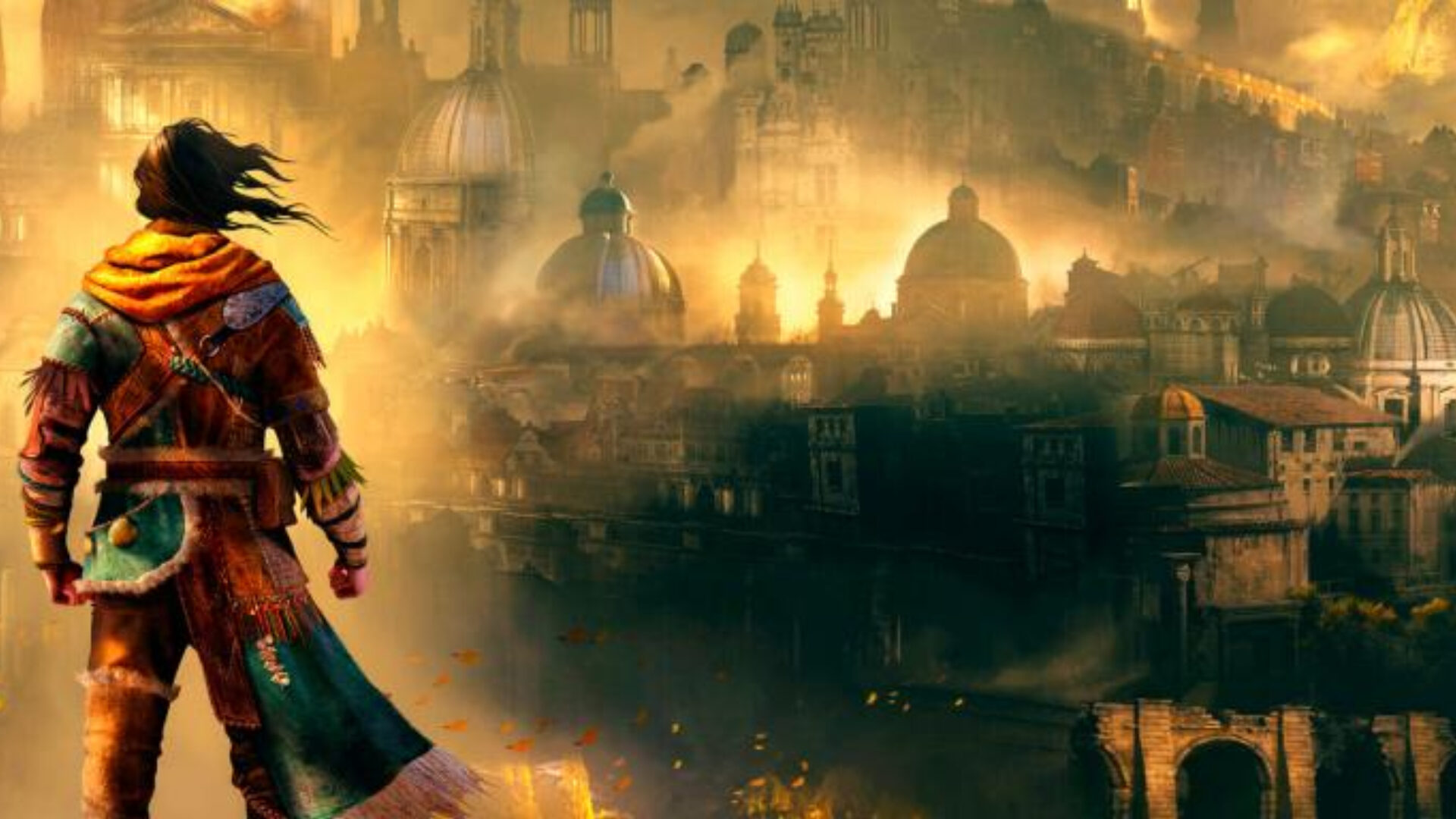
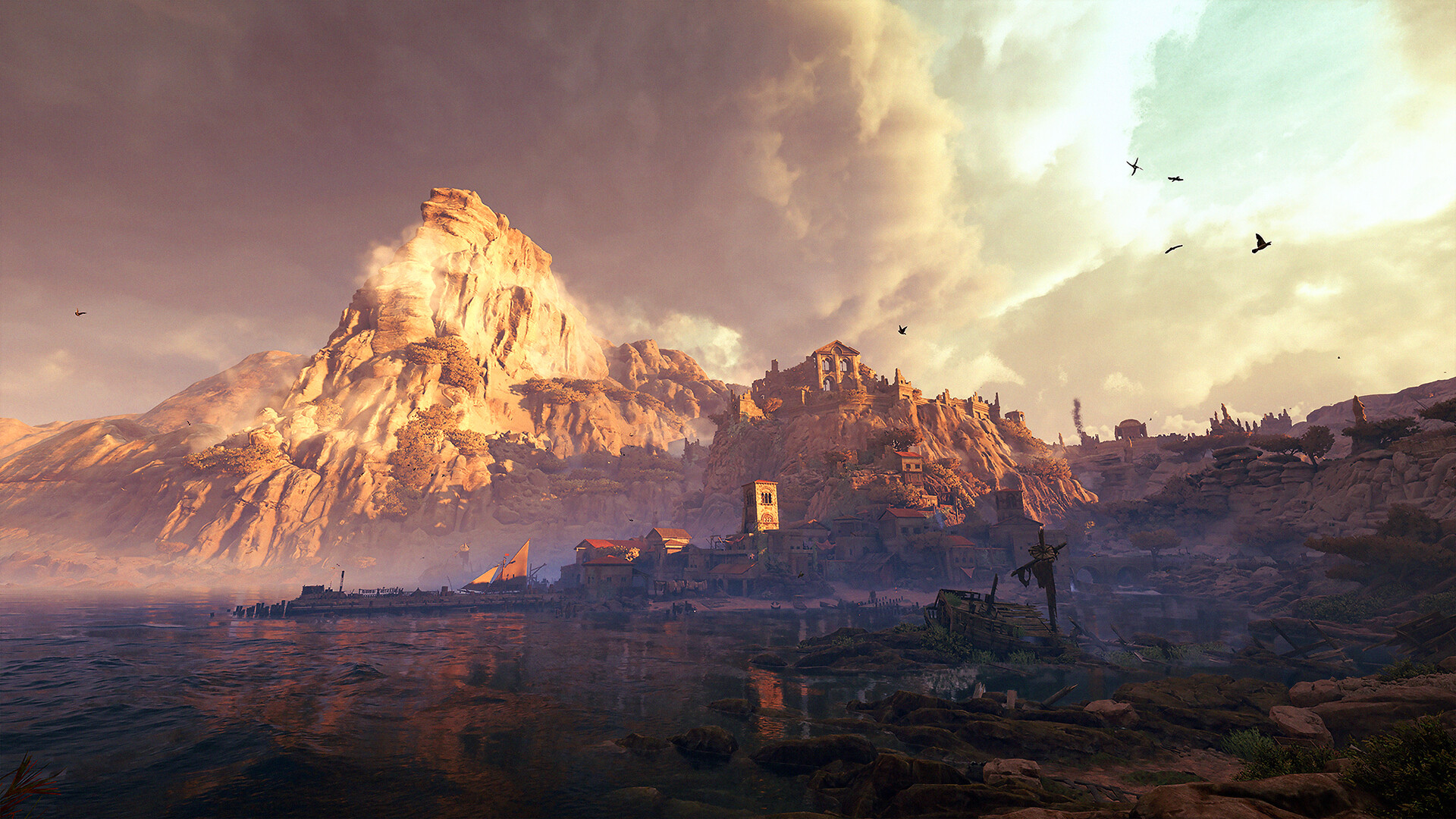
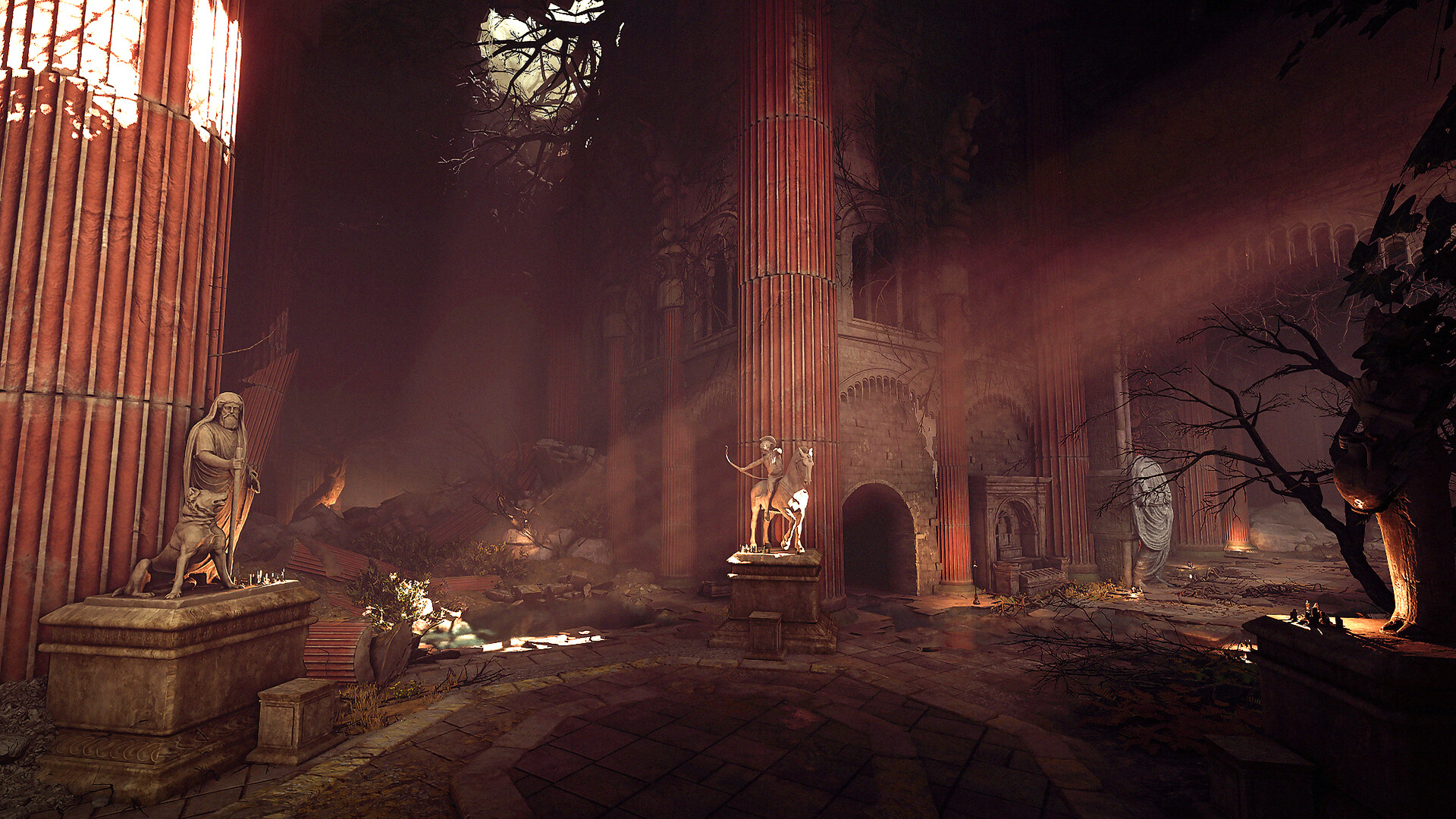
The cities of the continent reflect this ambition. Ports saturated with activity, narrow streets dominated by baroque facades, administrative buildings whose architecture recalls the assurance of an empire convinced of its legitimacy: each space expresses a form of organized power. Statues, ornaments and religious symbols invade public squares as a reminder that the imperial order is not only based on force, but also on a deeply rooted ideology.
This setting, however, takes on a particular dimension when the player begins to observe its cracks. Behind the palaces and cathedrals, the more modest neighborhoods tell another story: that of a world where social hierarchies are rigid and where imperial prosperity rests on a fragile balance. The visual contrasts between wealth and precariousness directly contribute to the discourse of the game.
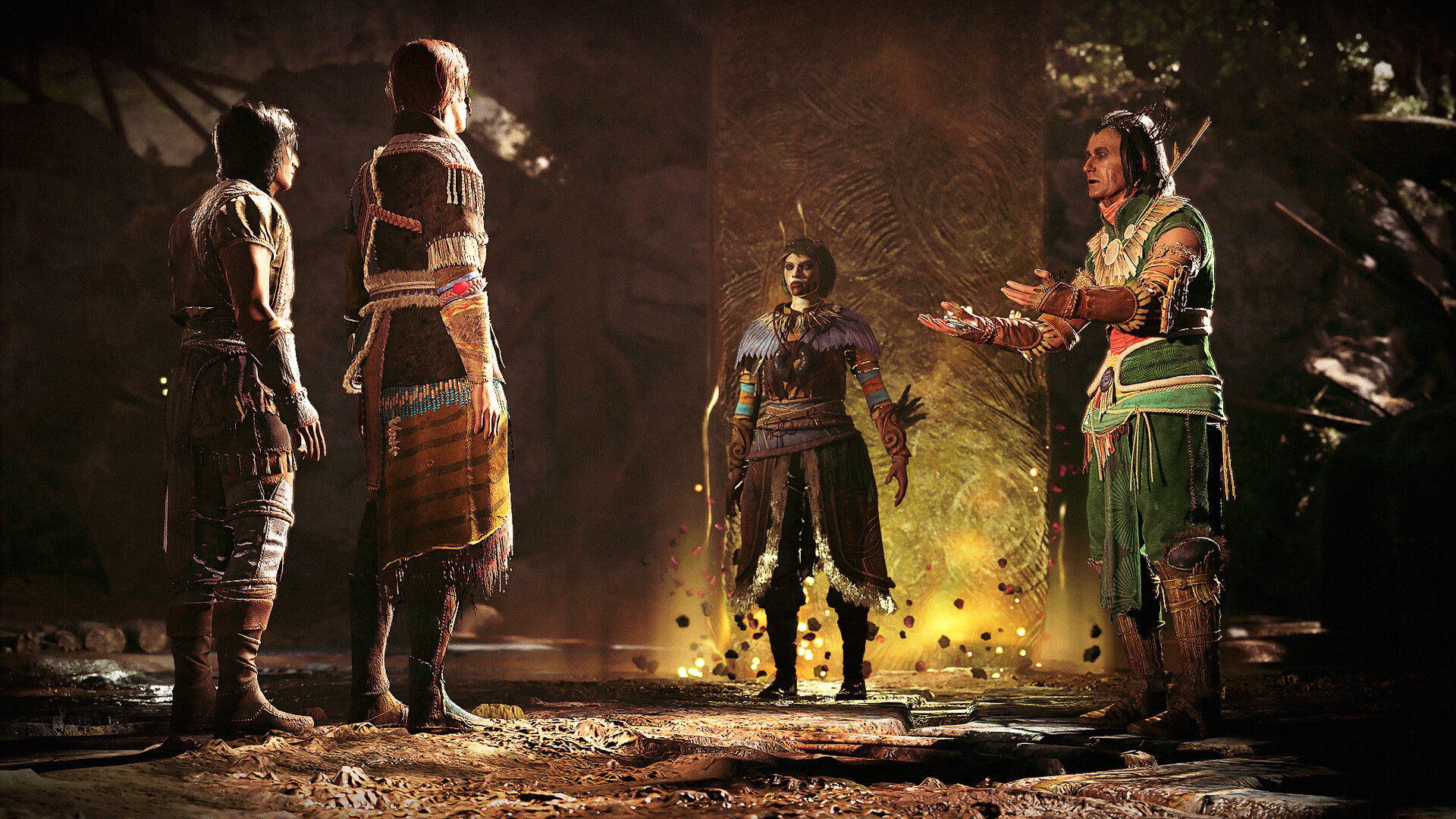
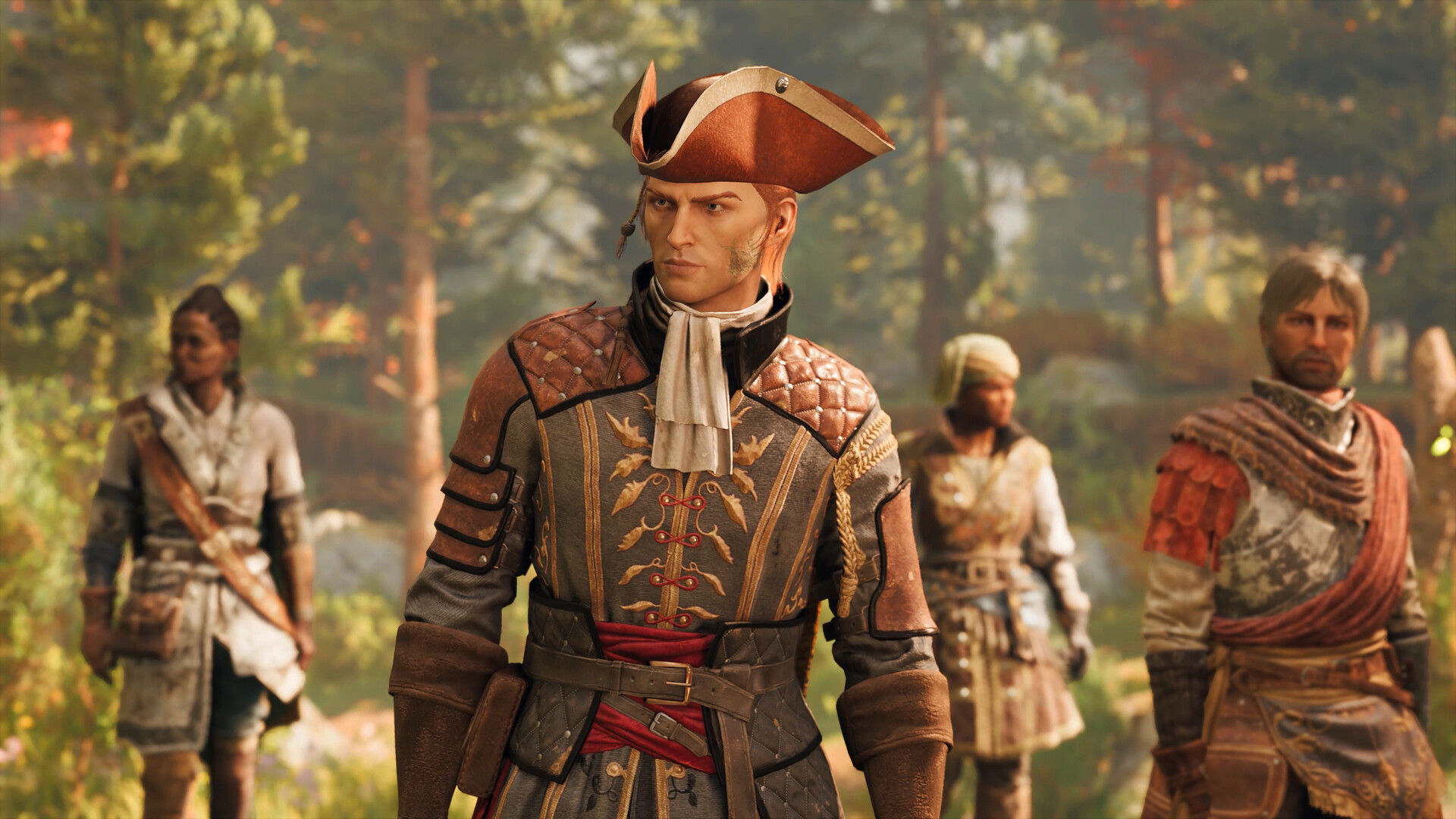
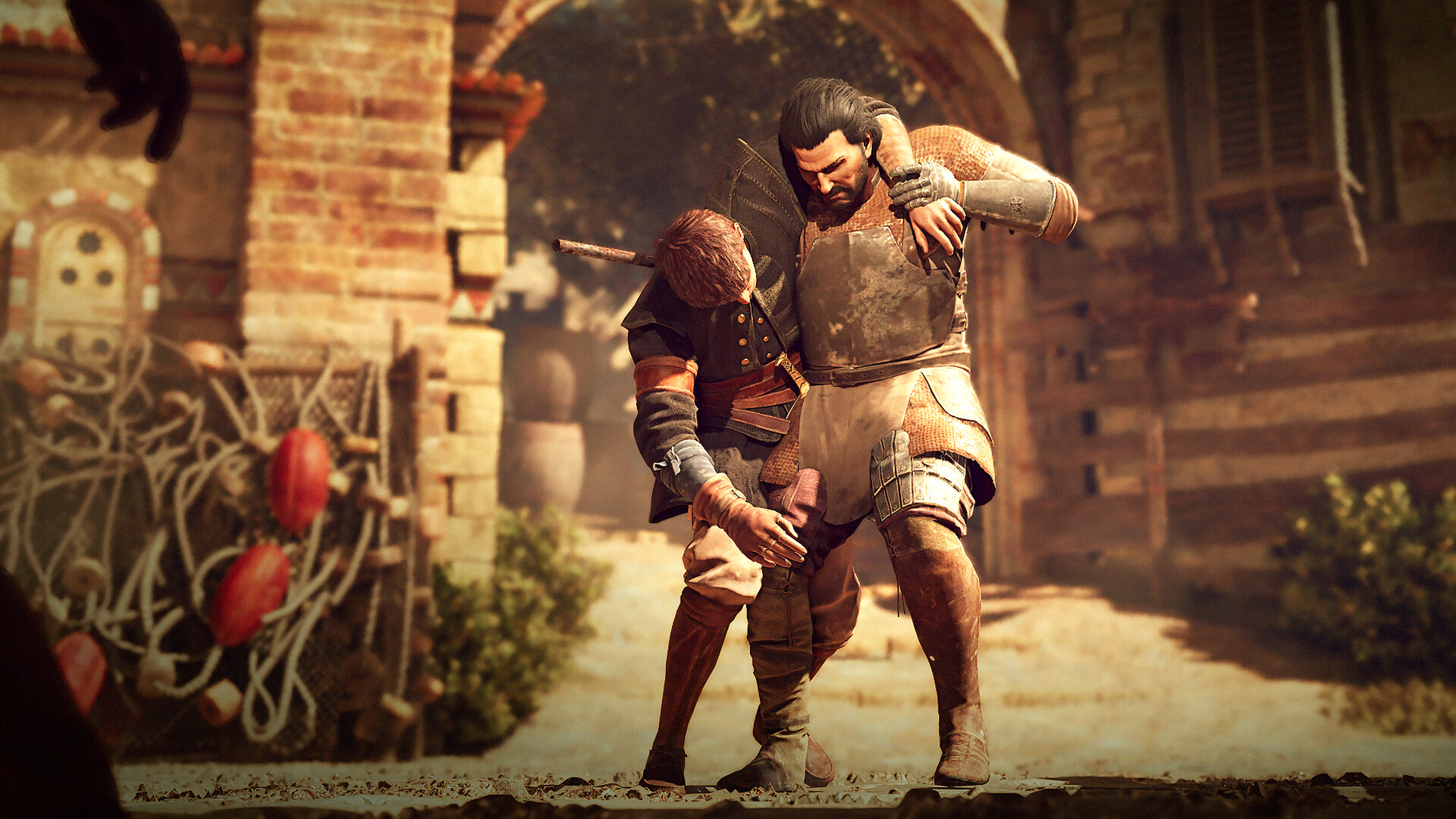
The costumes extend this reading. Military uniforms, embroidered coats and religious clothing make up an immediately identifiable iconography. Each faction has its own aesthetic, its colors, its signs of authority. This visual differentiation helps the player read the political space of the world without the need for constant explanations.
On the opposite side of these urban centers are the wilder territories, where the imperial footprint is more uncertain. Natural landscapes, sometimes still marked by the traditions of native peoples, introduce a visual tension between two visions of the world: that of organized colonial expansion and that of an environment that resists it.
This duality constitutes one of the aesthetic successes of The Dying World. The world is not just a backdrop. It acts as a permanent commentary on the unfolding story. The architecture, clothing and landscapes all tell the same thing: an empire that is expanding, but whose foundations are already beginning to shake.
Verdict
A world that is written in fractures
8.5/10
With GreedFall II: The Dying World, the Spiders studio is not only expanding the universe of the first game. It is moving its center of gravity. Where GreedFall offered a diplomatic adventure in the heart of a still mysterious territory, this prequel chooses to explore behind the scenes: the political tensions, economic rivalries and contradictions of a world shaped by imperial expansion.
This change of perspective gives the game a darker, but also more ambitious, tone. The story gains in density, the factions in complexity and the universe in coherence. The narrative progression, supported by well-written characters and quests rich in dilemmas, gradually builds a political fresco where each decision leaves a trace. Supported by an artistic direction that remains as distinctive as ever, mixing baroque inspirations and colonial imagination, The Dying World confirms Spiders' ability to build immediately recognizable universes. Despite some still perceptible technical rigidities, the whole manages to offer a dense, coherent experience deeply marked by its identity.
The result is an ambitious, demanding RPG, driven by a clear vision: to tell the story of a world whose foundations are already beginning to crack.
Pros
- A dense and coherent political universe
- Writing that truly explores the tensions of the world
- A superb and immediately identifiable baroque artistic direction
Cons
- Still uneven technical performance
- Controls that take time to learn
- A heavy combat system in the first hours
More in Video games
Full library 5.5/10
Warrior Cats: Clans of the Forest
SWITCH 6.5/10
Demons’ Night Fever
SWITCH 9/10
Dragon’s Dogma 2: Dark Arisen
XBOX 6/10
Qliphah in Providence’s Shadow
SWITCH 8/10
Verho – Curse of Faces
XBOX 7.5/10
Terrinoth: Heroes of Descent
XBOX 7/10
LumenTale: Memories of Trey
SWITCH 6/10
STARBITES
SWITCH 8/10
Monster Crown: Sin Eater
XBOX 7/10