
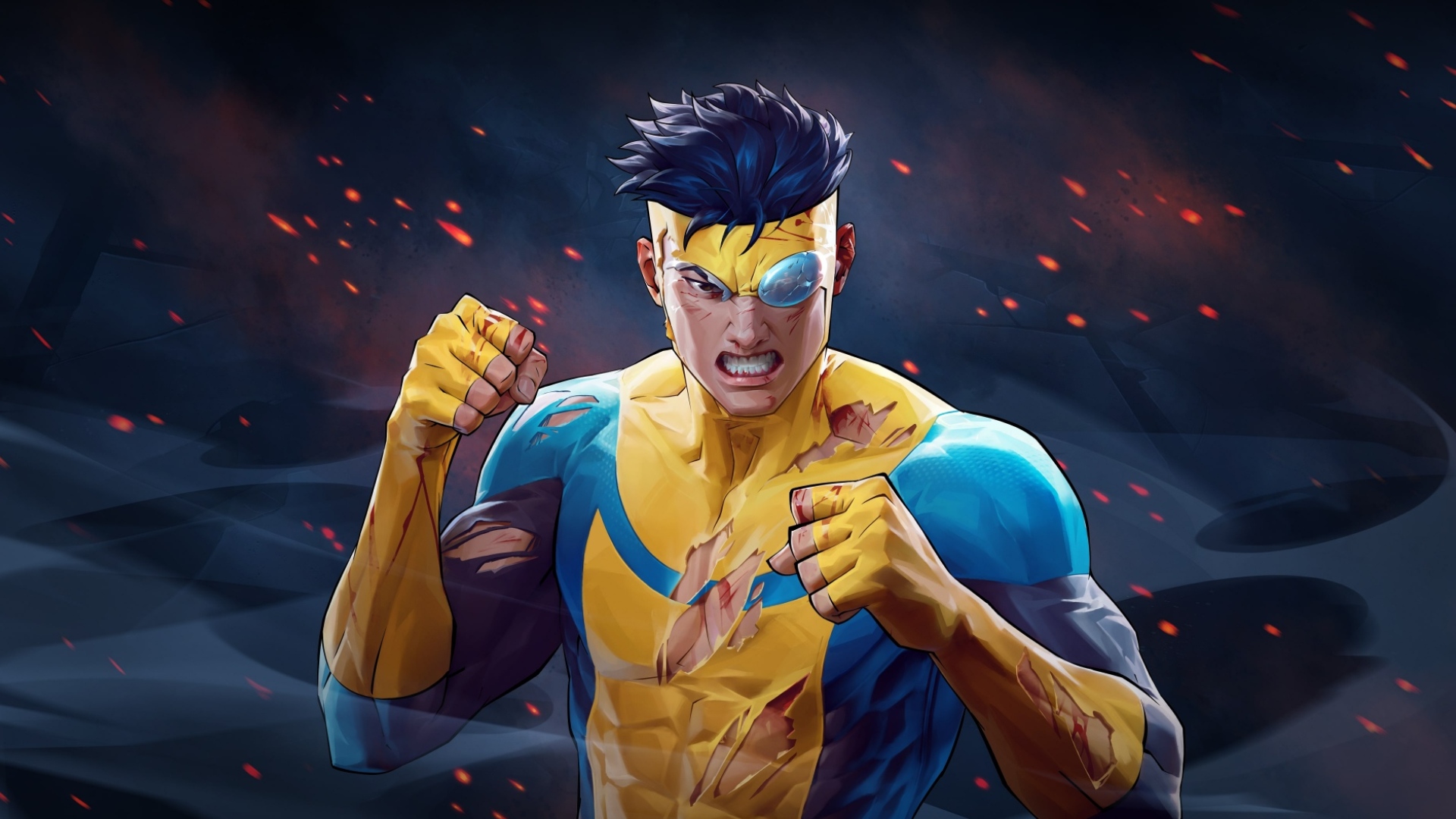

INVINCIBLE VS
Score: 8/10
Images and videos
At a glance
We liked
- An accessible and really solid 3v3 system
- Visual violence faithful to Invincible
- Well differentiated characters despite the roster’s overall power
- Excellent sound energy
We liked less
- A Story mode that is too short and not memorable enough
- Single-player content lacks depth
- Vocal absences break the immersion
- The selection of fighters and the arenas quickly show their limits
 By Farrel Grimwood · published · 7 min read
Contents
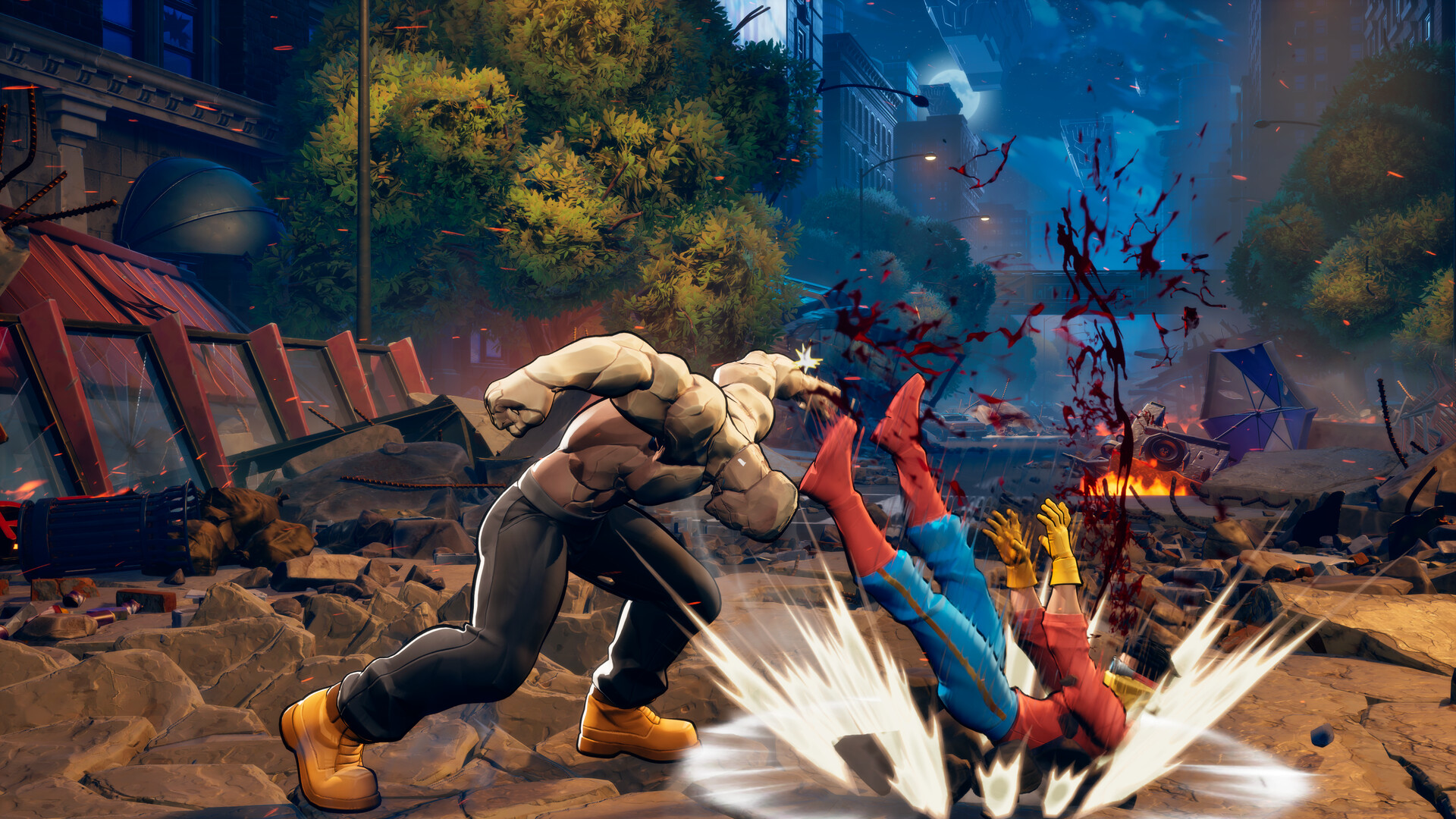
Invincible VS is presented with an almost obvious premise: this franchise had to end up in a fighting game. The comic and the animated series have always told their family breakups, their betrayals and their existential crises with bodies crushed against walls. The blood is not a decoration, but a punctuation. And Quarter Up understood that.
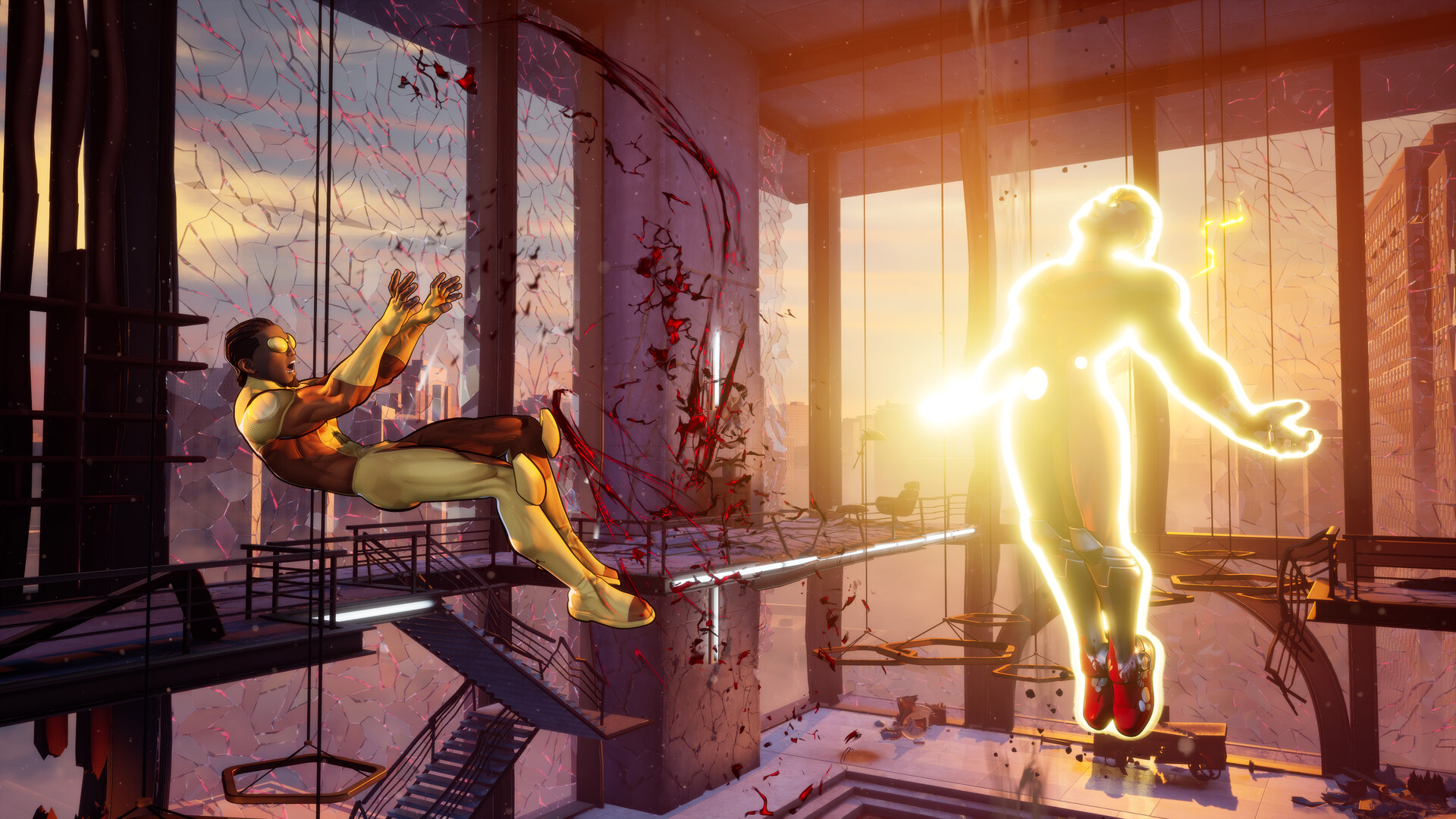
The game therefore does not seek to soften Invincible to make it more presentable. It keeps the broken jaws, the silhouettes projected into the concrete, the final moments that end an exchange like an execution. The result is brutal, readable, sometimes grotesque in its quantity of hemoglobin, but faithful. For once, the adaptation doesn’t feel like it’s asking for forgiveness for its source material.
The chosen form is that of 3v3 with tags and assistance. Three characters, a team to build, relays to place at the right time, combos to extend, defensive exits to break the opposing pressure. The choice is good. Invincible speaks of absurd balances of power, of heroes too powerful for the world they traverse, of bodies which endure for too long. The tag-fighter format gives this brutality structure.
Invincible VS is not just a well-packaged licensing product. It’s a real fighting game. It lacks content, its Story mode does not have the dramatic strength of the series, and some voice casting choices are grating. But the foundation is solid. Better: it hits.
The shot that makes an image
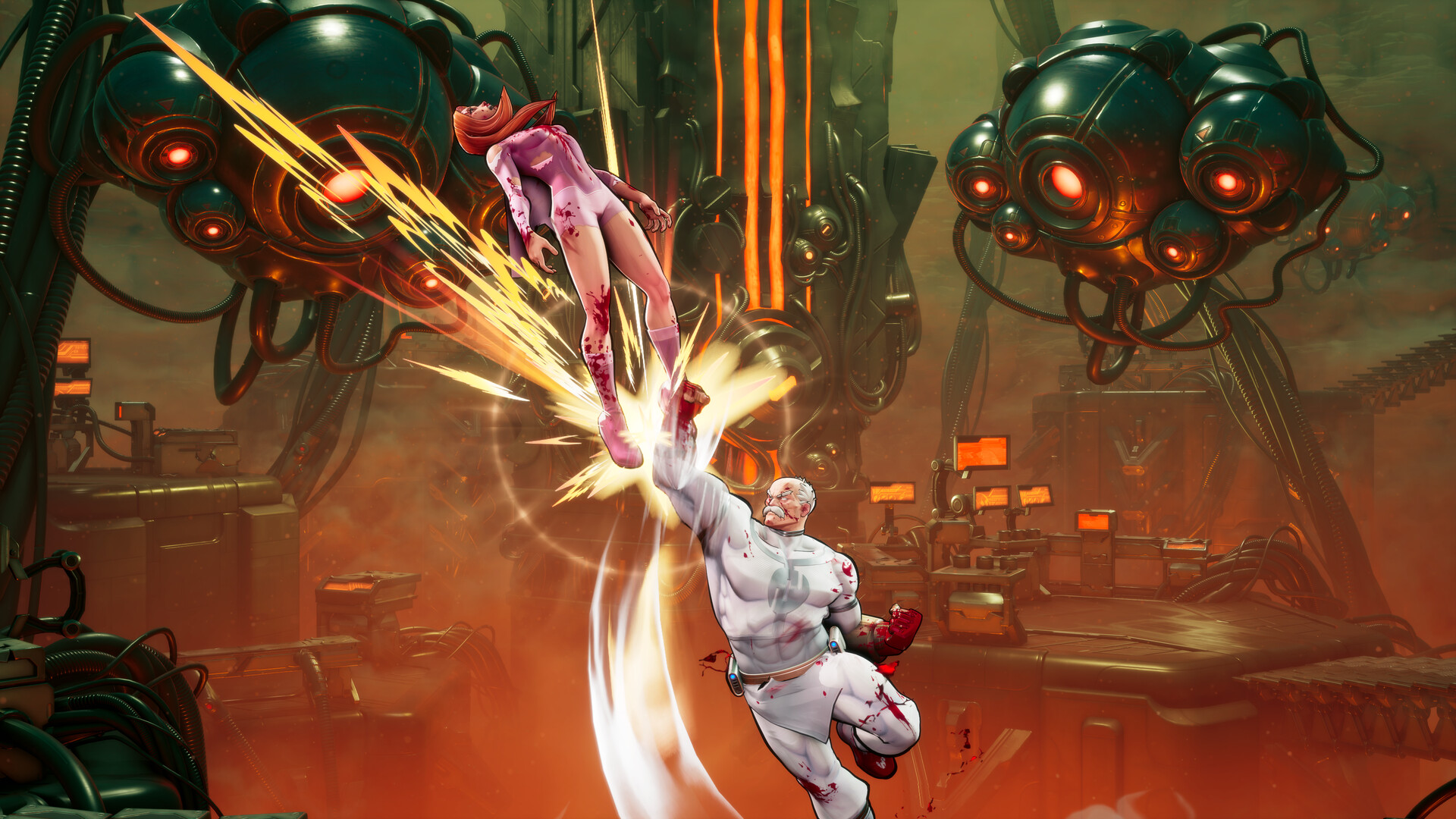
The first success of Invincible VS is visual. The characters have weight, the impacts slam, the stages are destroyed, the bodies keep the marks of the blows. The game does not seek to exactly copy the aesthetic of the animated series. It translates it into 3D with enough fidelity so that the silhouettes remain immediately recognizable, and enough volume so that each confrontation gains presence.
This violence works because it does not hold back. A major hit doesn’t just move a life bar. It tears, crushes, crosses, splashes. The super attacks and ultimates have this logic of one-upmanship specific to Invincible: the action goes too far, then even further, until it becomes almost comical. The game assumes this excess instead of reducing it.
Sound works in the same direction. Bones crack, impacts sound heavy, the Viltrumites’ movements slam like planes passing too close. The Glitch Mob’s music pushes the energy without drowning out the fights. Invincible VS has a real sonic identity, not just a soundtrack placed behind exchanges.
The pre-fight dialogues add an important layer. The characters aren’t just models pounding on each other. They provoke each other, recognize each other, judge each other, rekindle tensions known to fans. Some exchanges are enough to make it feel like an interactive episode, even when the fight itself doesn’t make canon sense.
Where the game loses a little strength is in emotional coherence. Invincible relies on the pain of consequences. Here, everyone can end up in a pulp, then return to the next match. This is normal for a fighting game, but it necessarily reduces the dramatic load of the universe. Invincible VS gains in fun what it loses in gravity.
An accessible, not simplistic system
Invincible VS understands that a modern fighting game must open the door without emptying the room. The inputs are simple, the basic sequences are read quickly, auto-combos provide an easy way in, but the system does not stop there. Tags, assists, defensive breaks and the hierarchy of blows quickly provide material.
The great success comes from this dosage. You can have fun without having to read twenty years of fighting game combos. We can also feel, very quickly, that the game has something to hold in the hands of more serious players. A good team isn’t just about three favorite characters. You have to think about the range, the pressure, the assists, the ability to open guard or extend a sequence.
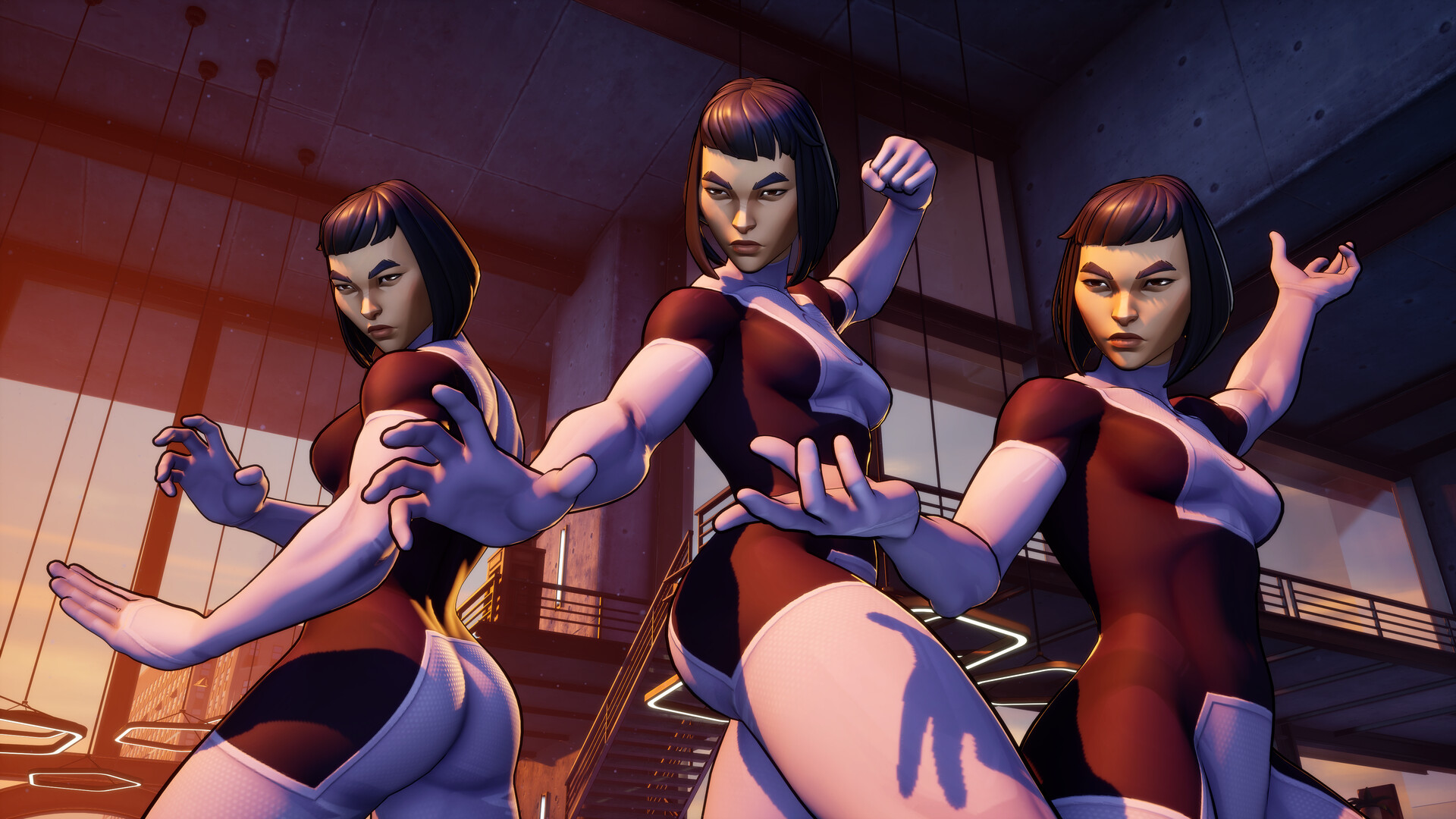
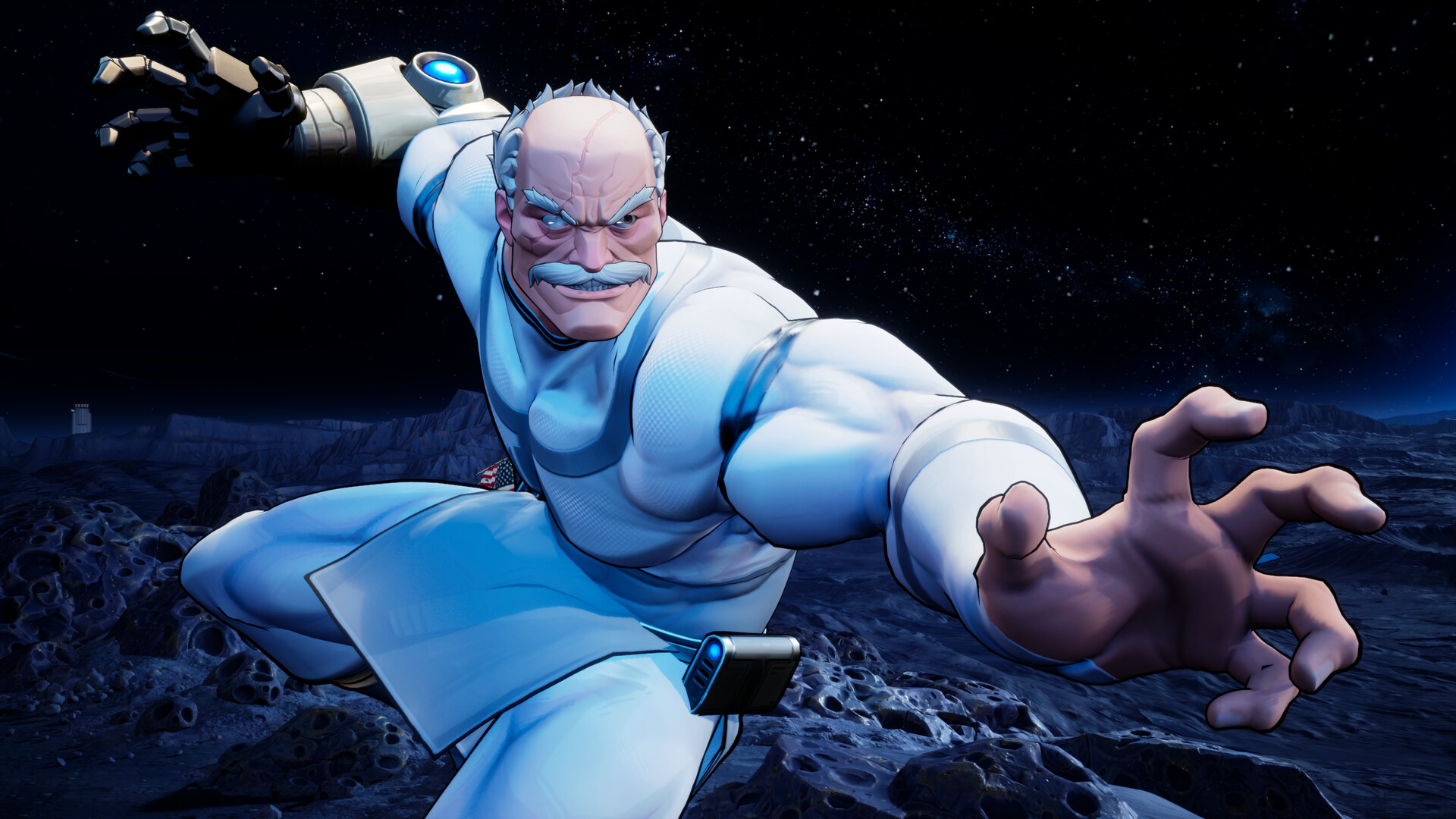
The characters stand out better than their common power might lead us to fear. The Viltrumites hit hard, obviously, but they don’t take up all the space equally. Atom Eve, Rex Splode, Robot, Cecil or Monster Girl bring other readings, other tempos, other ways of dirtying the screen. The launch selection has eighteen fighters, and it already gives enough profiles to build really different teams.
The tutorial does the job. It explains the fundamentals, gives the first keys, encourages you to understand the role of tags and counters. It does not turn the player into an expert, but it prevents the system from remaining opaque. For a licensed game that also targets fans of the series, this is essential.
The game remains stronger in movement than in theory. When a team begins to rotate, when a combo is interrupted with the right tag, when pressure is extended with an assist, when the ultimate ends the exchange in a deluge of blood, Invincible VS finds exactly its language. It’s quick, dirty, readable, generous.
There are snags. Counter Tag lacks consistency. Some shots miss in situations where the game seems to have started the right sequence. These flaws don’t destroy the fight, but they exist. In a game aimed at the competitive scene, these small grains of sand need to be corrected quickly.
The series holds up better than the script
Story mode had a difficult mission: to tell an original plot without betraying the universe, while justifying impossible clashes between allied, enemy, dead, absent or too powerful characters. It fulfils part of that promise. It gives a framework, connects the fights, places some strong scenes and offers enough fan service to keep the attention.
But this Story mode doesn’t have the power of an episode of Invincible. It lacks length, build-up and emotional impact. The series knows how to hurt because it sets up the characters before breaking them. The game doesn’t have this time. It prefers to move forward to the next fight. For an adaptation of this franchise, this is a clear weakness.
The problem isn’t the writing. The dialogues often work, the references are spot on, some face-to-face encounters have bite. The problem is scale. Invincible VS tells enough to justify its single-player mode, not enough to make a lasting impression.
Offline modes complete the whole without transforming it. Arcade, training, tutorial, difficulty levels, some rewards, galleries: the content exists, it does its job, but it never overflows. We quickly feel that the heart of the game is elsewhere. Invincible VS lives primarily in local and online versus.
A fighting game must first succeed in its fights. But the Invincible license calls for a little more than a good battleground. It calls for a campaign that hits the stomach, scenes that remain, a feeling of catastrophe. The game gives blood, minus the injury.
A solid ring
On Xbox Series X|S, Invincible VS aims for what a fighting game should aim for first and foremost: fluidity and readability. The fights keep the rhythm, the animations remain clear despite the chaos, and the staging does not sacrifice the understanding of the exchanges. The spectacle does not take precedence over the game, which is crucial for such a visually charged title.
The game also benefits from real comfort in terms of controls. Modern controls allow you to quickly get into the system, while more technical players still have room to personalize their approach. With the Xbox controller, the basics fall naturally under the fingers. More specialized sticks and controllers also have their place.
Rollback netcode is essential, and it is one of the good decisions of the project. Online versus cannot be a fragile supplement in a game like this. It is at the center of its lifespan. The exchanges remain clean, the fights do not collapse under latency, and the game already provides a serious basis for those who want to work on it beyond solo.
French is present for the texts and subtitles, the voices remain English. This choice goes better here than in many games, because the sonic identity of the series already relies heavily on its English-speaking casting. The absence of several known voices is felt more. When Steven Yeun, Seth Rogen or Walton Goggins are missing, fans’ ears notice.
An adaptation that chooses its side
Invincible VS clearly chooses the fight before the fan service museum. This is the right priority. Many adaptations fall into the opposite trap: they pile on references and forget to become a good game. Quarter Up avoids this. The studio first builds a solid mechanic, then dresses it up with Invincible.
This choice gives the game its best quality and its main limitation. The fight stands up without the franchise. It would still be fun with other characters, other names, other settings. That’s a real compliment. But Invincible is not just any license. It carries an emotional charge, a moral violence, a family brutality that the game touches on more than it embodies.
The launch content is honest, not generous. Eighteen characters, essential modes, local, online, arcade, story, training. The structure is there. It still lacks width. Few really surprising modes, a campaign that is too short, a selection of fighters that is already waiting for the Year 1 Character Pass to fill visible absences: the follow-up model is too obvious.
This does not make Invincible VS an incomplete game. This makes it a game built to last by its scene and its updates, not by its initial content. The player looking for a dense single-player adventure will be disappointed. The player who wants a tag fighter that is brutal, accessible and deep enough to dig into teams for weeks has plenty to enjoy.
Invincible VS therefore does not miss its entry. It lands its blows. And it hits hard.
Verdict
A real blow to the jaw
8/10
Invincible VS succeeds where it absolutely had to succeed: in combat. Its 3v3 is accessible, violent, fast-paced and readable, and deep enough to make you want to build real teams. The presentation respects the brutality of the franchise, the sound hits, the characters have style, and the game finally gives Invincible a console adaptation that stands up.
It remains too short in single player, too light in additional content and its Story mode does not carry the dramatic charge of the series. Some missing voices grate, some mechanics need polishing, and the pattern of upcoming content is already showing. But the basis is there. Invincible VS is a very good fighting game, not just a good product for fans.
Pros
- An accessible and really solid 3v3 system
- Visual violence faithful to Invincible
- Well differentiated characters despite the roster’s overall power
- Excellent sound energy
- Local and online versus really carry the game
Cons
- A Story mode that is too short and not memorable enough
- Single-player content lacks depth
- Vocal absences break the immersion
- The selection of fighters and the arenas quickly show their limits
- Counter Tag and hit detection still need polishing
More in Video games
Full library 9/10
Dragon’s Dogma 2: Dark Arisen
XBOX 7/10
Brigandine Abyss
XBOX 6/10
The Walking Dead: Streets of Survival
XBOX 8/10
Onimusha: Way of the Sword
XBOX 7/10
HOT WHEELS Infinite Rush
XBOX 8.5/10
S.T.A.L.K.E.R. 2: Cost of Hope
XBOX 7.5/10
The Lord of the Rings: War in the North – Legacy Edition
XBOX 8/10
Verho – Curse of Faces
XBOX 8/10
Halo: Campaign Evolved
XBOX 7/10