
Anno 117: Pax Romana
The Empire holds in its warehouses
Score: 8.5/10
Images and videos
At a glance
We liked
- A construction loop as addictive as ever
- A more accessible episode without being empty
- Latium and Albion give real color to the game
- Faith and the tree of discoveries enrich progression well
We liked less
- The campaign lacks weight
- War remains less interesting than the economy
- The interface requires too many detours
- The controller slows down administration
 By Farrel Grimwood · published · 9 min read
Contents
A good Anno never starts out spectacular. It begins with a road that is too short, two houses installed a little quickly, a reserve of wood that goes down faster than expected, then this very particular little worry: if we add a bakery, we will also have to think about wheat, flour, coal, transport, workers, those who will then demand something else. Anno 117: Pax Romana knows this mechanic very well. It does not try to hide it behind Rome. It puts it back at the centre.
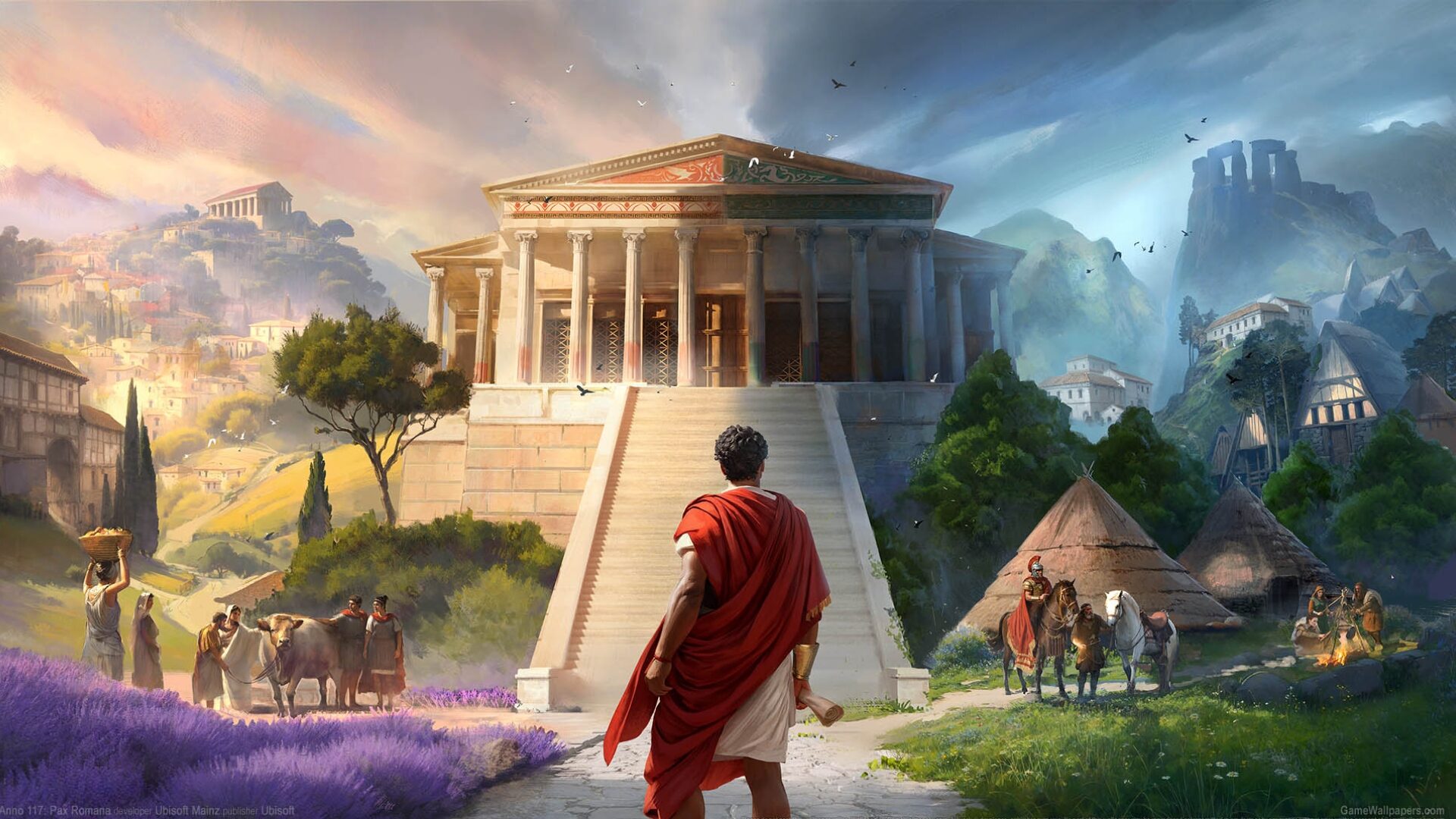
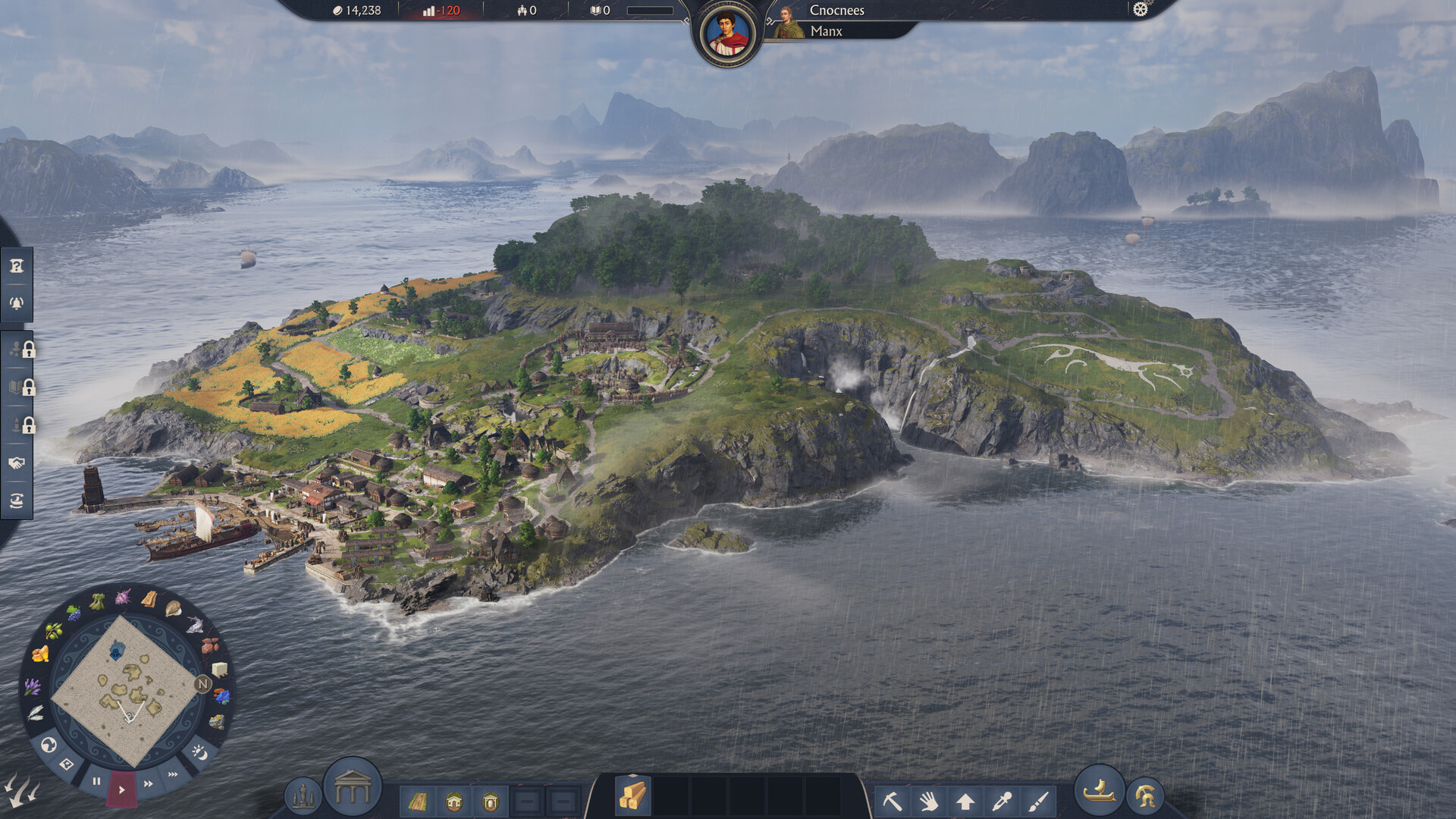
Ubisoft Mainz this time sets the series in the heart of the Roman Empire, at the time of the Pax Romana. The player takes the role of a governor, builds in Latium, ventures towards Albion, deals with the needs of the citizens and the demands of the emperor. Rome provides the decor, the vocabulary, the statues, the roads, the temples. But the real subject remains the same: how to transform a fragile island into a province that runs on its own, then accept that it never really runs on its own.
This is where the game finds its strength. Anno 117 is not the most violent, nor the most surprising, nor even the most daring of city-builders. It is more valuable than that: it is readable. It makes its systems understandable without gutting them. It welcomes better than some previous episodes, without becoming a simple game of antique decoration. You can enter for the beauty of Rome, then stay for much more concrete reasons: a production chain that is finally stable, a neighborhood that no longer lacks food, a trade that balances an entire province.
On Xbox Series X|S, this achievement comes with a significant caveat. The series may have learned to speak console, but it remains a game of menus, tabs, submenus, numbers and quick returns between several layers of information. The controller ends up doing the job. It never makes it as natural as a mouse. And for an Anno, this detail counts.
The city before prestige
The smartest thing in Anno 117 is not to reduce Rome to a backdrop of power. The game is about empire, conquest, influence, but it is first built in tiny gestures. Build a house. Connect a road. Feeding the first inhabitants. Add a production building. Watching the balance shift elsewhere. The entire series is based on this logic, and Pax Romana takes it up with remarkable clarity.
Progress by population needs remains the main driving force. Each level requires new goods, new services, new production chains. A satisfied request opens another. An economy that seemed strong suddenly reveals its weakness. The pleasure comes from this gentle tension between the order that we believe we have built and the disorder that we ourselves have just introduced.
Anno 117 makes entry easier than its predecessor. The first objectives guide better, the tools explain more clearly what is missing, the buildings are read without too much effort, and the game avoids drowning the player too quickly under layers of management. We understand sooner what the game expects, so we get to the interesting part more quickly: deciding how to organize your city instead of desperately searching in which menu the answer is hidden.
This accessibility comes at a price. Regulars of Anno 1800 will feel a less overwhelming density, chains that are sometimes less tortuous, a progression that gives less the impression of juggling an industrial empire on the verge of collapse. Anno 117 gains in comfort what it loses in dizziness. The choice is clear, assumed, and generally profitable. But the game doesn’t have the same overload madness as its predecessor.
That doesn’t stop it from being solid. The tree of discoveries, faith, the needs of each population, commercial exchanges and the place of each island provide enough material for the hours to disappear silently. The game doesn’t need to constantly punish to captivate. It knows how to create a very pleasant form of concentration, one where you correct one detail, then another, then another, until you raise your head much too late.
Latium, Albion and the politics of stones
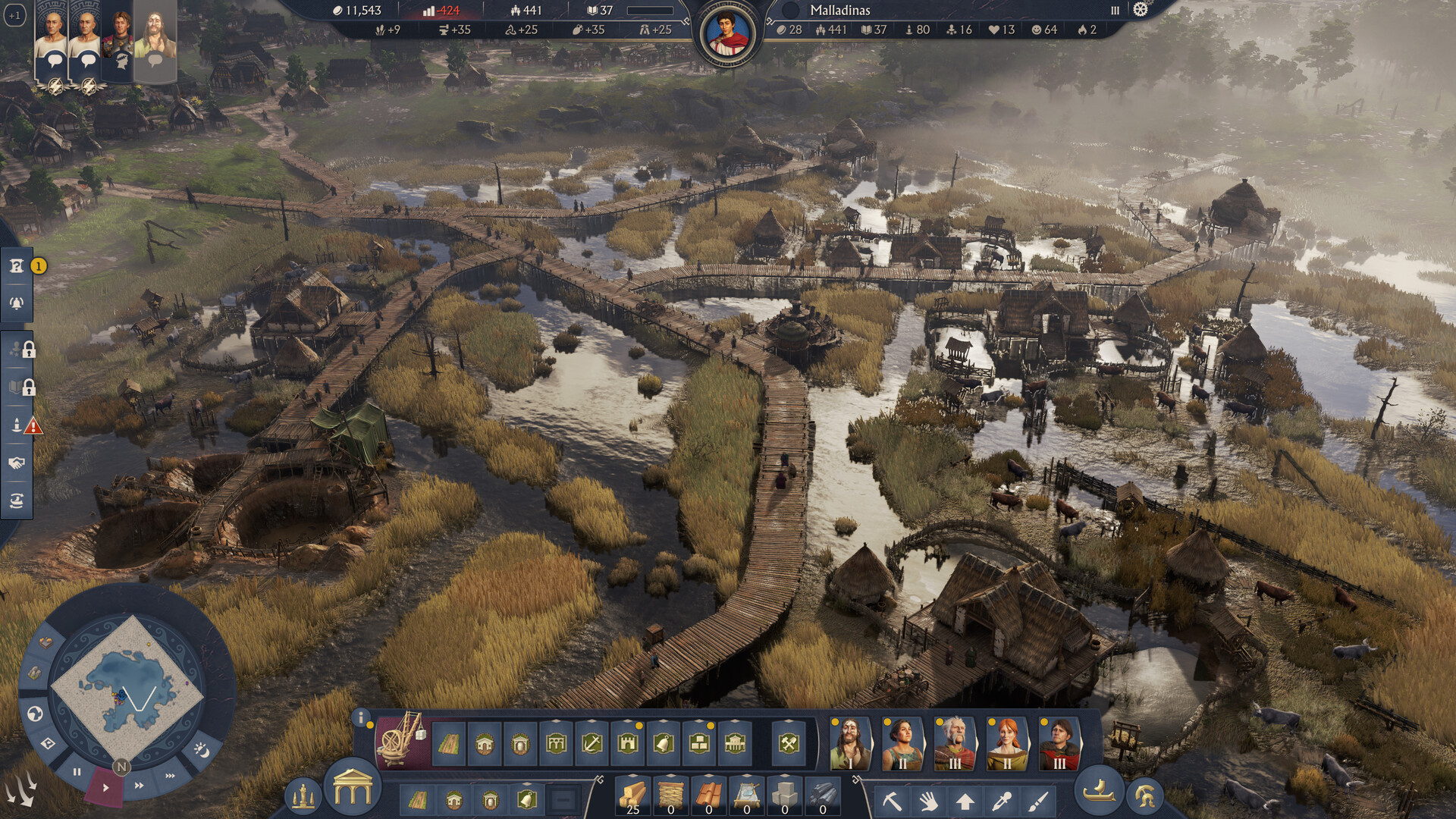
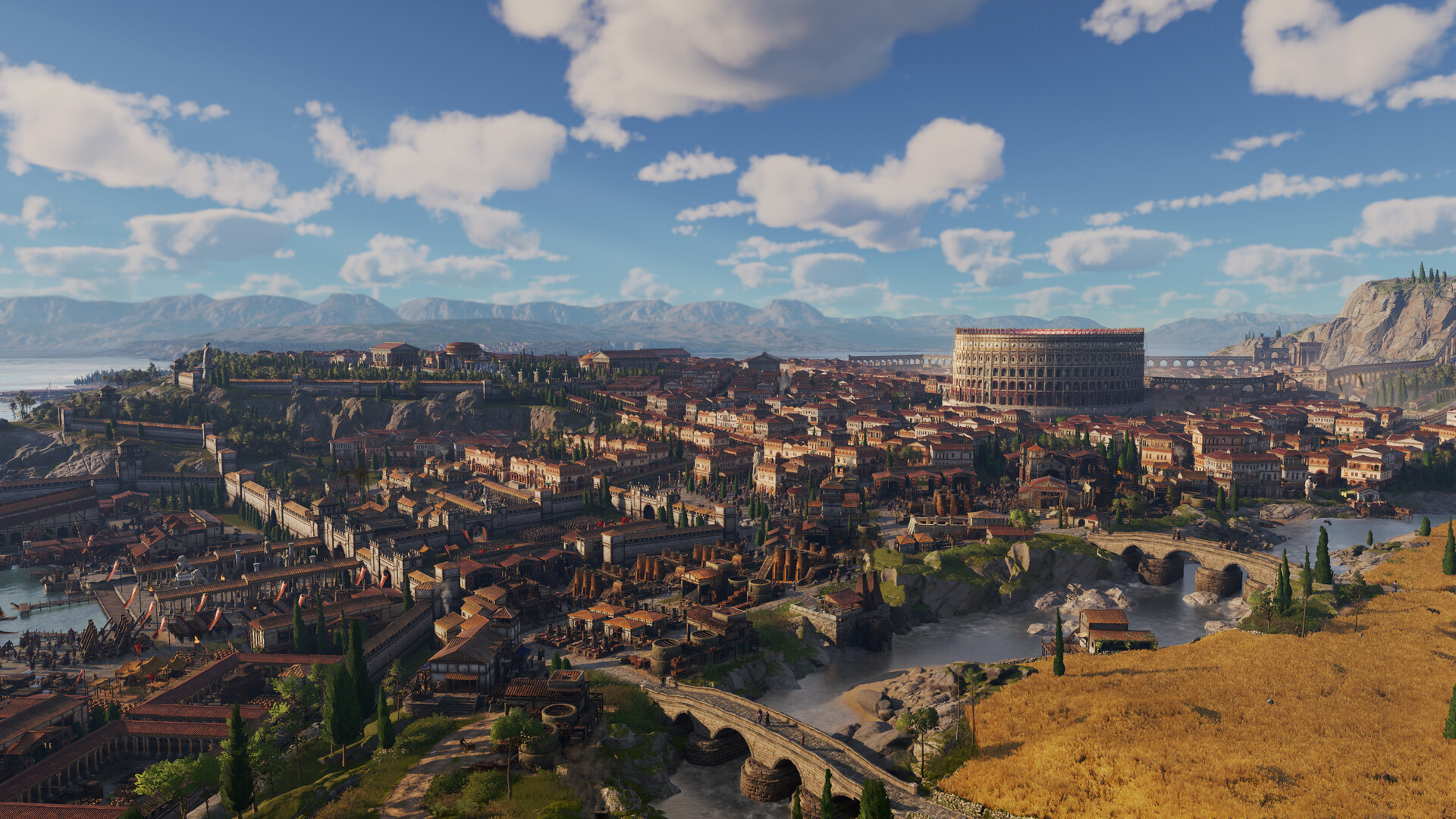
Roman decor works because it doesn’t remain completely decorative. Latium gives the game its most readable base: warm light, fertile plains, ordered architecture, an almost immediate desire to trace clean roads and raise the facades. Albion, for its part, brings a wetter, rougher material, more foreign to the Roman order. The Celtic Swamps don’t change everything, but they change the atmosphere enough that the expansion doesn’t just feel like a copy of the first territory.
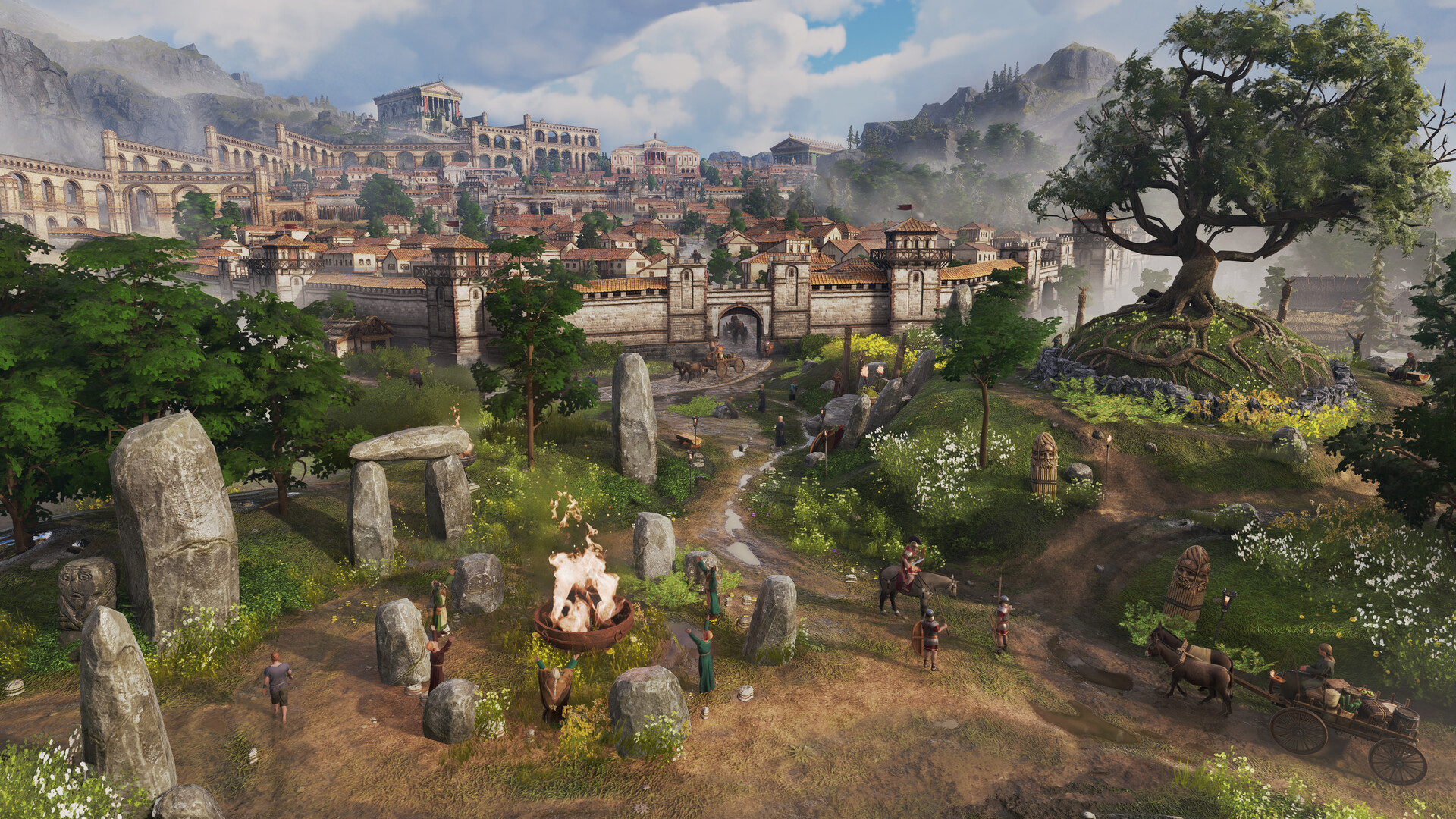
In Albion, the game requires you to choose between preserving Celtic customs or imposing Roman traditions. The idea gives a real identity to the region, with buildings, bonuses and different progression depending on the chosen orientation. Anno 117 also has the intelligence not to transform this choice into an overly strong lesson. It does not put Rome on trial, does not reduce the empire to a caricature, and prefers to let the player deal with the practical consequences of his governance. We can simply regret that this cultural opposition does not weigh more on the campaign, which remains wiser than its subject allows.
This lack of bite is found in the campaign. It correctly accompanies the first hours, gives a face to the governor, establishes power issues and allows you to learn without going through a dry tutorial. But it does not carry the game. The characters exist, the plot advances, certain decisions give color to the progression.
Free mode therefore quickly wins the game. This is where Anno 117 breathes best, when it stops pushing a rather safe narrative and lets the player govern in their own way. Building through trade, through diplomacy, through weapons, through the patient balancing of needs: the game becomes more convincing when it stops telling about power and lets it work.
Faith adds a good layer to this governance. Choosing a deity to worship on an island is not just an ornament, it is a way of orienting your province, obtaining bonuses, giving a functional identity to a territory. The system is nothing revolutionary, but it fits neatly into the main loop. It gives a little relief to the islands, and that’s all we ask of it.
An economy that sticks, a war that follows
As is often the case in Anno, the best part of the game is in the invisible streams. A successful city is not just pretty. It circulates. Materials arrive at the right place, workshops respond to each other, warehouses empty and refill at the right rate, residents stop complaining just long enough for another problem to be taken care of. Pax Romana makes this satisfaction very clear.
The production lines keep this almost musical side. We add a piece, it calls for another, then the whole ends up standing. The strength of the game is to make this construction readable without flattening it. We know why a shortage occurs, we know where to look, we know what to correct. And when everything starts again, the reward is immediate. Not spectacular, but profound.
Trade and diplomacy support this logic well. The other governors do not transform Anno 117 into a big political game, but they give reasons to expand one’s network, to produce beyond one’s own needs, to sell, to buy, to compensate for what an island cannot give. The game becomes more interesting when the provinces are no longer separate maps, but pieces of the same organism.
The military part remains the least convincing. Land and sea combat have their place, they give weight to expansion and keep the Pax Romana from becoming a frictionless ride. But war does not have the finesse of economics. It is understood quickly, it is played correctly, then it shows its limits. Anno 117 knows how to organize a province much better than stage a confrontation.
This defect is not secondary, because the game promises to govern through the economy, diplomacy or weapons. The first two paths really carry the experience. The third is more like a complement. Useful, sometimes pleasant, rarely exciting. When the game requires producing, balancing and trading, it is in its element. When it asks you to fight, it becomes more ordinary.
The controller facing the administration
On Xbox Series X|S, Anno 117 has an obvious merit: it exists without giving the impression of having been thrown onto console at the last minute. The menus have been designed for the controller, the shortcuts eventually enter, the navigation becomes more fluid after a few hours, and the keyboard-mouse support on console remains real good news for those who want to find more natural comfort.
But the limit does not disappear. An Anno asks to get the information quickly. See what is missing, go up a chain, install a building, check production, switch to another island, come back to a specific need. On the controller, these gestures remain heavier. The game works, yes. It also requires an acclimatization period that is too visible to forget.
The interface is the real downside. It contains a lot of information, sometimes tidy, sometimes too deep in menus that break the rhythm. Checking certain production chains would have benefited from being more direct. When you know what you want to build, the game shouldn’t force so many detours. This is not a flaw that ruins the experience. This is a fault that comes up often, and which wears down comfort a little over long sessions.
The Xbox version remains pleasant to play, especially once you get the hang of it. The city remains legible, the details stand out well, and we move from the overview to the busy street without losing this almost childish pleasure of watching a city function. This is the most important thing here: Anno 117 does not become a more spectacular game on console, but it retains its ability to bring a province into existence before our eyes.
So we have to be clear. Anno 117 is a good console version of a game designed primarily as a management machine. It does the job, sometimes very well. It does not erase the deep nature of the genre. Those who play solely on the controller will have to accept slower administration. Those who plug in keyboard and mouse will have a more obvious experience.
Rome makes you want to zoom
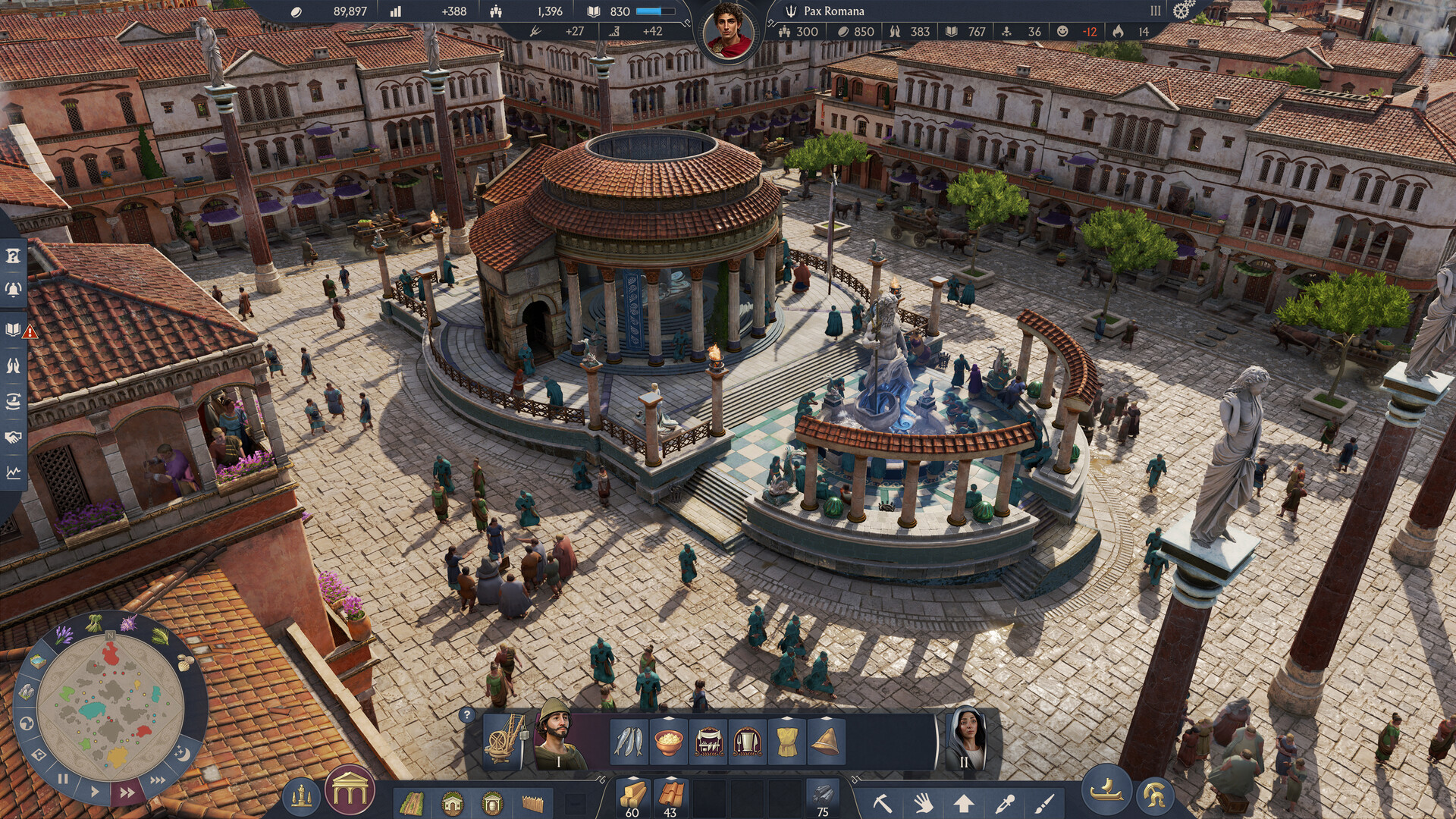
Visually, Anno 117 achieves what too many city-builders forget: it makes you want to look at what you have just built. Not just to check the effectiveness of a chain, but for the pleasure of seeing the streets live. The buildings have character, the neighborhoods gain coherence, the squares and temples give a real presence to the cities. The game knows how to sell the rise of a province without needing to do too much.
Latium works very well in this idea of ordered beauty. Albion, more foggy, more humid, gives a different breath. The contrast is not radical, but it is enough to avoid monotony. The two regions respond to each other rather than cancel each other. We move from a highly anticipated Roman fantasy to something more borderline, less controlled, and this serves the general rhythm well.
The artistic direction also has the intelligence not to be satisfied with a historical veneer. The painted statues, the arenas, the roads, the fields, the homes, the production areas: everything helps to make the city credible in its function. Anno 117 does not seek absolute realism. It seeks a readable, pleasant, immediately understandable Rome. This is exactly what was needed.
The soundtrack accompanies this active tranquility. It does not take over the management work, but it adds breadth to long sessions. The game has that rare quality of good construction titles: it can stay calm without becoming flat. It leaves room for gestures, decisions, small corrections. Then, when the city takes shape, it knows how to give it a little majesty.
Not everything is flawless. Certain interface elements break the general elegance, and the campaign does not always take advantage of this visual richness to create truly striking scenes. But the city is holding on. It makes you want to build clean, then build too big, then start again elsewhere because another island could do better. This is a sign that the heart of the game is beating as it should.
Verdict
Rome built on good foundations
8.5/10
Anno 117: Pax Romana is a great city-builder because it understands where its appeal lies. Not in the hollow fantasy of the Empire, but in the patient organization of a province, in the needs that pile up, in the chains that end up turning, in this very simple satisfaction of seeing a city finally respond to what is expected of it.
It does not have the sometimes dizzying density of Anno 1800, its campaign lacks weight, the war remains too limited and the console interface retains angles. But the game is beautiful, solid, welcoming and rich enough to devour entire evenings. On Xbox Series X|S, despite a controller less natural than a keyboard-mouse, Anno 117 succeeds in its challenge: making Rome a construction site that we want to repeat again.
Pros
- A construction loop as addictive as ever
- A more accessible episode without being empty
- Latium and Albion give real color to the game
- Faith and the tree of discoveries enrich progression well
- A very successful Roman artistic direction
- Keyboard-mouse support on Xbox
Cons
- The campaign lacks weight
- War remains less interesting than the economy
- The interface requires too many detours
- The controller slows down administration
- A lower density than that of Anno 1800
More in Video games
Full library 9/10
Dragon’s Dogma 2: Dark Arisen
XBOX 7/10
Brigandine Abyss
XBOX 6/10
The Walking Dead: Streets of Survival
XBOX 8/10
Onimusha: Way of the Sword
XBOX 7/10
HOT WHEELS Infinite Rush
XBOX 8.5/10
S.T.A.L.K.E.R. 2: Cost of Hope
XBOX 7.5/10
The Lord of the Rings: War in the North – Legacy Edition
XBOX 8/10
Verho – Curse of Faces
XBOX 8/10
Halo: Campaign Evolved
XBOX 7/10