
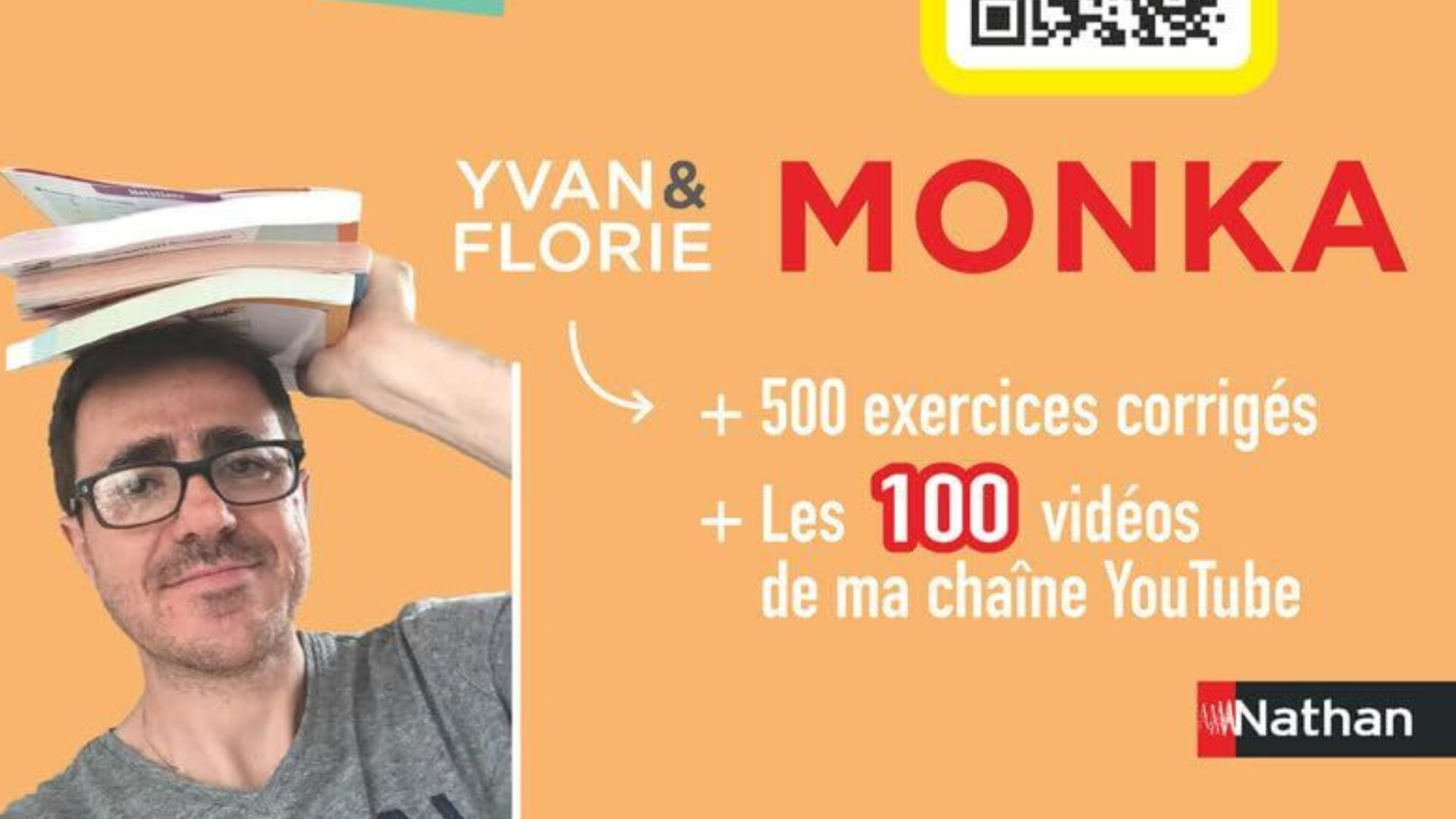
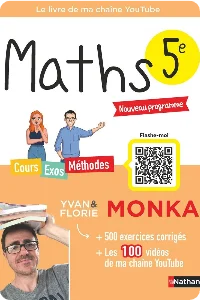
Maths 5ème avec Yvan et Florie Monka
A real method around YouTube, with a screen always in the middle
Score: 7.5/10
Images and videos


At a glance
We liked
- A real organization of Yvan Monka's videos for the cinquième curriculum.
- The course, methods, exercises and corrections remain together on paper.
- More than 500 exercises to repeat the same concept several times.
- Quite detailed solved exercises to compare the stages of reasoning.
We liked less
- QR codes require a screen, connection and access to YouTube.
- The number of pages implies a lot of short exercises.
- The promise of “mastering” each chapter is beyond what a book can verify on its own.
- Autonomy remains fragile for a student unable to identify where they are stuck.
 By Farrel Grimwood · published · 5 min read
Contents
Yvan Monka has more than 1,800 mathematics videos, from the first year of French secondary school through the final year of lycée. This abundance is its strength on YouTube and attracts more than 3 million subscribers, but it also ends up posing a very concrete problem: when a student gets stuck on a concept from French cinquième (seventh grade), you still have to find the right video, at the right level, without opening ten tabs which cover almost the same point. This book seeks to address this need for order.
In Maths 5e with Yvan & Florie Monka, the videographer works with Florie Monka, a certified teacher who teaches in middle school. The duo brings together a complete course, methods explained in stages, more than 500 corrected exercises and 100 videos accessible by QR code. It all fits into 224 pages and follows the 2026-2027 cinquième curriculum.
On the cover, the numbers do their job very well. One hundred videos, five hundred exercises and a whole year for 12.90 euros: the proposition seems difficult to fault. There remains a less flattering question for the marketing: why buy a book to join a free channel, and what really remains when the phone remains in another room?
A channel too big to remain a summary
The link with YouTube has real utility. A channel of more than 1,800 videos necessarily contains several levels, several methods and content published on different dates. A search on an engine quickly returns to an explanation close to the subject, but not always to the one that corresponds to the current chapter. Here, the 100 QR codes provide a shorter and structured path.
The book becomes a map: the student joins the video linked to the topic being studied instead of searching the channel. But a QR code takes you off the page. It requires a phone or tablet, a connection and access to YouTube. For a family specifically looking for independent, offline support, especially in an age of hyper-connection, one of the main arguments of the cover therefore loses much of its force.
Yvan Monka’s videos are also already available for free. Holding them behind QR codes is therefore not enough to defend a price, even a reasonable one. The value of the purchase lies elsewhere: in the printed course, the methods, the exercises and especially the corrections. Without this set, the book would only be a paid index for a channel that everyone can consult without going through Nathan.
Solved and detailed exercises are more important than the big number on the cover. A single result confirms an error; a resolution shows where it begins. Here, the corrections extend the methods and provide a usable point of comparison. This is the least selling part of the concept, but it is what makes the paper and video duo coherent.
Five hundred exercises in 224 pages
The figure is impressive, but the 224 pages must accommodate the course, the methods, more than 500 exercises, their corrections and references to 100 videos. So not all of them can be long problems requiring a page of reflection. A good part is necessarily used to apply a rule, repeat a calculation or check a technique.
This repetition makes sense. Knowing how to redo an operation without hesitation, recognizing the expected method and correcting a wrong step requires practice. The number also avoids exhausting a chapter after four questions. We can return to a specific point without immediately returning to the same questions.
Quantity, however, does not prove variety. A student can complete a very guided series and get stuck as soon as the method is no longer indicated. The book provides a solid reserve to consolidate the program; the number of 500 does not, on its own, answer all the difficulties encountered in class.
Each chapter is presented around three verbs: understand, train, master. The first two describe the proposal well. The course and methods provide a foundation, then the exercises check if it holds. The third promises more. Mastering a concept requires recognizing it in a new situation and choosing the right path alone.
The book can lead to this mastery, but it cannot certify it. It does not read a student’s work, does not spot imprecise writing and does not ask the student to defend his choice. The formula remains clear, but it transforms a revision course into a broader promise than what supplementary study material can provide alone.
The presence of Florie Monka prevents the project from becoming the book of a YouTuber who puts his name on a school curriculum. Yvan Monka teaches at the high school; Florie Monka is a certified middle school teacher. For a French cinquième book, this difference brings direct contact with the target age and the rhythm of a class.
However, communication continues to place Yvan at the center, even talking about the “book for my YouTube channel”. This makes sense to attract those who already know his videos, but it reduces their joint work to a brand extension a little too much. The title captures their two names well; the rest of the messaging mainly sells the celebrity of the first. The book seems more serious when we look at it as a project of two teachers, and not as a derivative product of YouTube.
Autonomy is not a button
The system is very suitable for students who are able to identify where they are stuck. If he knows which chapter to resume, he can reread the course, try a few exercises, check the answer key and open the video as a last resort. In this specific case, the book prevents a parent from having to search for a correct lesson on the internet themselves.
The situation changes for the person who comes back with a bad grade and only thinks they are “bad at math”. Five hundred exercises can then seem like five hundred opportunities to make a mistake. The book cannot determine whether the problem is the calculation, understanding the question, an older concept, or the writing.
The cover stresses support strongly enough that nuance is necessary. This book helps to work alone; it does not transform all middle school students into autonomous students from the first page. The difference seems slim in an advertisement. It becomes huge after a failed test.
At 12.90 euros, the paper price remains reasonable for 224 pages. The 19 x 26 cm format and 470 grams are intended primarily for a desk rather than travel.
Verdict
YouTube finds its place in the notebook
7.5/10
Maths 5e with Yvan & Florie Monka gives a usable form to a huge channel. The QR codes lead to a hundred selected videos, the paper preserves the course and the methods, while the corrected exercises allow you to verify something other than a final result. So there is a real reason to buy the book while the videos remain free.
Five hundred exercises in 224 pages involve a lot of short formats, the word “master” promises too much and the support still depends on a screen. The book will especially help students who already know how to identify what they need to cover. For those who don't even know where they left off, they'll still need someone capable of asking the right question.
Pros
- A real organization of Yvan Monka's videos for the cinquième curriculum.
- The course, methods, exercises and corrections remain together on paper.
- More than 500 exercises to repeat the same concept several times.
- Quite detailed solved exercises to compare the stages of reasoning.
- Florie Monka brings the direct experience of a middle-school teacher.
- A price of 12.90 euros consistent with the 224 pages and 100 video references.
Cons
- QR codes require a screen, connection and access to YouTube.
- The number of pages implies a lot of short exercises.
- The promise of “mastering” each chapter is beyond what a book can verify on its own.
- Autonomy remains fragile for a student unable to identify where they are stuck.
More in Books
Full library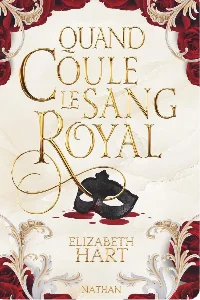 7/10
Quand coule le sang royal
Nathan 8/10
100 Films d’animation japonais
Yniss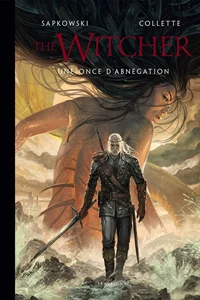 8/10
The Witcher: A Little Sacrifice
Bragelonne 7/10
One of Us Is Next
PKJ 9/10
The Star That Fell from the Sky
 8/10
Mégères et vamps face caméra
L’Harmattan 8/10
Strange Maps
Seuil 7.5/10
Quelque part dans la région du Kinki
Seuil 7.5/10
L’Élue du Dragon Volume 1: Le Voyage de Mia
Ynnis Éditions 8/10