
Riven
The cracks of a world that refuses to close
Score: 9/10
Images and videos
At a glance
We liked
- A full remake that recreates the archipelago of Riven in real-time 3D, without betraying the original artistic direction.
- A first-person exploration that reinforces the understanding of places and mechanisms, without sacrificing mystery.
- Puzzles as coherent and ambitious as ever, thought of as the language of a world and not as a series of isolated puzzles.
- A serious achievement on Xbox Series (4K, HDR, ray tracing, 60 fps), driven by precise and discreet sound work.
We liked less
- Sometimes heavy movements and interactions with the controller, despite the comfort options.
- Underwhelming facial animation, which weakens the presence of the rare human characters.
- No French dubbing, even though the series already existed in full VF and this remake would have been the ideal opportunity to reestablish it.
 By Farrel Grimwood · published · 6 min read
Contents
Riven on Xbox Series is not a simple Myst 2 brought up to date. It’s a complete rereading of one of the most memorable adventure games of the 90s, reconstructed in real time in Unreal Engine 5, with free movement, first-person view and an archipelago which finally ceases to be a series of frozen screens to become a tangible place. The remake does not attempt to clean up the difficulty or add an overlay of guidance. It takes the Age as it was, dense, opaque, obsessed with observation, and gives it the presentation it already demanded almost thirty years ago.
Riven is much more than an interactive museum. It’s a real contemporary game, with HDR, 4K, ray tracing and comfort options; but it remains deeply faithful to what made the original unique: a world to decode before being a puzzle to solve.
A fractured archipelago, taken back piece by piece
Riven picks up right where Myst left off. Atrus, freed, asks this time to go and save Catherine in a doomed Age, where his father Gehn took himself for a god and transformed an archipelago into a laboratory of obsession and control. The player arrives in a set of islands connected by gateways, minecarts, D’ni structures planted in the rock and a jungle that refuses to be domesticated.
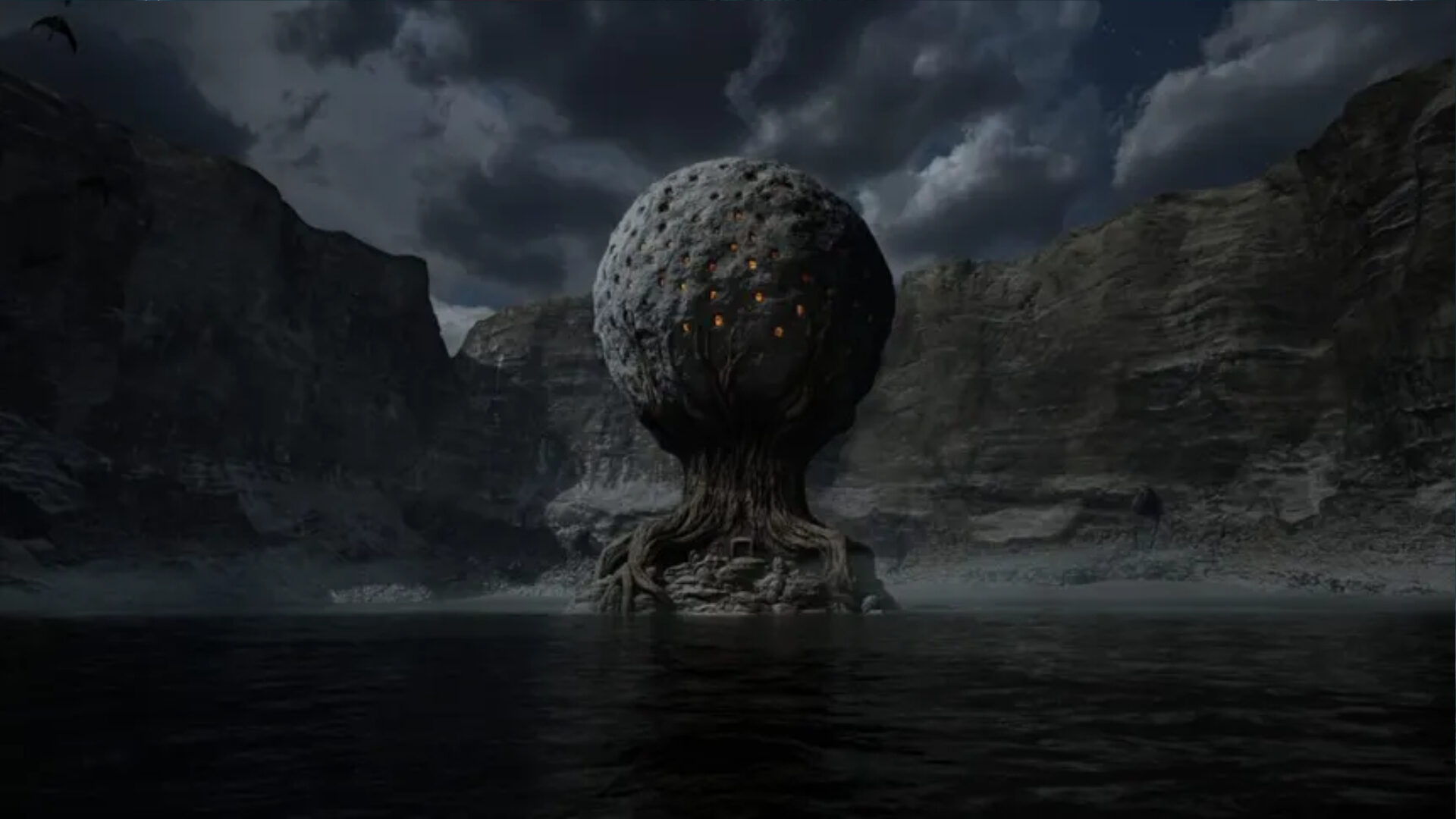
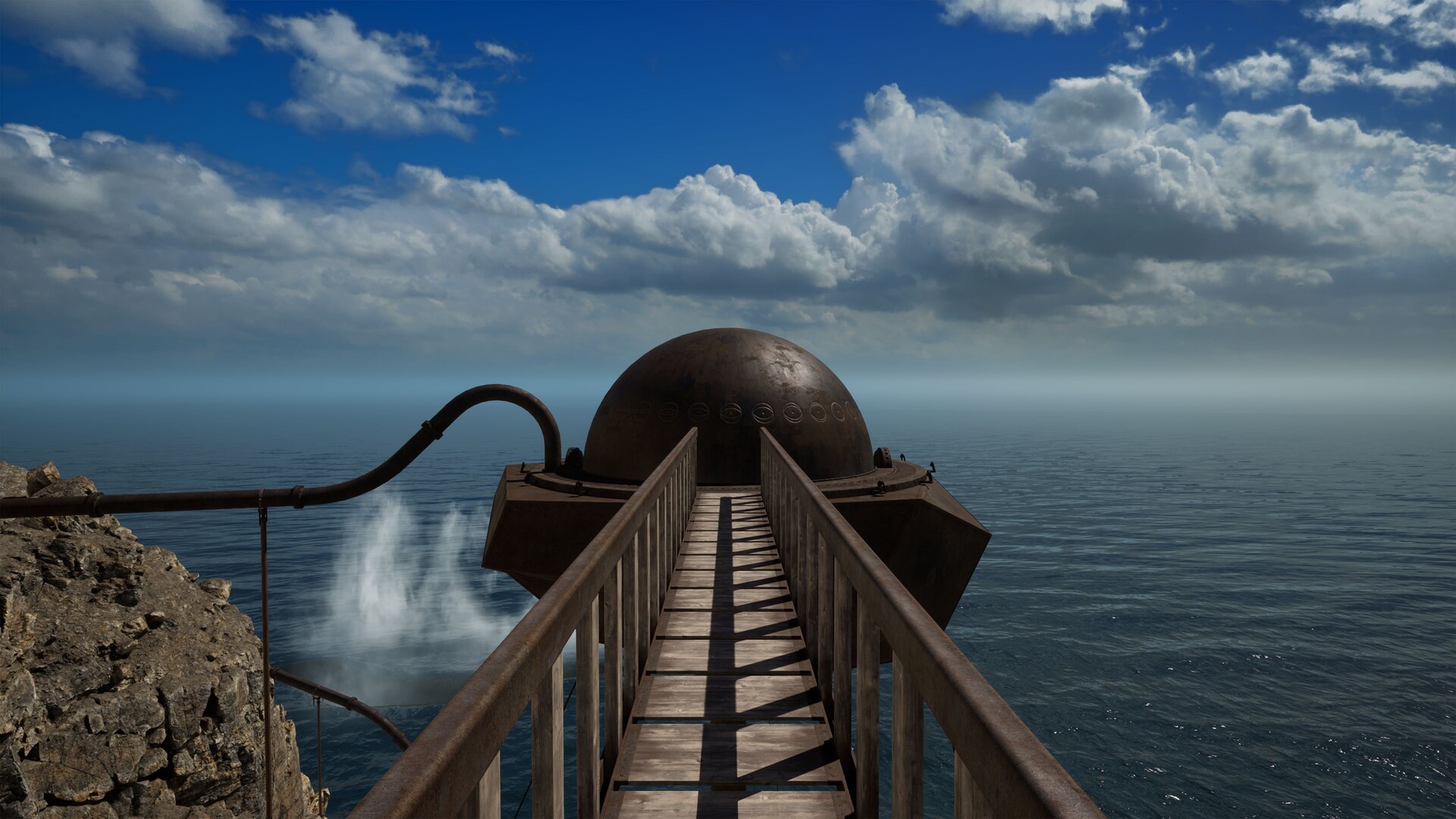
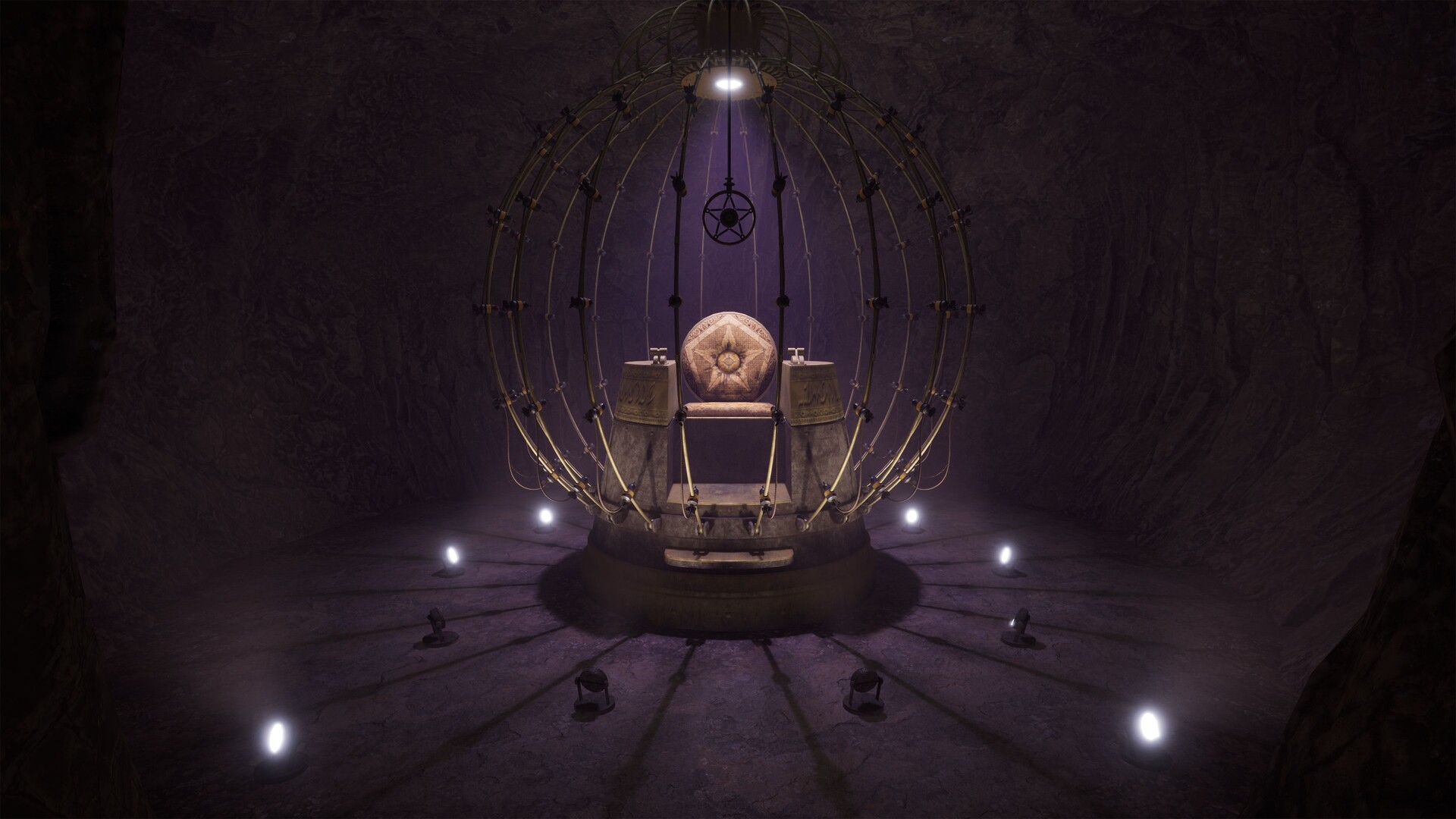
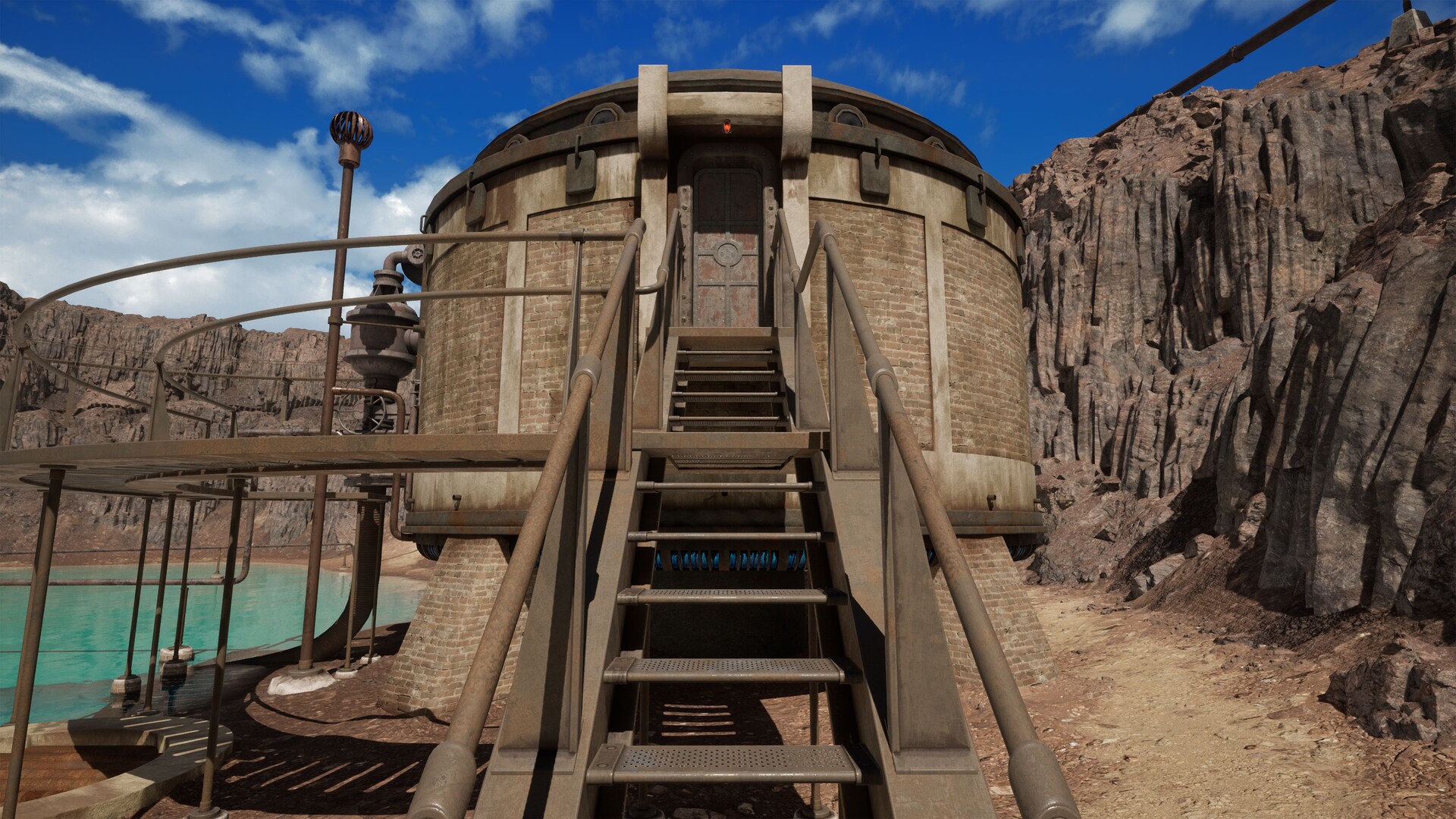
The remake reconstructs all of this in full 3D. The five large islands, their cliffs, their bridges, their caves and their buildings take shape in a continuous space where we finally feel the distances, the heights and the ruptures. We no longer click on a thumbnail to discover a new point of view, we move forward, we turn our heads, we bend, we go around a structure. Riven immediately gains geographic readability: what was an approximate map becomes a place that we physically memorize.
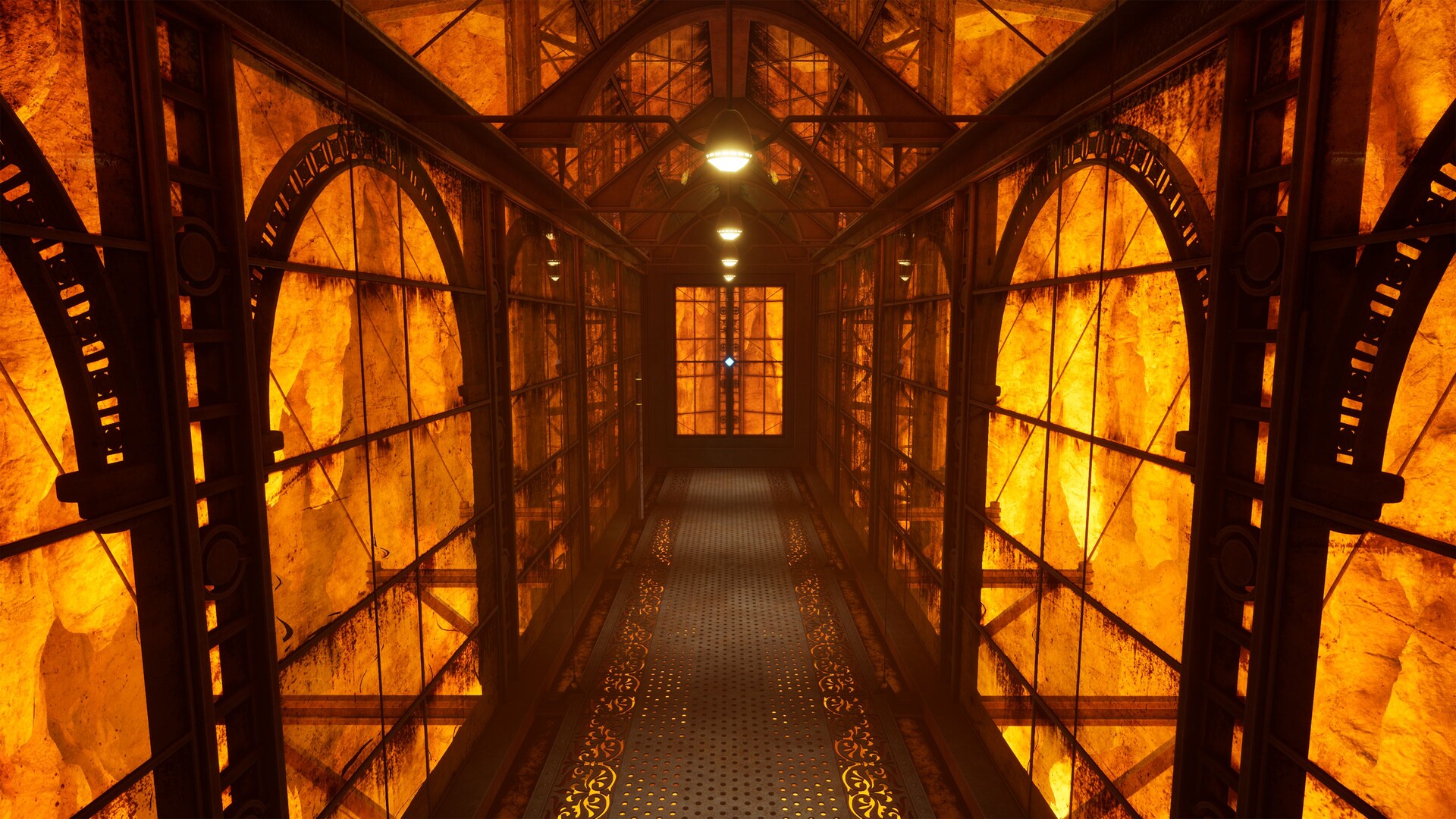
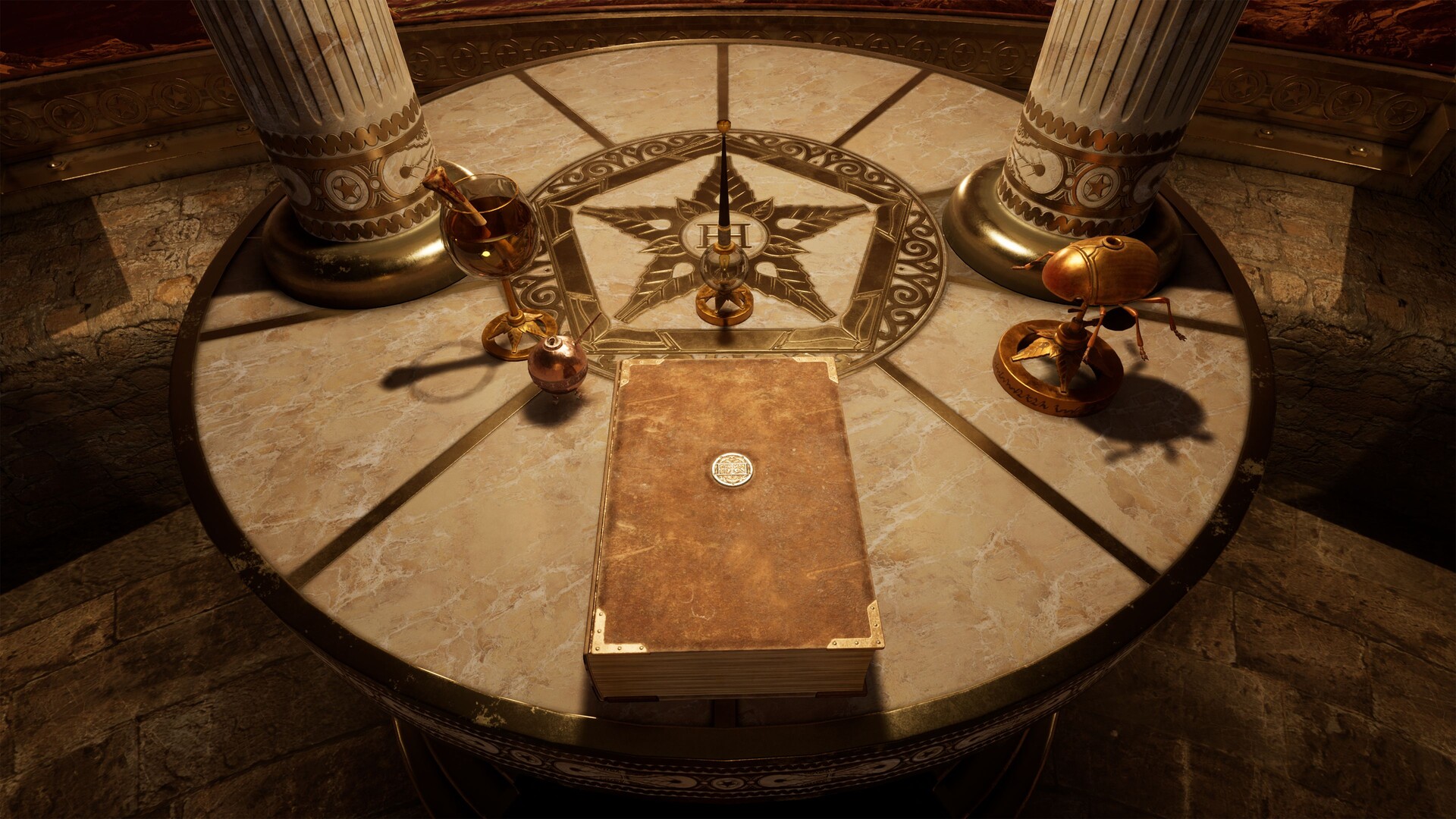
Cyan does not deny the original artistic direction. The archipelago retains this mixture of rough rock, D’ni metal, worked wood and humid vegetation which was the strength of the 1997 game. The colors, light and volumes constantly recall the iconography of the period, but in a living version. The new additions fit into this logic rather than seeking to modernize at all costs.
More fluid exploration, but not more docile
As with Myst in its 2021 version, the remake of Riven abandons moving square by square for a complete first-person view. We move with the controller, we finely adjust the speed, we activate or not certain animations (ladders, transitions) so as not to break the rhythm more than necessary.
This change transforms the sensation, not the nature of the game. Riven remains a title that relies above all on observation. The essence of the experience consists of surveying the islands, noticing the route of a cable, the position of a switch, an inscription engraved on a pillar, a symbol repeated on several surfaces. Each machine, each structure, each point of view exists for a reason, and the game expects the player to eventually understand this reason without being spoon-fed.
The remake helps on one specific point: reading spaces. Certain links between two mechanisms, two constructions or two islands that we could barely guess in 2D become obvious in 3D. We see better how a signal circulates, how an element triggers a reaction elsewhere, how an alignment of shapes is projected onto a landscape. The difficulty does not disappear, but understanding “how” is less blind.
Nothing has been added in terms of quest guide or context help. Riven doesn’t highlight your goals, doesn’t list your tasks, doesn’t check any boxes for you. It assumes that you take notes, that you draw diagrams, that you return to an area because you understood afterwards what a room showed.
Riddles as a language of the world
We often talk about Riven’s puzzles, but that would almost be a vocabulary error. The game does not throw puzzles into its setting to furnish. It constructs a complete language, which the player must learn to read.
The numbers, symbols, control devices, locking systems, domes, elevators and the behavior of the inhabitants form a network of signs that the game refuses to translate head-on. The remake respects this logic and even pushes certain threads a little further. Some new puzzles densify the world, not by adding gratuitous obstacles, but by specifying links which remained implicit in 1997.
The reward of this approach remains intact. When a number written in a classroom finally takes on meaning in a mechanism seen an hour earlier, when a noise heard in the background turns out to be the key to a lock, when a symbol spotted in the distance finds itself at the heart of a system that we thought we understood, Riven offers this very particular sensation of having learned something about a world, not just of having solved an enigma.
The downside is obvious: Riven does not forgive distraction. Missing a detail, ignoring a noise, neglecting a symbol can condemn you to going in circles for a long time. The remake does not change this reality. It frames it a little better through visual clarity, but it refuses to simplify the deep structure.
A solid achievement, designed to last
Technically, Riven on Xbox Series X|S checks all the boxes you’d expect from an ambitious remake. The game runs in 4K with HDR, offers ray tracing reflections and several performance modes to stay at 60 frames per second while maintaining a stable image. The movements are fluid, loading is unobtrusive, and the archipelago maintains a clarity which serves both exploration and reading the clues.
The work on sound follows the same logic. The environments are inhabited by the noises of mechanisms, the grunts of creatures, the swirls of water, the creaking of wood and rock which give real depth to the world. The music remains rare, almost always used to highlight a particular moment or area, without invading the silence which is part of the DNA of the series.
On the language side, this version corrects one of the major historical flaws of the franchise: the interface, menus and gameplay texts are entirely localized in French, as are a certain number of in-game elements. The voices remain in English, which goes much less well for a game whose old episodes had already benefited from complete French dubbing. The absence of French voice acting on a remake of this importance leaves a real void, especially when we know that the French-speaking audience for Myst and Riven has existed since the origin.
The angles that still catch
Riven doesn’t try to pass itself off as a recent game in its structure, and it shows. Movements remain deliberately heavy, interactions require a little too precise positioning with the controller to activate a lever or a button, and the number of back and forths necessary to test a hypothesis remains high. The remake reduced some friction, but it didn’t seek to break the spine of a game designed to be slow.
The rereading of human characters also shows its limits. Cyan ditches the vintage video-in-picture for real animated 3D models, but the lip syncing isn’t always up to par. Some lines of dialogue seem detached from the mouth movements, others suffer from a rigidity which contrasts with the care given to the rest of the archipelago. These are not defects that destroy the experience, but they regularly remind us that the cinematic part did not benefit from the same level of finish as the environments.
Finally, Riven remains a game that will make no effort to retain a player who quickly lets go. There is no system of optional clues, no graduated help, no journal that gently reminds you of the threads in progress. It’s a choice, assumed, but you have to know it before starting: the remake modernises the presentation, not the philosophy.
Verdict
The Age finally breaks its shell without denying its age
9/10
Riven on Xbox Series achieves what seemed almost impossible: extracting a cult game from its CD-ROM prison without flattening it or explaining it. The archipelago regains an impressive physical presence, the puzzles keep their internal coherence, the environmental narration remains intact, and the whole finally benefits from solid technology and a French localization worthy of the name for everything that is text and interface.
But the flaws are not trivial. Riven remains slow, demanding, rough in its controls, and the decision not to reintroduce a full French version when the series had already done so in the past feels like a lack. But for those who accept this pact, this Xbox version clearly resembles the definitive flat-screen version of the game. Riven does not modernize to make everyone like it. It rebuilds itself to continue to haunt those who were already ready to give it time.
Pros
- A full remake that recreates the archipelago of Riven in real-time 3D, without betraying the original artistic direction.
- A first-person exploration that reinforces the understanding of places and mechanisms, without sacrificing mystery.
- Puzzles as coherent and ambitious as ever, thought of as the language of a world and not as a series of isolated puzzles.
- A serious achievement on Xbox Series (4K, HDR, ray tracing, 60 fps), driven by precise and discreet sound work.
- An interface and texts entirely localized in French, which finally open the universe to a wider audience.
Cons
- Sometimes heavy movements and interactions with the controller, despite the comfort options.
- Underwhelming facial animation, which weakens the presence of the rare human characters.
- No French dubbing, even though the series already existed in full VF and this remake would have been the ideal opportunity to reestablish it.
More in Video games
Full library 7.5/10
Scholar Adventure: Mystery of Silence
XBOX 6/10
Midnight Swamp
XBOX 7/10
Gobliiins Collection
SWITCH 8/10
Myst
XBOX 9/10
Dragon’s Dogma 2: Dark Arisen
XBOX 7/10
Brigandine Abyss
XBOX 6/10
The Walking Dead: Streets of Survival
XBOX 8/10
Onimusha: Way of the Sword
XBOX 7/10
HOT WHEELS Infinite Rush
XBOX 8.5/10