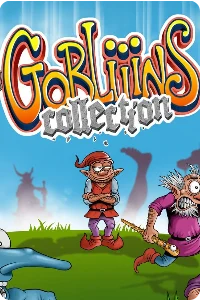
Gobliiins Collection
The goblins take over the construction site
Score: 7/10
Images and videos


At a glance
We liked
- The first five episodes together, with several historical versions for games from the 90s.
- A substantial set of extras: music player, archive gallery, 3D objects, mini-series and interview with Pierre Gilhodes.
- A Switch release fully playable in French
- The handheld format which goes well with puzzles to be tackled in small sessions.
We liked less
- No deep modernization of the structure or readability of the puzzles.
- A deliberately twisted puzzle logic, which risks putting off players accustomed to more guidance.
- Uneven instalments
- A compilation especially designed for those who already have an affection for the saga, less for an entirely new audience.
 By Farrel Grimwood · published · 5 min read
Contents
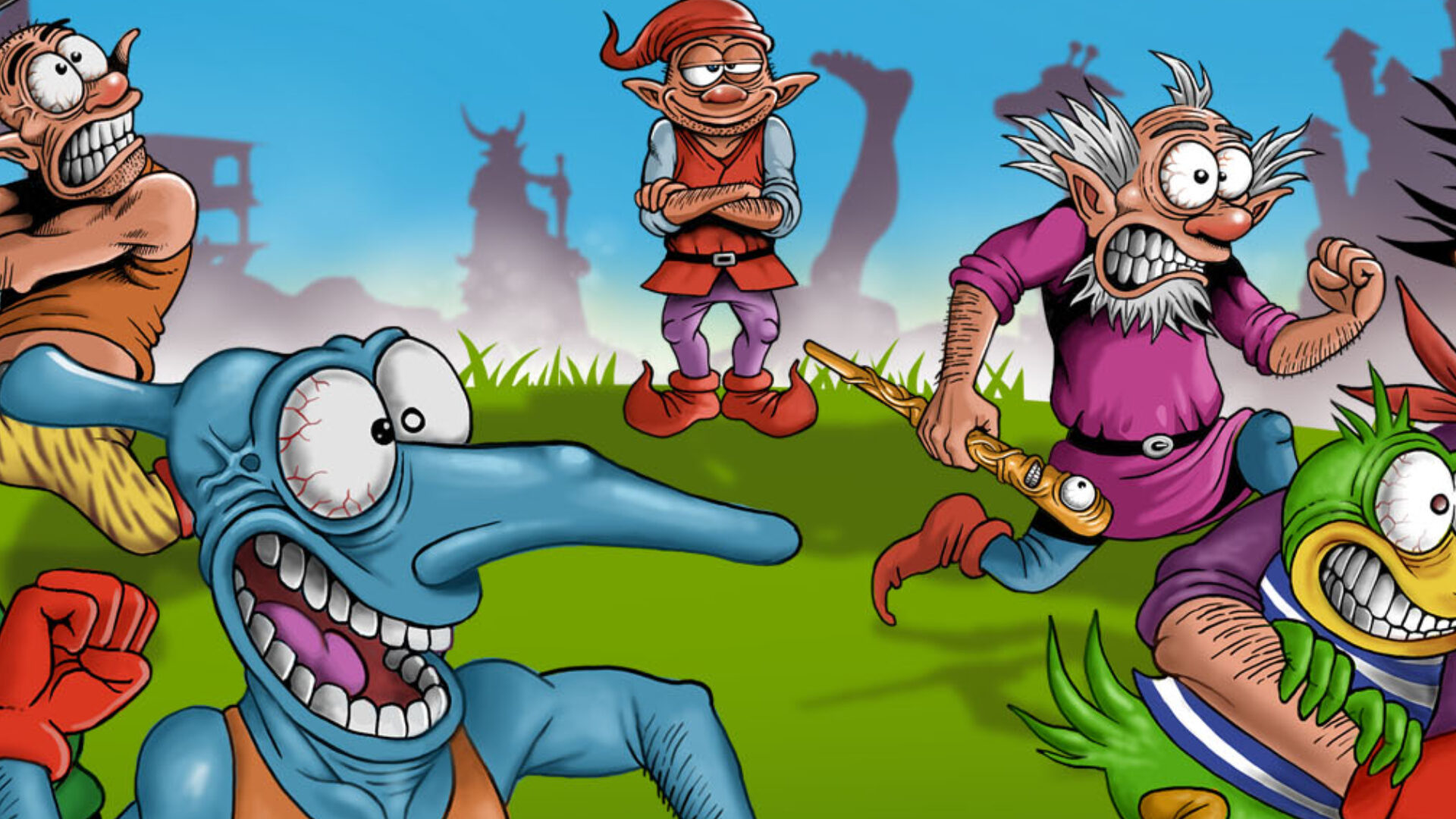
Gobliiins Collection puts the first five episodes in one package, from the pixelated beginnings of the 90s to the return to 2D in 2023, without trying to rewrite their character or disguise their quirks. We find the goblins shooting in all directions, the mad kings, the missing princes, the mad scientists and the absurd labyrinths, lined up in the same menu as if all of this formed a single long, twisted game designer’s nightmare.
On Nintendo Switch, this collection is available for download, fully playable in French and accompanied by bonuses which make it closer to a small interactive museum than to a simple retro pack thrown onto the eShop in a hurry. The question is not whether the return is generous, but whether this generosity is enough to transform such a particular saga into an offering that still holds up today, controller in hand.
Five eras, the same obsession with the absurd
The compilation brings together Gobliiins, Gobliins 2, Goblins 3, Gobliiins 4 and Gobliiins 5, i.e. all of the episodes released between 1991 and 2023. The first three return in their original versions, with several variants for Gobliiins, Gobliins 2 and Goblins 3, notably the MS-DOS, CD-ROM or Mac editions, which already gives an idea of the collection’s preservation role.
Each game keeps its own little theater. In the first, Oups, Asgard and Ignatius struggle to save King Angoulafre, who has suddenly gone mad. The second sends Fingus and Winkle to track down Prince Jester in a distant land, always juggling each other’s skills. The third locks Blount, an eccentric reporter, in the middle of a war between sovereigns around a mysterious labyrinth. Gobliiins 4 switches to 3D to send Tchoup, Stucco and Perluis to recover the aardvark Riri on behalf of King Badigoince, before Gobliiins 5 brings everyone back to 2D to face the invasion of the Morglotons and avoid the the entire kingdom being turned into potatoes.
Taken one after the other, these games above all tell the story of an obsession: using several characters as so many tools of logical demolition in scenes that often defy common sense. The offbeat humor and the system of interchangeable characters clearly make the saga original. You don’t play Gobliiins to have a smooth adventure. You play it to get stuck in a room that has no respect for logic, then end up understanding why this lack of respect still ends up holding up.
Riddles that make you smile
Gobliiins comes from a time when point and click considered confusion as a teaching method. The puzzles are not only difficult, they are deliberately twisted, built around small sequences where each goblin has its role and where the solution looks more like a gag than a demonstration of pure logic.
This operation has not changed. The screens remain small enclosed theaters, filled with objects to manipulate, characters to provoke, levers to activate in the wrong order before finding the right one. The pleasure comes less from a feeling of continued mastery than from those moments when a hidden detail in the setting, an idiotic enemy behavior or the very specific skill of a goblin finally begins to make sense.
But when internal logic slips away, games immediately become more abrasive. The compilation does not add a modern clue system, no quest log or luminous arrows to explain what the series has always refused to explain head-on. The puzzles retain their sometimes unfair character, their taste for the solution which only seems obvious when it has already been found. Those who grew up with this type of game design will find their bearings there. Newcomers instead risk hitting a wall of puzzles that are not waiting to welcome them.
A collection that plays the museum card
Where Gobliiins Collection really surprises is in the way it treats its own heritage. The compilation doesn’t just stack five executables behind a neutral menu. It adds a music player to browse the soundtracks of all versions of the games, including lesser-known tracks, a graphic archive gallery with 3D objects from the original packaging, a documentary mini-series and a new interview with Pierre Gilhodes, co-creator of the saga.
This bonus layer changes the nature of the object. We are no longer content with relaunching an old, very original point and click; we also circulate through the documents that shaped the series, we listen to music that we would never have sought elsewhere, we hear the creator recount the origins, the choices and the future envisaged for the universe. For such a distinctive series, which has long lived mainly in the memories of a few PC players, this work of putting it into context makes a real difference.
In this respect, Gobliiins Collection is closer to a small anniversary edition than a simple port. The presence of several versions for the episodes from the 90s, the promotion of the period packaging and the video documents give it a density that is not found in most lazier retro compilations. This doesn’t erase the limitations of the games themselves, but it makes you want to approach them as pieces of a whole, rather than as five isolated files recovered from the corner of a hard drive.
Goblins in the pocket
On Switch, the compilation arrives with an interface and texts and even voices entirely in French, as at the time. This localization, associated with the very French-speaking heritage of the series, finally allows these episodes to be found on a current console without language barriers. For a genre where each description, each line and each object title can count in the understanding of a riddle, this is an excellent point.
Nintendo’s machine lends itself well to the way Gobliiins works: relatively isolated screens, sessions that can be broken up into a few puzzles, then resumed later. The handheld format helps you cope with the roughness of the puzzles, test an idea, close the console, come back to it cooler. The compilation won’t change the nature of the games, but the platform provides a coherent framework for living with their quirks.
On the other hand, we feel that most of the effort has been placed on content and conservation rather than on a profound modernisation of convenience. This honesty comes at a price. The navigation, the puzzle logic, certain interfaces keep this old PC flavor that the Switch only frames. The player who wanted a remake in the strict sense, with a global overhaul of the systems, will miss out on what the compilation really offers: a clean and structured way of keeping a distinctive strand of point-and-click gaming alive.
Verdict
Goblins preserved, quirks and all
7/10
Gobliiins Collection isn't trying to turn a series of nasty, twisted little adventure games into a slick product for modern audiences. On the contrary, the compilation assumes the complete legacy of the saga, with its five episodes, their period versions, their dry humor and puzzles as brilliant as they are unfair. It adds a genuine effort to celebrate that legacy, with numerous bonuses which make it as much an object of conservation as a simple commercial return on Switch.
Its limits are exactly those of what it puts back into circulation: a logic of enigmas which refuses the obvious, dated ergonomics, uneven episodes and an unapologetic taste for frustration. The compilation does not soften the line. It frames it, contextualizes it and makes it accessible on a current console, in French, to those who are ready to reconnect with this type of point and click. For these players, Gobliiins Collection feels like a playable, valuable and sometimes infuriating little museum piece. For others, it will remain above all a curiosity that we look at from afar, wondering how we could, one day, consider these goblins as reasonable guides.
Pros
- The first five episodes together, with several historical versions for games from the 90s.
- A substantial set of extras: music player, archive gallery, 3D objects, mini-series and interview with Pierre Gilhodes.
- A Switch release fully playable in French
- The handheld format which goes well with puzzles to be tackled in small sessions.
Cons
- No deep modernization of the structure or readability of the puzzles.
- A deliberately twisted puzzle logic, which risks putting off players accustomed to more guidance.
- Uneven instalments
- A compilation especially designed for those who already have an affection for the saga, less for an entirely new audience.