
Necrophosis: Full Consciousness
A beautiful, slow and very limited nightmare
Score: 7/10
Images and videos
At a glance
We liked
- Strong artistic direction, inspired by Beksiński and cosmic horror.
- A real dead world atmosphere, slow and oppressive.
- The absence of weapons gives an interesting coherence to the experience.
- Subconsciousness included in this complete edition.
We liked less
- Very light gameplay, which relies almost entirely on the atmosphere.
- Useful puzzles but rarely memorable.
- Readability sometimes complicated by overly busy scenery.
- A slow pace that will keep many players at a distance.
 By Farrel Grimwood · published · 5 min read
Contents
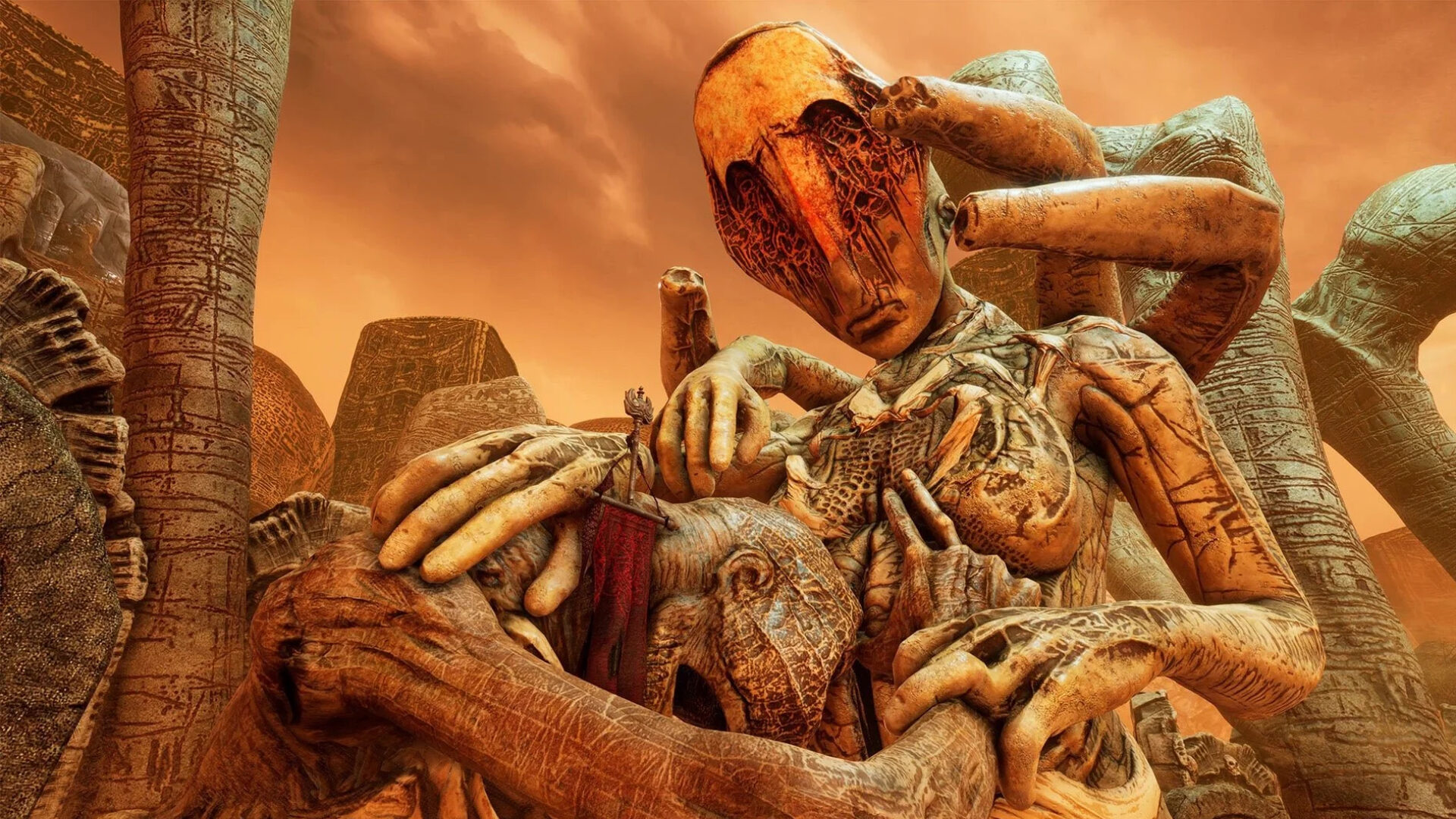
Necrophosis: Full Consciousness arrives on Xbox Series with a very clear promise: to bring the player into a world of surreal, slow, grotesque horror, built more like a gallery of visions than like a classic horror game. There is Beksiński in the landscapes, Lovecraft in the idea of a universe beyond the player’s comprehension, and inevitably a bit of Scorn in the way of using the body, ruins and death as a visual language.
The comparison with Scorn is easy, almost too easy. Necrophosis does not play on exactly the same terrain. It removes combat, limits systems, slows everything down, and prefers exploration to direct tension. That’s what makes it interesting. This is also what prevents it from convincing everyone. We are faced with an atmospheric experience, sometimes fascinating, often beautiful in its ugliness, but the game part of which remains much more fragile than its artistic direction.
A world that exists above all through its images
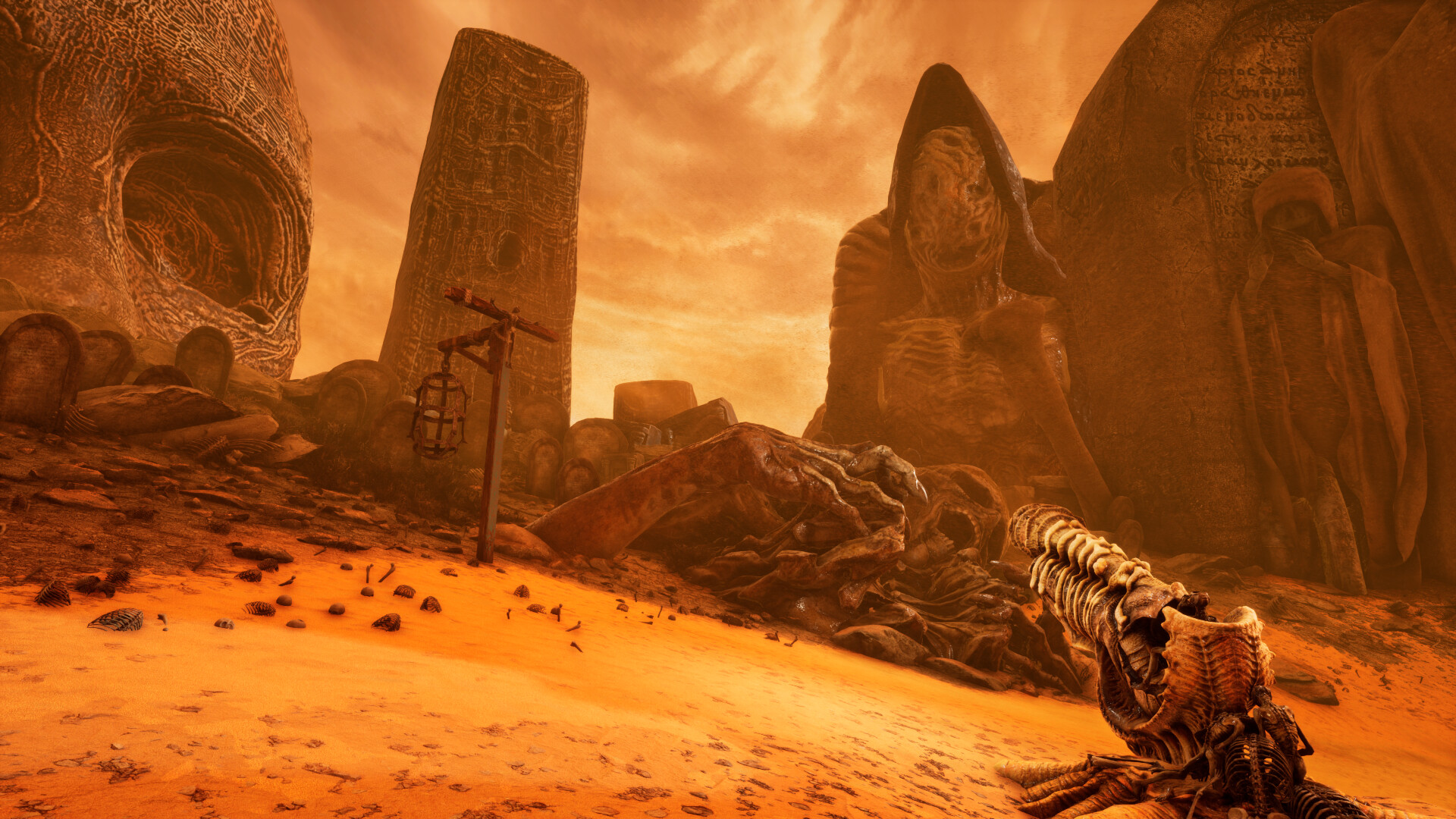
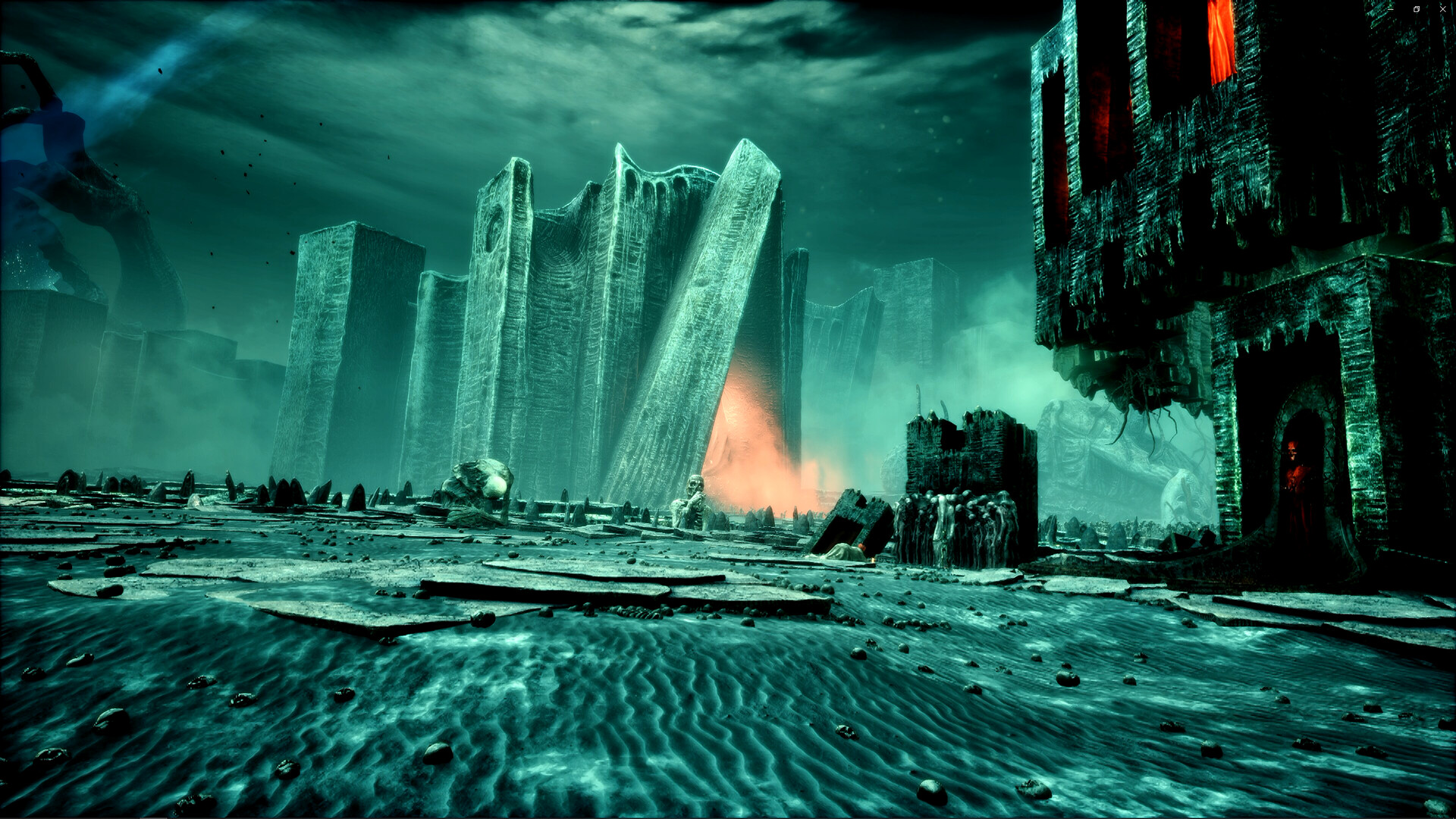
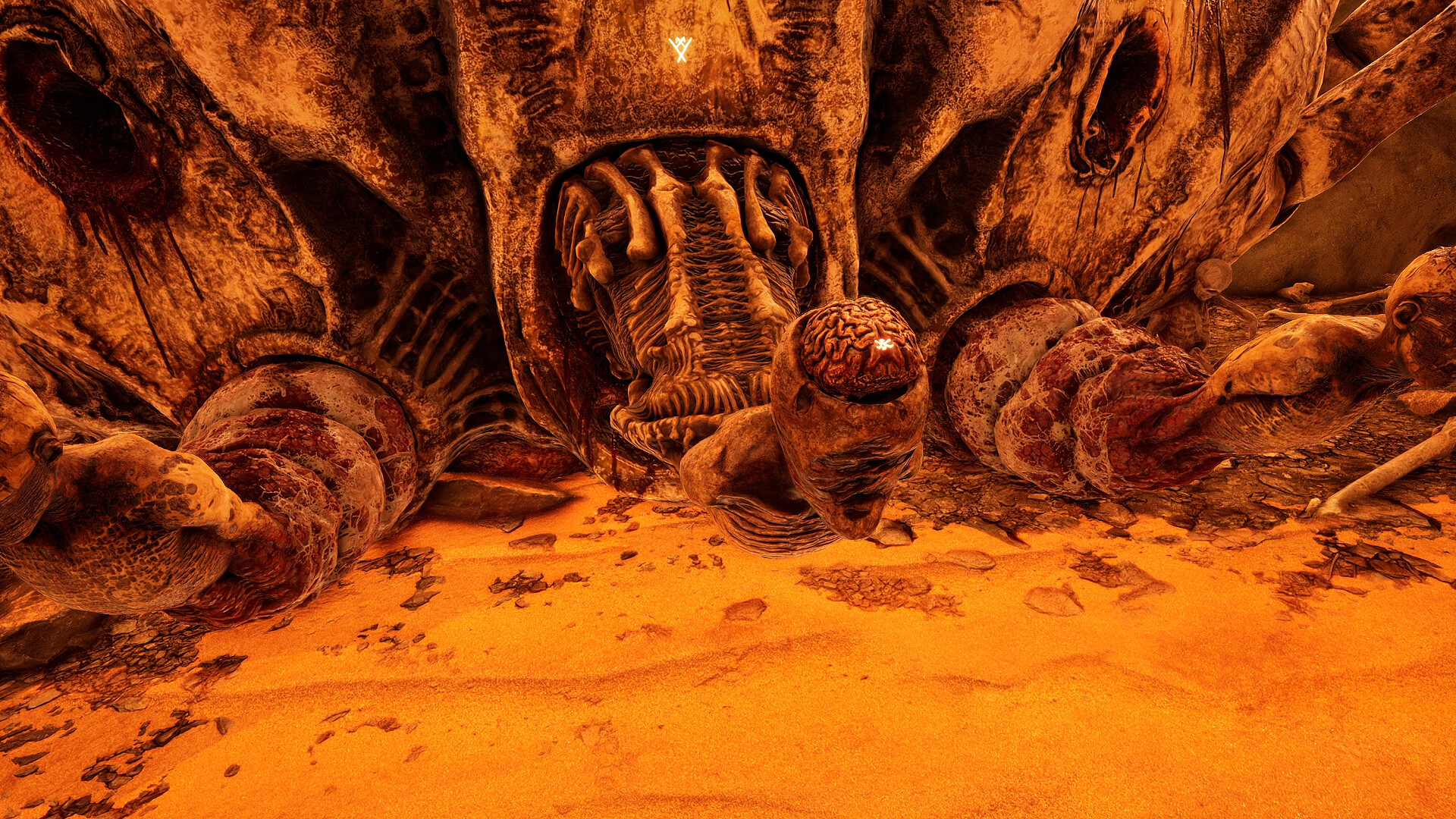
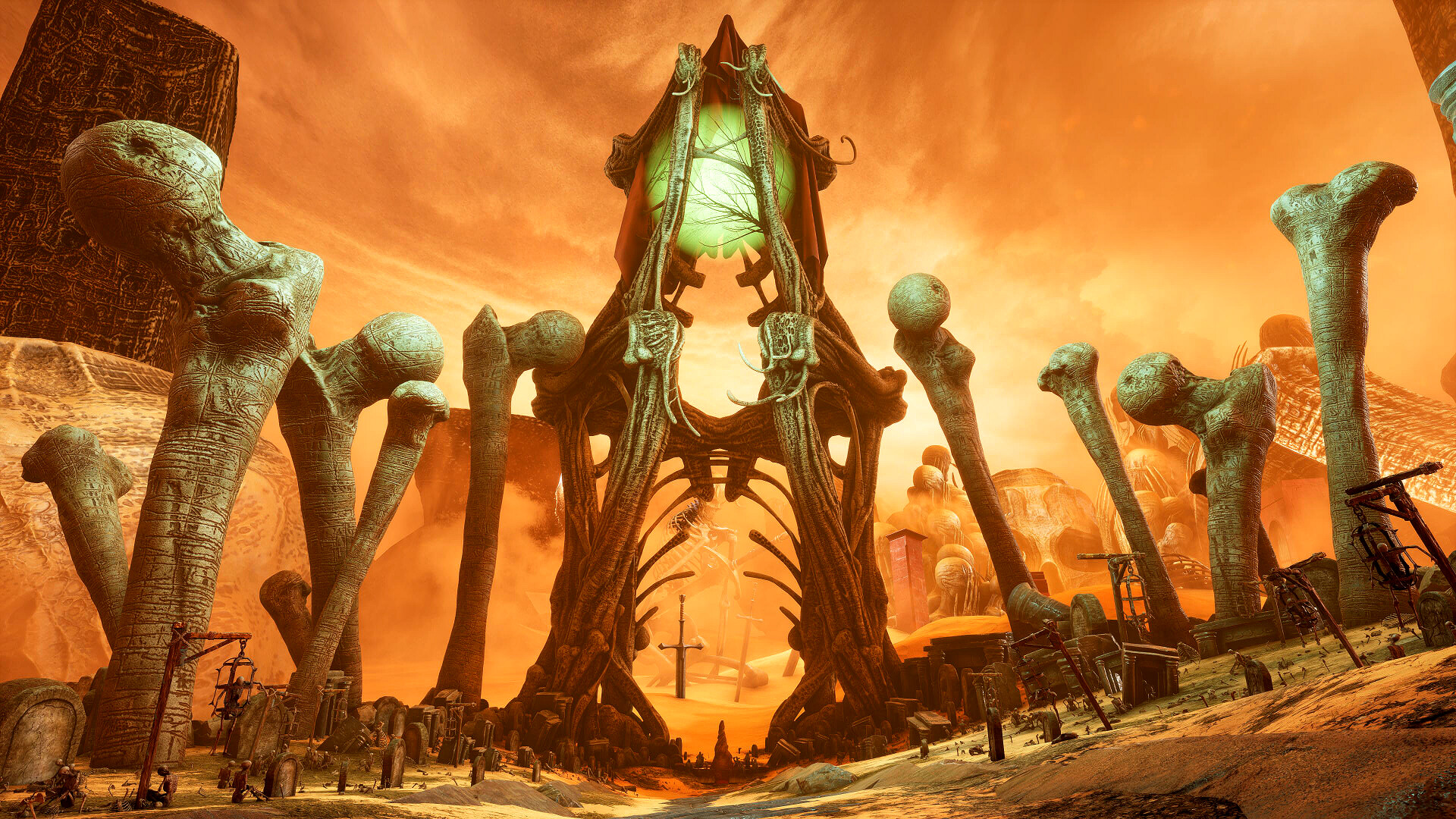
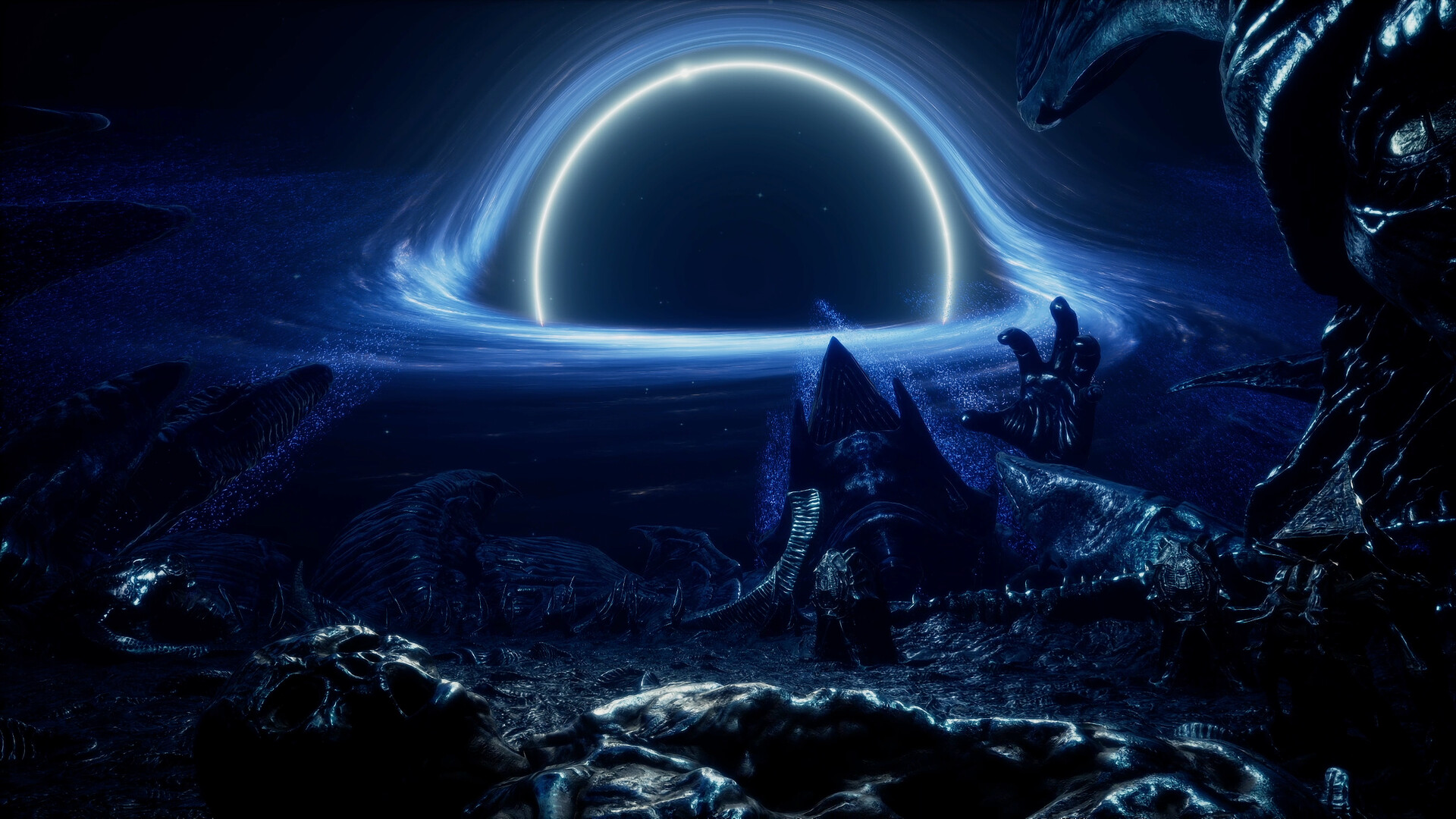
The strong point of Necrophosis is obvious from the first minutes. The game has a real visual identity. We cross impossible landscapes, dead architectures, organic forms which never clearly say whether they are statues, bodies or machines. Dragonis Games does not seek realism. The studio wants to give the impression of a very old world, already destroyed, in which death itself has become matter.
On this level, the game often succeeds. Some panoramas are strong enough to justify pressing on on their own. We walk less to achieve a specific objective than to see how far the scene will go in terms of discomfort. Necrophosis is clearly designed for players who like to stop, look, interpret, and accept that a game does not explain to them everything it shows.
The problem is that this visual ambition also ends up creating its own limits. Everything is so busy, so twisted, so conceived as a visual composition, that navigating it sometimes becomes difficult. A passage, a useful object or a mechanism can get lost in the scenery. It is no disaster, but it’s a reminder that the game almost always prioritizes atmosphere over clarity.
A horror without weapons, therefore without escape
Necrophosis does not give the player a weapon, and this choice defines the entire experience. We’re not here to clear corridors, target monsters or save ammo. We move forward, we observe, we solve a few puzzles and we experience the universe. The horror comes less from an immediate danger than from a feeling of helplessness established over time.
This is consistent with the point. The player embodies a Consciousness locked in a decaying body, without memories, lost in a world where the gods themselves seem to have rotted on the spot. In this context, pulling out a weapon would almost have broken something. The game prefers that we remain small, slow, vulnerable, with only the desire to understand what we are doing there.
But this choice has a cost. Without combat, without truly memorable chase sequences and without strong mechanical pressure, Necrophosis relies heavily on the player’s desire to let themselves be carried away. If the atmosphere works, slowness becomes a quality. If it doesn’t work, you quickly feel like you’re walking from one morbidly beautiful room to another while waiting for the game to respond a little more.
Riddles that are more useful than brilliant
Necrophosis also presents itself as a puzzle adventure, but you shouldn’t expect a great puzzle game. Progression is mainly based on observation, objects to find, mechanisms to activate and some associations to understand. Nothing shameful, nothing unplayable, but rarely enough to provoke that little click that makes you smile in front of a really good enigma.
Their role is rather elsewhere. Puzzles serve to slow the player down and force them to look at the world more carefully. They give a function to places, a reason to search corners, to return to a structure, to vaguely understand what an altar or a machine expects from us. In such a contemplative game, this is important: without it, Necrophosis would quickly fall into a simple guided tour.
The fact remains that the whole sometimes lacks density. The interactions are limited, the solutions are not always very elegant, and certain passages above all give the feeling of looking for the right piece in a setting that does everything to resemble something else. The game is never better than when the puzzle and the image work together. It is less convincing when it reverts to a more mundane key-and-door logic.
Full Consciousness, the good version for consoles
This Xbox Series version is not a simple recycling of the PC release. Full Consciousness brings together the base game and Subconsciousness content, designed as an additional dive into the more mental areas of the title. This is clearly the best way to discover Necrophosis today, especially if you arrive without having followed its first life on Steam.
In terms of features, this Xbox version offers exactly what we expect: Series X|S optimization, 4K Ultra HD, 60 fps+, achievements, cloud save and Xbox Play Anywhere. The game is not a technical showcase in the classic sense, but its artistic direction obviously benefits from a clean image and good fluidity. In a title where we spend so much time looking at the scenery, this is not a detail.
The price remains reasonable, around 19.99 euros excluding launch promotion. For a fairly short game, this can be discussed, but the complete edition makes the package easier to accept. You don’t pay for a big survival horror, nor for a puzzle game rich in mechanics. You pay for a very specific visual proposition, and that is what Necrophosis should be judged on.
A game that chooses its audience
Necrophosis doesn’t make much effort to hold back those who do not connect with its vision. It’s slow, opaque, often more contemplative than truly interactive. Fans of fast-paced horror may find it drawn out. Players who come looking for solid puzzles also risk being left wanting more.
Conversely, those who like experiences with a heavy atmosphere or worlds that tell more through their forms than through their dialogue can find something strong there. Necrophosis is limited, but it knows exactly what impression it wants to leave.
This is probably the fairest way to approach it. Not like a great forgotten horror game, nor like a new Scorn, but like a dark, serious, sometimes clumsy curiosity, which pushes its visual idea very far even when its gameplay remains behind.
Verdict
A strong vision, a more fragile game
7/10
Necrophosis: Full Consciousness is an experience that is difficult to recommend to everyone, but easy to understand. Dragonis Games' game is almost entirely based on its artistic direction, its macabre atmosphere and its refusal to transform horror into simple ammunition management. On Xbox Series, this complete edition gives the title its cleanest and most coherent form.
Its limits remain clear: light gameplay, modest puzzles, very slow pace and readability sometimes sacrificed to the setting. But for players who mostly want to traverse a sick, inspired, strange world, and accept that the pleasure comes more from the atmosphere than the action, Necrophosis has something to offer. Not a great game, but a vision that lasts longer than many more conventional productions.
Pros
- Strong artistic direction, inspired by Beksiński and cosmic horror.
- A real dead world atmosphere, slow and oppressive.
- The absence of weapons gives an interesting coherence to the experience.
- Subconsciousness included in this complete edition.
- A clean Xbox Series version, with 4K, 60 fps+, Play Anywhere, achievements and cloud save.
Cons
- Very light gameplay, which relies almost entirely on the atmosphere.
- Useful puzzles but rarely memorable.
- Readability sometimes complicated by overly busy scenery.
- A slow pace that will keep many players at a distance.
More in Video games
Full library 7/10
The Mound: Omen of Cthulhu
XBOX 8/10
Amanda the Adventurer 3
XBOX 6/10
The Coma 3: Bloodlines
XBOX 8.5/10
FATAL FRAME II: Crimson Butterfly REMAKE
SERIES 5/10
Dark Atlas: Infernum
SERIES 9/10
Dragon’s Dogma 2: Dark Arisen
XBOX 7/10
Brigandine Abyss
XBOX 6/10
The Walking Dead: Streets of Survival
XBOX 8/10
Onimusha: Way of the Sword
XBOX 7/10