

Formula Legends
F1 without logos, but not without character
Score: 7/10
Images and videos
At a glance
We liked
- A real personality despite the absence of licenses
- Cars that really change with the times
- Driving more demanding than expected
- Weather and tires that add pace
We liked less
- An AI that is sometimes too rigid
- Frustrating collisions
- Some less notable circuits
- An uneven balance between arcade accessibility and demanding driving
More on Formula Legends
 By Farrel Grimwood · published · 7 min read
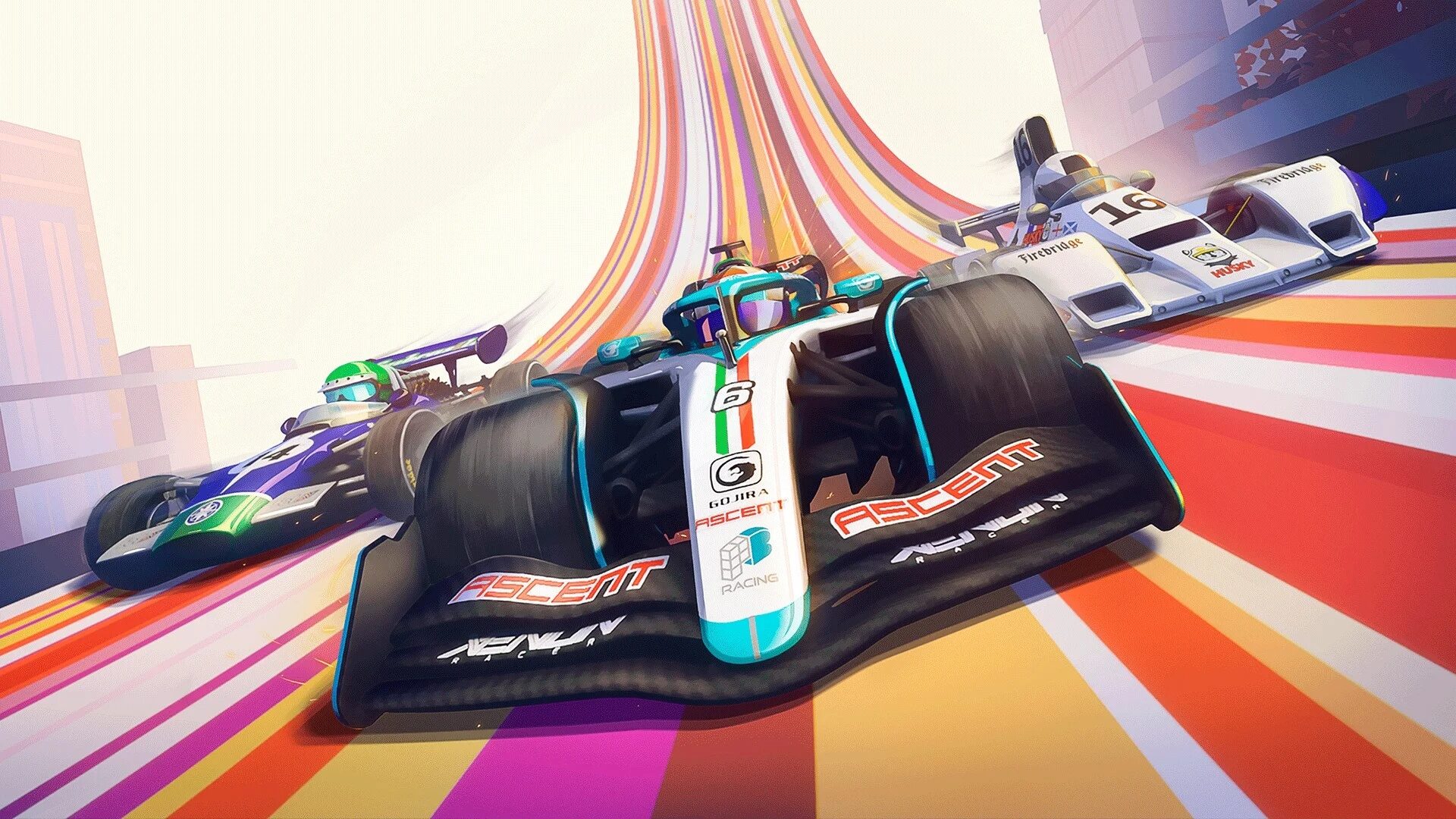
Formula Legends starts from a constraint that could have crushed it: telling Formula 1 without its names, its teams, its drivers and without its official circuits. 3DClouds instead makes it its playground. The single-seaters change shape over the decades, the routes resemble recomposed memories, the liveries evoke without ever signing, and the game advances like a car racing album whose rights have been replaced by vague memories.
The first impression is a little misleading. With its compact cars, its bright colors and its distant view, Formula Legends could pass for a small arcade racing game to launch without thinking. Then the brakes arrive, the tires heat up, the weather changes the grip, a wheel bites the outside, and we understand that the surface smile hides something more demanding. The game has a light pace, but it quickly requires careful driving.
Each era requires a different way of keeping the car on track. The old single-seaters have their nervousness, the more modern their speed, and the game finds a real personality in this crossing of several generations. We don’t just play to win a cup. We move from one mechanism to another, with cars that tell their era through their behavior as much as through their silhouette.
Not everything follows with the same finesse. Artificial intelligence can remain too rigid in its trajectories, contacts sometimes lack logic and the line between requirement and frustration becomes blurred as soon as an opponent sends you out without really paying the same price. Formula Legends knows how to ask for precision, but it does not always provide a fair enough track so that each error seems entirely deserved.
There remains a more endearing racing game than its design suggests. It does not replace official licenses, and that is undoubtedly not its role. It prefers to tell what single-seaters have left behind: shapes, sounds, turns, risks, eras. It remains to be seen whether this great idea holds up over the entire distance, or whether Formula Legends ends up going off track too often when its tribute really begins to take hold.
Cars that really change their age
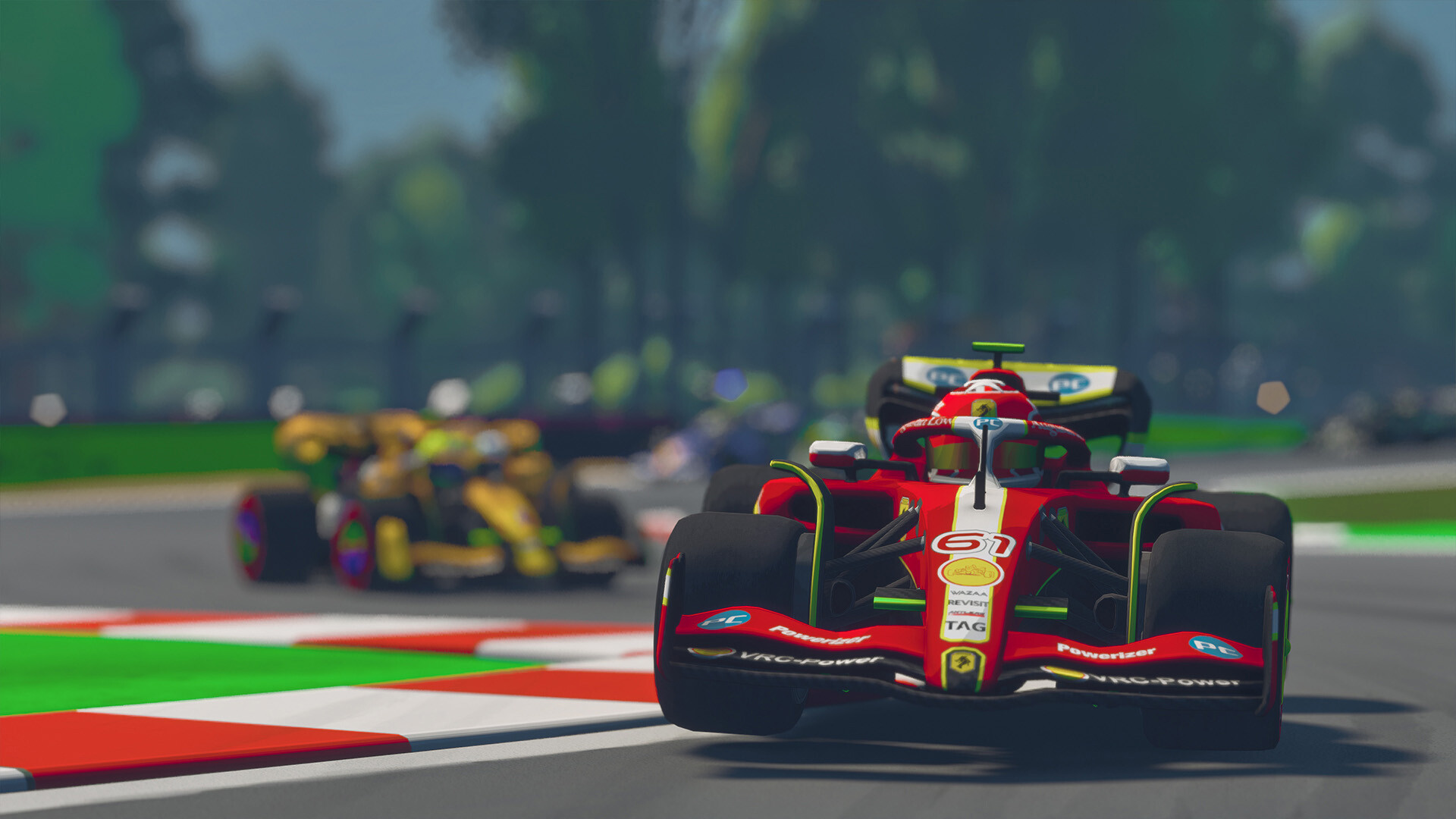
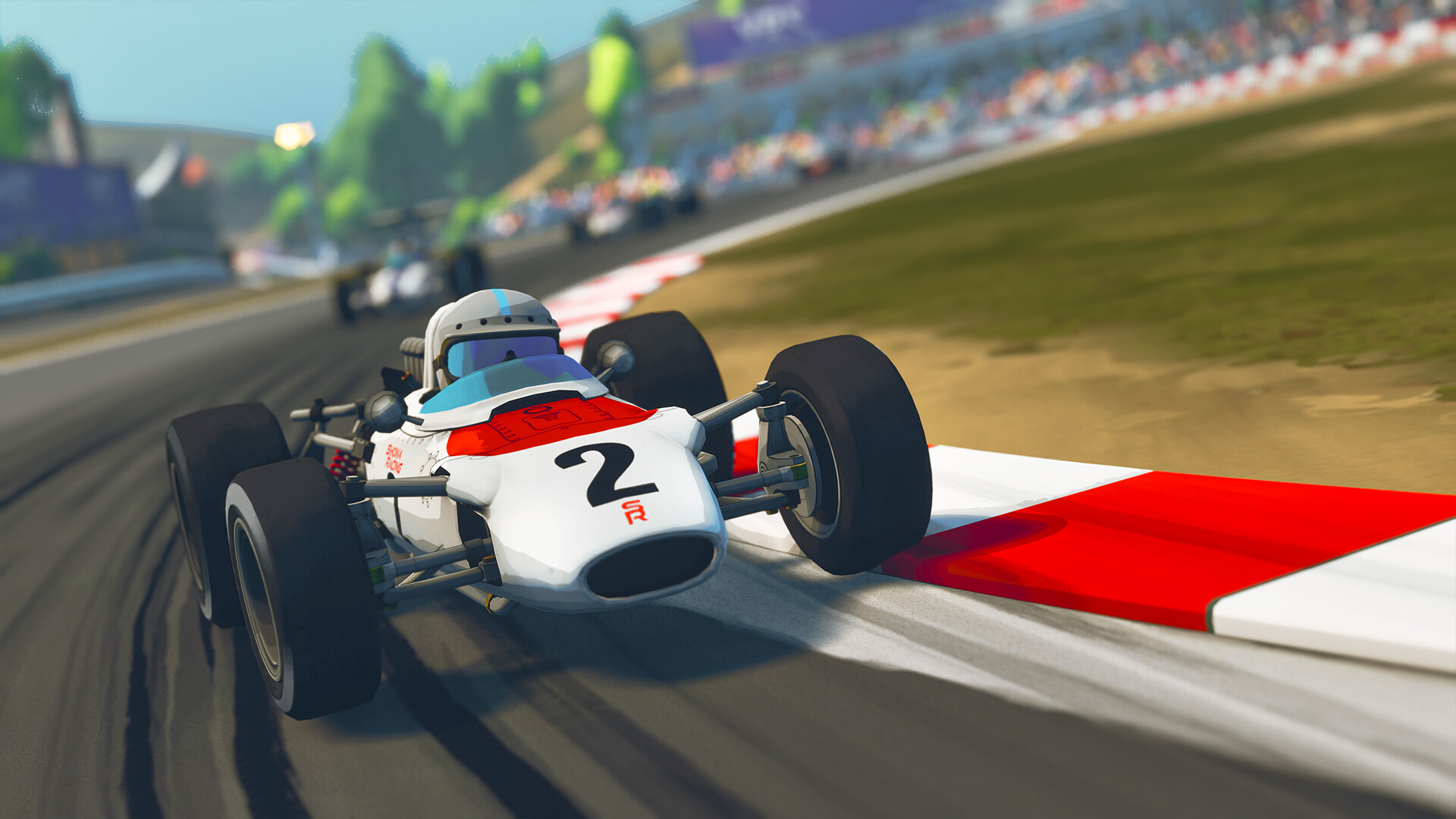
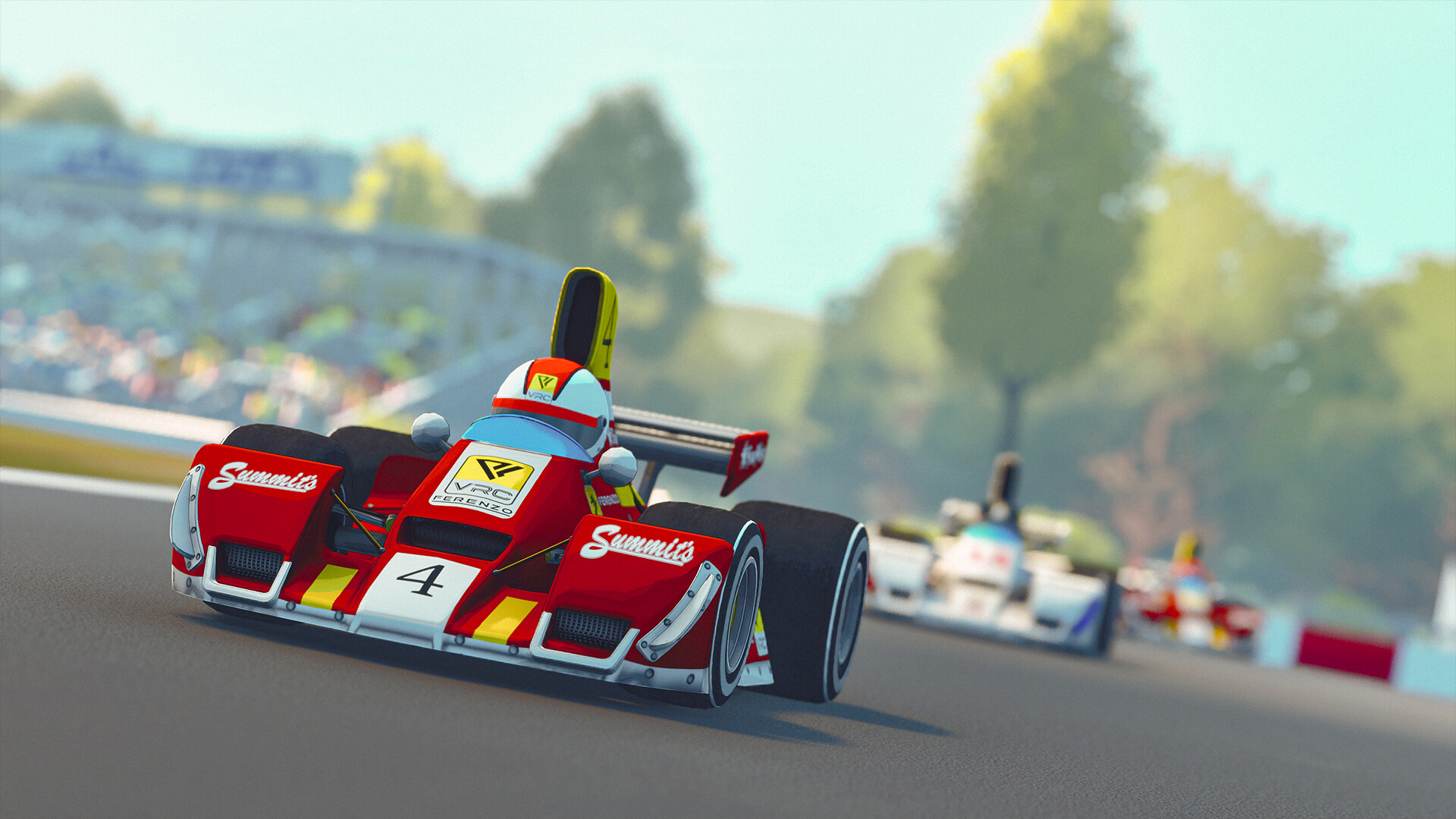
Formula Legends finds its best idea in its cars. The game doesn’t just change a body to give the impression of going through the history of single-seaters. The times really change the way we drive. The older models require more attention, more smoothness, more margin when braking. Modern cars go faster, take turns differently, give an impression of more responsive precision. It remains stylized, but the difference can be felt.
This is what gives the game its real depth. Each category requires you to relearn a little. You don’t take a curve in the same way with an old car as with a recent single-seater. The braking points change, the restart changes, the way of handling an error also changes. Formula Legends then manages to convey its subject without a museum or a long speech. It puts decades of racing into your hands.
Driving therefore requires more seriousness than its appearance suggests. The game maintains a fairly direct handling, but it is not as forgiving as a pure arcade. Braking too late, hitting a curb at the wrong time, accelerating too early in the rain or hitting an opponent can quickly ruin a lap. This small requirement gives satisfaction when the trajectory passes cleanly. You really have the impression of having negotiated the turn, not simply of having accompanied the car to the exit.
Weather and tire management add an interesting layer. Nothing as complex as a full simulation, but enough to require racing over several laps to be taken into account. A wet track changes habits, deteriorating rubber requires more caution, a pit stop can put strategy back at the center of an event. Formula Legends remains accessible, but it sometimes gives the player that little tension specific to racing: not only go fast, but hold on until the end.
The format of the events also helps to vary the pace. Between short races, championships, time trials and challenges, the game gives enough reasons to test your cars beyond a simple quick race. It’s not immense content, but the crossing of eras gives a natural progression. We move forward less to unlock a story than to see how the next generation will behave.
The circuits play the reinvented reference card. They evoke known tracks without directly reproducing them, with turns, scenery and sequences that resemble Grand Prix memories passed through a more playful filter. Some circuits work very well, because they give enough pace to the cars and enough personality to the event. Others seem more ordinary, or less pleasant when the AI is too aggressive.
It is precisely AI that weakens the whole the most. Opponents sometimes follow their line too rigidly, as if they had more rights on the asphalt than the player. Contacts can then become particularly frustrating. A small touch is enough to destabilize the car, while the AI sometimes seems to continue its race without worrying too much about the impact. In a game that requires precision, this kind of behavior is quickly noticed.
Collisions also lack consistency. Formula Legends wants the player to follow the track, but the penalties don’t always feel completely fair. You can lose a lot on a slightly vague contact, or go wide after a reaction that is difficult to anticipate. It’s not permanent, but it’s enough to break some races. The game needs a clean ride to shine. As soon as the traffic becomes too messy, its charm becomes dented.
The difficulty may therefore be surprising. Not because the game would be unfairly hard from start to finish, but because it mixes a light aesthetic with driving that requires real application. Those who come looking for a small, immediate arcade racing game may encounter a steeper learning curve than expected. Those who accept this requirement will, on the contrary, find much of the interest in the game.
Scale model circuits
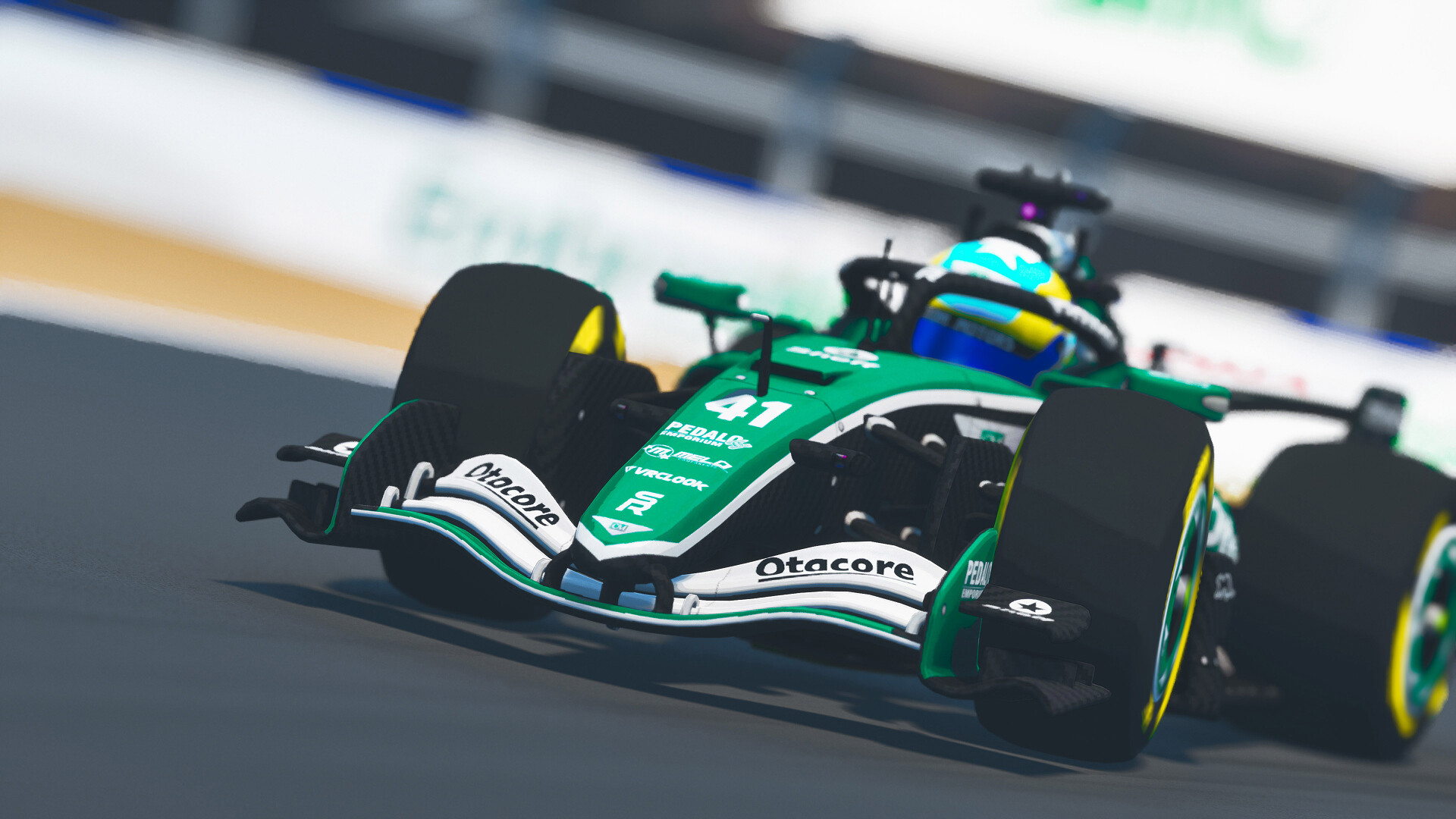
Formula Legends has a real visual identity. The game chooses compact cars, stylized circuits, bold colors and a camera that gives the races the appearance of a moving miniature. This could reduce the feeling of speed. However, this approach works quite well. We’re looking less at a Formula 1 simulation than at a condensed, almost toy version of several decades of motor racing.
The single-seaters are the best part of this skin. Each era has its silhouette, its fins, its proportions, its colors, its small detail which immediately evokes a period without ever calling it by its real name. It’s smart, because the game works with the player’s memory. Sometimes all it takes is a shape or a livery to recognize what Formula Legends wants to suggest. This wink gives a lot of charm to the whole.
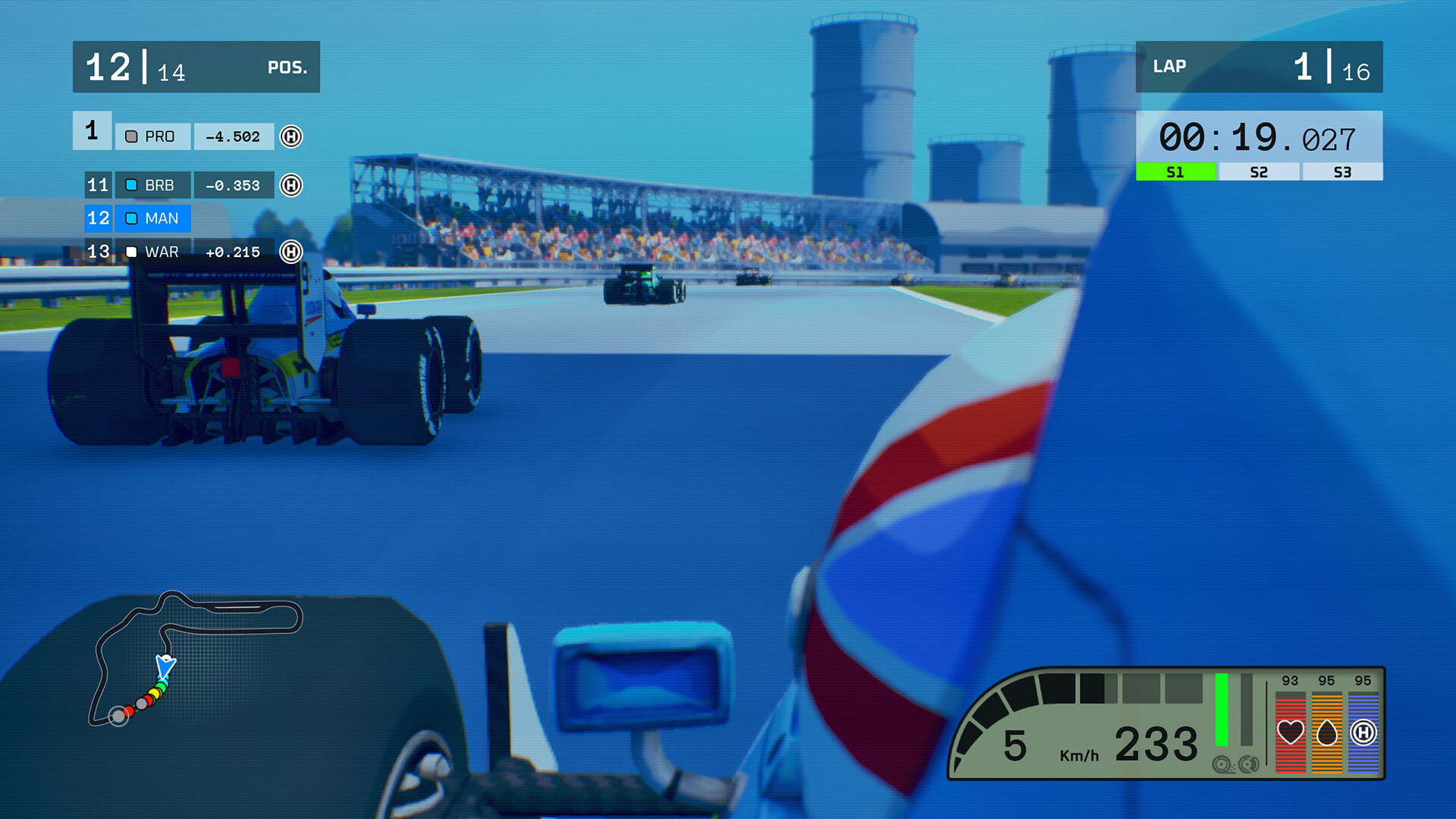
The circuits follow the same logic, with routes inspired by known places but reworked to fit into the aesthetics of the game. Certain settings have personality, certain portions convey this impression of a miniature Grand Prix, and the whole remains generally readable. We can see the turns, the curbs, the braking zones, the traps in the scenery. For a game that requires more precision than expected, this clarity is essential.
Not everything has the same shine, however. Some environments seem more generic, and we sometimes feel that the game relies more on evocation than on the richness of the setting. Formula Legends knows very well how to suggest an era or a circuit, but it sometimes struggles to give a real presence to the places. We especially remember the cars, the trajectories, the errors. Less so the places where they occur.
The technique remains clean on Xbox Series X|S. The game doesn’t have the visual ambition of a big racing title, but it runs with enough clarity and fluidity to let the driving speak for itself. This is essential. As soon as driving becomes more demanding, the slightest technical hesitation could damage the feeling. Here, the image remains stable and readable, even if it never seeks to impress.
The animations and effects remain sober. Rain, changing conditions, pit stops and small racing details bring just the right amount of life without turning the screen into a permanent spectacle. Formula Legends prefers to keep its eye on the track. It’s a fairly coherent choice, even if we would sometimes have liked a little more visual nervousness to accompany the moments of tension.
The sound plays a more discreet card. The engines change from one era to another, but they don’t always have the power or brutality that we expect from a game dedicated to single-seaters. The difference exists, it contributes to the identity of the cars, but they sometimes lack punch. We understand what we are piloting. You don’t always feel it in your stomach.
The music correctly accompanies the menus and the general atmosphere, without really making a mark. Formula Legends does not need a very present soundtrack during the race, because the engine and the concentration naturally take the place. But the sound as a whole could have carried more this idea of travel through the eras. It remains useful, clean, but quite wise.
The track sound effects fulfill their role. Tires, contacts, exits, surface changes provide the necessary information, even if collisions sometimes lack weight. Here again, the problem is with the gameplay: when a contact seems strange in physics, the sound fails to give it more credibility.
Formula Legends has a coherent, endearing design that is smarter than it looks. Its stylized cars have charm, its circuits know how to evoke without copying, and its readability serves driving well. But sometimes it lacks a little power, a little sound, a little presence to transform this pretty model into a real racing souvenir. The game looks at racing history with affection. It does not always make it roar loudly enough.
Verdict
A great idea that sometimes goes wrong
7/10
Formula Legends succeeds because it has a real way of looking at the race. Without an official license, without real names and without exact circuits, 3DClouds nevertheless manages to convey several decades of single-seaters. The cars change their behavior, the eras are recognized, the routes evoke familiar memories, and the whole thing has a scale model charm that works better than one might believe.
But the race is not always as clean as the tribute. The AI lacks flexibility, collisions can be frustrating, some circuits score less than others, and the game sometimes requires precision that its opponent's behavior does not really respect. There remains an endearing, singular title, more demanding than its design suggests. A good declaration of love to the single-seater, imperfect in its trajectories, but sincere in its engine.
Pros
- A real personality despite the absence of licenses
- Cars that really change with the times
- Driving more demanding than expected
- Weather and tires that add pace
- A stylized artistic direction full of charm
Cons
- An AI that is sometimes too rigid
- Frustrating collisions
- Some less notable circuits
- An uneven balance between arcade accessibility and demanding driving
- Engines that sometimes lack punch
More in Video games
Full library 7/10
HOT WHEELS Infinite Rush
XBOX 9.5/10
Warhammer 40,000: Speed Freeks
XBOX 5.5/10
Formula Legends : Formula E – Electric Evolution
XBOX 4/10
Fast & Furious: Arcade Edition
SERIES 10/10
World of Warcraft: Forever
PC 7/10
Castlebound
SWITCH 8.5/10
Village in the Shade
SWITCH 5.5/10
Warrior Cats: Clans of the Forest
SWITCH 6.5/10
Demons’ Night Fever
SWITCH 8/10