
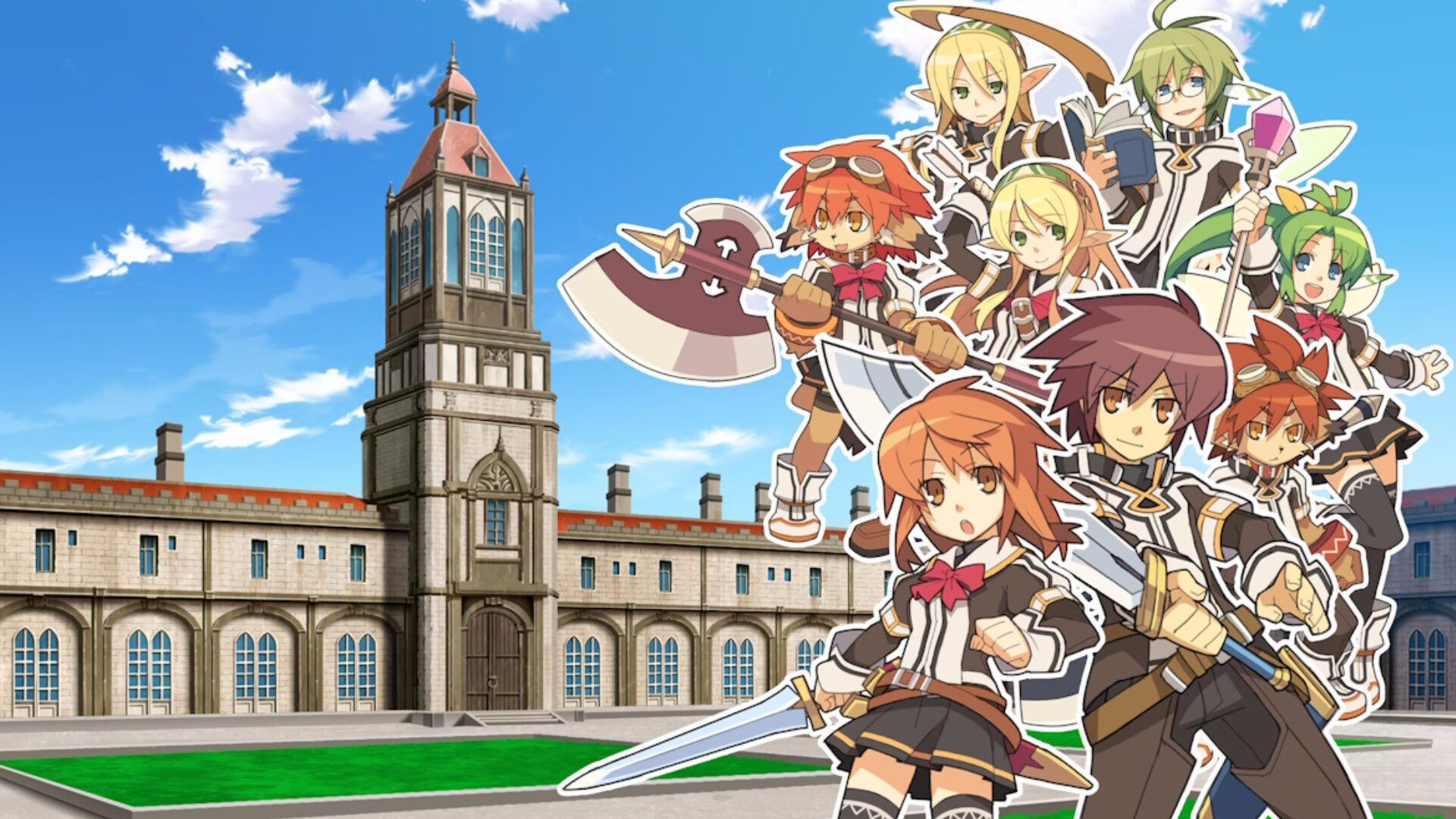

Class of Heroes 3 Remaster
The return of a forgotten dungeon
Score: 7.5/10
Images and videos


At a glance
We liked
- The fidelity of the remaster and the newfound clarity of the interface
- The richness of combinations of classes and affinities
- Technical stability and comfort on Switch
- Coherence between progression, difficulty and narrative
We liked less
- The absence of significant new features
- Visual rigidity and repetition of dungeons
- The slow pace for the uninitiated
- An English translation only
 By Farrel Grimwood · published · 6 min read
Having remained confined to the Japanese market for a long time, Class of Heroes 3 finally finds a second life with this remaster and officially opens up to Western audiences for the first time. The bet is bold: resurrect an old-fashioned dungeon crawler, from the PSP, and adapt it to a generation of players accustomed to fluid interfaces and more immediate mechanics.
On Switch, the hybrid machine par excellence, the game highlights its handheld roots and embraces its rigidity, but it also offers visual modernization and some comfort adjustments. This is not an overhaul, but an invitation to rediscover a part of academic and methodical JRPG, where progression is earned through the sweat of each fight. It remains to be seen whether this resurrection seduces with its fidelity or whether it is locked in the shadows of its time.
The foundations of destiny
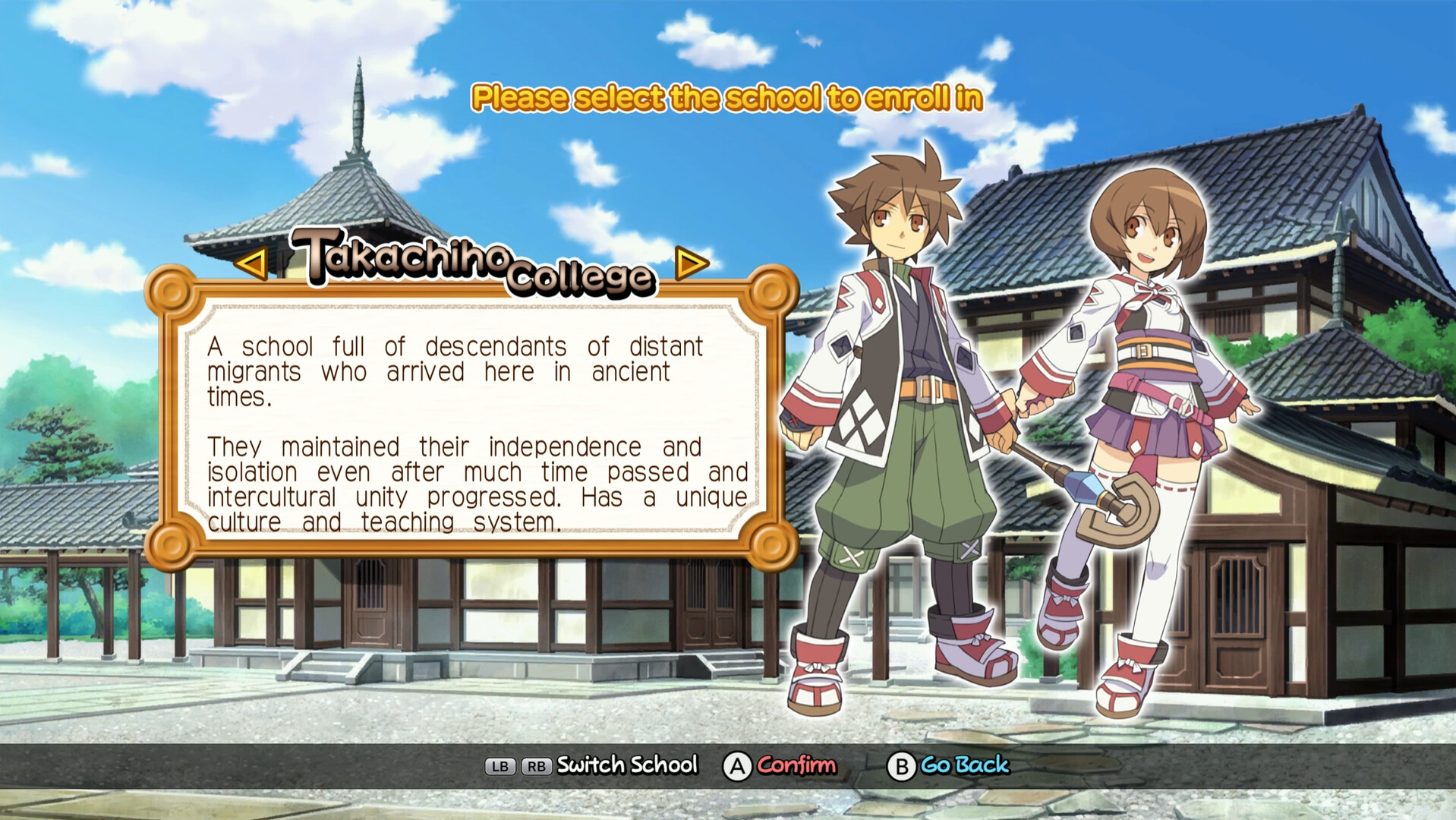
Class of Heroes 3 Remaster is a continuation of the first two episodes but refines their narrative contours. The action takes place at the Particus Academy, an establishment where the future adventurers of the kingdom are trained. This starting point is not new, but it gains an unprecedented scale here thanks to the overhaul of the rhythm and the balance found between school setting and exploration. The game is no longer limited to a succession of anonymous dungeons: it is based on a structure divided into semesters, evaluations and expeditions which intertwine to give a clearer, better-paced progression, and above all consistent with the learning logic that the series has claimed since its beginnings.
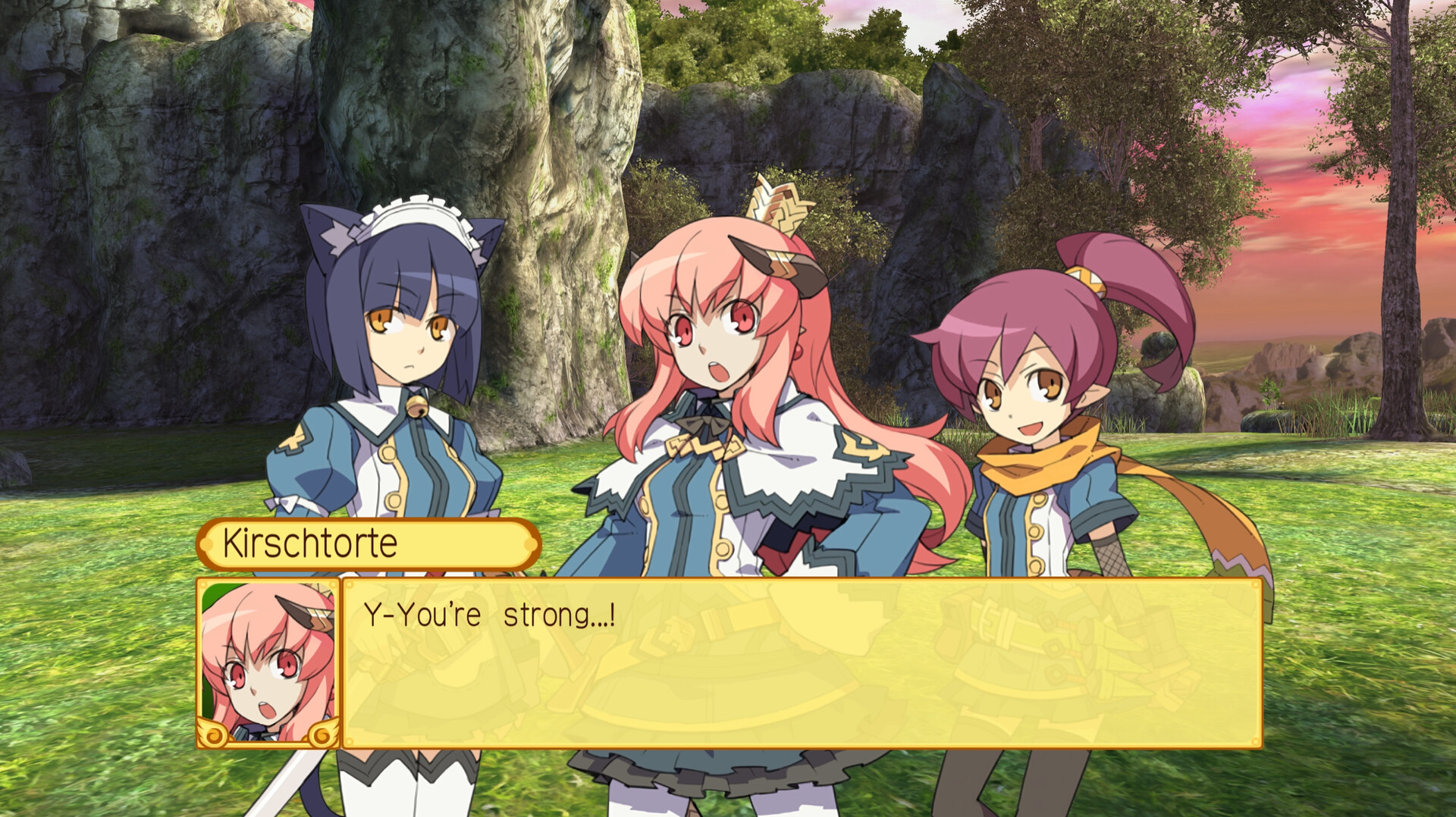
The narration maintains a superficial sobriety but gains in precision. Each mission, each duty entrusted by the administration becomes a pretext to probe the personality of the students, their weaknesses, their rivalries, their hopes. The player does not embody a single hero: he composes a class, a collective entity which grows, fails, reforms, evolves according to the tactical and moral choices made between two explorations. This principle, inherited from the original, finds new life here thanks to the adjustments of the remaster: the dialogues have been rewritten, the transitions better brought, and the whole manages to give a more natural, less mechanical tone to sequences which, in the past, served mainly as a pretext for combat.
The figures who revolve around the academy participate in this newfound density. The director, austere and inflexible, embodies the rigor of the outside world that awaits students beyond the walls. The professors, each carrying their own ideology, whether focused on military discipline, magical research or the philosophy of races, serve as moral benchmarks in a universe that values diversity without ever erasing tensions. The students, finally, offer the variety necessary for a game based on personalization: humans, fairies, dwarves or monsters make up a heterogeneous whole where differences in temperament, beliefs and affinity become as important as statistics.
The scenario, as a whole, does not seek surprises. It relies on repetition to build a sense of belonging. Each exploration, each return to the academy, each exam session reinforces the sensation of a cycle: that of learning through failure. This approach, faithful to the original spirit of the series, could seem rigid, but it gives the game a rare coherence. We gradually understand that the real intrigue is not played out in the corridors or dungeons, but in the way in which these apprentice heroes face their limits, learn to listen to each other and end up deserving the title that they have been promised since the opening.
The remaster does not upset this structure but gives it back a clarity that it had lost. Where the old episode struggled to articulate story and progression, this one manages to make dialogues, lessons and missions a homogeneous whole. Class of Heroes 3 Remaster ultimately tells the same story as its predecessors: that of a group in search of identity in a world of rules and dangers. But for the first time, this quest rings true, carried by a writing which assumes its restraint and by a direction which, without emphasis or detours, gives back to the series its coherence and its meaning.
The foundations of the system
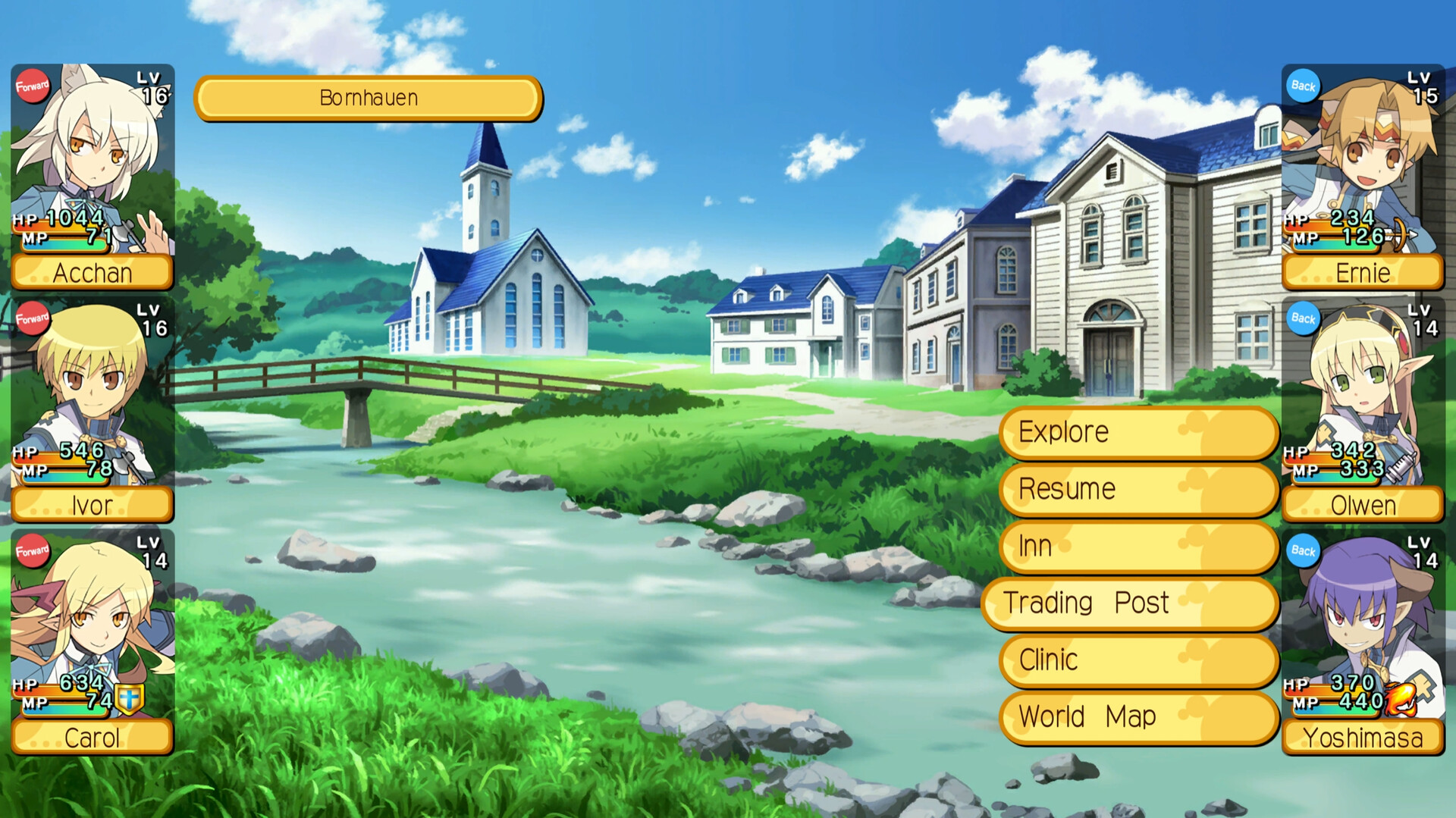
This remaster does not seek to reinvent the gameplay, it consolidates it. Class of Heroes 3 remains above all an old-fashioned dungeon crawler, based on rigor, preparation and patience. Exploration in first-person view maintains its methodical pace: every step counts, every detour can cost victory. However, the Switch version refines the formula. Movement becomes more fluid, transitions between menus and combat become lighter, and the readability of maps has been reworked to avoid the visual breaks that disrupted the experience on PSP.
The heart of the system is based on the composition of the teams. Each adventurer, defined by their race, class and moral alignment, influences the cohesion of the group. Compatibilities between characters, often neglected in previous episodes, become a central strategic factor here: a powerful but disunited team can collapse at the first setback. Learning happens through mistakes: recruit, test, fail, reform. This slow but rewarding cycle forms the backbone of the game and imposes a discipline that rewards thought more than luck.
The dungeons, spread around the academy, retain their labyrinthine structure. Each imposes its own logic, between invisible traps, secret passages and environmental puzzles. The remaster does not modify the original topography but clarifies it: the textures are sharper, the lighting effects better dosed, and crucial information such as health, morale or endurance; are more accessible on screen. The experience remains demanding but never punishing, because each defeat is accompanied by tangible progress.
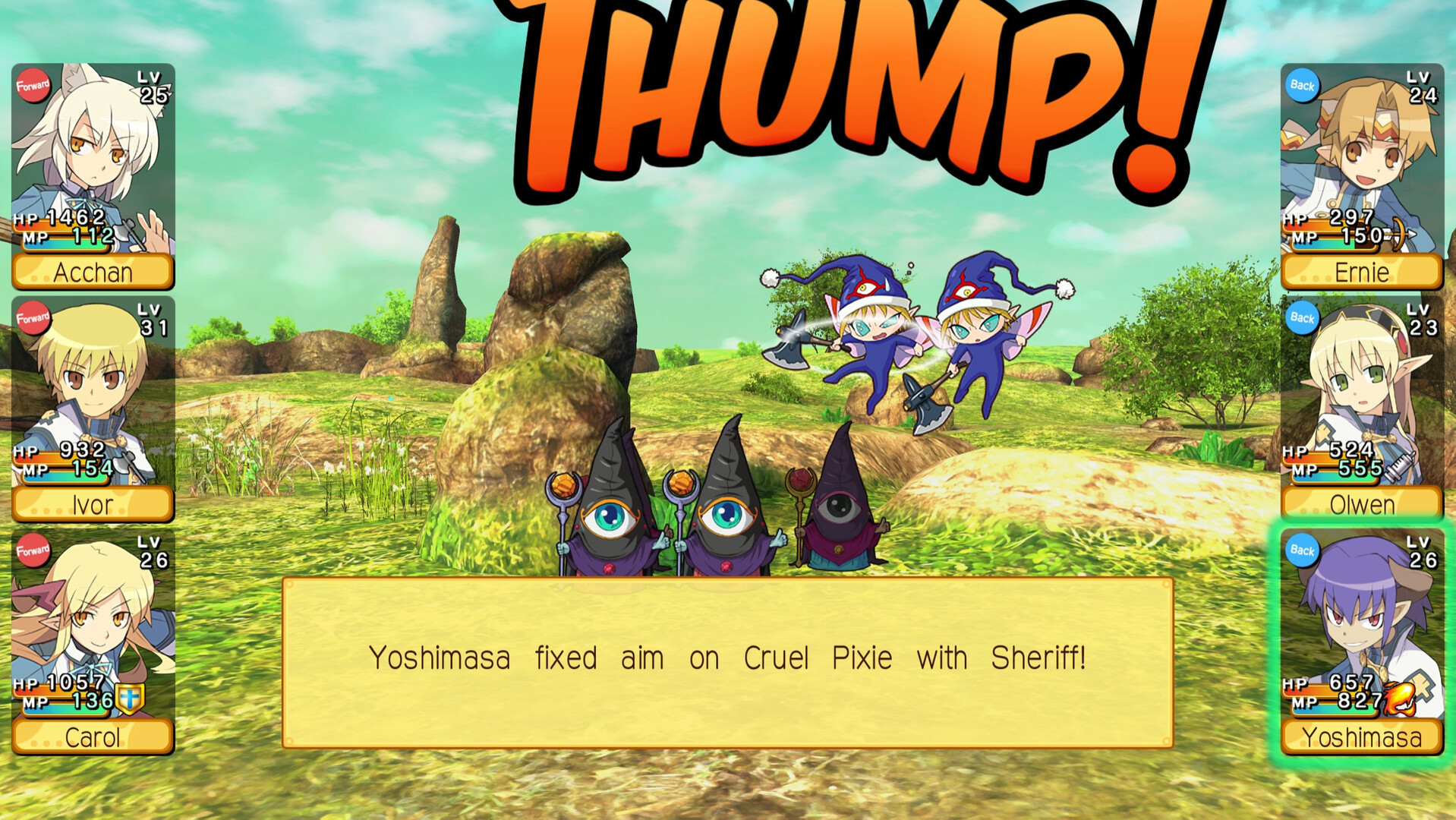
The combat system, still turn-based, is based on a classic alternation between physical attacks, magic and support. The minimalist staging does not prevent tension: each confrontation is like a calculation exercise where the slightest error in rhythm can ruin an entire expedition. The adjustments made to the balancing, in particular the revision of certain damage and resistance formulas, make the clashes more dynamic without altering the tactical dimension.
On a larger scale, the player’s development is part of an academic progression: the semesters follow one another, the grades are displayed, the evaluations determine access to new areas. This structure, typical of the series, finds its culmination here: it finally links the player’s learning to that of his characters. We learn to understand the game as we learn to survive its rules. Class of Heroes 3 Remaster does not soften its difficulty; it makes it readable. Therein lies its success: offering a modern audience a game of rare rigor without distorting it, restoring to effort a value that few RPGs still dare to demand.
Visual and sound foundations
The work of remastering Class of Heroes 3 does not transform the experience, it clarifies it. Switching to Switch brings sharper definition, sharper colors and an interface free of the original blurs and slowness. The rendering remains modest but coherent. The character portraits benefit from a slight rework which reinforces their readability without betraying the initial style. The menus gain contrast and reading comfort, making long gaming sessions more enjoyable.
The dungeons, the heart of the game, retain their narrow structure and geometric corridors. Nothing has been recast but everything has been cleaned. The finer textures, better managed lighting effects and constant fluidity provide a solidity that the portable version could not guarantee. The whole thing retains this rigid and repetitive aspect specific to the genre, but this rigor is part of its identity. It requires concentration, memorization, and prudence. The remaster does not soften the formula, it simply gives it back the stability it deserved.
The soundtrack, reworked for the occasion, accompanies this restoration. The orchestral music, sober and discreet, alternates between the luminous themes of the academy and the darker motifs of the depths. The mix gains clarity and the sound effects benefit from better spatialization. Nothing is spectacular, but everything rings true. The transitions between exploration and combat are more fluid and the soundscapes, more precise, help to maintain this slow tension specific to the series.
This remaster does not seek to modernize to seduce. It stands out as a stabilized, faithful and readable version of a game that needed precision more than novelty. Class of Heroes 3 keeps its period look, its calm rhythm and its studious atmosphere. On Switch, this sobriety finds ideal ground: a game to restart, to resume, to explore in fragments, without pressure or artifice.
Verdict
The return of a school of patience
7.5/10
Class of Heroes 3 Remaster does not seek to seduce with modernity or to compete with contemporary RPGs. On the contrary, it affirms its loyalty to an age of role-playing games where difficulty was not an obstacle, but a language. On Switch, this rigor finds ideal ground: portability highlights the session structure, learning through repetition and the slow satisfaction of mastering a demanding system. Acquire delivers here an honest, careful, lucid remaster on what it is.
It's not a spectacular game. Its slow pace, its austere artistic direction and its mechanics from another time will put off some. But for those who accept its framework, for those who see constraint as a form of immersion, Class of Heroes 3 Remaster becomes a model of coherence. Every corridor, every fight, every return to the academy tells the same thing: merit is earned through hard work.
Pros
- The fidelity of the remaster and the newfound clarity of the interface
- The richness of combinations of classes and affinities
- Technical stability and comfort on Switch
- Coherence between progression, difficulty and narrative
- The original spirit respected without artificial addition
Cons
- The absence of significant new features
- Visual rigidity and repetition of dungeons
- The slow pace for the uninitiated
- An English translation only
More in Video games
Full library 10/10
World of Warcraft: Forever
PC 8.5/10
Warhammer 40,000: Boltgun 2
PC 9/10
Total War: Warhammer III – Lord of the End Times DLC
PC 7/10
Revisited | Warcraft III: Reforged
PC 7.5/10
Warcraft III Reforged: Forsaken Kingdom
PC 8.5/10
World of Warcraft: Midnight
PC 9/10
Puzzle Bobble Everybubble!
PC 6/10
Crown of Greed
PC 6.5/10
Tavernhold
PC 6.5/10