
Beyond The Threshold
The mage, the cards and the siege
Score: 6.5/10
Images and videos
At a glance
We liked
- Four mages who really change the way the game is played
- A simple but effective resource economy
- A real board game texture
- Simultaneous cooperation works well
We liked less
- A very modest visual appearance
- An unwelcoming introduction
- English only
- Visibility still too low to exist beyond the niche
 By Farrel Grimwood · published · 5 min read
With Beyond The Threshold, William Ritson offers a strategy game that is as much a card game as a board game. Released on December 5, 2025 on PC, the title places the player in the shoes of a hunted mage, forced to retreat into the wild lands to build his power before the villagers, the king’s army or other ascendant mages come and wipe him off the map.
You choose one of the four available mages, you place your servants on the board, you collect five resources, you build projects, you cast spells, then you try to survive a progressive increase in peril. Everything can be played alone or in cooperation with up to four players, with simultaneous actions that avoid long downtimes.
Nothing spectacular in form, but an immediately identifiable proposal in substance. Beyond The Threshold is not trying to ape a big real-time strategy game, nor a classic deckbuilder. It brings together cards, resource management, positioning and permanent escalation logic. The idea is not absolutely new. It is more so in this way of making it fit into a very concentrated little independent game.
It remains to be seen whether this good idea is enough to take the game beyond the simple clever prototype, or if Beyond The Threshold remains a niche curiosity, solid in its systems but too austere to really go beyond its circle of believers.
Four mages, a good base
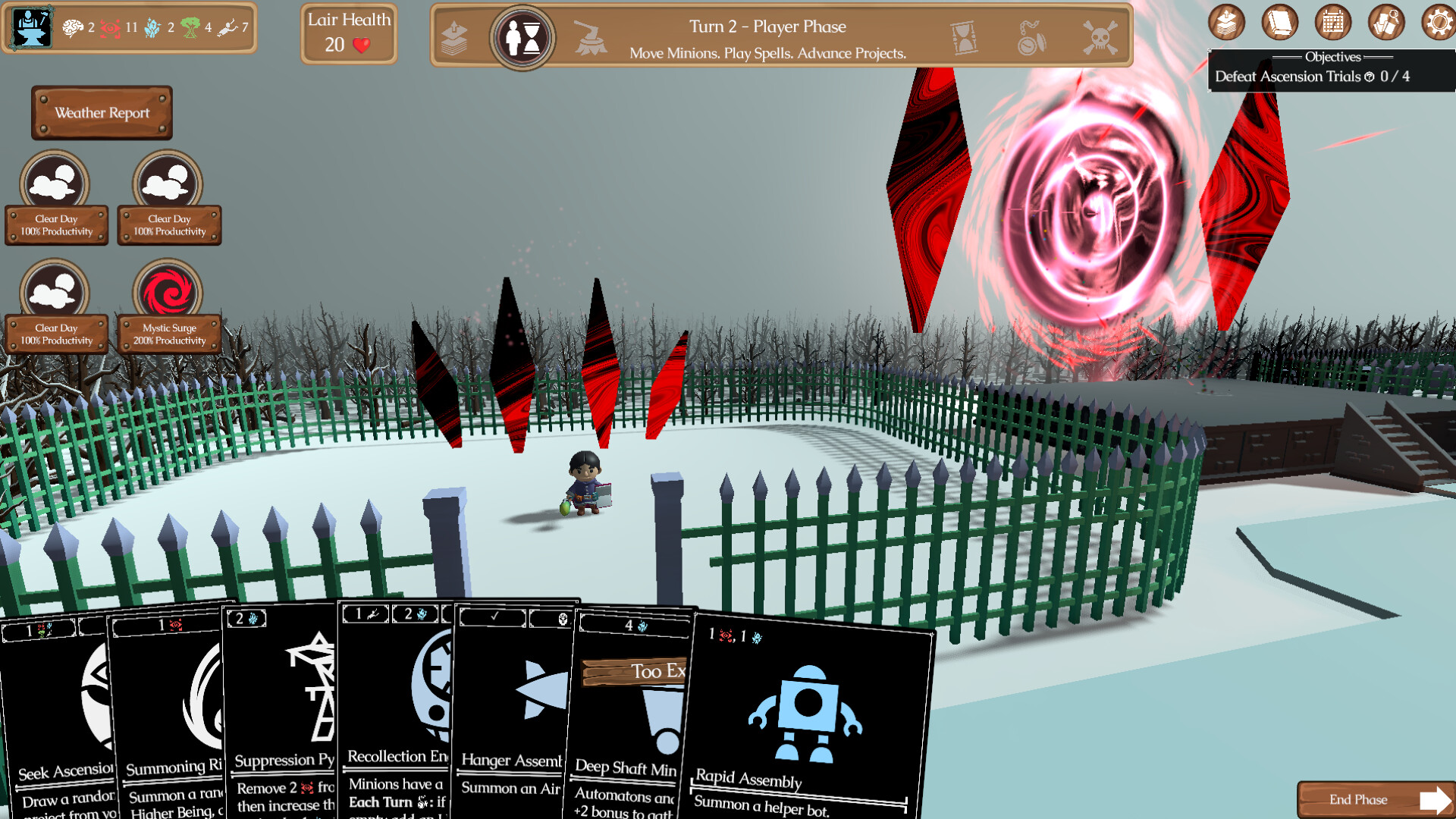
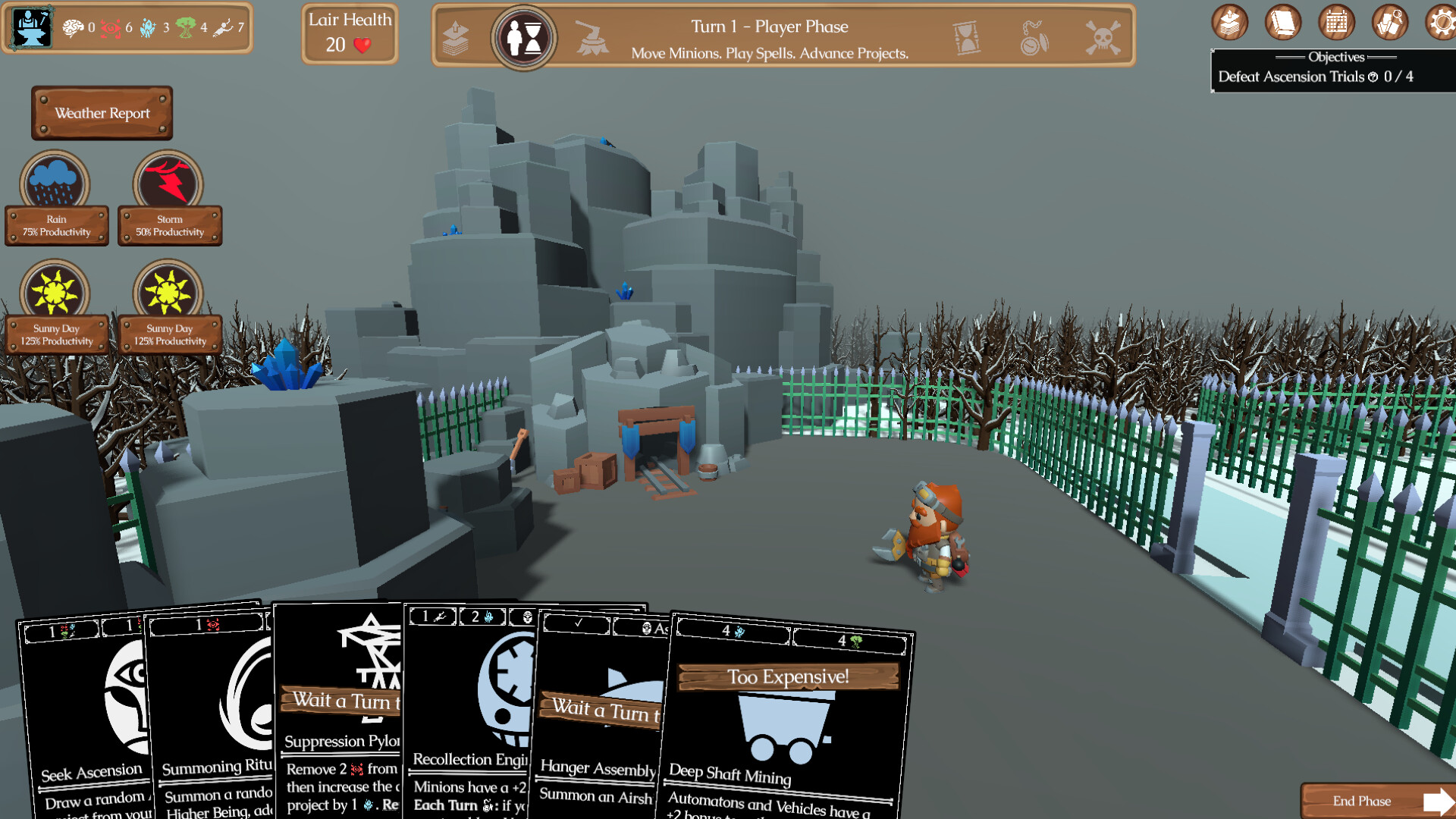
Beyond The Threshold is based above all on the difference between its mages. The Prophet relies on faithful people and unpredictable summons, the Artificer transforms the table into an industrial machine, the Druid relies on animal companions, and the Necromancer recycles the dead as another resource. The game doesn’t just change a few numbers depending on the character chosen, it really encourages you to play differently.
This variety does a lot for the title. Resources do not all serve the same purpose depending on the mage, priorities change, and the way of handling pressure is never exactly the same. We are not playing a simple wizard repainted in four colors. We choose a logic.
The card system works because it remains legible. We quickly understand what a servant produces, what a project brings, and what a spell can correct in the short term. Beyond The Threshold doesn’t need to hide its depth behind artificial complexity. It sets clear rules, then lets the player combine them to find their own path to power.
Cooperation naturally strengthens this good foundation. The game benefits from simultaneous action. Everyone manages their own small economy, their creatures, their way of responding to the threat, without the game stopping for too long between two decisions. This gives the title a welcome fluidity, especially for a game that could very quickly become rigid or interminable with several players.
This first layer is already enough to give the game its personality. Beyond The Threshold impresses not with abundance, but with how quickly its systems fit together. We feel a game built around a real structure, not just around an accumulation of ideas.
A card game that thinks on a board
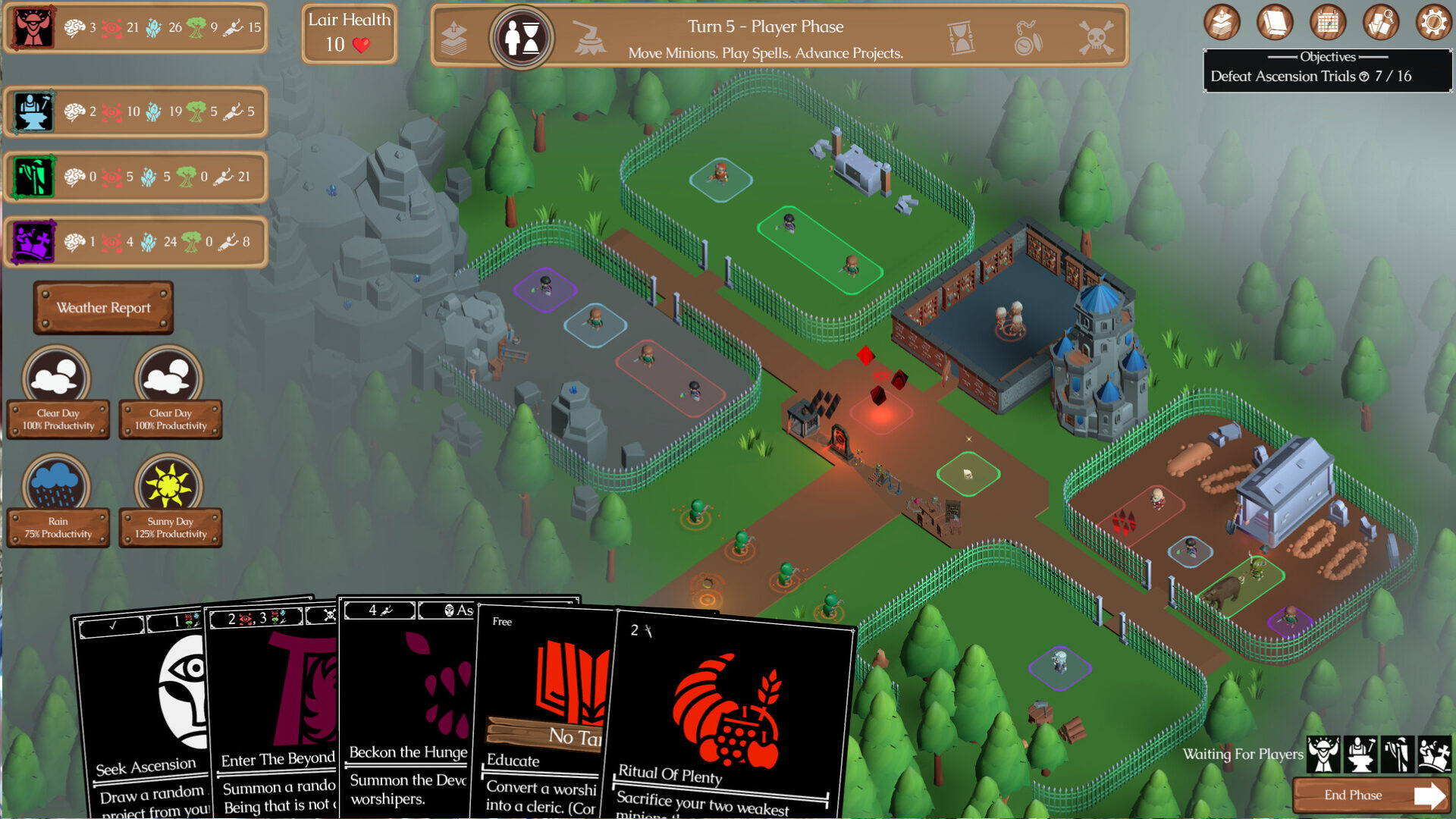
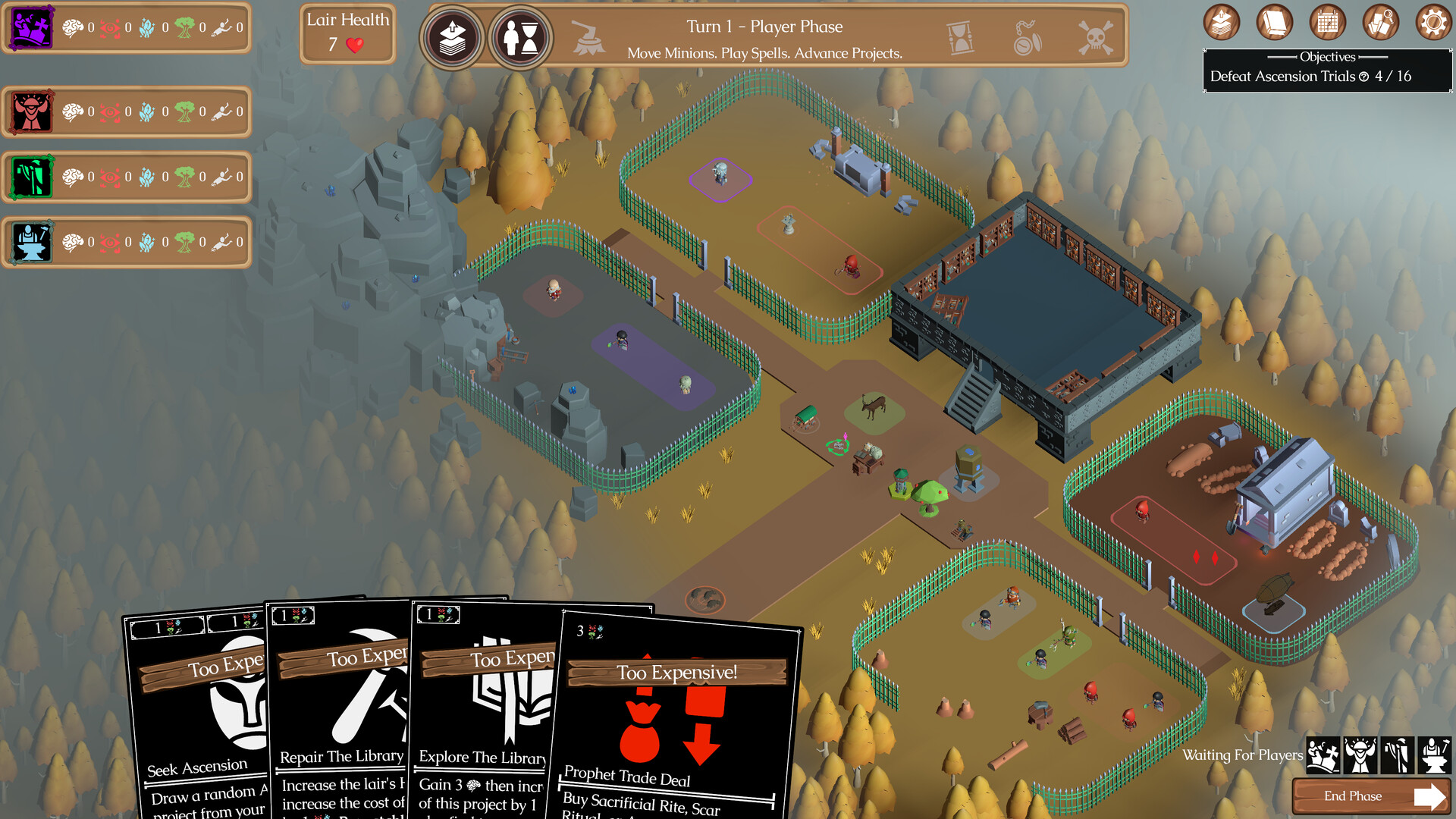
Beyond The Threshold does not treat its cards as simple chain effects. Positioning matters, the way you distribute your units matters, and the pace at which you transform your resources also matters. There is something very board-like about the game, almost very tabletop, which gives it a different texture from a faster-paced or more spectacular deckbuilder.
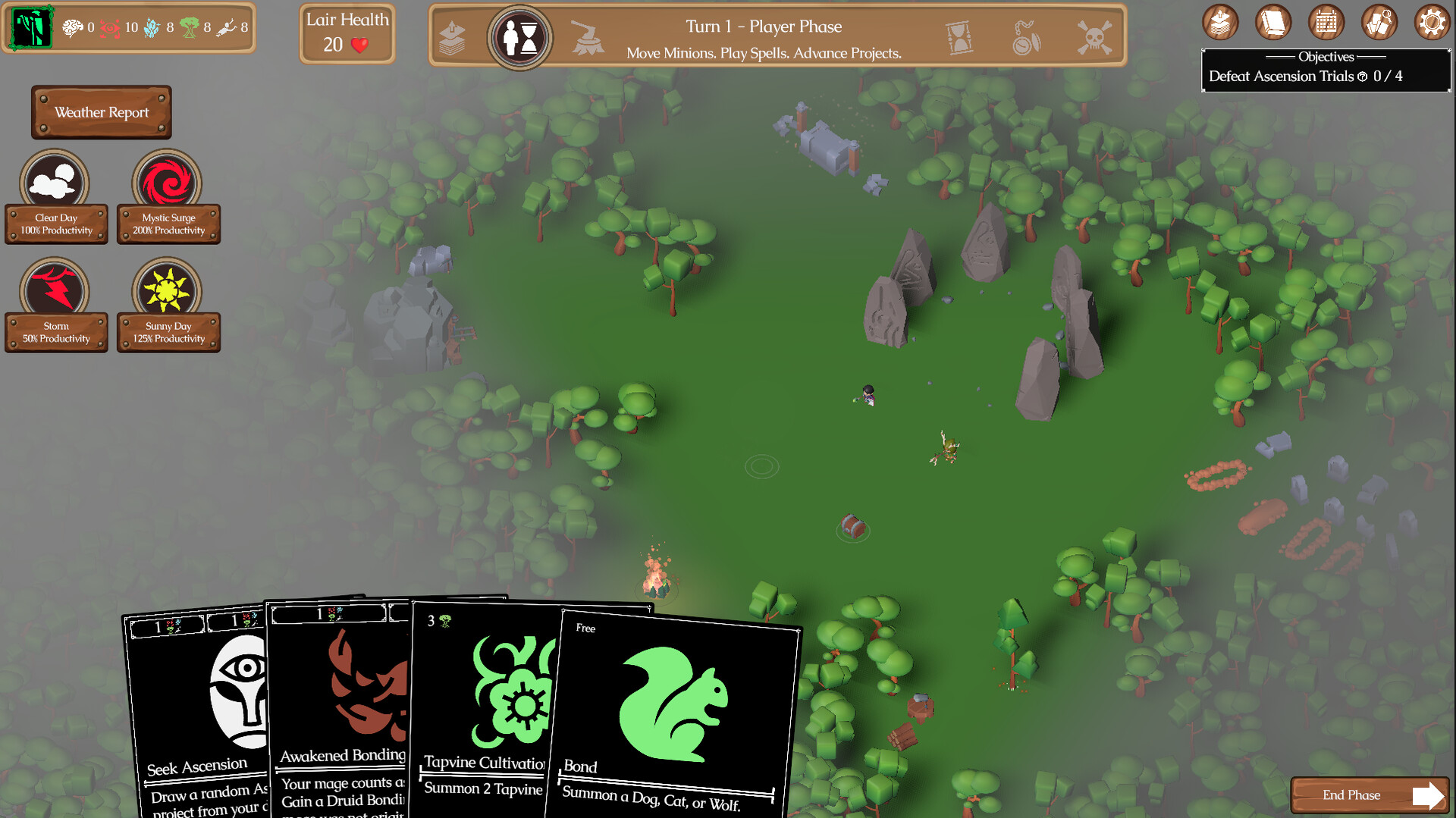
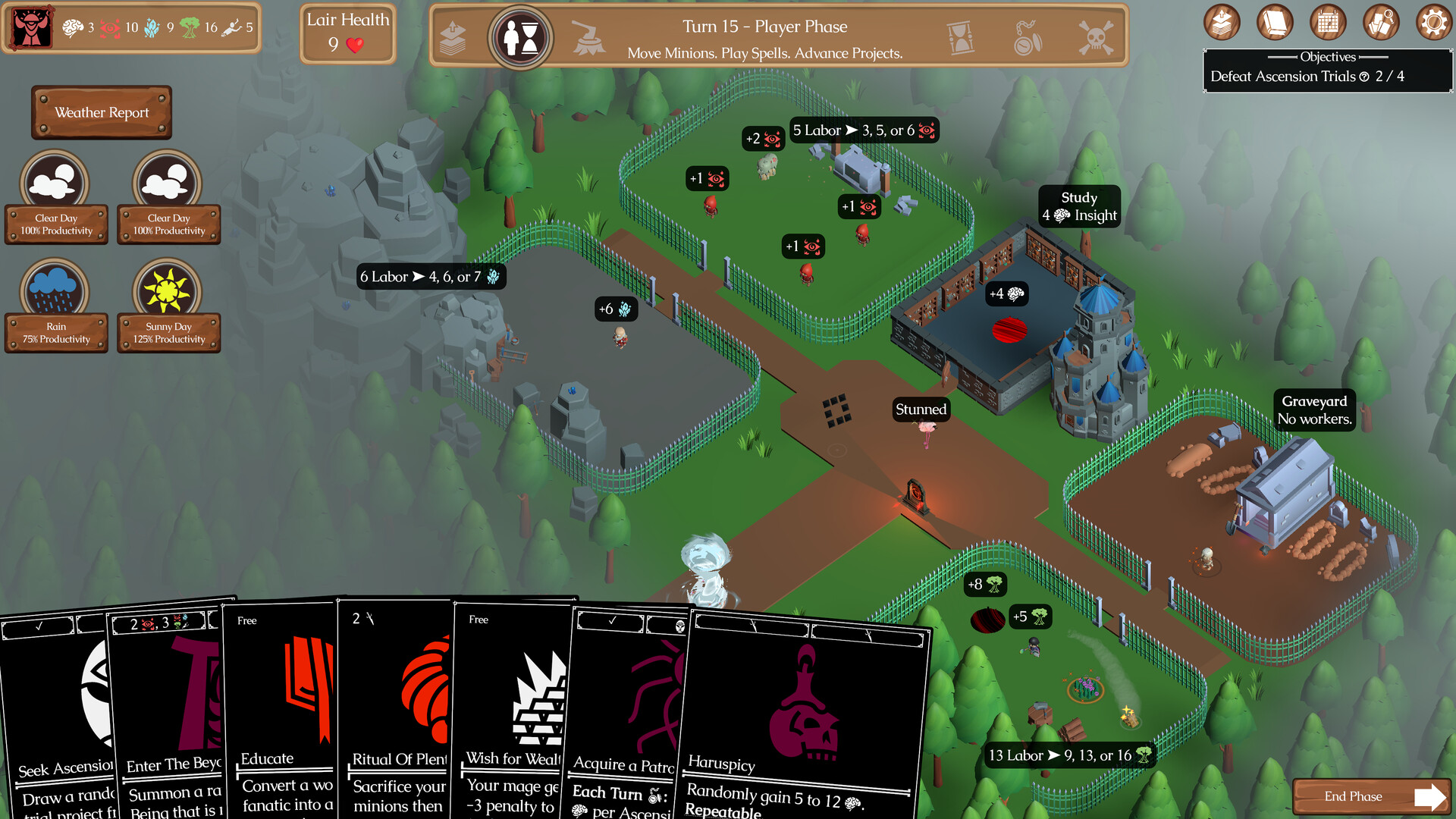
The five resources, which are insight, mana, crystals, wood and corpses, are enough to set up a small, credible economy. We don’t just accumulate to play harder. We must choose what we develop, what we delay, what we agree to sacrifice in order to pass a dangerous turn. Beyond The Threshold becomes interesting when it forces these kinds of compromises.
The permanent siege of the kingdom adds constant pressure. The danger does not only come from outside. It comes from the fact that everything must hold together: defense, build-up, production, progression. A bad investment is not only paid for by a lost turn, but sometimes by the impression of having opened a breach that is impossible to close.
The different objectives also help the game not to be reduced to just one way to win. Ascension, boss fight, survival, ultimate: each pushes the system slightly in a different direction. Again, it’s not a revolution, but it’s enough to prevent the loop from running out too quickly.
Post-launch updates are moving in the right direction. The addition of the perks system, Ascended mode and challenge perks shows that the game is seeking to thicken its replay and give more room to game plans. It’s not the kind of follow-up that transforms everything, but it indicates a coherent direction.
Real depth, thin covering
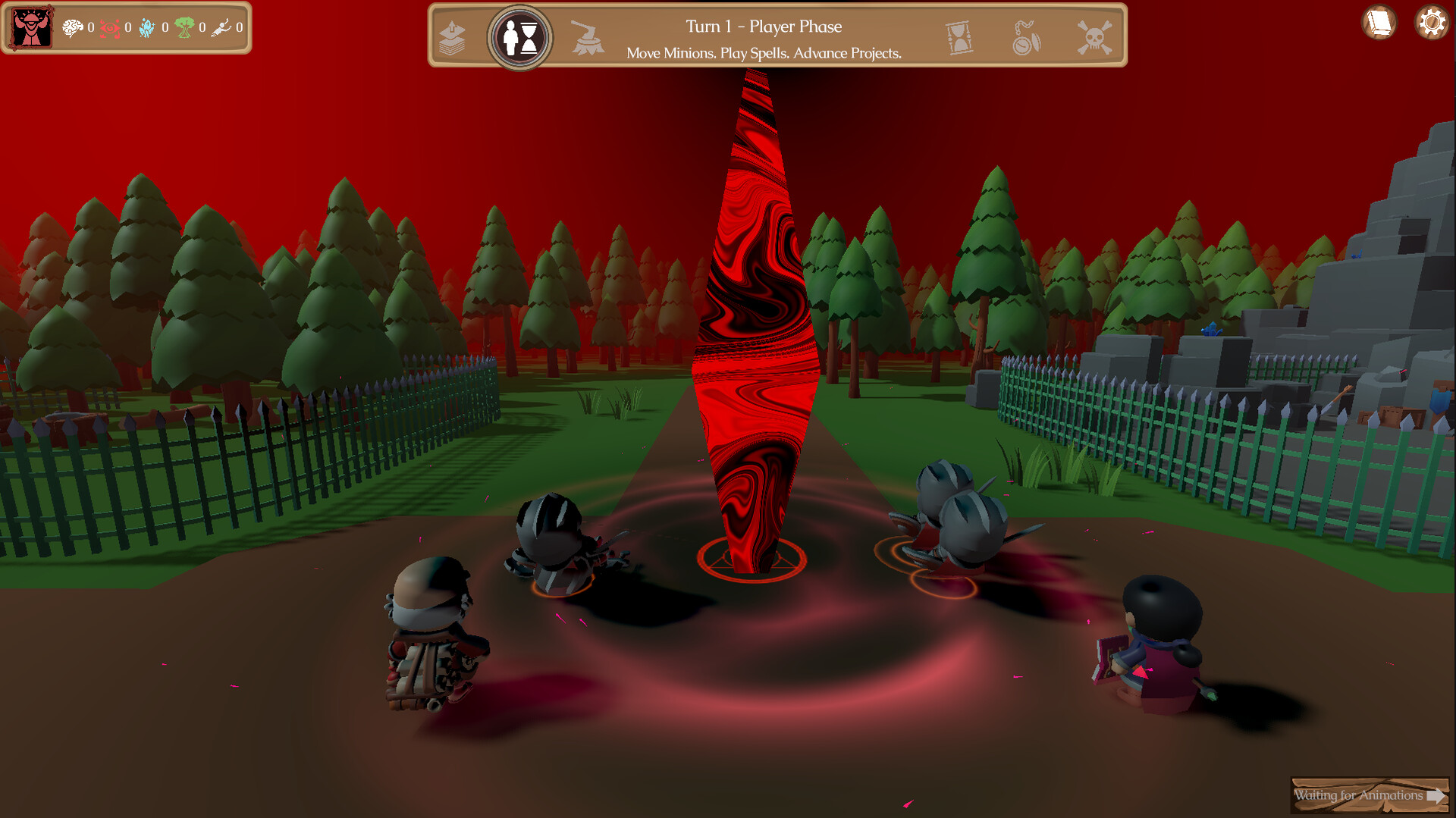
The limit of Beyond The Threshold is quite clear: the game has more structure than seduction. Its appearance remains sober, sometimes even very dry. Visually, the whole thing is readable, but modest. The cards, the board, the effects and the interface fulfill their role, without ever really creating this surplus presence which helps a game go beyond its genre circle.
It’s not dramatic, because the title knows exactly where to place its interest. But this necessarily reduces its power to draw players in. Beyond The Threshold requires some initial effort. It does not immediately charm with its staging, its animations or its visual identity. It convinces especially once you begin to understand what it is trying to do.
The fact that it’s only in English doesn’t help expand its audience either. The rules are not incomprehensible, but the game relies enough on reading cards, effects and situations for this barrier to really count. Those who already easily get into this type of strategy will adapt to it. The others risk staying outside.
It is therefore a demanding little game in the way it is presented. It does not seek the player out. It waits for them. And once you give it time, it reveals real staying power, but also the limits of a very independent project, still a little narrow to become more than a niche recommendation.
Verdict
A niche game that stands up well
6.5/10
Beyond The Threshold succeeds because it is built on solid systems. The difference between mages, resource management, positioning of minions, pressure of perils and simultaneous cooperation give the game a real density. There is more than one good idea here. There is a structure that holds.
But this solidity is accompanied by a thin covering, limited accessibility and still very low visibility. Beyond The Threshold doesn't try to please everyone, and it pays for that. What remains is a clever, coherent and serious little strategy game, which does not have the power of a major title of the genre, but enough character to merit passing its threshold.
Pros
- Four mages who really change the way the game is played
- A simple but effective resource economy
- A real board game texture
- Simultaneous cooperation works well
Cons
- A very modest visual appearance
- An unwelcoming introduction
- English only
- Visibility still too low to exist beyond the niche
More in Video games
Full library 10/10
World of Warcraft: Forever
PC 8.5/10
Warhammer 40,000: Boltgun 2
PC 9/10
Total War: Warhammer III – Lord of the End Times DLC
PC 7/10
Revisited | Warcraft III: Reforged
PC 7.5/10
Warcraft III Reforged: Forsaken Kingdom
PC 8.5/10
World of Warcraft: Midnight
PC 9/10
Puzzle Bobble Everybubble!
PC 6/10
Crown of Greed
PC 6.5/10
Tavernhold
PC 7/10