
[Preview]Life Below
The reef catches its breath
Score: 7/10
Images and videos
At a glance
We liked
- A real idea of ecological management
- The reef which is visibly rebuilding itself
- A soft and coherent atmosphere
- Thalassa, a good poetic gateway
We liked less
- Actual depth remains to be confirmed
- The risk of an overly repetitive loop
- Ecological issues that will have to become real choices
- Readability to monitor as the reef fills up
 By Farrel Grimwood · published · 8 min read
Contents
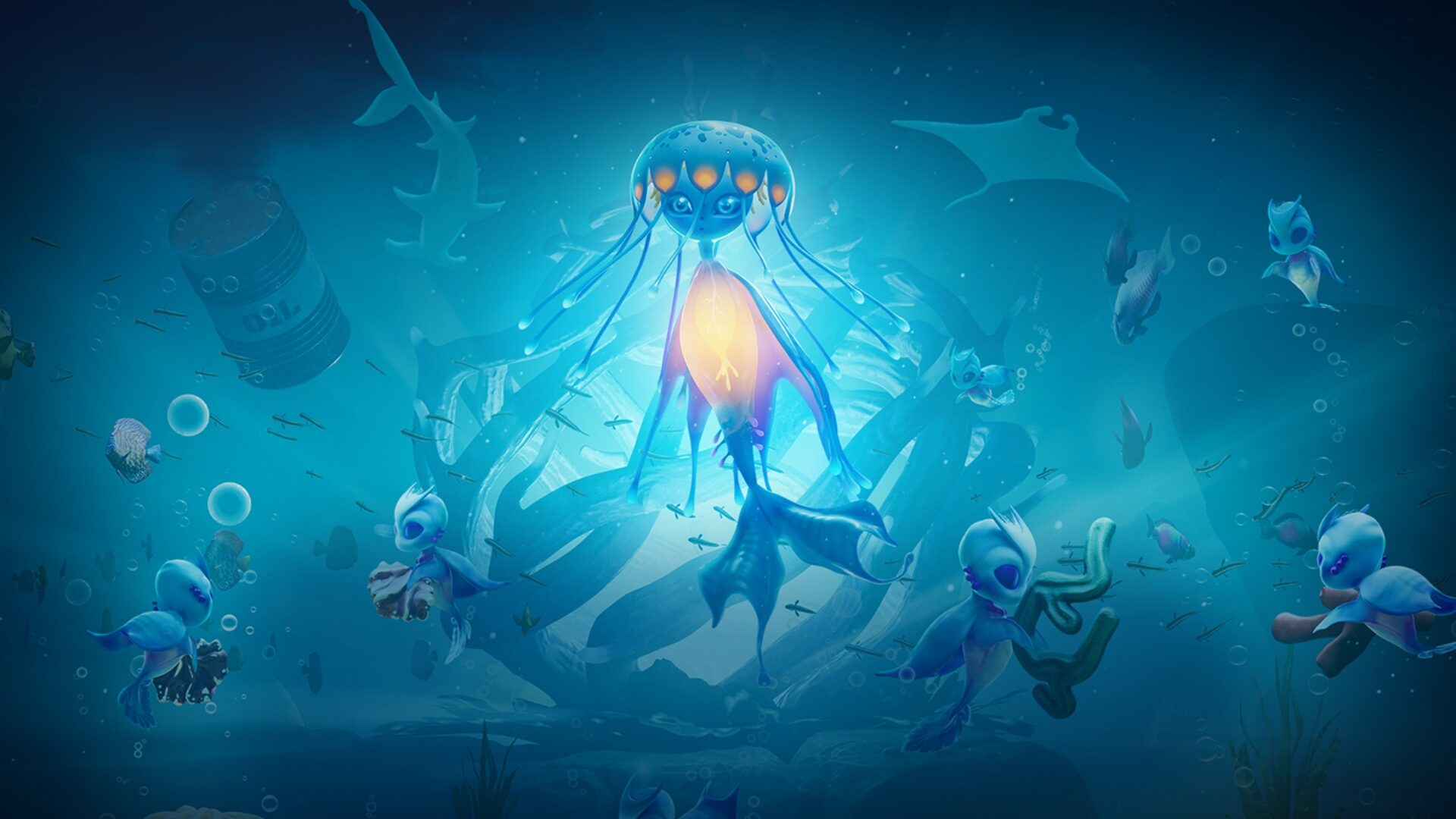
With Life Below, Megapop does not require building a city, laying out roads or stacking buildings around a central square. The game goes further down, below the surface, where the city builder changes material. It is no longer a question of managing inhabitants, but of bringing life back to a dying coral reef. The player plays Thalassa, a guardian linked to the heart of the reef, and must rebuild an ecosystem with corals, algae, shellfish, fish, lures and enough balance for everyone to agree to stay.
Life Below takes familiar reflexes from the management game, but it moves them into a more organic framework. Here, a bad decision does not block a road or a factory. It can unbalance a chain of life, scare away certain species, allow an area to heat up or weaken the reef that we are trying to save.
This is where the game already finds its good idea. It is not just trying to repaint a city builder blue. It replaces the usual logic of growth with a logic of care. We do not build to exploit more, but to hold together forms of life that depend on each other.
Life Below does not want to turn ecology into a dry lesson. The game maintains an element of fantasy, with Thalassa, the heart of the reef and these spirits linked to resources. But this fantasy remains based on a real desire for credibility, Megapop having worked with marine biologists to give meaning to the relationships between species, environmental dangers and the way in which the reef rebuilds itself.
In its current state (the game is supposed to be released next year), Life Below above all resembles a promise: that of a management game more calm than spectacular, more attentive to balance than to expansion, capable of making a colony of corals more endearing than an entire city. The rhythm is deliberately set, almost meditative, with the idea that satisfaction comes less from a great peak of power than from a reef which slowly begins to move again, to produce, to attract, to breathe.
Thalassa repairs more than she reigns
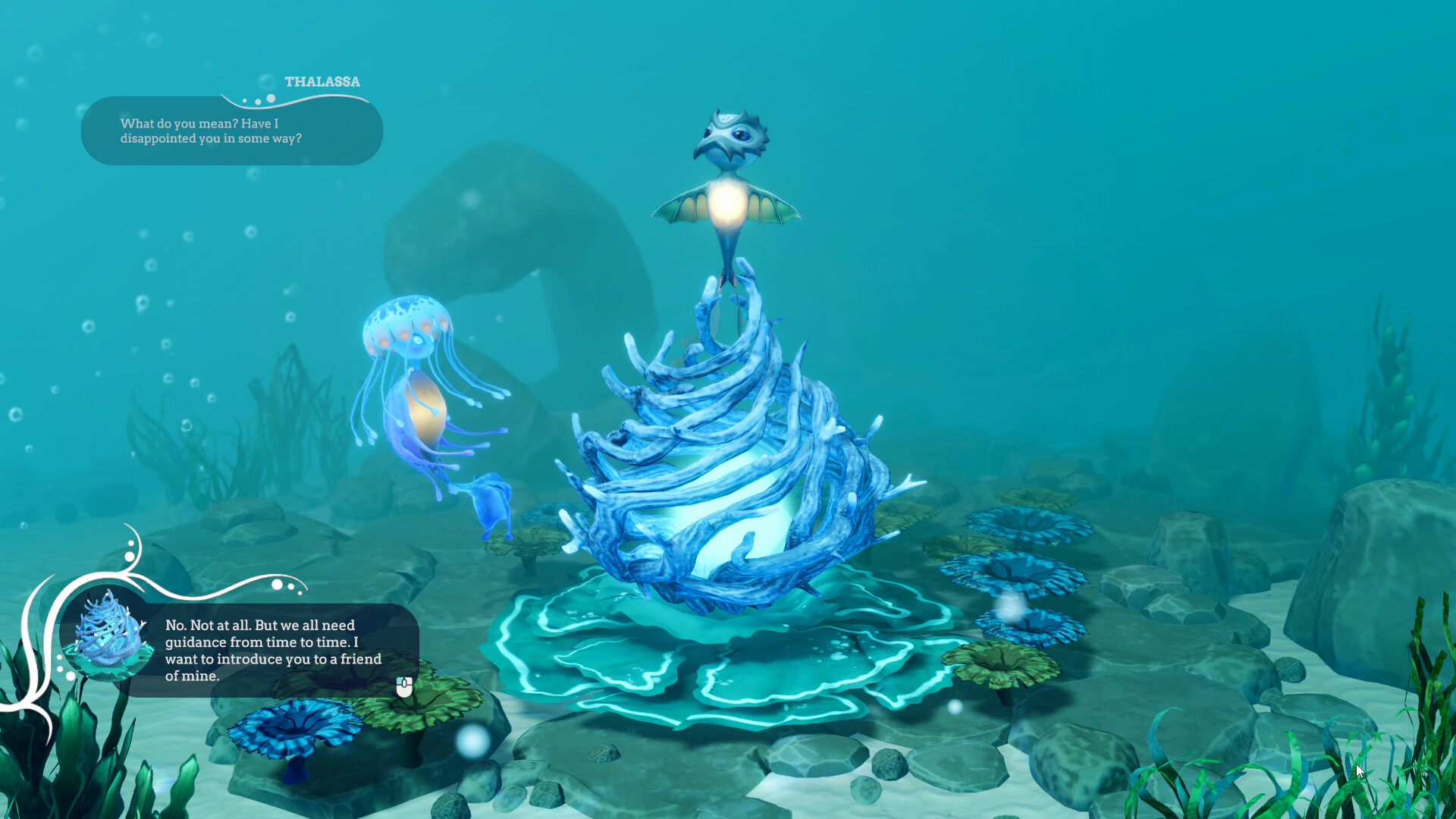
Life Below does not seem to want to tell a great ecological adventure with big speeches. Currently, the game mainly sets a framework: Thalassa watches over a sick reef, linked to a living heart that must be awakened, nourished and protected. The player does not embody a mayor, a builder god or an all-powerful manager. Rather, it accompanies a presence responsible for putting an ecosystem back into motion.
This is an important nuance. Many management games give the player a place of absolute control. Here, Life Below seems to be looking for something else. We don’t really dominate the reef. We help it recover. Corals, algae, shellfish, fish and sea creatures are not simple decorative units. They represent needs, connections, conditions of survival. The story therefore already goes through this idea: repairing a world does not mean imposing a form on it, but understanding what it is missing in order to breathe again.
Thalassa gives this approach a little storytelling dimension. The game could have remained entirely documentary, almost cold, with its ecological data and its natural chains. It prefers to include a softer, more mythological figure, capable of connecting the player to the reef without transforming the experience into a marine biology textbook. This presence helps give a face to the project. It prevents Life Below from being just a pretty interface placed on systems.
The narration, however, remains very discreet at this stage. We understand the state of the world, Thalassa’s mission, the need to restore balance, but the game does not yet show whether it will really be able to develop this matter over time. There is a great starting idea, that of a reef that we take care of rather than a territory that we conquer. But we will have to see if the final version will give enough weight to this relationship, or if it will remain above all a poetic dressing around a game of placement and resources.
There remains the question of emotion. Life Below has naturally strong subject matter, but is it enough? For the game to make an impact, Thalassa, the heart of the reef and the creatures that we attract will have to become something other than concepts. We will have to feel a loss when the ecosystem falters, a real satisfaction when it rebuilds, and perhaps even a form of attachment to this fragile world. In this version, the potential is there. The narrative depth remains to be confirmed.
Growing a swimming city
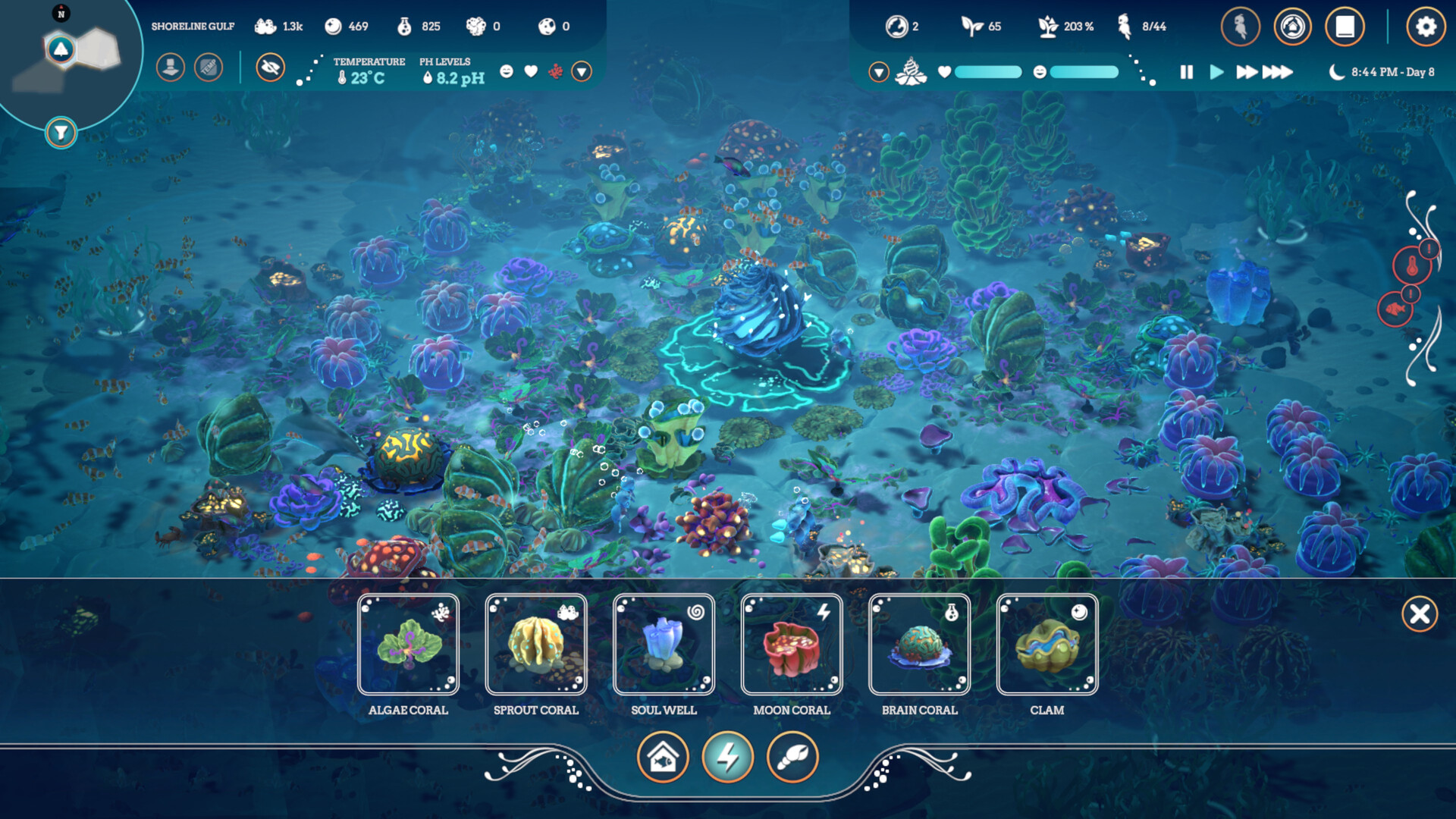
Life Below uses reflexes known from the management game, but it moves them intelligently enough so that the loop already has its own color. We do not lay houses, roads or warehouses. We place corals, algae, shells, habitats, lures and elements capable of attracting a new form of life. The game keeps the logic of the city builder, but it uses a more organic vocabulary. An area does not develop because it produces more gold but because it becomes habitable.
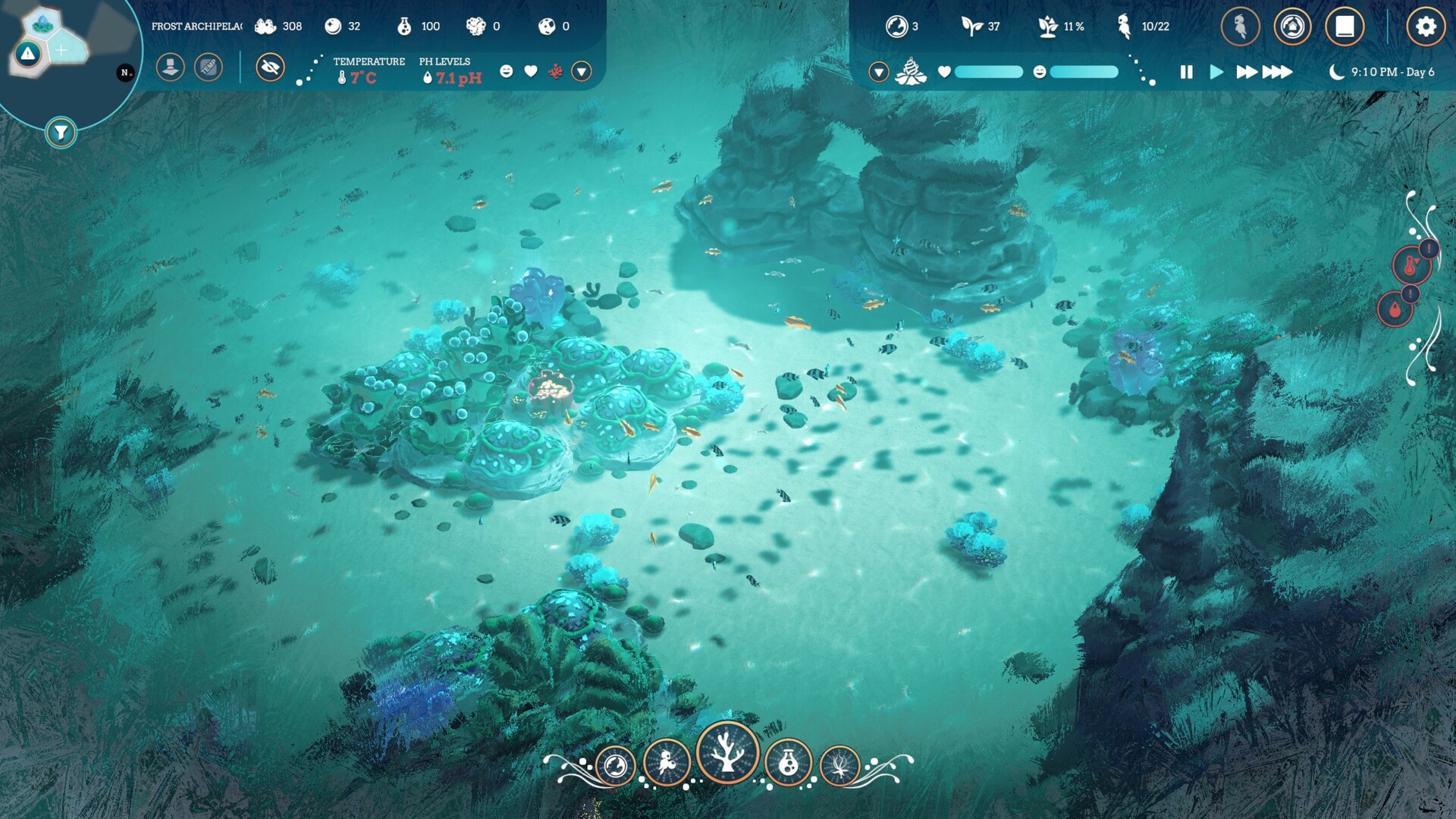
Currently, the system is mainly based on balance. Each species has its needs, its conditions, its preferences. We must produce food, monitor the temperature, manage pollution, deal with the pH, prevent certain presences from unbalancing what has just been rebuilt too quickly. The idea works because it gives meaning to each investment. A coral is not just a pretty building. It becomes a piece in a fragile chain.
Many management games push for expansion, optimization, and permanent growth. Here, the progression seems smoother, but not necessarily less interesting. It’s not just about going bigger. We need to hold it together better. An area developed too quickly, a resource poorly distributed, a species attracted without having prepared its environment: all of this can become a problem. The game seeks less power than stability.
This approach makes the loop quite enjoyable. We observe the reef, we identify what is missing, we place an element, we wait to see how the ecosystem responds, then we adjust. The rhythm is necessarily more relaxed than a fast-paced building game. Life Below does not seem to want to put the player under permanent pressure. Instead, it encourages the player to pay attention. Watch, understand, correct, support.
The other issue concerns variety. Restoring a first area naturally makes you want to continue, especially when species appear and the decor comes back to life. But everything will depend on the game’s ability to renew its problems. New species, new dangers, different biomes, finer environmental constraints, choices that force you to accept a compromise rather than an obvious solution: this is where Life Below will have to gain depth.
The game already has a good idea of progression. Seeing the reef fill up, attracting a new creature, unlocking one more element, feeling that the area reacts to decisions: these are simple, but effective rewards. They speak directly to the player. We didn’t just check off a mission. We see something coming back. In an ecological management game, this visible response from the world can become more satisfactory than a simple production table.
It remains to be seen how far the threat will go. Life Below talks about pollution, invasive species, heat, imbalance. If these elements remain small obstacles to be corrected mechanically, the game risks losing part of its weight. If they really force us to review an area, to sacrifice too rapid growth, to protect one species to the detriment of another, then the loop could become much thicker. The subject calls for choices. Not just solutions.
Colors to heal the silence
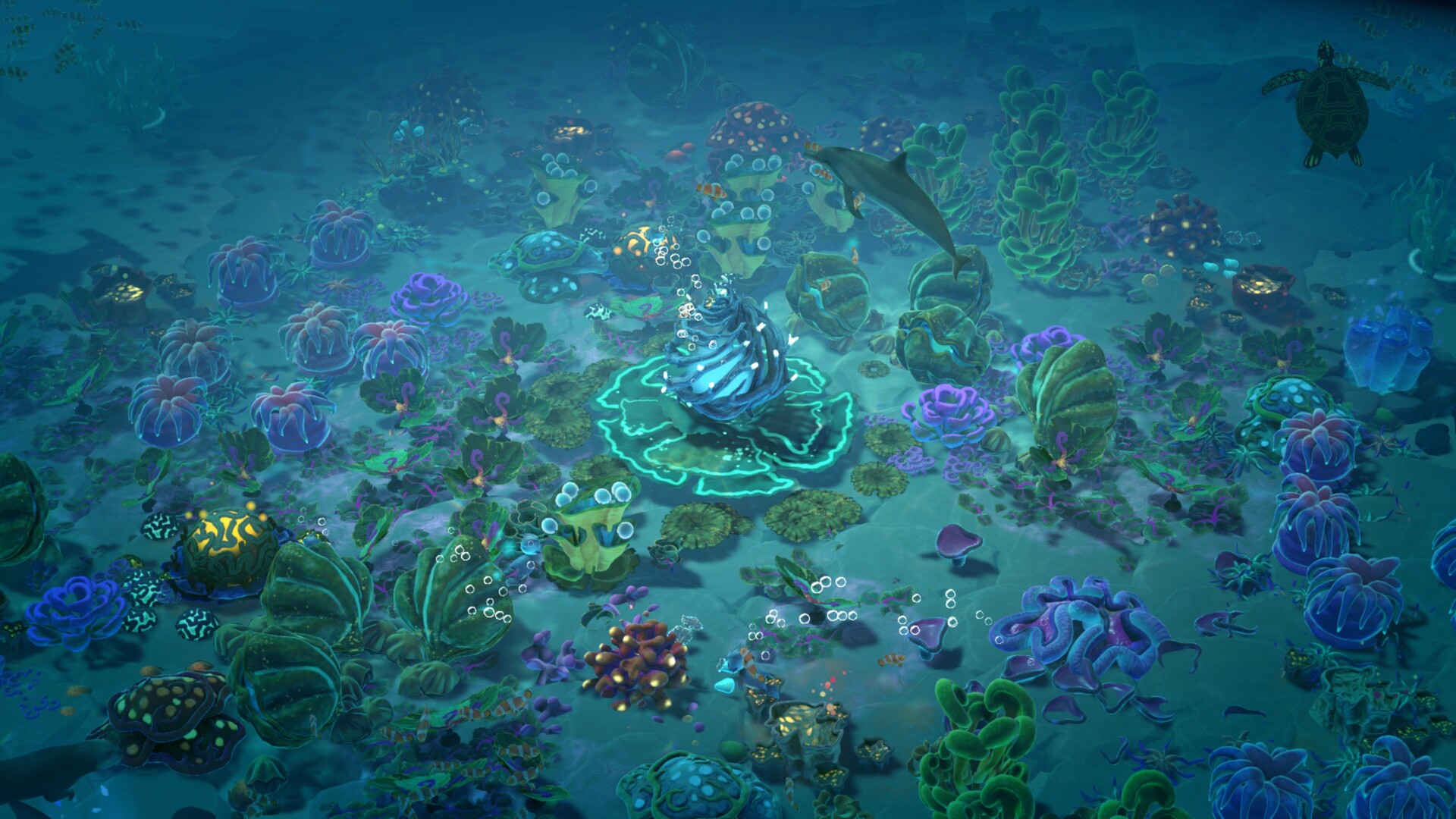
Life Below relies heavily on its atmosphere. An underwater management game can quickly become a simple blue grid with a few icons, but Megapop seems to want something else. The reef must be readable, of course, but above all it must make you want to be looked at. In its current state, this is what stands out the most: this desire to make the return of life a visual reward.
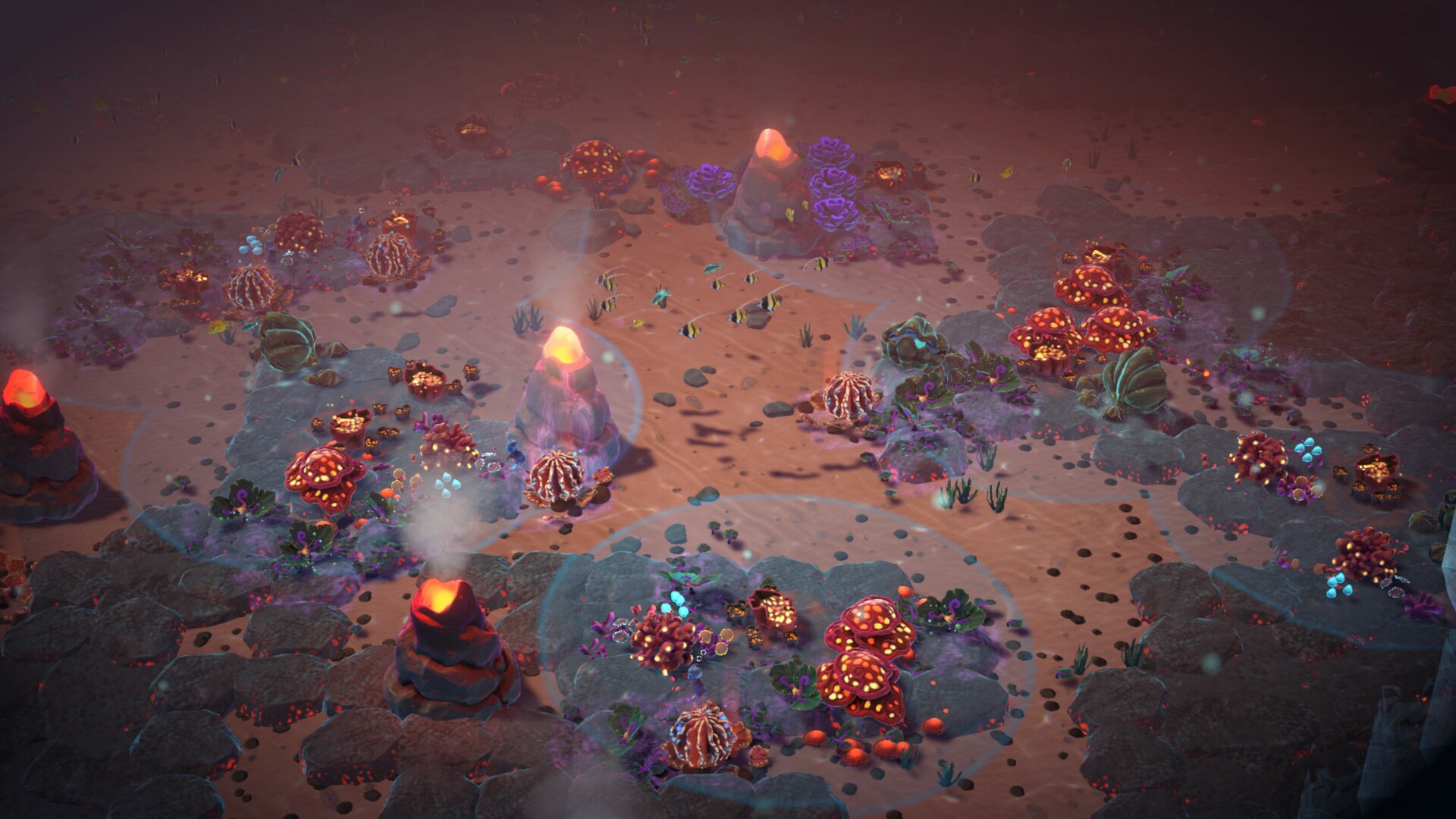
The game starts from a damaged, duller world, almost emptied of its breath. Then the corals return, the algae settle in, the fish appear, the colors gradually return to their place. It’s a simple principle, but it works well for this type of experience. We don’t just read progress in an interface. We see it in the decor. A reef that fills almost becomes the best gauge in the game.
The artistic direction chooses a fairly gentle path. Life Below does not seek pure realism, nor cold documentary reconstruction. It retains a part of the story, with Thalassa, the heart of the reef, the almost luminous marine shapes and this way of making the ocean welcoming without completely erasing its fragility. This stylisation suits it well. It allows the game to remain clear, while giving its environments real warmth.
The animations contribute a lot to this impression. Seeing the creatures moving around, the living elements responding to the space, the fish moving around the structures we have placed: all this gives the reef a presence that menus alone could not create. These are not necessarily big spectacular effects, but small movements which remind us that we are not building a fixed base. We support a living environment.
Readability must, however, remain at the center. The more the reef loads, the more the game will have to avoid losing the player in their own colors. A beautiful underwater scene can become confusing if every element attracts the eye in the same way. For now, Life Below seems to strike a decent balance between beauty and clarity, but the final version will need to back that up with more complex areas, more species, and more constraints to watch out for.
The sound part follows this same calm intention. The music does not seek to push the player towards urgency. They rather establish a breathing, an almost meditative background, adapted to this idea of slow reconstruction. It’s a consistent choice. Life Below is not about a conquest, but about care. Sound must therefore support attention, not overwhelm it.
The sounds of the ocean, the small feedback linked to actions, the movements of the ecosystem and the general atmosphere seem to go in this direction. The game benefits from leaving room for silence, or at least a form of calm. Too many beeps would turn the experience into an anxious dashboard. Here, gentleness participates in reading the world. We must want to stay in the reef, not just correct it.
There remains one obvious reservation: the atmosphere will not be enough if the systems do not follow. Life Below is pretty, soothing, sometimes really seductive in this idea of a world that regains its colors. But a beautiful atmosphere can also mask, during a demo, a loop that is still too light. Over time, each visual feedback must be linked to real choices, and not just a decorative progression.
Verdict
A promise that still breathes
7/10
In its November 2025 state, Life Below above all gives the impression of a game that has a real idea. Megapop is not trying to make a classic underwater city builder, but to transform management into an act of repair. Placing corals, attracting species, monitoring the balance of the reef, fighting against pollution or heat: all this gives the game a clear, gentle identity, and already quite unique in a genre often obsessed with production and expansion.
There are bound to be questions left. The final version will have to prove that its systems maintain depth over time, that the variety of species and threats is enough to avoid routine, and that readability does not collapse when the reef becomes denser. But the base is promising. Life Below has a beautiful idea, a coherent atmosphere, a peaceful rhythm and this very simple satisfaction of seeing a damaged world start to live again. An encouraging preview, provided that the final ocean is not just beautiful.
Pros
- A real idea of ecological management
- The reef which is visibly rebuilding itself
- A soft and coherent atmosphere
- Thalassa, a good poetic gateway
- Systems already readable in their intention
Cons
- Actual depth remains to be confirmed
- The risk of an overly repetitive loop
- Ecological issues that will have to become real choices
- Readability to monitor as the reef fills up
- The final content still difficult to judge
More in Video games
Full library 5/10
The Witch’s Bakery
SWITCH 5/10
K-pop Idol Stories: Road to Debut
SWITCH 10/10
World of Warcraft: Forever
PC 8.5/10
Warhammer 40,000: Boltgun 2
PC 9/10
Total War: Warhammer III – Lord of the End Times DLC
PC 7/10
Revisited | Warcraft III: Reforged
PC 7.5/10
Warcraft III Reforged: Forsaken Kingdom
PC 8.5/10
World of Warcraft: Midnight
PC 9/10
Puzzle Bobble Everybubble!
PC 6/10