
Candylands Journey
The shattered sweetness of a kingdom made of bitter sugar
Score: 5.5/10
Images and videos


At a glance
We liked
- The fully embraced nostalgia of the 16-bit platformer
- Elemental wands that renew exploration
- The immediate visual explosion, hypnotic in its first moments
- The clear simplicity of the quest
We liked less
- Visual confusion that sacrifices readability
- A narrative that is too bare, without significant characters
- A short running time, quickly consumed
- A pleasant soundtrack but without memorable depth
 By Farrel Grimwood · published · 5 min read
Contents
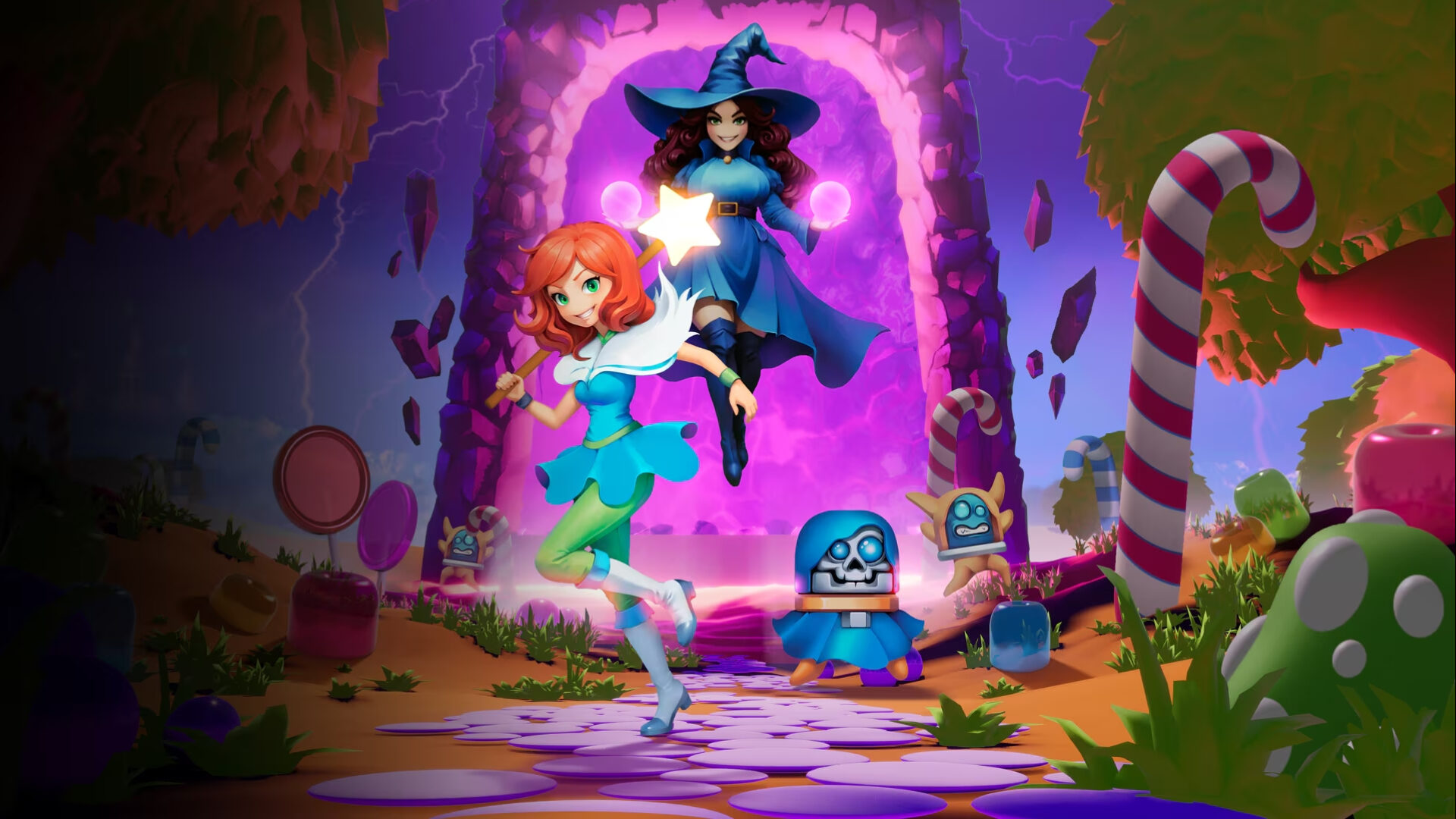
With Candylands Journey, developed by Spell Pie & Uncle Frost Team and published by Sometimes You on September 4, 2025 on Nintendo Switch, pixel art takes on the air of poisoned confectionery. Behind the sweet shine of candies and the childlike simplicity of saturated colors hides a more austere quest: a tiny witch, wand in hand, rushes across fifteen kingdoms to find a stolen crystal, thwart the evil charms of possessed pastry chefs and repel armies of sweets who no longer smile.
The game does not just invite nostalgia for the 16-bit platformer: it bends it, folds it under an avalanche of gems to collect, colorful puzzles, elemental wands which modify the way of seeing and crossing each setting. Here, sugar is a trap, visual excess a weapon, and each jump becomes an attempt to escape the suffocation of a world too good to be true.
But the question remains: will this sweet adventure be able to transform its nostalgia into a truly memorable epic, or will it remain the fragile memory of a flamboyant cake that crumbles at first contact?
The exploded tale of a lost crystal
It all starts with a theft, but it’s not just an object that disappears: it’s the balance of a world that fractures. The magic crystal, the vital heart of Candylands, has been stolen, and with it sweetness has turned into threat. Sweets, once a promise of innocence, are distorted into grotesque enemies; the pastry chefs, guardians of taste, become corrupted into cruel witches. Where gluttony reigned, all that remains is a perverted fairyland, a toxic beauty.
You play as a tiny witch, a fragile silhouette lost in a vastness saturated with colors. She has neither faithful companions nor talkative allies: her path is traced alone, carried by a wand which becomes an extension of her will. This nameless heroine is less a character than a symbol: the tenacity of being in the face of an overflowing universe, the obstinacy to move forward even when each setting seems to want to swallow you.
But this is where the narrative paradox of Candylands Journey reveals itself. The fable has the clarity of a fairy tale but it sacrifices the flesh of the characters. No secondary voices, no figures who arise to question or enrich your trajectory. Enemies are forms to be slain, incarnations of sugar turned into poison, not rivals to be hated or understood. The story, reduced to a clear line, becomes a parable: limpid, but solitary.
This narrative economy has its power: it focuses attention on the crossing, on the act of crossing and resisting. But it also has its price: without dialogue, without parallel destinies, the adventure loses in emotional depth what it gains in symbolic purity. The quest for the crystal is experienced like a colorful dream, but it is forgotten as quickly as candy melted on the tongue.
The sweet mechanics, the bitterness of the decor
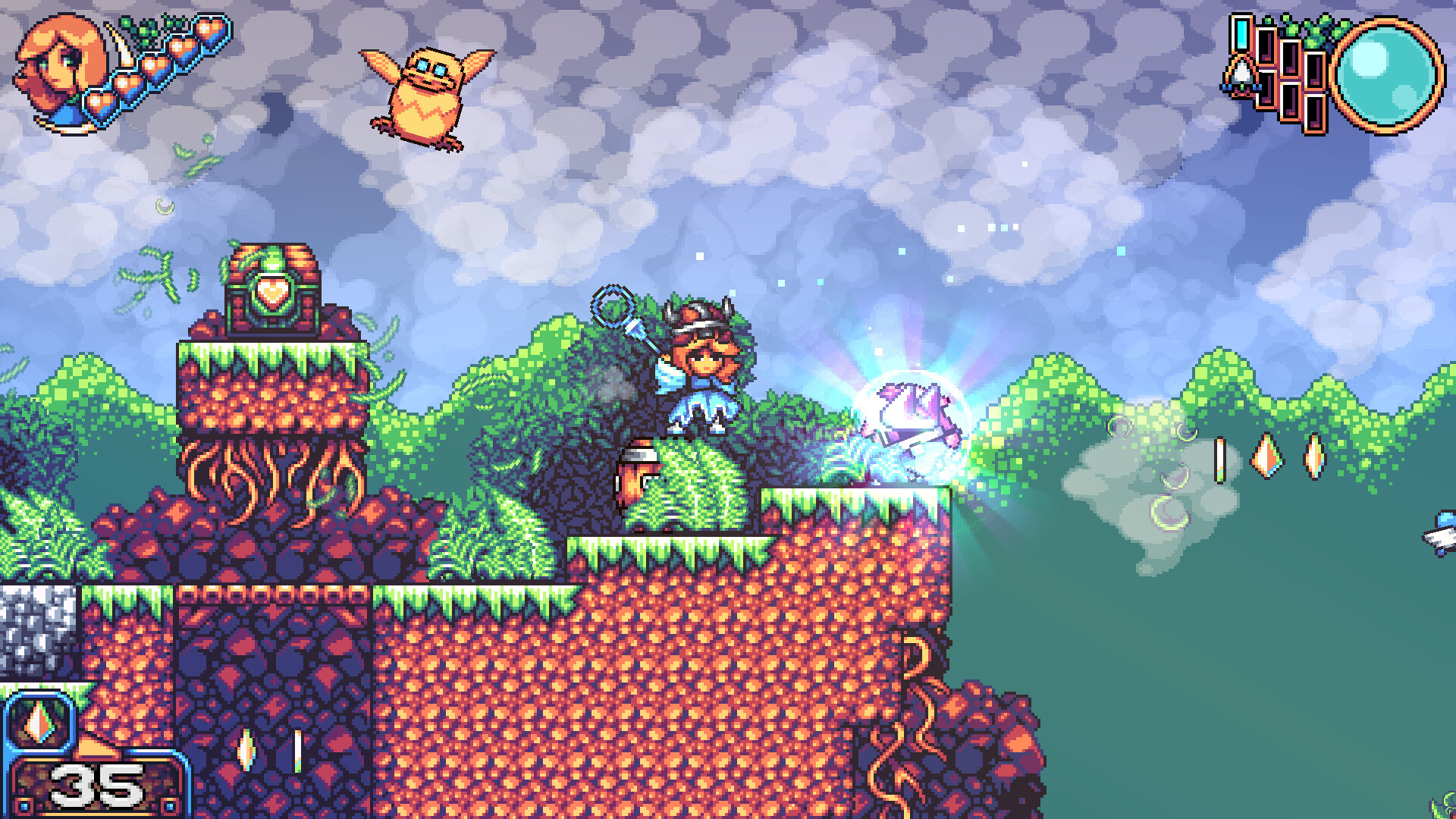
Candylands Journey does not move forward in disguise: its skeleton is that of the retro platformer, but dressed in chromatic excess and a promise of variety. Fifteen biomes, each presented like a giant candy store, offer the player a theater where each jump becomes a bet against the confusion of the setting. You progress from stage to stage, chaining collections, puzzles, confrontations against pastry witches, like so many refrains of a known but always replayed mechanic.
At the heart of this system, the magic wand acts as an instrument of identity and renewal. It is not unique: the game gives you several, endowed with elemental powers – fire, ice, bubbles, unexpected summons. Each wand is not only a weapon, but a key: certain passages only open with the appropriate element, forcing you to come back, to reread the level, to transform the apparent linearity into a rediscovery loop. Therein lies the subtlety of the design: the exploration is not frontal, it is fragmented, deferred, always incomplete before being replayed.
But this ambition comes up against a glaring fragility: the level design, saturated with visual details, sometimes lacks readability. Shimmering backgrounds blur the line between setting and platforming; an object seems attainable but is not yet, causing frustrating falls and forced returns. Sugar, in its excess, stifles the precision of the gesture. The pleasure of collecting then clashes with the irritation of waiting: seeing a puzzle piece, knowing that it is there, but realizing too late that we will have to come back with another power. This choice can be read as loyalty to the demanding platformer, but it sometimes becomes clumsy, an artifice that breaks the rhythm.
The fights against the pastry bosses follow this logic: spectacular in their saccharine staging, but often mechanical in their progress. We learn their cycle, we repeat, we triumph. The satisfaction is real, but brief, like a burst of sugar that cracks before disappearing.
Thus, the gameplay of Candylands Journey exudes a deliberate nostalgic ambition: varied wands, demanding collection, colorful biomes. But it is also condemned by its excess: too much decoration kills readability, too much collection slows down the momentum, too much repetition wears out the charm. It is a world that wants to shine like eternal candy, but which sometimes melts between the fingers.
The blinding brilliance of a sweet world, the melody of a fragile dream
Candylands Journey imposes a flamboyant aesthetic. Pixel art, deliberately saturated, splashes the screen with a garish palette where each color seeks to seduce the eye, where each background is intended to be a spectacle. The biomes, fifteen in total, parade like so many baroque showcases: frosty forests, caves lined with sweets, ruins covered in icing, marine abysses saturated with improbable sweets. This visual abundance, sometimes hypnotic, reflects the ambition of a game that wants to make its mark through excess.
But this excess, by transforming into a system, turns against itself. Too many details, too many animated settings confuse the readability of the level design: what should be a platform becomes a misleading fresco, what seems accessible turns out to be a distant setting. The universe, instead of guiding, dazzles, and the player sometimes advances more blindly than to the rhythm of his intuition. Beauty becomes an obstacle, brilliance turns into a trap.
The soundtrack embraces this contrasting logic. The compositions are dynamic, light, catchy, using the codes of arcade melodies: sweet motifs, fast rhythms, punctuated with simple sound effects. The charm is immediate, almost childish, but it struggles to renew itself. The pieces run in a loop, accompanying the action without always transcending it. Where a score could have provided nuances, the music is content to cover the surface.
Thus, the audiovisual identity of Candylands Journey is based on a contradiction: an overflowing visual world that blinds as much as it fascinates, and a joyful soundtrack that supports without uplifting. The universe exists, shimmering, noisy, but it lacks the subtlety capable of transforming excess into lasting memory. We leave dazzled, but rarely marked.
Verdict
The unfinished feast of a kingdom of sugar
5.5/10
Candylands Journey is a dazzling promise: a return to the classic platformer, enveloped in a sweet aesthetic, powered by a tiny witch whose wand becomes the engine of a colorful journey. The game succeeds in awakening nostalgia for the 16-bit years, seducing with its excessive colors, its elemental wands, its puzzles and its collections. We find there the momentum of a simple and clear video game tale, where the quest for the crystal becomes a metaphor for tenacity.
But behind this shiny facade lies a more bitter truth: sugar drowns out the taste. The saturated settings confuse readability, the repetition wears out patience, the collection mechanics frustrate with their delayed promises. The absence of embodied characters, dialogues or memorable rivals deprives the story of an emotional depth capable of transforming the fable into a fresco. What remains is a charming adventure, sometimes magical, but too often trapped in its visual excess and brevity.
Pros
- The fully embraced nostalgia of the 16-bit platformer
- Elemental wands that renew exploration
- The immediate visual explosion, hypnotic in its first moments
- The clear simplicity of the quest
Cons
- Visual confusion that sacrifices readability
- A narrative that is too bare, without significant characters
- A short running time, quickly consumed
- A pleasant soundtrack but without memorable depth
More in Video games
Full library 10/10
World of Warcraft: Forever
PC 8.5/10
Warhammer 40,000: Boltgun 2
PC 9/10
Total War: Warhammer III – Lord of the End Times DLC
PC 7/10
Revisited | Warcraft III: Reforged
PC 7.5/10
Warcraft III Reforged: Forsaken Kingdom
PC 8.5/10
World of Warcraft: Midnight
PC 9/10
Puzzle Bobble Everybubble!
PC 6/10
Crown of Greed
PC 6.5/10
Tavernhold
PC 6.5/10